

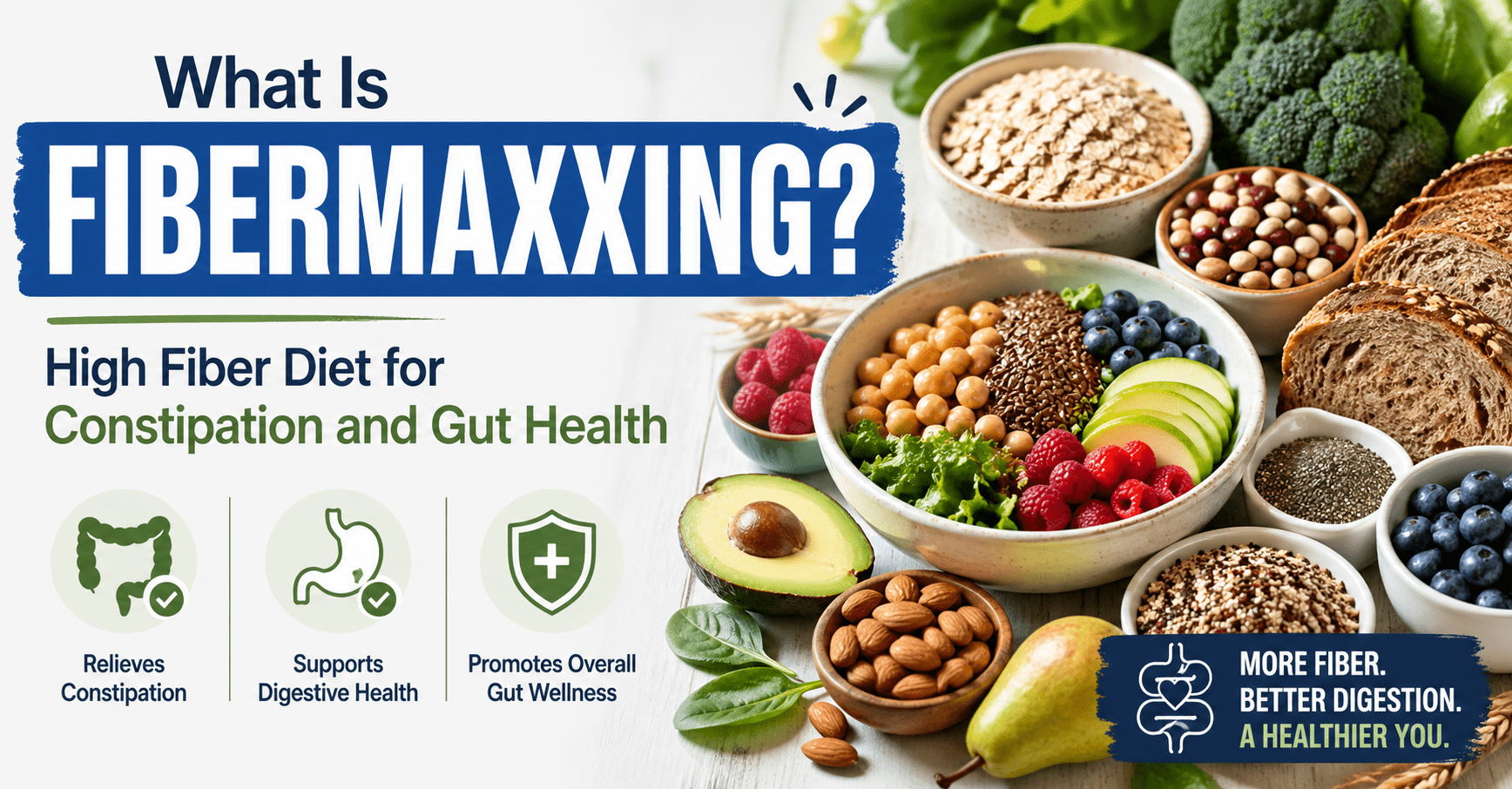
Quick Answer Fibermaxxing means intentionally increasing your daily fiber intake — mostly through high fiber foods — as part of a high fiber diet for constipation to improve digestion, relieve constipation, and support gut health. It is a social media trend that is supported by established nutrition science.
If you have been scrolling through TikTok or Instagram and keep seeing the word fibermaxxing — you are not alone. The trend has spread rapidly across social media, and this time the underlying idea is supported by strong nutritional evidence.
The uncomfortable reality is that most adults are not eating enough fiber. A very small percentage — estimated at around 5–10% depending on the population studied — consistently meet their daily fiber recommendations. Most people consume roughly 16 grams per day, which is approximately half of what current dietary guidelines suggest.
That fiber gap contributes directly to one of the most common digestive complaints worldwide: constipation. This guide explains what fibermaxxing is, what research says about a high-fiber diet for constipation, how to start safely, and which foods to prioritize.
What Is Fibermaxxing?
At its core, fibermaxxing means intentionally increasing your daily fiber intake — primarily through whole foods, and sometimes with the support of supplements — with the goal of better digestive health. It is a social media label for a well-established dietary principle, and the underlying science is well supported.
Since fibermaxxing is mainly about increasing fiber through diet, it becomes important to understand which foods actually make the biggest difference for digestion and constipation relief. You can explore a detailed breakdown of those foods here: Constipation Relief: Hidden Causes, Fiber Therapy & Best Treatments
Healthcare professionals often describe fibermaxxing as a practical, evidence-based way to improve digestive health by increasing fiber intake — a modern framing of long-established dietary advice from dietitians and physicians.
Why Is Fibermaxxing Trending Right Now?
Ultra-processed foods now account for the majority of daily calories for many people. These products are typically very low in fiber, as most is stripped away during manufacturing. The result is a widespread pattern of chronic digestive problems — constipation, bloating, irregular bowel movements — that could often be meaningfully addressed through straightforward dietary changes.
Fibermaxxing caught on for several practical reasons: digestive issues are increasingly common; people often prefer natural approaches over laxatives; high-fiber foods are affordable and available at any grocery store; and the supporting science is consistent. Social media made the concept accessible and shareable in a way that textbook nutrition advice rarely is.
Research dietitian Eytan Stern, MS, RD, from the University of Miami Health System puts it simply: “I think it’s always a good thing when we can get people to increase their fiber intake. I’m a big fan of introducing a fibrous or fiber-containing food at every meal.”
High-Fiber Diet for Constipation: How It Works Inside Your Body
Understanding the mechanism makes it much easier to apply a high-fiber approach consistently. Here is what fiber is actually doing once you eat it.
It Physically Moves Stool Through Your Colon
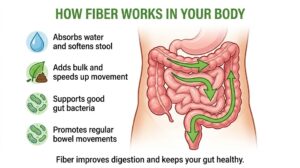
When fiber enters your digestive system, it absorbs water and forms a soft, gel-like substance that travels through your intestines. This gel softens hard, dry stools that are difficult or painful to pass, and adds bulk that stimulates the intestinal walls to contract. The result is faster transit time, less stool sitting in the colon, and more predictable bowel movements.
This is the core mechanism behind why a high-fiber diet for constipation tends to be effective — it addresses the physical cause of the problem rather than forcing a bowel movement artificially, as stimulant laxatives do.
It Feeds the Beneficial Bacteria in Your Gut
Fiber that reaches the colon is fermented by gut bacteria. In return, those bacteria help shape the diversity of the entire microbiome — with effects that extend well beyond digestion.
If you want to understand how supporting gut bacteria with both fiber and probiotics can improve digestion and overall gut health, you can explore our guide on .
When gut bacteria break down fiber, they produce compounds called short-chain fatty acids (SCFAs) — particularly butyrate, propionate, and acetate. These compounds help support gut health, reduce inflammation, and play a role in immune regulation. They also serve as the primary fuel for the cells that line the colon, helping to maintain the integrity of the gut wall.
A 2025 randomized controlled trial found that participants in the high-fiber group showed significant improvements in bowel-related quality of life, along with measurable increases in beneficial SCFA-producing bacteria including Anaerostipes, Bifidobacterium, and Fusicatenibacter. [1]
It Is Associated With Reduced Chronic Disease Risk
The benefits of fiber extend beyond constipation relief. Higher fiber intake is associated with better blood sugar management, lower LDL cholesterol, and reduced risk of heart disease and type 2 diabetes. It also supports satiety, which may help with healthy weight management over time.
A large research review published in The Lancet found lower risks of early death and several chronic diseases as fiber intake increased — with the most notable gains occurring when people raised their daily intake to 25–29 grams. Above that threshold, benefits continued to appear, but at a smaller incremental rate. [2]
 Related Articles You May Find Helpful
- 5 Best Magnesium Supplements for Constipation (2026 Review)
- Magnesium Citrate vs Glycinate: The 2026 iHerb Guide for GLP-1 Users
- Mag O7 vs ColonBroom: Which Is Better for Colon Cleanse?
- Best OTC Laxatives for Constipation in the US (Fast & Gentle Options)
- 9 Best Probiotic Supplements 2026: Expert Guide for Gut Health
- 7 Best Natural Constipation Relief Remedies in 2026
- Does Dehydration Cause Constipation? The Science-Backed Link
- Best Fiber Foods for Gut Health & Constipation Relief
Soluble vs. Insoluble Fiber: Why You Need Both
One of the most common mistakes when starting a high-fiber diet for constipation is focusing on only one type of fiber. There are two distinct types, and they work differently in the body.
Soluble Fiber
Dissolves in water and forms a thick, gel-like substance in the digestive tract. This type softens stool, moderates digestion speed (which supports blood sugar stability), may help lower LDL cholesterol, and acts as a prebiotic to feed beneficial gut bacteria.
Best food sources: Oats, psyllium husk, chia seeds, flaxseeds, apples, oranges, beans, lentils, barley
Insoluble Fiber
Does not dissolve in water. Instead, it adds bulk and helps move material through the digestive tract. It speeds up intestinal transit time and does not ferment significantly, which generally means it causes less gas than soluble fiber.
Best food sources: Whole wheat, wheat bran, brown rice, broccoli, carrots, cauliflower, nuts, fruit skins
For a detailed look at one of the most studied soluble fiber supplements for constipation, see our guide to psyllium husk for constipation.
How Much Fiber Do Adults Need Per Day?
Here are the official recommendations from the 2020–2025 Dietary Guidelines for Americans, which are widely referenced internationally:
| Group | Daily Fiber Goal |
|---|---|
| Women 19–30 | 28 grams |
| Women 31–50 | 25 grams |
| Women 51+ | 22 grams |
| Men 19–30 | 34 grams |
| Men 31–50 | 31 grams |
| Men 51+ | 28 grams |
A useful rule of thumb: aim for 14 grams of fiber per 1,000 calories you eat each day. According to the same dietary guidelines, approximately 90% of women and 97% of men fall short of these daily targets — a gap that is both common and largely addressable through diet.
The Best High-Fiber Foods for Constipation Relief
You do not need expensive specialty products or complicated meal plans. These everyday foods are among the highest in fiber and most consistently associated with improved bowel regularity.
Fruits
| Food | Fiber per Serving |
|---|---|
| Raspberries (1 cup) | 8g |
| Pear, with skin (1 medium) | 5.5g |
| Apple, with skin (1 medium) | 4.4g |
| Prunes (5–6 pieces) | 3.8g |
| Banana (1 medium) | 3.1g |
| Orange (1 medium) | 3.1g |
Prunes deserve special mention. They contain both fiber and sorbitol — a naturally occurring compound that draws water into the colon and can directly stimulate bowel movements — making them particularly useful for constipation. Learn more in our article on prune juice for constipation relief.
Vegetables
| Food | Fiber per Serving |
|---|---|
| Artichoke, cooked (1 medium) | 10g |
| Green peas, cooked (1 cup) | 9g |
| Broccoli, cooked (1 cup) | 5g |
| Sweet potato, with skin (1 medium) | 4.8g |
| Spinach, cooked (1 cup) | 4g |
| Carrots, raw (1 cup) | 3.6g |
Legumes — The Most Fiber-Dense Staples
| Food (½ Cup, Cooked) | Fiber per Serving |
|---|---|
| Split peas | 8g |
| Lentils | 7.8g |
| Black beans | 7.5g |
| Kidney beans | 6.5g |
| Chickpeas | 6g |
Legumes are among the most fiber-dense, calorie-efficient, and affordable foods available. Adding half a cup of lentils or black beans to meals a few times per week can make a measurable difference in digestion and bowel regularity.
Whole Grains
| Food | Fiber per Serving |
|---|---|
| Quinoa, cooked (1 cup) | 5g |
| Oats, rolled (½ cup dry) | 4g |
| Whole wheat bread (2 slices) | 4–6g |
| Brown rice, cooked (1 cup) | 3.5g |
| Popcorn, air-popped (3 cups) | 3.6g |
Seeds
| Food | Fiber per Serving |
|---|---|
| Chia seeds (2 tbsp) | ~10g |
| Flaxseeds, ground (2 tbsp) | ~5.6g |
| Sunflower seeds (¼ cup) | ~3g |
Adding a tablespoon of chia seeds or ground flaxseeds to yogurt, oatmeal, or a smoothie is a simple, low-effort way to meaningfully increase your daily fiber intake.
For a broader overview of natural approaches to constipation, see our natural constipation remedies guide.
What About Fiber Supplements?
When food intake consistently falls short of daily targets, fiber supplements can serve as a practical complement. Most adults do not meet their daily fiber needs through diet alone, so supplementation can be a reasonable supporting strategy.
Psyllium husk is the most thoroughly researched option for constipation. It is the active ingredient in Metamucil and works by absorbing water to form a soft gel in the intestines, making stools easier to pass without causing cramping or urgency.
Other well-studied options include wheat dextrin (Benefiber), which dissolves completely in water and is very gentle; methylcellulose (Citrucel), which is non-fermentable and typically causes less gas and bloating; and inulin/FOS, a prebiotic fiber that selectively feeds beneficial gut bacteria.
Our detailed psyllium husk guide covers dosing, timing, what to expect, and what to look for in a product.
Does a High Fiber Diet for Constipation Actually Work? What the Research Shows
The evidence base here is consistent and well-replicated — this is not simply social media hype.
A 4-week double-blinded, randomized, placebo-controlled trial in 250 adults with functional constipation found that all dietary fiber groups — including psyllium husk, wheat bran, and polydextrose — showed meaningful improvements in stool consistency scores compared to placebo. [3]
A separate intervention study found that two weeks of increased fiber intake was sufficient to produce measurable changes in gut microbiome composition, including increases in Bifidobacterium and Lactobacillus — both genera associated with digestive health. [4]
A 2024 meta-analysis published in mSystems, pooling data from 21 fiber intervention studies covering 538 participants, found that short-term increases in dietary fiber consistently produced beneficial shifts in gut bacterial communities — suggesting that fiber reliably influences the microbiome in a positive direction even over short time periods. [5]
Key practical takeaways from the research: fiber from whole foods tends to produce broader and more lasting gut microbiome changes than isolated supplements; adequate hydration is essential for fiber to function effectively; and results for constipation relief typically appear within 2–5 days, while fuller gut microbiome adaptation takes approximately 3–4 weeks.
How to Start a High-Fiber Diet for Constipation Safely: A Week-by-Week Plan
The most common mistake when beginning fibermaxxing is jumping from a low baseline to very high amounts overnight. That approach reliably causes bloating, gas, and discomfort — and sends many people back to square one. Here is a more effective progression.
📅 Week 1 — Add, Don’t Overhaul
- Add one high-fiber food to one meal per day
- Start with easy-to-digest options: oatmeal, bananas, cooked carrots, sweet potato
- Increase water intake to at least 8 glasses (64 oz) daily — generally recommended alongside any fiber increase
- Target: Add roughly 5 grams more fiber than your current baseline
📅 Week 2 — Layer in Legumes and Seeds
- Add ½ cup of beans or lentils to one meal daily
- Sprinkle 1 tablespoon of chia or ground flaxseed on breakfast
- Switch white bread or white rice to whole grain versions
- Target: Reach 20–25 grams of total daily fiber
📅 Weeks 3–4 — Hit Your Daily Target
- Include a fiber-rich food at every meal
- Add a psyllium husk supplement if needed (start with ½ teaspoon in a full glass of water)
- Maintain consistent hydration throughout the day
- Target: Consistently reach 25–34 grams per day based on your personal guidelines
Four Principles That Make the Difference
1. Drink more water. Fiber absorbs water to do its job. Without adequate hydration, fiber can form a dry, compacted mass in the intestine and worsen constipation rather than relieving it. Aiming for 2–2.5 liters (8–10 glasses) daily is commonly advised alongside a higher-fiber diet, though individual fluid needs vary.
2. Always increase gradually. Sudden high doses overwhelm the gut microbiome before it has adapted — the result is bloating, gas, and discomfort. A 2–4 week progression gives your gut bacteria the time they need to adjust.
3. Mix your fiber sources. Relying on a single food or supplement limits the variety of bacteria you feed. Diversity of fiber sources generally supports greater microbial diversity in the gut.
4. Consistency over intensity. Eating 40 grams one day and 8 grams the next does not allow the gut microbiome to maintain a stable, beneficial balance. Steady daily intake is what produces lasting results.
Fibermaxxing Side Effects — What to Expect, and When to Slow Down
When fiber intake increases, gut bacteria ramp up fermentation activity and temporarily produce more gas. This is a normal adaptive response, particularly during the first 1–3 weeks. Many people abandon higher-fiber eating during this window — which is worth pushing through, because it is temporary.
Normal and temporary (usually resolves within 1–3 weeks): increased gas and flatulence, mild bloating, stomach gurgling, and occasional mild cramping.
Signs you have increased too fast: severe abdominal cramping, persistent diarrhea, or worsening constipation — the last of which is almost always a sign of insufficient water intake alongside the fiber increase.
As registered dietitian Jortberg explains: “If you haven’t been getting much fiber, and all of a sudden you add a lot, you’re not going to feel very well — bloating, nausea, diarrhea. That’s one of the reasons people sometimes don’t stick with a high-fiber diet.” The solution is a more gradual progression — not abandoning the approach entirely.
If side effects are uncomfortable, reduce your intake by 5–10 grams and rebuild more slowly. The adaptation period is worth completing.
Who Should Be Careful With a High Fiber Diet?
A high-fiber diet for constipation is appropriate and beneficial for most healthy adults. However, certain groups should consult a healthcare provider before significantly increasing fiber intake.
People with IBS should approach fiber increases with care. Not all fibers behave the same in IBS — highly fermentable fibers (high-FODMAP sources like onions, garlic, and certain beans) can worsen symptoms in some individuals, while low-FODMAP options such as oats, psyllium husk, and chia seeds are typically better tolerated. Individual response varies significantly.
People with Crohn’s disease or ulcerative colitis may find that high insoluble fiber irritates inflamed intestinal tissue during active flares. Guidance from a gastroenterologist is advisable.
People recovering from bowel surgery may require a temporary low-fiber or low-residue diet during the healing period.
People taking certain medications should be aware that fiber can affect the absorption of some drugs, including diabetes medications, blood thinners, and thyroid medications. A general guideline is to take medications at least 2 hours before or after fiber supplements to minimize interaction risk.
A Realistic High-Fiber Day of Eating
Here is what a practical, gut-friendly, high-fiber day actually looks like — targeting around 30–34 grams for an average adult:
| Meal | What to Eat | Approx. Fiber |
|---|---|---|
| Breakfast | ½ cup rolled oats + 1 tbsp chia seeds + 1 cup raspberries + water | ~13g |
| Mid-Morning Snack | 1 medium apple (with skin) + small handful of almonds | ~4g |
| Lunch | Large salad: mixed greens, ½ cup chickpeas, shredded carrots, cucumber + 1 slice whole grain bread | ~10g |
| Afternoon Snack | Whole grain crackers with hummus | ~3g |
| Dinner | Lentil soup (½ cup lentils) + 1 cup steamed broccoli + ½ cup brown rice | ~10g |
| Daily Total | ~40g |
This total is well within range for most adults — and achievable without exotic ingredients, costly supplements, or complex preparation.
The Gut Microbiome Connection: Why Fiber Matters Beyond Constipation
Many people start a high-fiber diet specifically to relieve constipation — a perfectly reasonable motivation. But the research suggests that fiber’s effects extend well beyond the bathroom.
Consistently eating dietary fiber alters the nutritional landscape inside the intestine, allowing beneficial bacteria to expand and maintain a more dominant presence. People who eat low-fiber diets tend to have reduced microbial diversity and tend to harbor microbes that feed primarily on amino acids and fats rather than plant-based substrates.
When fiber-fermenting bacteria thrive, they produce short-chain fatty acids — particularly butyrate — which serve as the primary fuel for colonocytes (the cells lining the colon), help reduce intestinal inflammation, support the integrity of the gut barrier, play a role in immune regulation, and may influence mood and cognition through gut-brain signaling pathways, though this area of research is still developing.
The 2025–2030 Dietary Guidelines for Americans formally acknowledge the role of the gut microbiome in overall health — a notable recognition that what you feed your gut bacteria has meaningful biological consequences across multiple body systems.
Fibermaxxing vs. a Balanced High Fiber Diet: What Is Actually Different?
| Factor | Fibermaxxing (Social Media Version) | Evidence-Based High Fiber Diet |
|---|---|---|
| Origin | TikTok and Instagram | Medical and nutritional guidelines |
| Daily fiber target | 50–70+ grams (some influencers) | 25–34 grams (evidence-based) |
| Approach | Often rapid and extreme | Gradual and sustainable |
| Food sources | Sometimes supplement-heavy | Primarily whole foods |
| Long-term sustainability | Often short-lived | Intended as a lifelong dietary habit |
As one nutrition researcher puts it: “Maxxing can be a bad idea for many people. Optimization is what we really want — getting adequate fiber along with other nutrients.”
There is currently no strong evidence that consistently consuming 50–70 grams of fiber daily provides additional benefits over simply meeting the recommended daily intake. The fibermaxxing trend has value in motivating people to pay attention to fiber intake. The actual science points to a simpler conclusion: hit your recommended target, maintain it consistently, and prioritize whole food sources.
Frequently Asked Questions
What is fibermaxxing?
Fibermaxxing is the practice of deliberately increasing your daily fiber intake — primarily through whole foods, sometimes with the support of supplements — to improve digestive health. It is a social media trend built on well-established nutritional science.
Does a high-fiber diet help constipation?
For most people, yes. Multiple randomized controlled trials have found that increasing dietary fiber is associated with improvements in stool consistency, bowel movement frequency, and overall digestive comfort. Results typically appear within 2–5 days of consistent, adequate intake, with fuller benefits developing over 3–4 weeks.
How much fiber do adults need per day?
The 2020–2025 Dietary Guidelines recommend between 22 and 34 grams of fiber per day depending on age and sex. A practical rule of thumb: aim for 14 grams of fiber per 1,000 calories consumed each day.
Is fibermaxxing safe?
For most healthy adults, a gradual increase in dietary fiber is safe and beneficial — provided two conditions are met: intake is increased slowly over 2–4 weeks, and water intake is increased meaningfully at the same time. Jumping to high amounts overnight tends to cause gas, bloating, and discomfort that many people mistake for a lasting problem.
How much fiber is too much?
There is no universally established upper limit, but some evidence suggests that consistently exceeding 50 grams per day increases the risk of digestive problems without delivering additional benefit over simply meeting the recommended daily target. More is not always better.
What are the best high-fiber foods for constipation?
Lentils, black beans, raspberries, chia seeds, artichokes, oats, and prunes are among the most useful. Combining different food categories — fruits, vegetables, legumes, and whole grains — consistently delivers broader gut microbiome support than relying on any single source.
Does fiber help constipation immediately?
Not immediately — most people notice meaningful improvement within 2–5 days of consistent, adequate fiber intake. Fuller gut microbiome adaptation — where many of the longer-term benefits occur — takes approximately 3–4 weeks of regular intake.
Can fiber make constipation worse?
Yes — temporarily — if fiber intake is increased too quickly or water intake is insufficient. Fiber absorbs water to form soft, easy-to-pass stool; without adequate hydration, it can harden and worsen constipation. The solution is to slow the rate of increase and significantly boost water intake. This side effect is generally avoidable with the right approach.
Whole food sources are preferable because they deliver fiber alongside vitamins, minerals, antioxidants, and a wide variety of prebiotic compounds. Supplements like psyllium husk serve as a useful daily boost when diet alone falls short — but they work best as a complement to high-fiber eating, not a replacement for it.
Summary
Fibermaxxing is a trendy label for something genuinely worthwhile: eating enough fiber, consistently, every day. A well-planned high-fiber diet for constipation is not just about improving bowel regularity — it is a well-supported dietary change with meaningful documented benefits for gut microbiome health, metabolic markers, and long-term disease risk.
The approach that works is not the social media extreme. It is the gradual, sustainable one: add fiber to each meal, drink enough water, and allow the gut microbiome the 3–4 weeks it needs to adapt fully. For most people, noticeable improvements in digestion appear within a few days of consistent effort.
Getting Started
A practical first step is adding one fiber-rich food to a meal — a handful of raspberries with oatmeal, or swapping white rice for brown. Consistent small additions tend to be more sustainable than dramatic dietary overhauls.
Explore more guides to support your digestive health:
👉 How to use psyllium husk for constipation relief
References
- Effects of Dietary Fiber Supplementation on Gut Microbiota and Bowel Function in Healthy Adults: A Randomized Controlled Trial. Microorganisms (2025). PubMed
- Reynolds A, et al. Carbohydrate quality and human health: a series of systematic reviews and meta-analyses. The Lancet (2019). The Lancet
- Effects of dietary fibers or probiotics on functional constipation symptoms and roles of gut microbiota: a double-blinded randomized placebo trial. Gut Microbes (2023). PubMed
- High-Fiber, Whole-Food Dietary Intervention Alters the Human Gut Microbiome but Not Fecal Short-Chain Fatty Acids. mSystems (2021). mSystems
- Rodriguez CI, Isobe K, Martiny JBH. Short-term dietary fiber interventions produce consistent gut microbiome responses across studies. mSystems (2024). PubMed
- U.S. Department of Agriculture & U.S. Department of Health and Human Services. Dietary Guidelines for Americans, 2020–2025 (2020). dietaryguidelines.gov
- Dietary Fibre Modulates the Gut Microbiota. Nutrients (2021). PMC
Health Disclaimer & Review:
At Constipation Relief, we prioritize your health. This content has been rigorously reviewed by Dr. ABM Sadikullah. While we strive for accuracy, this information is for educational purposes and should not replace professional medical advice. Always consult with your healthcare provider before starting any new fiber-heavy diet like “Fibermaxxing.