


The best foods for constipated toddlers are the ones that combine natural fiber and, in some cases, sorbitol, in forms small kids will actually eat. For mild constipation, dietary changes can be a useful first step, especially when a child’s diet is low in fiber or fluids.
If your toddler is straining, having painful or hard stools, or going several days without a bowel movement, the foods on this list are a reasonable place to start. Food is only one part of the picture, though: stool withholding, which is common during potty training, is also a frequent contributor to toddler constipation, so a calm, low-pressure bathroom routine can matter just as much as what’s on the plate.
- Prunes, pears, and small amounts of prune or pear juice may help soften stools because they contain sorbitol.
- Rather than chasing a specific fiber number, offer a variety of naturally fiber-rich foods daily as part of a balanced diet.
- Large amounts of cow’s milk can crowd out fiber-rich foods and may contribute to constipation indirectly. Excess juice (over the AAP’s 4 oz/day guidance) can work against you too.
- When increasing fiber, make sure fluid intake keeps pace. A sudden jump in fiber without enough fluid can cause bloating or discomfort.
- Stool withholding during potty training is a common contributor to toddler constipation, so behavior and routine matter alongside diet.
- Persistent, painful, or recurrent constipation, or any red-flag symptom below, is a reason to involve a pediatrician rather than relying on diet alone.
Toddler constipation is common and often becomes noticeable around the time of toilet training, typically between ages 2 and 4. In most children, constipation is functional, meaning there is no identifiable structural or biochemical cause behind it.[1] Diet, fluid intake, toilet-training habits, and stool withholding can all play a role. Food is one of the more accessible changes parents can make, although it isn’t the only part of managing constipation.
Affiliate disclosure: ConstipationRelief.net may earn a small commission from qualifying purchases made through links on this page, at no extra cost to you.
At a Glance: Foods That May Help a Constipated Toddler
These are the whole-food options covered in this guide. Always offer age-appropriate servings and ask your pediatrician if constipation persists beyond two weeks:
- Best sorbitol-rich prune juice option: Sunsweet Amazin Prune Juice (64oz) — contains sorbitol that draws water into the stool, limit to no more than 4oz per day per AAP guidance for ages 1 to 3, ask your pediatrician before using juice specifically for constipation
- Best toddler-specific pear juice option: Gerber 100% Pear Juice (32oz) — 100% pear juice with no added sugar or artificial flavors, designed for ages 12 months and older, pear juice contains sorbitol and is explicitly recommended in this guide alongside prune juice
- Best whole prune option (fiber + sorbitol together): Sunsweet Individually Wrapped Prunes — soft texture, easy to mash into oatmeal or yogurt, no added sugar, one of the more studied foods for childhood constipation per this guide
Why Diet Can Help With Toddler Constipation
Many children don’t consistently meet the recommended fiber intake for their age.[2] Picky eating, an early love of white bread and crackers, and a natural resistance to vegetables all add up fast. Add a toddler who’s drinking more cow’s milk than eating solid food, and constipation becomes more likely.
Bringing fiber intake in line with age-appropriate needs, while maintaining normal fluid intake, is where dietary changes are most likely to help. There isn’t good evidence that pushing fiber or fluid beyond the usual recommended amounts leads to further improvement, so the goal is meeting the target rather than maximizing it.
Before changing your toddler’s diet, it helps to think in terms of overall dietary pattern rather than a single number to hit. For a deeper look at fiber-rich foods across ages, our guide on the best fiber foods and fiber therapy for gut health breaks this down further.
How Much Fiber Does a Toddler Need?
Older pediatric guidance sometimes used the formula “age in years plus 5 grams” as a rough minimum fiber target.[3] Current dietary reference values for total fiber are considerably higher than that older formula, so it’s better understood as a historical starting point than a target to chase. The Institute of Medicine’s dietary reference values list an adequate intake of total fiber of:[2]
- Ages 1–3: about 19 g/day
- Ages 4–8: about 25 g/day
These are general nutrition reference values, not a constipation-treatment target. For constipation specifically, the goal is to meet age-appropriate fiber needs rather than push intake as high as possible: constipation guidelines haven’t found good evidence that fiber above the usual recommended amount improves outcomes.[1]
Quick Serving & Timing Reference
| Food | Example Serving | When / How |
|---|---|---|
| Prune puree | A small serving | Mixed into oatmeal or yogurt at breakfast |
| Pears | A small serving of ripe, soft pear | Cut, peeled, or mashed as needed for the child’s age and chewing ability |
| Prune, pear, or apple juice | No more than 4 oz/day (AAP guidance, ages 1 to 3) | Offer in a cup rather than a bottle or a cup that allows continuous sipping; skip at bedtime |
| Oatmeal | A small, toddler-appropriate serving | Breakfast, with prunes or ground flaxseed stirred in |
| Whole wheat bread/crackers/cereal | Direct swap for white versions | Look for whole-grain options with a meaningful amount of fiber and little added sugar |
| Beans, lentils, peas | A small, toddler-appropriate serving, well cooked | Mixed into soup, puree, or rice |
| Avocado | A small toddler-appropriate serving | Mashed on toast, mixed into eggs, or cubed as a snack |
| Berries | A small serving, prepared appropriately for age | Mashed or cut into smaller pieces for younger toddlers; always supervise |
| Broccoli, peas | A small serving, cooked until soft | Steamed soft for easier chewing |
| Yogurt/kefir | About 1/2 cup | As a snack; not a primary fiber source |
Note: exact amounts matter less than consistency. Offer small, age-appropriate servings and let your child’s appetite guide portion size. When increasing fiber, make sure fluid intake keeps pace, and introduce new fiber sources gradually to reduce the chance of gas or bloating.
Best Foods for Constipated Toddlers: 9 Options to Try
These foods and drinks aren’t ranked by strength of evidence; there’s no established hierarchy showing one works better than another. They’re grouped here simply as fiber- and sorbitol-rich options worth including in a varied diet.
1. Prunes and Prune Puree
Prunes are one of the more studied foods for childhood constipation. They pack fiber and sorbitol, a natural sugar alcohol the small intestine can’t fully absorb. That unabsorbed sorbitol pulls water into the colon, which can help soften stool.[4] A small serving of prune puree can be mixed into oatmeal or yogurt if your toddler resists the taste alone. For more on dosing and timing, see our full guide on how prune juice supports constipation relief.
2. Pears
Pears provide fiber and naturally occurring sorbitol, making them a practical fruit choice to include in a constipation-friendly diet. Offer ripe, soft pear with the skin on when that’s appropriate for your child’s age and chewing ability; for younger toddlers, peel it if needed and cut or mash it into an age-appropriate texture.
3. Small Amounts of Prune or Pear Juice
Pediatric constipation guidelines note that the sorbitol in prune and pear juice can help soften stool in young children.[1] Apple juice contains sorbitol too, but whole fruit is generally the better everyday choice, with prune or pear juice reserved for when a more targeted, softening effect is wanted. The American Academy of Pediatrics recommends limiting 100% fruit juice to no more than 4 ounces per day for toddlers ages 1 to 3.[5]
If juice is being used specifically for constipation, ask your pediatrician about whether it is appropriate for your child and how much to offer. More is not automatically better: excess juice can cause loose stools, gas, or bloating instead of helping. Two more AAP-aligned habits worth following: offer juice in a cup rather than a bottle or a cup that allows continuous sipping throughout the day, and skip it at bedtime, since both habits are linked to a higher risk of tooth decay.
4. Oats and Oatmeal
Oatmeal is a useful whole-grain option that many toddlers accept because of its mild flavor and soft texture. Stir in a spoonful of pureed prunes or ground flaxseed for an extra fiber boost.
5. Whole Wheat Toast, Crackers, and Cereal
Simply swapping white bread and refined crackers for whole grain versions closes a surprising amount of the fiber gap, since refined, low-fiber grains are a well-documented contributor to inadequate fiber intake in children.[6] Look for whole-grain cereals that provide a meaningful amount of fiber and contain little added sugar.
6. Beans, Lentils, and Peas
Legumes are among the higher-fiber foods toddlers can eat, and they are easy to work into soups, purees, or rice. Even a small, toddler-sized serving of well-cooked lentils or mashed black beans adds meaningful fiber without changing the meal much.
7. Avocado
Soft, mild, and naturally high in fiber, avocado is one of the easier fiber-rich foods to get into a toddler’s diet. Mash it onto toast, mix it into scrambled eggs, or serve small cubes as a snack.
8. Berries
Raspberries and blackberries are particularly high in fiber for their size, and their natural sweetness usually makes them an easy sell with toddlers. Prepare berries according to your child’s age and chewing skills: mash or cut larger berries into smaller pieces when appropriate, and always supervise young children while they’re eating to reduce choking risk.
9. Broccoli and Peas
Both vegetables pack fiber into small, toddler-sized bites. Steaming until soft makes them easier to chew and slightly sweeter, which can help with acceptance.
What About Yogurt and Kefir for Toddler Constipation?
Yogurt and kefir are worth a separate mention rather than a spot on the main list, because they aren’t major sources of fiber the way the foods above are. Fermented dairy does introduce live bacteria, and some research has looked at whether this supports more regular bowel habits, but a systematic review of randomized trials in children found no significant benefit of probiotics over placebo for functional constipation, so the evidence that probiotics reliably relieve childhood constipation remains limited.[8] They can be a reasonable part of a varied toddler diet, but treat them as a supporting food rather than a primary constipation treatment.
Water: An Essential Part of the Plan
Water isn’t one of the foods and drinks above, but it deserves a mention alongside them. Adequate fluid intake matters for normal hydration, especially when a child is eating more fiber, since fiber without enough fluid can cause bloating or discomfort. That said, giving extra fluids beyond a child’s normal needs hasn’t been shown to treat functional constipation on its own.[1]
Toddlers need fluids spread throughout the day, but the exact amount varies with age, size, activity, health, and climate; water and plain milk are generally the main recommended beverages, and individual needs are worth discussing with a pediatrician.[4] Our article on the science-backed link between dehydration and constipation explains why hydration is often underestimated.
Foods and Habits That May Contribute to Toddler Constipation
- Too much cow’s milk. Milk contains no fiber, and large amounts of it can crowd out fiber-rich foods, contributing to constipation indirectly. Keeping cow’s milk intake within age-appropriate limits may help; many toddlers over 1 year are commonly offered around 16 to 24 ounces a day depending on age and overall diet, but individual needs vary and are worth discussing with a pediatrician.
- Refined white bread, crackers, and pastries. These foods are often lower in fiber than whole-grain alternatives.
- Unripe (green) bananas. Unripe bananas contain more resistant starch and tannins than ripe bananas and may be less helpful for some children with constipation.[7] There’s no need to avoid ripe bananas, which can be part of a varied diet as usual.
- Large amounts of cheese. Cheese contains little to no fiber, so eating large amounts may displace higher-fiber foods from the diet.
- Large amounts of fruit juice. More juice does not mean more relief. Past a certain point it can cause bloating, gas, or diarrhea instead.[5]
Sample One-Day Toddler Meal Plan for Constipation Relief
| Meal | Fiber-Friendly Option |
|---|---|
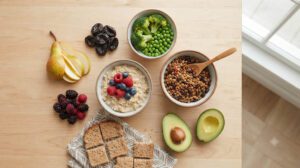
| Breakfast | Oatmeal with mashed prunes and a few berries |
| Snack | Pear slices with the skin on |
| Lunch | Mashed avocado on whole wheat toast, small side of peas |
| Snack | Yogurt with a spoonful of ground flaxseed |
| Dinner | Lentil soup with soft-steamed broccoli |
What to Expect, and How Long It May Take
There isn’t a reliable, evidence-based timeline for how quickly a particular food will relieve constipation. Some children may notice a softer stool within a few days of dietary changes; others need longer, or additional treatment beyond diet, especially when stool withholding is involved. Introduce new fiber sources gradually rather than all at once, since a sudden jump in fiber without enough water can cause gas, bloating, or cramping.
As a general guide, if constipation lasts more than about two weeks or isn’t improving with consistent home measures, it’s a reasonable point to check in with your pediatrician rather than continuing to wait it out. Pairing dietary changes with a calm, low-pressure bathroom routine tends to work better than diet alone when stool withholding is part of the picture.
When to Call a Pediatrician
Dietary changes can support management of mild constipation, but persistent or moderate-to-severe constipation often needs more than diet: behavioral strategies and, in some cases, medical treatment. Seek medical evaluation if your toddler:
- Has constipation that lasts more than about two weeks, or is persistent, painful, or recurrent despite dietary changes
- Has recurrent blood in or on the stool, more than a small streak of bright red blood, or blood accompanied by abdominal pain or other concerning symptoms (a single small streak of bright red blood from a minor fissure caused by hard stool is common and less urgent, but it’s still worth mentioning at your child’s next pediatrician visit)
- Is losing weight or not gaining as expected
- Has severe abdominal pain, repeated vomiting, or significant abdominal swelling. These symptoms warrant prompt evaluation rather than waiting
- Has been constipated since infancy
- Is soiling underwear despite appearing constipated, which can signal impaction
These can point to something that dietary changes alone will not resolve, including fecal impaction or, rarely, an underlying condition that needs medical management.[4]
Frequently Asked Questions
What foods may help a constipated toddler?
Prunes, pears, and small amounts of prune or pear juice may help soften stools because they contain sorbitol, which draws water into the stool. Fiber-rich foods like oats, legumes, and whole grains support regular bowel habits over time as part of an overall diet.
How much fiber does a toddler need per day?
Current dietary reference values put total fiber intake at roughly 19 grams a day for ages 1 to 3 and roughly 25 grams a day for ages 4 to 8. An older formula, age in years plus 5 grams, is sometimes cited as a historical minimum,[3] but it’s well below current recommendations. For constipation specifically, the goal is to meet age-appropriate fiber needs rather than push intake as high as possible, since going above normal recommended amounts hasn’t been shown to improve constipation.[1]
Can too much milk cause constipation in toddlers?
Large amounts of cow’s milk may contribute to constipation indirectly, mainly by displacing fiber-rich foods from the diet, since milk itself contains no fiber. Many toddlers over 1 year are commonly offered around 16 to 24 ounces of cow’s milk a day, depending on age and diet, but individual needs vary and a pediatrician can help tailor this.
Is fruit juice safe for a constipated toddler?
In limited amounts, yes. The American Academy of Pediatrics recommends no more than 4 ounces of 100% fruit juice per day for children ages 1 to 3, offered in a cup rather than a bottle or a cup that allows continuous sipping.[5] If juice is being used specifically for constipation, ask your pediatrician about the right amount for your child.
When should I see a doctor about my toddler’s constipation?
Contact a pediatrician if constipation lasts more than about two weeks, is painful or recurrent, or doesn’t improve with home measures. Also seek care if there’s blood in the stool, poor weight gain, or symptoms that started in infancy. Severe abdominal pain, repeated vomiting, or significant abdominal swelling warrants prompt medical evaluation rather than waiting.
For more research-backed guidance on managing digestive health at home, browse our full Diet section or our collection of natural constipation remedies.
References
- Tabbers MM, DiLorenzo C, Berger MY, et al. Evaluation and treatment of functional constipation in infants and children: evidence-based recommendations from ESPGHAN and NASPGHAN. J Pediatr Gastroenterol Nutr. 2014;58(2):258-274. Available from: Wiley Online Library
- Kranz S, Brauchla M, Slavin JL, Miller KB. What do we know about dietary fiber intake in children and health? Adv Nutr. 2012;3(1):47-53. Available from: PubMed Central
- Williams CL, Bollella M, Wynder EL. A new recommendation for dietary fiber in childhood. Pediatrics. 1995;96(5):985-988. Available from: American Academy of Pediatrics
- American Academy of Family Physicians. Constipation in Children and Adolescents: Evaluation and Treatment. Am Fam Physician. 2022;105(5):469-478. Available from: AAFP
- Abrams SA, Daniels SR, Heyman MB. Fruit Juice in Infants, Children, and Adolescents: Current Recommendations. Pediatrics. 2017;139(6):e20170967. Available from: American Academy of Pediatrics
- Dahl WJ, Auger J, Alyousif Z. Dietary Fibers in Healthy Children and in Pediatric Gastrointestinal Disorders. Nutrients. 2023;15(10):2313. Available from: PubMed Central
- Bae SH. Diets for Constipation. Pediatr Gastroenterol Hepatol Nutr. 2014;17(4):203-208. Available from: PGHN
- Wojtyniak K, Szajewska H. Systematic review: probiotics for functional constipation in children. Eur J Pediatr. 2017;176(9):1155-1162. Available from: Springer Nature Link
Medical Disclaimer: The information in this article is for general informational and educational purposes only. It does not replace professional medical advice. Always consult your toddler’s pediatrician before making significant dietary changes, especially if constipation is severe or persistent.