

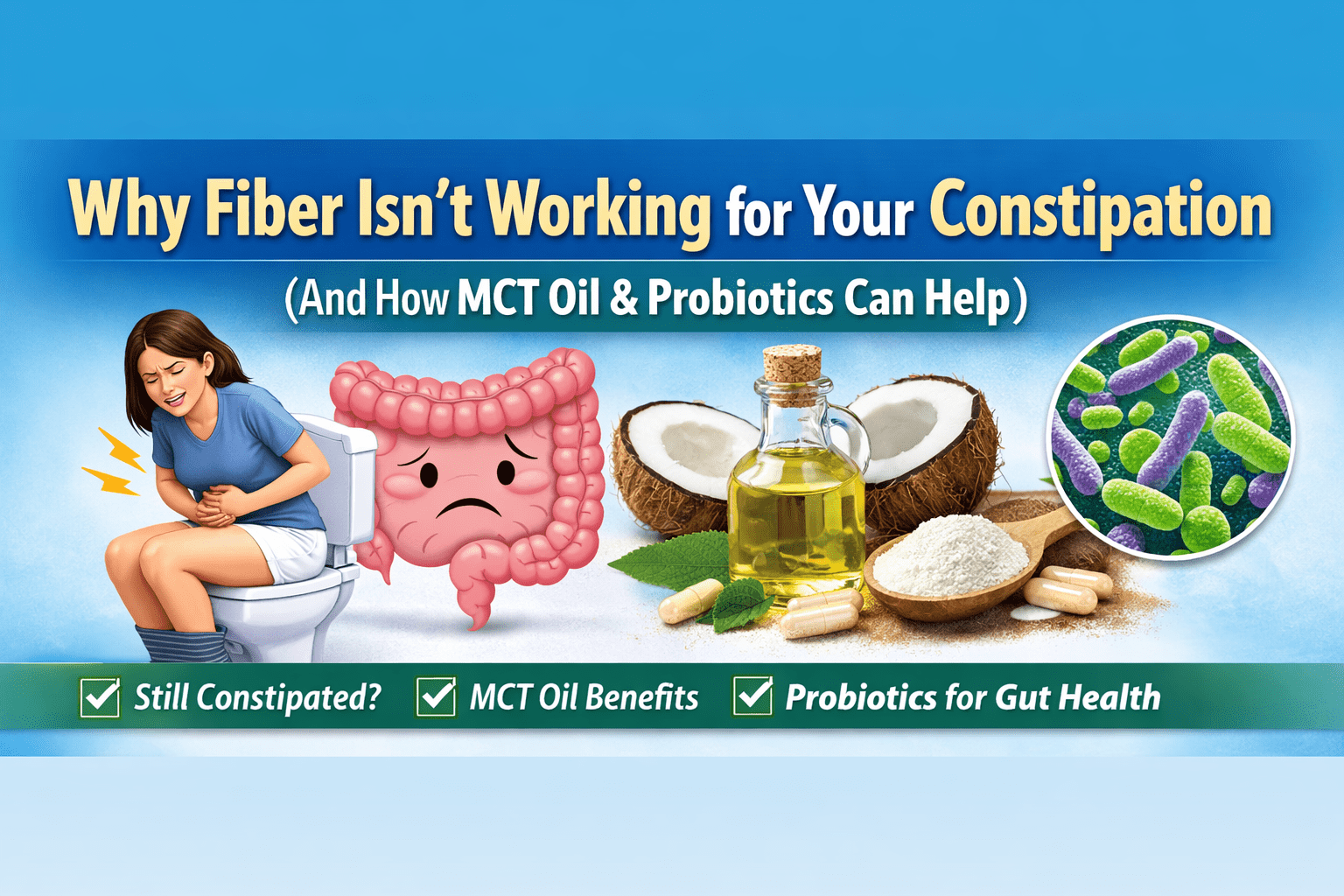
Why fiber isn’t working for your constipation is one of the most common questions we hear — and one of the most misunderstood problems in digestive health. You’ve been eating psyllium every morning. You’ve stirred oat bran into your yogurt. You’re drinking eight glasses of water a day. And yet — you’re still constipated. If this sounds familiar, here’s something your doctor may not have told you: for a significant portion of people with chronic constipation, fiber simply isn’t the right tool. You’re not doing it wrong. The advice itself may be wrong for your gut type.
The “eat more fiber” recommendation works reliably when constipation stems from genuinely low fiber intake combined with normal gut motility. But constipation isn’t one condition — it’s a symptom with multiple distinct underlying causes, and fiber only addresses one of them. For people with slow-transit constipation, IBS-C, or pelvic floor dysfunction, fiber often makes things worse, not better. A landmark 1997 clinical study found that 80% of slow-transit constipation patients saw zero improvement from fiber therapy — even after six weeks of consistent use.[2]
So what does work? Two alternatives are gaining both scientific attention and strong real-world results: MCT oil and probiotics. Does MCT oil help constipation? For many people — particularly those who have already failed fiber — the answer appears to be yes, through mechanisms fiber simply cannot replicate: direct intestinal lubrication and gut motility stimulation. And when it comes to probiotics vs fiber for constipation, multiple meta-analyses now confirm that probiotics produce consistent, measurable improvements in bowel frequency and gut transit time, especially in people whose constipation is rooted in gut dysbiosis.
In this guide, we break down exactly why fiber fails for specific gut types, what the science says about MCT oil and probiotics as alternatives, and how to build a practical plan matched to your actual cause — with 19 verified PubMed-backed references supporting every major claim.
1. Why Fiber Isn’t Working for Your Constipation
Fiber is universally recommended as the first-line treatment for constipation — and for people with genuinely low fiber intake and normal gut motility, it works reliably. But the blanket “eat more fiber” advice misses a crucial truth: constipation is not one disease. It’s a symptom with different underlying causes, and fiber only addresses one of them.
A gastroenterologist at University Hospitals noted that increased fiber intake “may sometimes worsen constipation,” particularly in patients with IBS or inflammatory bowel disease.[1]
The 4 Types of Constipation Where Fiber Fails
① Slow-Transit Constipation
This condition occurs when colonic muscle contractions are too weak to propel stool through efficiently. Adding more bulk (fiber) doesn’t fix a motility failure. A landmark 1997 German study by Voderholzer et al. — published in the American Journal of Gastroenterology — treated 149 chronic constipation patients with Plantago ovata (psyllium-type fiber) for 6 weeks. The result: 80% of patients with slow-transit constipation saw no improvement, and 63% of those with defecation disorders were equally unresponsive.[2] Fiber simply adds bulk to an already-backed-up system. It does not address the underlying motility failure.
② IBS-C (Constipation-Predominant IBS)
Many high-fiber foods are high in FODMAPs — fermentable carbohydrates that gut bacteria rapidly ferment in the colon, producing large amounts of gas. For IBS-C, this fermentation worsens cramping, bloating, and constipation. Research published in PMC confirms that short-chain, highly fermentable fibers (oligosaccharides, inulin, FOS) cause rapid gas production that worsens IBS symptoms, while longer-chain, less-fermentable soluble fibers like psyllium are much better tolerated.[3] The Canadian Digestive Health Foundation puts it plainly: if stool isn’t moving efficiently, adding fiber just adds to the backup.[4]
③ Pelvic Floor Dysfunction (Dyssynergic Defecation)
In this condition, the pelvic floor muscles paradoxically contract during defecation attempts instead of relaxing. A large, bulky stool in the rectum (from high fiber intake) worsens this significantly. Biofeedback therapy is the gold-standard treatment. Research confirms fiber provides no benefit for pelvic floor dysfunction and may actively aggravate straining.[5]
④ Already Eating Adequate Fiber
If your diet is already fiber-rich and you’re still constipated, doubling down won’t help. Research cited by Healthline shows that in some people who already eat adequate fiber, reducing fiber intake actually resolves chronic constipation.[6] You need to address a different root cause entirely.
The Water Myth: More Complex Than You Think
Fiber requires water to soften and bulk stool. Without hydration, fiber can harden stool further. However, Dr. Müller-Lissner and colleagues — in a landmark review of constipation myths published in The American Journal of Gastroenterology — caution that increasing fluid intake is unlikely to help constipation unless the person is genuinely clinically dehydrated.[7] Drinking more water is always sensible, but it is not a constipation treatment on its own.
2. Does MCT Oil Help Constipation? The Science Explained
MCT stands for medium-chain triglycerides — a class of dietary fats derived primarily from coconut oil or palm kernel oil. Unlike long-chain triglycerides (LCTs) found in most dietary fats, MCTs are absorbed rapidly in the small intestine and transported directly to the liver via the portal vein, bypassing the normal lymphatic route. This fast-track metabolism has several downstream effects on the digestive system.
4 Mechanisms by Which MCT Oil May Relieve Constipation
Mechanism 1: Intestinal Lubrication
Medium-chain fatty acids (MCFAs) coat the intestinal walls, reducing friction and helping stool slide through the colon more easily. Research on related oils — olive oil and flaxseed oil — demonstrates that lubricating fats meaningfully reduce constipation symptoms in clinical settings, including in hemodialysis patients.[8] MCT oil operates through the same lubricating principle, but with faster absorption.
Mechanism 2: Gut Motility Stimulation
Research indicates MCTs can influence the enteric nervous system — the “second brain” of the gut — to enhance peristalsis (the wave-like contractions that propel stool through the colon).[9] This is particularly relevant for slow-transit constipation: rather than adding more bulk to an immobile colon, MCT oil may help stimulate the colon’s own movement.
Mechanism 3: Antimicrobial and Microbiome Support
Caprylic acid (C8) and capric acid (C10) have documented antimicrobial activity against pathogenic bacteria and yeasts, including Candida albicans, Streptococcus, and Staphylococcus, while preserving beneficial gut flora.[10] A healthier microbiome reduces pathogenic gas production and contributes to better gut motility.
Mechanism 4: Anti-Inflammatory Properties
Research published in Foods (2019) found that MCTs modulate mitochondrial respiration in immune cells, influencing the body’s inflammatory response.[11] Chronic low-grade gut inflammation is a recognized contributor to poor motility and irregular bowel habits. By reducing this inflammation, MCT oil may support a more regular gut environment.
Which Type of MCT Has the Most Effect?
| MCT Type | Carbon Chain | Absorption Speed | Constipation Notes |
|---|---|---|---|
| Caproic Acid | C6 | Very fast | Rarely used; causes nausea and unpleasant taste |
| Caprylic Acid | C8 | Fastest useful | Best for gut motility; strongest laxative effect per dose |
| Capric Acid | C10 | Fast | Effective; often paired with C8 in supplements |
| Lauric Acid | C12 | Slower | Behaves more like a long-chain fat; less motility effect |
For constipation specifically, look for products high in C8 (caprylic acid) or a C8+C10 blend. Products that are primarily C12 (lauric acid) — like regular coconut oil — deliver a weaker per-dose effect.
MCT Oil vs. Coconut Oil
Regular coconut oil contains roughly 50–64% MCFAs. Concentrated MCT oil contains 90%+ MCFAs.[12] MCT oil delivers a stronger effect at a smaller dose — but this also means the risk of diarrhea is higher if you start too aggressively. Always start small.
3. Who Does MCT Oil Help — and Who Should Be Cautious?
| Profile | Benefit Likely? | Notes |
|---|---|---|
| Slow-transit constipation | ✓ Yes | Motility-stimulating mechanism targets root cause |
| Fiber-resistant constipation | ✓ Yes | Works via lubrication, not bulk |
| Keto / low-carb dieters | ✓ Yes | Low-carb diets naturally reduce dietary fiber; MCT oil compensates |
| IBS-C | ~ Possibly | Start at ½ teaspoon; individual response varies significantly |
| Elderly with reduced motility | ~ Possible | Start very small; monitor closely |
| Liver disease / gallbladder disease | ✗ Consult doctor | MCTs are metabolized by the liver; contraindicated in liver failure |
| Pregnant women | ✗ Consult doctor | Insufficient safety data during pregnancy |
| Type 1 diabetes / ketoacidosis risk | ✗ Consult doctor | MCT oil raises ketone levels; may be unsafe in T1D |
Side Effects to Know Before Starting
- Diarrhea and loose stools: The most common side effect at high doses. The acidic nature of free MCFAs can also cause burning discomfort if diarrhea occurs — another reason to start low.
- Nausea and stomach cramping: Common when taken on an empty stomach. Always take with food initially.
- Bloating: Less common than with fiber, but can occur in the first few days.
- Paradoxical constipation (rare): Some keto dieters experience constipation — but this is typically caused by simultaneous dramatic reduction in dietary fiber from carbohydrate restriction, not the MCT oil itself.
4. Probiotics vs Fiber for Constipation: What the Research Really Shows
When comparing probiotics vs fiber for constipation relief, the distinction matters greatly depending on the underlying cause. Probiotics are live bacteria that, when consumed in adequate amounts, confer measurable health benefits through mechanisms entirely different from both fiber and MCT oil — which is exactly why they succeed where others fail.
3 Mechanisms Probiotics Use to Relieve Constipation
Mechanism 1: SCFA Production
Certain probiotic strains ferment dietary residue into short-chain fatty acids (SCFAs) — butyrate, acetate, and propionate. These SCFAs lower colon pH, improve water retention in stool (softer, easier passage), and stimulate colonic muscle contractions — promoting more frequent bowel movements without the gas associated with rapidly fermentable fibers.[13]
Mechanism 2: Gut Motility Enhancement
Probiotics interact with the enteric nervous system and can enhance peristalsis through bacterial signaling pathways. Multiple meta-analyses have confirmed this effect in clinical settings (see table below).
Mechanism 3: Gut Barrier and Anti-Inflammatory Effects
Probiotics strengthen the intestinal barrier (tight junctions) and reduce pro-inflammatory cytokines. A 2023 systematic review in PMC confirmed these mechanisms as key pathways by which probiotics improve bowel function in adults with chronic constipation.[15]
Probiotics vs Fiber: What the Meta-Analyses Show
The clearest way to understand probiotics vs fiber for constipation is through the clinical trial data. Unlike fiber studies — which show highly variable results depending on gut type — probiotic meta-analyses show more consistent improvements across diverse patient populations:
| Study | Key Finding | Study Type |
|---|---|---|
| Dimidi et al. 2014 Am J Clin Nutr[14] |
↓ Transit time 12.4 h; ↑ stool frequency 1.3/wk; B. lactis most effective strain | Meta-analysis, 14 RCTs |
| Miller et al. 2017 Ann Gastroenterol[16] |
↑ Stool frequency ~0.8/wk; ↓ intestinal transit ~15 h; significant publication bias noted | Meta-analysis, 21 RCTs |
| Tian et al. 2019 Int J Surg[17] |
↑ Stool frequency 1.29/wk in IBS-C; improved consistency; multispecies > single-strain | Meta-analysis, 17 RCTs |
| Zhai et al. 2020 Nutrition[18] |
↓ Transit time 13.75 h; ↑ stool frequency 0.98/wk; multispecies outperform single-strain | Meta-analysis, 15 RCTs |
| Dale et al. 2023 Clin Nutr[19] |
B. lactis significantly ↑ stool frequency (SMD 0.71); mixed probiotic results less consistent | Meta-analysis, 30 RCTs (most recent) |
Which Strains Have the Best Evidence?
- Bifidobacterium lactis (BB-12, HN019) — Most consistently effective across meta-analyses; best evidence base[14]
- Lactobacillus rhamnosus GG — Well-studied for gut health; modest constipation benefit
- Lactobacillus reuteri — Shown to reduce transit time in functional constipation
- Bifidobacterium longum — Reduces transit time; frequency effect less consistent
- Bacillus coagulans — Spore-forming; highly acid-resistant; survives stomach well; studied for IBS-C
For a detailed guide on specific products and strains, see: Best Probiotics for Constipation Relief.
5. The Overlooked Option: Magnesium for Constipation
Before we compare the three main options in this guide, it’s worth noting a fourth approach that many people overlook — yet that many gastroenterologists use as first-line adjunct therapy: magnesium.
Magnesium works as an osmotic agent: it draws water into the colon, softening stool and stimulating bowel contractions. Unlike fiber, it works regardless of motility type. Unlike MCT oil, it has robust clinical evidence and is included in the AGA’s constipation treatment guidelines. Magnesium citrate and magnesium oxide are most commonly used for constipation; magnesium glycinate is better absorbed and preferred for those who are deficient but want a gentler effect.
For a full comparison of laxative types including magnesium, see our guide: Best OTC Laxatives for Chronic Constipation.
6. Full Comparison: MCT Oil vs. Fiber vs. Probiotics
| Factor | Fiber | MCT Oil | Probiotics |
|---|---|---|---|
| Primary mechanism | Bulk-forming; water absorption | Lubrication; gut motility stimulation | Microbiome rebalancing; SCFA production; motility |
| Slow-transit constipation | ✗ Often worsens it | ✓ Mechanistically plausible | ✓ RCT evidence supports |
| IBS-C | ~ Psyllium only; avoid high-FODMAP fibers | ~ Start very small; individual variation high | ✓ Best tolerated; addresses dysbiosis |
| Low-fiber constipation | ✓ Best first choice | ~ Adjunct, not primary fix | ~ Adjunct; complements fiber |
| Keto / low-carb constipation | ~ Limited low-carb options | ✓ Ideal; keto-compatible | ✓ Yes; no carb impact |
| Speed of action | Gradual (days to weeks) | Fast (hours to days) | Slow (2–6 weeks) |
| Bloating / gas risk | High with insoluble / fermentable fiber | Low if dosed correctly; diarrhea risk at high doses | Mild (first 1–2 weeks only) |
| Long-term gut health | Moderate (prebiotic effect for some) | Moderate (microbiome support) | ✓ High (microbiome rebalancing) |
| Clinical evidence strength | Strong (for low-fiber type) | Weak direct; mechanistically plausible | Moderate (multiple meta-analyses) |
| Safe long-term | ✓ Yes | ~ Probably; long-term data limited | ✓ Yes |
| Monthly cost (approx.) | $10–$25 | $20–$40 | $25–$55 |
7. Dosing Protocols: How to Use Each Option
🏝 MCT Oil Protocol for Constipation
- Week 1: Start with 1 teaspoon (5 ml) per day, taken with food. Never start on an empty stomach.
- Week 2: If well-tolerated (no cramps, no diarrhea), increase to 2 teaspoons (10 ml) per day.
- Week 3+: Gradually work up to 1–2 tablespoons (15–30 ml) per day as your personal tolerance allows.
- Best timing: Morning or midday. Late evening doses can cause overnight urgency.
- If diarrhea occurs: Drop back to the previous dose. Find your personal “Goldilocks dose” — regular bowel movements without loose stools.
- Product tip: Pure C8 (caprylic acid) produces the strongest effect per milliliter. If using a full-spectrum MCT oil (C8+C10+C12), you may need slightly more volume to achieve the same effect.
🦠 Probiotic Protocol for Constipation
- Choose a product with Bifidobacterium lactis as a primary or named strain (look for BB-12 or HN019 on the label).
- Look for at least 10 billion CFU per dose; 30–60 billion CFU is typical for therapeutic formulations.
- Take daily — consistency across weeks is essential. Probiotics do not produce overnight results.
- Take with food to improve bacterial survival through stomach acid (unless the product uses a specialized acid-resistant capsule).
- Pair with prebiotic foods (oats, garlic, bananas, asparagus) to feed the probiotic bacteria and enhance colonization.
- Allow 4–6 weeks before evaluating whether a product is working. Expecting results in week one leads to premature abandonment.
🌾 Re-introducing Fiber (When Appropriate)
- If you suspect IBS-C, start with psyllium husk (soluble, minimally fermentable) rather than insoluble fiber (wheat bran, cereals).
- Add fiber gradually — increase by 3–5g per week maximum. Never add a large amount at once.
- Drink at minimum 8 glasses of water daily alongside any fiber supplement.
- If bloating or gas worsens within 1 week, pause fiber and consult a gastroenterologist.
- Avoid high-FODMAP fiber sources (apple, peach, legumes, cabbage, wheat bran) if you have IBS-C.
🚨 8. When to Stop Self-Treating and See a Doctor
Natural approaches like MCT oil, probiotics, and dietary fiber are appropriate for mild to moderate functional constipation. See a gastroenterologist promptly if you experience any of the following:
- Rectal bleeding or blood in stool
- Unexplained weight loss
- Severe abdominal pain or cramping
- New-onset constipation after age 50
- No bowel movement for more than 3 weeks despite treatment
- Alternating constipation and diarrhea (may indicate IBS or colon disease)
- Family history of colorectal cancer
- Nausea, vomiting, or fever accompanying constipation
Chronic constipation can be a symptom of hypothyroidism, diabetes, neurological disease, colorectal cancer, or medication side effects. A proper medical workup is essential if symptoms are severe, persistent, or accompanied by any warning signs above.
9. Best Products on Amazon: Our Research-Based Picks
Verified by ingredient quality, third-party testing credentials, and community feedback. Affiliate disclosure applies — see full disclosure at the bottom.
🏝 Best MCT Oils for Constipation
USDA Organic certified, sourced exclusively from coconuts (no palm oil), and Informed Choice third-party tested for purity. Flavorless and easily added to coffee, smoothies, or dressings. Large 32 oz bottle offers excellent value. Full-spectrum C8+C10+C12 blend.
✓ Pros
- USDA Organic certified
- 100% coconut-sourced; no palm oil
- Informed Choice third-party tested
- Excellent value at 32 oz
- Completely flavorless
✗ Cons
- Contains C12 (lauric acid) — digests more like LCT; slightly weaker motility effect per ml vs. pure C8 oil
- Liquid; not travel-friendly
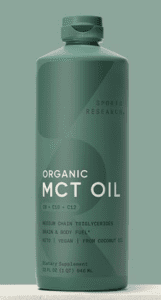
Pure caprylic acid (C8) — the fastest-absorbing MCT and the one with the strongest gut motility potential per dose. Triple-distilled, zero additives, non-GMO, coconut-only. If you want maximum effect at a minimal dose, this is the most targeted option. Community members on keto diets particularly favor it. Note: Start with just ½ teaspoon — this is potent.
✓ Pros
- 100% C8 — strongest motility potential
- Triple-distilled; no additives
- Non-GMO; coconut-only sourced
- Flavorless; ideal for keto coffee
✗ Cons
- Higher price per ounce than blended oils
- Potent — must start at ½ teaspoon only
- Smaller 16 oz bottle

A hybrid product combining organic MCT oil powder with prebiotic fiber — addressing both motility (MCT) and microbiome feeding (prebiotic) simultaneously. Powder form is easy to carry and mixes into hot or cold drinks. Non-GMO, no artificial ingredients. Good option for those who find liquid MCT oil difficult to incorporate.
Tip: Check Supplement Facts for the saturated fat content — this tells you the actual MCT% per serving.
✓ Pros
- MCT + prebiotic fiber in one product
- Powder — portable and travel-friendly
- Mixes into hot or cold beverages
- Non-GMO; no artificial ingredients
✗ Cons
- Lower MCT concentration than pure liquid oil
- Some fillers reduce per-dose MCT effect
🦠 Best Probiotics for Constipation
Amazon’s #1 bestselling probiotic. Contains 10 well-researched strains including Bifidobacterium lactis — the strain with the strongest constipation evidence across multiple meta-analyses — plus organic prebiotics. At 60 billion CFU, this delivers a high therapeutic dose. Acid-resistant delayed-release capsule technology for better bacteria survival through stomach acid. No refrigeration required.
✓ Pros
- 60 Billion CFU — therapeutic dose
- Includes B. lactis (best-evidenced strain)
- Organic prebiotics included
- Acid-resistant capsule technology
- Shelf-stable; no refrigeration
✗ Cons
- Only 30 capsules per bottle (1 month supply)
- Some users experience mild gas in first week — this is normal and typically resolves
A clinically developed 2-in-1 probiotic + prebiotic containing 53.6 billion AFU across 24 clinically studied strains. Seed’s patented nested capsule protects bacteria through the entire GI tract — a genuine technical advantage over most competitors. Particularly well-regarded in the IBS-C community for reducing bloating alongside improving regularity. Vegan, shelf-stable. Here’s our detailed review of this Seed DS-01 Review.
.✓ Pros
- 24 clinically studied strains
- Patented nested acid-protection capsule
- True synbiotic (probiotic + prebiotic integrated)
- Vegan; shelf-stable
- Strong IBS-C community track record
✗ Cons
- Higher price (~$50/month)
- Primarily subscription-based
The only product on this list combining soil-based probiotics (Bacillus strains — highly acid-resistant and spore-forming) with MCT oil and flaxseed oil in a single softgel. If you want to address multiple constipation mechanisms in one supplement, this is the most convenient option. Particularly suitable for people who don’t tolerate standard Lactobacillus strains well.
✓ Pros
- Probiotic + MCT oil + prebiotic in one capsule
- Bacillus strains — survive stomach acid exceptionally well
- Convenient; no separate MCT oil product needed
- Vegetarian softgel
✗ Cons
- MCT dose per capsule is lower than standalone oil — insufficient for severe constipation on its own
- Fewer clinical trials on Bacillus strains vs. B. lactis for constipation specifically
*Prices & availability may change. Ratings based on verified Amazon reviews. This post may contain affiliate links (we may earn a small commission at no extra cost to you).
10. More from ConstipationRelief.net
- Olive Oil for Constipation: Does It Really Work? — How this close relative of MCT oil compares
- Prune Juice for Constipation: The Evidence-Based Guide — Sorbitol, fiber, and why prunes work uniquely
- Best OTC Laxatives for Chronic Constipation — Including magnesium, osmotic, stimulant, and lubricant laxatives
- Foods That Cause Constipation — Identifying dietary triggers
- Yoga Poses for Constipation Relief — Movement as a motility tool
- Dehydration and Constipation — Why hydration matters (and its limits)
- Oxy-Powder Review — Oxygen-based colon cleanser: safe and effective?
11. Frequently Asked Questions
Why is fiber not working for my constipation?
Fiber fails when your constipation is caused by slow-transit motility issues, IBS-C with FODMAP sensitivity, pelvic floor dysfunction, or when you already eat adequate fiber. The landmark Voderholzer et al. 1997 study found that 80% of slow-transit patients saw no improvement from fiber therapy.[2] In these cases, you need to address motility directly — through MCT oil, probiotics, magnesium, or targeted medical treatment.
Does MCT oil help constipation?
For many people, yes. MCT oil lubricates the intestines, may stimulate gut motility, and supports a healthier microbiome. It typically works fastest among the options covered here. However, large randomized controlled trials specifically testing MCT oil for constipation in humans are still lacking. The evidence is mechanistically sound but not yet confirmed by major clinical trials. Start with 1 teaspoon with food and increase gradually.
Probiotics vs fiber: which is better for constipation?
It depends on the cause. Multiple meta-analyses confirm probiotics produce modest but consistent improvements: roughly 1 extra bowel movement per week and 12–15 hours reduction in transit time. For IBS-C sufferers who react badly to fiber, probiotics are generally better tolerated and address gut dysbiosis that fiber cannot fix. The two are not mutually exclusive — psyllium plus a B. lactis probiotic is a well-tolerated combination for many people.
How long does MCT oil take to work for constipation?
Most people report effects within a few hours to 2 days at therapeutic doses — making MCT oil the fastest-acting option among the three covered here. Probiotics require 4–6 weeks of consistent use. Fiber effects can range from days to weeks depending on type and dose.
Can I take MCT oil and probiotics together?
Yes — and this combination is often more effective than either alone. MCT oil provides fast lubrication and motility stimulation; probiotics work over weeks to rebalance the gut microbiome. The Smarter Nutrition product above combines both in a single capsule, though at a lower MCT dose than standalone oils.
Can MCT oil itself cause constipation?
Rarely, and typically indirectly. Some people on ketogenic diets experience constipation while taking MCT oil — but this is usually caused by the dramatic reduction in dietary fiber from the low-carb diet change, not the MCT oil itself. MCT oil at typical doses is far more likely to cause loose stools than constipation.
What’s the best type of fiber for IBS-C?
Non-fermentable, soluble fiber — specifically psyllium husk. Unlike insoluble fiber (wheat bran) or highly fermentable fibers (inulin, FOS), psyllium produces minimal gas and is the most studied fiber supplement for IBS. Research in PMC confirms that long-chain, moderately fermentable soluble fibers like psyllium are far better tolerated in IBS than short-chain rapidly fermentable alternatives.[3] Start with ½ teaspoon daily, always with plenty of water, and increase very slowly.
Is magnesium better than probiotics for constipation?
They work through different mechanisms and are not directly comparable. Magnesium is an osmotic agent with fast, reliable action and strong clinical evidence — it is first-line in many gastroenterology practices. Probiotics work on the microbiome for long-term benefit and require weeks to take full effect. Many clinicians use both together: magnesium for immediate relief while probiotics establish themselves over the long term. Note that magnesium is contraindicated in kidney disease.
The Bottom Line
Fiber’s reputation as the universal constipation cure has left millions of people frustrated, bloated, and still stuck. The research is unambiguous: fiber works reliably for constipation caused by inadequate fiber intake with normal gut transit — and often fails or worsens symptoms for several other types. Understanding why fiber isn’t working for your constipation is the essential first step toward finding a solution that actually matches your gut’s real problem.
MCT oil, probiotics, and magnesium each address different constipation mechanisms — lubrication and motility, microbiome rebalancing, and osmotic water drawing, respectively. When considering probiotics vs fiber or asking does MCT oil help constipation, the honest answer is: it depends on your specific gut type. Used intelligently and in combination, these tools offer a genuinely comprehensive toolkit that is finally matched to the actual cause of your constipation.
📚 Scientific References
All major claims in this article are supported by peer-reviewed literature or established clinical sources. References are numbered in order of first appearance.
- Nguyen V. Constipated? Why More Fiber Might Not Be the Answer. University Hospitals Health System. 2024.
uhhospitals.org — Full article - Voderholzer WA, Schatke W, Mühldorfer BE, Klauser AG, Birkner B, Müller-Lissner SA. Clinical response to dietary fiber treatment of chronic constipation. Am J Gastroenterol. 1997;92(1):95–98. RCT
PubMed PMID: 8995945 - El-Salhy M, Ystad SO, Mazzawi T, Gundersen D. Dietary fiber in irritable bowel syndrome. Int J Mol Med. 2017;40(3):607–613. Review
PMC: 5548066 - Canadian Digestive Health Foundation. IBS-C and Fibre: Why It’s Not as Simple as “Just Eat More Fibre.” 2025.
cdhf.ca — Full article - Bharucha AE, Lacy BE. Mechanisms, Evaluation, and Management of Chronic Constipation. Gastroenterology. 2020;158(5):1232–1249. Review
PubMed PMID: 31945360 - Healthline. Does Fiber Relieve or Cause Constipation? A Critical Look. 2023.
healthline.com — Full article - Müller-Lissner SA, Kamm MA, Scarpignato C, Wald A. Myths and misconceptions about chronic constipation. Am J Gastroenterol. 2005;100(1):232–242. Review
PubMed PMID: 15654804 - Ramos CI, Andrade de Lima AF, Grilli DG, Cuppari L. The short-term effects of olive oil and flaxseed oil for the treatment of constipation in hemodialysis patients. J Ren Nutr. 2015;25(1):50–56. RCT
PubMed PMID: 25238699 - Bubs Naturals. Does MCT Oil Help with Constipation? Exploring the Science and Benefits. 2025.
bubsnaturals.com — Full article - Axe J. MCT Oil Benefits, Uses and Dosage Recommendations. Dr. Axe. 2025.
draxe.com — Full article - Yu S, Go GW, Kim W. Medium Chain Triglyceride (MCT) Oil Affects the Immunophenotype via Reprogramming of Mitochondrial Respiration in Murine Macrophages. Foods. 2019;8(11):553. Animal Study
PubMed PMID: 31694254 - Medical News Today. Coconut oil for constipation: Does it work? 2023.
medicalnewstoday.com — Full article - Dimidi E, Christodoulides S, Scott SM, Whelan K. Mechanisms of Action of Probiotics and the Gastrointestinal Microbiota on Gut Motility and Constipation. Adv Nutr. 2017;8(3):484–494. Review
PubMed PMID: 28507013 - Dimidi E, Christodoulides S, Fragkos KC, Scott SM, Whelan K. The effect of probiotics on functional constipation in adults: a systematic review and meta-analysis of randomized controlled trials. Am J Clin Nutr. 2014;100(4):1075–1084. Meta-analysis
PubMed PMID: 25099542 - PMC. Effectiveness of Probiotics in Patients With Constipation: A Systematic Review and Meta-Analysis. 2024.
PMC: 10854359 Meta-analysis - Miller LE, Ouwehand AC, Ibarra A. Effects of probiotic-containing products on stool frequency and intestinal transit in constipated adults: systematic review and meta-analysis of randomized controlled trials. Ann Gastroenterol. 2017;30(6):629–639. Meta-analysis
PubMed PMID: 29118557 - Tian H, Jiang X, Nie M, Qin H. The efficacy and safety of probiotics for patients with constipation-predominant irritable bowel syndrome: a systematic review and meta-analysis based on seventeen randomized controlled trials. Int J Surg. 2020;79:111–119. Meta-analysis
PubMed PMID: 32387213 - Zhai Q, Narbad A, Chen W. Meta-analysis of randomized controlled trials of the effects of probiotics on functional constipation in adults. Nutrition. 2020;75–76:110830. Meta-analysis
PubMed PMID: 32005532 - Dale HF, Lied GA, Hatlebakk JG. Probiotics and synbiotics in chronic constipation in adults: A systematic review and meta-analysis of randomized controlled trials. Clin Nutr. 2023;42(4):438–447. Meta-analysis
PubMed PMID: 36372047
Disclosure
ConstipationRelief.net is reader-supported. We may earn a commission from purchases made through our links, at no extra cost to you. This information is for educational use only and is not a substitute for professional medical advice. Reviewed for accuracy by Dr. ABM Sadikullah. Always consult your doctor before starting any new supplement, particularly if you have underlying health conditions.






[…] Is your constipation not responding to fiber? That is a meaningful signal that something deeper may be going on. Read: Why Fiber Isn’t Working for Your Constipation […]
[…] transit. If you’re struggling to get results despite eating more fiber, our article on why fiber isn’t working for your constipation explains common reasons and solutions. For a plant-based approach, see our fiber foods and gut […]
[…] Pair with fiber and water: For a fuller picture of why fiber intake matters alongside probiotics, this article explains why fiber sometimes fails to relieve constipation. […]
[…] Roseburia and Fusicatenibacter produce butyrate, a short-chain fatty acid that stimulates colonic motility and helps regulate the release of serotonin in the gut, which in turn influences how quickly the bowel moves. This matters directly for the synbiotics-vs-probiotics question: if a deficit of butyrate-producing bacteria is part of the puzzle in women’s constipation, supplementation strategies that specifically feed those bacteria — exactly what a well-matched synbiotic prebiotic fiber is designed to do — have a clear mechanistic rationale, not just a marketing one. This deficit also helps explain why fiber alone sometimes isn’t enough; for more on that, see our guide on why fiber isn’t working for your constipation. […]
[…] Why Fiber Is Not Working for Your Constipation (And How Probiotics Can Help) […]
[…] stool form, IBS-C is worth discussing with a doctor. If fiber alone has not helped, our guide on why fiber isn’t working for your constipation covers probiotic strains and other approaches that have been studied specifically for […]
[…] you have already tried increasing fiber without success, our guide on why fiber isn’t working for your constipation covers this exact mechanism, including who should be evaluated for pelvic floor […]
[…] rather than as a standalone fix. If gummies alone have not moved the needle, our guide on why fiber isn’t working for your constipation covers what else may be going […]
[…] the results you expected, the issue may not be the fiber itself. See our deeper explanation of why fiber isn’t working for your constipation for the more likely underlying […]