

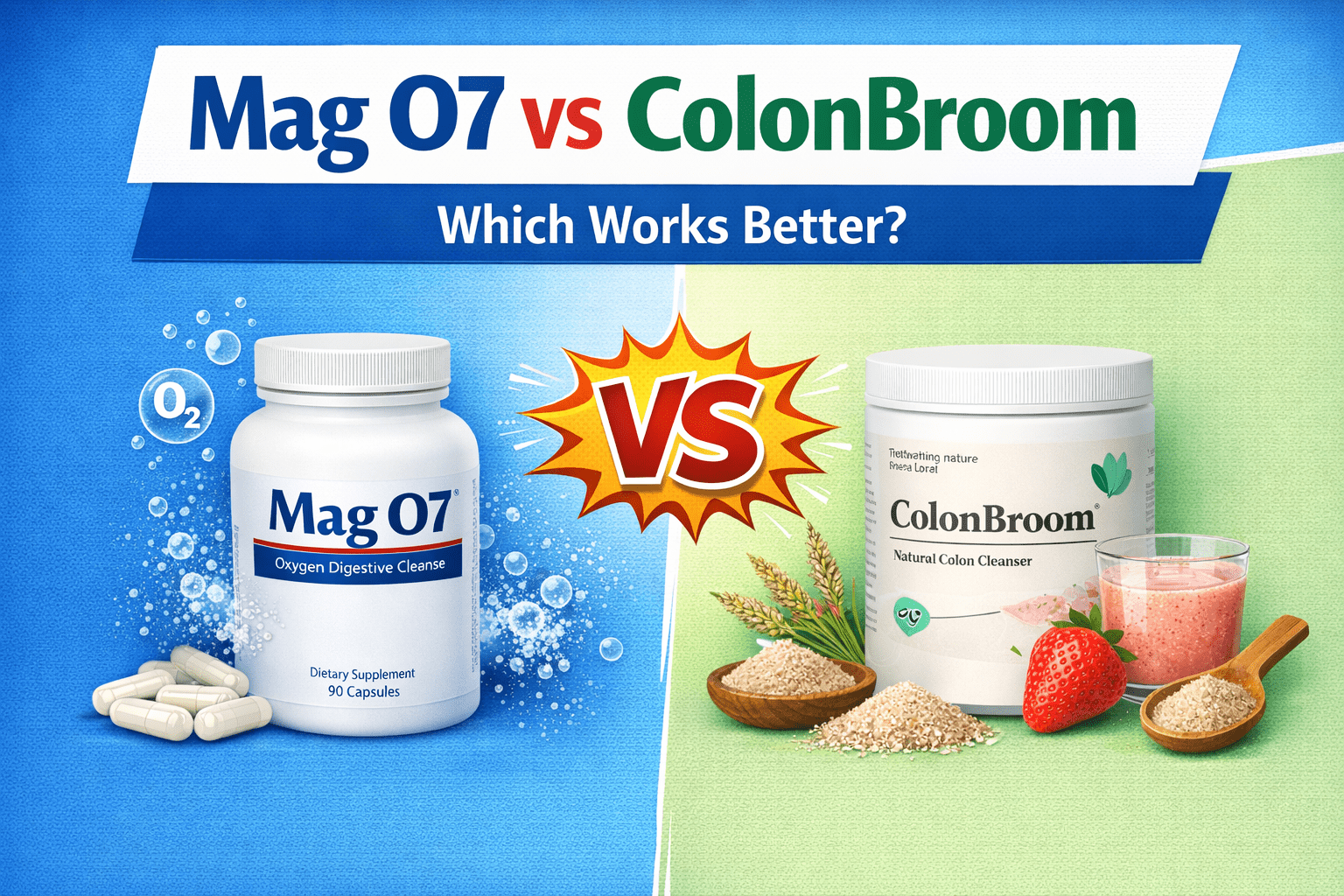
Bloated? Constipated? You’re not alone — and you’ve probably landed on the same two names everyone is talking about: Mag O7 and ColonBroom. They’re both bestsellers, both promise gut relief, and both have thousands of loyal fans.
But here’s the thing — they work in completely different ways. Choosing between Mag O7 vs ColonBroom isn’t just about picking a brand; it’s about understanding how your body responds to oxygen versus fiber. Picking the wrong one is like bringing an umbrella to a sunny day.
This research-backed guide breaks down exactly how each product works, what the clinical science says, and most importantly, which one is right for your specific colon cleanse goals.
- The Core Difference (Quick Read)
- What Is Mag O7?
- What Is ColonBroom?
- How Each One Works
- Ingredients Side by Side
- What the Research Says
- Side Effects & Safety
- Full Comparison Table
- Who Should Use Which?
- Product Details & Pricing
- Our Verdict
- FAQs
The Core Difference — In Plain English
Before anything else, you need to understand this one key point. Everything else flows from it:
Think of it this way…
Mag O7 is like a pressure wash for your colon. It releases oxygen-rich compounds that break down old, hardened waste and flush it out — fast, usually by the next morning. It’s designed for short bursts: a 1-day, 3-day, 7-day, or 10-day cleanse.[⚡ Fast Relief]
Read More: For a deeper dive into the science, ingredients, and clinical research, check out our full Mag O7 Review for Constipation: Does It Really Work? (2026)
ColonBroom is like daily watering for a garden. Its psyllium husk fiber gently softens and bulks up stool every day, gradually improving your gut health over weeks. It’s meant to be taken daily, long-term. [🌿 Daily Support]
Neither is universally “better.” They solve different problems. The best choice depends entirely on what your gut needs right now.
What Is Mag O7?
Mag O7 (you’ll also see it written as MagO7 or Mag07) is a colon cleanse supplement made by NBPure — previously sold under the Aerobic Life brand. It’s been on the market for over 25 years and is one of the most trusted oxygen-based colon cleansers available.
The formula hasn’t changed, only the packaging did (in 2020, when Aerobic Life rebranded to NBPure). You take capsules at bedtime, and most users wake up needing a bathroom visit within 6–10 hours. You can do a 1-day, 3-day, 7-day, or 10-day cleanse — or just take it as needed when constipated.
Mag O7 is vegan, non-GMO, gluten-free, and cramp-free according to the manufacturer — and thousands of user reviews confirm the no-cramp claim (something that sets it apart from harsh stimulant laxatives).
Expert Guide: Learn more about safety protocols and long-term use in our comprehensive guide: Is Oxy-Powder Safe for Daily Use? Side Effects, Dosage & Guide (2026).
What Is ColonBroom?
ColonBroom is a flavored psyllium husk fiber powder made by Gut Health UAB in Lithuania. It exploded in popularity around 2022–2024, largely through social media, and has since grown into a full product line (including ColonBroom Premium with added weight-management ingredients).
You mix one scoop into a large glass of water and drink it 30–60 minutes before a meal. The strawberry flavor makes it much more pleasant than unflavored psyllium supplements like generic Metamucil. It’s designed for daily use — not as a one-time cleanse, but as a consistent fiber habit.
Mag O7 by NBPure
180-capsule bottle. Take 3–5 capsules at bedtime on an empty stomach with 8–12 oz of water. Works overnight for a gentle morning cleanse.

ColonBroom Psyllium Powder
50-serving strawberry powder. Mix 1 scoop into 12–14 fl oz water, drink 30–60 min before a meal. Use daily for ongoing digestive health.

How Mag O7 vs ColonBroom Works — The Science Made Simple
🔵 How Mag O7 Works
Mag O7 contains a proprietary form of ozonated magnesium oxide. When the capsules reach your stomach, two things happen simultaneously:
1. The osmotic effect: Magnesium pulls water into your bowel — similar to how MiraLax works. This softens hardened stool and gets things moving. It’s one of the most well-established mechanisms in gastroenterology, endorsed by both the American Gastroenterological Association (AGA) and American College of Gastroenterology (ACG).
2. The oxygen release: The ozonated compounds slowly release reactive oxygen species (ROS) over 8–12 hours as they travel through your digestive tract. This oxygen helps break down old, compacted waste that may be stuck along the colon walls.
“MagO7 works gently overnight, bringing oxygen and water into your colon to promote morning movement. No cramps. No bloat. Just a good morning.” — NBPure (manufacturer)
Unlike stimulant laxatives (senna, bisacodyl), Mag O7 doesn’t force your bowel to contract. It simply creates the right conditions for your colon to empty naturally. That’s why most users describe it as gentle — more like your body doing its job than being forced.
🟢 How ColonBroom Works
ColonBroom’s active ingredient is psyllium husk — a soluble fiber from the seeds of the Plantago ovata plant. When you mix it with water and drink it, it absorbs the liquid and forms a thick gel in your gut.
That gel does four helpful things:
Bulks and softens stool — making it larger but softer, so it passes through your colon more easily. Slows digestion — you feel fuller longer, which can reduce unnecessary snacking. Feeds good gut bacteria — psyllium is a prebiotic, nourishing beneficial species like Faecalibacterium and Lachnospira that produce butyrate (a key gut health molecule). And unlike stimulant laxatives, it can work in both directions — helping whether you’re constipated or have loose stools, because it’s regulating water balance rather than forcing movement.
Mag O7 vs ColonBroom Ingredients: What’s Actually Inside?
| Feature | Mag O7 (NBPure) | ColonBroom (Original) |
|---|---|---|
| Active Ingredient | Ozonated Magnesium Oxide (MOXiO3™), Potassium Citrate | Psyllium Husk Powder (~3.6–6g per serving) |
| Other Ingredients | Organic Rice Flour, Citric Acid, Vegetable Capsule | Crystallized Lemon, Sea Salt, Natural Flavors, Stevia (some versions), Silicon Dioxide |
| Form | Capsule | Powder (drink mix) |
| Fiber Content | ❌ None — not a fiber supplement | ✅ ~3–6g psyllium fiber per serving |
| Magnesium | ✅ Yes (ozonated form) | ❌ No |
| Sweetener | None | Stevia in most versions |
| Caffeine / Stimulants | No | No |
| Probiotics | No | No (ColonBroom Premium has some) |
| Vegan / Non-GMO / GF | Yes / Yes / Yes | Yes / Yes / Yes |
What Does the Research Actually Say?
🔬 Evidence for Mag O7 (Magnesium Oxide)
Mag O7’s specific “ozonated” formula has not gone through independent published clinical trials. However, the underlying mechanisms are well-supported by research on magnesium oxide and osmotic laxatives broadly.
Magnesium-based laxatives are endorsed by the American Gastroenterological Association (AGA) and American College of Gastroenterology (ACG) in their 2023 joint guidelines on chronic constipation. The osmotic mechanism is one of the most reliable and well-studied laxative approaches in medicine.
The “time-released oxygen” component is the more unique claim. The manufacturer states that ozonated magnesium oxide releases reactive oxygen species that break down intestinal waste — this is biologically plausible chemistry, but peer-reviewed studies specifically on Mag O7’s ozonated formula are limited. You’re largely relying on the 25-year track record and 40,000+ Amazon reviews rather than formal clinical trials on the finished product.
Bottom line: The magnesium osmotic effect is very well-supported. The oxygen-cleansing aspect is manufacturer-claimed but plausible. Results are consistent in user reports.
🔬 Evidence for ColonBroom (Psyllium Husk)
Psyllium husk is one of the most clinically validated dietary fibers in existence. The evidence base here is genuinely outstanding:
A 2025 systematic review published in Przegląd Gastroenterologiczny concluded that psyllium husk deserves recognition as the gold standard fiber for regulating bowel movements — outperforming other dietary fibers in both chronic and occasional constipation. A 2022 meta-analysis of 16 randomized controlled trials found that psyllium supplementation significantly improved both stool frequency and consistency, with the strongest effects seen at doses above 10g/day taken for at least 4 weeks. A separate controlled trial found that psyllium feeds beneficial gut bacteria including Faecalibacterium, Lachnospira, and Roseburia — organisms that produce butyrate, a key short-chain fatty acid for colon health.
Psyllium husk is also the only dietary fiber with FDA approval as an over-the-counter laxative — the same FDA standing as Metamucil.
Mag O7 vs ColonBroom Side Effects & Safety — What to Expect
⚠️ Mag O7 Side Effects
Loose or watery stools — this is expected and is actually the product doing its job. At higher doses (4–5 capsules), you may have multiple bathroom trips, especially on the first day or two. Most people find 2–3 capsules is a gentler starting point. Gas is also common — some users report bubbling or gassiness during the cleanse. Dehydration is a real risk — magnesium draws water into your bowel, so you must drink plenty of water throughout the day (not just at the time of your dose).
Mag O7 is not recommended if you’re pregnant, nursing, or have kidney disease (since magnesium is processed by the kidneys). If you have inflammatory bowel disease (IBD like Crohn’s or ulcerative colitis), consult your doctor first.
⚠️ ColonBroom Side Effects
Bloating and gas in the first 1–2 weeks is very common — this is your gut adjusting to suddenly getting more fiber. It typically resolves on its own. Starting with half a scoop for the first week can help. The most serious risk with ColonBroom (and all psyllium products) is choking if not taken with enough water. Psyllium expands rapidly — always use 12–14 fl oz of water and drink it immediately after mixing.
Drug interactions are important: psyllium husk can reduce the absorption of some medications (diabetes drugs, cholesterol medications, thyroid hormones). Take ColonBroom at least 2 hours apart from any prescription medication.
Some users are allergic to psyllium — rare, but if you develop hives, difficulty breathing, or swelling, stop immediately and seek medical help.
Full Head-to-Head Comparison Table
| Category | Mag O7 | ColonBroom |
|---|---|---|
| Primary Purpose | Short-term colon cleanse / constipation relief | Daily fiber supplement for ongoing gut health |
| Mechanism | Oxygen release + osmotic (draws water into bowel) | Bulk-forming fiber (gel formation, softens stool) |
| How Fast It Works | Overnight (6–10 hours) | 24–72 hours; full benefits in 2–4 weeks |
| Duration of Use | 1–10 days per cleanse; as needed | Daily long-term use |
| Gut Microbiome Benefit | Limited / indirect | Strong prebiotic effect |
| Weight Management Help | Not a weight loss product | Moderate — increases satiety, may reduce appetite |
| Strength of Research | Strong (magnesium osmotic mechanism); limited formula-specific trials | Very strong (FDA-approved ingredient); no formula-specific trial |
| Taste / Form | Tasteless capsule — easy to swallow | Strawberry-flavored powder — generally pleasant |
| Non-Habit-Forming | ✔ Yes | ✔ Yes |
| Typical Monthly Cost | ~$20–$30 (90–180 caps) | ~$35–$55 (50 servings) |
| Best For | Quick cleanse, travel constipation, post-holiday reset, keto gut slowdown | Chronic constipation, IBS-C, daily fiber gap, weight management, cholesterol support |
Who Should Use Which?
✅ Choose Mag O7 If You…
- Need fast relief from constipation today (works overnight)
- Want to do a 1–10 day colon reset or detox
- Get constipated while traveling or on keto / low-fiber diets
- Prefer capsules — no mixing, no flavor, no fuss
- Have tried fiber supplements and still feel stuck
- Want a cramp-free, stimulant-free alternative to laxatives
- Are starting a new diet or probiotic protocol and want a clean slate first
✅ Choose ColonBroom If You…
- Struggle with chronic constipation and need daily support
- Have IBS-C (constipation-type IBS) — psyllium is highly recommended for this
- Want to close the fiber gap (most people get 10–15g/day vs the 25–38g recommended)
- Are looking for mild support for Gut Microbiome Rebalancing
- Want to improve your gut microbiome over time
- Have high cholesterol — psyllium carries an FDA-approved cholesterol-lowering claim
- Enjoy a flavored drink supplement over swallowing multiple capsules
Can You Use Both Together?
Some people do a Mag O7 cleanse first, then switch to daily ColonBroom for maintenance — and that’s a reasonable approach. Using both simultaneously is not recommended without doctor approval, since combined osmotic and fiber effects could cause excessively loose stools or dehydration.
A smart protocol: Use Mag O7 for a 3–7 day cleanse, let your gut settle for a few days, then begin daily ColonBroom for ongoing maintenance. If you want even more gut support, consider adding a probiotic supplement after the cleanse — our guide to the best probiotics for constipation explains how to combine them effectively.
You might also want to read our full guide on chronic constipation to better understand what type you’re dealing with before choosing a supplement.
Product Details & Where to Buy
🧴 Mag O7 — NBPure Ozonated Colon Cleanser
Key Details
| Category | Details |
| Sizes | 30, 90, and 180 capsules |
| Dosage | Start with 3 capsules at bedtime (up to 5 for more intense cleanse) with 8–12 oz water on an empty stomach |
| Duration | 7–10 day cleanse, or as needed |
| Price | ~$20–$30 |
| Where to Buy | Amazon, GNC, Vitacost, Walmart, NBPure.com |
Pros
- Works overnight — fastest relief
- No cramping, no sudden urgency
- Non-habit-forming
- 25+ year track record
- Easy to take — just capsules
- Vegan, non-GMO, gluten-free
Cons
- Not meant for daily long-term use
- May cause watery stools / frequent trips
- Must stay well-hydrated
- No formula-specific clinical trials
- Avoid with kidney disease
- Counterfeit products circulating — buy from trusted sellers
🥤 ColonBroom — Psyllium Husk Fiber Powder (Strawberry)
Key Details
| Category | Details |
| Sizes | 30, 50, and 100 servings |
| Dosage | 1 scoop in 12–14 fl oz water, 30–60 min before a meal |
| Duration | Daily ongoing use |
| Price | ~$35–$55 for 50 servings |
| Where to Buy | Amazon, ColonBroom official website |
Pros
- Gold-standard ingredient (psyllium) with decades of research
- Prebiotic benefit for gut microbiome
- Supports weight management / satiety
- Pleasant strawberry taste
- FDA-approved ingredient for constipation
- Non-habit-forming
Cons
- Takes days to weeks for full effect
- Must drink lots of water — choking risk if not
- Initial bloating / gas is common
- More expensive than generic psyllium (Metamucil, etc.)
- No independent clinical trial on ColonBroom itself
- Some reports of shipping delays when ordering direct
🏆 Our Verdict: Which One Should You Choose?
For fast, short-term colon cleansing → Mag O7 wins. If you’re backed up right now, coming off a low-fiber stretch, dealing with travel constipation, or just want to do a proper gut reset — Mag O7 will deliver results by morning. Its oxygen-based, cramp-free mechanism is gentler than stimulant laxatives, and 25 years of track record is hard to argue with.
For long-term gut health and chronic constipation → ColonBroom wins. If you want a sustainable, daily approach backed by gold-standard ingredient science, ColonBroom (or any quality psyllium supplement) is the smarter investment. The prebiotic effects, cholesterol benefits, and satiety support give it a major edge for overall gut health over months and years.
Neither is universally “better” — they serve completely different roles. Some people wisely use both: Mag O7 for a seasonal cleanse, ColonBroom as their daily fiber routine. If budget is tight, note that generic psyllium husk powder gives you the same ingredient as ColonBroom for a fraction of the cost — but with less flavor.
For more natural ways to support your gut health alongside either supplement, check out our guides on olive oil for constipation and prune juice for constipation — both are well-supported and can complement either product.
Mag O7 vs ColonBroom: Frequently Asked Questions
Can I take Mag O7 and ColonBroom together?
It is generally not recommended to take them simultaneously. When comparing Mag O7 vs ColonBroom, both draw water into your bowel through different mechanisms, and taking them together may cause very loose stools or dehydration. A better approach is to use Mag O7 for a 3–7 day cleanse first, then transition to daily ColonBroom for ongoing maintenance. Always check with your doctor before combining supplements.
How long does Mag O7 take to work?
Most users experience a bowel movement 6–10 hours after taking it — so if you take it before bed, expect a bathroom trip in the morning. However, in the context of Mag O7 vs ColonBroom, Mag O7 is much faster, though some people with severe constipation may still need 2–3 nights before seeing full results.
Is ColonBroom safe for daily use?
Yes. Psyllium husk is non-habit-forming and is considered safe for long-term daily use when taken with adequate water. In the Mag O7 vs ColonBroom debate, ColonBroom is the one designed for a daily routine, similar to Metamucil. If you take prescription medications, check with your doctor as psyllium can interfere with drug absorption.
Which is better for weight loss — Mag O7 or ColonBroom?
ColonBroom is the better choice for weight management support. Between Mag O7 vs ColonBroom, psyllium husk wins for weight loss because it increases satiety (you feel full longer) and regulates blood sugar. Mag O7 is purely a colon cleanser — any “weight loss” from it is usually waste elimination, not fat loss.
Is Mag O7 habit-forming?
No. Mag O7 works through an osmotic, oxygen-release mechanism — not by stimulating your bowel muscles. While stimulant laxatives can cause dependency, Mag O7 vs ColonBroom are both non-habit-forming options. However, Mag O7 is still designed for short-term use, unlike the daily fiber support of ColonBroom.
Does ColonBroom actually work?
Yes, primarily because its main ingredient — psyllium husk — is an FDA-approved laxative with decades of clinical evidence. While the specific brand hasn’t been independently tested, the results of Mag O7 vs ColonBroom are both well-supported by their respective active ingredients (magnesium vs fiber).
Can I take either of these supplements if I’m on medication?
Both supplements can interact with medications. In the Mag O7 vs ColonBroom comparison, both require caution; psyllium can reduce drug absorption (take 2 hours apart), while magnesium should be monitored if you have kidney issues or take meds affected by mineral levels.
Why is ColonBroom so expensive compared to Metamucil?
The price difference between Mag O7 vs ColonBroom and generic options like Metamucil comes down to branding, strawberry flavoring, and app features. Scientifically, generic psyllium works just as well as ColonBroom, but ColonBroom offers a more premium “experience.
The information in this article is for educational purposes only and does not constitute medical advice. Please consult a qualified healthcare professional before starting any supplement, especially if you are pregnant, nursing, taking medications, or have a diagnosed medical condition. These statements have not been evaluated by the Food and Drug Administration. These products are not intended to diagnose, treat, cure, or prevent any disease.
- Przybyszewska J, et al. (2025). “The role and therapeutic effectiveness of Plantago ovata husk in gastrointestinal diseases.” Przegląd Gastroenterologiczny. PMC12224249
- Jalanka J, et al. (2019). “The Effect of Psyllium Husk on Intestinal Microbiota in Constipated Patients and Healthy Controls.” Nutrients. PMID 30669509
- Christodoulides S, et al. (2016). “Systematic review: effect of fibre supplementation on chronic idiopathic constipation in adults.” Alimentary Pharmacology & Therapeutics. PMID 35816465
- Yang C, et al. (2021). “The effects of psyllium husk on gut microbiota in chronically constipated women.” Aging. PMID 34081625
- GlobeNewsWire (April 2026). “ColonBroom Claims Evaluated: Latest Research Reviews.” Source
- NBPure MagO7 Official Product Page. NBPure.com
- American Gastroenterological Association / American College of Gastroenterology. (2023). Joint Clinical Guidelines: Management of Chronic Constipation.
- WellnessVerge. (2022). “Colon Broom Review: Is It Worth It? A Dietitian Explains.” WellnessVerge.com






[…] Read More: Mag O7 vs ColonBroom: Which is Better for Colon Cleanse? […]
[…] Want the full deep-dive on just one product? Read our comprehensive Mag O7 vs ColonBroom: Which is Better for Colon Cleanse? — covering ingredients, clinical evidence, dosage protocols, real side effects, and who it’s […]
[…] Mag O7 vs ColonBroom: Which Is Better for Colon Cleanse? […]
[…] Mag O7 vs ColonBroom: Which Is Better for Colon Cleanse? […]