

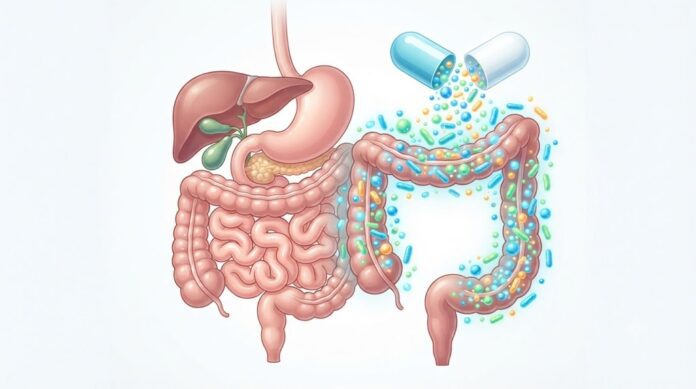
Do probiotics work for chronic constipation? The honest, research-based answer is yes, modestly, for some people, and mainly with specific strains, not with probiotics as a category.
That distinction matters more than almost anything else in this topic, because most of the confusion around probiotics comes from treating “probiotics” as one single thing rather than dozens of different bacterial strains with very different levels of clinical evidence behind them.
Many people wonder whether a probiotic supplement is actually worth trying after fiber or over-the-counter laxatives haven’t provided lasting relief. This guide walks through what the major systematic reviews and meta-analyses actually found, which strains have real trial data behind them, what gastroenterology guidelines currently say, and how big a difference you can realistically expect if you decide to try one.
Quick Answer
If you’re wondering, “Do probiotics work for chronic constipation?” evidence from five systematic reviews and meta-analyses of probiotics, published between 2014 and 2024, says yes, modestly. Probiotics produced a small but statistically significant improvement: approximately 0.8 to 1.3 additional bowel movements per week depending on the review, and a reduction in whole gut transit time of about 12 to 15 hours, compared with placebo.3,4,5
Bifidobacterium lactis, particularly the HN019 and BB-12 strains, is the most consistently effective strain across independent reviews. The effect is statistically significant, but generally modest, and it varies considerably from person to person, partly because different probiotic strains were tested across studies.
Research Snapshot
- 5 systematic reviews / meta-analyses, 2014–2024
- ≈0.8 to 1.3 extra bowel movements per week vs. placebo
- ≈12 to 15 hours faster gut transit time vs. placebo
- Strongest strain-level evidence: B. lactis HN019 and BB-12
- Overall evidence quality: Moderate (one review rated High)
What Counts as Chronic Constipation
Chronic constipation is generally defined as fewer than three spontaneous bowel movements per week, often with straining, hard stools, or a sense of incomplete emptying, persisting for at least three months.1 It is one of the most common gastrointestinal complaints seen in primary care, and it has several distinct underlying mechanisms, including slow colonic transit, pelvic floor dysfunction, and normal-transit constipation with symptom-predominant complaints.1
This matters because probiotics are unlikely to work equally well for every type of constipation. Their effects on the gut microbiome and intestinal motility are likely to matter more for some people than others. For more on how the two are connected, see our guide on how gut health affects chronic constipation.
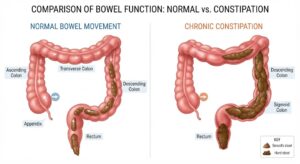
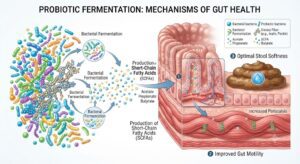
How Probiotics May Help Constipation
Researchers have proposed several mechanisms by which certain probiotic strains could influence bowel function.2 None of these act like a stimulant laxative. Instead, they work indirectly, over time, by changing the gut environment itself.
- Short-chain fatty acid production. Certain strains ferment residual carbohydrate in the colon into short-chain fatty acids such as butyrate, acetate, and propionate. These compounds lower colonic pH, help retain water in the stool, and stimulate colonic muscle contractions.2
- Gut motility signaling. Probiotics interact with the enteric nervous system, the network of nerves that governs peristalsis, and may influence the release of gut hormones and neurotransmitters involved in bowel movement.2
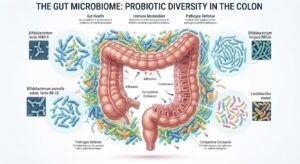
- Microbial rebalancing. Some studies in constipated patients report lower levels of Bifidobacteria and altered microbial diversity compared with people who have normal bowel habits, which is the basis for the idea that restoring these populations could help.2
| 1. Probiotic bacteria ferment fiber in colon |
→ | 2. SCFAs produced butyrate, acetate, propionate |
→ | 3. Colon changes lower pH, more water retained |
→ | 4. Softer, more frequent stool |
For a deeper breakdown of these mechanisms alongside how they compare with fiber and MCT oil, see our guide on why fiber isn’t working.
What Does the Latest Research Say?
Over the past decade, researchers have looked closely at whether probiotics genuinely help people with chronic constipation, and the picture that emerges is fairly consistent: modest but real benefits, concentrated in a handful of well-studied strains rather than probiotics as a whole. The sections below walk through what that research actually shows, review by review and strain by strain.
What the Meta-Analyses Found
Five systematic reviews and meta-analyses published between 2014 and 2024 have consistently reported a modest benefit of probiotics for chronic constipation, although the quality of evidence and included studies vary between reviews. Here’s what each review found.
Research Snapshot
- 5 systematic reviews / meta-analyses, 2014–2024
- ≈0.8 to 1.3 extra bowel movements per week vs. placebo
- ≈12 to 15 hours faster gut transit time vs. placebo
- Strongest strain-level evidence: B. lactis HN019 and BB-12
- Overall evidence quality: Moderate (one review rated High)
| Review | Studies Included | Key Finding | Evidence Quality |
|---|---|---|---|
| Dimidi et al., 2014, Am J Clin Nutr3 | 14 RCTs | Transit time reduced by 12.4 hours; stool frequency increased by 1.3 per week; B. lactis most effective strain | Moderate |
| Miller et al., 2017, Ann Gastroenterol4 | 21 RCTs | Stool frequency increased by about 0.8 per week; transit time reduced by about 15 hours; some publication bias noted | Moderate |
| Zhai et al., 2020, Nutrition5 | 15 RCTs | Transit time reduced by 13.75 hours; stool frequency increased by 0.98 per week; multispecies formulas outperformed single strains | Moderate |
| Dale et al., 2023, Clin Nutr6 | 30 RCTs | B. lactis significantly increased stool frequency; synbiotics showed insufficient evidence for a recommendation | High (largest, most recent) |
| Garzon Mora & Jaramillo, 2024, Cureus7 | 10 RCTs, 1,243 patients | Probiotics significantly favored over placebo overall, with 95 percent heterogeneity across subgroups | Moderate (high heterogeneity) |
| 2014 | 2017 | 2020 | 2023 | 2024 |
| Dimidi 14 RCTs |
Miller 21 RCTs |
Zhai 15 RCTs |
Dale 30 RCTs |
Garzon Mora 10 RCTs |
The pattern across the pooled evidence is remarkably consistent: a small but statistically real benefit, high variability between individual trials, and one strain (Bifidobacterium lactis) repeatedly outperforming the rest. The most recent and largest review, Dale et al. 2023, also concluded there is currently insufficient evidence to recommend synbiotics (probiotic and prebiotic combinations) specifically for chronic constipation, even though probiotics alone showed benefit.6
Which Strains Have the Strongest Evidence
Strain matters more than the word “probiotic” on a label. Below are the individual strains with published randomized controlled trial data specifically in constipated adults.
| Strain | Evidence Level | Best-Supported Outcome |
|---|---|---|
| B. lactis HN019 | Best evidence | Stool frequency, straining (higher dose)8 |
| B. lactis BB-12 | Best evidence | Defecation frequency9 |
| B. longum BB536 | Promising | Stool frequency in older adults10 |
| L. reuteri | Promising | Transit time and bloating |
| B. lactis NCC2818 | No proven benefit | No benefit over placebo11 |
Best evidence
Best evidence
Promising
Promising
No proven benefit
Relative strength of published constipation-specific trial evidence by strain.
Not a measure of effect size.
Bifidobacterium animalis subsp. lactis HN019
In a 228-person, dose-ranging, placebo-controlled trial, 28 days of HN019 supplementation improved bowel movement frequency in participants who started with fewer than three stools per week, and reduced straining at the higher dose, although colonic transit time itself did not differ significantly between groups.8 This is one of the more rigorously dosed trials in the probiotic-constipation literature.
Bifidobacterium animalis subsp. lactis BB-12
A large trial of 1,248 healthy adults with low defecation frequency found that BB-12 increased the likelihood of an improved defecation frequency, with a clearer effect when responders were defined as gaining at least one additional bowel movement per week for at least half the study period.9
Bifidobacterium longum BB536
In elderly patients with chronic constipation, four weeks of BB536 did not significantly change the primary constipation severity score, but it did produce a significant improvement in stool frequency, particularly among patients who started with a low baseline frequency.10
Not every strain works
It is worth being direct about this: strain-specific negative trials exist too. A well-designed placebo-controlled trial of Bifidobacterium lactis NCC2818 found no significant improvement in transit time, stool output, symptoms, or quality of life compared with placebo in adults with mild chronic constipation.11 This is exactly why blanket claims about “probiotics” as a category are misleading. If you want a full strain-by-strain breakdown with product recommendations, see our guide to the best probiotics for constipation relief.
For readers specifically interested in Lactobacillus reuteri, which shows benefit for transit time and bloating in several trials but works through a somewhat different mechanism, we cover it in detail in does L. reuteri help constipation and bloating. Lactobacillus rhamnosus GG (LGG), one of the most extensively studied probiotic strains in the world with over a thousand published trials across various conditions, has a well-documented safety and tolerability record, although it has not shown the same constipation-specific evidence as HN019 or BB-12.13 If you’re weighing prebiotics as well, see our guide to the Supplements for Regular Bowel Movements.
Why Do Some People Respond and Others Don’t?
Even within the strains with the best evidence, response is inconsistent from person to person. A few factors likely explain why:
- Different underlying cause. Chronic constipation can stem from slow colonic transit, pelvic floor dysfunction, or normal-transit constipation with symptom-predominant complaints.1 Probiotics are more likely to help when the mechanism involves gut motility or microbiome composition than when the primary issue is pelvic floor coordination.
- Individual gut microbiome variation. People start with different baseline bacterial populations, so the same strain may colonize and produce short-chain fatty acids more effectively in one person than another.
- Strain-specific effects. As the strain comparison above shows, some strains (HN019, BB-12) have consistent trial support while others (NCC2818) do not, so the specific product chosen matters.
- Diet. Fiber intake affects how much fermentable material is available for probiotic bacteria to act on, which is part of why probiotics and fiber are often recommended together rather than as alternatives.
- Consistency of use. Every trial that found benefit used daily dosing over several weeks; inconsistent use is unlikely to reproduce trial results.
Does a Higher CFU Count Mean a Better Probiotic?
Not necessarily. CFU (colony-forming units) reflects how many live bacteria were in the product at the time of manufacture, but it says nothing about whether that particular strain has been shown to help constipation. The trials that found real benefit used specific strains, such as HN019 or BB-12, at specific, trial-tested doses, not simply the highest CFU count on the market. A product with a modest CFU count of a well-studied strain is a better bet than a high-CFU product using an untested one.
Who Should Try Probiotics First?
Based on the subgroup patterns across the trials reviewed here, probiotics are a reasonable first thing to try if:
- Your constipation is accompanied by bloating or gas
- Fiber alone hasn’t provided enough relief
- You have overlapping IBS-type symptoms, since probiotics have separate evidence supporting their use in IBS specifically12
- You’d prefer a longer-term, non-stimulant approach rather than immediate relief
- You’re open to committing to daily use for at least 4 to 6 weeks before judging results
Who Should Talk to a Doctor First?
Probiotics aren’t the right starting point for everyone. The table below summarizes when it’s worth checking with a healthcare provider before trying one on your own.
| Situation | Recommendation |
|---|---|
| Severe constipation, or symptoms like rectal bleeding or unintended weight loss | See a doctor before self-treating |
| Sudden-onset constipation, especially in someone over 50 | Medical evaluation first |
| Need for same-day or next-day relief | Use a fast-acting option like magnesium or an osmotic laxative instead |
| Critically ill, severely immunocompromised, recent major GI surgery, or a central venous catheter | Talk to a physician before starting any probiotic strain |
| No improvement after 6 weeks of consistent daily use | Reassess with a healthcare provider rather than continuing indefinitely |
Probiotics vs Fiber, Magnesium, and MiraLax: How They Compare
Probiotics are not the only option, and they are not always the right first step. The table below summarizes how they stack up against the other most common approaches by speed, evidence strength, and who they suit best.
| Treatment | Speed | Evidence Strength | Best For |
|---|---|---|---|
| Psyllium fiber | 1 to 4 days | Strong | Low dietary fiber intake with otherwise normal gut motility |
| Magnesium (citrate or oxide) | Hours to 1 day | Strong | Fast, occasional relief; not for kidney disease |
| MiraLax (PEG 3350) | 1 to 3 days | Strong | Gentle, low-urgency daily or as-needed use |
| Probiotics (e.g. B. lactis) | 2 to 6 weeks | Moderate (strain-specific) | Constipation linked to bloating, gas, or gut microbiome alterations; long-term use |
B. lactis probiotics
Fiber, magnesium, and MiraLax each carry strong, guideline-backed evidence and tend to act within days. Probiotics have moderate evidence, supported by the available systematic reviews,3,4,5,6,7 but generally take two to six weeks of consistent use before an effect appears.
These approaches are not mutually exclusive. Many people use a fast-acting option like magnesium or MiraLax for immediate relief, while a probiotic has time to establish itself over several weeks. For full detail on the faster-acting options, see our guides to magnesium supplements for constipation and OTC laxatives for constipation.
What Gastroenterology Guidelines Say
The American Gastroenterological Association published a formal clinical practice guideline on probiotic use across gastrointestinal disorders in 2020.12 That guideline issued eight recommendations covering seven conditions: prevention of Clostridioides difficile infection in adults and children on antibiotics, Crohn’s disease, ulcerative colitis, pouchitis, irritable bowel syndrome, acute infectious gastroenteritis, and prevention of necrotizing enterocolitis in preterm, low-birth-weight infants.12
Chronic idiopathic constipation was not included in that scope at all, so there is currently no formal AGA position, either for or against, on probiotics specifically for chronic constipation. This should not be interpreted as evidence that probiotics are ineffective. Rather, chronic constipation was outside the scope of that guideline. The topic simply has not yet received a dedicated guideline of its own, even though the underlying trial evidence summarized in the meta-analyses above does exist.
In practice, this means probiotics for constipation currently sit in a middle ground. There is real, reproducible trial evidence of benefit for specific strains. No major gastroenterology society has issued a dedicated recommendation specifically for probiotics in chronic idiopathic constipation. This also reflects the strain-specific nature of probiotic research, since evidence that applies to one strain doesn’t necessarily apply to another, making it harder for guideline panels to issue a single broad recommendation the way they can for a defined drug or fiber type.
This means clinicians must rely on strain-specific clinical trials rather than formal guideline recommendations when considering probiotics for chronic constipation. This is a meaningfully different situation from, for instance, psyllium husk, which does carry a conditional guideline recommendation for chronic constipation from other bodies.
Realistic Expectations: What “Working” Actually Looks Like
Based on the pooled trial data, here is what a realistic response to a well-chosen probiotic looks like over 4 to 6 weeks of consistent daily use.
How many bowel movements can you expect?
Across the pooled evidence, the improvement ranged from approximately 0.8 to 1.3 additional bowel movements per week compared with placebo, depending on which review and which strains were included.3,4,5 This is an average across many people and many strains, so individual results vary; some people see no change at all, since gut microbiome composition affects response.
How long does it take?
Most trials measured results at 2 to 4 weeks. Some people notice softer stool within the first week, but a meaningful change in bowel movement frequency generally takes at least 4 weeks of consistent daily use to appear, and up to 6 weeks in some trials.8,9,10
| Start Begin daily use |
→ | Week 1 Possible mild gas or bloating |
→ | Weeks 2–4 Softer stool for some people |
→ | Weeks 4–6 More frequent bowel movements, if it’s working |
- Around one extra bowel movement each week, on average (0.8 to 1.3 across reviews)
- A modestly faster gut transit time, roughly half a day quicker
- Softer stool consistency for some people, though this effect is less consistent than frequency changes
- No meaningful change at all for a subset of users, since individual gut microbiome composition affects response
This is a genuinely useful effect for many people with mild to moderate chronic constipation, particularly when the underlying issue involves alterations in the gut microbiome. It is not, however, a substitute for medical evaluation if constipation is severe, sudden in onset, or accompanied by red flag symptoms such as rectal bleeding or unintended weight loss. For a broader comparison of how probiotics stack up against fiber and other options by mechanism and speed of action, see our full guide to supplements for regular bowel movements.
Common Mistakes When Taking Probiotics for Constipation
Many people who try probiotics and conclude “they don’t work” have actually run into one of these avoidable mistakes:
- Switching strains every few days. Trial results reflect weeks of continuous use of a single strain, not sampling several brands back to back.
- Stopping after less than a week. Most trials didn’t assess results until 2 to 4 weeks in; quitting early doesn’t give the strain a fair test.
- Choosing based on CFU count instead of strain-specific evidence. A high CFU number on an untested strain isn’t the same as a trial-backed strain at its studied dose.
- Skipping fiber and water intake. Probiotic bacteria need fermentable fiber to produce the short-chain fatty acids that support bowel function.
- Expecting laxative-like, same-day results. Probiotics work through a slower mechanism than stimulant or osmotic laxatives and are not designed for immediate relief.
Safety and Side Effects
Probiotics are generally well tolerated in healthy adults. The most commonly reported side effects across the trials reviewed here were mild, temporary bloating and gas during the first one to two weeks of use, which typically resolved without stopping the supplement.8,9 Across the pooled safety data in these meta-analyses, serious adverse events were rare and not clearly attributable to the probiotic itself in most cases.3,6
There are, however, specific groups where caution is warranted. Probiotics are generally avoided or used only under medical supervision in people who are critically ill, severely immunocompromised, recovering from major gastrointestinal surgery, or who have a central venous catheter, because of a small but documented risk of bacteremia or fungemia in these higher-risk populations. If you fall into one of these categories, talk with your doctor before starting any probiotic supplement, regardless of strain.
How to Choose and Use a Probiotic for Constipation
- Check the label for a named strain, not just the species. Look specifically for Bifidobacterium lactis (HN019 or BB-12), since this has the most consistent trial support.3,6,8,9
- Follow the dose used for the specific strain you choose, since effective doses vary between clinical trials rather than following one universal number, and don’t assume a higher CFU count is automatically better.
- Take it daily and consistently. None of the trials that found benefit used occasional or as-needed dosing. Four to six weeks is the realistic window before judging whether it is working.
- Pair it with adequate fiber and water where tolerated, since prebiotic fiber gives the bacteria material to ferment into short-chain fatty acids. See our guide on soluble vs. insoluble fiber for constipation for how to choose the right type.
- Reassess after 6 weeks. If there is no change in stool frequency or consistency by then, it is reasonable to try a different strain or move to a different category of treatment, such as an osmotic laxative, rather than continuing indefinitely.
Limitations of the Evidence
It’s worth being upfront about the limits of what these reviews actually show:
- Different strains were pooled together. “Probiotics” in these meta-analyses cover dozens of different strains with different mechanisms; a pooled average can obscure the fact that some strains work and others don’t.
- Doses varied across trials, making direct comparisons between studies imprecise.
- Populations differed, ranging from healthy adults with low defecation frequency to diagnosed chronic constipation patients to elderly cohorts, which affects how generalizable any single finding is.
- High heterogeneity was explicitly noted in at least one review, with Garzon Mora & Jaramillo reporting 95 percent heterogeneity across subgroups.7
- Possible publication bias was noted in the Miller et al. 2017 review.4
- No dedicated gastroenterology guideline exists yet specifically addressing probiotics for chronic constipation, so clinical recommendations currently rely on trial-level evidence rather than a formal guideline consensus.12
Clinical takeaway
Current evidence suggests probiotics can be considered as an adjunct therapy for adults with mild to moderate chronic constipation, particularly when bloating is also present. However, they should not replace established treatments such as adequate dietary fiber, osmotic laxatives when appropriate, or medical evaluation for alarm symptoms.
The Bottom Line
So, do probiotics work for chronic constipation? The evidence says yes, but with real limits. Five independent meta-analyses spanning a decade all point the same direction: a modest, statistically consistent improvement of around one extra bowel movement per week, driven mainly by specific, well-studied strains rather than probiotics as a general category.3,4,5,6,7
Bifidobacterium lactis currently has the strongest evidence base. No guideline body has yet issued a formal recommendation for or against probiotics in chronic constipation specifically, not because the effect isn’t real, but because the topic has not yet received a dedicated review from a major guideline panel.12
If you’re considering probiotics for chronic constipation, choosing a clinically studied strain matters far more than choosing the product with the highest CFU count or the longest ingredient list. Current evidence suggests that strain selection, daily consistency, and realistic expectations are the keys to seeing any meaningful benefit.
For adults with mild to moderate chronic constipation, especially when bloating or altered gut symptoms are also present, a well-studied probiotic strain may be a reasonable addition to an overall constipation management plan. It should complement, rather than replace, proven treatments such as adequate fiber intake, hydration, physical activity, and medical evaluation when appropriate. If symptoms persist despite lifestyle changes and over-the-counter treatments, speak with a healthcare professional to rule out underlying conditions such as pelvic floor dysfunction, slow-transit constipation, or other gastrointestinal disorders.
In short: if you’re looking for an overnight fix, probiotics aren’t the answer. If you’re looking for a safe, long-term approach and you choose a clinically studied strain such as Bifidobacterium lactis HN019 or BB-12, current evidence suggests it can provide a modest but meaningful improvement in chronic constipation.
Key takeaways
- Probiotics can help chronic constipation, though the effect is modest, not dramatic
- Bifidobacterium lactis has the strongest evidence of any strain
- Daily use for 4 to 6 weeks is needed before judging results
- They work best alongside adequate fiber and hydration, not as a standalone fix
- Major gastroenterology guidelines have not yet issued a dedicated recommendation specifically for probiotics in chronic constipation
Frequently Asked Questions
Do probiotics really work for chronic constipation?
Yes, though modestly. Pooling data from five meta-analyses, probiotics were linked to roughly 0.8 to 1.3 extra bowel movements per week and a 12 to 15 hour drop in gut transit time versus placebo.3,4,5 That is a real, repeatable effect, just smaller than typical marketing claims suggest.
Which probiotic strain works best for constipation?
Bifidobacterium lactis, especially the HN019 and BB-12 strains, holds up best across independent trials.3,6,8,9 Lactobacillus reuteri and certain multispecies blends also show promise, while some individually tested strains, such as NCC2818, have shown no advantage over placebo.11
How long does it take for probiotics to help with constipation?
In most trials, benefits were assessed after 2 to 4 weeks of daily use.8,9,10 Stool may soften within the first week for some people, but a noticeable change in how often you go usually takes at least a month of consistent use.
Do gastroenterology guidelines recommend probiotics for constipation?
The AGA’s 2020 probiotic guideline addressed eight recommendations across seven GI conditions, such as IBS, inflammatory bowel disease, and acute infectious gastroenteritis, but chronic constipation was not among them.12 That is an evidence gap in the guideline process, not a rejection of the underlying research.
Can probiotics make constipation worse?
Usually not. The main complaint in trials was temporary bloating or gas in the first week or two, which tends to fade on its own.8,9 Serious problems are uncommon in otherwise healthy adults, though people who are critically ill, immunocompromised, or have a central venous catheter should check with a doctor first because of a small documented infection risk in those groups.
Are probiotics better than fiber for chronic constipation?
It depends on the cause. Fiber has stronger guideline backing and acts faster when low intake is the main issue.1 Probiotics may be more helpful in people whose constipation is accompanied by bloating or gas, although no clinical test currently identifies who will respond best, and the two are commonly combined rather than used as alternatives.
Should you take probiotics every day for constipation?
Yes. Every trial that found a benefit used daily dosing, not occasional use.8,9,10 Give it 4 to 6 weeks of consistent use before deciding whether a particular strain is working for you.
Does a higher CFU count mean a better probiotic?
Not necessarily. The trials that found benefit used specific strains at specific, trial-tested doses, not simply the highest CFU count available. Choosing a clinically studied strain matters more than chasing the biggest number on the label.
More From ConstipationRelief.net
- Synbiotics vs Probiotics for Women’s Constipation, what the research actually shows
- Seed DS-01 Review, our in-depth look at a leading synbiotic product
- 9 Best Probiotic Supplements 2026, our broader gut health and immunity guide
- Fast Constipation Relief at Home, 12 natural, research-backed approaches
Scientific References
All major claims in this article are supported by peer-reviewed literature. References are numbered in order of first appearance. Last verified August 2026.
- Bharucha AE, Lacy BE. Mechanisms, Evaluation, and Management of Chronic Constipation. Gastroenterology. 2020;158(5):1232-1249. Review. Source: PMID (PMID 31945360)
- Dimidi E, Christodoulides S, Scott SM, Whelan K. Mechanisms of Action of Probiotics and the Gastrointestinal Microbiota on Gut Motility and Constipation. Adv Nutr. 2017;8(3):484-494. Review. Source: PMID (PMID 28507013)
- Dimidi E, Christodoulides S, Fragkos KC, Scott SM, Whelan K. The effect of probiotics on functional constipation in adults: a systematic review and meta-analysis of randomized controlled trials. Am J Clin Nutr. 2014;100(4):1075-1084. Meta-analysis. Source: PMID (PMID 25099542)
- Miller LE, Ouwehand AC, Ibarra A. Effects of probiotic-containing products on stool frequency and intestinal transit in constipated adults: systematic review and meta-analysis of randomized controlled trials. Ann Gastroenterol. 2017;30(6):629-639. Meta-analysis. Source: PMID (PMID 29118557)
- Zhai Q, Narbad A, Chen W. Meta-analysis of randomized controlled trials of the effects of probiotics on functional constipation in adults. Nutrition. 2020;75-76:110830. Meta-analysis. Source: PMID (PMID 32005532)
- Dale HF, Lied GA, Hatlebakk JG. Probiotics and synbiotics in chronic constipation in adults: A systematic review and meta-analysis of randomized controlled trials. Clin Nutr. 2023;42(4):438-447. Meta-analysis. Source: PMID (PMID 36372047)
- Garzon Mora N, Jaramillo AP. Effectiveness of Probiotics in Patients With Constipation: A Systematic Review and Meta-Analysis. Cureus. 2024;16(1):e52013. Meta-analysis. Source: PMCID (PMC10854359)
- Ibarra A, Latreille-Barbier M, Donazzolo Y, Pelletier X, Ouwehand AC. Effects of 28-day Bifidobacterium animalis subsp. lactis HN019 supplementation on colonic transit time and gastrointestinal symptoms in adults with functional constipation: a double-blind, randomized, placebo-controlled, and dose-ranging trial. Gut Microbes. 2018;9(3):236-251. RCT. Source: PMCID (PMC6219592)
- Eskesen D, Jespersen L, Michelsen B, Whorwell PJ, Muller-Lissner S, Morberg CM. Effect of the probiotic strain Bifidobacterium animalis subsp. lactis, BB-12, on defecation frequency in healthy subjects with low defecation frequency and abdominal discomfort: a randomised, double-blind, placebo-controlled, parallel-group trial. Br J Nutr. 2015;114(10):1638-1646. RCT. Source: PMCID (PMC4657032)
- Takeda T, Asaoka D, Nojiri S, et al. Usefulness of Bifidobacterium longum BB536 in Elderly Individuals With Chronic Constipation: A Randomized Controlled Trial. Am J Gastroenterol. 2023. RCT. Source: PMCID (PMC9973440)
- Dimidi E, Zdanaviciene A, Christodoulides S, et al. Randomised clinical trial: Bifidobacterium lactis NCC2818 probiotic vs placebo, and impact on gut transit time, symptoms, and gut microbiology in chronic constipation. Aliment Pharmacol Ther. 2019;49(3):251-264. RCT. Source: DOI (10.1111/apt.15073)
- Su GL, Ko CW, Bercik P, et al. AGA Clinical Practice Guidelines on the Role of Probiotics in the Management of Gastrointestinal Disorders. Gastroenterology. 2020;159(2):697-705. Guideline. Source: DOI (10.1053/j.gastro.2020.05.059)
- Vandenplas Y, et al. Lactobacillus rhamnosus GG: a review of its effectiveness. Probiotics Antimicrob Proteins. 2023. Review. Source: PMID (PMID 37176576)
Disclosure: ConstipationRelief.net is reader-supported. This information is for educational use only and is not a substitute for professional medical advice. Always consult your doctor before starting any new supplement, particularly if you have underlying health conditions.