

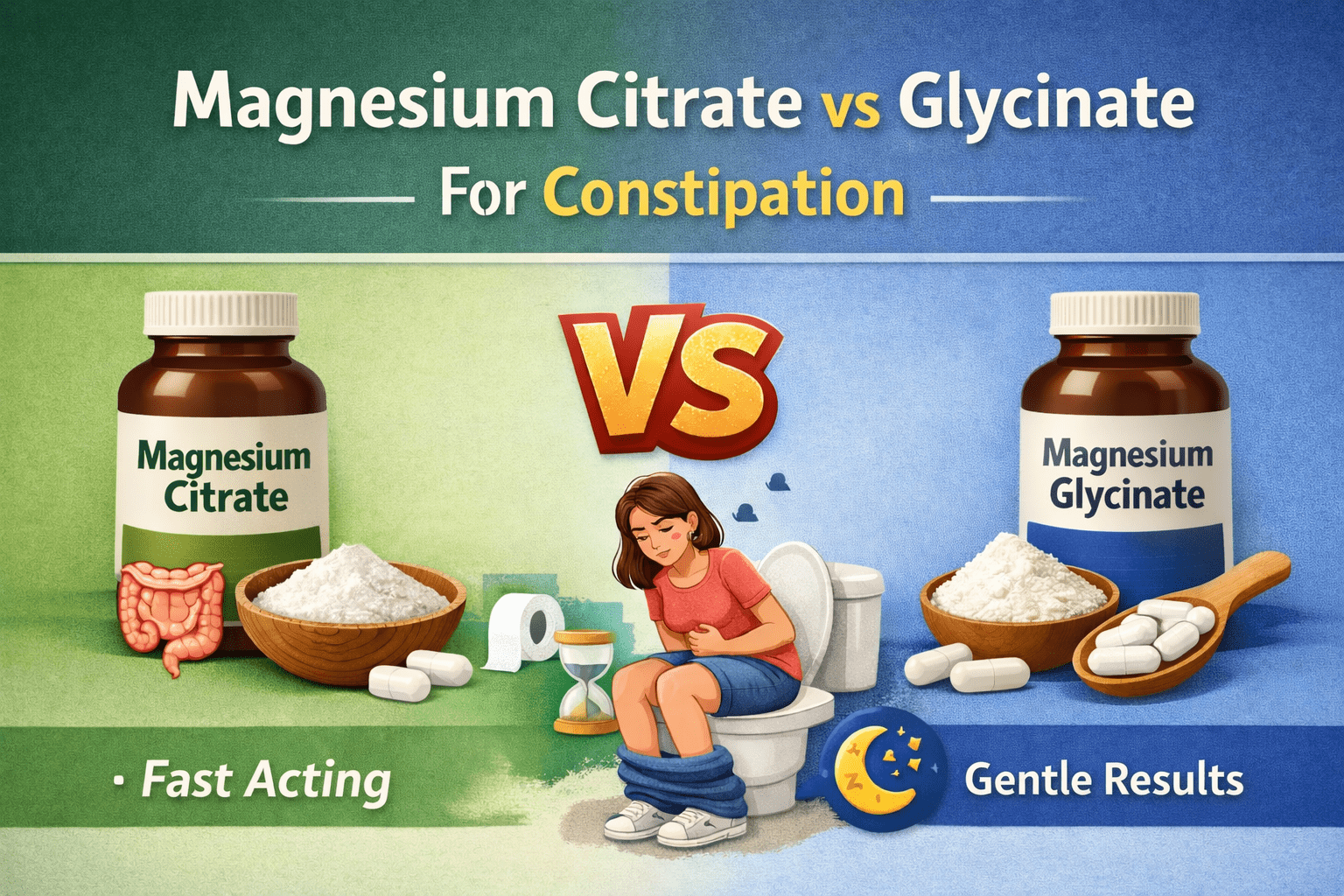
📋 In This Article
What This Guide Covers — and Who It Is For
If you have landed on this page, you are probably dealing with one of three situations: you are constipated and want to know whether magnesium citrate vs glycinate for constipation is the right answer for your specific case; you are taking Ozempic, Wegovy, or another GLP-1 medication and your gut has effectively stopped moving; or you have read conflicting advice online and simply want a clear, evidence-based verdict on the best magnesium for constipation on iHerb in 2026.
This guide addresses all three. We explain the clinical difference between magnesium citrate and glycinate, identify the top iTested products available on iHerb for each use case, provide clear dosing guidance grounded in current NIH literature, and go deep on a subject most supplement guides miss entirely: why GLP-1 receptor agonists create a specific magnesium need that ordinary supplement advice does not account for.
This guide is particularly useful if you are:
- Currently taking Ozempic, Wegovy, Mounjaro, or Zepbound and experiencing constipation as a side effect
- Experiencing chronic or recurrent constipation and want a non-stimulant, non-habit-forming laxative alternative
- Concerned about magnesium deficiency due to dietary changes, GLP-1 use, aging, or medication side effects
- Looking for the best-value, independently verified magnesium supplements on iHerb in 2026
- Seeking to understand the real difference between magnesium forms before spending money on the wrong one
For our broader overview of all magnesium forms, see our Complete Guide to Magnesium Supplements for Constipation. For non-magnesium alternatives, see our Best OTC Laxatives review.
⚡ Quick Answer — Best Magnesium for Constipation on iHerb 2026
Not sure which to buy? Here is our top recommendation for each situation:
Whether you need immediate constipation relief, daily GLP-1 support, or a budget entry point, these three independently verified products represent the best the best magnesium for constipation on iHerb has to offer in 2026. Full reviews, clinical mechanism analysis, and dosing guidance follow below.
🏆 Best for Constipation ReliefNatural Vitality CALM® Ionic Magnesium Citrate Powder⭐ Best for Daily GLP-1 SupportDoctor’s Best High Absorption Magnesium Glycinate TRAACS® View on iHerb → View on amazon →💊 Best Budget OptionNOW Foods Magnesium Citrate 200 mg Tablets
Affiliate links — we may earn a small commission at no cost to you. Prices are approximate and subject to change.
The Constipation Crisis That Nobody Saw Coming
It is the side effect that rarely makes the headlines. While the medical establishment has spent the past three years celebrating GLP-1 receptor agonists — Ozempic, Wegovy, Mounjaro — as transformative tools for weight loss and diabetes management, a quieter epidemic has been building in gastroenterology clinics across the United States: chronic, drug-induced constipation affecting a significant minority of the now tens of millions of GLP-1 users.
In October 2025, the FDA formally amended Ozempic’s warning label to include “severe constipation including fecal impaction” as a listed adverse reaction — an acknowledgment that what patients had been reporting for years was real, serious, and clinically documented. Research published in Annals of Internal Medicine analyzing over 200,000 patient records confirmed that GLP-1 receptor agonists carry a materially higher risk of serious gastrointestinal complications compared to other drug classes, with Ozempic users facing roughly a 21% elevated risk.
Into this gap, one supplement has emerged as both a talking point in online GLP-1 communities and a genuine subject of clinical interest: magnesium. Specifically, the debate over Magnesium Citrate vs Glycinate for Constipation — two forms of the same mineral with fundamentally different mechanisms, different price points, and very different answers to the question of who they are actually for. This is our investigation.
| Topic | Statistic |
|---|---|
| U.S. adults currently using GLP-1 drugs | ~6% (2026) |
| GLP-1 users reporting constipation | 10–20% |
| Americans below magnesium RDA | ~48% (NHANES data) |
| Daily upper limit for supplemental magnesium | 350 mg (NIH) |
Before we get to the products, we need to understand the biology. Choosing the wrong form of magnesium is not just ineffective — for someone already dealing with the nausea and GI turbulence of Ozempic, it can actively make things worse.
The Science of Relief: How Citrate and Glycinate Work Differently
All magnesium supplements deliver the same essential mineral. What differs is the carrier molecule — and that carrier determines almost everything: how fast the magnesium is absorbed, how much remains in the gut, and whether the result is a bowel movement or simply better sleep.
Magnesium is the fourth most abundant mineral in the human body, involved in over 300 enzymatic reactions. It regulates muscle and nerve function, blood glucose, blood pressure, and protein synthesis. Yet national nutrition surveys consistently find that approximately 48% of American adults consume less than the recommended dietary allowance — a figure documented in NHANES data and confirmed by the Dietary Guidelines Advisory Committee. For people on GLP-1 medications who are eating substantially less food overall, this gap widens further.
Magnesium Citrate: The Gut’s Osmotic Engineer
Magnesium citrate is magnesium bound to citric acid. When it reaches the intestines, it behaves as an osmotic laxative: it draws water from surrounding tissues into the bowel, increasing intestinal fluid volume, softening hardened stool, and stimulating the wave-like muscle contractions — peristalsis — that move waste toward the exit. For most people, a 200–400 mg dose produces a bowel movement within 30 minutes to 6 hours.
This mechanism works precisely because magnesium citrate is moderately absorbed. Enough is taken up by the bloodstream to restore systemic magnesium levels, but enough remains in the intestinal lumen to exert meaningful osmotic pressure. It is the Goldilocks formulation — more laxative than the highly bioavailable glycinate, less aggressive than magnesium hydroxide (Milk of Magnesia), which can cause cramping and urgency.
A 2025 systematic review and meta-analysis published in Antioxidants (PMC12189353) affirmed that magnesium citrate is “particularly favoured for its dual benefits of replenishing magnesium and alleviating constipation.” A randomized study in Magnesium Research (PMID 14596323) found it demonstrated superior bioavailability compared to magnesium oxide, making it effective for both gut action and systemic repletion simultaneously.
“Magnesium citrate’s osmotic mechanism draws water into the intestinal lumen, softening stool and stimulating peristalsis. This effect is dose-dependent: at standard doses of 200–400 mg, the effect is gentle and supportive of regularity.” — Clinical Review, 2026
Magnesium Glycinate: The Brain-Gut Calmer
Magnesium glycinate is magnesium chelated to glycine, an amino acid. It tells an entirely different story. Because glycine has dedicated amino acid transport pathways in the small intestine, magnesium glycinate is absorbed far more efficiently into the bloodstream — which is precisely what makes it ineffective as a direct laxative. Very little magnesium remains in the gut to draw water in.
What glycinate does instead is work upstream: it restores systemic magnesium status, supports the GABA neurotransmitter system, activates glycine receptors in the brainstem and spinal cord, and has been shown in a 2025 review to possess specific anxiolytic properties. For constipation driven by chronic stress, gut-brain axis dysregulation, or colon muscle tension, glycinate addresses root causes rather than symptoms. But for the mechanically blocked bowel of an Ozempic user whose gastric emptying has been chemically slowed, glycinate alone is not enough.
According to clinical content from Oshi Health, “a highly absorbed form, such as magnesium glycinate, is beneficial for correcting magnesium deficiencies, but it leaves little in the intestine to have its osmotic, and therefore, laxative effects.”
Head-to-Head: The Clinical Distinction
| Feature | Magnesium Citrate | Magnesium Glycinate |
|---|---|---|
| Primary action | Osmotic laxative (gut) | Systemic repletion (bloodstream) |
| Constipation relief | ✓ Direct & fast (30 min–6 hrs) | ✗ Minimal direct laxative effect |
| GI tolerance | Moderate — may cause loose stools at high doses | ✓ Excellent — rarely causes GI upset |
| Best for sleep/anxiety | ✗ Limited glycine benefit | ✓ Strong — glycine activates CNS calming pathways |
| Bioavailability | High (moderate gut retention) | Very high (efficient systemic absorption) |
| Long-term daily use | Use with care; may loosen stools chronically | ✓ Ideal for long-term supplementation |
| Ozempic/GLP-1 users | Good for active constipation episodes | Best for daily tolerance without GI aggravation |
| Typical cost on iHerb | Budget–Mid range (~$12–$25) | Mid–Premium (~$18–$35) |
Signs of Magnesium Deficiency: Are You Already Low?
Before deciding which magnesium supplement to take, it is worth asking whether you are already deficient — because the answer changes the calculus. A person who is severely depleted of magnesium needs a form that rapidly restores systemic levels (glycinate or malate), whereas a person who is merely constipated with normal magnesium status primarily needs the osmotic action of citrate.
Magnesium deficiency — clinically termed hypomagnesemia — is widely underdiagnosed because standard serum magnesium tests often appear normal even when intracellular stores are critically depleted. Research published in Nutrition Reviews (Rosanoff et al., 2012, PMID 22364157) documented that approximately 48% of Americans consume less than the RDA for magnesium from food. NHANES data shows that 64% of women aged 51–70 fail to meet their estimated average requirement. A 2018 paper in Open Heart (PMC5786912) described subclinical magnesium deficiency as “a principal driver of cardiovascular disease and a public health crisis.” In the GLP-1 era, these figures are increasingly relevant: patients eating significantly less food are at heightened risk of compounding an already widespread deficit.
⚠ Common Signs of Magnesium Deficiency
Physical Symptoms
- Muscle cramps and spasms, especially at night
- Unexplained fatigue and weakness
- Constipation or irregular bowel movements
- Headaches or migraines (often recurring)
- Heart palpitations or irregular heartbeat
- Bone pain or increased fracture risk
- Numbness or tingling in extremities
Neurological & Metabolic Symptoms
- Anxiety, irritability, or low mood
- Poor sleep quality or chronic insomnia
- Difficulty concentrating (“brain fog”)
- Elevated blood pressure
- Worsening blood glucose control in diabetics
- Increased sensitivity to noise or light
- Restless legs syndrome
If you experience multiple symptoms from both columns, consult your physician about serum and red blood cell (RBC) magnesium testing. RBC magnesium is a more sensitive indicator of intracellular stores than standard serum testing. GLP-1 users should proactively request magnesium testing alongside routine bloodwork. For food-based approaches, see our high-fiber and mineral-rich foods guide.
Magnesium for Ozempic Constipation: A Clinical Necessity in 2026
To understand why magnesium has become such a critical conversation for GLP-1 users, you need to understand precisely how semaglutide (Ozempic, Wegovy) disrupts normal bowel function — and why it is not a minor inconvenience for the patients experiencing it.
GLP-1 receptor agonists work by slowing gastric emptying — the rate at which food moves from the stomach into the small intestine. This is a designed feature: it creates satiety and moderates blood sugar spikes. But the downstream consequence is that food and waste move more slowly through the entire gut. The colon absorbs more water from stool (because it has more time to do so), producing harder, drier fecal matter. Reduced food intake — another intentional effect — means less dietary fiber and reduced bulk in the intestinal tract, further slowing transit time.
Research published in PMC (PMC10213739) found that constipation incidence among GLP-1 users is “positively correlated with the duration of therapy (r² = 0.8–0.9)” — meaning the longer you take Ozempic, the more likely the problem becomes. The FDA’s October 2025 label update for Ozempic explicitly added “severe constipation including fecal impaction” to its listed adverse reactions. Constipation is reported in approximately 10–20% of patients taking GLP-1 weight-loss drugs, with real-world prevalence likely higher during dose escalation phases.
Meanwhile, GLP-1 users face double jeopardy with their magnesium status. GoodRx’s clinical pharmacy team notes that the vomiting and reduced appetite associated with GLP-1 medications can deplete magnesium and potassium levels. Older adults and those with Type 2 diabetes — the core Ozempic demographic — already have statistically higher rates of magnesium deficiency. This is why physicians are increasingly treating magnesium supplementation not as optional but as part of standard GLP-1 supportive care. For related guidance, see our guide to fiber supplements for constipation — a complementary intervention many clinicians recommend alongside magnesium.
⚠ Safety Note for GLP-1 Users: There is no known drug interaction between magnesium supplements and injectable GLP-1 receptor agonists like Ozempic or Wegovy. However, if you take oral semaglutide (Rybelsus), separate your magnesium supplement by at least 30 minutes to avoid potential absorption interference. Patients with kidney disease or impaired renal function should consult their physician before taking any magnesium supplement, as the kidneys regulate magnesium excretion.
The GLP-1 Magnesium Protocol: What Integrative Practitioners Recommend
Morning: Magnesium Citrate (200–400 mg with breakfast). The mild osmotic effect supports regular bowel movements early in the day, working synergistically with the body’s natural cortisol-driven morning motility window. Citric acid also participates in the Krebs energy cycle, providing a subtle metabolic boost relevant to patients managing blood sugar.
Evening: Magnesium Glycinate (200–400 mg, 30–60 minutes before bed). The glycine component promotes sleep onset and quality — clinically important for GLP-1 users, for whom poor sleep impairs the weight-loss benefits of the medication. Overnight, it corrects systemic magnesium deficiency and supports nervous system recovery.
Fella Health’s clinical guide for GLP-1 users confirms: “Given that nausea, vomiting, diarrhea, and constipation are common adverse effects of GLP-1 medications — particularly during dose titration — selecting a magnesium supplement that does not exacerbate these symptoms is clinically prudent.” Glycinate wins on tolerability. Citrate wins on bowel results. Both win when used together.
Best Magnesium for Constipation on iHerb: Top 3 iTested Products (2026)
iHerb uses an independent third-party lab verification program called iTested — testing products via accredited labs including ABC Testing, Eurofins, and Alkemist every 6 months for label accuracy, microbial safety, and heavy metal content. This is the standard we used to filter our recommendations.
🏆 Best for Constipation Relief
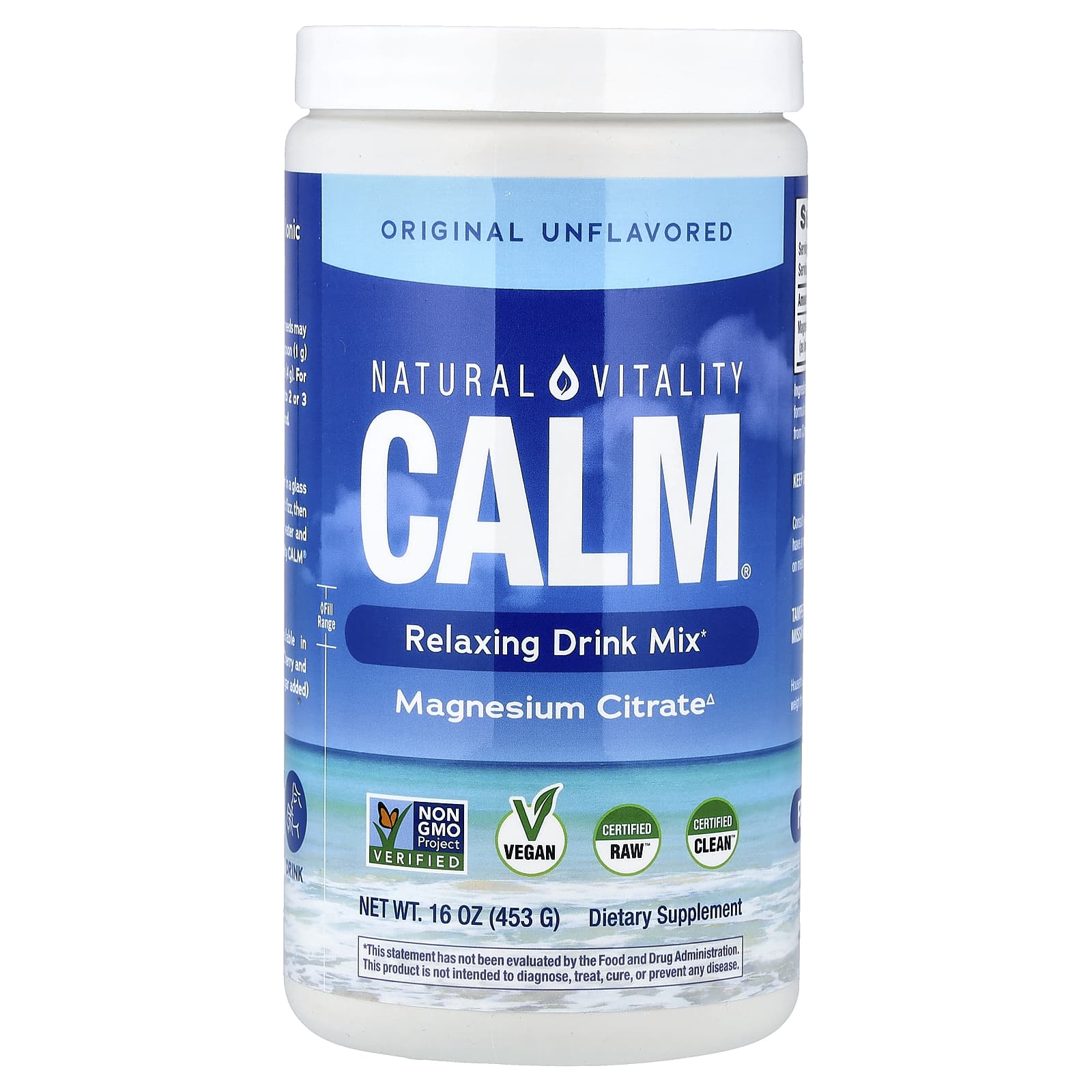
Natural Vitality CALM® — Ionic Magnesium Citrate Powder
Available on iHerb | ~$25–$35 for 16 oz (approximately 72 servings)
If there is a single product most cited in online GLP-1 support communities for constipation relief, it is Natural Vitality CALM. The powder fizzes when added to water because it is formulated as magnesium carbonate plus citric acid — which creates ionic magnesium citrate in solution. This ionic form is arguably the most bioavailable liquid presentation of citrate available over the counter. Multiple iHerb reviewers with chronic constipation report measurable improvement in bowel movement frequency within the first week. iHerb carries unflavored (cleanest option for sensitive GI systems), Raspberry-Lemon, and Cherry variants sweetened with organic stevia.
Pros
- Ionic form — fastest-acting magnesium citrate available
- Highly dose-flexible (start at ½ tsp, build up gradually)
- Non-GMO, gluten-free, vegan, no added sugar
- Strong real-world evidence for constipation relief
- Multiple flavors; mixes easily into warm water or tea
Cons
- Higher doses can cause loose stools — titrate carefully
- Powder form less convenient for travel than capsules
- Not individually iTested (relies on brand-level GMP)
Recommended dose for GLP-1 users: Start with ½ tsp (approximately 83 mg elemental Mg) in warm water each morning. Increase gradually to 1–2 tsp (165–330 mg) as tolerated.
View on iHerb → View on amazon →Affiliate link — we may earn a commission at no cost to you.
⭐ Best for Daily GLP-1 Support
Doctor’s Best High Absorption Magnesium Lysinate Glycinate — Albion® TRAACS® Chelated
Available on iHerb | ~$23–$30 for 240 tablets (100 mg per tablet)
Doctor’s Best is one of iHerb’s perennial bestsellers. It uses Albion® TRAACS® technology — a patented chelation process that binds magnesium to both lysine and glycine amino acids, producing a bisglycinate chelate with superior tolerance and absorption compared to standard glycinate. The Albion TRAACS certification is independently verified, making this one of the most trusted glycinate products available globally. For GLP-1 users, this is the product for daily baseline support: correcting magnesium deficiency without aggravating nausea or accelerating loose stools. Vegan, non-GMO, gluten-free, and soy-free.
Pros
- Albion® TRAACS® — clinically validated chelation form
- Excellent GI tolerance — no laxative effect at standard doses
- Vegan, non-GMO, gluten-free, soy-free
- 240 tablets — outstanding value per dose
- Preferred for sleep support and daily deficiency correction
Cons
- Not a direct constipation remedy — minimal osmotic effect
- Tablet form; less flexible for micro-dosing
- Takes days to weeks before systemic effects become noticeable
Recommended dose for GLP-1 users: 2–4 tablets daily (200–400 mg) with food, split between morning and evening. Evening dose 30–60 minutes before sleep for sleep support.

View on iHerb → View on amazon →
Affiliate link — we may earn a commission at no cost to you.
💊 Best Budget Citrate Option
NOW Foods Magnesium Citrate — 200 mg Tablets
Available on iHerb | ~$12–$16 for 100 tablets
NOW Foods is one of the most trusted supplement manufacturers in the natural products industry, with over 50 years of GMP-certified production. Their Magnesium Citrate 200 mg tablets offer a fully reacted (not blended) citrate formulation at one of the lowest price points available on iHerb. Ideal for users who want the constipation-relieving osmotic effect of citrate in tablet form, or for users who want to trial citrate before committing to a larger or more expensive format. Manufactured in GMP-certified, NSF-audited facilities.
Pros
- Fully reacted magnesium citrate — not a partial blend
- Best-value citrate option on iHerb
- GMP-certified, NSF-audited manufacturing
- Tablet format — convenient for travel and daily use
- Free from wheat, gluten, soy, milk, egg, fish, and shellfish
Cons
- 200 mg per serving — may need 2 tablets for full constipation relief
- Less dose-flexible than powder formats
- No sleep/anxiety benefit (no glycine component)
Recommended dose for GLP-1 users: 1–2 tablets (200–400 mg) in the morning with food. Monitor stool consistency and adjust dose accordingly.

View on iHerb → View on amazon →
Affiliate link — we may earn a commission at no cost to you.
Expert Dosage Guide: What Physicians Recommend in 2026
Clinical Dosing Reference — Magnesium for Constipation
| User Profile | Recommended Form | Daily Dose | Timing |
|---|---|---|---|
| General adult (mild constipation) | Magnesium Citrate | 200–400 mg elemental Mg | Morning, with food |
| GLP-1 user (Ozempic/Wegovy) | Citrate (AM) + Glycinate (PM) | 200 mg citrate + 200 mg glycinate | Morning + 60 min before bed |
| Sensitive GI / nausea-prone | Magnesium Glycinate only | 200–400 mg/day | Split: morning + evening |
| Acute constipation (short-term) | Magnesium Citrate (liquid/powder) | Up to 400 mg in single dose | Morning on empty stomach |
| Children (ages 9–18) | Consult pediatrician first | 240–410 mg/day (food + supplements combined) | With food only; start at lowest dose |
| Elderly / kidney caution | Consult physician first | Start at 100 mg; monitor closely | With food only |
| Pregnant women | Magnesium Glycinate preferred | 350–360 mg/day total (supplement + diet) | With food; discuss with OB-GYN |
The NIH Office of Dietary Supplements sets the RDA for magnesium at 400–420 mg/day for adult men and 310–320 mg/day for adult women. The tolerable upper intake level (UL) for supplemental magnesium is 350 mg/day — this applies to supplement intake only and does not count dietary magnesium from food. Exceeding the UL increases the risk of osmotic diarrhea and, in susceptible individuals, more serious electrolyte disturbances.
⚠ Drug Interaction Alert: Magnesium can reduce the absorption of certain oral antibiotics (tetracyclines, fluoroquinolones like ciprofloxacin) and bisphosphonates. Separate magnesium supplementation from these medications by at least 2–4 hours. For oral semaglutide (Rybelsus), take magnesium supplements at least 30 minutes after the morning dose. Magnesium may also modestly lower blood pressure — patients on antihypertensive medications should inform their doctor before beginning supplementation.
Side Effects and Safety Considerations
Magnesium is among the safest supplements available when used within recommended limits, but adverse effects are possible — particularly at higher doses or in specific populations. Understanding the risk profile of each form is essential before beginning supplementation, especially for GLP-1 users whose GI systems are already under stress.
Magnesium Citrate — Side Effects
- Loose stools or diarrhea (dose-dependent — most common)
- Abdominal cramping at high doses (above 600 mg)
- Electrolyte depletion (potassium, sodium) with chronic overuse
- Dehydration risk if fluid intake is not maintained
- Nausea — especially on an empty stomach at high doses
- Urgency — ionic/liquid form acts faster and more strongly
Magnesium Glycinate — Side Effects
- Mild drowsiness (glycine’s CNS calming effect) — best taken at night
- Occasional mild headaches during first days of use
- Very low GI side-effect risk — best tolerated of all forms
- Minimal laxative effect — not a standalone constipation remedy
- Higher cost than citrate or oxide forms
- Slow onset for systemic benefits (days to weeks)
Who Should Avoid Magnesium Supplementation Without Medical Supervision
Patients with chronic kidney disease (CKD) or reduced renal function should approach magnesium supplementation only under physician supervision. Healthy kidneys excrete excess magnesium efficiently; impaired kidneys cannot, and magnesium accumulation can lead to hypermagnesemia — a potentially serious condition characterized by low blood pressure, reduced reflexes, cardiac irregularities, and in severe cases, respiratory depression. This risk is particularly relevant for elderly patients and those with diabetic nephropathy — two populations that overlap heavily with the GLP-1 user base.
Additionally, patients taking potassium-sparing diuretics or digoxin (a heart medication) should seek physician guidance before combining magnesium supplementation, as combined electrolyte changes and drug interactions may warrant monitoring.
📋 The Verdict
The 2026 Ruling: Citrate Relieves, Glycinate Sustains
After reviewing the clinical literature, the mechanism data, and the iHerb product landscape, the answer to the Magnesium Citrate vs Glycinate debate for constipation in 2026 is not either/or. It is sequencing.
Magnesium citrate is the active relief agent. It works mechanically, predictably, and quickly on the bowel. It is the form you reach for when Ozempic has slowed your gut to a halt, when you have not had a normal bowel movement in three days, or when you simply need reliable regularity each morning. Natural Vitality CALM (ionic citrate powder) is the gold standard format on iHerb — fast, flexible, and extensively validated by real users.
Magnesium glycinate is the long-game supplement. It corrects the systemic magnesium deficiency that dietary restriction and GLP-1-induced GI disruption create. It supports the sleep quality that amplifies GLP-1’s metabolic effects. It calms the stress-tension axis that contributes to gut dysfunction. Doctor’s Best Glycinate (TRAACS chelated) is the best-in-class glycinate product on iHerb for this purpose.
For Constipation Relief
Winner: Magnesium Citrate
Natural Vitality CALM (iHerb). Start at ½ tsp daily and titrate up. Expect results within hours.
For Ozempic / GLP-1 Users
Winner: The Stack
Citrate (morning) + Glycinate (evening). Addresses both immediate bowel function and long-term mineral deficiency without aggravating GI sensitivity.
For Daily Long-Term Use
Winner: Magnesium Glycinate
Doctor’s Best TRAACS Glycinate (iHerb). Superior tolerance, verified chelation technology, and the most trusted brand in this category.
For Budget-Conscious Buyers
Winner: NOW Foods Citrate
NOW Foods 200 mg tablets (iHerb). Fully reacted citrate in GMP-certified form. The best entry-level constipation supplement on iHerb.
Frequently Asked Questions
Is magnesium citrate or glycinate better for constipation?
Magnesium citrate is directly and reliably better for constipation. It works as an osmotic laxative, typically producing results within 30 minutes to 6 hours. Magnesium glycinate is absorbed too efficiently to leave much behind in the gut for a laxative effect — it is better suited to sleep, anxiety, and long-term magnesium repletion. For a comparison of all magnesium forms, see our complete magnesium guide.
Which magnesium is best for Ozempic (semaglutide) constipation?
For GLP-1 users, a combined approach is recommended: magnesium citrate in the morning for bowel regularity, and magnesium glycinate in the evening for sleep support and systemic deficiency correction. If you can only choose one and your primary concern is constipation, start with citrate. If you already have loose stools from Ozempic, use glycinate exclusively. Pairing either form with a soluble fiber supplement can further improve bowel regularity.
What is the best magnesium for constipation on iHerb in 2026?
Natural Vitality CALM (ionic magnesium citrate powder) is the top-rated product on iHerb for constipation relief. For glycinate, Doctor’s Best High Absorption (Albion TRAACS chelated) is the gold standard. For a budget citrate option, NOW Foods Magnesium Citrate 200 mg tablets offer excellent value in GMP-certified form.
Is magnesium safe to take with Ozempic or Wegovy?
Yes. There is no known drug interaction between magnesium supplements and injectable semaglutide. However, if you take oral semaglutide (Rybelsus), separate your magnesium supplement by at least 30 minutes. Patients with kidney disease should always consult their doctor before taking magnesium supplements.
How long does magnesium citrate take to work for constipation?
Most people experience a bowel movement within 30 minutes to 6 hours of taking magnesium citrate, depending on the dose, form (liquid/ionic is faster than tablets), and the severity of constipation. Taking it on an empty stomach in the morning with a glass of warm water tends to produce the fastest results.
Can I take magnesium citrate and glycinate together?
Yes — and for most GLP-1 users, this is the recommended approach. There is no known interaction between these two forms. The standard protocol is citrate in the morning (for bowel regularity) and glycinate in the evening (for sleep and systemic repletion). Ensure your combined daily elemental magnesium intake from supplements stays within the NIH tolerable upper limit of 350 mg/day.
Is magnesium oxide a good alternative for constipation?
Magnesium oxide has the highest elemental magnesium content by weight but very poor bioavailability — typically only 4–8% is absorbed. This means a large proportion remains in the gut, producing a stronger laxative effect but delivering minimal systemic magnesium. It can work for acute constipation in healthy adults, but it is a poor long-term choice and particularly unsuitable for those with GI sensitivity or kidney issues. For a detailed comparison, see our complete magnesium forms guide.
What is the daily upper limit for magnesium supplementation?
The NIH tolerable upper intake level (UL) for supplemental magnesium is 350 mg per day for adults. This applies to supplements only — dietary magnesium from food does not count toward this limit. Exceeding the UL increases the risk of diarrhea, nausea, and in severe cases (especially in kidney patients), more serious toxicity. Always start low and increase gradually.
Clinical References & Sources
- Cepeda V, et al. “Unlocking the power of magnesium: a systematic review and meta-analysis regarding its role in oxidative stress and inflammation.” Antioxidants. 2025;14(6):740. PMC12189353 →
- PMC10213739. “A potentially serious adverse effect of GLP-1 receptor agonists.” Chinese Pharmaceutical Association / Elsevier. 2023. PubMed Central →
- FDA Ozempic label update: Severe constipation including fecal impaction listed as adverse reaction. October 2025. Regulatory source →
- Rosanoff A, Weaver CM, Rude RK. “Suboptimal magnesium status in the United States.” Nutr Rev. 2012;70(3):153–64. DOI:10.1111/j.1753-4887.2011.00465.x PubMed →
- DiNicolantonio JJ, O’Keefe JH, Wilson W. “Subclinical magnesium deficiency: a principal driver of cardiovascular disease and a public health crisis.” Open Heart. 2018. PMC5786912 →
- Schuette SA, Lashner BA, Janghorbani M. “Bioavailability of magnesium diglycinate vs magnesium oxide.” JPEN. 1994;18(5):430–435. DOI:10.1177/0148607194018005430
- Siegel JD, Di Palma JA. “Medical Treatment of Constipation.” Clin Colon Rectal Surg. 2005;18(02):76–80. DOI:10.1055/s-2005-870887
- NIH Office of Dietary Supplements. “Magnesium: Fact Sheet for Health Professionals.” NIH ODS →
- Fella Health. “Which Magnesium Is Best for GLP-1 Medications.” November 2025. Source →
- Armanious et al. “Patient Perceptions of Ozempic for Weight Loss.” J Med Internet Res. 2026;28:e78391. DOI:10.2196/78391
- GoodRx. “7 Supplements to Consider With Ozempic and Why.” April 2025. Source →
- Boyle NB, Lawton C, Dye L. “The Effects of Magnesium Supplementation on Subjective Anxiety and Stress.” Nutrients. 2017;9(5):429. DOI:10.3390/nu9050429






[…] Magnesium Citrate vs Glycinate: The 2026 iHerb Guide for GLP-1 Users […]
[…] Magnesium Citrate vs Glycinate: The 2026 iHerb Guide for GLP-1 Users […]
[…] Magnesium Citrate vs Glycinate: The 2026 iHerb Guide for GLP-1 Users […]