

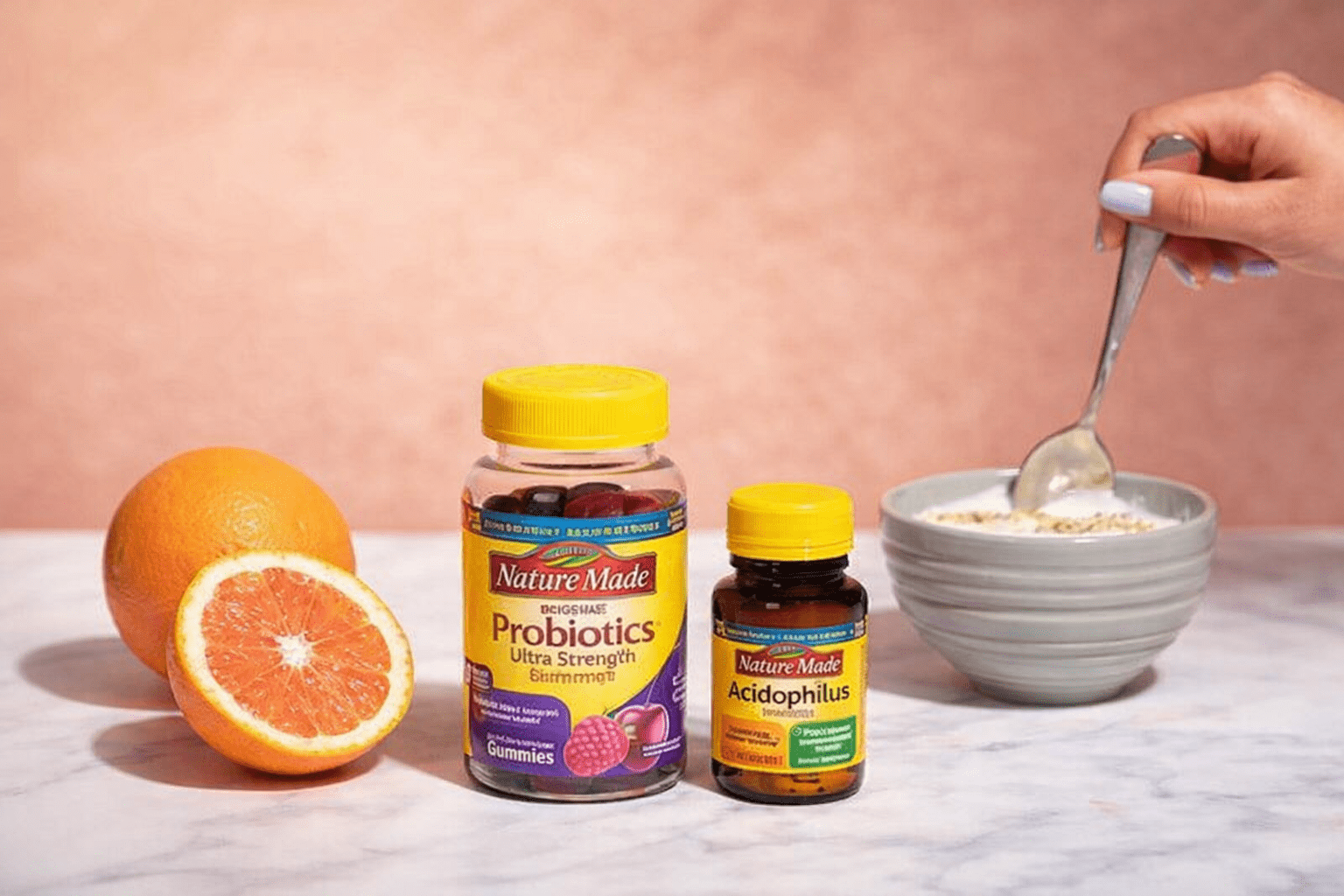
Chronic constipation is frustrating. You change your diet, you try a laxative, and a few weeks later you’re back where you started. This is exactly why so many people start looking at probiotic supplements for constipation as a longer-term fix instead of a quick patch. Probiotics are live beneficial microorganisms that help balance your gut microbiome. Taken in the right amount, they may improve digestion, support regular bowel movements, and ease constipation symptoms in a gentler way than a laxative.
Estimates of how common constipation is vary by population and definition, but many studies put it somewhere in the 10 to 30% range worldwide. A large share of people also say standard laxatives don’t fully solve the problem. That combination is a big part of why interest in probiotics for constipation relief has grown so much.
If you’re exploring other natural options too, our guides on the best magnesium supplements for constipation → and the best laxative for constipation from iron pills → may also help.
In this guide, we break down 9 Best Probiotic Supplements 2026 constipation relief, based on clinical research, strain evidence, third-party testing, and user feedback.
💡 Quick answer: the strains with the strongest evidence for constipation are Bifidobacterium lactis (BB-12, HN019) and Bifidobacterium longum. Lactobacillus rhamnosus GG is better supported for immune and antibiotic-related benefits than for constipation specifically. Our top pick, Seed DS-01, stands out mainly because its full formula was tested in a large, published randomized controlled trial, which is rare in this category.
⚠️ Affiliate disclosure: this article contains Amazon affiliate links. If you buy through them, we may earn a small commission at no extra cost to you. Nothing here is medical advice. Full disclaimer at the end.
At a Glance: 9 Probiotic Supplements for Constipation (2026)
| # | Product | Best For |
|---|---|---|
| 1 | Seed DS-01 | 🏆 Best Overall |
| 2 | Culturelle Daily Probiotic | Best Clinically Studied Single Strain |
| 3 | Renew Life Ultimate Flora | Best High-Potency |
| 4 | Garden of Life Dr. Formulated | Best Diverse Strains |
| 5 | Align Daily Probiotic | Best for IBS-C |
| 6 | Florastor Daily Probiotic | Best Post-Antibiotic |
| 7 | Hyperbiotics PRO-15 | Best for Sensitive Stomach |
| 8 | BioSchwartz Advanced Strength | Best Budget |
| 9 | MegaFood MegaFlora | Best Clean Label |
(Scroll down for full reviews, pros and cons, and pricing for each product.)
The Science of Gut Health: Why Probiotics Matter
The gut microbiome is a huge ecosystem of bacteria, fungi, and viruses. It plays a role in digestion, immunity, and even mood. When antibiotics, a low-fiber diet, stress, or illness throw it out of balance, problems like constipation, bloating, and irregular bowel movements often follow.
Probiotics work by adding beneficial bacterial strains, mainly Lactobacillus and Bifidobacterium species. These may help the gut in a few ways:
- Compete with harmful bacteria
- Produce short-chain fatty acids that support the gut lining
- Improve bowel movement regularity
- Support overall digestive function
A 2014 systematic review and meta-analysis of 14 randomized controlled trials (1,182 adults with functional constipation) found that probiotics reduced whole gut transit time by about 12.4 hours and increased stool frequency by about 1.3 bowel movements per week on average (Dimidi et al., Am J Clin Nutr, doi: 10.3945/ajcn.114.089151).
One nuance worth flagging: this benefit was driven mainly by Bifidobacterium lactis. The effect was not statistically significant for Lactobacillus casei Shirota in the same analysis, and later, larger meta-analyses from 2019 and 2020 found somewhat smaller average effects (closer to 0.9 to 1.4 bowel movements per week). The overall takeaway holds up though: the benefit is strain-specific. Which exact strain you pick matters more than simply choosing “a probiotic.”
👉 A quick note on viability: viability means whether probiotic bacteria survive long enough to reach the intestines alive, where they can actually work. Many bacteria die in stomach acid before that happens, which is why delivery systems matter.
Understanding CFUs (Colony-Forming Units)
CFUs measure the number of live, active microorganisms in a probiotic supplement at the stated dose.
- General gut health: 5 to 10 billion CFUs per day is usually enough
- After antibiotics or a digestive flare-up: 20 to 50 billion CFUs may help more
- A higher CFU count is not automatically better. Strain identity and quality matter more than raw quantity
Delivery technology matters too. Enteric-coated or delayed-release capsules protect bacteria from stomach acid so more of them reach the gut alive.
Health Benefits of Probiotics: What the Evidence Actually Shows
Evidence strength varies a lot by strain and condition. “Probiotics” isn’t one thing, so treat these benefits as strain-specific rather than universal.
Constipation and gut motility. Bifidobacterium lactis (strains like BB-12 and HN019) has the most consistent trial support for improving stool frequency, stool consistency, and gut transit time in adults with constipation.[1]
Antibiotic-associated diarrhea prevention. Lactobacillus rhamnosus GG and Saccharomyces boulardii have the strongest evidence here. Meta-analyses show they can lower the risk of antibiotic-associated diarrhea during or after a course of antibiotics.[2]
Immune support. Strains including Lactobacillus acidophilus and Bifidobacterium bifidum have been studied for a possible modest role in shortening upper respiratory infections, though effect sizes in this research are generally small.[3]
IBS symptom relief. A 2018 meta-analysis (Ford et al., American Journal of Gastroenterology), pooling around 53 trials, found that probiotics as a category modestly improved overall IBS symptoms and abdominal pain compared with placebo. Again, results varied a lot by strain.[4]
Mental wellbeing (gut-brain axis). Some strains may influence the gut-brain axis, and early research has looked at possible mood-related effects. This area is genuinely early-stage. It shouldn’t be oversold, and larger high-quality trials are still needed.[5]
⚠️ A Note on Weight Loss Claims
Some probiotics are marketed for weight loss. Certain strains, such as Lactobacillus gasseri, have shown small effects on body weight in limited studies, but the overall evidence is inconsistent. Don’t treat probiotics as a reliable primary weight-loss strategy. Their better-supported role is digestive and gut health.
Side Effects and Safety Considerations
Probiotics are generally well tolerated by healthy adults. Most side effects are mild and temporary.
- Initial gas and bloating. Common in the first 1 to 2 weeks as the gut adjusts. Usually resolves on its own
- Loose stools. Especially with high-CFU doses. Consider reducing the dose if this happens
- Allergic reactions. Uncommon, but possible in people sensitive to dairy-derived strains or other ingredients
⚠️ Caution for high-risk groups: people with significantly compromised immune systems (chemotherapy patients, organ transplant recipients, critically ill ICU patients) should talk to their physician before taking probiotics, since rare but serious infections have been reported in these groups. Premature infants should only take probiotics under direct medical supervision.
Probiotics vs. Prebiotics vs. Synbiotics
Probiotics are live microorganisms that provide a health benefit when taken in adequate amounts. Prebiotics are non-digestible fibers or compounds, such as inulin, FOS, GOS, or certain polyphenols, that feed beneficial gut bacteria. Synbiotics combine both. Several products on this list, including Seed DS-01, take this combined approach. You can also get some of these benefits from food: yogurt, kefir, and sauerkraut for probiotics; asparagus, garlic, and oats for prebiotics.
How We Selected These Products
Products were evaluated on strain identity and specificity (genus, species, and strain code), CFU count near expiry rather than just at manufacture, delivery method (enteric coating, delayed release, or a patented system), third-party testing certifications (NSF, USP, Non-GMO Project Verified), allergen and additive profile, and a large base of verified user reviews.
Best Probiotic Strains for Constipation: A Quick Reference
When choosing a supplement specifically for constipation, check the label for the full strain ID: genus, species, and strain code, since evidence is strain-specific, not just species-wide.
| Strain | Evidence Level | Primary Effect |
|---|---|---|
| Bifidobacterium lactis BB-12 | Strong | Increases bowel movement frequency |
| Bifidobacterium lactis HN019 | Strong | Reduces gut transit time |
| Bifidobacterium longum BB536 | Moderate to strong | May improve stool consistency and regularity |
| Bifidobacterium longum 35624™ | Strong for IBS-C | Reduces IBS-C symptoms and stool hardness |
| Lactobacillus rhamnosus GG | Moderate | Better evidence for immunity and antibiotic diarrhea than for stool frequency |
| Lactiplantibacillus plantarum | Moderate to good | May help reduce bloating and gas |
| Bifidobacterium breve | Emerging | Some support for general digestive regularity |
9 Best Probiotic Supplements for Constipation: Detailed Reviews
#1 Seed DS-01 Daily Synbiotic
🏆 Best Overall | Best for: Chronic Constipation and Bloating
Seed DS-01 is our top pick. It’s one of the few products in this category backed by a real, large, published trial on the full formula rather than just individual ingredients.
A randomized, double-blind, placebo-controlled trial of 350 generally healthy adults with self-reported bloating or indigestion, not a diagnosed-patient population, was published in Nutrients (2026;18(2):255, doi: 10.3390/nu18020255). It found meaningful reductions in bloating and abdominal discomfort and improvements in bowel regularity over six weeks. About 76% of participants reported a significant decrease or elimination of abdominal pain by the end of the study. The trial was funded by Seed, so as with any manufacturer-sponsored study, it’s worth weighing alongside independent replication as it comes out.
DS-01 uses Seed’s patented ViaCap® capsule-in-capsule delivery system, designed to protect its 24 studied strains from stomach acid so more of them reach the colon alive. For a full breakdown, see our complete Seed DS-01 Review →.
Key specs
- Probiotic strains: 24 studied strains
- CFU count: 53.6 billion AFU
- Prebiotic: about 400 mg pomegranate-derived polyphenol extract
- Third-party tested: ✅ Yes
- Refrigeration: Not required
- Price: $59.99/month ($53.99 with Subscribe & Save)
✅ Pros
- Large published RCT on the complete formula
- ViaCap delivery designed to survive stomach acid
- 2-in-1 prebiotic and probiotic
- Non-GMO, vegan, gluten-free
- Broader digestive benefits beyond constipation alone
❌ Cons
- Most expensive option here
- Trial studied general bloating and indigestion, not diagnosed chronic constipation specifically, and was manufacturer-funded
- Takes 2 to 4 weeks for full results
- Subscription model
#2 Culturelle Daily Probiotic
💊 Best Clinically Studied Single Strain | Best for: Everyday Gut Health
Culturelle contains Lactobacillus rhamnosus GG (LGG), one of the most extensively studied probiotic strains, with a large published research base. LGG’s strongest evidence is for immune support and reducing antibiotic-associated diarrhea. Its evidence for constipation specifically is more moderate than strains like B. lactis. It’s still a reasonable, affordable everyday option, especially if antibiotic-related digestive upset is also a concern.
Key specs
- Strain: L. rhamnosus GG
- CFU count: 10 billion
- Third-party tested: ✅ Yes
- Refrigeration: Not required
- Price: $
✅ Pros
- Extremely well-studied single strain
- Affordable
- Gluten-free, dairy-free, soy-free
- Widely available
❌ Cons
- Single strain, so less broadly targeted
- Lower CFU than high-potency options
- Evidence for constipation specifically is weaker than for B. lactis-based products
#3 Renew Life Ultimate Flora Probiotic
⚡ Best High-Potency | Best for: Severe or Chronic Constipation
A high-potency option delivering roughly 50 billion CFU from around 12 strains, including Bifidobacterium lactis, the strain with the strongest constipation-specific evidence. Worth checking the current packaging and formulation before buying, since probiotic brands periodically reformulate or rename product lines.
Key specs
- Strains: about 12, including B. lactis
- CFU count: 50 billion
- Third-party tested: ✅ Yes
- Refrigeration: Not required
- Price: $$
✅ Pros
- High CFU count
- Includes B. lactis
- Gluten-free, dairy-free, soy-free
- Delayed-release capsule
❌ Cons
- Pricier than basic options
- May cause temporary bloating when starting
- Confirm the current strain list on the package, since formulations can change
#4 Garden of Life Dr. Formulated Probiotics
🌿 Best for Diverse Strains | Best for: IBS and Constipation
A 16-strain, 50 billion CFU formula, NSF Certified, aimed at broad digestive support including constipation and bloating.
Key specs
- Strains: 16
- CFU count: 50 billion
- Third-party tested: ✅ NSF Certified
- Refrigeration: Not required
- Price: $$
✅ Pros
- Broad strain diversity
- NSF Certified
- USDA Organic certified
❌ Cons
- Premium price
- Large capsule
- Some formulations recommend refrigeration after opening, so check your specific product
#5 Align Daily Probiotic
🧘 Best for IBS-C | Best for: Stress-Related Constipation
Align contains Bifidobacterium longum 35624™, a strain specifically studied for IBS, including IBS with constipation (IBS-C). It’s a reasonable pick if your constipation is tied to IBS or tends to flare with stress, but its low CFU count and single-strain formula make it less suited to general, non-IBS constipation.
Key specs
- Strain: B. longum 35624™
- CFU count: about 1 billion
- Third-party tested: ✅ Yes
- Refrigeration: Not required
- Price: $$
✅ Pros
- Strain specifically studied for IBS-C
- Widely recommended by gastroenterologists for this use case
- Gluten-free, dairy-free, soy-free
❌ Cons
- Single strain
- Low CFU count
- Less suited to general constipation unrelated to IBS
- Higher price per CFU
#6 Florastor Daily Probiotic
🍄 Best Yeast-Based | Best for: Antibiotic-Related Constipation
Florastor uses Saccharomyces boulardii, a beneficial yeast rather than bacteria, which isn’t killed off by antibiotics. That makes it a sensible choice for constipation or diarrhea that flares up during or after a course of antibiotics.
Key specs
- Strain: S. boulardii CNCM I-745
- CFU count: about 5 billion
- Third-party tested: ✅ Yes
- Refrigeration: Not required
- Price: $$
✅ Pros
- Unaffected by antibiotics
- Well-studied for antibiotic-related GI issues
- Gluten-free, dairy-free
❌ Cons
- Not specifically studied for general, non-antibiotic constipation
- Avoid if allergic to yeast
- Less relevant for chronic constipation unrelated to antibiotic use
#7 Hyperbiotics PRO-15 Probiotics
⏰ Best Time-Release | Best for: Sensitive Stomachs
Uses a time-release delivery technology designed to release bacteria gradually over several hours, which may be gentler for people who get side effects from regular probiotics.
Key specs
- Strains: 15
- CFU count: 15 billion
- Third-party tested: ✅ Yes
- Refrigeration: Not required
- Price: $
✅ Pros
- Time-release delivery
- Gentle for sensitive stomachs
- Affordable
- Vegetarian, non-GMO
❌ Cons
- Lower CFU than high-potency options
- May take longer to show results
- Less independent research on the complete formula
#8 BioSchwartz Advanced Strength Probiotic
💪 Best Budget High-Potency | Best for: Gut-Immune Support
Delivers around 40 billion CFU from 11 strains, including Lactobacillus acidophilus and Bifidobacterium lactis, at a relatively affordable price for its potency.
Key specs
- Strains: 11, including B. lactis
- CFU count: 40 billion
- Third-party tested: ✅ Yes
- Refrigeration: Not required
- Price: $
✅ Pros
- High CFU for the price
- Includes B. lactis
- Vegetarian, non-GMO, gluten-free
❌ Cons
- Less comprehensive research than Seed DS-01
- No prebiotic component
- Some users report initial bloating
#9 MegaFood MegaFlora Probiotic
🥦 Best Whole-Food Formula | Best for: Clean-Label Preference
A whole-food-sourced formula with 50 billion CFU across 14 strains, Non-GMO Project Verified, aimed at people who prioritize minimally processed supplements.
Key specs
- Strains: 14
- CFU count: 50 billion
- Third-party tested: ✅ Non-GMO Project Verified
- Refrigeration: Not required
- Price: $$
✅ Pros
- Whole-food sourced
- High CFU count
- No artificial ingredients
- Certified Non-GMO, gluten-free
❌ Cons
- Premium price
- Takes time to show results
- Less clinical research on the complete formula
Quick Comparison Table
| Product | Strains | CFU | Key Strain | Best For | Price |
|---|---|---|---|---|---|
| Seed DS-01 | 24 | 53.6B AFU | B. longum group | Best Overall | $$$ |
| Culturelle | 1 | 10B | LGG | Everyday Use | $ |
| Renew Life | ~12 | 50B | B. lactis | High Potency | $$ |
| Garden of Life | 16 | 50B | B. lactis | Diverse Strains | $$ |
| Align | 1 | ~1B | B. longum 35624™ | IBS-C | $$ |
| Florastor | 1 | ~5B | S. boulardii | Post-Antibiotic | $$ |
| Hyperbiotics PRO-15 | 15 | 15B | Multiple | Sensitive Stomach | $ |
| BioSchwartz | 11 | 40B | B. lactis | Best Value | $ |
| MegaFood MegaFlora | 14 | 50B | Multiple | Clean Label | $$ |
(Star ratings were left out of this table since they weren’t tied to a disclosed, verifiable review source. Check current ratings directly on the retailer page before buying.)
Buying Guide: How to Choose
- Look for the right strains. For constipation specifically, prioritize Bifidobacterium lactis or B. longum strains with a specific strain code, not just the genus name.
- Check the CFU count near expiry, not just at manufacture. 5 to 10 billion CFU is typically enough for general gut health. 20 to 50 billion may help more after antibiotics or for chronic issues. More CFUs isn’t automatically better.
- Check delivery technology. Enteric coating, delayed release, or a patented system like ViaCap helps more bacteria survive stomach acid.
- Look for third-party testing (NSF, USP, Non-GMO Project Verified) to confirm the label matches what’s actually in the capsule.
- Consider a prebiotic component. Probiotics paired with a prebiotic (a synbiotic) may work better together.
-
Budget:
- Budget-friendly ($): Culturelle, BioSchwartz, Hyperbiotics PRO-15
- Mid-range ($$): Renew Life, Garden of Life, Align, Florastor, MegaFood MegaFlora
- Premium ($$$): Seed DS-01
How to Take Probiotics for Constipation
| Tip | Why It Matters |
|---|---|
| Take daily at the same time | Consistency supports gut colonization |
| Take with breakfast | Food can buffer stomach acid |
| Start with a lower dose | Reduces initial adjustment symptoms |
| Drink plenty of water | Supports gut motility |
| Be patient | Full results typically take 2 to 4 weeks |
| Combine with fiber | Prebiotics feed the probiotic bacteria |
| Space apart from antibiotics | Take roughly 2 hours apart if you’re on antibiotics |
⚠️ Important: if you have severe or persistent constipation lasting more than 3 weeks, blood in your stool, or unexplained weight loss, see a doctor. Probiotics are not a substitute for medical evaluation or treatment.
Frequently Asked Questions
Which probiotic is best for constipation relief?
It depends on your situation. For general chronic constipation, look for a B. lactis-containing product with good third-party testing, such as Renew Life, Garden of Life, or BioSchwartz. Seed DS-01 stands out for having its complete formula tested in a large published trial. For IBS-related constipation specifically, Align’s B. longum 35624™ has the most targeted evidence. For a budget-friendly everyday option, Culturelle is reasonable, though its evidence leans more toward immunity than constipation.
How long does it take for probiotics to relieve constipation?
Most people who respond notice a difference within 1 to 4 weeks of consistent daily use. Probiotics work by gradually rebalancing the gut microbiome rather than acting like a fast-acting laxative. If you need faster relief while you wait, consider talking to a doctor or pharmacist about options like magnesium citrate →.
Can I take probiotics for constipation every day?
Generally yes, for healthy adults. Daily use is recommended since most probiotic strains are transient and need ongoing intake to keep their effect.
Do probiotics work for chronic constipation?
On average, pooled trial data show a modest benefit: roughly 1.3 more bowel movements per week and about 12 hours less gut transit time. That benefit is largely driven by specific strains, especially B. lactis, not probiotics as a whole category. Some people respond much better than this average, and some don’t respond at all.
Can probiotics make constipation worse?
Some people get temporary bloating, gas, or a change in bowel habits when starting. This is a normal adjustment that usually passes within 1 to 2 weeks. Starting with a lower dose and increasing gradually can reduce this.
Are probiotics safe for elderly adults with constipation?
Generally yes, and they may be worth considering since constipation is more common with age. Elderly adults on multiple medications or with a compromised immune system should check with their doctor first.
Our Final Verdict
| Need | Best Pick |
|---|---|
| Best overall | Seed DS-01 |
| Best budget | BioSchwartz or Culturelle |
| Best for IBS-C | Align |
| Best high-potency | Renew Life or Garden of Life |
| Best for sensitive stomach | Hyperbiotics PRO-15 |
| Best after antibiotics | Florastor |
| Best clean label | MegaFood MegaFlora |
For most people looking for a well-rounded option, Seed DS-01 is our top pick. It’s the only product on this list backed by a large, published randomized controlled trial on the complete formula, though it’s also the most expensive option here. It’s worth weighing that cost against your budget and how much you value the underlying research.
- 5 Best Magnesium Supplements for Constipation (2026) →
- Best Laxative for Constipation from Iron Pills (2026) →
- Seed DS-01 Full Review (2026) →
References
- Dimidi E, et al. The effect of probiotics on functional constipation in adults: a systematic review and meta-analysis. Am J Clin Nutr. 2014;100(4):1075-1084. doi: 10.3945/ajcn.114.089151
- Goldenberg JZ, et al. Probiotics for the prevention of Clostridium difficile-associated diarrhea in adults and children. Cochrane Database Syst Rev. 2017;(12):CD006095. doi: 10.1002/14651858.CD006095.pub4
- Hao Q, et al. Probiotics for preventing acute upper respiratory tract infections. Cochrane Database Syst Rev. 2015;(2):CD006895. doi: 10.1002/14651858.CD006895.pub3
- Ford AC, et al. Efficacy of prebiotics, probiotics, and synbiotics in irritable bowel syndrome and chronic idiopathic constipation. Am J Gastroenterol. 2018;113(10):1557-1574. doi: 10.1038/s41395-018-0232-4
- Dinan TG, Cryan JF. Gut instincts: microbiota as a key regulator of brain development, ageing and neurodegeneration. J Physiol. 2017;595(2):489-503. doi: 10.1113/JP273106
- Allegretti JR, et al. A randomized, placebo-controlled trial evaluating multi-species synbiotic supplementation for bloating, gas, and abdominal discomfort. Nutrients. 2026;18(2):255. doi: 10.3390/nu18020255
Medical disclaimer: this article is for informational purposes only and does not constitute medical advice. Always consult a qualified healthcare provider before starting any new supplement, especially if you have a health condition or take medications.
Affiliate disclosure: this article contains Amazon affiliate links. If you purchase through these links, this site may earn a small commission at no extra cost to you. Product recommendations reflect an attempt to prioritize clinically supported strains, but this is not a substitute for checking current formulations, pricing, and reviews yourself before buying.





[…] 9 Best Probiotic Supplements 2026 […]
[…] 9 Best Probiotic Supplements 2026 […]
[…] 9 Best Probiotic Supplements 2026 […]
[…] 9 Best Probiotic Supplements 2026 […]
[…] 9 Best Probiotic Supplements 2026 […]
[…] 9 Best Probiotic Supplements 2026 […]
[…] 9 Best Probiotic Supplements 2026 […]
[…] 9 Best Probiotic Supplements 2026 […]
[…] 9 Best Probiotic Supplements 2026 […]
[…] is why probiotic supplements are increasingly being recommended alongside cookware changes — because restoring beneficial gut […]
[…] consider pairing your fiber supplement with a quality probiotic. Read our expert guide on the 9 Best Probiotic Supplements 2026 for top-rated, clinically reviewed […]
[…] 9 Best Probiotic Supplements 2026: Expert Guide for Gut Health & Immunity […]
[…] read: 9 Best Probiotic Supplements 2026: Expert Guide for Gut Health | After 12 Years of Chronic Constipation, a Probiotic Brought […]
[…] context on how the gut microbiome intersects with constipation management, see our review of the 9 Best Probiotic Supplements 2026. Combining a probiotic with prebiotic fiber creates a synbiotic effect — arguably the most […]
[…] 9 Best Probiotic Supplements 2026 — Why pairing Oxy-Powder with probiotics is a smart gut-reset strategy […]
[…] ⚠️ Important Note: Not all probiotics are equal, and the evidence base varies considerably by strain. The ISAPP (International Scientific Association for Probiotics and Prebiotics) notes that only certain Bifidobacterium lactis strains have demonstrated meaningful improvement in constipation in peer-reviewed trials. Generic “probiotic” blends with unspecified strains have much weaker evidence. Even so, in slow-transit constipation, even the best-evidenced strains are unlikely to produce lasting relief. Related Read: 9 Best Probiotic Supplements 2026 […]
[…] More: If you are looking for long-term gut health, don’t miss our guide on the 9 Best Probiotic Supplements of 2026 to support your microbiome after a Mag O7 […]
[…] oxide alone isn’t enough, consider pairing with aprobiotic supplement— research shows combining MgO with probiotics improves bowel movement scores significantly more […]
[…] with both fiber and probiotics can improve digestion and overall gut health, you can explore our guide on […]
[…] evidence really says about probiotic strains for long-term bowel health. For a deeper dive, see our 9 Best Probiotic Supplements 2026 guide, or our VSL#3 for Constipation […]
[…] all your probiotic options? Our 2026 probiotic supplement research roundup places MegaSporeBiotic in context alongside other reviewed […]
[…] constipation. If you are considering a supplement alongside dietary changes, see our review of the 9 best probiotic supplements and the best spore-based probiotics for […]
[…] psyllium may help restore the microbiome conditions needed for fiber to work. See our guide to the 9 best probiotic supplements for gut health in 2026. You may also find our article Why Fiber Is Not Working for Your Constipation useful, which […]
[…] For a wider product-by-product comparison, including CFU counts and additional synbiotic options, see our full guide to the 9 Best Probiotic Supplements of 2026. […]
[…] 📖 Related: 9 Best Probiotic Supplements 2026: Expert Guide for Gut Health & Immunity | Safe Probiotics for Pregnancy-related Constipation […]
[…] 9 Best Probiotic Supplements of 2026 […]
[…] strain-specific picks, see our guides to 9 best probiotic supplements and best probiotics for IBS-C and […]
[…] Support the gut microbiome. Some probiotic strains have been studied for constipation and stool consistency, though results vary by strain, as discussed in this guide to probiotic supplements for gut health. […]
[…] 4. Probiotics Support Gut Flora: Yogurt with live cultures, kefir, and kimchi improve gut bacteria diversity. For evidence based picks, see: 9 Best Probiotic Supplements 2026: Expert Guide for Gut Health & Immunity […]