

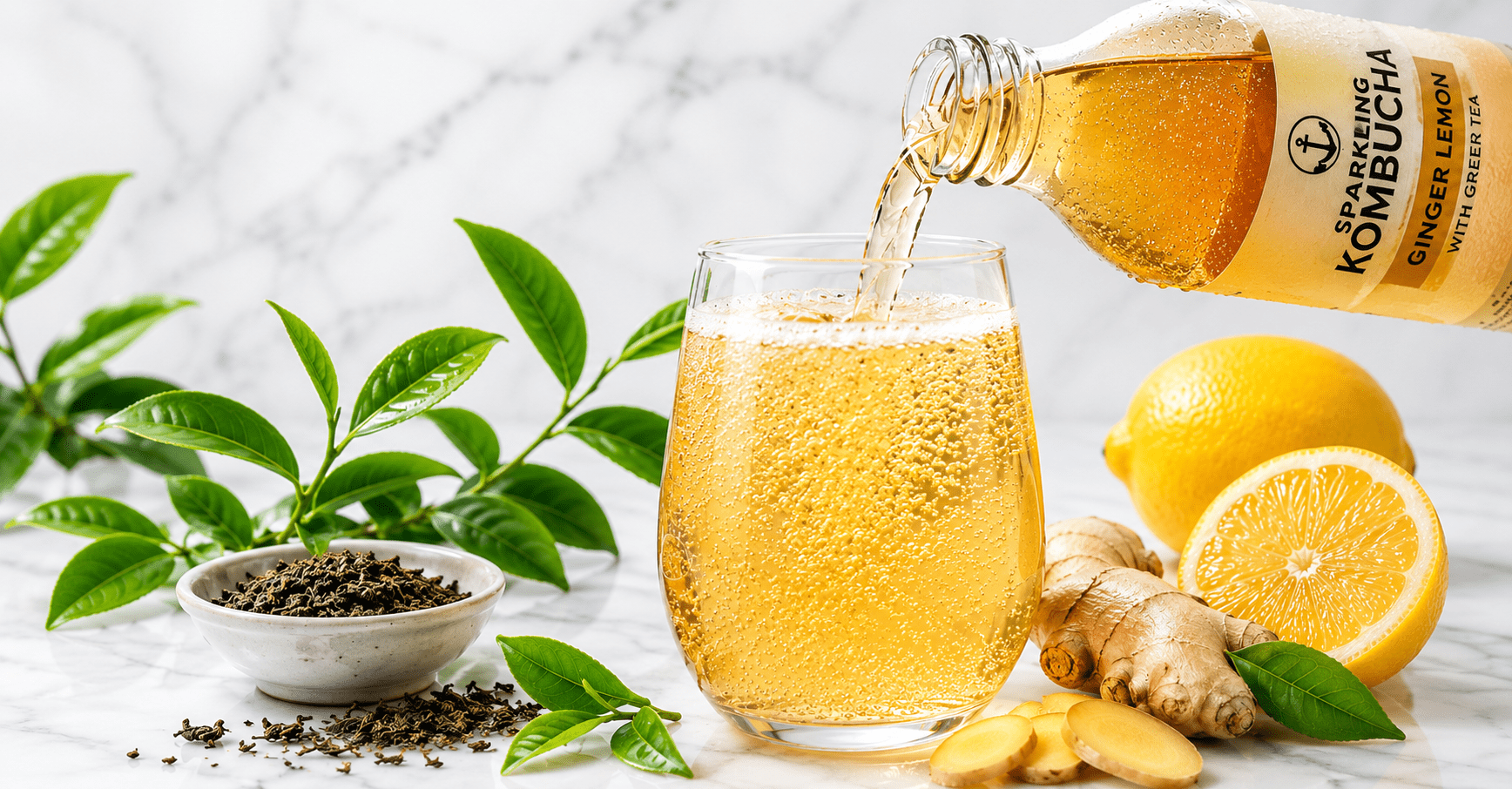
Whether you’re dealing with bloating, irregular digestion, or simply want to support a healthier gut microbiome, kombucha has become one of the most popular daily choices for gut-health-conscious adults. With dozens of brands making different claims, finding the right kombucha for gut health can feel confusing. If you’re also exploring the broader picture of gut microbiome rebalancing for constipation, this guide will complement that approach well.
In this research-informed guide, we review some of the best kombucha for gut health options commonly discussed in 2026, explain what the science actually shows (including its limitations), and help you make a smarter, more informed purchase decision. For a broader, step-by-step approach to digestive wellness, see our guide to natural laxatives for constipation.
What Is Kombucha and How Does It Support Gut Health?
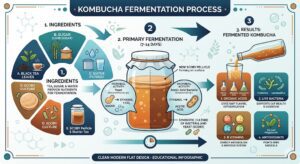
Kombucha is a fermented tea beverage made from tea, sugar, water, and a SCOBY (Symbiotic Culture of Bacteria and Yeast). During fermentation, the SCOBY transforms these ingredients into a drink rich with:
- Organic acids (acetic, lactic, gluconic acid) — may support a gut-friendly pH environment
- B vitamins — involved in energy and cellular metabolism
- Live microbial cultures — potentially beneficial bacteria and yeasts
- Polyphenols and antioxidants — from the tea base
- Enzymes — may assist in breaking down food
These compounds may create conditions in which beneficial gut bacteria are better able to thrive, though how reliably this happens across human populations is still being studied.
One important buying note: Choose unpasteurized kombucha whenever possible. Pasteurization uses heat that kills live microbial cultures — the primary functional component. Shelf-stable kombucha that requires no refrigeration is almost always pasteurized. (Some research studies have used pasteurized or fortified versions and still observed certain benefits — discussed below.)
What Does the Research Actually Say?
It’s worth reading kombucha research carefully. Several widely cited studies have notable limitations — small sample sizes, short durations, or formulations enriched with added fiber rather than plain kombucha. Here’s an honest summary.
Study 1 — Gut Microbiome (Ecklu-Mensah et al., 2024, Scientific Reports)
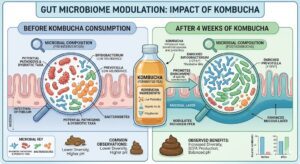
In this controlled study (kombucha group n=16, control group n=8), 4 weeks of daily kombucha consumption was associated with modest enrichment of certain short-chain-fatty-acid-producing bacteria, including Prevotella, Bifidobacterium, and Eubacterium, in the kombucha group. Weizmannia coagulans, a kombucha-associated probiotic, also showed increased presence, though the authors described the overall impact as modest given the small sample size and high inter-participant variability. No meaningful changes in blood biomarkers or inflammation markers were detected.
Takeaway: A preliminary signal that daily kombucha may modestly shift microbiome composition toward beneficial species — but far from conclusive at scale.
Study 2 — Digestion & Stool Frequency (Isakov et al., 2023)
This trial observed improvements in stool frequency among women with constipation-predominant IBS. An important detail often missed in popular coverage: the kombucha used was fiber-enriched (with inulin), pasteurized, and fortified with added vitamins — not plain raw kombucha. The results, while encouraging, can’t be directly attributed to plain raw kombucha alone. For a deeper look at how fiber affects gut motility, see our guide on why fiber supplements can sometimes make constipation worse.
Takeaway: Fiber-enriched kombucha formulations may support digestion and stool regularity, but this shouldn’t be generalized to all kombucha products.
Study 3 — Glycemic Index (Atkinson et al., 2023, Frontiers in Nutrition)
In a small crossover trial of 11 healthy adults, drinking unpasteurized kombucha alongside a high-glycemic meal appeared to lower the meal’s glycemic index (from roughly 86 to 68), an effect not seen with soda water or diet soft drinks. The sample size is very small, and broader replication hasn’t yet occurred.
Takeaway: Intriguing early evidence that raw kombucha may help moderate post-meal blood sugar response. Larger trials are needed.
Study 4 — Microbiota & Triglycerides (Arce-López et al., 2025, Current Research in Food Science)
This randomized controlled trial (n=58) evaluated fiber-enriched kombucha (with inulin) over 8 weeks and noted improvements in gut microbiota diversity and triglyceride levels. As with Study 2, this wasn’t plain kombucha — the added prebiotic fiber likely played a significant role in the outcomes.
Takeaway: Combining kombucha with prebiotic fiber shows promise; plain kombucha alone may not produce the same effects.
Study 5 — 8-Week Microbiome Intervention (2024)
A small pre-post clinical study (n=46) on black tea kombucha consumed over 8 weeks reported some favorable shifts in intestinal health markers, though the lack of a control group limits how much can be concluded.
Important context across all studies: Most kombucha research involves small sample sizes, short durations, and significant variability between participants. Some of the most cited “kombucha benefits” studies used fiber-enriched or pasteurized versions — not off-the-shelf raw kombucha. Major clinical authorities note that strong human evidence for kombucha’s health claims remains preliminary. More large-scale, well-controlled trials are needed before definitive conclusions can be drawn.
Best Time to Drink Kombucha for Digestion
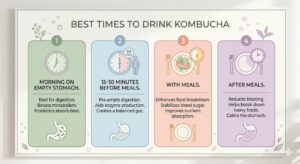
| Timing | Potential Benefit | Good For |
|---|---|---|
| Morning (fasted) | Live cultures reach the gut before food changes pH | General gut maintenance |
| Before meals (15–30 min) | Organic acids may prime digestive enzyme activity | Bloating-prone individuals |
| With meals | May help moderate glycemic response (early evidence) | Blood sugar management |
| After meals | May ease post-meal heaviness | Slow digestion |
Generally best to avoid:
- On an empty stomach if you have acid reflux or GERD
- Right before bed (caffeine from the tea base may affect sleep)
- Large servings all at once when starting your kombucha routine
If you’re drinking kombucha in the morning specifically for digestion, pairing it with other morning habits to relieve constipation naturally can make a meaningful difference.
How Much Kombucha Should You Drink Daily?
Suggested daily intake: 4–8 oz (120–240ml) for beginners, up to 12–16 oz (350–470ml) for those who tolerate it well.
| Week | Daily Amount | Notes |
|---|---|---|
| Week 1–2 | 4 oz (120ml) | Half a small bottle; gut adjustment |
| Week 3–4 | 8 oz (240ml) | One standard serving |
| Ongoing | 8–16 oz (240–470ml) | Based on personal tolerance |
Starting gradually matters because introducing significant amounts of fermented foods can temporarily cause gas or loose stools as your gut microbiome adjusts. This is normal and usually resolves within 1–2 weeks.
Pairing daily kombucha with adequate fiber intake, hydration, and movement is likely to produce better digestive results than kombucha alone — see our roundup of best probiotic supplements for gut health for complementary options. Adding high-fiber fruits to your daily diet alongside kombucha is another practical step backed by research.
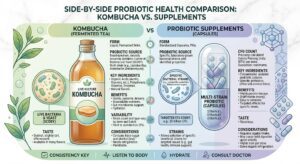
Kombucha vs Probiotics – Which Is Better?
| Factor | Kombucha | Probiotic Supplements |
|---|---|---|
| Strains | Variable, batch-dependent | Specific, standardized |
| CFU count | Rarely disclosed; highly variable | Clearly labeled |
| Additional compounds | Organic acids, antioxidants, B vitamins | Probiotics only |
| Convenience | Requires refrigeration | Many shelf-stable |
| Cost/day | ~$1–2 | ~$0.50–2 |
| Evidence strength | Promising but early-stage | More robust clinical data |
| Sugar content | 0–19g per serving | Zero |
Bottom line: They work differently. Probiotic supplements provide specific, measurable strains at documented doses — useful for targeted purposes. Kombucha offers a broader mix of organic acids, enzymes, and live cultures in a food format many people find more enjoyable and sustainable as a daily habit. For most people, the two are complementary rather than competing. If you’ve already tried probiotics without success, our article on what to do when fiber and probiotics aren’t working for constipation covers alternative approaches worth exploring.
Top Kombucha Brands for Gut Health in 2026
We considered publicly available ratings, ingredients, fermentation practices, and product information across fermentation method, ingredient transparency, and sugar content.
Note: Individual tolerance varies. A kombucha that works well for one person may cause bloating or discomfort in another, especially when starting fermented foods.
Quick Comparison
| Brand | Sugar/8oz | Live Cultures | Pasteurized? | Amazon Rating |
|---|---|---|---|---|
| GT’s Synergy | 4–6g | Yes | Never | 4.6/5 |
| Health-Ade | 6–8g | Yes | No | 4.6/5 |
| Liquid Remedy | 0g | Yes | No | 4.5/5 |
| Humm Zero | 0g | Yes (2B CFU labeled) | No | 4.4/5 |
| Health-Ade Paradise Pack | 6–8g | Yes | No | 4.6/5 |
1. GT’s SYNERGY Kombucha — Best Traditional Fermentation Option
Trilogy (16oz) on Amazon | Gingerade
GT’s has brewed raw, unpasteurized kombucha since 1995 and remains the market leader in the US. Their Synergy line — 95% raw kombucha and 5% organic juice — is widely recognized for traditional fermentation using heirloom cultures.
Why it’s commonly recommended for gut health: GT’s Synergy is never pasteurized, traditionally fermented for weeks rather than days, and contains billions of naturally occurring living probiotics per bottle. GT’s reports approximately 9 billion CFU per bottle, although naturally occurring kombucha cultures can vary by batch. This profile is often considered one of the closest commercial examples of traditionally fermented kombucha to what’s used in research contexts.
Pros:
- Never pasteurized — live culture integrity fully preserved
- Billions of naturally occurring probiotics (GT’s reports ~9 billion CFU per bottle; batch variation applies)
- Decades-long track record of small-batch fermentation
- Widely available (Whole Foods, Target, Walmart, Amazon)
- Broad flavor range (Gingerade, Trilogy, Guava Goddess, Gingerberry, and more)
- USDA Organic, Non-GMO certified
Cons:
- Strong, vinegary taste — may be off-putting for first-time drinkers
- Must be kept refrigerated at all times
- Alcohol content varies by batch; most are well under 0.5% ABV, but some batches have historically tested higher and are labeled accordingly — sensitive individuals should check labels
- Slightly higher price per bottle than canned alternatives
Best for: Gut health enthusiasts who want an authentic, traditionally fermented raw kombucha with high live culture integrity. If you’re also dealing with persistent constipation, combining GT’s Synergy with a well-chosen magnesium supplement may give better results than kombucha alone.
2. Health-Ade Kombucha — Best for Flavor & Fermentation Quality
Signature Variety Pack (12-Pack) on Amazon | Ginger-Lemon Cans
Brewed in small glass batches with cold-pressed organic juices, Health-Ade is consistently cited by nutrition writers as a top-tier option for gut support. The fermentation process produces a well-rounded postbiotic acid profile — acetic, lactic, gluconic, and glucuronic acids — that may contribute to a gut-friendly environment.
Pros:
- Cold-pressed juice base for improved flavor and nutrient preservation
- Rich postbiotic organic acid profile
- No artificial sweeteners, flavors, or colors — ever
- USDA Organic, Non-GMO, Vegan, Gluten-Free certified
- Available in both glass bottles and portable cans
- Consistently rated in the top tier of Amazon’s Kombucha Tea category
Cons:
- Sugar content (6–8g per 8oz) is slightly higher than GT’s Synergy
- Live culture count not specifically disclosed on packaging
- Premium pricing (~$4–5 per bottle retail)
- Refrigeration required
Best for: Those who want a premium, well-rounded gut health drink with a more approachable flavor profile than GT’s.
3. Liquid Remedy Kombucha — Best Sugar-Free Option
Fan Favorites Variety Pack (24-Pack) on Amazon | Mixed Berry (24-Pack)
Liquid Remedy uses a long-aged fermentation process that consumes nearly all residual sugar, resulting in 0g sugar per serving. Live cultures, organic acids, and fermentation-derived compounds are still retained, making it a suitable daily option without the glycemic concern.
Pros:
- 0g sugar per serving — suitable for people looking to reduce sugar intake, including those on low-carb diets
- Long-aged fermentation retains the organic acid profile
- Lighter, more refreshing taste profile than GT’s
- Organic certified, vegan, gluten-free
- Convenient can format — portable for travel and gym
Cons:
- Uses erythritol and stevia to restore sweetness — some people sensitive to sugar alcohols or stevia may notice an aftertaste
- Live CFU count not disclosed on packaging
- Less widely available in physical stores than GT’s or Health-Ade
- Some may prefer glass bottles for fermentation integrity reasons
Best for: Those following low-carb or keto approaches, or anyone wanting daily kombucha without added sugar. Note that some people on very low-fiber diets may still experience constipation — see our guide on best psyllium husk for constipation relief for a compatible fiber source.
4. Humm Probiotic Kombucha Zero Sugar — Best for Convenience & Transparency
Zero Sugar Variety Pack (16-Pack) on Amazon | Ginger Lemonade (16-Pack)
Humm ferments its kombucha until most sugar is consumed, then sweetens with monk fruit and allulose (plant-based sweeteners). It adds 2 billion CFU of Bacillus subtilis DE111 — a well-researched heat-stable strain — plus Vitamin B12. Notably, Humm doesn’t require refrigeration, making it highly portable.
Pros:
- 2 billion CFU clearly labeled — rare transparency in the kombucha category
- No refrigeration needed — ideal for travel, office, or gym bag
- Minimal sugar; fermented until sugar content is very low
- Vitamin B12 added for energy support
- Mild, approachable flavor with no harsh vinegar taste
- Keto-friendly, organic, vegan, gluten-free
Cons:
- Adds Bacillus subtilis after fermentation rather than relying solely on naturally occurring SCOBY cultures — a meaningful difference for those seeking traditionally fermented kombucha
- Shelf-stable format may mean lower naturally occurring live culture diversity vs. refrigerated options
- Uses allulose — some people experience digestive sensitivity to this sweetener
- Monk fruit sweetener may taste artificial to some palates
Best for: Beginners, frequent travelers, or office workers who want a portable, no-refrigeration kombucha with a clearly labeled probiotic count and minimal sugar.
5. Health-Ade Paradise Variety Pack — Best for Daily Variety
Paradise Variety 12-Pack on Amazon
Rated 4.6/5 with 800+ Amazon reviews, this variety pack from Health-Ade is ideal for those who want to rotate through multiple flavors while maintaining consistent gut health support. It carries the same quality standards as Health-Ade’s core line.
Pros:
- Multiple tropical and fruit-forward flavors in one order
- Same Health-Ade quality (organic, cold-pressed, non-GMO)
- Strong verified buyer ratings across hundreds of reviews
- Good for households or for trying flavors before committing
Cons:
- Not every flavor in a variety pack will suit all palates
- Premium price for a multi-pack
What to Look for When Buying Kombucha
| Factor | What to Look For |
|---|---|
| Pasteurization | “Raw” or “unpasteurized” on label |
| Storage | Refrigerated in-store (not shelf-stable) |
| Sugar | Under 8g per 8oz; 0g if managing blood sugar |
| Live cultures | “Live and active cultures” disclosed |
| Ingredients | Short, clean list — tea, SCOBY, optional fruit juice |
| Certification | USDA Organic preferred |
Common Questions
For Beginners
What is a good kombucha for beginners?
If you’re new to kombucha, Humm Zero or Health-Ade are generally easier to start with. Humm has a mild, approachable flavor with no strong vinegar taste, doesn’t require refrigeration, and has a clearly labeled probiotic count. Health-Ade sits in a middle ground — slightly tangy but smoother than GT’s Synergy.
Start with 4 oz (half a small bottle or can) per day and gradually increase. Some people experience temporary gas or loose stools when first introducing fermented foods — this usually resolves within 1–2 weeks.
Is GT’s Synergy too strong for a first-time drinker?
For many people, yes. GT’s has a notably tart, vinegary profile. If you find it too sharp, try the Guava Goddess or Mystic Mango flavors first — they’re fruit-forward and easier to ease into.
For Bloating Relief
Which kombucha may help with bloating?
There’s no evidence that any commercial kombucha produces rapid bloating relief from a single serving. However, consistent daily use (about 8 oz per day for 2–4 weeks) appears to be more associated with digestive improvements in the research literature than one-time consumption.
For bloating specifically, GT’s Synergy Gingerade is a popular choice — ginger has independently studied anti-nausea and digestive properties that complement kombucha’s organic acid profile. Many users report noticing improvements in bloating after 2–3 weeks of daily use. For faster bloating and constipation relief in the short term, some people also turn to herbal laxatives while waiting for fermented food habits to take effect.
Does kombucha help with digestion quickly?
One small study observed improvements in stool frequency within 10 days, but that used a fiber-enriched formulation, not plain raw kombucha. For most people, digestive changes from kombucha are gradual and may take 2–4 weeks of consistent use to become noticeable. It’s not a rapid-acting digestive remedy.
Sugar-Free Options
What is a good sugar-free kombucha for gut health?
Both Liquid Remedy (0g sugar, naturally fermented, suitable for people watching their sugar intake) and Humm Zero (0g sugar, monk fruit and allulose sweetened) are solid choices. Liquid Remedy is closer to traditional fermentation — sugar is consumed during fermentation itself. Humm Zero adds plant-based sweeteners after fermentation and also adds a specific probiotic strain post-production.
Is sugar-free kombucha as effective as regular kombucha for gut health?
The organic acid profile and live cultures are largely preserved in sugar-free fermented versions like Liquid Remedy. The sugar in standard kombucha is mostly consumed by the SCOBY during fermentation anyway, leaving much less than the starting amount. Both can support gut health; the choice comes down to individual dietary preferences.
Health & Safety
Can I drink kombucha every day?
For most healthy adults, 8–16 oz of kombucha per day is generally tolerated by many healthy adults and may support gut health maintenance as part of a balanced diet. Start with a smaller amount and monitor how your body responds. Individual reactions vary, and if you have an underlying health condition, consult a healthcare provider before adding kombucha to your routine.
What about the alcohol in kombucha?
Many commercially sold kombucha products contain trace amounts of alcohol, though levels vary by brand and batch. Some batches — particularly from brands like GT’s Synergy — may occasionally test higher and will be labeled accordingly. People in alcohol recovery, those with strict dietary restrictions around alcohol, or pregnant individuals should check labels carefully or consult a healthcare provider before consuming.
Does kombucha replace probiotics?
No. Kombucha and probiotic supplements serve overlapping but different purposes. Specific therapeutic probiotic strains — like Lactobacillus rhamnosus GG for certain GI conditions — are best delivered through supplements at measurable, standardized doses.
Can kombucha help with constipation?
Preliminary evidence suggests it may support stool regularity, particularly with consistent use. However, the best-studied results in constipation research used fiber-enriched kombucha formulations. For anyone managing chronic constipation, kombucha is best viewed as one complementary tool within a broader approach that includes dietary fiber, hydration, and movement. If fiber supplements alone haven’t helped, our article on why fiber supplements can make constipation worse explains common pitfalls and how to fix them. You may also want to explore our full list of best OTC laxatives for constipation for situations where a faster-acting solution is needed alongside long-term gut health habits.
Buying Checklist & Final Thoughts
Kombucha is a well-established fermented food with a growing — though still preliminary — evidence base supporting potential gut health benefits. The studies are promising, and many people report positive digestive changes with regular consumption. That said, it works best as part of a broader healthy lifestyle, not as a standalone treatment.
Our Top Picks at a Glance
| Rank | Brand | Best For | Link |
|---|---|---|---|
| 1 | GT’s Synergy | Overall gut health & authenticity | Shop Now |
| 2 | Health-Ade Variety | Probiotic diversity & flavor | Shop Now |
| 3 | Liquid Remedy | Sugar-free daily option | Shop Now |
| 4 | Humm Zero | Convenience & labeled CFU | Shop Now |
| 5 | Health-Ade Paradise | Daily flavor variety | Shop Now |
Pre-Purchase Checklist
- Labeled “raw” or “unpasteurized”
- Kept refrigerated in-store
- Under 8g sugar per 8oz (or 0g for sugar-managed diets)
- Live cultures disclosed on label
- Clean ingredient list, no artificial additives
- Certified organic where possible
- Alcohol content checked if you have sensitivities
Start with 4 oz daily, build up over 2–4 weeks, and give your gut time to adjust and respond. Individual results will vary, and kombucha is not a replacement for medical treatment of any digestive condition.
Affiliate Disclosure: This article may contain affiliate links. If you purchase through these links, we may earn a small commission at no extra cost to you. Our recommendations are based on research and editorial evaluation, not affiliate partnerships.
Medical Disclaimer: The information on this page is for general educational purposes only and is not a substitute for professional medical advice, diagnosis, or treatment. Individual responses to fiber supplements vary. Always consult a qualified healthcare provider before starting, stopping, or changing any supplement or treatment, especially if you have an underlying medical condition. Medically reviewed by Dr. ABM Sadikullah, FCPS (Medicine).
References
- Ecklu-Mensah G, Miller R, Maseng MG, et al. Modulating the human gut microbiome and health markers through kombucha consumption: a controlled clinical study. Sci Rep. 2024;14:31647. PMC11686376
- Pilipenko VI, Isakov VA, Morozov SV, Vlasova AV, Kochetkova AA. Efficacy of a newly developed kombucha-based specialized food product for treatment of constipation-predominant irritable bowel syndrome. Curr Dev Nutr. 2023. PMID 36394933
- Atkinson FS, Cohen M, Lau K, Brand-Miller JC. Glycemic index and insulin index after a standard carbohydrate meal consumed with live kombucha: a randomised, placebo-controlled, crossover trial. Front Nutr. 2023;10:1036717. PMID 36875857
- Arce-López B, Bazán GX, Molina S, et al. Effect of fiber-modified kombucha tea on gut microbiota in healthy population: a randomized controlled trial. Curr Res Food Sci. 2025;11:101130. ScienceDirect