

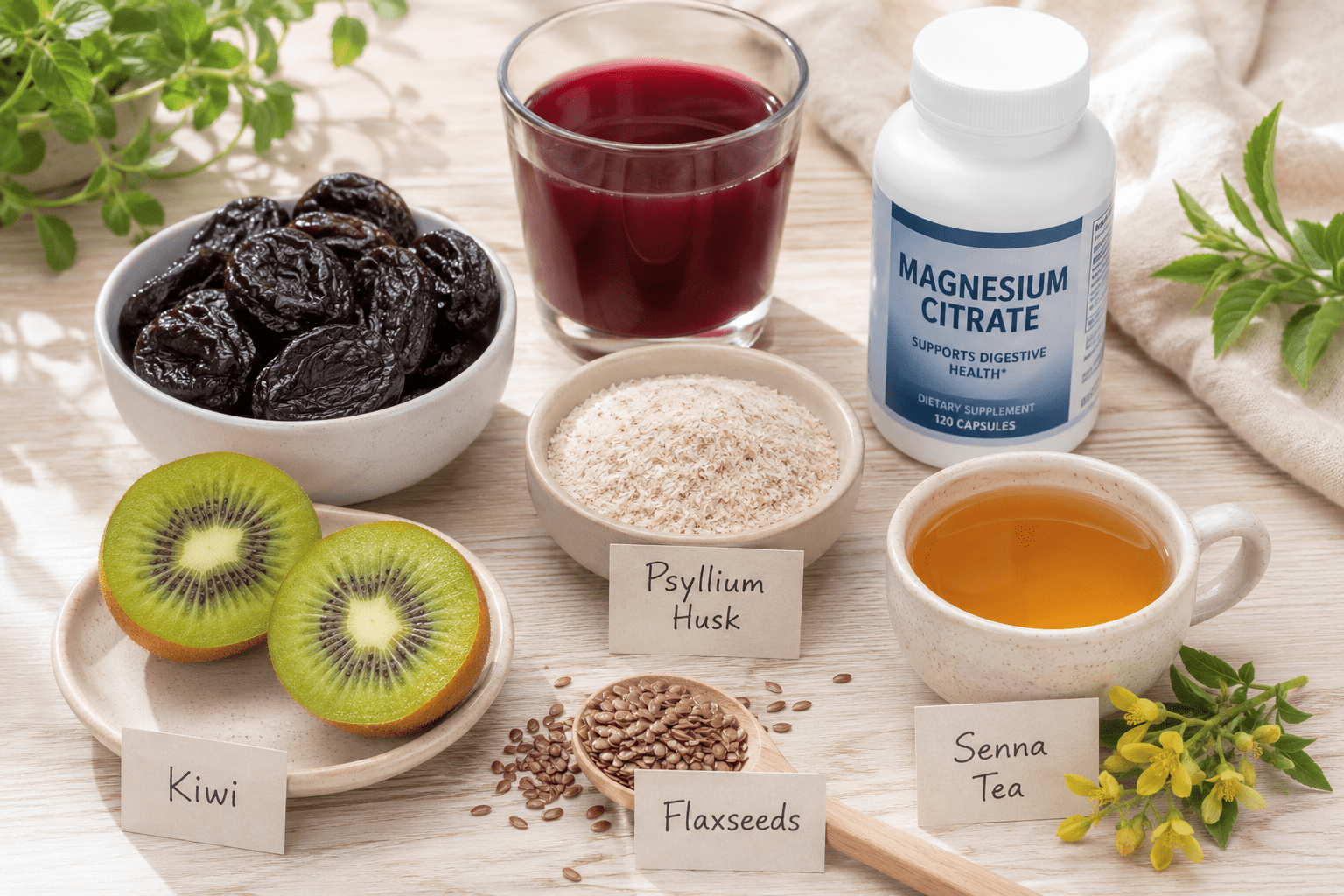
Constipation is one of the most common digestive problems worldwide, and many people are now searching for the best natural laxatives for constipation to improve bowel regularity without relying entirely on medications.
Some constipation remedies work quickly for short-term relief, while others are better suited for long-term digestive support and daily bowel regularity. Among the most researched options are prunes, kiwifruit, magnesium citrate, psyllium husk, senna tea, and flaxseed.
This guide covers the best constipation remedies based on clinical research, including how quickly each option may work, possible side effects, long-term safety, and which remedies appear most effective for different situations.
Quick Answer
The best bowel-supporting remedies for constipation include prunes, kiwifruit, magnesium citrate, psyllium husk, and senna tea. Prunes have the strongest food-based clinical evidence. Magnesium citrate may provide the fastest short-term relief. Kiwifruit and psyllium are commonly used for long-term bowel regularity, while senna tea may provide reliable overnight support when used short-term only.
⚡ Quick Takeaways
- Best overall food-based option: Prunes — strongest clinical evidence among constipation relief foods
- Fastest short-term relief: Magnesium citrate — may work within 30 minutes to 6 hours
- Gentlest daily digestive support: Kiwifruit — low side-effect profile and may reduce bloating
- Best long-term fiber supplement: Psyllium husk — one of the most extensively studied bulk-forming fibers
- Reliable overnight option (short-term only): Senna tea — should generally not be used longer than 1–2 weeks
Important: Stimulant laxatives and stimulant bowel remedies such as senna or aloe latex are not recommended for long-term daily use, as prolonged use may reduce normal bowel function over time.
 Best Natural Laxatives for Constipation (By Situation)
| Situation | Suggested Option | Estimated Onset |
|---|---|---|
| Rapid acute relief | Magnesium citrate | 30 min – 6 hrs |
| Strongest clinical evidence | Prunes / prune juice | 6–12 hrs |
| Gentlest daily digestive support | Kiwifruit (2/day) | 12–24 hrs |
| Overnight short-term support | Senna tea | 6–12 hrs |
| Long-term bowel regularity | Psyllium husk | 24–72 hrs |
| Daily stool softening (food-based) | Ground flaxseed | 12–24 hrs |
Constipation lasting longer than 3 weeks, blood in the stool, unexplained weight loss, or severe abdominal pain should be evaluated by a healthcare professional before trying home remedies or supplements.
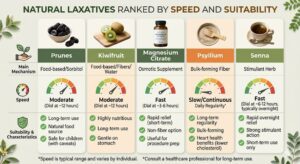
How These Remedies Work: The 4 Main Mechanisms
Understanding how different constipation relief options work can help you choose the most appropriate approach for your situation.
1. Bulk-Forming (Fiber)
These absorb water and expand in the colon, adding bulk to stool and stimulating the natural urge to defecate. Examples: psyllium husk, ground flaxseed, chia seeds. Generally the gentlest and safest for regular use — but adequate water intake is essential or they may worsen constipation.
2. Osmotic (Drawing Water Into the Colon)
Osmotic agents draw water into the intestines, softening stool and encouraging movement. Magnesium citrate and the sorbitol in prune juice work this way — potentially producing quicker bowel movements by increasing colon water content.
3. Stimulant (Triggering Muscle Contractions)
Stimulant options may activate nerves in the colon wall, causing peristaltic contractions that propel stool forward. Senna is the most studied stimulant in this category — effective but intended for short-term use only. Long-term use carries dependency risk.
4. Lubricant (Coating and Softening Stool)
These may coat the stool and intestinal walls, reducing friction and making passage easier. Olive oil is the most commonly referenced lubricant-type digestive support option, though evidence in healthy adults is limited.
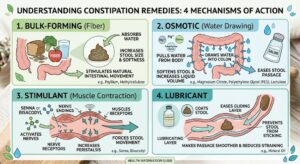
15 Well-Researched Constipation Relief Options
01 Prunes and Prune Juice — Strongest Food-Based Clinical Evidence
Prunes are among the most extensively studied bowel regularity foods available, working through multiple mechanisms simultaneously — a key reason they consistently outperform single-mechanism options in clinical trials.
Why Prunes May Help
- Sorbitol — a sugar alcohol with osmotic properties that may draw water into the colon, softening stool
- Insoluble fiber — adds bulk and may support regular bowel movement frequency
- Pectin (soluble fiber) — feeds beneficial gut bacteria and acts as a gentle stool softener
- Polyphenols — may stimulate digestive hormones that support intestinal movement
- Isatin and chlorogenic acids — act as mild bowel-stimulating compounds
What the Research Shows
- 3.5 vs. 2.8 complete spontaneous bowel movements per week vs. psyllium (P = 0.006) — (Lever et al., 2014)
- Significant improvement in stool consistency (P = 0.049) and reduced straining (P < 0.001) vs. baseline — (Chey et al., 2021)
- Outperformed psyllium on both stool frequency and consistency in an 8-week head-to-head RCT — (Attaluri et al., 2011)
Estimated Onset
Prune juice: approximately 6 to 12 hours on an empty stomach. Whole prunes may take up to 24 hours for first-time users. Individual results vary considerably.
How to Use
- Whole prunes: 4–8 prunes (~50 g) daily, preferably in the morning
- Prune juice: 240 mL (8 oz) of 100% unsweetened prune juice in the morning on an empty stomach — no added sugars
- Increasing water intake may enhance the osmotic stool-softening effect

📖 Related: How Prune Juice Supports Constipation Relief | Prunes and Kiwifruit for Chronic Constipation
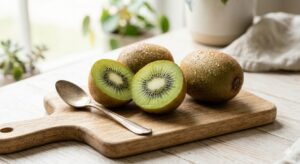
02 Kiwifruit — Gentlest Daily Digestive Support Food
Kiwifruit has attracted considerable clinical interest as a bowel regularity food with an unusually favorable side-effect profile. Multiple RCTs suggest benefits for stool regularity and bloating that some other fiber-based options cannot replicate — including a lower adverse event rate than psyllium.
Why Kiwifruit May Help
- Pectin (soluble fiber) — softens stool and feeds beneficial gut bacteria
- Actinidin — a proteolytic enzyme unique to kiwifruit that may enhance gastric emptying and support bowel transit
- Insoluble fiber — adds stool bulk
- Prebiotic effects — may support gut microbiome diversity for sustained bowel regularity
What the Research Shows
- Significantly reduced bloating vs. psyllium (P = 0.021) — a benefit psyllium did not demonstrate in this study — (Bayer et al., 2022)
- Improved stool consistency (P = 0.01) and reduced straining (P = 0.003) vs. baseline — (Chey et al., 2021)
- Lowest adverse event rate among kiwifruit, prunes, and psyllium in a US multicenter RCT — (Chey et al., 2021)
Estimated Onset
12 to 24 hours for initial effects; meaningful bowel regularity benefit typically develops over 2–4 weeks of daily use.
How to Use
- Eat 2 kiwifruit daily (green or gold variety), at breakfast or before bed
- The skin is edible and fiber-rich — blend into smoothies if preferred
- Consistent daily use delivers better results than occasional use
📖 Related: Kiwifruit for Constipation: What the Research Shows
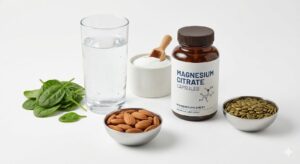
03 Magnesium Citrate — Fastest-Acting Short-Term Osmotic Option
Magnesium citrate works through a well-understood osmotic mechanism and is widely available without a prescription. It is among the faster-acting constipation relief options available OTC.
Why Magnesium May Help
Magnesium ions are poorly absorbed in the GI tract, remaining in the intestinal lumen and drawing water in through osmosis — softening stool, increasing intraluminal pressure, and supporting peristaltic contractions. Magnesium citrate is faster-acting due to better absorption kinetics. Magnesium oxide has a stronger osmotic effect per gram and may suit ongoing use under medical guidance — as studied by (Morishita et al., AJG 2021).
What the Research Shows
- 68% symptom improvement vs. 12% on placebo in a magnesium oxide RCT — (Morishita et al., AJG 2021)
- Inverse association between dietary magnesium intake and constipation confirmed in a large NHANES dataset
Magnesium-Rich Foods
Increasing dietary magnesium may gently support bowel function over time: dark leafy greens, pumpkin seeds, almonds, black beans, dark chocolate, and avocado are among the richest sources.
Estimated Onset
30 minutes to 6 hours — among the faster-acting options available without a prescription.
How to Use
- Magnesium citrate supplement: 200–400 mg with a full glass of water; taking in the evening may support a morning bowel movement
- Magnesium oxide: 250–500 mg elemental magnesium daily under medical guidance
- Do not use liquid magnesium citrate for more than 1 week continuously without medical advice
📖 Related: Best Magnesium for Constipation Relief
04 Senna Tea — Reliable Overnight Option (Short-Term Only)
Senna (Senna alexandrina) appears in the AGA 2023 Clinical Guidelines for Chronic Idiopathic Constipation as a conditionally recommended option (low certainty of evidence). It is one of the more reliable short-term stimulant choices available without a prescription.
Why Senna May Help
Senna contains anthraquinone glycosides (sennosides A and B). Gut bacteria convert these into active metabolites that may stimulate enteric nerves (myenteric plexus), increasing peristalsis and reducing colon transit time. They may also increase fluid secretion into the colon, softening stool.
What the Research Shows
- Mean difference of 7.60 additional complete spontaneous bowel movements per week (95% CI 5.90–9.30) vs. placebo — (AGA Clinical Guidelines, 2023)
- Approximately 5× higher response rate than placebo in meta-analysis; certainty of evidence rated low by the AGA panel — (AGA Clinical Guidelines, 2023)
Estimated Onset
6 to 12 hours — taking before bed often supports a bowel movement the following morning.
How to Use
- Senna tea: 1 cup before bed (steep 10 minutes); do not exceed 1 cup per day
- Senna tablets: Standard OTC starting dose is 17.2 mg sennosides once daily at bedtime
- Limit use to 1–2 weeks maximum unless directed by a physician

05 Olive Oil — Traditional Lubricant Remedy (Limited Evidence)
Olive oil has a long history in traditional medicine. Some research suggests it may have mild stool-softening properties through lubricant and bile-stimulating mechanisms, though available evidence is largely limited to specific patient populations.
Why Olive Oil May Help
- May coat the intestinal walls and stool surface, reducing friction and easing passage
- May support bile production, which can encourage bowel movement
- Contains oleic acid and oleocanthal, compounds with mild anti-inflammatory properties
What the Research Shows
- Improved constipation scores (P = 0.01) comparable to mineral oil in a 4-week RCT of 50 hemodialysis patients — results may not generalize to healthy adults — (Ramos et al., JRN 2014)
Note: Evidence is limited to specific populations. Olive oil is a reasonable option for mild constipation but should not replace more evidence-backed approaches in moderate or severe cases.
Estimated Onset
Several hours when taken on an empty stomach — onset varies between individuals.
How to Use
- Take 1 tablespoon of extra-virgin olive oil first thing in the morning on an empty stomach
- Adding fresh lemon juice may support the digestive effect for some people
- Do not exceed 2 tablespoons per day

📖 Related: Does Olive Oil Help with Constipation?
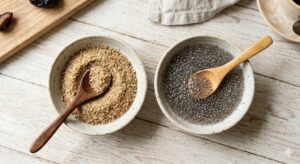
06 Ground Flaxseed — Dual-Action Fiber and Omega-3 Bowel Regularity Food
Ground flaxseed is among the more nutrient-dense bowel regularity foods available, combining soluble and insoluble fiber with omega-3 fatty acids — a practical daily addition to a constipation-focused diet.
Why Ground Flaxseed May Help
- Soluble fiber (mucilage) — absorbs water to form a gel that may soften stool
- Insoluble fiber — adds bulk and may support faster bowel transit
- Omega-3 fatty acids (ALA) — may support the intestinal lining and reduce gut inflammation
Important: Always use ground flaxseed (flaxseed meal) — whole seeds pass through the gut largely undigested and provide minimal bowel regularity benefit.
What the Research Shows
- Comparable to lactulose in improving stool frequency and consistency in a 2020 RCT
- Significant improvement in constipation scores with flaxseed oil in hemodialysis patients — (Ramos et al., JRN 2014)
Estimated Onset
12 to 24 hours; consistent daily use is needed for best results.
How to Use
- Start with 1 tablespoon (10 g) daily, gradually building to 2 tablespoons
- Mix into oatmeal, smoothies, yogurt, or baked goods
- Look for pre-ground golden or brown flaxseed meal in vacuum-sealed packaging — refrigerate after opening to prevent rancidity
- Drink at least 8 oz of water with each serving
📖 Related: Fiber Supplements for Chronic Constipation
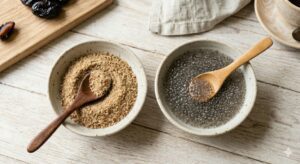
07 Chia Seeds — High-Fiber Daily Bowel Support (Must Soak First)
Chia seeds are approximately 34% fiber by weight — one of the highest fiber densities of any food — making them a practical daily digestive support food when properly prepared.
Why Chia Seeds May Help
They contain both soluble and insoluble fiber. When soaked in water, they form a viscous gel that adds significant stool bulk, retains water in the colon, and may aid stool passage.
Estimated Onset
12 to 24 hours; consistent daily use delivers the most predictable results.
How to Use — Critical Soaking Instruction
- Always soak chia seeds before consuming — dry seeds can expand unexpectedly in the esophagus or gut, posing a choking or blockage risk
- Soak 1–2 tablespoons in 1 cup of water for 20–30 minutes until they form a gel
- Add to smoothies, oatmeal, puddings, or yogurt
- Drink extra water throughout the day
08 Pears — High-Fiber Fruit with Mild Osmotic Properties
Pears are among the higher-sorbitol fruits available. One medium pear with skin provides about 5.5 g of fiber — roughly 20% of the daily recommended intake — along with sorbitol for a mild osmotic stool-softening effect.
Why Pears May Help
- Sorbitol — mild osmotic agent that may draw water into the colon
- Insoluble fiber (cellulose) — concentrated in the skin; adds stool bulk
- Pectin (soluble fiber) — gentle stool softener; feeds beneficial gut bacteria
Estimated Onset
12 to 24 hours for most people, though individual responses vary.
How to Use
- Eat 1–2 medium pears daily with the skin on
- Pair with warm water in the morning for potentially better results for some individuals
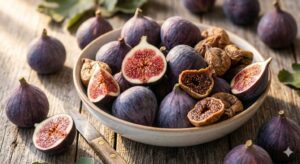
09 Figs — Traditional Bowel Regularity Food with Emerging Evidence
Figs are a natural source of fiber, digestive enzymes, and sorbitol, with some clinical evidence suggesting benefits for stool passage and bowel movement frequency in adults with functional constipation.
What the Research Shows
- Emerging clinical trial evidence suggests 45 g/day of fig paste over 8 weeks may reduce colonic transit time and improve stool frequency and consistency. High-quality large-scale RCT evidence remains limited; findings should be considered preliminary.
Estimated Onset
12 to 24 hours; fresh figs may act slightly faster for some individuals.
How to Use
- Eat 3–4 dried figs in the morning or as a snack
- For potentially faster results: soak 2–3 dried figs overnight in water and eat them first thing in the morning, drinking the soaking liquid as well
10 Apples (With Skin) — Pectin-Rich Daily Bowel Regularity Food
Apples are rich in both soluble and insoluble fiber, particularly when eaten with the skin. Pectin may form a gel in the colon that gently softens stool, feeds beneficial bacteria, and increases short-chain fatty acid (SCFA) production, which supports the intestinal lining.
Estimated Onset
12 to 24 hours; effects are gentle and cumulative rather than dramatic.
How to Use
- Eat 1–2 medium apples daily with the skin on
- Pair with warm water in the morning for potentially better results
- Apple juice contains far less fiber — whole apples are required for a meaningful bowel regularity benefit
11 Psyllium Husk — Most Extensively Studied Bulk-Forming Fiber Supplement
Psyllium (Plantago ovata) husk is the active ingredient in Metamucil and one of the most thoroughly researched bowel regularity supplements in clinical literature, widely referenced in long-term bowel management guidelines.
Why Psyllium May Help
Psyllium husk is approximately 70% soluble fiber. Mixed with water, it forms a viscous gel that adds stool bulk, softens stool, stimulates the gut wall through mechanical pressure, and feeds beneficial gut bacteria through prebiotic effects.
What the Research Shows
- +2.32 spontaneous bowel movements per week vs. placebo (95% CI 0.86–3.79) — (AGA Clinical Guidelines, 2023 meta-analysis)
- 66% relief rate vs. 41% in control groups across 16 clinical trials involving over 1,200 participants
- FDA-approved cholesterol-lowering claim — provides additional cardiovascular benefit beyond bowel regularity
Estimated Onset
24 to 72 hours; maximum benefit typically develops over 1–4 weeks. Psyllium is a long-term maintenance option — not suitable for acute bowel emergencies.
How to Use
- Start with 5 g (about 1 teaspoon) once daily, gradually increasing to 10–15 g/day
- Use pure psyllium husk powder or capsules without artificial sweeteners
- Mix in a full 8 oz glass of water and drink immediately — do not let it thicken in the glass
- Follow with another glass of water
- Take medications at least 1–2 hours apart from psyllium — it may interfere with absorption

📖 Related: Fiber Supplements for Chronic Constipation | Psyllium Husk vs Wheat Bran | Why Fiber Isn’t Working for Your Constipation
12 Coffee — Morning Stimulant That May Support Bowel Activity
Coffee may stimulate bowel activity in a significant proportion of regular drinkers, working through caffeine-driven colon contractions, chlorogenic acid-mediated gastric secretion, gastrin release, and activation of the gastrocolic reflex.
What the Research Shows
- Approximately 50% more propagating colon contractions compared to water in sensitive individuals — (Iriondo-DeHond et al., Nutrients 2021)
- Both caffeinated and decaffeinated coffee appear to stimulate bowel activity; caffeinated coffee tends to produce a stronger, more consistent effect
Estimated Onset
Minutes to 30 minutes in sensitive individuals — this effect does not apply to all coffee drinkers and varies considerably.
How to Use
- Drink 1–2 cups of caffeinated coffee in the morning, ideally before eating
- Decaffeinated coffee may also support bowel movement, though less reliably
- Avoid more than 3–4 cups/day — excess coffee can worsen dehydration, potentially counteracting any bowel benefit
13 Warm Water and Lemon Water — The Essential Hydration Baseline
Dehydration is one of the most frequently overlooked contributors to hard stools and sluggish bowel function. Warm water (40–50°C) may promote intestinal peristalsis more effectively than cold water for some people. A 2016 study in postoperative patients found warm water intake was associated with improved bowel movement frequency.
How to Use
- Drink 1–2 glasses (240–480 mL) of warm water first thing in the morning, before food or coffee
- Adding fresh lemon juice (half a lemon) may provide additional mild digestive stimulation for some people
- Aim for at least 8 glasses (64 oz / ~2 liters) of water daily — essential for all fiber-based options to work properly
📖 Related: Does Dehydration Cause Constipation?
14 Aloe Vera Juice — Traditional Remedy (Use with Caution; Inner Leaf Only)
Aloe vera has a long history of traditional medicinal use, but its effects and safety depend on the specific part of the plant used.
⚠ Important Safety Note:
The outer leaf latex of aloe vera contains anthraquinone compounds (including aloin) that may have stimulant laxative effects. The inner leaf gel is milder and is generally used in commercial aloe vera juice products.
Some non-decolorized aloe latex preparations have been associated with safety concerns, which is why many commercial products now use purified, decolorized inner-leaf gel with reduced aloin content.
Always choose products labeled for internal use and properly purified.
How to Use
- Use only inner-leaf aloe vera juice (not latex-based products)
- Typical amount: 30–60 mL (1–2 oz) per day
- Do not use continuously for more than 1–2 weeks without medical guidance
Precautions
- Pregnant or breastfeeding individuals should consult a healthcare provider before use
- People with kidney or liver conditions should avoid use unless medically advised
- Discontinue use if any adverse digestive symptoms occur
Pros
✓ May have mild soothing effects on the digestive tract
✓ Long history of traditional use
Cons
✗ Limited high-quality clinical evidence for constipation in healthy adults
✗ Some forms may contain compounds with stimulant laxative activity
✗ Potential for drug interactions in sensitive individuals
15 A High-Fiber Diet — Most Sustainable Long-Term Constipation Strategy
Increasing overall dietary fiber consistently ranks as the most evidence-based long-term approach to bowel regularity. The average American consumes only 10–15 g of fiber per day — far below the recommended 25 g for women and 38 g for men (National Academy of Medicine).
Top High-Fiber Foods for Bowel Regularity
- Raspberries: 8 g fiber per cup — among the highest-fiber fruits available
- Lentils: 15.6 g fiber per cooked cup
- Black beans: 15 g per cooked cup
- Oatmeal: 4 g per cup; beta-glucan may soften stool naturally
- Broccoli: 5 g per cup; also provides vitamin C and magnesium
- Whole wheat bread: ~2 g per slice vs. 0.5 g for white bread
📖 Related: High-Fiber Foods for Constipation Relief | Plant-Based Diet for Constipation | Why Fiber Isn’t Working for Your Constipation
Comparison Table: All 15 Options at a Glance
| Remedy | Est. Onset* | Best For | Mechanism | Daily Use? | Key Side Effects |
|---|---|---|---|---|---|
| Prunes / Prune Juice | 6–12 hrs | Chronic constipation; daily use | Osmotic + Bulk + Stimulant | ✅ Yes | Gas, bloating (mild) |
| Kiwifruit | 12–24 hrs | Gentle long-term; IBS-C | Bulk + Enzyme (actinidin) | ✅ Yes | Minimal; rare allergy |
| Magnesium Citrate | 30 min – 6 hrs | Rapid short-term relief | Osmotic | ⚠ Short-term only | Diarrhea, cramping, electrolyte risk |
| Senna Tea | 6–12 hrs | Overnight short-term use | Stimulant | ⚠ Max 1–2 weeks | Cramping, dependency risk |
| Olive Oil | Several hrs | Mild constipation; morning routine | Lubricant | ✅ Yes (1 tbsp/day) | Loose stools in excess |
| Ground Flaxseed | 12–24 hrs | Daily stool softening | Bulk-forming | ✅ Yes | Gas; needs adequate water |
| Chia Seeds | 12–24 hrs | Daily fiber supplement | Bulk-forming | ✅ Yes (soaked only) | Bloating if dry; dehydration risk |
| Pears (with skin) | 12–24 hrs | Mild daily bowel regularity | Osmotic + Bulk | ✅ Yes | Gas with excess sorbitol |
| Figs (dried) | 12–24 hrs | Gentle daily maintenance | Bulk + mild Enzyme | ✅ Yes | High natural sugar; loose stools in excess |
| Apples (with skin) | 12–24 hrs | Daily mild maintenance | Bulk + Osmotic (mild) | ✅ Yes | Gas with excess |
| Psyllium Husk | 24–72 hrs | Long-term bowel regularity | Bulk-forming | ✅ Yes | Gas; bloating; choking risk if dry |
| Coffee | Min – 30 min | Morning stimulation (sensitive users) | Stimulant (mild) | ✅ Yes (1–2 cups) | Dehydration; anxiety in excess |
| Warm Lemon Water | 30–60 min | Daily hydration baseline | Hydration + mild stimulation | ✅ Yes | Tooth enamel risk if lemon undiluted |
| Aloe Vera Juice | 8–12 hrs | Occasional use (inner leaf only) | Stimulant (mild) | ⚠ Max 2 weeks | Diarrhea; drug interactions |
| High-Fiber Diet | Days–weeks | Long-term prevention | Bulk-forming | ✅ Yes | Gas initially; drink more water |
*Factors including gut motility, hydration, diet, and underlying conditions all affect onset times. These figures are approximate estimates only.
Dietary Constipation Remedies vs OTC Laxatives: Which Should You Use?
Both approaches have their place. Here is a practical breakdown:
| Situation | Recommended Approach | Examples |
|---|---|---|
| Mild to moderate constipation | Dietary bowel regularity aids first | Prunes, psyllium husk, kiwifruit, magnesium |
| Acute or severe constipation | OTC laxative for faster, more reliable relief | MiraLAX (polyethylene glycol), Dulcolax (bisacodyl), Colace (docusate sodium) |
| Long-term prevention | Dietary fiber + hydration + bowel-supporting foods | High-fiber diet, psyllium husk, kiwifruit, prunes |
| Short-term overnight relief | Stimulant option | Senna tea, Dulcolax |
| Stool softening (post-surgery, hemorrhoids) | Stool softener + hydration | Colace (docusate), ground flaxseed, soaked chia seeds |
MiraLAX (polyethylene glycol) is one of the most commonly recommended OTC osmotic options in the US — generally well-tolerated without significant dependency risk. Dulcolax (bisacodyl) is a fast-acting stimulant tablet for acute, short-term constipation. Colace (docusate sodium) is a stool softener widely used post-surgery and during pregnancy under medical supervision.
📖 Related: Best OTC Laxatives: MiraLAX, Dulcolax, and Colace Compared | How to Reverse Chronic Constipation with Diet
Who Should Avoid Self-Treating Constipation?
⚠ Seek Medical Evaluation First If You Have Any of These Signs
Dietary remedies and OTC options are appropriate for occasional or mild constipation. However, some situations require professional evaluation before attempting home-based treatment. Speak to a doctor rather than relying on any home remedy if you experience:
- Persistent vomiting alongside constipation
- Severe abdominal swelling or distension
- Inability to pass gas — may indicate bowel obstruction
- Blood in the stool (red or black/tarry)
- Unexplained weight loss alongside constipation
- Unexplained anemia or iron deficiency
- Family history of colon cancer or inflammatory bowel disease
- New or worsening constipation after age 50
- No bowel movement for more than 5 days
- Constipation during pregnancy — some options are contraindicated. See: Safe Options for Constipation During Pregnancy
These symptoms may indicate an underlying condition — such as hypothyroidism, bowel obstruction, medication side effects, or colorectal disease — that requires diagnosis and targeted treatment rather than dietary remedies alone. See: What to Do When Stool Won’t Pass
Lifestyle Habits That Amplify Every Constipation Remedy
These habits are foundational to sustained bowel regularity and amplify the effect of every digestive support option on this list. No bowel regularity aid works optimally without them.
1. Drink Enough Water — Especially With Fiber
Fiber without adequate water can make constipation worse, not better. All bulk-forming options need water to function as stool softeners. Aim for at least 8 glasses (64 oz / ~2 liters) per day, increasing to 10–12 glasses when taking fiber supplements. Read more: Does Dehydration Cause Constipation?
2. Move Your Body Daily
Physical activity may stimulate the gastrocolic reflex and increase intestinal movement. Even a 20–30-minute brisk walk daily can meaningfully support bowel regularity. See: Yoga Poses and Exercises for Constipation Relief
3. Prioritize Fiber-Rich Whole Foods
Vegetables, fruits, legumes, and whole grains form the dietary foundation of good bowel function. Reducing processed foods — which are stripped of fiber — supports sustained bowel transit. See: High-Fiber Foods for Constipation Relief | Plant-Based Diet for Constipation
4. Establish a Morning Toilet Routine
The colon tends to be most active in the morning. Setting aside unrushed bathroom time within 20–30 minutes after waking — following a warm drink — takes advantage of the body’s natural gastrocolic reflex. Never suppress the urge to defecate when it arises.
5. Optimize Your Toilet Position
Using a footstool to raise your feet creates a more natural squatting position, relaxing the puborectalis muscle and straightening the anorectal angle. Multiple studies confirm this may significantly reduce straining and ease stool passage. See: What to Do When Stool Won’t Pass
6. Support Your Gut Microbiome
A healthy gut microbiome plays a key role in regular bowel movements. Fermented foods — yogurt, kefir, kimchi, sauerkraut — and probiotic supplements may help restore beneficial bacteria. See: How Probiotics May Support Constipation Relief | Gut Health and Chronic Constipation

Precautions and Side Effects: “Natural” Does Not Mean Risk-Free
Common Side Effects Across These Options
- Gas and bloating — common when starting high-fiber options; usually subsides within 1–2 weeks
- Diarrhea and cramping — can occur with magnesium citrate or senna if dose is too high
- Dehydration — osmotic and stimulant options can dehydrate if water intake is insufficient
- Electrolyte disruption — prolonged use of magnesium or senna may affect sodium, potassium, and magnesium blood levels
Long-Term Risks of Stimulant Options
Using stimulant bowel aids daily for weeks or months may contribute to dependency — the colon may lose some natural function and become reliant on chemical stimulation. This risk is well-established with long-term overuse of senna and aloe latex. Always limit these to short-term use only.
Special Populations — Extra Caution Required
- Kidney disease: Magnesium can accumulate to dangerous levels (hypermagnesemia) — avoid magnesium supplements without explicit medical guidance
- Pregnancy: Senna and aloe latex are contraindicated; magnesium only under medical supervision. See: Constipation During Pregnancy: Safe Options
- Children under 12: Most options require pediatrician guidance before use
- IBD (Crohn’s, ulcerative colitis): Stimulant bowel aids may trigger flares
- People on multiple medications: Psyllium can interfere with medication absorption — take medications at least 1–2 hours apart; high-dose flaxseed may interact with blood thinners
What If Natural Remedies Do Not Work?
Seek medical evaluation if any of the following occur:
- Constipation lasts longer than 3 weeks
- No bowel movement occurs for more than 5 days
- Severe or persistent abdominal pain develops
- Vomiting or fever is present
- Blood appears in the stool
- Stools become pencil-thin or unusually narrow
These symptoms may indicate an underlying medical condition that requires proper diagnosis and treatment, rather than home-based constipation remedies.
Frequently Asked Questions
What is the fastest bowel-supporting remedy for constipation?
Magnesium citrate is typically the fastest-acting option available without a prescription, often producing a bowel movement within 30 minutes to 6 hours. For a food-based option, warm prune juice on an empty stomach may support a bowel movement within 6 to 12 hours. Coffee may stimulate bowel activity within minutes in sensitive individuals — though this varies considerably between people. See: Fastest Ways to Relieve Constipation.
Can bowel regularity aids be used every day?
Gentle bulk-forming options — psyllium husk, prunes, kiwifruit, flaxseed, and high-fiber foods — are generally considered safe for daily use. Stimulant options like senna and osmotic agents like magnesium citrate should not be used daily long-term without medical supervision due to dependency and electrolyte risks. When in doubt, consult your healthcare provider.
Are prunes better than psyllium for constipation?
A 2011 randomized trial (Attaluri et al.) found prunes outperformed psyllium on both stool frequency and consistency over 8 weeks. Prunes work through multiple mechanisms simultaneously — osmotic, bulk-forming, and mild stimulant. Psyllium may be better tolerated by people sensitive to sorbitol or who prefer a tasteless supplement without natural sugar. Both are well-supported by clinical evidence. See: Prunes vs Psyllium: Full Comparison.
What foods make constipation worse?
Foods that may worsen constipation include processed foods low in fiber (white bread, pastries, fast food), red meat consumed in excess, dairy products in large quantities, fried foods, alcohol, and unripe bananas. Low water intake alongside a low-fiber diet is among the most common contributors to hard, infrequent stools.
Is coffee a natural bowel stimulant?
Coffee may act as a mild bowel stimulant for many people. Research suggests it can trigger approximately 50% more propagating colon contractions compared to water in sensitive individuals (Iriondo-DeHond et al., 2021). Both caffeinated and decaffeinated coffee may promote a bowel movement, though the effect is more consistent with caffeinated coffee and varies considerably between individuals.
When should constipation become a medical concern?
Seek medical evaluation promptly if you experience blood in stool, no bowel movement for more than 5 days, severe abdominal swelling, inability to pass gas, persistent vomiting alongside constipation, unexplained weight loss, or new-onset constipation after age 50. These may indicate an underlying condition requiring diagnosis rather than home-based bowel regularity aids.
What are the best digestive support options for the elderly?
Psyllium husk, prunes, kiwifruit, and a high-fiber diet are generally among the safer constipation relief options for older adults. Stimulant options and magnesium supplements require extra caution in this population due to higher risks of dehydration and electrolyte imbalances. Always consult a healthcare provider before starting any new supplement in elderly individuals. See: Constipation in Older Adults: Causes and Remedies.
How do dietary constipation remedies compare to OTC laxatives?
Dietary bowel regularity aids like prunes, psyllium, and kiwifruit are well-suited to mild to moderate constipation and long-term prevention. OTC laxatives like MiraLAX, Dulcolax, and Colace tend to work faster for acute or severe constipation. For chronic constipation, a combination of dietary changes and occasional OTC use as needed tends to be most effective. See: Best OTC Laxatives Compared.
Who should avoid self-treating constipation at home?
People with blood in stool, severe abdominal pain, vomiting, inability to pass gas, unexplained weight loss, or constipation lasting more than 3 weeks should seek medical evaluation rather than relying on home remedies.
Can You Become Dependent on Natural Laxatives?
Long-term overuse of stimulant options such as senna or aloe latex may contribute to laxative dependence over time. Gentle bulk-forming options like psyllium, kiwifruit, prunes, and high-fiber foods are generally safer for long-term bowel regularity support.
Conclusion
For most people with mild to moderate constipation, prunes, kiwifruit, psyllium husk, and magnesium citrate represent the strongest evidence-backed starting points — each offering a different mechanism to suit different needs and lifestyles. Senna tea provides reliable short-term overnight support when used sparingly. A high-fiber diet with adequate hydration remains the most sustainable long-term constipation strategy.
No single remedy works for everyone. Individual responses vary based on gut motility, hydration, diet composition, and underlying health conditions. Start with gentler, food-based constipation relief options before progressing to stimulant bowel aids, and always limit short-term options to their recommended duration.
Medical Reminder: This article is for informational purposes only and does not substitute for consultation with a qualified healthcare provider. If constipation is persistent, severe, or accompanied by any of the warning signs listed above, seek prompt medical evaluation.
Scientific References
- 1 American Gastroenterological Association (AGA) Clinical Guidelines, 2023. Clinical Practice Update on the Management of Chronic Idiopathic Constipation. Gastroenterology. → View AGA Guidelines
- 2 Chey WD, et al., 2021. Efficacy of Kiwifruit, Psyllium, or Prunes in Patients with Chronic Constipation. American Journal of Gastroenterology. → PubMed: 34074830
- 3 Attaluri A, et al., 2011. Randomised clinical trial: dried plums (prunes) vs. psyllium for constipation. Alimentary Pharmacology & Therapeutics. → PubMed: 21323688
- 4 Bayer SB, et al., 2022. Green Kiwifruit and Constipation in IBS-C: A Randomized Controlled Trial. American Journal of Gastroenterology. → PubMed: 36235798
- 5 Morishita D, et al., 2021. Magnesium Oxide for Chronic Constipation: A Randomized Controlled Trial. American Journal of Gastroenterology. → View Abstract
- 6 Lever E, et al., 2014. Systematic review: the effect of prunes on gastrointestinal function. Alimentary Pharmacology & Therapeutics. → PubMed: 25109788
- 7 Iriondo-DeHond A, et al., 2021. Effects of Coffee on the Gastrointestinal Tract and Brain–Gut Axis. Nutrients. → PMC7824117
- 8 Ramos CI, et al., 2014. Short-Term Effects of Olive Oil and Flaxseed Oil for Constipation in Hemodialysis Patients. Journal of Renal Nutrition. → View Abstract
- 9 Murakami K, et al., 2021. Dietary Magnesium Intake and Constipation: NHANES Analysis. → PMC8645769
- 10 National Academy of Medicine. Dietary Reference Intakes for Energy, Carbohydrate, Fiber, Fat, Protein, and Amino Acids. → View Report
- 11 NIH / National Institute of Diabetes and Digestive and Kidney Diseases. Constipation: Symptoms, Causes & Treatment. → View NIH Resource
- 12 Mayo Clinic. Constipation: Symptoms and Causes. → View Mayo Clinic Resource
- 13 Cleveland Clinic. Constipation: Management and Treatment. → View Cleveland Clinic Resource






[…] trials confirm — can be similarly effective for many people. If you are already exploring natural laxatives for constipation, knowing which specific foods have the strongest evidence behind them is a useful next […]
[…] Broader natural options: Olive oil, warm lemon water, and mineral-rich water are covered in our roundup of the 15 best natural laxatives for constipation that actually work. […]
[…] Note: concentrated aloe latex (from the inner rind of the leaf) contains strong laxative compounds and is not recommended for internal use without medical supervision.Read our other article Best Natural Laxatives for Constipation. […]
[…] 15 Best Natural Laxatives for Constipation if you want food-based options before reaching for medication […]
[…] reading: natural laxatives for constipation and, if poor fat or dairy digestion is the actual issue rather than low fiber intake, digestive […]