


Struggling with constipation and looking for the best herbal laxatives for fast relief with fewer side effects? You are not alone. According to the American Gastroenterological Association, chronic constipation affects up to 16% of adults in the United States, with rates rising to over 33% in people over age 60. Many people turn to over-the-counter laxatives — only to face harsh cramping, diarrhea, and the fear of long-term reliance on stimulant laxatives.
That is exactly why herbal laxatives have become so popular. Plant-based options often carry a lower risk of side effects and offer a gentler, more natural path to relief. That said, “herbal” does not automatically mean risk-free — every laxative, natural or pharmaceutical, has a side effect profile that depends on the type, dose, and duration of use.
In this research-based guide, we review the 8 best herbal laxatives for fast constipation relief with fewer and milder side effects than many conventional options. For each herb, we explain how it works, its proven benefits, its risks and potential side effects, the correct dosage, and how long it takes to work. Every clinical claim is backed by a verified PubMed reference.
| Your Situation | Best Herbal Option |
|---|---|
| Safest option for daily use | Psyllium Husk (Isabgol) |
| Best Ayurvedic option | Triphala Powder |
| Fastest relief (short-term only) | Senna Tea |
| Gentlest option for bloating + mild constipation | Ginger + Fennel Tea |
| Gut soothing + mild constipation | Aloe Vera Juice (inner-leaf, aloin-free) |
| Bile-related or liver-linked constipation | Dandelion Root Tea |
| Constipation with heartburn or gut inflammation | Licorice Root (DGL form only) |
| One-time emergency relief (last resort) | Castor Oil |
📋 A note on clinical evidence: The strength of evidence varies significantly between the herbs covered in this guide. Psyllium husk has the strongest modern clinical evidence, supported by multiple large randomized controlled trials. Triphala and senna have good RCT evidence. Ginger, fennel, dandelion root, and licorice rely more heavily on traditional use, mechanistic research, and smaller studies. Castor oil has established pharmacological evidence but limited modern clinical trials for routine constipation. We make these distinctions clear throughout the article so you can weigh the evidence for yourself.

Why Are Herbal Laxatives a Popular Choice for Constipation Relief?
Conventional laxatives such as polyethylene glycol (MiraLAX), bisacodyl (Dulcolax), and sodium picosulfate are medically effective, but many people are uncomfortable using them regularly. Common concerns include electrolyte imbalances, habitual overuse, and the feeling of a forced or unnatural bowel movement.
Herbal laxatives appeal to people who want to support their body’s natural digestive processes rather than override them. Key advantages include:
- Lower risk of habitual overuse — bulk-forming herbs like psyllium husk are non-habit-forming even with daily long-term use
- Gentler action — most plant-based options support healthy gut motility gradually rather than forcing sudden evacuation
- Additional digestive benefits — options such as Triphala, ginger, fennel, and dandelion root support overall gut health beyond just producing a bowel movement
- Long traditional history with growing clinical evidence — several of these herbs have centuries of documented use in Ayurvedic, Chinese, and Western herbal medicine, with randomized controlled trials now supporting their effectiveness
That said, stimulant herbal laxatives — particularly senna and aloe vera latex — carry similar cautions to pharmaceutical stimulants. Understanding the type of herbal laxative you are choosing is essential for safe use.
For more natural constipation strategies, see our full guide: Natural Remedies for Constipation: What Actually Works. For fiber-specific questions, read: Why Fiber Is Not Working for Your Constipation.
Affiliate Disclosure: This article may contain affiliate links. If you purchase through these links, we may earn a small commission at no extra cost to you. Our recommendations are based on research and editorial evaluation, not affiliate partnerships.
The 8 Best Herbal Laxatives for Fast Constipation Relief With Fewer Side Effects
1 Psyllium Husk (Isabgol) — Best Herbal Laxative for Daily Use
Psyllium husk is the most clinically validated herbal laxative available. Derived from the seeds of Plantago ovata, it is a highly soluble, gel-forming dietary fiber that works by absorbing water in the large intestine and forming a soft, bulky gel. This increases stool weight and water content, making stools significantly easier to pass — without causing cramping or sudden urgency.
A 2021 randomized, placebo-controlled trial published in Aging (Albany NY) found that psyllium husk significantly relieved constipation symptoms in chronically constipated women — reducing the frequency of hard stools, painful bowel movements, and feelings of incomplete evacuation (Yang C et al., PMID: 34081625). A 2023 double-blind, placebo-controlled trial in Gut Microbes involving 250 adults with functional constipation further confirmed psyllium’s effectiveness over a 4-week period (DOI: 10.1080/19490976.2023.2197837).
▶ Benefits of Psyllium Husk
- Strongest clinical evidence among all herbal laxatives for constipation relief
- Non-habit-forming; safe for daily long-term use without risk of tolerance-like effects
- Acts as a prebiotic — feeds beneficial gut bacteria to support long-term motility
- Also lowers LDL (bad) cholesterol and helps stabilize blood sugar after meals
- Widely available, affordable, and comes in powder or capsule form
▶ Risks and Side Effects
- Bloating and gas are common in the first 1–2 weeks — usually settles with continued use
- Risk of intestinal or esophageal blockage if taken without sufficient water
- Reduces absorption of medications taken at the same time — always leave a 2-hour gap between psyllium and other drugs
- Rare but serious allergic reactions, especially from inhaling the powder form
- May temporarily worsen bloating in certain IBS-C patients when first starting
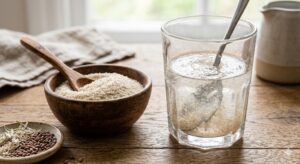
📋 How to Use (Dosage):Take 1 teaspoon (5–7 g) mixed in a full glass (240 ml / 8 oz) of water once or twice daily. Always drink the full glass of water immediately after — never take psyllium without sufficient fluid. Take 30–60 minutes before a meal. Start with a lower dose if you are new to fiber supplements to minimize initial bloating. Leave at least 2 hours between psyllium and any other medications.
One of the most widely studied psyllium husk brands. Available in powder and capsule forms. Unflavored and sugar-free options available.View on Amazon | Compare on iHerb
2Triphala Powder — Best Ayurvedic Herbal Laxative for Long-Term Gut Health
Triphala is one of the most important formulations in Ayurvedic medicine. The name means “three fruits” — it is a balanced blend of Amalaki (Emblica officinalis), Bibhitaki (Terminalia bellerica), and Haritaki (Terminalia chebula). Together, these three fruits provide a synergistic combination of gentle laxative, anti-inflammatory, and antioxidant activity throughout the GI tract.
Unlike senna, Triphala does not act as a harsh stimulant. It works primarily by gently improving colonic transit time and supporting natural peristalsis. A 2022 randomized, double-blind, placebo-controlled trial in Complementary Therapies in Medicine found that Triphala significantly improved functional constipation symptoms over the treatment period (Kamal M et al., PMID: 35447477). A 2021 systematic review and meta-analysis in the Journal of Ayurveda and Integrative Medicine further confirmed Triphala’s beneficial effect on gastrointestinal motility (Singh B, Gautam V et al., PMID: 34183204). Triphala has also been shown to favorably shift gut microbial composition in a double-blind, placebo-controlled pilot trial (Peterson CT et al., PMID: 32955913).
▶ Benefits of Triphala
- Gently improves colonic motility and transit time without cramping
- Increases beneficial gut bacteria, including Akkermansia muciniphila
- Anti-inflammatory and antioxidant activity throughout the digestive tract
- Suitable for daily long-term use without risk of habitual overuse
- Supported by multiple randomized controlled trials for functional constipation
▶ Risks and Side Effects
- Mild diarrhea or loose stools possible if the dose is too high — start low
- May interact with blood thinners such as warfarin — consult your doctor first
- Strongly bitter taste; many people prefer capsule form over powder
- Supplement quality varies widely between brands — choose third-party-tested products
- Not well studied in children or during pregnancy — use with caution
Take 1/2 to 1 teaspoon (2–5 g) of Triphala powder dissolved in warm water at bedtime. Capsule form: 500–1,000 mg per day. Always start at the lower dose. Results typically appear within 6–24 hours. Suitable for long-term daily use. Choose products with a clear, standardized 1:1:1 ratio of all three fruits, from a reputable brand with third-party testing.
Organic India Triphala Herbal SupplementUSDA certified organic Triphala capsules with all three fruits in standardized proportions. Third-party tested for quality and purity.

3 Senna Tea / Senna Leaves — Fastest-Acting Herbal Laxative (Short-Term Use Only)
Senna (Cassia angustifolia / Cassia senna) is the most potent and fastest-acting of all herbal laxatives, and it is also an FDA-approved over-the-counter stimulant laxative. Senna contains active compounds called sennosides — anthraquinone glycosides that are converted by intestinal bacteria into their active metabolite, rhein anthrone. Senna is best reserved for occasional use only. Daily or long-term habitual use is not recommended by most gastroenterologists due to the risk of reduced natural bowel responsiveness and melanosis coli.
Rhein anthrone works through two mechanisms: it stimulates fluid secretion into the colon (softening the stool) and triggers increased contractions of the intestinal smooth muscle (promoting bowel evacuation). The mechanism was formally described by Lemli J in a review published in Bull Acad Natl Med [article in French] (PMID: 8717178). Senna reliably produces a bowel movement within 6–12 hours. However, long-term anthraquinone laxative use has been associated with melanosis coli (reversible darkening of the colon lining) and potential adverse effects on colonic function, making it unsuitable for regular ongoing use (Le Jiamei et al., Front Pharmacol 2021, PMID: 34764866).
🛑 Clinical Warning:Senna is appropriate only for short-term, occasional relief — a strict maximum of 7–10 consecutive days. Do not use senna as a daily or weekly habit. Habitual overuse may lead to tolerance-like effects, reduced natural bowel responsiveness (the colon becomes less able to contract on its own), melanosis coli, and electrolyte imbalances including dangerously low potassium. If you feel you need senna regularly, this is a signal to see a gastroenterologist. If you need senna more than once a month, consult a doctor.
▶ Benefits of Senna
- Fastest-acting herbal laxative available — reliable bowel movement in 6–12 hours
- FDA-approved OTC stimulant laxative status; extensively studied
- Effective and predictable for occasional acute constipation
- Available as tea, tablets, or capsules; widely accessible and inexpensive
- Can be combined with fennel tea to reduce cramping risk
▶ Risks and Side Effects
- Abdominal cramping and diarrhea are common, especially at higher doses
- Habitual overuse may lead to reduced natural bowel responsiveness — use only when genuinely needed
- Associated with melanosis coli (reversible darkening of the colon lining) with chronic use
- Electrolyte imbalances (especially low potassium) with overuse or high doses
- Interacts with digoxin, diuretics, and corticosteroids — check with your pharmacist
- Contraindicated in pregnancy, especially during the first trimester
📋 How to Use (Dosage):As a tea: steep 1–2 g of dried senna leaves in 240 ml of hot water for 10 minutes; strain and drink once daily before bedtime. As a supplement: typically 15–30 mg of sennosides per dose (follow product label). Use only for occasional constipation. Do not use for more than 7–10 consecutive days without medical supervision. Drink plenty of water with each dose to reduce cramping.

4 Aloe Vera Juice (Inner Leaf / Whole Leaf) — Gentle Digestive Aid for Mild Constipation and Gut Soothing
Aloe vera has been used for digestive ailments for thousands of years across Egyptian, Indian, and Chinese traditional medicine. However, it is critical to understand that not all aloe vera products are the same — and the difference between them has major safety implications.
⚠ Inner Leaf vs. Whole Leaf — Know the Difference Before You Buy:
- Inner-leaf gel (safe for regular use): The clear, water-rich gel found at the center of the aloe leaf. It contains no aloin. This form is soothing, anti-inflammatory, and very gentle on the gut. Products labeled “inner fillet,” “inner-leaf,” or “aloin-free” use this form.
- Whole-leaf extract (use with caution — contains aloin): Processed from the entire leaf including the outer green rind and the yellow layer beneath it. This yellow layer (the latex layer) contains aloin and aloe-emodin — anthraquinone compounds that act as strong stimulant laxatives by irritating the colon wall. Whole-leaf products that are not specifically decolorized or aloin-filtered will contain these compounds.
- Many commercial “aloe vera juice” products on shelves are whole-leaf unless clearly marked otherwise. Always read the label. If it does not say “inner-leaf,” “inner fillet,” or “aloin-free,” assume it contains aloin.
Aloe latex’s anthraquinone compounds — primarily aloin and aloe-emodin — act as stimulant laxatives by irritating the colon wall. A randomized, double-blind clinical trial published in Digestion found that a combination laxative preparation containing aloe vera, psyllium, and celandin significantly increased bowel movement frequency and improved stool consistency over 28 days (Odes HS, Madar Z, PMID: 1800188). The pure inner-leaf gel (without aloin) works differently — it soothes the gut lining and supports mild motility without the stimulant effect.
⚠ Important Regulatory Note: In 2002, the FDA required the removal of aloe-based stimulant laxatives from OTC products due to insufficient safety data for long-term use. Whole-leaf aloe vera products that contain aloin (aloe latex) should therefore be used with caution and only short-term. Always choose clearly labeled “inner-leaf” or “aloin-free” products for regular use.
▶ Benefits of Aloe Vera Juice
- Soothes and protects irritated or inflamed gut lining
- Anti-inflammatory effect throughout the gastrointestinal tract
- Hydrating; helps maintain gut mucosal moisture
- Inner-leaf gel form is very gentle with a low side effect profile
- May help with mild constipation alongside other digestive complaints
▶ Risks and Side Effects
- Aloe latex can cause severe abdominal cramping and diarrhea
- Prolonged use of aloe latex leads to electrolyte loss, particularly low potassium
- Contraindicated in pregnancy — aloe latex may stimulate uterine contractions
- May lower blood glucose — caution with insulin or diabetes medications
- Long-term oral use of aloin-containing products is not recommended by the FDA (removed from OTC status in 2002 due to insufficient safety data)
- Contraindicated in kidney disease and in those taking diuretics
📋 How to Use (Dosage):For daily / gentle use (preferred):Chooseinner-leaf / aloin-freealoe vera juice. Start with 2–4 oz (60–120 ml) daily, diluted in a glass of water. This form is safe for ongoing use when well tolerated.
For short-term stronger effect only:Whole-leaf aloe vera juice (with aloin) — 1–2 oz (30–60 ml) on an empty stomach in the morning. Donotuse whole-leaf form daily for more than 7–10 days. Always drink extra water alongside.
Avoid all aloe vera products during pregnancy, if you have kidney disease, take diuretics, or use diabetes medications.

5Ginger and Fennel Tea — Gentlest Herbal Digestive Aids for Bloating and Mild Constipation
Ginger (Zingiber officinale) and fennel seed (Foeniculum vulgare) are not primary laxatives in the pharmacological sense — they are best described as gentle herbal digestive aids that support healthy gut motility. For mild constipation caused by slow digestion, trapped gas, or sluggish gut transit, this combination is both effective and extremely well tolerated by most people.
Ginger works by accelerating gastric emptying and stimulating gut motility through its active compounds — gingerols and shogaols — which act on serotonin (5-HT3) and cholinergic receptors in the gut wall. Multiple clinical trials have confirmed ginger’s prokinetic (gut motility-enhancing) properties. Fennel contains anethole and fenchone, which relax intestinal smooth muscle, relieve trapped gas, and gently stimulate digestive secretions — making it particularly useful when constipation is combined with abdominal bloating and discomfort.
▶ Benefits of Ginger and Fennel Tea
- Extremely safe; suitable for regular daily long-term use
- Relieves bloating and trapped gas alongside constipation
- Ginger’s prokinetic effect supports natural gut motility without stimulating the colon directly
- Anti-nausea and anti-inflammatory properties from ginger’s active compounds
- Fennel’s antispasmodic action reduces intestinal cramping
- Well tolerated by older adults and people with sensitive digestive systems
▶ Risks and Side Effects
- Works best only for mild constipation; insufficient for moderate or severe cases on its own
- Ginger above 4 g per day may have mild anticoagulant effects — caution with blood thinners
- Fennel has mild phytoestrogenic properties — use with caution in hormone-sensitive conditions such as estrogen-dependent cancers
- Not effective for structural or medication-induced constipation
📋 How to Use (Dosage):Add 1 inch of fresh ginger (or 1/2 tsp ground ginger) and 1 tsp of crushed fennel seeds to 2 cups of boiling water. Simmer for 5–10 minutes, strain, and drink warm. Drink 1–2 cups daily, ideally after a meal. Safe for daily long-term use. Pairs well with a morning glass of warm water to further stimulate the gastrocolic reflex.

6Castor Oil — Powerful Herbal Laxative for One-Time Acute Relief Only
Castor oil is one of the most potent plant-based laxatives available. Derived from the seeds of Ricinus communis, its active compound ricinoleic acid binds to EP3 prostaglandin receptors in the intestinal wall, triggering strong peristaltic contractions and a significant increase in fluid secretion into the bowel. This typically produces a bowel movement within 2–6 hours — making it the fastest-acting of all herbal laxative options.
Castor oil is appropriate only for short-term, one-time use — for example, before a colonoscopy preparation, or when other remedies have failed after several days. It is contraindicated in pregnancy (it may stimulate uterine contractions and risk premature labor), in children under 12, and in anyone with a suspected bowel obstruction.
🛑 Clinical Warning: Most gastroenterologists do not recommend castor oil for routine constipation. Safer, better-tolerated alternatives — such as psyllium husk or osmotic laxatives (e.g., polyethylene glycol) — are strongly preferred for regular use. Castor oil should be reserved strictly for one-time acute situations where all gentler options have already failed. Do not use castor oil more than once per month under any circumstances. If you feel you need it regularly, see a doctor immediately to investigate an underlying cause.
▶ Benefits of Castor Oil
- Fastest relief of all herbal laxatives — works in as little as 2–6 hours
- Effective when psyllium, Triphala, or gentler options have not worked
- Lubricates the stool while simultaneously stimulating bowel motility
- Inexpensive and available without a prescription
▶ Risks and Side Effects
- Often causes severe abdominal cramping, nausea, and explosive diarrhea
- Dehydration and electrolyte loss (low sodium, potassium) with overuse
- Absolutely contraindicated in pregnancy — may trigger uterine contractions and premature labor
- Not suitable for children under age 12
- Contraindicated with suspected intestinal obstruction — a medical emergency requiring urgent care
- Not suitable for regular use under any circumstances — can deplete fat-soluble vitamins
📋 How to Use (Dosage):Adults: 1–2 teaspoons (5–10 ml) of food-grade castor oil on an empty stomach in the morning. Mix with orange or apple juice to improve the taste. Do not exceed the recommended dose. Use no more than once every 1–2 weeks at most. Do not use during pregnancy or breastfeeding. If you need it more than once per month, consult a doctor to investigate an underlying cause.

7 Dandelion Root Tea — Mild Bile-Stimulating Herbal Aid with Traditional Liver Support Use
Dandelion root (Taraxacum officinale) works through a mechanism that most other herbal laxatives do not: it is traditionally used to support bile production and secretion from the liver and gallbladder (a property known as cholagogue action). Because bile acids directly stimulate colonic motility and promote water secretion into the bowel, increased bile flow may gently improve regularity. Dandelion root also contains inulin, a well-established prebiotic fiber that feeds beneficial gut bacteria, further supporting healthy bowel motility over time.
This herb may be particularly useful for people whose constipation is linked to sluggish bile flow — such as those following a very low-fat diet, or people who have had their gallbladder removed. Note that large-scale randomized trial evidence for dandelion root in constipation is still limited; its use rests primarily on traditional evidence, mechanistic research, and smaller studies.
▶ Benefits of Dandelion Root
- Traditionally used to support bile flow, which may directly influence bowel regularity
- Contains prebiotic inulin fiber to support gut microbiome balance
- Very low side effect profile; suitable for regular long-term use
- Anti-inflammatory and antioxidant compounds (luteolin, chicoric acid)
- Mild natural diuretic effect that helps support healthy fluid balance
▶ Risks and Side Effects
- Contraindicated with gallstones or bile duct obstruction — stimulating bile flow may worsen these conditions and cause pain
- Allergic reactions are possible in people sensitive to the Asteraceae family (ragweed, chrysanthemums, marigolds)
- Mild diuretic effect may increase urinary frequency — avoid before long trips or important meetings
- Limited large-scale randomized trial evidence compared to psyllium or senna
📋 How to Use (Dosage):Brew 1–2 teaspoons of dried dandelion root in 240 ml (8 oz) of boiling water for 10 minutes. Strain and drink 1–3 cups daily. Also available as standardized capsules (500–2,000 mg per day). Avoid if you have gallstones, bile duct obstruction, or are allergic to plants in the Asteraceae (daisy) family. Best taken after meals.
8. Licorice Root (DGL Form Only) — Best Herbal Option for Constipation with Gut Inflammation
Licorice root (Glycyrrhiza glabra) soothes and protects the mucosal lining of the digestive tract, stimulates protective mucus production, and has mild laxative and anti-inflammatory properties. It is particularly useful for constipation accompanied by gut irritation, heartburn, or intestinal spasm.
The critical point is to use Deglycyrrhizinated Licorice (DGL) — a form in which glycyrrhizin (glycyrrhizic acid) has been removed through extraction. Whole licorice root containing glycyrrhizin inhibits the enzyme 11β-hydroxysteroid dehydrogenase type 2 (11β-HSD2), causing sodium retention, potassium loss, and raised blood pressure with regular use. DGL removes glycyrrhizin completely, eliminating these hormonal risks while retaining the beneficial compounds — including flavonoids (glabridin, liquiritigenin, isoliquiritigenin) and polysaccharides — that provide the gut-soothing and mild laxative effects.
▶ Benefits of Licorice Root (DGL)
- Soothes inflamed, irritated, or damaged gut mucosal lining
- Stimulates protective mucus secretion throughout the GI tract
- Mild laxative effect combined with meaningful anti-inflammatory action
- DGL form is safe for most adults, including for daily use
- Particularly helpful for constipation combined with heartburn, acid reflux, or gastritis
▶ Risks and Side Effects
- Whole (non-DGL) licorice root raises blood pressure and lowers potassium — do not use it long-term
- Even some DGL products may contain residual glycyrrhizin — consult a pharmacist if you have hypertension
- Not recommended for hypertension, heart failure, or kidney disease unless confirmed DGL form is used
- Non-DGL licorice interacts with antihypertensives, diuretics, and corticosteroids
- Mild laxative effect only — not sufficient as a standalone treatment for moderate or severe constipation
📋 How to Use (Dosage):Chew 1–2 DGL tablets (380–760 mg) 20 minutes before meals, 2–3 times daily. As a tea: steep 1 tsp of DGL-standardized licorice root in 240 ml of hot water for 5–10 minutes; drink 1 cup daily. Always confirm the DGL label before purchasing. Do not use whole (non-DGL) licorice root long-term. Consult your doctor if you have high blood pressure, heart disease, or kidney disease.
Herbal Laxatives Comparison Table: Speed, Benefits, and Side Effect Risk
Use this table to quickly identify the best herbal laxative for your specific situation:
| Herbal Laxative | Speed of Relief | Gentleness | Best For | Safe for Daily Use? | Side Effect Risk |
|---|---|---|---|---|---|
| Psyllium Husk | 12–72 hours | Very Gentle | Daily fiber support, long-term regularity | ✓ Yes | Very Low |
| Triphala | 6–24 hours | Very Gentle | Long-term Ayurvedic gut health | ✓ Yes | Very Low |
| Senna Tea | 6–12 hours | Moderate | Occasional quick relief only | ✗ No — max 7–10 consecutive days; do not use daily | Medium–High (long-term) |
| Aloe Vera Juice | 8–24 hours | Gentle | Mild constipation + gut soothing | ✗ Short-term only | Low–Medium |
| Ginger + Fennel Tea | 4–12 hours | Very Gentle | Mild constipation, bloating, gas | ✓ Yes | Very Low |
| Castor Oil | 2–6 hours | Strong / Harsh | One-time acute relief only | ✗ No — one-time use only | High |
| Dandelion Root Tea | 12–24 hours | Gentle | Bile-related constipation, bile flow support | ✓ Yes | Very Low |
| Licorice Root (DGL) | 12–48 hours | Gentle | Constipation with gut inflammation or heartburn | ✓ Yes (DGL only) | Low |

How to Use Herbal Laxatives Safely and Avoid Side Effects
Even the gentlest herbal laxatives can cause problems when used incorrectly. Follow these six principles for the best results with the lowest possible risk:
Always Drink Enough Water Bulk-forming herbs like psyllium husk can cause an intestinal or esophageal blockage if taken without adequate fluid. Drink at least 240 ml (8 oz) of water immediately after each dose, and aim for 6–8 glasses of water throughout the day. Read more: How Dehydration Causes Constipation.
Start with the Lowest Dose Begin at half the recommended dose for the first 2–3 days. This minimizes bloating, gas, and cramping as your digestive system adjusts — especially important with fiber-based herbs like psyllium and Triphala.
Choose the Right Timing Psyllium works well taken 30–60 minutes before a meal in the morning. Triphala is traditionally taken at bedtime in warm water. Senna and castor oil are most effective at night given their 6–12 hour and 2–6 hour onset times. Dandelion root and ginger tea work best after meals.
Avoid Habitual Overuse of Stimulant Herbs Stimulant herbs — senna, aloe vera latex, and castor oil — must never be used daily for extended periods. Use only when genuinely needed, and allow several days between doses. Habitual overuse may lead to tolerance-like effects and reduced natural bowel responsiveness over time.
Choose Third-Party-Tested Products Herbal supplements in the US are not regulated as tightly as pharmaceutical drugs. Look for products certified by NSF International, USP (United States Pharmacopeia), or Informed Sport. For Triphala, choose products with a clearly labeled 1:1:1 ratio of all three fruits.
Check for Drug Interactions Psyllium husk reduces absorption of ALL medications taken at the same time — leave a minimum 2-hour gap. Senna interacts with digoxin, diuretics, and corticosteroids. Aloe vera latex may reduce blood glucose. Triphala may interact with warfarin. Non-DGL licorice interacts with antihypertensives. Always tell your doctor and pharmacist about herbal supplements you are taking. For elderly patients on multiple medications, see our guide: Constipation Relief for the Elderly.
Best Herbal Laxative Combinations for Faster and Safer Relief
Combining two complementary herbal laxatives can produce better results than one alone — while keeping the dose of each individual herb lower. Here are three evidence-informed combinations:
🌿 Combo 1: Psyllium Husk + Triphala (Best Daily Combination)
This pairing addresses constipation from two complementary angles. Psyllium husk adds bulk and softens stool by absorbing water, while Triphala gently stimulates colonic motility and supports gut microbiome balance. Take psyllium in the morning with a full glass of water and Triphala in warm water at bedtime. Together, they produce reliable daily relief without the risk of habitual overuse. See also: Can Probiotics Relieve Chronic Constipation?
🍇 Combo 2: Warm Ginger Tea + Prune Juice (Gentle Morning Routine)
A cup of warm ginger tea followed by a small glass of prune juice (4–6 oz) is a simple, highly effective morning routine for mild to moderate constipation. Ginger stimulates gastric motility and accelerates gut transit, while prune juice provides sorbitol and natural fiber that draw water into the colon. Safe for daily use and typically works within 6–12 hours. See our full guide: Prune Juice for Constipation: How Much You Need and When.
💦 Combo 3: Senna Tea + Fennel Tea (Fast Relief with Reduced Cramping)
If you need fast relief and choose senna, adding fennel tea significantly reduces the risk of cramping. Fennel’s natural antispasmodic activity (from anethole) counteracts the intense intestinal contractions that senna often triggers. Drink fennel tea 30 minutes after taking senna. Use this combination only for occasional constipation — a maximum of 7–10 consecutive days.

When to Avoid Herbal Laxatives
Herbal laxatives are not appropriate for everyone. Avoid them or consult your doctor first in the following situations:
- Pregnancy: Senna must be avoided, especially in the first trimester. Castor oil is absolutely contraindicated as it may trigger uterine contractions. Aloe vera latex is also contraindicated. Psyllium husk is generally considered one of the safer first-line fiber options during pregnancy when taken with adequate hydration, but always confirm with your obstetrician before use. See our guide: Constipation During Pregnancy: Safe Relief Options.
- Kidney disease: Stimulant herbs that alter electrolytes (senna, aloe latex) can worsen kidney stress. Non-DGL licorice root is contraindicated. Psyllium should be used cautiously in advanced kidney disease.
- Liver disease: Dandelion root, licorice, and herbal blends require hepatic metabolism and may not be appropriate. Consult your hepatologist or specialist.
- Inflammatory bowel disease (IBD, Crohn’s disease, Ulcerative Colitis): Stimulant herbs can trigger flares. Even psyllium may be poorly tolerated during active inflammation. Use only under physician guidance.
- Suspected bowel obstruction: Any laxative is absolutely contraindicated with a suspected bowel obstruction. Symptoms include severe abdominal pain, vomiting, abdominal distension, and inability to pass gas. This is a medical emergency — seek care immediately.
- Children under 12: Most herbal laxatives have not been adequately studied in children. Castor oil and senna are particularly unsuitable. Discuss psyllium husk with your child’s pediatrician.
- Elderly patients on multiple medications: Greater sensitivity to electrolyte changes and drug interactions requires careful guidance. See our guide: Constipation Relief for the Elderly: Safe and Effective Options. Also consider: Magnesium for Constipation: Which Form Works Best?
When to See a Doctor:
If constipation has lasted more than 3 weeks, or is accompanied by unexplained weight loss, blood in the stool, severe abdominal pain, or nausea and vomiting, do not rely on any laxative. These symptoms may indicate a serious underlying condition requiring medical evaluation.
Frequently Asked Questions About Herbal Laxatives
What is the safest herbal laxative for daily use?
Psyllium husk (Isabgol) is the safest herbal laxative for regular daily use. It is a bulk-forming fiber with strong clinical evidence and no risk of habitual overuse when taken with adequate water. Triphala powder is the best Ayurvedic option for long-term daily use, with multiple randomized controlled trials supporting both its safety and its efficacy for functional constipation.
Do herbal laxatives work faster than stool softeners?
It depends on the type. Stimulant herbal laxatives like senna work in 6–12 hours, which is comparable to pharmaceutical stimulant laxatives. Stool softeners like docusate sodium typically take 12–72 hours — similar to psyllium husk. Triphala often works within 6–24 hours. Castor oil is the fastest option at 2–6 hours, but should only be used occasionally. For the fastest and most consistent herbal relief, senna is the best short-term option when used responsibly.
Can I take herbal laxatives every day?
Psyllium husk, Triphala, ginger tea, fennel tea, and dandelion root tea are all generally safe for daily long-term use with proper hydration. However, stimulant herbal laxatives — senna, aloe vera latex, and castor oil — should only be used short-term. Habitual overuse of stimulant laxatives may lead to tolerance-like effects and reduced natural bowel responsiveness. Always consult a healthcare provider before sustained daily use of any laxative.
Which herbal laxative has the least side effects?
Psyllium husk and Triphala have the fewest side effects when used correctly with adequate water. Both provide gentle relief through bulk-forming or mild motility-enhancing action with very low risk of cramping, electrolyte imbalance, or reliance on stimulant laxatives developing over time. Ginger tea and fennel tea are the gentlest of all, though they work best for mild constipation only. Dandelion root tea and DGL licorice root also have very low side effect profiles when used as directed.
Is it safe to combine herbal laxatives with OTC laxatives?
Combining multiple laxatives increases the risk of diarrhea, dehydration, and electrolyte imbalances. As a general rule, use one approach at a time. If you are already taking a stimulant OTC laxative, do not simultaneously add senna or castor oil. Psyllium husk can generally be used alongside osmotic laxatives like MiraLAX, but leave at least 2 hours between them and confirm with your pharmacist. If you regularly need both an OTC laxative and a herbal remedy to manage constipation, this is a reason to seek a medical evaluation for an underlying cause. See our full guide: The Best OTC Laxatives for Constipation.
Conclusion: Which Herbal Laxative Should You Choose?
The right herbal laxative depends on one simple question: how often do you need relief?
- Daily support: Psyllium husk or Triphala — safe, non-habit-forming, and backed by clinical trials.
- Mild bloating + occasional constipation: Ginger and fennel tea — the safest gentle digestive aids for everyday use.
- Occasional quick relief: Senna tea — effective, but strictly limited to 7–10 consecutive days maximum. Never use daily.
- Emergency one-time relief: Castor oil — fast but harsh. Last resort only, used no more than once a month.
No herbal laxative replaces the basics: 25–35 g of daily fiber, 6–8 glasses of water, and regular movement. If symptoms persist beyond 4–6 weeks despite these measures, consult a gastroenterologist — underlying causes require proper diagnosis, not more laxatives.
Related articles on ConstipationRelief.net:
Get More Free Constipation Relief Resources
Join thousands of members in our Facebook community for daily constipation relief tips, natural remedies, expert-backed guidance, and real experiences from people improving their gut health naturally.
Browse our carefully selected digestive health products, fiber supplements, probiotics, herbal remedies, and wellness essentials in our Amazon Storefront.
👉 Join the Constipation Relief Facebook Community
👉 Shop Our Recommended Constipation Relief Products on Amazon
⚠ Medical Disclaimer: This article is for informational purposes only and is not a substitute for professional medical advice. If you are pregnant, breastfeeding, have kidney disease, liver disease, inflammatory bowel disease, or take prescription medications, consult your doctor before using any herbal laxative. If constipation is sudden or severe, or is accompanied by blood in the stool, significant pain, or unexplained weight loss, seek medical attention immediately.
References
All citations are verified against PubMed and linked directly to their source. Citations follow Vancouver format.
- Yang C, Liu S, Li H, Bai X, Shan S, Gao P, Dong X. The effects of psyllium husk on gut microbiota composition and function in chronically constipated women of reproductive age using 16S rRNA gene sequencing analysis. Aging (Albany NY). 2021;13(11):15366–15383. PMID: 34081625
- Kamal M, Pathak S, Shrivastava S, Pandey P, Maurya PK, Khan F. Effect of Triphala on functional constipation: a randomized, double-blind, placebo-controlled study. Complement Ther Med. 2022;67:102830. PMID: 35447477
- Singh B, Gautam V, Singh B, Kumar A, Garg V. Effect of Triphala on gastrointestinal motility and constipation: a systematic review and meta-analysis. J Ayurveda Integr Med. 2021;12(3):477–485. PMID: 34183204
- Peterson CT, Pourang A, Dhaliwal S, Kohn JN, Uchitel S, Singh H, Mills PJ, Peterson SN, Sivamani RK. Modulatory effects of Triphala and Manjistha dietary supplementation on human gut microbiota: a double-blind, randomized, placebo-controlled pilot study. J Altern Complement Med. 2020;26(11):1017–1028. PMID: 32955913
- Lemli J. Mechanism of action of sennosides [article in French]. Bull Acad Natl Med. 1995;179(8):1605–1611. PMID: 8717178
- Le Jiamei, Ji H, Zhou X, Wei X, Chen Y, Fu Y, Ma Y, Han Q, Sun Y, Gao Y, Wu H. Pharmacology, toxicology, and metabolism of sennoside A, a medicinal plant-derived natural compound. Front Pharmacol. 2021;12:714586. PMID: 34764866
- Odes HS, Madar Z. A double-blind trial of a celandin, aloevera and psyllium laxative preparation in adult patients with constipation. Digestion. 1991;49(2):65–71. PMID: 1800188
- Guo X, Mei N. Aloe vera: A review of toxicity and adverse clinical effects. J Environ Sci Health C Environ Carcinog Ecotoxicol Rev. 2016;34(2):77–96. PMID: 26986231
- Tunaru S, Althoff TF, Nüsing RM, Diener M, Offermanns S. Castor oil induces laxation and uterus contraction via ricinoleic acid activating prostaglandin EP3 receptors. Proc Natl Acad Sci USA. 2012;109(23):9179–9184. PMID: 22615395
- Nikkhah Bodagh M, Maleki I, Hekmatdoost A. Ginger in gastrointestinal disorders: A systematic review of clinical trials. Food Sci Nutr. 2019;7(1):96–108. PMID: 30680163 / PMC6341159






[…] This dual action — increased motility plus softer stool — makes senna one of the fastest-working herbal laxatives available. […]
[…] daily use. For faster bloating and constipation relief in the short term, some people also turn to herbal laxatives while waiting for fermented food habits to take […]
[…] For more OTC options, see our Best OTC Laxatives for Constipation in the US roundup. For a deeper look at how the two laxative classes differ mechanically, see our Natural Laxatives and herbal laxatives guides. […]