

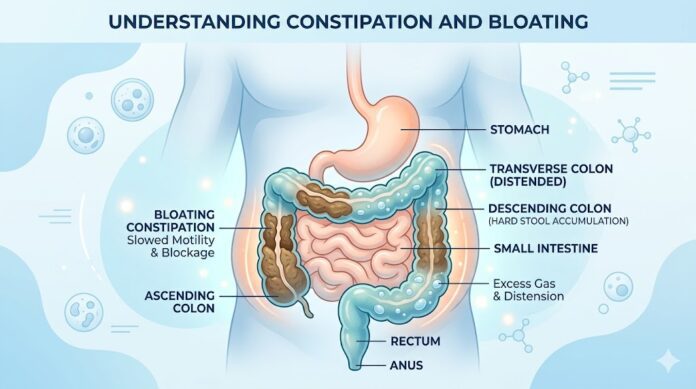
Short Answer: Fiber supplements can make constipation worse when taken without enough water, introduced too quickly, chosen as the wrong type, or used by people with slow transit constipation or gut dysbiosis. Insoluble fiber (wheat bran) may worsen symptoms in some people, while psyllium, a soluble gel-forming fiber, is generally the most effective and best-evidenced option for chronic constipation.
You followed the advice. You added psyllium husk, Metamucil, or another fiber supplement to your daily routine, expecting smoother, more regular bowel movements. Instead, you feel more bloated, more backed up, and more uncomfortable than before you started.
You are not imagining it. Fiber supplements make you more constipated in certain people, and the reasons are well-documented in peer-reviewed research. This article explains exactly why it happens, who is most at risk, and what evidence-based alternatives can help.
Understanding the difference between soluble fiber and insoluble fiber, the critical role of water intake, and conditions like slow transit constipation can make all the difference between relief and worsened symptoms.
Quick Summary: Why Fiber Supplements Worsen Constipation
- Taking fiber without adequate hydration can create a dry, hardened mass in the colon.
- Insoluble fiber (wheat bran) may worsen bloating in slow transit constipation and IBS-C.
- Adding too much fiber too quickly causes gas buildup and can slow transit.
- People with slow transit constipation may need treatments beyond fiber alone, depending on the underlying cause and medical evaluation.
- Altered gut microbiota can affect how fiber ferments and may contribute to worsened symptoms.
- Medications, low physical activity, and underlying conditions can counteract fiber’s benefits.
- Soluble, gel-forming fiber (psyllium) has the strongest clinical evidence for chronic constipation.
How Fiber Supplements Are Supposed to Work
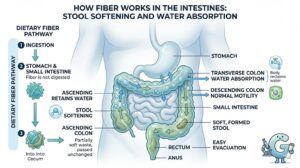
Dietary fiber, whether from food or supplements, helps relieve constipation by adding bulk to stool and retaining water in the colon. This softens stool and stimulates peristalsis, the rhythmic muscle contractions that move stool through the large intestine.
A 2022 systematic review and meta-analysis by van der Schoot et al., published in the American Journal of Clinical Nutrition, analyzed 16 RCTs involving 1,251 adults with chronic constipation.[1] Overall, 66% of participants responded to fiber treatment versus 41% on placebo (RR 1.48; 95% CI 1.17 to 1.88; p = 0.001). Psyllium and pectin showed the strongest, most consistent effects.
But that same research, alongside a broader body of evidence, also documents meaningful exceptions. These exceptions explain why fiber supplements may be making your constipation worse.
Affiliate Disclosure: This article may contain affiliate links. If you purchase through these links, we may earn a small commission at no extra cost to you. Our recommendations are based on research and editorial evaluation, not affiliate partnerships.
7 Reasons Fiber Supplements Make Constipation Worse
Reason 1: Not Drinking Enough Water (The Most Common Mistake)
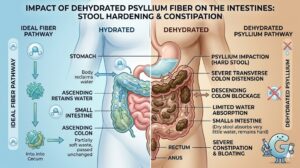
This is the single most frequent and most preventable reason fiber supplementation backfires. Adequate hydration is essential when taking psyllium. Without it, fiber does not soften stool; in some individuals, it may actively worsen it.
Psyllium husk can absorb 10 to 12 times its own weight in water. When taken with too little liquid, it draws moisture from your intestinal wall rather than from the fluid you drank. The result is a swollen, dry, bulky mass that is harder to pass than before. The same problem applies to methylcellulose (Citrucel) and other bulk-forming agents.
A correspondence published in the Journal of the Academy of Nutrition and Dietetics (PMID: 28449791) noted that psyllium must be taken with adequate water, a minimum of 8 oz per standard dose and up to 500 mL for higher doses of 20 to 25 g, to achieve its maximum gel-forming and stool-softening effect.[3]
Fluid guidelines when taking fiber supplements:
- Take each dose with at least 8 oz (240 mL) of water immediately.
- Drink a second full glass within 30 minutes of taking the supplement.
- Many adults benefit from 64 to 80 oz (8 to 10 glasses) of total daily fluid, though individual needs vary based on body size, climate, and activity level.
- For doses of 20 to 25 g psyllium, aim for 500 mL per dose per the clinical literature.
Reason 2: Using the Wrong Type of Fiber
Not all fiber behaves the same way in your gut. Choosing the wrong type for your specific situation is one of the most overlooked reasons fiber supplements fail or worsen symptoms.
A PMC review on fiber supplementation (PMID: 25972619) confirmed that soluble, gel-forming fiber, particularly psyllium, consistently improved stool consistency, reduced straining, and decreased pain on defecation. Evidence for insoluble fiber was described as “conflicting,” and in IBS-C patients, insoluble fiber was associated with worse symptoms and more pain compared to placebo.[7]
The Bellini et al. nutritional review (PMID: 34684388) further noted that insoluble fiber types such as wheat bran stimulate transit by irritating the intestinal mucosa, and this effect is limited only to coarser, larger particles. Finely milled wheat bran, common in commercial supplements, showed no meaningful laxative benefit in most studies.[5]
If your current supplement is wheat bran-based, switching to psyllium may resolve your worsening constipation within 2 to 4 weeks. For a full comparison of psyllium products, see our guide to the best psyllium husk products for constipation relief in 2026.
Reason 3: Increasing Your Dose Too Quickly
Even the right fiber type can cause significant problems when introduced too rapidly. When large amounts of fermentable fiber arrive in the colon at once, gut bacteria ferment them quickly, producing hydrogen, methane, and carbon dioxide gas. This can cause:
- Significant bloating and abdominal distension
- Cramping and a sensation of pressure and fullness
- Paradoxical slowing of colonic transit in susceptible individuals
The van der Schoot 2022 meta-analysis specifically recommended a gradual dose increase when initiating fiber supplementation, noting that flatulence was significantly higher in the fiber group compared to controls (SMD 0.80; 95% CI 0.47 to 1.13; p less than 0.00001).[1]
Recommended ramp-up schedule: Start at half the label dose, approximately 2.5 to 3.5 g per serving, for the first week. Increase by 2 to 3 g every 5 to 7 days over 3 to 4 weeks to give your gut microbiome time to adapt.
Reason 4: You May Have Slow Transit Constipation
Slow transit constipation (STC) is a form of colonic dysmotility in which the nerve or muscle activity driving peristalsis is impaired, causing stool to move through the large intestine far too slowly. People with confirmed slow transit constipation may require treatments beyond fiber supplementation, including osmotic laxatives, stimulant laxatives, or other therapies recommended by their healthcare provider.
In STC, the colon lacks sufficient contractile force to push bulk forward. Adding more fiber, especially insoluble fiber, gives the sluggish colon additional material without providing the motility stimulus needed to move it, and stool accumulates rather than moves.
The 2022 systematic review by van der Schoot et al. states explicitly: “Excessive fiber intake, particularly the insoluble type, may worsen constipation-related symptoms, such as abdominal distension and flatulence, especially in patients with slow-transit constipation (STC) or defecatory disorders (DD).”[1]
Signs that may suggest slow transit constipation (consult your doctor for proper evaluation):
- Bowel movements fewer than 3 times per week despite adequate fiber and fluid intake
- Feeling more bloated and backed up after starting fiber supplements
- Rarely or never feeling an urge to defecate
- History of constipation dating back to childhood or adolescence
- Laxatives provide only temporary or partial relief
Slow transit constipation requires medical evaluation, including colonic transit studies, for proper diagnosis. Do not self-diagnose. If STC is suspected, see our evidence-based review of the best OTC laxatives for constipation, which covers osmotic and stimulant options in detail.
Reason 5: Your Total Daily Fiber Intake Is Too High
More fiber is not always better. Adding a full-dose fiber supplement on top of a diet already providing 20 or more grams of fiber per day can push total intake well above the recommended 25 to 38 g. At very high intakes, the fermentation load in the colon increases dramatically, generating excess gas that can slow transit and worsen constipation rather than relieve it.
The van der Schoot 2022 meta-analysis found that doses above 10 g/day of psyllium for at least 4 weeks produced the most consistent improvements, but stacking fiber without proportionally increasing fluid intake amplifies the problem.[1]
Use a food diary or nutrition app to estimate your current daily fiber intake for 2 to 3 days. Supplement only the shortfall. Do not add a full-dose supplement on top of a high-fiber diet without adjusting food sources accordingly.
Reason 6: Gut Dysbiosis May Be Affecting How Fiber Ferments
Fiber works partly by feeding beneficial gut bacteria, which produce short-chain fatty acids (SCFAs), particularly butyrate, that stimulate colonic motility and nourish the colon lining. A 2019 randomized, placebo-controlled study by Jalanka et al. (PMID: 30669509) found that psyllium supplementation significantly increased fecal water content and boosted three key butyrate-producing genera: Lachnospira, Roseburia, and Faecalibacterium.[4]
However, when the gut microbiome is significantly disrupted, a state called gut dysbiosis, fiber may not produce this beneficial SCFA response. In some individuals, altered gut microbiota may contribute to fermentation patterns associated with increased gas production and worsened constipation symptoms.
Signs gut dysbiosis may be involved:
- Constipation began or worsened after a course of antibiotics
- Significant bloating after any high-fiber food, not just supplements
- History of GI infection such as C. difficile, Giardia, or Salmonella
- Constipation alternating with loose stools
Combining a targeted probiotic with psyllium may help restore the microbiome conditions needed for fiber to work. See our guide to the 9 best probiotic supplements for gut health in 2026. You may also find our article Why Fiber Is Not Working for Your Constipation useful, which covers MCT oil and probiotics as complementary approaches.
Reason 7: Lifestyle and Medication Factors Are Counteracting Fiber
Fiber supplementation alone cannot overcome certain physiological barriers. The following factors commonly negate its benefits:
Physical inactivity: Peristalsis is partly driven by physical movement. Research published in PLOS ONE (PMID: 23977342) demonstrated that extended immobility produces new-onset constipation in previously healthy adults.[8] A 20 to 30 minute walk after meals can meaningfully accelerate colonic transit. For a complete routine, see our guide to 5 simple morning habits to relieve constipation naturally.
Medications that independently slow colonic transit:
- Opioid analgesics (the strongest cause of drug-induced constipation)
- Tricyclic antidepressants such as amitriptyline and nortriptyline
- Calcium channel blockers such as verapamil and diltiazem
- Antacids containing calcium or aluminum
- Iron supplements
- Anticholinergic antihistamines
- GLP-1 receptor agonists such as semaglutide (Ozempic) and liraglutide
If you are taking any of these, speak with your prescriber before adding or increasing a fiber supplement. An osmotic laxative or stool softener may be more appropriate in these situations.
Other contributing factors:
- Very low-calorie diets, which reduce stool volume and limit fiber’s bulking effect
- Chronic stress and anxiety, which slows colonic motility through the gut-brain axis
- Low magnesium intake, as magnesium is needed for smooth muscle function in the colon
- Hypothyroidism and uncontrolled diabetes, which cause autonomic neuropathy and delayed gut motility that fiber cannot compensate for
- Suppressing the defecation urge habitually, which weakens the rectal reflex over time
Who Should Avoid Fiber Supplements Without Medical Advice
Fiber supplements are generally safe for healthy adults, but certain individuals should consult a healthcare provider before starting or continuing fiber supplementation. Do not take fiber supplements without medical supervision if you have any of the following:
- Suspected bowel obstruction: Fiber adds bulk and can worsen a blockage. Seek emergency care if you have severe abdominal pain, vomiting, and no bowel movements.
- Severe or persistent abdominal pain: Pain that does not improve or worsens requires medical evaluation before adding any supplement.
- Persistent nausea or vomiting alongside constipation: This combination may indicate a serious gastrointestinal issue requiring urgent care.
- Difficulty swallowing (dysphagia): Fiber supplements, particularly psyllium powder and capsules, can swell in the esophagus if not swallowed with enough water, posing a choking or obstruction risk.
- Fecal impaction: A hardened mass of stool stuck in the rectum or colon requires manual removal or medical treatment. Adding more fiber to an impacted colon makes the problem significantly worse.
- Recent gastrointestinal surgery: Bowel rest protocols vary after surgery. Always follow your surgical team’s dietary guidance before reintroducing fiber supplements.
- Inflammatory bowel disease (Crohn’s disease or ulcerative colitis) during a flare: High-fiber intake may aggravate active inflammation. Work with your gastroenterologist on appropriate fiber levels.
If you are unsure whether fiber supplementation is appropriate for your situation, speak with your doctor or a registered dietitian before starting.
Soluble vs. Insoluble Fiber: Which Is Right for You?
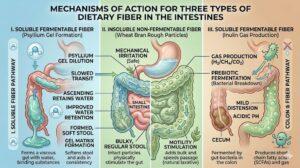
The research on this question is now well-established. Soluble, gel-forming fiber (psyllium) has the strongest clinical evidence for chronic constipation.
| Fiber Type | Examples | Mechanism | Evidence and Cautions |
|---|---|---|---|
| Soluble, gel-forming | Psyllium (Metamucil), pectin | Forms viscous gel; retains water; softens and normalizes stool | Strongest evidence for chronic constipation; benefits IBS-C |
| Soluble, non-viscous | Inulin, FOS, wheat dextrin (Benefiber) | Fermented by bacteria; produces gas; does not form gel | Moderate benefit; may cause notable bloating and flatulence |
| Insoluble | Wheat bran, corn bran, cellulose | Adds bulk; irritates colon mucosa (coarse particles only) | Inconsistent evidence; may worsen slow transit constipation and IBS-C |
The Lambeau and McRorie review (PMID: 28252255) clarified that only gel-forming soluble fibers such as psyllium and beta-glucan produce viscosity-driven benefits in the intestine. Non-viscous and insoluble fibers do not form gels and therefore do not produce the same stool-normalizing effects.[2]
For detailed product comparisons with dosing tables and ingredient breakdowns, see our guide to the best psyllium husk products for constipation relief in 2026. For broader context on fiber and gut health, see our guide: Constipation Relief: Fiber Foods and Gut Health Guide.
What to Do Instead: A Step-by-Step Action Plan
Step 1: Audit Your Water Intake First
Before changing anything else, track your actual daily fluid intake for 2 to 3 days. Many people find they are drinking only 30 to 50 oz per day, well below the recommended minimum when taking fiber supplements. Increasing fluid intake alone often resolves fiber-induced constipation within 3 to 5 days.
Step 2: Switch to Psyllium if Using Insoluble or Non-Viscous Fiber
If your current supplement is wheat bran-based or a non-viscous fiber such as plain inulin or wheat dextrin (Benefiber), consider switching to a psyllium-based product such as Metamucil, Konsyl, or a high-quality organic psyllium husk powder. Allow 4 weeks at the correct dose before evaluating results.
Step 3: Reduce Dose and Titrate Gradually
If switching and increasing hydration do not help within 2 weeks, reduce your psyllium dose by half and rebuild slowly, increasing by approximately 2 to 3 g every 5 to 7 days. This titration approach significantly reduces gas and bloating while progressively building to an effective dose.
Step 4: Add Daily Physical Activity
A 20 to 30 minute walk after meals can meaningfully accelerate colonic transit and reduce the stagnation that makes fiber supplementation feel ineffective. Even low-intensity activity such as yoga with abdominal engagement provides a measurable motility benefit.
Step 5: Consider Magnesium as a Complementary Option
Magnesium citrate and magnesium oxide act as osmotic agents, drawing water into the colon to soften stool and stimulate motility through a completely different mechanism from fiber. For many people with fiber-resistant constipation, adding magnesium at bedtime provides the relief fiber alone could not.
Safety note: People with kidney disease or impaired renal function should consult their healthcare provider before using magnesium supplements, as reduced kidney function can impair magnesium excretion. See our guide to the 5 best magnesium supplements for constipation in 2026 for clinically reviewed product picks.
Step 6: Consider Targeted Probiotics
If constipation worsened after antibiotics or a GI illness, adding a clinically studied probiotic strain may help restore the gut microbial environment needed for fiber fermentation to produce motility-stimulating SCFAs. See our guide to the 9 best probiotic supplements for gut health.
Step 7: Consult a Doctor If Nothing Improves After 4 to 6 Weeks
If fiber supplements continue to worsen constipation despite correct hydration, the right fiber type, and gradual dose titration, seek medical evaluation. Ask your doctor about slow transit constipation, pelvic floor dysfunction, or metabolic causes. Colonic transit studies and anorectal manometry can identify these conditions, and the appropriate chronic constipation treatment for each differs significantly from fiber supplementation alone.
Top Psyllium Supplements to Try Instead of Wheat Bran
If you are ready to switch to a psyllium-based supplement, here are three commonly used options available on Amazon. These products are psyllium-based options commonly used by adults with chronic constipation when taken with adequate water. Individuals with swallowing difficulties, bowel obstruction, or other gastrointestinal conditions should consult a healthcare professional before use.
Metamucil Premium Blend Psyllium Fiber One of the most widely used psyllium-based fiber supplements. The Premium Blend is sugar-free, mixes cleanly, and provides 3 g of psyllium per teaspoon. Psyllium has been evaluated as a first-line fiber supplement in multiple constipation clinical guidelines.
Konsyl Original Formula Psyllium Fiber 100% pure psyllium with no added sugar, flavoring, or fillers, making it a practical choice for people with IBS or food sensitivities. Provides 6 g of psyllium per teaspoon and has been used in clinical research settings.
Organic India Whole Husk Psyllium USDA certified organic whole psyllium husk, minimally processed, non-GMO, and free of common allergens. A practical choice for those seeking a clean-label organic option. Mixes well in water or smoothies.
For a full comparison with dosing tables, price-per-serving analysis, and ingredient breakdowns, see our detailed guide: Best Psyllium Husk for Constipation Relief in 2026.
Foods That Help Where Supplements Fail
For some people, whole food sources of fiber outperform supplements because they come packaged with water, natural osmotic compounds such as sorbitol and mannitol, enzymes, and bioactive phytonutrients that act synergistically. The strongest clinical evidence is for:
- Prunes (dried plums): A randomized crossover trial by Attaluri et al. (PMID: 21323688) compared 50 g/day of dried plums with 11 g twice daily of psyllium in 40 constipated adults over 8 weeks. Prunes produced significantly greater improvements in complete spontaneous bowel movements per week and stool consistency scores (p less than 0.05). The authors concluded this benefit was likely driven by sorbitol content (approximately 14.7 g/day) and polyphenols, not fiber alone.[9]
- Kiwifruit (green): Two green kiwis per day improved bowel frequency, reduced straining, and improved stool consistency in multiple RCTs, likely due to actinidin enzyme activity and kiwi-specific pectic polysaccharides.
- Flaxseeds (ground): Provide both soluble and insoluble fiber plus omega-3 ALA. Must be ground to be bioavailable. Start with 1 tsp per day and increase gradually.
- Oat bran: Contains beta-glucan, a viscous soluble fiber with effects similar to psyllium. Adding it to porridge or yogurt provides a gentle, food-based fiber source.
For a comprehensive evidence-based list, see our guides to the best foods for immediate constipation relief and the 10 best fruits for chronic constipation.
Natural Laxatives as an Alternative to Fiber Supplements
When fiber supplements worsen constipation, natural laxatives that work through different mechanisms can provide relief:
- Senna: A stimulant laxative that activates colonic nerve receptors to trigger propulsive contractions, bypassing the bulk-forming mechanism entirely. Particularly useful for slow transit constipation and opioid-induced constipation. Not recommended for daily long-term use without medical supervision. See our review of the best senna tea products for constipation.
- Herbal laxatives (cascara, rhubarb root, aloe vera): Work as stimulant or osmotic agents. Long-term use of anthraquinone stimulant laxatives, including cascara and aloe, should be supervised by a doctor. See our guide to the best herbal laxatives for fast constipation relief.
- Broader natural options: Olive oil, warm lemon water, and mineral-rich water are covered in our roundup of the 15 best natural laxatives for constipation that actually work.
When to See a Doctor for Fiber-Resistant Constipation
Seek prompt medical evaluation if you experience any of the following:
- Rectal bleeding or blood in the stool not clearly explained by hemorrhoids
- Unintentional weight loss of 5 or more pounds over less than 3 months
- Severe abdominal pain, cramping, or significant distension
- Constipation that has worsened progressively over weeks or months
- No improvement after 2 to 4 weeks of consistent dietary change, fiber, and OTC laxatives
- New-onset constipation after age 50, where a colonoscopy referral is typically recommended
- Nausea and vomiting alongside constipation, which may indicate a possible obstruction requiring urgent care
- Family history of colorectal cancer or inflammatory bowel disease
These symptoms can indicate structural causes such as colorectal cancer or stricture, functional dysmotility such as slow transit constipation, pelvic floor dysfunction, or metabolic conditions including hypothyroidism, hypercalcemia, and diabetes-related autonomic neuropathy. All of these require investigation beyond dietary modification.
Key Takeaways
- Fiber supplements can worsen constipation when taken without adequate hydration, using the wrong type, increasing the dose too fast, or in the presence of slow transit constipation or gut dysbiosis.
- Soluble, gel-forming fiber (psyllium) has the strongest clinical evidence for chronic constipation. Insoluble fiber (wheat bran) may worsen IBS-C and slow transit constipation.
- Adequate hydration is essential when taking psyllium. Take each dose with at least 8 oz (240 mL) of water and maintain sufficient daily fluid intake. Without adequate hydration, psyllium may worsen constipation in some individuals.
- People with confirmed slow transit constipation may require treatments beyond fiber supplementation, including osmotic or stimulant laxatives, as recommended by their healthcare provider. Medical evaluation is needed to confirm this diagnosis.
- People with kidney disease should consult their healthcare provider before using magnesium supplements.
- Gradual dose titration, starting at half dose and increasing by 2 to 3 g per week, prevents gas, bloating, and paradoxical constipation.
- If fiber is not working, consider magnesium, targeted probiotics, whole-food sources such as prunes and kiwifruit, and daily physical activity as evidence-backed alternatives.
Frequently Asked Questions
Can fiber supplements make constipation worse?
Yes. Fiber supplements can worsen constipation in people who take them without adequate water, use the wrong fiber type, increase the dose too quickly, or have underlying conditions such as slow transit constipation. Using soluble fiber (psyllium) with adequate hydration and a gradual dose increase usually helps. If symptoms persist, consult a doctor.
Why does psyllium husk make me more constipated?
Psyllium husk requires at least 8 oz of water per dose to form a gel and soften stool. Without adequate hydration, it can swell and become harder to pass. Always drink a full glass of water immediately after taking psyllium and maintain good daily fluid intake throughout the day.
How much water should I drink with a fiber supplement?
Drink at least 8 to 10 oz (240 to 300 mL) immediately with each dose. Beyond that, many adults benefit from around 64 oz or more of total daily fluid when taking fiber supplements, though individual needs vary by body size, activity level, and climate. For higher psyllium doses of 20 to 25 g, clinical research recommends up to 500 mL per dose to achieve maximum gel-forming benefit.
What type of fiber is best for constipation?
Soluble, gel-forming fiber, especially psyllium, has the strongest clinical evidence for chronic constipation, confirmed by a 2022 meta-analysis of 16 RCTs. Insoluble fiber (wheat bran) may worsen symptoms in slow transit constipation and IBS-C and is generally not the best first choice for these groups.
What should I do if fiber supplements are not working?
First, increase water intake and switch to psyllium if using wheat bran. Introduce fiber gradually over 3 to 4 weeks and add daily physical activity. If symptoms persist after 4 to 6 weeks, consult a doctor, as slow transit constipation, pelvic floor dysfunction, or a metabolic condition may require targeted treatment beyond fiber supplementation.
Is Metamucil or Benefiber better for constipation?
Metamucil (psyllium) has substantially stronger clinical evidence for chronic constipation than Benefiber (wheat dextrin). Psyllium forms a viscous gel that softens stool and normalizes transit. Wheat dextrin is a non-viscous soluble fiber that does not produce the same physical effect. For most people with chronic constipation, psyllium is the better-supported choice.
Can I take fiber supplements every day?
Yes, daily psyllium supplementation is generally safe for most adults when taken with adequate water. Psyllium is among the best-studied fiber supplements for chronic constipation, with benefits demonstrated in multiple clinical trials. However, people with suspected bowel obstruction, difficulty swallowing, kidney disease, or recent gastrointestinal surgery should consult a doctor before starting daily fiber supplementation.
Medical Disclaimer: The information on this page is for general educational purposes only and is not a substitute for professional medical advice, diagnosis, or treatment. Individual responses to fiber supplements vary. Always consult a qualified healthcare provider before starting, stopping, or changing any supplement or treatment, especially if you have an underlying medical condition. Medically reviewed by Dr. ABM Sadikullah, FCPS (Medicine).
References
- van der Schoot A, Drysdale C, Whelan K, Dimidi E. The effect of fiber supplementation on chronic constipation in adults: an updated systematic review and meta-analysis of randomized controlled trials. Am J Clin Nutr. 2022;116(4):953-969. PMC: PMC9535527.
- Lambeau KV, McRorie JW Jr. Fiber supplements and clinically proven health benefits: How to recognize and recommend an effective fiber therapy. J Am Assoc Nurse Pract. 2017;29(4):216-223. PMID: 28252255. PMCID: PMC5413815.
- McRorie JW Jr. Psyllium Husk Should Be Taken at Higher Dose with Sufficient Water to Maximize Its Efficacy. J Acad Nutr Diet. 2017;117(5):681-682. PMID: 28449791.
- Jalanka J, Major G, Murray K, et al. The Effect of Psyllium Husk on Intestinal Microbiota in Constipated Patients and Healthy Controls. Int J Mol Sci. 2019;20(2):433. PMID: 30669509. PMCID: PMC6358997.
- Bellini M, Tonarelli S, Barracca F, et al. Chronic Constipation: Is a Nutritional Approach Reasonable? Nutrients. 2021;13(10):3386. PMID: 34684388. PMCID: PMC8538724.
- Baxter NT, Schmidt AW, Venkataraman A, Kim KS, Waldron C, Schmidt TM. Dynamics of Human Gut Microbiota and Short-Chain Fatty Acids in Response to Dietary Interventions with Three Fermentable Fibers. mBio. 2019;10(1):e02566-18. PMID: 30696735. PMCID: PMC6355990.
- McRorie JW Jr. Evidence-Based Approach to Fiber Supplements and Clinically Meaningful Health Benefits, Part 2. Nutr Today. 2015;50(2):90-97. PMID: 25972619. PMCID: PMC4415963.
- Iovino P, Chiarioni G, Bilancio G, et al. New onset of constipation during long-term physical inactivity: A proof-of-concept study. PLoS ONE. 2013;8(8):e72608. PMID: 23977342. PMCID: PMC3748094.
- Attaluri A, Donahoe R, Valestin J, Brown K, Rao SSC. Randomised clinical trial: dried plums (prunes) vs. psyllium for constipation. Aliment Pharmacol Ther. 2011;33(7):822-828. PMID: 21323688.





[…] If you’ve started fiber and noticed things got worse before they got better, our article on why fiber supplements can make you more constipated explains […]