

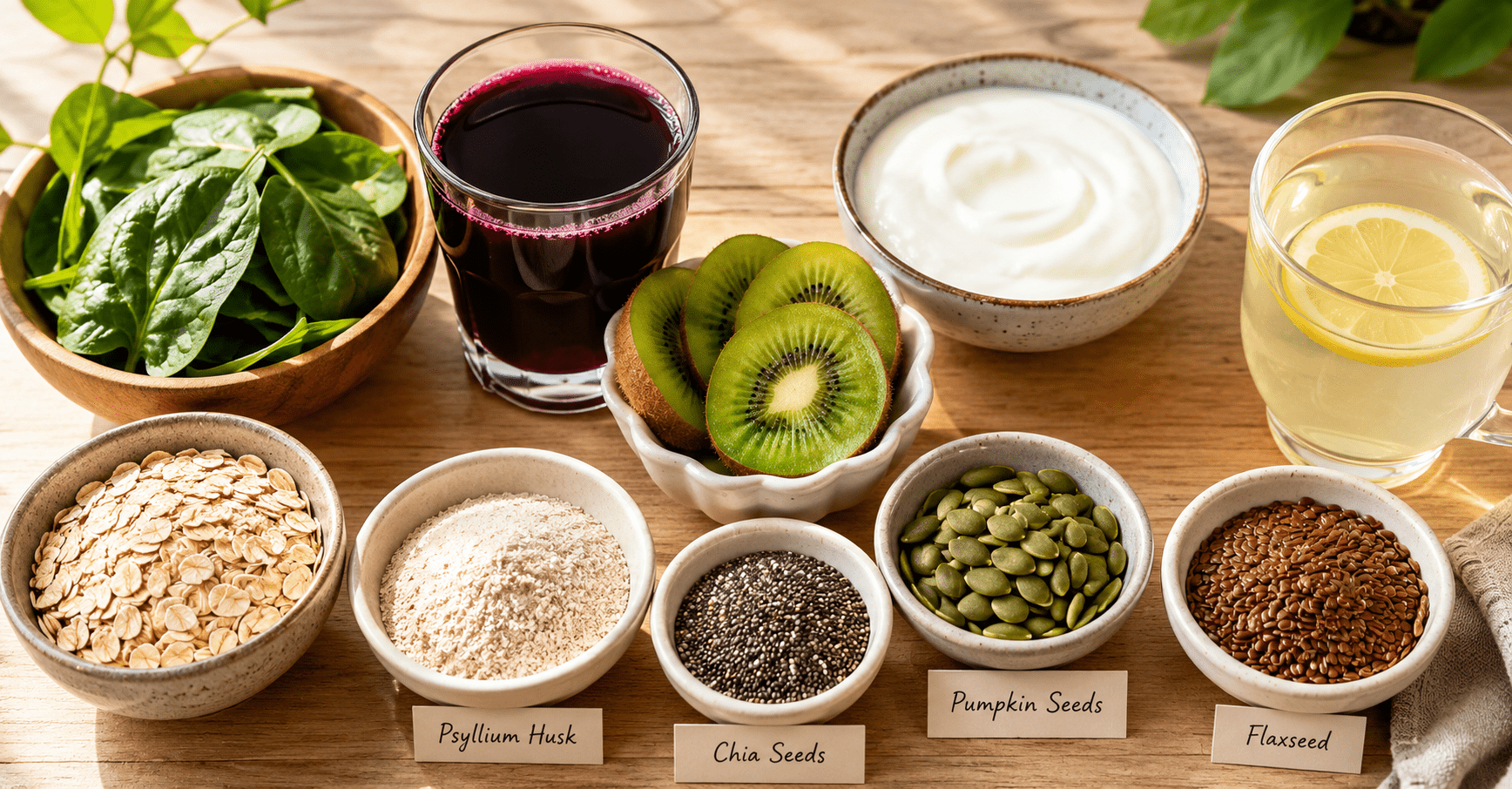
When you need the best foods for immediate constipation relief, the options with the fastest onset are prune juice, warm water, coffee, and olive oil — all of which can trigger bowel movement within 30 minutes to 6 hours in many individuals. Longer-acting options like kiwifruit, psyllium husk, and magnesium-rich foods provide more sustained relief over 1–3 days.
Constipation affects roughly 16% of adults in the United States.¹ Clinically, it means fewer than three bowel movements per week, hard or lumpy stools, or significant straining. While over-the-counter options can help short-term, food-based approaches are safer for everyday use and — as multiple clinical trials confirm — can be similarly effective for many people. If you are already exploring natural laxatives for constipation, knowing which specific foods have the strongest evidence behind them is a useful next step.
This guide explains which foods work, why they work, how much to use, and the best same-day combinations. Every recommendation is based on peer-reviewed clinical research and gastroenterology guidelines.
Quick Answer: Best Foods for Immediate Constipation Relief
For same-day or next-day results, the best foods for immediate constipation relief are:
- Prune juice (120–240 mL on an empty stomach) — osmotic + polyphenol action, possible onset 1–6 hours
- Warm water (1 glass on waking) — activates gastrocolic reflex, 30–60 minutes
- Coffee (1 cup) — stimulates colon contractions rapidly in some individuals
- Olive oil (1–2 tbsp on empty stomach) — traditional use, limited clinical evidence, 1–3 hours
For relief within 1–3 days, add whole kiwifruit (2 per day) and psyllium husk (10+ g with water). Individual responses vary widely based on gut health, hydration, and dietary history. If constipation persists beyond three weeks, see a doctor.
Evidence Rating Used in This Article
| Rating | Criteria |
|---|---|
| Strongest | Multiple RCTs confirming benefit |
| Strong | ≥1 RCT with consistent results |
| Moderate | Observational or mechanistic data |
| Limited | Small studies or mixed findings |
| Traditional use | Clinical trials lacking; based on established use |
Affiliate Disclosure: This article may contain affiliate links. If you purchase through these links, we may earn a small commission at no extra cost to you. Our recommendations are based on research and editorial evaluation, not affiliate partnerships.
How Foods Relieve Constipation Immediately
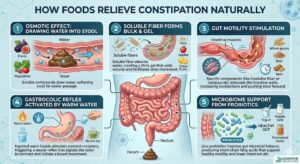
Different best foods for constipation relief act through different biological mechanisms. Understanding these pathways helps in choosing the right approach — and in combining foods more effectively.
- 💧 Osmotic effect — Sorbitol (prunes, pears) and magnesium draw water into the colon, softening stool directly.
- 🌾 Soluble fiber — Absorbs water to form a smooth gel, making stool softer and easier to pass.
- ⚡ Motility stimulation — Coffee, olive oil, and certain plant compounds may trigger the wave-like contractions that move stool forward.
- 🌅 Gastrocolic reflex — Warm liquids signal the colon to contract — strongest in the morning after overnight fasting.
- 🦠 Microbiome support — Probiotic foods restore gut bacteria that produce short-chain fatty acids, supporting regular transit over time.
Practical insight:
Using foods from two or three categories simultaneously tends to be more helpful than relying on any single food. For example, prune juice (osmotic) + warm water (gastrocolic reflex) + pumpkin seeds (magnesium) targets three mechanisms at once. For a detailed look at how gut bacteria affect regularity, see our guide on gut microbiome rebalancing for constipation.
Foods That Work Fastest — Same-Day Relief
If you need the best foods for immediate constipation relief today, these are your first options. They act through motility stimulation and the gastrocolic reflex — the two fastest mechanisms available through diet.
| Food | Approximate Onset |
|---|---|
| Coffee | Rapid colon stimulation observed in some individuals* |
| Warm water on empty stomach | 30–60 min |
| Prune juice | 1–6 hrs |
| Olive oil on empty stomach | 1–3 hrs (limited evidence)† |
| Whole prunes | 6–12 hrs |
| Kiwifruit (2 per day) | 1–3 days |
| Psyllium husk | 12–72 hrs |
| Probiotic foods | 2–4 weeks |
* Rapid colon stimulation following coffee has been observed in some individuals in research settings; the effect is not universal and timing varies widely. † Olive oil onset is based on traditional use and limited clinical data; not reliably observed in all individuals.

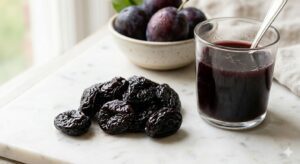
1. Prunes & Prune Juice — Strongest Evidence
When it comes to the best foods for constipation relief, prunes (dried plums) have more clinical backing than almost any other dietary option. They act through three mechanisms simultaneously:
- Sorbitol (~12 g per 100 g) — a natural sugar alcohol that draws water into the colon to soften stool.²
- Dietary fiber (6–7 g per 100 g) — cellulose and pectin that add bulk and support peristalsis.
- Polyphenols — phenolic compounds that stimulate intestinal secretion and colon contractions independently of fiber — which is why prune juice also provides benefit.³
What the Research Shows
A randomized controlled trial by Attaluri et al. (2011) compared dried plums with psyllium in adults with chronic constipation. Prunes produced significantly better outcomes for both stool frequency and consistency — the two primary clinical endpoints.⁴ A 2022 double-blind, placebo-controlled trial by Koyama et al. confirmed that prune juice containing sorbitol, pectin, and polyphenols significantly reduced hard stools and improved constipation symptoms, with no adverse effects on liver or kidney function.⁵
Wondering how prunes compare to kiwifruit head-to-head? See our detailed prunes vs kiwifruit for constipation breakdown.
How to Use
Daily maintenance: 5–6 prunes (50 g) per day — suitable for chronic constipation and long-term regularity.
Acute relief: 120–240 mL (½–1 cup) of prune juice on an empty stomach in the morning. Warming the juice slightly may strengthen the gastrocolic reflex response.
Combined approach: Prune juice + a glass of warm water + a 10-minute walk (see the Core Protocol below).
Practical note: If you are new to prune juice, starting with 60 mL (¼ cup) and increasing gradually over a few days may help avoid loose stools or cramping. Some individuals notice effects within 1–2 hours; for others it may take up to 6 hours or longer. See the
full prune juice dosage guide for more detail.
2. Kiwifruit — Strong Evidence
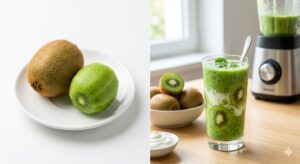
Among the best foods for constipation relief, kiwifruit stands out for its strong clinical trial record. In multiple well-designed randomized controlled trials, eating two green kiwifruits daily significantly increased bowel movement frequency and improved stool consistency — with fewer side effects than fiber supplements for many participants.
Why Kiwifruit May Help
- Actinidin — a protease enzyme unique to kiwifruit that may speed up gastric emptying and intestinal motility.
- Complex pectin — a slowly fermented, water-retaining fiber that softens stool without the bloating some people experience from wheat-based fibers like bran.
- Vitamin C and polyphenols — may support a healthy gut microbiome and reduce low-grade gut inflammation that can slow transit.
What the Research Shows
Chey et al. (2021) conducted a comparative effectiveness trial randomizing participants to green kiwifruit (2 per day), prunes (100 g per day), or psyllium (12 g per day) for 4 weeks. Kiwifruit produced significantly higher stool frequency than psyllium.⁶ A 2022 randomized clinical trial by Bayer et al. confirmed that two gold kiwifruits daily significantly increased complete spontaneous bowel movements per week and reduced gastrointestinal discomfort.⁷
Read about one person’s real-world experience with this approach: 2 kiwis a day for constipation — a chronic constipation relief story.
How to Use
Eat 2 whole green kiwifruits daily — morning or evening both appear to work. Pairs well with plain probiotic yogurt (see combinations section). Consistent benefit typically develops over 1–2 weeks of daily use; some individuals notice initial effects within 1–3 days.
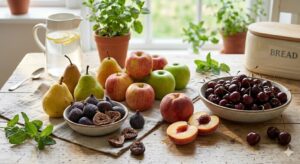
3. Other Sorbitol-Rich Fruits — Moderate Evidence
Several common fruits are among the best foods for constipation relief — particularly when eaten on an empty stomach or in larger amounts. For a full breakdown of fruit-based options ranked by evidence, see the 10 best fruits for chronic constipation.
- Pears — among the highest sorbitol contents of everyday fruits (~2–3 g per medium pear). Eating with the skin adds insoluble fiber.
- Apples — contain sorbitol plus pectin. One medium apple with skin provides about 4 g of total fiber.
- Dried figs — high in both sorbitol and insoluble fiber. Three to four as an evening snack may produce results by morning in some individuals.
- Peaches and nectarines — moderate sorbitol content; useful as part of a higher-fruit dietary approach.
- Cherries — contain sorbitol and are a natural source of melatonin, which may play a modest role in gut motility at night.
These fruits tend to be gentle, making them a reasonable option for children, older adults, and pregnant women who need food-based support.
4. Magnesium-Rich Foods — Strong Evidence
Magnesium-rich foods are among the most clinically supported best foods for constipation relief and are often overlooked. Magnesium works through two pathways:
- Osmotic effect — magnesium ions draw water into the intestinal lumen, softening stool.
- Smooth muscle support — magnesium regulates contraction and relaxation of colon wall muscles. Low magnesium levels are associated with sluggish bowel contractions in some individuals.
What the Research Shows
A randomized, double-blind, placebo-controlled trial by Bothe et al. (2017) found that mineral water rich in magnesium sulfate and sodium sulfate significantly improved stool consistency and constipation symptoms over 6 weeks.⁸
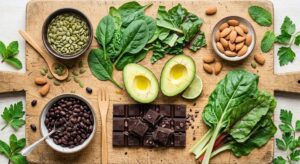
| Food | Serving | Magnesium | Additional Benefit |
|---|---|---|---|
| 🌰 Pumpkin seeds (pepitas) | 1 oz (28 g) | 156 mg | Highest-density food source |
| 🥬 Spinach, cooked | ½ cup | 78 mg | Also provides ~2 g of fiber |
| 🥜 Almonds | 1 oz (28 g) | 76 mg | Pairs well with prune juice |
| 🌿 Swiss chard, cooked | ½ cup | 75 mg | Also high in potassium and fiber |
| 🫘 Black beans, cooked | ½ cup | 60 mg | Also provides 7.5 g of dietary fiber |
| 🍫 Dark chocolate (70%+) | 1 oz (28 g) | 64 mg | Polyphenols may mildly support gut motility |
| 🥑 Avocado | Half (68 g) | 29 mg | Also provides ~5 g of soluble fiber |
Practical note: A handful of pumpkin seeds (1 oz) alongside a spinach smoothie provides over 230 mg of magnesium — more than half the recommended daily intake (400–420 mg for adult men; 310–320 mg for adult women). If dietary sources are insufficient, speak with your doctor before starting a magnesium supplement.
5. Soluble Fiber Foods — Strongest Evidence
Not all fiber works the same way. Soluble fiber absorbs water, forms a smooth gel, and makes stool softer and easier to pass — making these some of the best foods for constipation relief available. Insoluble fiber adds bulk and can speed transit, but may worsen bloating if added too quickly or without adequate fluid. For a comprehensive look at how fiber fits into gut health, see our guide on fiber foods and gut health.
Psyllium Husk
Psyllium is the most clinically studied dietary fiber for constipation. A 2022 systematic review and meta-analysis by van der Schoot et al. found psyllium to be the most effective fiber type for chronic constipation, with optimal outcomes at doses above 10 g per day for at least 4 weeks.⁹
How to use psyllium:
- Mix 1–2 teaspoons (5–10 g) of psyllium husk powder into 8–12 oz of water and drink immediately.
- Always follow with an additional glass of water. Psyllium without adequate fluid can worsen constipation.
- Initial softening may occur within 12–72 hours; consistent improvement typically develops after 2–4 weeks of daily use.
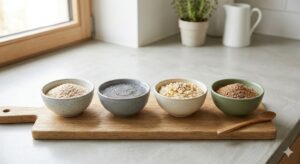
Chia Seeds
Two tablespoons of chia seeds provide about 10 g of fiber — mostly soluble. When soaked in water, they expand into a gel that acts as a gentle stool softener. Unlike psyllium, chia seeds also supply omega-3 fatty acids and plant protein. Soak 1 tablespoon in 8 oz of water for 20–30 minutes before drinking.
Oats
Oats are rich in beta-glucan, a soluble fiber that softens stool, feeds beneficial gut bacteria, and may help reduce gut inflammation. One cup of cooked oatmeal delivers about 4 g of fiber. Oats work best as a consistent daily habit rather than an occasional remedy.
Ground Flaxseed
Ground flaxseed provides soluble fiber (a gel-forming mucilage) plus omega-3 fatty acids that support gut wall health. Always use ground flaxseed — whole seeds pass largely undigested. Start with 1 tablespoon per day in yogurt, smoothies, or oatmeal, and increase gradually to minimize gas.
Important: Increase fiber intake gradually — add no more than 5 g per week — and drink at least 8 glasses of water per day. If fiber is not producing results, read why fiber isn’t working for your constipation — the issue is often hydration, fiber type, or gut dysbiosis rather than the amount.
6. Probiotic Foods — Moderate Evidence
A healthy gut microbiome supports regular bowel movements. When gut bacteria fall out of balance, intestinal transit often slows. Probiotic foods restore beneficial bacteria that produce short-chain fatty acids and help maintain healthy peristalsis over time.
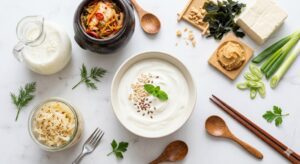
- Plain yogurt with live cultures — look for Lactobacillus acidophilus, Bifidobacterium lactis BB-12, or Lactobacillus rhamnosus GG on the label. A clinical study found significantly faster colonic transit time after two weeks of daily probiotic yogurt compared to a control group.¹⁰
- Kefir — a fermented milk drink with greater probiotic diversity than yogurt. Often better tolerated by people with mild lactose sensitivity.
- Sauerkraut — fermented cabbage rich in Lactobacillus species. Buy unpasteurized, refrigerated versions — pasteurization destroys live cultures.
- Kimchi — Korean fermented vegetables containing a wide range of beneficial bacteria plus prebiotic fiber.
- Miso — fermented soybean paste. One tablespoon dissolved in warm (not boiling) water adds a meaningful probiotic component.
Probiotic foods work gradually — allow 2–4 weeks of daily use before assessing results. For a deeper look at the evidence, read how a probiotic brought relief after 12 years of chronic constipation. If you are considering a supplement alongside dietary changes, see our review of the 9 best probiotic supplements and the best spore-based probiotics for constipation.
7. Hydrating Foods and Drinks — Strong Evidence
Dehydration is one of the most common — and most underestimated — contributors to constipation. When the body is short on fluids, the colon pulls additional water from stool as it passes through, making it harder and more difficult to pass. No best food for constipation relief works optimally in a dehydrated gut.
Research consistently links inadequate fluid intake to slower gastrointestinal transit and harder stools, making hydration one of the most modifiable dietary factors in constipation management.¹¹
- Warm water on an empty stomach — one glass first thing in the morning activates the gastrocolic reflex, signaling the colon to contract. Many individuals feel the urge to go within 30–60 minutes.
- Warm lemon water — the mild acidity of lemon juice may stimulate bile production and digestive enzyme activity, adding a gentle gut stimulus alongside hydration.
- Coconut water — natural electrolytes (potassium, sodium, magnesium) help restore hydration balance. Read about one reader’s remarkable experience using coconut water for constipation relief.
- Vegetable soup and bone broth — provide fluid, minerals, and electrolytes together. Particularly helpful for older adults and young children who often drink less plain water.
- Water-rich vegetables — cucumber (96% water), watermelon (92%), celery (95%), and zucchini (94%) all contribute meaningfully to daily fluid intake.
Daily target: Aim for at least 8–10 cups (2–2.5 litres) of total fluid per day — more if you exercise, live in a warm climate, or have recently increased your fiber intake.
8. Foods That May Directly Stimulate a Bowel Movement
Some of the best foods for constipation relief act by triggering gut muscle contractions or intestinal reflexes — not through fiber or osmosis, but through chemical and mechanical stimulation. These may act more quickly than fiber-based options for some individuals, though responses vary considerably.
Coffee — Moderate Evidence
Caffeinated coffee is one of the faster-acting dietary tools for bowel support. Both caffeine and chlorogenic acids appear to be active, which is why even decaf coffee has some gut-stimulating properties. However, excess coffee causes dehydration, which counteracts the benefit. Limiting intake to 1–2 cups per day is advisable, always accompanied by a glass of water.
Olive Oil — Traditional Use
Extra virgin olive oil is a widely used traditional remedy for constipation. The proposed mechanisms include intestinal wall lubrication and mild stimulation of bile flow. However, clinical evidence is limited — most support comes from traditional use and mechanistic plausibility. It may be worth including as part of a broader approach but should not be relied upon as a primary treatment.
Traditional use — how it is commonly taken:
- 1–2 tablespoons of extra virgin olive oil on an empty stomach in the morning.
- Some people mix it with the juice of half a lemon for palatability and a mild bile-stimulating effect.
- Some individuals report softer stools within a few hours — though this is not guaranteed and individual responses vary considerably.
Warm Herbal Teas — Moderate Evidence
Any warm liquid activates the gastrocolic reflex. Certain herbal teas may also have direct effects on gut motility:
- Senna tea — contains anthraquinones that stimulate colon contractions within 6–12 hours. Effective for occasional, short-term relief. See the full senna safety information below before use.
- Ginger tea — gingerols may promote gastric motility and reduce gut spasms. Generally considered safe for daily use, including during pregnancy.
- Peppermint tea — menthol relaxes smooth muscle in the gut wall, may reduce bloating, and supports forward movement of gas and stool.
- Dandelion root tea — acts as a mild prebiotic and gentle digestive stimulant. Suitable for longer-term microbiome support.
⚠️ Senna — Important Safety Information
- Do not use for more than 7 consecutive days without medical supervision.
- Dependency risk: with frequent use, the colon can lose its ability to contract normally without stimulation. This is a recognized form of laxative overuse.
- Electrolyte imbalance: long-term use can lower potassium and sodium levels, affecting heart rhythm and muscle function.
- Structural risk: chronic overuse has been linked to structural changes in the colon lining (melanosis coli).
If you feel you need senna more than once a week, consult a doctor to identify the underlying cause.
Core Same-Day Protocol
This approach targets three mechanisms at once and may provide relief within the same day in some individuals with mild-to-moderate constipation — though responses vary. For more morning strategies backed by research, see 5 simple morning habits to relieve constipation naturally.
| Time | Action | Mechanism |
|---|---|---|
| ☀️ On waking | 1 glass warm water | Activates gastrocolic reflex |
| 🫐 Within 10 min | ½ cup prune juice | Osmotic + polyphenol action |
| 🍳 Breakfast | High-fiber meal | Fiber + sustained hydration |
| 🚶 After breakfast | 10–15 min walk | Stimulates intestinal contractions |
9. Best Food Combinations
Combining the best foods for constipation relief from two or more mechanisms tends to produce better outcomes than any single food alone. Here are five combinations to try for overnight or next-day relief:
🥤 Combination 1 — Classic
½ cup warm prune juice + 1 glass warm water Sorbitol draws water into the colon (osmotic); warm liquid activates the gastrocolic reflex. Possible relief: 6–8 hours (some individuals)
🥝 Combination 2 — Kiwi + Yogurt
2 green kiwifruits + ½ cup plain probiotic yogurt Actinidin enzyme + pectin supports motility; probiotic bacteria support microbiome-driven transit. Best results: consistent daily use over 1–2 days
🍋 Combination 3 — Chia Lemon Water
1 tbsp chia seeds soaked in 8 oz water + juice of ½ lemon Soluble fiber gel (chia) softens stool; lemon may mildly stimulate bile production. Gentle enough for daily use during pregnancy. Gradual; safe for long-term use
🌰 Combination 4 — Magnesium Snack
5–6 prunes + 1 oz pumpkin seeds + 1 glass warm water Sorbitol + polyphenols (prunes) + magnesium for osmotic and motility support (pumpkin seeds) + hydration. Targets three mechanisms at once. Possible relief: 6–10 hours (some individuals)
🥤 Combination 5 — Morning Smoothie
1 cup spinach + 1 ripe banana + 1 tbsp ground flaxseed + 1 tbsp psyllium husk + 8 oz coconut water Magnesium (spinach) + potassium (banana) + omega-3 + soluble fiber (flax, psyllium) + electrolytes (coconut water). Best for managing chronic constipation over weeks. Best results: daily use over 2–4 weeks
10. Morning Routine for Daily Regularity
When you eat and drink matters almost as much as what you eat. The gastrocolic reflex is strongest in the first hour after waking — your colon is most ready to contract, and stool collected overnight is in position to be expelled. Building a consistent morning routine around the best foods for constipation relief is one of the more effective long-term strategies. See our full article on 5 simple morning habits to relieve constipation naturally for more detail.
- Immediately on waking: 1 glass (8 oz) of warm water to activate the gastrocolic reflex and begin rehydrating the colon after overnight fasting.
- Within 10 minutes: ½ cup of prune juice (for acute constipation) or 1–2 tablespoons of olive oil with lemon (traditional use; limited clinical evidence).
- Breakfast (within 30–60 minutes of waking): a fiber-rich meal — oatmeal with ground flaxseed and berries, yogurt with 2 kiwifruits, or Combination 5 above.
- After breakfast: allow 15–20 minutes of unhurried bathroom time. Never suppress the urge to go — habitual suppression progressively weakens the reflex over time.
- Light movement: a gentle 10–15 minute walk after breakfast can meaningfully support intestinal contractions.
11. Foods That Tend to Worsen Constipation
Knowing what to limit is as important as knowing the best foods for constipation relief. The following tend to slow digestive transit, dehydrate stool, or disrupt gut bacteria balance:
- ✕ Cheese & hard dairy — Very low fiber; dairy-heavy diets are consistently linked to higher constipation rates in clinical research.
- ✕ Fried foods — High-fat meals slow gastric emptying and displace fiber-rich foods.
- ✕ Highly processed foods — White bread, chips, packaged snacks: stripped of fiber, may disrupt the gut microbiome.
- ✕ Excess red meat — Contains no fiber. A diet heavy in red meat without adequate vegetables is a common pattern linked to constipation.
- ✕ Unripe bananas — High resistant starch slows gut transit and firms stool. Ripe bananas (with brown spots) are fine in moderation.
- ✕ White rice — A low-fiber refined grain with a binding effect. Swap for brown rice, quinoa, or barley when possible.
- ✕ Alcohol — Significantly dehydrating. Even moderate consumption can measurably worsen stool hardness and slow transit.
- ✕ Excess caffeine (>2 cups/day) — A small amount of coffee may stimulate the gut; excessive intake causes dehydration that worsens constipation overall.

12. Quick-Action Summary
| Your Goal | Best Foods to Use | Expected Onset* |
|---|---|---|
| Fastest relief (same day) | Prune juice (½ cup) + warm water + 1 tbsp olive oil on empty stomach | 1–6 hours |
| Overnight relief by morning | 5–6 prunes + 1 oz pumpkin seeds + warm water before bed | 6–10 hours |
| Soften hard, dry stool | Psyllium husk in water, soaked chia seeds, oatmeal | 12–72 hours |
| Increase bowel frequency | 2 green kiwifruits daily + plain probiotic yogurt | 1–3 days |
| Long-term prevention | High-fiber diet + magnesium foods + probiotics + 8–10 cups water daily | 2–4 weeks |
| Safe for older adults | Warm prune juice, warm water in the morning, kiwifruit, vegetable soups | 1 hr – 2 days |
| Safe during pregnancy | Chia water with lemon, kiwifruit, oats, pears, soaked prunes, ginger tea | 12 hrs – 2 days |
* All onset times are approximate and can vary considerably based on individual gut health, hydration status, diet history, and constipation severity. Consult a healthcare provider if constipation persists.
If food-based approaches are not producing consistent results, the next step may be an OTC laxative or a targeted supplement. When fiber and probiotics are both failing, read about what to do when fiber and probiotics are not working for constipation.
⚠️ When to See a Doctor
Food-based approaches are suitable for most people with occasional or mild chronic constipation. However, the following situations require prompt medical evaluation:
- Constipation lasting more than 3 weeks that does not improve with dietary changes
- Blood in your stool or rectal bleeding of any amount
- Severe or persistent abdominal pain or cramping
- Unexplained weight loss alongside constipation
- Constipation alternating with sudden diarrhoea — a possible sign of IBS, colon obstruction, or other conditions
- New-onset constipation in anyone over 50 with no obvious dietary cause — a colonoscopy evaluation is recommended
- Inability to pass gas, severe abdominal bloating, or visible abdominal distension
Related Articles
- Prune juice for constipation: how much & when to drink
- Prunes vs kiwifruit for constipation: which works better?
- The 10 best fruits for chronic constipation
- 15 best natural laxatives for constipation
- Best OTC stool softeners and laxatives: evidence review
- 5 best magnesium supplements for constipation
- 9 best probiotic supplements for gut health
- Best spore-based probiotic: MegaSporeBiotic vs Just Thrive
- 5 simple morning habits to relieve constipation naturally
- Why fiber isn’t working for your constipation
- Coconut water for constipation: real success story
- After 12 years of chronic constipation, a probiotic brought relief
Frequently Asked Questions
What are the best foods for immediate constipation relief?
Among food-based options, prune juice (120–240 mL on an empty stomach) has the strongest clinical evidence, with some individuals reporting effects within 1–6 hours for mild cases. Combining it with warm water and a short walk may improve outcomes. Kiwifruit (2 whole fruits daily) is another evidence-backed option that tends to produce results within 1–3 days of consistent use. Individual responses vary significantly.
What best foods for constipation relief work most quickly?
The options with the fastest potential onset are warm water on an empty stomach (gastrocolic reflex, 30–60 minutes in many people), coffee (rapid colon stimulation observed in some individuals in research settings), and prune juice (osmotic action, potentially 1–6 hours for mild cases). Olive oil is a commonly used traditional remedy, though its clinical evidence is limited. Results depend on constipation severity, hydration level, and individual gut health.
Which food has the strongest clinical evidence for constipation?
Among food-based options, prunes have the broadest clinical evidence: they contain sorbitol (~12 g per 100 g), dietary fiber (6–7 g per 100 g), and polyphenols that stimulate colonic secretion. Multiple randomized controlled trials confirm prunes produced better outcomes than psyllium — the standard medical fiber treatment — for both stool frequency and consistency. For a full comparison, see prunes vs kiwifruit for constipation.
Do magnesium-rich foods help with constipation?
Yes, for many people. Magnesium may help through two mechanisms: drawing water into the intestinal lumen (osmotic effect) and supporting smooth muscle contractions that drive peristalsis. The best food sources are pumpkin seeds (156 mg per oz), cooked spinach (78 mg per ½ cup), almonds (76 mg per oz), and Swiss chard (75 mg per ½ cup). If dietary intake is insufficient, speak with your doctor before starting a magnesium supplement.
How long do high-fiber foods take to relieve constipation?
It depends on the fiber type. Psyllium husk may produce initial stool softening within 12–72 hours, but optimal benefit requires more than 10 g per day for at least 4 weeks. Prunes and kiwifruit tend to act more quickly — often within 1–3 days for some individuals. Probiotic foods and broader dietary changes typically take 2–4 weeks to produce consistent improvements.
What foods should I avoid when constipated?
It helps to reduce or avoid cheese and hard dairy products, fried foods, highly processed foods (white bread, chips, packaged snacks), excess red meat, unripe bananas, white rice, alcohol, and more than 2 cups of coffee per day. All of these tend to slow gut transit, dehydrate stool, or disrupt the gut microbiome.
References
- Bharucha AE, Dorn SD, Lembo A, Pressman A. American Gastroenterological Association medical position statement on constipation. Gastroenterology. 2013;144(1):211–217. PubMed
- Stacewicz-Sapuntzakis M, Bowen PE, Hussain EA, et al. Chemical composition and potential health effects of prunes: a functional food? Crit Rev Food Sci Nutr. 2001;41(4):251–286. PubMed
- Lever E, Cole J, Scott SM, Emery PW, Whelan K. Systematic review: the effect of prunes on gastrointestinal function. Aliment Pharmacol Ther. 2014;40(7):750–758. PubMed
- Attaluri A, Donahoe R, Valestin J, Brown K, Rao SS. Randomised clinical trial: dried plums (prunes) vs. psyllium for constipation. Aliment Pharmacol Ther. 2011;33(7):822–828. PubMed
- Koyama T, Nagata N, Nishiura K, et al. Prune juice containing sorbitol, pectin, and polyphenol ameliorates subjective complaints and hard feces while normalizing stool in chronic constipation: a randomized placebo-controlled trial. Am J Gastroenterol. 2022;117(10):1714–1717. PubMed
- Chey SW, Chey WD, Jackson K, et al. Exploratory comparative effectiveness trial of green kiwifruit, psyllium, or prunes in US patients with chronic constipation. Am J Gastroenterol. 2021;116(6):1304–1312. PubMed
- Bayer SB, Heenan P, Frampton C, et al. Two gold kiwifruit daily for effective treatment of constipation in adults — a randomized clinical trial. Nutrients. 2022;14(19):4146. PubMed
- Bothe G, Coh A, Auinger A. Efficacy and safety of a natural mineral water rich in magnesium and sulfate for bowel function: a double-blind, randomized, placebo-controlled study. Eur J Nutr. 2017;56(2):491–499. PubMed
- van der Schoot A, Drysdale C, Whelan K, Dimidi E. The effect of fiber supplementation on chronic constipation in adults: an updated systematic review and meta-analysis of randomized controlled trials. Am J Clin Nutr. 2022;116(4):953–969. PubMed
- Agrawal A, Houghton LA, Morris J, et al. Clinical trial: the effects of a fermented milk product containing Bifidobacterium lactis DN-173010 on abdominal distension and gastrointestinal transit in irritable bowel syndrome with constipation. Aliment Pharmacol Ther. 2009;29(1):104–114. PubMed
- Arnaud MJ. Mild dehydration: a risk factor of constipation? Eur J Clin Nutr. 2003;57(Suppl 2):S88–S95. PubMed
Medical Reminder: This article is for general informational purposes only and does not constitute medical advice. It is not a substitute for professional medical evaluation, diagnosis, or treatment. Always seek the guidance of a qualified healthcare provider with any questions you may have regarding a medical condition or before making changes to your diet.






[…] a comprehensive evidence-based list, see our guides to the best foods for immediate constipation relief and the 10 best fruits for chronic […]