

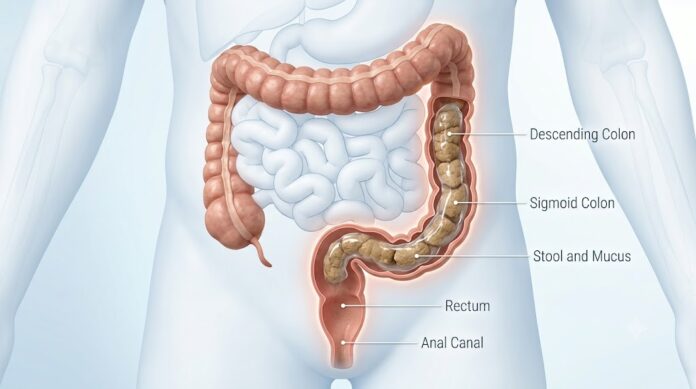
Can constipation cause mucus in stool? Yes, in most cases, hard and slow-moving stool irritates the lining of the colon and rectum, prompting the bowel to release extra mucus to help the stool pass more easily. This is one of the most common and usually harmless explanations for mucus you may notice on or around your stool, though a smaller number of cases point to something that needs medical attention.
Quick Answer: Constipation is one of the most common causes of visible mucus in stool.8 Hard stool moving slowly through the colon stretches and irritates the intestinal lining, which increases mucus production as a protective response.1,8 A thin film of clear or whitish mucus on hard, infrequent stool is usually not a cause for alarm. Mucus that is discolored, bloody, increasing in amount, or paired with pain, fever, or weight loss deserves a doctor’s evaluation.
Why Does Constipation Cause Mucus in Stool?
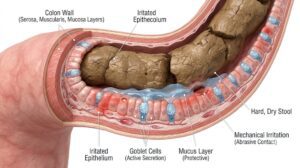
The lining of your intestines is constantly producing a small, usually unnoticeable amount of mucus. This mucus layer protects the delicate epithelial cells underneath from mechanical stress, dehydration, and bacteria, while also helping stool move smoothly through the colon.1 Specialized goblet cells in the gut lining secrete this mucus continuously at a low baseline rate, and they can secrete considerably more of it when the tissue is stressed or irritated.1
When constipation develops, stool sits in the colon far longer than it should. The longer it stays, the more water the colon continues to pull out of it, making the stool harder, drier, and more abrasive as it eventually passes through the rectum and anal canal. That mechanical friction and the straining that often goes with it can irritate the rectal lining, and the bowel responds the way irritated tissue generally does: by producing more mucus to cushion and lubricate the passage.
This is the same basic mechanism seen in solitary rectal ulcer syndrome, a condition strongly associated with chronic straining and constipation, where mucus discharge is one of the hallmark symptoms alongside straining, a sense of incomplete evacuation, and sometimes rectal bleeding.2,3 In more severe or long-standing cases, repeated straining and rectal mucosal trauma can produce a similar pattern of mucus discharge even without a diagnosed ulcer.4
A Less Obvious Mechanism: Mucin-Degrading Gut Bacteria
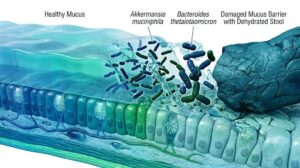
Newer research adds another layer to this picture. The colonic mucus layer is built largely from a glycoprotein called mucin, which forms a gel-like barrier that protects the intestinal lining and helps keep stool hydrated. A recently published study identified two mucin-degrading gut commensals, Akkermansia muciniphila and Bacteroides thetaiotaomicron, that act cooperatively to break down colonic mucin, reducing the lubrication it normally provides and contributing to fecal dehydration and constipation; the effect was seen in patients with chronic idiopathic constipation and Parkinson’s disease, and reproduced in gnotobiotic mice colonized with both bacteria together.5
In other words, changes in the mucus layer and constipation may run in both directions: hard stool irritates the gut lining into producing more mucus, while certain shifts in gut bacteria can degrade that same mucus layer and make stool harder to pass in the first place.5
For a broader look at how gut bacteria influence bowel regularity, see our guide on probiotics and chronic constipation relief.
What Constipation-Related Mucus Usually Looks Like
Mucus from constipation and rectal irritation typically appears as:
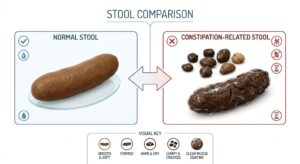
- A thin, clear, or slightly whitish coating on or around hard, dry stool
- Jelly-like or slimy strands noticed on toilet paper or in the toilet bowl
- More noticeable during periods of straining or infrequent bowel movements
- Improving once bowel movements become softer and more regular
Because it’s normal for a healthy gut to release some mucus with every bowel movement, seeing an occasional trace is not unusual.8 What matters most is the trend: whether the amount is genuinely increasing, whether the color is changing, and whether other symptoms are appearing alongside it.
Affiliate Disclosure: This article may link to related articles on ConstipationRelief.net that contain Amazon affiliate links. If you purchase through those links, we may earn a small commission at no extra cost to you. Our editorial recommendations are based on peer-reviewed research and clinical guidelines, never on commission potential.
At a Glance: Products That Help Relieve the Constipation Behind Mucus in Stool
Because constipation-related mucus is driven by hard, slow-moving stool irritating the bowel lining, softening and speeding up stool transit is the most effective way to reduce it:
- Best for softening hard, irritating stool (strongest evidence): MiraLAX Laxative Powder (45-Dose) — PEG 3350 osmotic laxative, the only OTC agent with a strong recommendation for chronic use in the 2023 AGA-ACG guideline, tasteless and odorless, mixes into any drink
- Best for sensitive or already irritated bowels: Citrucel Fiber Therapy Caplets (180 Count) — non-fermentable methylcellulose fiber, gentler on an irritated gut lining than fermentable fibers, causes significantly less gas and bloating
- Best for long-term stool regularity (psyllium): Konsyl Daily Psyllium Fiber Powder (19oz) — pure psyllium husk, supports regular well-formed bowel movements to reduce recurring rectal irritation — always take with at least 8 oz of water
- Best for faster short-term relief: Natural Vitality CALM Magnesium Citrate Powder — osmotic action draws water into the colon to soften and move stool faster, works in 30 minutes to 6 hours — avoid with kidney disease, occasional use only
For a full comparison of over-the-counter options, see our guide on Best OTC Laxatives for Constipation in the US, and for food-first strategies, see our guide on Fiber Foods and Fiber Therapy for Gut Health.
Mucus in Stool: Constipation Versus Other Causes
Constipation is one of the more common explanations for mucus in stool, but it is not the only one. Knowing what tends to distinguish these conditions can help you decide whether home management is reasonable or whether it’s time to see a doctor.
Irritable Bowel Syndrome (IBS-C)
Irritable bowel syndrome with constipation (IBS-C) is a disorder of gut-brain interaction diagnosed using the Rome IV criteria, which require recurrent abdominal pain along with altered bowel habits.6,7 Mucus is a frequently reported symptom in IBS, particularly in subtypes involving looser stools, though it can appear with the constipation-predominant subtype as well, often alongside bloating, cramping, and a sensation of incomplete evacuation.6
If your mucus consistently comes with abdominal pain that improves after a bowel movement, IBS may be worth discussing with a doctor.
Hemorrhoids and Anal Fissures
Straining from constipation is also a well-documented driver of hemorrhoids, and inflamed hemorrhoidal tissue can add mucus discharge on top of the more classic symptom of bright red bleeding.8 If you’re trying to work out whether your symptoms point more toward hemorrhoids, our guide on Can Constipation Cause Hemorrhoids? walks through the mechanism and warning signs in detail.
Infections and Inflammatory Bowel Disease
Bacterial, viral, or parasitic gut infections can trigger a noticeable increase in mucus, usually alongside diarrhea, cramping, and sometimes fever rather than constipation.8 Inflammatory bowel disease, including Crohn’s disease and ulcerative colitis, can also produce mucus that looks like white or yellow streaks on stool, and typically comes with more persistent pain, weight loss, or blood.8
Colorectal Cancer (Uncommon, But Worth Knowing)
Mucus in stool is a recognized, though relatively uncommon, presenting symptom of colorectal cancer. In a widely cited case series of 194 colorectal cancer patients, mucus in stool was reported in about 6% of cases, well behind more common presenting features such as a positive fecal occult blood test (77%), rectal bleeding (58%), anemia (57%), and abdominal pain (52%).9
This means mucus alone, without other warning signs, is a poor predictor of cancer on its own, but it is one of several symptoms that clinicians consider together when evaluating a persistent change in bowel habits, particularly in people over 45 or with a family history of colorectal cancer.10
Warning Signs: When Mucus in Stool Is Not Just Constipation
Most mucus that accompanies constipation improves once bowel habits normalize and does not require urgent evaluation. See a doctor promptly if you notice any of the following:
- Mucus that is bloody, pink, or mixed with dark or black stool
- A significant and ongoing increase in the amount of mucus, rather than an occasional trace
- Mucus that is yellow, green, or has a strong foul odor
- Constipation lasting more than three weeks despite dietary and lifestyle changes
- Unexplained weight loss, persistent abdominal pain, or fever
- A new change in bowel habits that lasts more than a few weeks, especially after age 4510
- Pencil-thin stools or a persistent feeling of incomplete evacuation
These symptoms don’t automatically mean something serious is happening, but they are the kind of pattern that should be evaluated rather than self-managed, since they can point to inflammatory bowel disease, an infection, or, less commonly, colorectal disease.8,10
How to Relieve Mucus in Stool Caused by Constipation
Because the extra mucus is generally a downstream response to hard, irritating stool, the most effective approach is to treat the constipation itself rather than the mucus in isolation.
Hydration and Fiber
Adequate fluid intake helps keep stool softer and easier to pass, which reduces the mechanical irritation driving the extra mucus. See our guide on Does Dehydration Cause Constipation? for the specifics. Gradually increasing fiber intake, ideally with a mix of food sources and, if needed, a supplement, supports regular, well-formed bowel movements over time. Our guide on fiber foods and fiber therapy for gut health covers a structured approach to building this up without triggering excess gas.
Toilet Habits and Posture
Straining is one of the more direct contributors to rectal irritation and mucus, so anything that reduces the need to strain helps. See our guide on the best position to poop for constipation for specifics on toilet posture.
Osmotic Laxatives, Used Correctly
When fiber and hydration alone aren’t enough, an osmotic laxative can help keep stool consistently soft, which reduces the friction and irritation behind extra mucus production. Our guide to magnesium supplements for constipation covers dosing and forms, and our full breakdown of OTC laxatives compares the evidence by category.
Address Related Symptoms Together
Mucus rarely shows up in isolation. If you’re also dealing with gas and bloating, our guide on whether constipation causes gas explains the overlapping mechanisms. If nausea or lower back discomfort are part of the picture, see our guides on Can Constipation Cause Nausea? and Can Constipation Cause Back Pain?
Key Takeaway: Constipation is one of the most common, generally benign causes of mucus in stool. The mucus is a protective response to hard, slow-moving stool irritating the bowel lining, and it typically improves as constipation is treated. Watch for blood, color changes, persistent increases, or accompanying red-flag symptoms, which should be evaluated by a healthcare provider promptly.
The Bottom Line
Can constipation cause mucus in stool? For most people, yes, and it’s a sign that the bowel lining is responding to hard, irritating stool the way it’s designed to: by adding lubrication to ease the stool’s passage. A thin trace of clear mucus on hard stool during a constipated stretch is common and typically resolves with better hydration, fiber, and stool consistency. Persistent, increasing, discolored, or bloody mucus is a different story and is worth bringing to a healthcare provider, since it can also signal IBS, hemorrhoids, infection, inflammatory bowel disease, or, less commonly, colorectal disease.
Medical Disclaimer: This article is for informational purposes only and does not constitute medical advice, diagnosis, or treatment. Always consult a qualified healthcare provider before starting any new supplement, diet, or treatment regimen, particularly if you have persistent symptoms or an underlying health condition.
Frequently Asked Questions
Can constipation cause mucus in stool?
Yes. Hard, slow-moving stool irritates and stretches the lining of the colon and rectum, which responds by producing extra mucus to ease the stool’s passage. A thin coating of clear or whitish mucus on hard stool is common with constipation and usually resolves once bowel movements return to normal.
Is it normal to see mucus on hard stool?
A small amount of clear or pale mucus is normal and is part of how the intestines protect and lubricate themselves. It becomes a concern when the amount increases noticeably, changes color, or appears alongside blood, severe pain, or weight loss.
What color of mucus in stool is concerning?
Clear or white mucus in small amounts is usually not concerning. Mucus that looks yellow, green, pink, red, or is mixed with visible blood should be evaluated by a doctor, since these patterns can point to infection, inflammatory bowel disease, hemorrhoids, or, less commonly, colorectal cancer.
Should I see a doctor for mucus in stool with constipation?
See a doctor if mucus is accompanied by blood, severe abdominal pain, unexplained weight loss, fever, constipation lasting more than three weeks, or if the amount of mucus keeps increasing despite treating the constipation itself.
How do you stop mucus in stool from constipation?
Treating the underlying constipation is the most effective approach: adequate hydration, gradually increased fiber intake, regular physical activity, and an osmotic laxative if needed to keep stool soft. As stool becomes easier to pass, the irritation driving the extra mucus typically subsides.
References
- Zhang X, Zhou Y, et al. Intestinal mucus components and secretion mechanisms: what we do and do not know. Exp Mol Med. 2023. Available from: https://www.nature.com/articles/s12276-023-00960-y
- Forootan M, Darvishi M. Solitary rectal ulcer syndrome: A systematic review. Medicine (Baltimore). 2018;97(18):e0565. Available from: https://journals.lww.com/md-journal
- Solitary rectal ulcer syndrome in children. PubMed. Available from: https://pubmed.ncbi.nlm.nih.gov/18188026/
- Mayo Clinic. Solitary rectal ulcer syndrome: Symptoms & causes. Available from: https://www.mayoclinic.org/diseases-conditions/rectal-ulcer/
- Hamaguchi T, Gibo N, Ohara M, et al. Bacterial constipation: Mucin-degrading intestinal commensal bacteria cause constipation. Gut Microbes. 2026;18(1):2596809. Available from: https://www.ncbi.nlm.nih.gov/pmc/articles/PMC12928629/
- Irritable bowel syndrome: Epidemiology, overlap disorders, pathophysiology and treatment. World J Gastroenterol. Available from: https://pmc.ncbi.nlm.nih.gov/articles/PMC10354571/
- What Is New in Rome IV. Available from: https://pmc.ncbi.nlm.nih.gov/articles/PMC5383110/
- Cleveland Clinic. Mucus in Stool: Causes & When To Be Concerned. Available from: https://my.clevelandclinic.org/health/symptoms/mucus-in-stool
- Presenting symptoms and signs for patients with colorectal cancer (adapted from Majumdar SR, et al. Am J Gastroenterol. 1999;94(10):3039-45). BMC Med. 2009;7:18. Available from: https://pmc.ncbi.nlm.nih.gov/articles/PMC2672954/
- American Cancer Society. Colorectal Cancer Signs and Symptoms. Available from: https://www.cancer.org/cancer/types/colon-rectal-cancer/