


A stressful week can affect more than your mood. Some people find themselves in the bathroom more often. Others find that nothing moves at all, and the harder they try, the more tense they get.
So does stress really cause constipation, or is that just something people say? The research gives a more interesting answer than a plain yes or no. This guide covers what studies have found about the gut-brain connection, why stress often speeds the colon up in experiments, and the other pathways that may lead to constipation instead. It also separates what is reasonably established from what is still a working theory.
Quick answer
Stress can contribute to constipation, but the link is not as simple as stress slowing the gut down. In controlled experiments, stress often makes the colon more active. Constipation is more likely to involve other pathways, such as pelvic floor muscles that tighten instead of relaxing, disrupted routines, gut-brain signaling and overlap with irritable bowel syndrome, and the strength of evidence differs for each. Studies connect stress, anxiety and constipation, but most cannot prove that stress is the cause.
How stress reaches your gut
The gut and the brain are in constant two-way conversation. This network, called the gut-brain axis, links the emotional and thinking centers of the brain with the nerves of the intestine, and it also involves the stress hormone system [6].
When you feel under pressure, the hypothalamus, a control center in the brain, releases a hormone called corticotropin-releasing factor, or CRF. Reviewers describe CRF signaling as the main coordinator of the body’s hormonal, behavioral and immune responses to stress, and CRF receptors in the brain and gut have been tied to stress-related changes in gut movement [3]. This helps explain why stress is so often felt in the gut.
One caveat: much of the detailed mechanism comes from animal studies, and researchers have said that it is not yet clear how well some of these findings translate to people [3,7].
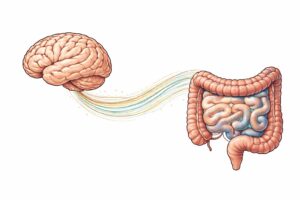
The surprise: stress often speeds the colon up
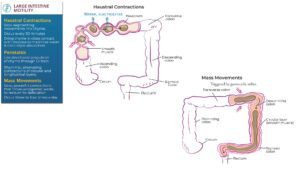
This is the counterintuitive part. In a small study of 12 healthy volunteers, researchers measured colon muscle activity while the volunteers faced psychological stress (a demanding listening task) or physical stress (repeated hand immersion in cold water). Both kinds of stress increased colon activity.
After physical stress it returned to baseline during recovery, but after psychological stress it stayed high, with more of the wave-like contractions that push stool along [4]. These findings help explain why stress can trigger urgency in some people. A study this small cannot show how stress affects everyone, or how it affects people who already have constipation.
A broader review reached a similar conclusion: the most consistent pattern in response to acute, short-term stress is slower stomach emptying and faster movement of contents through the colon [5]. That fits the diarrhea or urgency many people get before an exam or a big presentation. It does not neatly explain constipation.
No single mechanism has been proven. Several pathways are plausible, and they carry different levels of evidence.
Route 1: A pelvic floor that tightens when it should relax
Passing stool is a team effort. The abdominal muscles push, the rectum contracts, and the anal sphincter and pelvic floor muscles relax so stool can leave. In dyssynergic defecation, that coordination breaks down, so the muscles work against each other instead of together. Rao and Patcharatrakul describe the failure as inadequate propulsive force, a paradoxical tightening of the anal muscles, or inadequate relaxation, and they note that why and how it develops is still unclear [8].
Some clinical references suggest that stress or anxiety may contribute by raising muscle tension, and that adults with difficult defecation score higher on anxiety and depression measures [9]. That is a proposed mechanism, not a proven one, and the source is a general clinical reference rather than a trial. Dyssynergic defecation itself is common. Rao and Patcharatrakul report it in roughly 27 to 59 percent of patients with chronic constipation across studies, and say it affects up to half [8]. Treat that range as approximate, because it depends on who is tested and how.
This matters because fiber and laxatives may not fully address a coordination problem. Signs that point this way include repeated straining, a feeling of incomplete emptying, and needing manual help to pass stool [9]. Biofeedback-based pelvic floor retraining is recommended as first-line treatment, and randomized trials have found it more effective than laxatives [8]. It needs a trained specialist, so it is worth raising with a clinician rather than trying to fix on your own.
Route 2: Routine, habits and the small things stress changes
The National Institute of Diabetes and Digestive and Kidney Diseases (NIDDK) notes that constipation can happen when your life or daily routine changes, including when you ignore the urge to go or change how much and what you eat [2]. Stress changes routines in obvious ways. Meals get skipped or rushed. Water bottles sit untouched. Walks and workouts disappear. Sleep slips. The morning bathroom window shrinks, or the urge gets ignored because there is somewhere to be.
None of these is unique to stress, and studies have not measured how much each one contributes. They are, however, real and fixable. Our guides on constipation after traveling (another kind of routine disruption), dehydration and constipation, and simple morning habits cover the practical side. Even coffee, a common companion on stressful days, behaves differently from person to person, as we explain in does coffee help with constipation.
Medicines can play a part too. NIDDK lists some depression medicines, iron supplements, calcium or aluminum antacids, anticholinergics and narcotic pain medicines among those that can make constipation worse [2]. If your constipation started after you began something new, ask a doctor or pharmacist before changing or stopping it. For the wider picture, see our complete guide to what causes constipation.
Route 3: Gut-brain signals and the microbiome
The gut microbiota talks to the brain, and the brain talks back. Reviews describe this exchange as running both ways through nerve, hormone, immune and chemical signals [6]. In animal work, the brain can alter the makeup of gut bacteria through the autonomic nervous system, but information on how these findings apply to healthy people and to specific diseases is limited [7].
So this route is interesting, but a direct cause-and-effect link between stress, microbiome changes and constipation has not been established. Our article on the gut microbiome and constipation goes deeper, and if you are curious about bacteria-based approaches, our review of whether probiotics work for chronic constipation looks at what the trials actually found.
Route 4: Overlap with irritable bowel syndrome
Stress is considered part of the picture in irritable bowel syndrome (IBS), a condition with many contributing factors [3]. A review of stress and gut function concluded that the colon’s response to stress appears exaggerated in IBS [5]. Constipation-predominant IBS is one subtype.
If your constipation comes with abdominal pain related to bowel movements, ask a clinician whether IBS might fit, because the treatment approach can differ from that of simple constipation.
What studies say about anxiety, stress and constipation
Several population studies connect mood with bowel habits. In a US survey of 9,126 adults (NHANES, 2007 to 2010), people with constipation, defined as fewer than three bowel movements a week, were more likely to report frequent anxiety, meaning worry, tension or anxiety on at least 7 days in the past month. Anxiety was reported by 41.4 percent of people with constipation compared with 26.0 percent of those without. The link weakened but stayed significant after adjusting for other factors (adjusted odds ratio 1.33) [10].
The same paper ran a Mendelian randomization analysis, which uses genetic variants to test cause and effect. It asked whether genetic risk for constipation affects anxiety and found no significant causal association [10]. It did not test the opposite question, whether anxiety causes constipation, so the paper cannot say which way the link runs.
In children, a systematic review of eleven studies (four cross-sectional, four case-control and three cohort) found that most reported a significant relationship between psychological stress and functional constipation. The stressors included family problems, school pressures and stressful life events [11]. These are observational designs, so they show an association rather than a proven cause, and findings in children cannot be assumed to apply to adults.
It is also worth remembering that living with constipation is stressful in its own right. The relationship probably runs in both directions.
What helps when stress and constipation show up together
Strong trials testing stress reduction alone as a constipation treatment are scarce, to our knowledge. So the steps below combine measures with some constipation evidence and supportive habits. They are our suggestions for organizing your approach, not a trial protocol or medical instruction.
- Protect a calm bathroom routine. Pick a window you can keep, often after a meal, and do not ignore the urge when it comes. Tracking stool form with the Bristol Stool Chart gives you a simple record to share with a doctor.
- Keep fiber and fluids steady. For adults with chronic idiopathic constipation, the 2023 AGA and ACG guideline made a conditional recommendation for fiber supplements based on low-certainty evidence, and noted that among the supplements studied only psyllium appears effective [14]. If fiber is not helping, read why fiber sometimes stops working, compare soluble and insoluble fiber, or browse the best fruits for chronic constipation.
- Move your body. A meta-analysis of nine randomized trials with 680 participants found that exercise, mostly aerobic activity, improved constipation symptoms (relative risk 1.97), though results varied widely between trials and the authors called for more rigorous studies [12]. A short daily walk is a low-risk place to start.
- Try a better position. In a before-and-after study of 52 healthy volunteers, a footstool that raised the knees was linked to less straining and a fuller sense of emptying [13]. It was not tested in people with constipation, so think of it as a cheap experiment. Our guide to the best position to poop for constipation shows how to set it up.
- Add stress relief you will actually do. A walk, slow breathing, better sleep, time away from screens, or a conversation with someone you trust. If IBS is part of the picture, the 2021 ACG guideline suggests gut-directed psychotherapy such as cognitive behavioral therapy or gut-directed hypnotherapy, a conditional recommendation based on very-low-certainty evidence [16]. If stress or anxiety feels constant or overwhelming, a mental health professional can help, and that is worth doing for its own sake.
- Keep short-term options in perspective. If lifestyle steps are not enough, our overview of the best OTC laxatives explains the choices without hype. For reference, the same 2023 guideline gave its strong recommendation among over-the-counter options to polyethylene glycol (PEG), based on moderate-certainty evidence [14]. Our guide to relieving constipation without laxatives covers the food-based options.
- Ask about pelvic floor testing if straining is the main problem. This is especially relevant if fiber and laxatives have not helped [8,9].
A simple two-week log can help: jot down stool form, a stress rating from 1 to 5, sleep, water and movement. Patterns often become visible, and a log makes a doctor’s visit far more productive.
When to see a doctor
NIDDK advises seeing a doctor if constipation does not improve with self-care or if you have a family history of colon or rectal cancer. See a doctor promptly, without waiting for a routine appointment, if constipation comes with rectal bleeding, blood in the stool, constant abdominal pain, inability to pass gas, vomiting, fever, lower back pain, or weight loss without trying [2]. Constipation affects about 16 out of 100 adults in the United States [1], so you are not alone, but persistent changes deserve a proper evaluation. For children, ask a pediatrician before using any remedy.
Practical items worth considering
Disclosure: As an Amazon Associate, Constipation Relief earns from qualifying purchases at no extra cost to you. Product links are included for convenience, not as medical recommendations. None of these products has been shown to reduce stress.
You do not need special products to work on any of this. If you want a few practical items, these are the ones we would look at. Prices change, so check each listing and read the label.
- Squatty Potty Original Toilet Stool, 7-inch is a simple footstool for the posture experiment above. The evidence is limited, so treat it as a low-cost trial.
- NOW Foods Psyllium Husk Powder is a bulk-forming fiber supplement. Follow the label dose and take it with a full glass of water. Gas is a common side effect [14]. Space it away from other medicines, and ask a doctor first if you have trouble swallowing or a known bowel blockage. Our psyllium husk review goes into the details.
- Nature Made Magnesium Oxide 250 mg is the form that appears in the 2023 guideline, which gave it a conditional recommendation based on very-low-certainty evidence [14]. Our magnesium supplement review and our comparison of magnesium oxide and magnesium citrate explain the differences.
A note on magnesium safety: the NIH sets a general upper limit of 350 mg a day for magnesium from supplements and medications in adults, and notes that higher doses often cause diarrhea [15]. That is a safety ceiling, not a constipation dose. People with kidney disease should not use magnesium supplements without medical advice, and magnesium can interact with some medicines.
Frequently asked questions
Can stress cause constipation?
It can contribute, but the research does not show a single simple pathway. In experiments, stress often increases colon activity. Constipation is more likely to come from other pathways such as pelvic floor muscles that do not relax, changes in daily routine, irritable bowel syndrome, and gut-brain signaling. Most human studies show an association rather than proof of cause.
Why does stress cause diarrhea in some people and constipation in others?
Researchers do not have a complete answer. Reviews describe faster movement through the colon as the most consistent response to short-term stress, which fits with looser stools. Constipation may arise when stress comes with pelvic floor tension, disrupted routines, or irritable bowel syndrome. Individual differences in the gut and nervous system probably play a role too.
Can anxiety cause constipation?
Anxiety and constipation are linked in studies. In a US survey of 9,126 adults, frequent anxiety was reported by 41.4 percent of people with constipation and 26.0 percent of those without. That is an association. A genetic analysis in the same paper found no significant evidence that constipation causes anxiety, but it did not test whether anxiety causes constipation, so that question is still open.
How do I relieve constipation caused by stress?
Start with the basics: keep a regular bathroom routine, do not ignore the urge, keep fiber and fluids steady, and move daily. Stress-relief habits such as walking, slow breathing and better sleep may help too, although trials of stress reduction alone for constipation are scarce. If constipation persists, or you often strain or feel incompletely emptied, see a doctor.
When should I see a doctor about constipation linked to stress?
See a doctor if constipation does not improve with self-care or if you have a family history of colon or rectal cancer. Get prompt medical care, without waiting for a routine appointment, if constipation comes with rectal bleeding, blood in the stool, constant abdominal pain, inability to pass gas, vomiting, fever, lower back pain, or weight loss without trying.
This article is for educational and informational purposes only and does not constitute medical advice. Always consult a qualified healthcare provider before starting new supplements or making significant changes, especially if you have chronic health conditions, are pregnant, or take regular medications.
References
- National Institute of Diabetes and Digestive and Kidney Diseases. Definition and facts for constipation. Bethesda (MD): NIDDK. Available from: niddk.nih.gov
- National Institute of Diabetes and Digestive and Kidney Diseases. Symptoms and causes of constipation. Bethesda (MD): NIDDK. Available from: niddk.nih.gov
- Taché Y, Bonaz B. Corticotropin-releasing factor receptors and stress-related alterations of gut motor function. J Clin Invest. 2007;117(1):33-40. jci.org/articles/view/30085
- Rao SSC, Hatfield RA, Suls JM, Chamberlain MJ. Psychological and physical stress induce differential effects on human colonic motility. Am J Gastroenterol. 1998;93(6):985-90. PMID 9647034
- Mönnikes H, Tebbe JJ, Hildebrandt M, et al. Role of stress in functional gastrointestinal disorders: evidence for stress-induced alterations in gastrointestinal motility and sensitivity. Dig Dis. 2001;19(3):201-11. PMID 11752838
- Carabotti M, Scirocco A, Maselli MA, Severi C. The gut-brain axis: interactions between enteric microbiota, central and enteric nervous systems. Ann Gastroenterol. 2015;28(2):203-9. PMID 25830558
- Mayer EA, Tillisch K, Gupta A. Gut/brain axis and the microbiota. J Clin Invest. 2015;125(3):926-38. doi:10.1172/JCI76304. PMID 25689247
- Rao SSC, Patcharatrakul T. Diagnosis and treatment of dyssynergic defecation. J Neurogastroenterol Motil. 2016;22(3):423-35. PMC4930297
- GPnotebook. Pelvic floor dyssynergia. Clinical reference page. Available from: gpnotebook.com
- Huang Y, Wang Y, Xu B, Zeng Y, Chen P, Huang Y, Liu X. The association between constipation and anxiety: a cross-sectional study and Mendelian randomization analysis. Front Psychiatry. 2025;16:1543692. doi:10.3389/fpsyt.2025.1543692. frontiersin.org
- Gozali FS, Febiana B, Putra IGNS, Karyana IPG, Hegar B. Relationship between psychological stress with functional constipation in children: a systematic review. Pan Afr Med J. 2023;46:8. doi:10.11604/pamj.2023.46.8.41130. PMC10620441
- Gao R, Tao Y, Zhou C, et al. Exercise therapy in patients with constipation: a systematic review and meta-analysis of randomized controlled trials. Scand J Gastroenterol. 2019;54(2):169-77. PMID 30843436
- Modi RM, Hinton A, Pinkhas D, et al. Implementation of a defecation posture modification device: impact on bowel movement patterns in healthy subjects. J Clin Gastroenterol. 2019;53(3):216-9. PMID 30346317
- Chang L, Chey WD, Imdad A, et al. American Gastroenterological Association and American College of Gastroenterology clinical practice guideline: pharmacological management of chronic idiopathic constipation. Am J Gastroenterol. 2023;118(6):936-54. doi:10.14309/ajg.0000000000002227
- National Institutes of Health, Office of Dietary Supplements. Magnesium: fact sheet for health professionals. Available from: ods.od.nih.gov
- Lacy BE, Pimentel M, Brenner DM, Chey WD, Keefer LA, Long MD, Moshiree B. ACG clinical guideline: management of irritable bowel syndrome. Am J Gastroenterol. 2021;116(1):17-44. doi:10.14309/ajg.0000000000001036. PMID 33315591





[…] It is one of the main contributors, because straining raises pressure in the veins around the anus.[12] Stress can play a part in constipation too, so see can stress cause constipation. […]