
A 2024 case report describes one man whose Grade II internal piles settled over six weeks of Ayurvedic care. It is encouraging, but it is a single patient with no comparison group, so it cannot show that the herbs did the work. The best-supported part of the plan is also the plainest: softer stools, more fiber and less straining.
What the case study actually reported
The paper appeared in the Journal of Neonatal Surgery in 2024. Its author, Dr. Sanghamitra Samantaray of an Ayurvedic medical college in Agra, follows one patient: a 38-year-old IT professional.[1] For three months he had bleeding during bowel movements, pain, a heavy feeling in the rectum and constipation. He sat for long hours, ate at irregular times and leaned on spicy fast food.
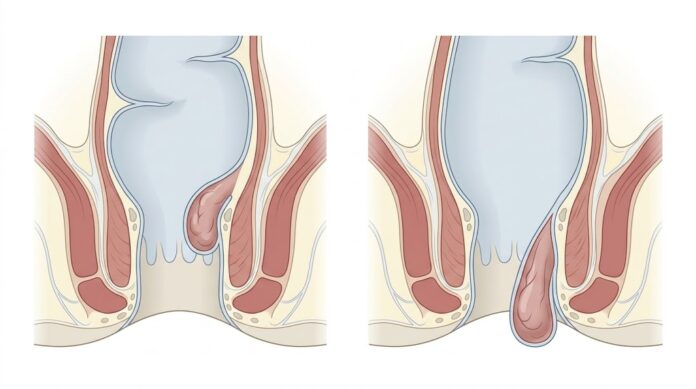
An examination with a proctoscope confirmed Grade II internal hemorrhoids at the 3, 7 and 11 o’clock positions. Grade II simply means the piles slip down when you strain and then go back in on their own. In Ayurvedic terms, the author labelled the condition Pittaja Arsha.
Over six weeks he took four oral medicines, had a medicated oil enema for seven days, soaked in a sitz bath twice a day, and changed his diet and daily habits. The author scored five symptoms from 0 to 4 before and after. The total fell from 11 out of 20 to 1 out of 20, which the paper reports as a 90.9% improvement.[1]
Bleeding had stopped by week two. Pain is described inconsistently: the abstract says bleeding and pain both resolved within two weeks, while the follow-up table shows mild pain at week two and complete relief by week four. The paper also says the patient reached “normal bowel habits” and that “all symptoms had disappeared,” yet its own score table leaves constipation at 1 out of 4 (mild). The write-up is not perfectly consistent with itself.

What the Ayurvedic plan included
The plan mixed internal medicines, local treatments and lifestyle advice. Here is what each part was meant to do, according to the author.[1]
| Part of the plan | What it is | Purpose given in the paper |
|---|---|---|
| Triphala Guggulu | Herbal tablet taken after meals | Calms inflammation, supports digestion and healing |
| Abhayarishta | Fermented herbal tonic | Mild laxative effect, less straining |
| Arshoghni Vati | Tablet formulated for piles | Eases bleeding and pain |
| Avipattikara Churna | Powder taken at bedtime | Gentle bowel regulation |
| Jatyadi Taila matra basti (7 days) | Small medicated oil enema | Soothes and heals the inflamed lining |
| Panchavalkala sitz bath (twice daily) | Warm bath with a bark decoction | Keeps the area clean and reduces swelling |
| Diet and habits | Less spicy and oily food, more fiber, warm water, light exercise, less sitting | Removes the everyday triggers |
The paper lists doses. We left them out on purpose. The oil enema is given by a trained practitioner, and nobody should copy a dose from a single case report.
Why one good result is not proof
A recovery like this feels convincing, and it may well be real. But a single case cannot tell you why the patient got better. Five things stand in the way:
- No comparison. Piles often improve without any special treatment. Health-information sources note that symptoms can settle on their own or with simple measures, and that hemorrhoids do not always get bigger.[2][3]
- Too many changes at once. Herbs, an enema, sitz baths, a new diet, more movement and less sitting all started together. In trials, fiber alone cut the risk of bleeding by about half, so the diet change could explain much of the result.[4]
- Soft measurements. Symptoms were scored by hand on a 0 to 4 scale, with no blinding. The 90.9% figure is simple arithmetic on five scores: ten points gained out of eleven.
- Unclear follow-up. The paper’s table notes “no recurrence” at week six, but that is the same week the medicines were being tapered. The paper does not state a separate follow-up period after treatment ended, so it tells us nothing reliable about whether piles come back. The author says larger controlled trials are needed.[1]
- Weak publication and referencing. The journal’s name points to newborn surgery, an unusual home for an adult Ayurvedic case. Several of the paper’s references are thin for this topic: one entry appears twice, one concerns fourth-degree piles treated with Ksharasutra, and one concerns fistula-in-ano. The keywords list Ksharasutra, yet no Ksharasutra was used in this patient’s treatment.
None of this makes the report worthless. It shows the approach is worth testing properly. It just does not show that the approach works.
What stronger evidence says about piles
The National Institute of Diabetes and Digestive and Kidney Diseases (NIDDK) describes hemorrhoids as swollen, inflamed veins around the anus or lower rectum. Constipation, straining, certain toilet habits, a low-fiber diet and aging can all contribute, and high-fiber foods help both treat and prevent them.[7] If you want the constipation side of that link, our guide on how to relieve constipation without laxatives is a good place to start.
The best trial evidence is for fiber. A Cochrane review pooled seven randomized trials with 378 people who had symptomatic hemorrhoids. Fiber lowered the risk of persisting symptoms by 47% and the risk of bleeding by 50%.[4][5] The trials used psyllium (ispaghula husk), sterculia and unprocessed bran.[6] The reviewers also flagged moderate study quality, and the effect on pain and itching was unclear.[4] If fiber has not worked for you so far, read why fiber isn’t working for your constipation before giving up on it.
Warm sitz baths are another low-risk step. Information based on NIDDK guidance suggests soaking in warm water several times a day to ease symptoms.[8]
A fair reading of the case study follows from this. Three of the four oral medicines were chosen partly for a mild laxative effect, and the diet and sitz bath advice matches standard care. Softer stools and less straining may have done a lot of the work.
Triphala, the herbal blend behind Triphala Guggulu, has its own small trials in constipation. One randomized trial compared Triphala powder with a prescribed diet, and both groups improved, but there was no placebo group.[9] We did not find a good trial of Triphala for piles themselves.
Gentle habits worth starting at home
These steps overlap with what the case study’s patient was told to do, and they have the strongest support behind them. Change one thing at a time so you can tell what helps.
- Build fiber up slowly. A sudden jump causes gas and bloating. Start with the best fruits for chronic constipation, then see psyllium husk vs wheat bran if you want a supplement. The best time of day to take fiber supplements is worth a read too.
- Keep fluids up. Fiber works better with enough water. Our piece on whether dehydration causes constipation explains when fluid is the missing piece.
- Stop straining. A footstool that raises your knees above your hips can make emptying easier. In one small study of 28 volunteers, squatting cut both the time and the straining compared with sitting.[10] Here is how to set it up: best position to poop for constipation.
- Don’t linger on the toilet. Phones and long sits put pressure on the same veins. Check your stool with the Bristol Stool Chart so you know what “normal” looks like for you.
- Move every day. A short walk after meals is enough to begin with. Our morning habits guide shows how to fit it in.
- Try food-based help first. Prune juice and the other options in our list of natural laxatives can soften stools. If they are not enough, the best OTC laxatives are the next step to discuss with a pharmacist.
A word on buying Ayurvedic products
Quality is the part people skip. A JAMA study bought 70 Ayurvedic products made in South Asia from stores in the Boston area and tested them. Fourteen of them (20%) contained lead, mercury or arsenic, and taken as the labels directed, each could push intake above regulatory limits.[11]
Industry groups pointed out that many of those products were traditional metal-based preparations meant for use under a practitioner’s care. That is a fair point, but it is also the reason to be careful. If you decide to try an Ayurvedic product:
- Ask whether the brand publishes third-party heavy-metal test results.
- Avoid metal or mineral preparations unless an Ayurvedic physician prescribes them.
- Tell your doctor and pharmacist about every herb you take, since some can interact with prescription medicines.
- Do not use an oil enema or any rectal treatment on your own.
When to see a doctor
Bleeding should be checked at least once. Hemorrhoids are the most common cause of anal symptoms, but not every anal symptom comes from them, and the NIDDK advises seeing a doctor if symptoms last after a week of home care.[12] The patient in the case study had a proctoscope exam before any treatment began, and that step matters.
Get medical advice promptly if you notice any of these:
- Bleeding that is heavy, keeps happening or comes with dizziness
- Black or tarry stools
- A change in bowel habits that lasts, or unexplained weight loss
- Fever or constant, severe pain
- A lump that will not go back in
No self-care plan, Ayurvedic or otherwise, replaces a proper diagnosis.
Simple products that can make the habits easier
You do not need special products to follow the steps above. If you would like a few practical items, these are the ones we would look at. Prices change, so check each listing and read the label first.
Disclosure: As an Amazon Associate, Constipation Relief earns from qualifying purchases at no extra cost to you. Product links are included for convenience, not as medical recommendations.
For fiber
- NOW Foods Psyllium Husk Powder: psyllium is one of the fibers used in the hemorrhoid trials. Mix it with plenty of water and take it apart from other medicines.
- Organic India Psyllium Husk: a second option if you prefer an organic brand.
Our psyllium husk review compares the two.
For a gentler toilet posture
- Squatty Potty Original Toilet Stool, 7 inch: a simple footstool for trying the squat position on a regular toilet.
- Squatty Potty Adjustable 2.0 Toilet Stool: handy if several people share one bathroom.
For the pantry
- Bob’s Red Mill Organic Flaxseed Meal, 16 oz: easy to stir into yogurt or oatmeal.
Follow the label, and see how much flaxseed to take before you start.
- Viva Naturals Organic Ground Flaxseed, 15 oz: a smaller bag if you want to test it first.
An unproven extra: plain Triphala
Triphala is the herbal blend at the heart of the case study’s main tablet. The evidence for it is limited to small constipation trials, and none that we found are in piles, so treat it as an optional extra, not a treatment.
Choose a simple Triphala powder or capsule from a brand that publishes third-party heavy-metal test results, and avoid combination products that contain guggulu or metals. Talk to your doctor or pharmacist first if you take regular medicines.
- NOW Triphala: check the brand’s current test results before buying.
- Organic India Triphala: check the brand’s current test results before buying.
- Himalaya Triphala: a widely available capsule option. Check the label and the brand’s testing information.
We’ve focused on simple Triphala products rather than more complex formulations such as Arshoghni Vati, Abhayarishta, and Triphala Guggulu, or oil-enema products. These remedies may require practitioner guidance, and we found insufficient reliable evidence to establish their effectiveness for hemorrhoids. Product quality and ingredients can also vary, so it’s worth being cautious and checking with a qualified healthcare professional before trying them.
Frequently asked questions
Can Ayurveda cure piles?
It has not been proven. One 2024 case report describes a good result in a single patient, but that cannot show cause and effect. Larger controlled trials are still needed.[1]
Can Grade II piles go away without surgery?
Often they improve with diet and toilet-habit changes. The NIDDK says many people can treat hemorrhoids at home this way, and that procedures are kept for cases that need them.[7]
Is Triphala good for piles?
Small studies suggest Triphala may ease constipation, which can help indirectly. We did not find a good trial of it for piles themselves, so treat it as an unproven extra.[9]
How long should I try home care?
The NIDDK suggests seeing a doctor if symptoms last after a week of at-home treatment, and sooner if there is bleeding you cannot explain.[12]
Does constipation cause piles?
It is one of the main contributors, because straining raises pressure in the veins around the anus.[12] Stress can play a part in constipation too, so see can stress cause constipation.
This article is for information only and is not medical advice. Talk to a qualified healthcare provider before starting any herbal product or treatment, especially if you are pregnant, take regular medicines or have bleeding.
References
- Samantaray S. Ayurvedic Management of Arsha (Piles): A Clinical Case Study. Journal of Neonatal Surgery. 2024;13:615-620. jneonatalsurg.com
- InformedHealth.org. Enlarged hemorrhoids: overview. NCBI Bookshelf NBK279467
- NI Direct. Haemorrhoids (piles). nidirect.gov.uk
- Alonso-Coello P, Mills E, Heels-Ansdell D, et al. Fiber for the treatment of hemorrhoids complications: a systematic review and meta-analysis. Am J Gastroenterol. 2006;101(1):181-188. PMID 16405552
- Cochrane Database of Systematic Reviews. Laxatives for the treatment of hemorrhoids (CD004649). cochrane.org
- American Family Physician. Laxatives for hemorrhoids? 2006;74(3):413. aafp.org
- NIDDK. Hemorrhoids. niddk.nih.gov
- Carle Health. Hemorrhoids (NIDDK-based patient information). carle.org
- A randomized controlled trial to evaluate the laxative effect of prescribed diet compared with Triphala Churna in Vibandha. Journal of Ayurveda. 2022. DOAJ record
- Sikirov D. Comparison of straining during defecation in three positions. Dig Dis Sci. 2003;48(7):1201-1205. doi:10.1023/A:1024180319005
- Saper RB, Kales SN, Paquin J, et al. Heavy metal content of Ayurvedic herbal medicine products. JAMA. 2004;292(23):2868-2873. JAMA doi:10.1001/jama.292.23.2868
- NIDDK. Symptoms and causes of hemorrhoids. niddk.nih.gov