

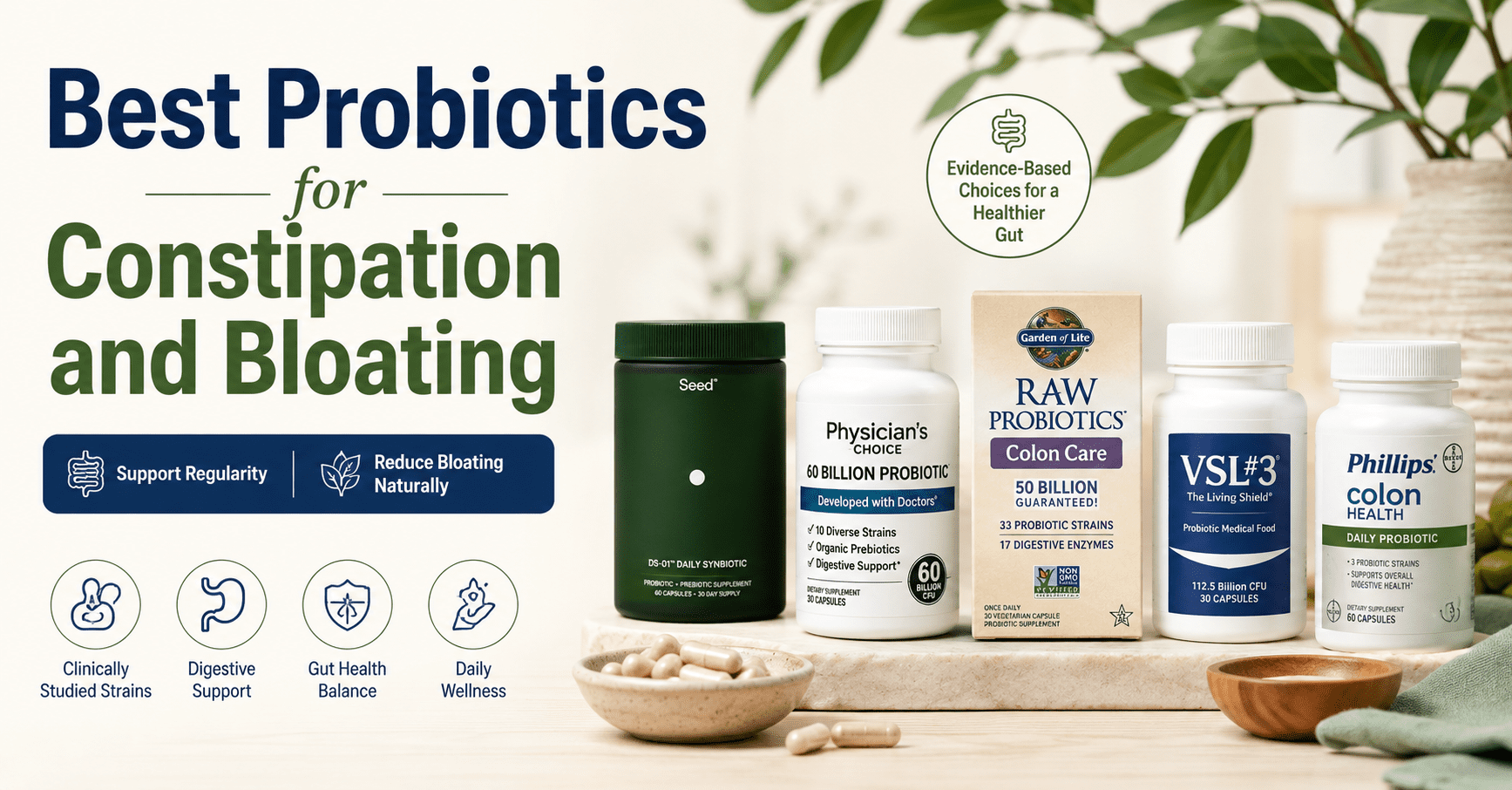
If you are looking for information on the best probiotics for constipation and bloating, this guide reviews commonly studied options based on available clinical research, strain-level evidence, and publicly available product information. Constipation affects roughly 12–30% of adults in the United States, and bloating is one of its most common and uncomfortable digestive concerns. Many people experience abdominal tightness, irregular bowel movements, and persistent discomfort that can be difficult to manage.
More and more people are turning to probiotics as a longer-term approach to help support bowel function, rather than relying on laxatives that may provide quick relief but sometimes lead to cramping or discomfort afterward. If you are also considering other approaches, see our related guide: Why Fiber Isn’t Working for Your Constipation and Dehydration and Constipation: What the Research Shows.
However, the probiotic market includes a wide variety of products with different strains, formulations, and claims. Because of this, it can be challenging to identify which options are better supported by available research.
In this evidence-based 2026 guide, we review some of the most commonly studied probiotics for constipation and bloating, based on available clinical research, strain-level evidence, and publicly available product information.
Quick Summary: Among the probiotic strains that appear in constipation and bloating research are Bifidobacterium lactis BB-12 and Bifidobacterium lactis HN019, though HN019 has shown mixed results depending on the population studied. For bloating, Lactobacillus plantarum has appeared in several relevant studies.
Commonly discussed examples in published literature and consumer research include synbiotic formulations such as Seed DS-01, Physician’s CHOICE 60B CFU, and Garden of Life RAW Probiotics Colon Care, among others.
How We Evaluated These Probiotics
The probiotics in this guide were reviewed based on strain-level research, formulation transparency, CFU/AFU labeling, third-party testing, delivery system, and overall product accessibility. This article is for informational purposes only. Individual responses to probiotics may vary.
How Probiotics May Help With Constipation and Bloating
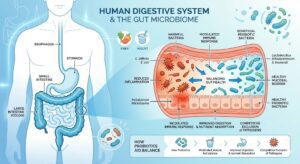
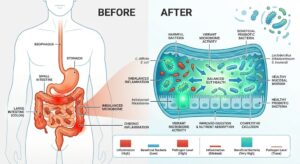
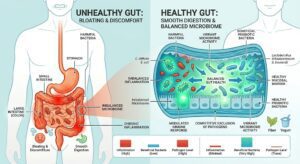
Your gut contains trillions of microorganisms. When this microbial balance is disrupted — by stress, antibiotics, a low-fiber diet, or simply aging — your digestion may slow. The result can include harder, infrequent stools and a feeling of trapped gas.
Probiotics are live microorganisms that, when consumed in adequate amounts, may help support a healthier gut microbial balance in some people. Research in this area is still evolving, and the following reflects findings observed in clinical studies rather than guaranteed outcomes:
- Some clinical studies suggest that certain probiotic strains may support gut transit time, which could help reduce the time stool remains in the colon and becomes harder.
- Several randomized controlled trials (RCTs) have reported changes in stool frequency in some participants with functional constipation.
- Some evidence suggests that specific strains may be associated with improvements in stool consistency, leading to softer and easier-to-pass stools in certain populations.
- Certain strains have also been studied for possible effects on bloating and abdominal discomfort, although results vary across studies and populations.
- Some research has explored potential associations between probiotics and intestinal barrier function, but evidence in this area remains limited and not yet fully established.
A 2022 meta-analysis of 30 RCTs (van der Schoot et al., Clinical Nutrition) found that probiotics were associated with a higher treatment response rate compared to placebo (57% vs 44%; RR 1.28, p = 0.007) [1]. In that analysis, Bifidobacterium lactis strains were among those showing a statistically significant association with stool frequency.
A separate 2024 meta-analysis of 17 RCTs found that probiotics were associated with an average increase of approximately 0.93 bowel movements per week compared to placebo [5]. The analysis also suggested that synbiotics (probiotic + prebiotic combinations) may show slightly greater effects on stool frequency compared to standalone probiotics in some cases.
Note: Individual responses vary. These findings represent average effects across study populations and may not reflect every individual’s experience.
Commonly Studied Probiotic Strains for Constipation and Bloating
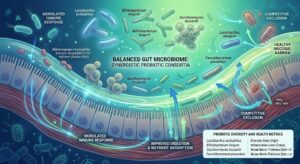
When comparing probiotics for constipation and bloating, strain identity is considered one of the most important factors. Probiotic effects are understood to be strain-specific — meaning the research on one strain does not automatically apply to another strain of the same species. This distinction matters when reading product labels.
1. Bifidobacterium lactis BB-12
BB-12 appears in a substantial body of probiotic research, with data across multiple independent research groups. Several RCTs have reported possible associations between BB-12 and changes in stool frequency and consistency in adults with functional constipation [1]. It is one of the more frequently cited strains in constipation and bloating support literature.
2. Bifidobacterium lactis HN019
HN019 has been studied for its potential to support colonic transit time. However, a 2024 triple-blind RCT published in JAMA Network Open (Cheng et al., 229 participants, 5 hospitals) did not find a statistically significant benefit over placebo for complete spontaneous bowel movements in the overall study population [2]. A subgroup analysis suggested possible associations in people with fewer than 3 bowel movements per week. Findings should be interpreted cautiously.
3. Lactobacillus plantarum
L. plantarum has appeared in several studies examining bloating and digestive discomfort. Some trials in IBS and functional constipation suggest a possible association with changes in abdominal bloating scores [4]. Products listing verified strain codes such as Lp-115 or SD-LP1-IT may be worth comparing if bloating is a primary concern.
4. Bifidobacterium longum BB536
BB536 has appeared in studies examining longer-term constipation and bloating support, with some RCTs suggesting possible associations with bowel regularity, particularly in older adults [4].
5. Lactobacillus casei Shirota — A Nuanced Picture
Some older studies suggested possible associations with improved stool consistency in people with hard stools. However, the 2022 van der Schoot meta-analysis did not find a statistically significant association with stool frequency overall [1]. Evidence suggests its relevance may be more limited to stool softness in specific subgroups.
6. Saccharomyces boulardii
A yeast-based probiotic primarily studied in diarrhea contexts, but also researched in people who alternate between constipation and loose stools (IBS-mixed pattern). Some studies have reported possible associations with markers related to gut barrier function [4].
7. Lactobacillus reuteri (L. reuteri DSM 17938)
A bacterium naturally found in the human gut and breast milk, L. reuteri DSM 17938 is one of the more thoroughly studied probiotic strains for constipation. A randomized controlled trial found that adults taking it twice daily for 4 weeks experienced an average of 2.6 more bowel movements per week compared to baseline. A 2024 trial also reported significant reductions in bloating and abdominal pain in IBS patients. For a full breakdown of the research and top products, see: Does L. Reuteri Help Constipation and Bloating?
Why Strain Codes Matter: “Bifidobacterium lactis” on a label alone identifies only the species. “Bifidobacterium lactis BB-12” identifies the specific strain that appears in published research. Products that list alphanumeric strain identifiers tend to be more transparent and easier to evaluate against the available literature.
Affiliate Disclosure: This article may contain affiliate links. If you purchase through these links, we may earn a commission at no additional cost to you. This does not influence our editorial process, product selection, or opinions expressed in this guide.
6 Commonly Reviewed Probiotics for Constipation and Bloating
The following reviews are based on available published research, product labeling, third-party testing status, and publicly available product information. These are not medical recommendations. Individual results may vary. Pricing is approximate and may vary by retailer and region.

1. Seed DS-01 Daily Synbiotic
Formulation type: Multi-strain synbiotic with nested capsule delivery
Manufacturer: Seed Health, Inc. — a microbiome science company founded in 2018, headquartered in Los Angeles, California, USA.
Seed DS-01 combines multiple probiotic strains with a prebiotic component in a single delivery system. Some preliminary data have been shared in conference settings; full peer-reviewed publication is still ongoing [6].
Key specs:
- 53.6 billion AFU across 24 strains
- Strains include B. lactis SD-BS5-IT, L. plantarum SD-LP1-IT, B. longum SD-BB536-JP, and 21 additional strains
- Nested capsule system (prebiotic outer, probiotic inner)
- Third-party tested by SGS and Eurofins for identity, purity, and potency
- No refrigeration required — shelf-stable
- Vegan, gluten-free, non-GMO
- ~$49.99/month (subscription); also available at Target
Noted advantages
- Full strain transparency with alphanumeric codes
- Synbiotic: prebiotic and probiotic in one system
- No refrigeration needed
- Third-party tested (SGS, Eurofins)
Noted limitations
- Subscription model — no straightforward one-time purchase on brand site
- Higher price (~$49.99/month)
- Some users report a 2–4 day adjustment period with temporary mild bloating
- AFU and CFU are different measurement systems and are not directly comparable
Commonly chosen by: Adults looking for a synbiotic formula with strain-level transparency and third-party testing. Less commonly chosen by: Budget-conscious shoppers, or those who prefer a simple one-time purchase.
👉 View product details and current pricingRead our full review: Seed DS-01 Review: Does It Help With Constipation? (2026)
2. Physician’s CHOICE Probiotics 60 Billion CFU
Formulation type: Higher CFU formulation (label-based comparison) with organic prebiotic blend
Manufacturer: Physician’s Choice — founded in 2017 in Denver, Colorado, USA. Formulas are developed with a Scientific Advisory Board of MDs and PhDs. Manufactured in the USA in GMP-certified facilities.
Strain Transparency Note: While Physician’s Choice lists some strain codes, their 60B formula labels certain strains primarily to genus and species level rather than providing alphanumeric identifiers for every strain. This makes independent clinical verification more challenging, though it does not necessarily mean the strains are unstudied.
Key specs:
- 60 billion CFU — guaranteed at time of manufacture
- 10 strains: L. acidophilus La-14, L. casei Lc-11, L. paracasei LPC-37, L. salivarius Ls-33, L. plantarum Lp-115, B. lactis BL-04, B. bifidum Bb-02, B. longum Bl-05, B. breve, L. bulgaricus Lb-87
- Organic prebiotic blend: Jerusalem Artichoke Root, Organic Acacia Fiber, Chicory Root (inulin)
- Acid-resistant delayed-release capsules
- Third-party tested for purity and potency
- Shelf-stable — no refrigeration required
- Vegan, Non-GMO, gluten-free, soy-free, dairy-free
- ~$25–30 for a 30-day supply
Noted advantages
- Lower-priced among higher-CFU label formulas
- Includes strains that appear in published literature (including B. lactis BL-04 and L. plantarum Lp-115)
- Organic prebiotic fiber blend included — functions as a synbiotic
- No refrigeration needed
- Widely available: Amazon, Target, Walmart
- Acid-resistant delayed-release capsules
Noted limitations
- Not all strain codes listed on label — less transparency compared to some other options
- CFU guaranteed at manufacture only, not through expiration date
- Some users report initial gas or bloating in the first 1–2 weeks
- Not studied as a complete formulation in peer-reviewed clinical trials
Commonly chosen by: Individuals looking for a higher-CFU option at a more accessible price point.
View product details and current pricing
3. Garden of Life RAW Probiotics Colon Care
Formulation type: Probiotic and digestive enzyme combination
Manufacturer: Garden of Life — founded in 2000, headquartered in Palm Beach Gardens, Florida, USA. Holds B Corp certification, USDA Organic, Non-GMO Project Verified, and NSF Certified Gluten Free status.
Garden of Life’s Colon Care formula pairs 33 probiotic strains with 17 digestive enzymes. This type of combination is sometimes explored by people who experience both constipation and bloating and prefer an all-in-one formula.
Key specs:
- 50 billion CFU from 33 probiotic strains
- Colon Care Blend includes: B. lactis BL818, L. acidophilus SD-5221, B. lactis SD-5674
- 17 digestive enzymes including Amylase, Proteases, Lipase, Lactase
- Non-GMO Project Verified, NSF Certified Gluten Free, B Corp certified
- ~$35–40/month
Noted advantages
- 17 digestive enzymes included — studied for possible effects on post-meal discomfort
- Triple-certified: USDA Organic + Non-GMO Project Verified + B Corp
- Whole-food sourced probiotic strains
- NSF Certified Gluten Free
Noted limitations
- 33 strains means no single strain reaches its standalone clinically studied dose
- Refrigerated version recommended for maximum potency
- Higher price than some other options on this list
Commonly chosen by: Individuals looking for a combined probiotic and enzyme formula for constipation and bloating support.
View product details and current pricing
4. VSL#3
Formulation type: High-CFU probiotic — typically used under healthcare provider guidance
Manufacturer: VSL Pharmaceuticals, Inc. (a subsidiary of Alfasigma USA). Manufactured in GMP-certified facilities in the United States.
Formulation Background Note: The original eight-strain formula associated with the VSL#3 brand was developed by Professor Claudio De Simone and is now sold separately under the brand name Visbiome® (by ExeGi Pharma). The current VSL#3 product uses formulations that may differ from earlier studied versions. Much of the published clinical literature referencing “VSL#3” was based on the original De Simone formulation. If a physician references “VSL#3” based on research literature, it may be worth clarifying which formulation they mean.
Key specs:
- 112.5 billion CFU per capsule — guaranteed through expiration date when refrigerated
- 8 strains: Streptococcus thermophilus, Bifidobacterium breve, B. lactis, L. acidophilus, L. plantarum, L. paracasei, L. helveticus
- Available as capsules or powder sachets
- Dairy-free, gluten-free, non-GMO, vegan, kosher, halal-certified
- Requires refrigeration
- ~$50–70/month (capsules)
Noted advantages
- Higher CFU concentration compared to most standard daily probiotics
- CFU guaranteed through expiration date when refrigerated — less common in this category
- Formulated for more serious GI conditions (IBS, ulcerative colitis, pouchitis)
- Available in multiple potency formats
Noted limitations
- Expensive ($50–70/month for capsules)
- Requires refrigeration
- Current formulations may differ from earlier studied versions (see note above)
- Generally intended for use under medical supervision — not a casual daily supplement
Commonly chosen by: People with IBS-C or severe chronic constipation who are working with a healthcare provider.
👉 View product details and current pricingRead our full review: VSL#3 for Constipation: Does It Work? (2026)
5. Phillips’ Colon Health Daily Probiotic
Formulation type: Low-CFU introductory formula
Manufacturer: Bayer AG (Consumer Health Division). Available at CVS, Walgreens, Walmart, Target, and most major US pharmacies.
Phillips’ Colon Health is a pharmacy-brand probiotic widely available in the United States.
Key specs:
- 1.5 billion CFU per serving
- 3 strains: Lactobacillus gasseri, Bifidobacterium bifidum, Bifidobacterium longum
- No refrigeration required
- ~$18–22 for a 60-count bottle (~$9–11/month)
- Available at all major US pharmacies and mass retailers
Noted advantages
- Lower-cost option at approximately $9–11/month
- Available off the shelf without online ordering
- Simple, low-strain formula
- May be suitable for general maintenance or post-antibiotic support
Noted limitations
- 1.5B CFU is low relative to doses used in many clinical trials for constipation and bloating
- Only 3 strains — limited microbial diversity
- No prebiotic included
- No specific strain codes listed on label
Commonly chosen by: Individuals looking for a low-cost, accessible introduction to probiotics or general maintenance use.
👉View product details and current pricing
6. Colopril
Formulation type: Combined constipation and bloating formula with enzymes
Colopril is formulated to address constipation and bloating through a combination of probiotics, digestive support ingredients, and fiber-based components. Consumers should review the product label and official brand information for current details on strain transparency, CFU count, and third-party testing status before purchasing.
Key specs:
- Multi-strain probiotic blend
- Includes digestive enzymes for bloating and gas support
- Contains natural soluble fiber
- No stimulant laxatives
- Capsule form, shelf-stable
- ~$30–40/month
Noted advantages
- Formulated with the constipation and bloating combination in mind
- Combines probiotics and digestive enzymes
- No stimulant laxatives
- Shelf-stable
Noted limitations
- Less independent published clinical research compared to some other options on this list
- Specific strain codes and exact CFU count not always clearly disclosed on labeling
- Harder to find in physical retail stores
- Third-party testing status should be verified before purchase
Commonly chosen by: Individuals looking for a combined probiotic and digestive support formula for constipation and bloating concerns.
Because publicly available strain-level data, exact CFU disclosure, and independent clinical research on Colopril remain limited, direct comparisons with more extensively studied probiotic formulations may be difficult.
👉 View product details and current pricingRead our full review: Colopril for Constipation: Does It Work? (2026)
Quick Comparison Tables
Products are listed in no particular order and are grouped based on formulation type, not performance ranking.
Table 1 — Standard CFU Formulas
| Product | CFU | Strains | Enzymes? | Formulation Type | Price/Month |
|---|---|---|---|---|---|
| Physician’s CHOICE 60B | 60B CFU | 10 | No (prebiotic blend) | Higher CFU with prebiotic | ~$25–30 |
| Garden of Life Colon Care | 50B CFU | 33 | Yes — 17 enzymes | Probiotic + enzyme combination | ~$35–40 |
| VSL#3 † | 112.5B CFU/cap | 8 | No | High-CFU (medical guidance) | ~$50–70 |
| Phillips’ Colon Health | 1.5B CFU | 3 | No | Low-CFU introductory | ~$9–11 |
| Colopril | Not disclosed | Multi | Yes | Constipation + bloating combo | ~$30–40 |
† VSL#3 CFU guaranteed through expiration date when refrigerated.
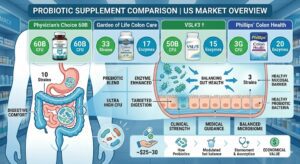
Table 2 — Synbiotic / Special Formulas
| Product | Potency | Strains | Format | Price/Month |
|---|---|---|---|---|
| Seed DS-01 | 53.6B AFU* | 24 | Synbiotic (nested capsule) | ~$49.99 |
| Physician’s CHOICE 60B | 60B CFU | 10 | Synbiotic (prebiotic blend) | ~$25–30 |
* AFU and CFU are different measurement systems and are not directly comparable.Pricing is approximate and may vary by retailer and region.
How to Choose a Probiotic for Constipation and Bloating
With hundreds of options available, here are five factors worth evaluating when comparing products:
1. Strain Identity — Look for the Strain Code
As noted in the strain section above, probiotic effects are understood to be strain-specific. Products listing full alphanumeric strain identifiers (such as BB-12, BL-04, Lp-115, or SD-LP1-IT) are more straightforward to evaluate against the published literature than those listing only genus and species names.
2. CFU (or AFU) Count — Consider Quality Alongside Quantity
Colony Forming Units (CFU) measure the count of live bacteria per dose. For constipation and bloating support, a product with 10–60 billion CFU from well-characterized strains may be a more useful starting point than a higher-count product with unstudied strains. Also check whether potency is guaranteed at manufacture or through the expiration date.
3. Third-Party Testing
The supplement industry has limited FDA oversight. Products independently verified by NSF International, USP, Eurofins, SGS, or ConsumerLab tend to offer greater label accuracy assurance. Seed (SGS + Eurofins), Garden of Life (NSF), and VSL#3 (GMP-certified manufacturing) are examples that report meeting this standard.
4. Synbiotic Formulas
A synbiotic pairs probiotics with prebiotics — fermentable fibers that may support bacterial establishment in the colon. The 2024 meta-analysis found synbiotics were associated with somewhat better stool frequency outcomes compared to standalone probiotics in some analyses [5].
5. Delivery Mechanism
Many probiotic bacteria may be reduced by stomach acid before reaching the colon. Acid-resistant delayed-release capsules or nested delivery systems may be one contributing factor in how much live bacteria ultimately reaches the lower gut — though this remains one of several variables to consider.
If you are also considering magnesium as a complementary approach, see our related guide:Magnesium Supplements for Constipation (2026).
When Might You See Results?
Allow at least 3–4 weeks before evaluating whether a probiotic is supporting your digestion. Here is a general timeline based on available research:
Days 1–7: Some people with mild constipation and bloating may notice subtle changes in stool softness or frequency. Mild, temporary gas may also occur as the gut microbiome adjusts. This is a commonly reported adjustment response and typically resolves on its own.
Weeks 2–4: Some improvement in stool frequency and consistency may become more apparent during this window. This aligns with the average intervention period used in many published RCTs [1].
Weeks 5–8: For chronic constipation and bloating, further changes may appear in this range. Sustained use beyond 8 weeks may be relevant for some individuals.
Note: The 2022 van der Schoot meta-analysis (30 RCTs) noted that probiotic-related changes in stool frequency tend to build gradually. Stopping within the first week is a commonly cited reason people report that probiotics did not appear to help.
For guidance on additional approaches, see: OTC Laxatives for Constipation.

Are Probiotics Safe?
Probiotics have a generally favorable safety profile in healthy adults. Major clinical reviews consistently find they are well-tolerated [3], with mild gas or bloating in the first 1–2 weeks being the most commonly reported side effect. This typically resolves on its own.
Consider consulting a healthcare provider before starting if you have a compromised immune system (e.g., HIV/AIDS, organ transplant, active cancer treatment), are recovering from major surgery, have Crohn’s disease, ulcerative colitis, or other serious gastrointestinal conditions, are pregnant, or are considering probiotics for an elderly family member. See also: Immediate Constipation Relief for Elderly at Home.
Note: Dietary supplements are not approved by the U.S. Food and Drug Administration (FDA) for the treatment or prevention of constipation or other medical conditions.
Frequently Asked Questions: Probiotics for Constipation and Bloating
Which probiotic strains appear most frequently in constipation and bloating research?
As described in the strain section above, Bifidobacterium lactis BB-12 is one of the more frequently cited strains in constipation and bloating research. The 2022 van der Schoot meta-analysis identified it as the only strain subgroup with a statistically significant association with stool frequency in that analysis [1]. For bloating, Lactobacillus plantarum (including strains such as Lp-115 and SD-LP1-IT) has appeared in several studies.
B. lactis HN019 is also widely studied, but a 2024 JAMA Network Open trial did not find significant improvement over placebo in the overall study population [2].
How long does it take for a probiotic to show results?
Published RCTs typically use 3–4 weeks as their primary evaluation window [1]. Assessing results in the first week may be too early. Full effects for chronic constipation and bloating may take 6–8 weeks of consistent use.
Are higher CFU counts always more useful for constipation and bloating?
Not necessarily. Strain identity may matter more than CFU count alone. A product with 10–30 billion CFU from a well-characterized strain is one commonly discussed option in the constipation and bloating literature — and may be a more practical starting point than a higher-count product using unverified strains [5].
Should I take a probiotic on an empty stomach or with food?
Consistency in timing tends to matter more than the specific time chosen. Take your probiotic at the same time each day — whenever you are most likely to remember. Modern acid-resistant capsule technology has largely addressed earlier concerns about timing relative to meals.
Can I take a probiotic and a laxative at the same time?
Generally yes — laxatives provide short-term relief through different mechanisms, while probiotics are a longer-term constipation and bloating support strategy. They are not known to interfere with each other. Always consult a healthcare provider if you are unsure. See also: OTC Laxatives for Constipation.
What is the difference between a probiotic and a synbiotic?
A probiotic contains live microorganisms. A synbiotic combines probiotics with prebiotics — fermentable fibers that may support bacterial colonization in the colon. The 2024 meta-analysis found synbiotics were associated with somewhat greater stool frequency outcomes compared to standalone probiotics in some analyses [5].
Can probiotics help with bloating?
Some strains — particularly Lactobacillus plantarum and Bifidobacterium lactis — have been studied for possible effects on bloating in some populations [4]. Results vary across individuals and study populations.
What is the difference between VSL#3 and Visbiome?
The original eight-strain formula developed by Professor Claudio De Simone is now sold exclusively as Visbiome® (by ExeGi Pharma). The current VSL#3 product uses formulations that may differ from the earlier studied versions. If a physician references “VSL#3” based on research literature, it may be worth clarifying which formulation they are referring to.
What does AFU mean on Seed DS-01’s label?
AFU stands for Active Fluorescent Units. As noted in the comparison tables above, AFU and CFU are different measurement systems and are not directly comparable across products.
Summary Table: Probiotics Reviewed for Constipation and Bloating
| Formulation Type | Product |
|---|---|
| Multi-strain synbiotic with strain transparency | Seed DS-01 — Seed Health |
| Higher CFU label formulation with prebiotic | Physician’s CHOICE 60B CFU — Physician’s Choice |
| Probiotic + digestive enzyme combination | Garden of Life RAW Probiotics Colon Care |
| Combined constipation and bloating formula | Colopril |
| High-CFU — typically under healthcare provider guidance | VSL#3 — see formulation note; Visbiome for original De Simone formula |
| Low-CFU introductory formula | Phillips’ Colon Health — Bayer AG |
Products are listed in no particular order and are grouped based on formulation type, not performance ranking.
Conclusion
Strain identity and third-party testing are two of the most commonly discussed factors when comparing probiotics for constipation and bloating support. Among strains, Bifidobacterium lactis BB-12 and Lactobacillus plantarum Lp-115 appear in multiple studies related to digestive regularity and abdominal comfort.
Some synbiotic formulations combine probiotic strains with prebiotic fibers to support gut function, though their effects can vary depending on the specific formulation and population studied.
Consistency is a commonly emphasized factor in clinical research on probiotic use. Taking a probiotic at the same time each day, allowing at least 3–4 weeks before evaluating results, staying well hydrated, and maintaining adequate dietary fiber intake are often included as part of a broader digestive health approach.
Overall, probiotics are generally considered one component of a wider strategy for supporting constipation and bloating, rather than a standalone solution.
For additional natural approaches, you may also want to explore: Natural Constipation Relief Remedies and Olive Oil for Constipation.
Editorial Process
This article was researched and written using publicly available clinical studies, peer-reviewed journals, manufacturer labeling, and third-party testing information where available.
Products mentioned in this guide were selected based on formulation transparency, published research relevance, and consumer accessibility. No manufacturer paid for inclusion in this article.
Content is periodically reviewed and updated to reflect newer clinical research and product information when available.
Disclaimer: This article is intended for informational and educational purposes only. It does not constitute medical advice, diagnosis, or treatment. Always consult a qualified healthcare provider before starting any new supplement, especially if you have an existing health condition.
References and Sources
Peer-Reviewed Clinical Studies
- van der Schoot A, Helander C, Whelan K, Dimidi E. (2022). Probiotics and synbiotics in chronic constipation in adults: A systematic review and meta-analysis of randomized controlled trials. Clinical Nutrition, 41(12), 2759–2777.
- DOI: https://doi.org/10.1016/j.clnu.2022.10.015 (30 RCTs)
- Cheng J, et al. (2024). Eight-Week Supplementation With Bifidobacterium lactis HN019 and Functional Constipation: A Randomized Clinical Trial. JAMA Network Open, 7(10).
- Dimidi E, et al. (2014). The effect of probiotics on functional constipation in adults: a systematic review and meta-analysis. American Journal of Clinical Nutrition.
- Araújo MM, Botelho PB. (2022). Probiotics, prebiotics, and synbiotics in chronic constipation. Frontiers in Nutrition.
- Wang F, et al. (2024). Efficacy in bowel movement and change of gut microbiota on adult functional constipation patients treated with probiotics: a systematic review and meta-analysis. BMJ Open Gastroenterology.
- Trinchieri V, et al. (2017). Efficacy and Safety of a Multistrain Probiotic Formulation Depends from Manufacturing. Frontiers in Immunology.
Conference Presentations (Preliminary — Not Yet Peer-Reviewed)
- Seed Health. (2025). DS-01 formulation data shared at Digestive Disease Week (DDW), San Diego. (Conference presentation only — peer-reviewed publication pending)
Non-Clinical Sources
- Physician’s Choice. (2024). Inc. 5000 Ranking. Globe Newswire, August 22, 2024. (Press release — non-clinical)






[…] the problem: most probiotics for constipation and bloating are marketed by CFU count, not by clinical evidence. But the specific probiotic strain […]
[…] Best Probiotics for Constipation and Bloating (2026) — evidence-based overview covering both symptoms […]
[…] of which individual strains have the strongest constipation evidence, see our related guide on the best probiotics for constipation and bloating, which reviews Physician’s Choice alongside five other commonly discussed […]