

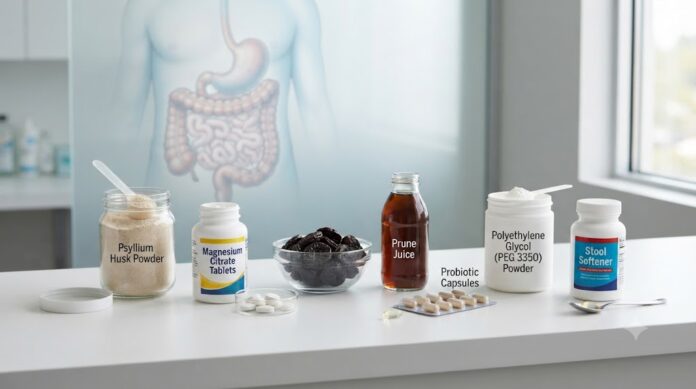
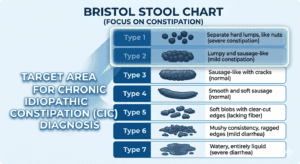
The best supplements for hard stool work in one of three ways: they hold water inside the stool (bulk-forming fiber), they pull water into the stool from the surrounding gut (osmotic agents), or they help rebalance the gut bacteria that influence stool texture over time (probiotics). Hard, dry stool, the kind that scores a 1 or 2 on the Bristol Stool Form Scale, usually means the colon has pulled too much water out before the stool has a chance to pass. Understanding which mechanism actually addresses that problem, rather than reaching for whatever is on the pharmacy shelf, makes a real difference in how quickly and how safely you get relief.
This guide walks through the supplements with the strongest clinical research behind them specifically for hard, lumpy stool (not just infrequent bowel movements, which is a related but different problem covered in our guide to supplements for regular bowel movements). We will look at how each one works, what the trials actually found, how fast it acts, and who should be cautious.
Quick Answer
- Best daily option for long-term softening: Psyllium husk, a soluble fiber with more than two decades of RCT support for improving stool consistency.[1]
- Fastest option for occasional hard stool: Magnesium citrate, an osmotic agent that often works within 30 minutes to 6 hours.
- Best food-based option: Prunes or prune juice, shown in a randomized trial to outperform psyllium for reducing hard, lumpy stools.[2]
- Best for chronic constipation with strong guideline backing: Polyethylene glycol (PEG), which carries a strong recommendation in the 2023 AGA-ACG guideline.[3]
- Worth trying for gut-driven hard stool: Probiotics containing Bifidobacterium lactis, shown in meta-analysis to improve stool consistency.[4]
- Weakest evidence despite popularity: Docusate sodium (a true stool softener), which has not outperformed placebo in seven controlled trials.[5]
Why Stool Becomes Hard in the First Place
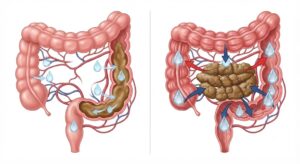
Stool consistency comes down largely to water content. As waste moves through the colon, the colon wall reabsorbs water. If transit is slow, whether from low fiber intake, dehydration, low physical activity, certain medications, or an underlying motility issue, the colon has more time to pull water out, and the stool becomes harder, drier, and more difficult to pass.
This is why the most effective supplements for hard stool all work by adding water back into the picture, either by holding it in place (fiber) or by drawing it in osmotically (magnesium, PEG, sorbitol from prunes).
If fiber alone has not helped, it is worth reading why stool stays hard even after eating fiber, since low water intake, certain fiber types, or an underlying motility problem can all blunt the effect of fiber on its own.
A general note before starting any of these: whenever you increase fiber intake, whether from psyllium, prunes, or diet, do it gradually over one to two weeks and alongside enough fluids. Adding a large dose of fiber all at once, without enough water, often causes bloating and gas and can even worsen constipation temporarily.
1. Psyllium Husk: The Most Studied Fiber for Stool Consistency
Evidence rating: Conditional recommendation, but one of the largest and most consistent evidence bases of any option here.[3]
Psyllium (from Plantago ovata seed husk) is a soluble, gel-forming fiber. Mixed with water, it forms a viscous gel that holds water inside the stool as it moves through the colon, which both softens the stool and increases its bulk.
In an early controlled trial, psyllium significantly increased stool weight and improved patient-reported stool consistency scores compared with placebo over an 8-week period.[1] A more recent, updated systematic review and meta-analysis of RCTs in adults with chronic constipation looked at fiber type, dose, and duration together.
It found that psyllium, along with fiber doses above 10 grams per day sustained for at least 4 weeks, was associated with the most consistent improvements in treatment response, stool consistency, and compliance across trials.[6]
A crossover trial comparing dried plums directly against psyllium found that, gram for gram of fiber, prunes actually produced better results, but psyllium still improved stool consistency significantly compared with baseline, and it remains one of the best-tolerated daily options.[2]
Typical dose: More than 10 g of fiber per day, split into 2 to 3 doses (for example, roughly 5 g twice daily, which works out to approximately one serving according to the product label, since fiber concentration per scoop or capsule varies by brand). Effects build up over time, so judge results after at least 4 weeks of consistent use rather than a single dose.
When to take it: With meals works well for most people, since it slows the spike in blood sugar and is easy to remember alongside breakfast and dinner. Some people prefer one dose in the morning and one in the evening, roughly 10 to 12 hours apart, to keep a steady effect through the day.
How to take it: Stir the powder into a full glass (at least 240 mL) of water, juice, or another beverage, and drink it right away, since the mixture thickens into a gel within a few minutes and becomes harder to swallow. Follow it with a second glass of water. Start at a lower dose (around 5 g per day) for the first few days and increase gradually to the full dose to reduce bloating and gas.
Caution: Always take psyllium with adequate water. Taken dry or with too little liquid, it can worsen constipation or, in rare cases, cause choking, particularly in people with swallowing difficulties. Fiber supplements like psyllium can also bind to and reduce the absorption of some medications, so it is generally advised to take other prescription drugs at least 1-2 hours before or after a dose of psyllium.
For a full breakdown of dosing, timing, and product comparisons, see our guides on natural fiber supplements for chronic constipation and Benefiber vs Metamucil.
2. Magnesium (Citrate or Oxide): Fastest Osmotic Relief
Evidence rating: Conditional recommendation, very low certainty by strict guideline standards, but two well-designed Japanese RCTs support its use.[7]
Magnesium citrate and magnesium oxide work as osmotic laxatives. Rather than adding bulk, they draw water from the body into the intestine, directly softening stool that is already too dry to pass comfortably.
A randomized, double-blind, placebo-controlled trial found that magnesium oxide significantly improved overall symptoms, shortened colonic transit time, and improved stool form compared with placebo over 4 weeks.[7] A separate head-to-head trial found magnesium oxide performed as well as senna, a stimulant laxative, with response rates of roughly 68 to 69 percent for both, compared to just 11.7 percent for placebo.[8]
Typical dose: For liquid magnesium citrate, the labeled OTC laxative dose is typically the full bottle (commonly around 296 mL, though this varies by brand), or a smaller amount for a milder effect. Magnesium oxide for constipation is commonly dosed around 500 mg once or twice daily, though the exact dose depends on the product’s elemental magnesium content, so it is worth checking the label or asking a pharmacist rather than assuming a fixed amount.
When to take it: For fast, occasional relief with magnesium citrate, taking it on an empty stomach speeds up the effect, and many people prefer taking it at a time when they can stay near a bathroom for the next several hours. For daily magnesium oxide use, taking it at the same time each day, either with breakfast or at bedtime, makes the effect more predictable.
How to take it: Magnesium citrate liquid can be taken straight or followed by a full glass of water, and drinking extra water throughout the day helps the osmotic effect work smoothly. Magnesium oxide tablets should be swallowed with a full glass of water rather than on a dry throat.
Typical onset: Often within 30 minutes to 6 hours for magnesium citrate; 6 to 12 hours for magnesium oxide, though individual response varies.
Caution: Magnesium-based laxatives should be avoided in people with kidney disease, since impaired kidneys cannot clear excess magnesium efficiently, raising the risk of hypermagnesemia. Magnesium can also bind to certain antibiotics, including tetracyclines and fluoroquinolones, and reduce their absorption, so these should be taken a few hours apart from a magnesium dose. Overuse can cause loose stools or electrolyte imbalance, so stick to labeled dosing.
For a full comparison of magnesium forms, dosing, and specific product picks, see our guide to the 5 best magnesium supplements for constipation and our breakdown of magnesium citrate vs glycinate.
3. Prunes and Prune Juice: The Best-Studied Food-Based Option
Evidence rating: Not part of formal laxative guidelines, but supported by some of the highest-quality RCT data for hard stool specifically.
Prunes contain sorbitol (an osmotic sugar alcohol), pectin (a soluble fiber), and polyphenols, a combination that appears to target hard stool through more than one mechanism at once.
In a randomized, placebo-controlled trial of 84 adults with chronic constipation, the prune group showed a significantly greater reduction in hard stool (Bristol types 1 and 2) and a corresponding increase in normal stool, without an increase in diarrhea.[9] In the earlier crossover trial mentioned above, 50 g of dried plums taken twice daily outperformed an equivalent fiber dose of psyllium on both stool frequency and stool consistency scores, leading the authors to suggest dried plums be considered a first-line option for mild to moderate constipation.[2]
Typical dose: Roughly 100 g of dried plums per day (about 8 to 10 prunes), split into two doses of 50 g each, or 120 to 240 mL of prune juice daily.
When to take it: A common approach is one dose in the morning on an empty stomach and one in the evening, since taking it away from other food may help it act a bit faster, though it works reasonably well with meals too if an empty stomach causes discomfort. For prune juice, many people prefer drinking it first thing in the morning to help prompt a bowel movement before or after breakfast.
How to take it: Dried prunes can be eaten as they are, chopped into oatmeal or yogurt, or soaked briefly in warm water to soften them further. Prune juice is best diluted with a little water if the concentrated version causes cramping, and it should be consumed along with, not instead of, regular daily water intake.
Caution: The sorbitol in prunes is a FODMAP (a fermentable sugar alcohol), so people with IBS or FODMAP sensitivity may notice more bloating or gas than with other options, even at doses that don’t cause outright diarrhea.
See our complete guide to prune juice for constipation relief and how long prune juice takes to work for dosing details.
4. Polyethylene Glycol (PEG): Strongest Guideline-Level Evidence
Evidence rating: Strong recommendation, moderate certainty, the highest evidence grade of any option covered here.[3]
PEG 3350 is an osmotic laxative that draws water into the colon without being absorbed systemically. A large, randomized, placebo-controlled, 24-week trial using current FDA responder criteria found that PEG produced substantial and sustained improvements in bowel movement frequency and reductions in hard or lumpy stools compared with placebo.[10] Pediatric maintenance trials have shown similarly strong results, with roughly 67 percent of children successfully treated on PEG versus 32 to 36 percent on placebo over 24 weeks.[11]
Typical dose: 17 g (one capful of the standard powder) once daily. It can be taken daily for up to two weeks for occasional constipation, or longer under a doctor’s guidance for chronic use, since guideline evidence supports ongoing daily use. Long-term use beyond the initial two-week period should be supervised by a healthcare provider.
When to take it: Any consistent time of day works, since PEG does not need to be taken on an empty stomach or with food. Many people find it easiest to build into a routine, such as with breakfast, so a dose is not accidentally skipped. It typically takes 1 to 3 days to produce a bowel movement, so it is not meant for fast, same-day relief.
How to take it: Dissolve the powder fully in 4 to 8 ounces (about 120 to 240 mL) of water, juice, coffee, tea, or another beverage, stir well until it disappears, and drink the entire glass. It has no noticeable taste or grit once fully dissolved.
Caution: Avoid PEG if a bowel obstruction is known or suspected, and stop and see a doctor if constipation is not resolved after 7 days rather than increasing the dose.
For a head-to-head comparison against other OTC options, see Bisacodyl vs Milk of Magnesia vs MiraLAX and our full OTC laxatives guide.
5. Probiotics: A Slower but Evidence-Supported Option for Gut-Driven Hard Stool
Evidence rating: Mixed by strain, but a meaningful body of RCT and meta-analysis data exists for specific species.
Probiotics do not soften stool directly the way magnesium or PEG do. Instead, they appear to shift gut transit time and microbial activity in ways that gradually normalize stool consistency. A meta-analysis of 14 RCTs (1,182 patients) found that probiotics significantly reduced whole gut transit time and improved stool consistency overall, and this effect was significant specifically for Bifidobacterium lactis, though not for Lactobacillus casei Shirota used alone.[4] A separate meta-analysis of 15 RCTs similarly found that multispecies probiotic blends improved stool consistency, while single-species products showed weaker or inconsistent effects.[12]
In a pediatric RCT, the percentage of children with hard stools dropped from 43 percent to 14 percent after 4 weeks of a probiotic blend containing Lactobacillus acidophilus DDS-1 and Bifidobacterium animalis subsp. lactis UABla-12, compared with a smaller shift in the placebo group.[13]
Typical dose: Most trials showing a benefit for stool consistency used products delivering at least 1 to 10 billion CFU (colony-forming units) per day of the specific strain, most consistently for Bifidobacterium lactis. Since potency and strain vary widely between brands, checking the label for the exact strain name (not just “probiotic blend”) and CFU count matters more than the price or capsule count.
When to take it: Taking it at roughly the same time every day helps with consistency, which matters because the benefit builds gradually rather than acting like a laxative. Many people take it with a meal, since food can buffer stomach acid and may improve survival of the bacteria through the stomach, though some specific products are formulated to be taken on an empty stomach, so it is worth checking the label.
How to take it: Capsules should be swallowed with a full glass of water. If refrigeration is listed on the label, store it as directed, since heat and moisture can reduce the number of live organisms before the dose is even taken. Give it a full 2 to 4 week trial before deciding whether it is helping, since probiotics do not produce an immediate stool-softening effect.
Typical timeline: Most trials show measurable change after 1 to 4 weeks of consistent daily use, not overnight.
For strain-specific picks, see our guides to 9 best probiotic supplements and best probiotics for IBS-C and constipation.
6. Docusate Sodium (Stool Softeners): Popular, but the Weakest Evidence Here
Evidence rating: No recommendation issued by the 2023 AGA-ACG guideline, due to insufficient evidence.[3]
Docusate sodium is the only product on this list that is technically a true “stool softener,” working as a surfactant that lets water and fat penetrate the stool. Despite decades of use, the clinical record is thin. A comprehensive review identified 7 randomized, placebo-controlled trials of docusate, and none found a statistically significant stool-softening benefit over placebo.[5] A follow-up study directly testing the proposed mechanism found that docusate did not meaningfully raise stool water content compared with psyllium, which did.[5]
This does not make docusate useless. It remains a reasonable, low-risk choice for people who specifically need to avoid straining, such as those recovering from surgery, childbirth, or with hemorrhoids, even though it has not been shown to treat hard stool more effectively than placebo in clinical trials.
Typical dose: Commonly 50 to 300 mg per day, taken as a single dose or split into 2 to 4 smaller doses, following the specific product’s label.
When to take it: Any time of day is fine, but taking it at a consistent time, such as with breakfast, makes it easier to stick with, especially in the post-surgical or postpartum period when it’s typically used for a limited stretch of time rather than indefinitely.
How to take it: Swallow the capsule or tablet whole with a full glass of water; do not chew it, since docusate can numb the mouth and throat if the liquid inside contacts them directly.
For a full breakdown of docusate, PEG, glycerin suppositories, and mineral oil side by side, see our guide to the 6 best stool softeners for constipation.
Best Supplements for Hard Stool Compared
| Supplement | Mechanism | Initial Effect | Maximum Improvement | Evidence Strength | Best For |
|---|---|---|---|---|---|
| Psyllium husk | Bulk-forming, water-holding gel | 12-72 hrs | 4+ weeks of daily use | Conditional, well-studied | Daily, long-term softening |
| Magnesium citrate/oxide | Osmotic (draws water in) | 30 min-12 hrs | Same-day, single-dose effect | Conditional, low certainty | Occasional, acute hard stool |
| Prunes / prune juice | Osmotic (sorbitol) + soluble fiber | 1-8 hrs | 1-2 weeks of daily use | Strong RCT data, not guideline-graded | Food-first, daily use |
| Polyethylene glycol (PEG) | Osmotic, non-absorbed | 24-72 hrs | Sustained with daily use over weeks | Strong, moderate certainty | Chronic constipation treatment |
| Probiotics (B. lactis, multispecies) | Microbiome / motility modulation | No same-day effect | 1-4 weeks of daily use | Mixed by strain, meta-analysis support | Gut-driven, recurring hard stool |
| Docusate sodium | Surfactant (theoretical) | 12-72 hrs | Not established (weak evidence overall) | Insufficient / no recommendation | Straining prevention only |
Choosing the Best Supplement for Hard Stool
- If your hard stool is occasional (travel, low-fiber week, mild dehydration): magnesium citrate or prune juice will usually work fastest.
- If your hard stool is a recurring, chronic pattern: psyllium husk or PEG have the strongest long-term evidence, and PEG in particular carries the highest guideline-level confidence.[3]
- If you suspect a gut-bacteria component (recent antibiotics, IBS-C symptoms, ongoing bloating): a Bifidobacterium lactis-containing probiotic is worth a 2 to 4 week trial.
- If your only concern is avoiding straining (post-surgery, hemorrhoids, cardiac history): docusate is reasonable for that specific goal, even though it will not reliably soften stool on its own.[5]
For dehydration-related hard stool specifically, see why you might still be constipated even while drinking water.
Ultimately, there is no single best supplement for hard stool that works for everyone; the right pick depends on how quickly you need relief, whether the problem is occasional or chronic, and how your body tolerates fiber versus osmotic agents. Starting with the option that best matches your situation, and giving it an honest trial at the right dose, will usually get you further than switching products every few days.
When to See a Doctor
Hard stool that persists for more than three weeks, or that comes with blood in the stool, unexplained weight loss, severe abdominal pain, or a sudden change in bowel habits, should be evaluated by a healthcare provider rather than managed with supplements alone. Hard stool can sometimes point to an underlying condition such as hypothyroidism, diabetes, or a motility disorder that needs its own diagnosis and treatment. If OTC options and probiotics have not helped after several weeks of consistent use, ask your doctor about prescription options; see our guide to prucalopride for chronic constipation for one such example.
Frequently Asked Questions
What is the best supplement for hard stool?
Psyllium husk has the largest body of clinical evidence for softening hard stool through daily fiber use, while magnesium citrate or magnesium oxide tends to work faster for occasional, acute hard stool. The right choice depends on whether you need daily maintenance or quick relief.
Do stool softeners like docusate actually soften hard stool?
Clinical trial evidence for docusate sodium is weak. A 2021 review of seven placebo-controlled trials found no significant stool-softening benefit over placebo, and the 2023 AGA-ACG guideline issued no formal recommendation for it.[3,5] Docusate is still commonly used to reduce straining after surgery or with hemorrhoids, but polyethylene glycol and psyllium have stronger evidence for actually softening stool.
How long does it take for a supplement to soften hard stool?
Magnesium citrate and prune juice tend to act within a few hours. Psyllium husk and polyethylene glycol usually need several days of consistent use, and probiotics generally take one to four weeks to show a measurable change in stool consistency.
Can probiotics help with hard stool?
Some strains can help. A meta-analysis found that Bifidobacterium lactis and multispecies probiotic blends significantly improved stool consistency and frequency, though single-strain Lactobacillus casei Shirota did not show the same benefit.[4]
Conclusion
Hard, dry stool almost always comes down to a water problem, and the supplements that work best are the ones that put water back into the picture, whether by holding it in place with fiber or drawing it in osmotically. For daily, long-term management, psyllium husk and polyethylene glycol have the strongest evidence behind them, with PEG carrying the highest guideline-level confidence of any option covered here. For fast, occasional relief, magnesium citrate and prune juice tend to work within hours rather than days. Probiotics containing Bifidobacterium lactis are worth a few weeks’ trial if a gut-bacteria component is suspected, while docusate remains reasonable only for avoiding straining rather than for treating hard stool itself.
None of these replace the basics of adequate water intake, regular physical activity, and, when fiber is increased, doing so gradually. And if hard stool persists for more than a few weeks despite consistent use of one of these options, or comes with any of the warning signs described above, that is a signal to involve a doctor rather than to keep experimenting with supplements alone.
Medical Disclaimer: This article is for general educational purposes only and does not replace professional medical advice. Always consult your physician or gastroenterologist before starting a new supplement, particularly if you have kidney disease, are pregnant or breastfeeding, or take other medications.
References
- Ashraf W, Park F, Lof J, Quigley EM. Effects of psyllium therapy on stool characteristics, colon transit and anorectal function in chronic idiopathic constipation. Aliment Pharmacol Ther. 1995. https://pubmed.ncbi.nlm.nih.gov/8824651/
- Attaluri A, Donahoe R, Valestin J, Brown K, Rao SSC. Randomised clinical trial: dried plums (prunes) vs. psyllium for constipation. Aliment Pharmacol Ther. 2011;33(7):822-828. https://pubmed.ncbi.nlm.nih.gov/21323688/
- Chang L, Chey WD, Imdad A, et al. American Gastroenterological Association-American College of Gastroenterology Clinical Practice Guideline: Pharmacological Management of Chronic Idiopathic Constipation. Am J Gastroenterol. 2023;118(6):936-954. https://doi.org/10.14309/ajg.0000000000002227
- Dimidi E, Christodoulides S, Fragkos KC, Scott SM, Whelan K. The effect of probiotics on functional constipation in adults: a systematic review and meta-analysis of randomized controlled trials. Am J Clin Nutr. 2014;100(4):1075-1084. https://ajcn.nutrition.org/article/S0002-9165(23)04789-5/fulltext
- McRorie JW, et al. Docusate Is Not Different From Placebo for Stool Softening: A Comprehensive Review. Am J Gastroenterol. 2021;116(Suppl):S190. https://journals.lww.com/ajg/fulltext/2021/10001/s190_docusate_is_not_different_from_placebo_for.190.aspx
- van der Schoot A, Drysdale C, Whelan K, Dimidi E. The Effect of Fiber Supplementation on Chronic Constipation in Adults: An Updated Systematic Review and Meta-Analysis of Randomized Controlled Trials. Am J Clin Nutr. 2022;116(4):953-969. doi:10.1093/ajcn/nqac184. https://pubmed.ncbi.nlm.nih.gov/35816465/
- Mori S, Tomita T, Fujimura K, et al. A Randomized Double-blind Placebo-controlled Trial on the Effect of Magnesium Oxide in Patients With Chronic Constipation. J Neurogastroenterol Motil. 2019. https://www.jnmjournal.org/journal/view.html?uid=1532&vmd=Full
- Morishita D, Tomita T, Mori S, et al. Senna Versus Magnesium Oxide for the Treatment of Chronic Constipation: A Randomized, Placebo-Controlled Trial. Am J Gastroenterol. 2021. https://pubmed.ncbi.nlm.nih.gov/32969946/
- Koyama T, Nagata N, Nishiura K, Miura N, Kawai T, Yamamoto H. Prune Juice Containing Sorbitol, Pectin, and Polyphenol Ameliorates Subjective Complaints and Hard Feces While Normalizing Stool in Chronic Constipation: A Randomized Placebo-Controlled Trial. Am J Gastroenterol. 2022;117(10):1714-1717. doi:10.14309/ajg.0000000000001931. https://pubmed.ncbi.nlm.nih.gov/35971232/
- Menees SB, et al. Polyethylene Glycol 3350 in the Treatment of Chronic Idiopathic Constipation: Post hoc Analysis Using FDA Endpoints. Can J Gastroenterol Hepatol. 2022. https://www.ncbi.nlm.nih.gov/pmc/articles/PMC9481403/
- Modin L, Walsted AM, Dalby K, Jakobsen MS. Polyethylene Glycol Maintenance Treatment for Childhood Functional Constipation: A Randomized, Placebo-controlled Trial. J Pediatr Gastroenterol Nutr. 2018;67(6):732-737. https://pubmed.ncbi.nlm.nih.gov/29952829/
- Zhang C, Jiang J, Tian F, Zhao J, Zhang H, Zhai Q, et al. Meta-analysis of randomized controlled trials of the effects of probiotics on functional constipation in adults. Clin Nutr. 2020;39(10):2960-2969. https://www.sciencedirect.com/science/article/abs/pii/S0261561420300108
- Gan D, Chen J, Tang X, Xiao L, Martoni CJ, Leyer G, Huang G, Li W. Impact of a Probiotic Chewable Tablet on Stool Habits and Microbial Profile in Children with Functional Constipation: A Randomized Controlled Clinical Trial. Front Microbiol. 2022;13:985308. https://www.ncbi.nlm.nih.gov/pmc/articles/PMC9441913/