

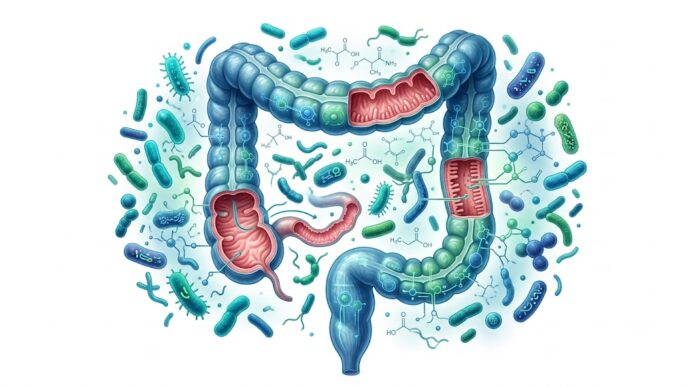
Gut health and constipation are far more closely connected than most people realize: the trillions of bacteria living in your colon directly influence how often you go, how hard your stool is, and how well your gut moves waste along. Researchers now recognize the gut microbiome as one of the key biological factors influencing chronic constipation. Over the past several years, research has moved gut health from a wellness buzzword to a measurable, testable part of constipation care, and recent studies are becoming increasingly specific about which bacterial species appear to support bowel regularity and which may contribute to constipation.
This guide breaks down what the current research actually shows about the gut microbiome’s role in constipation, in plain language, without oversimplifying the science or overselling any single fix. If you want a real-world account of what a full microbiome-focused approach looks like in practice, including stool testing, our related guide to gut microbiome rebalancing for constipation walks through a practical example of a microbiome-focused approach alongside the supporting research.
💡 Quick answer: Chronic constipation is associated with an imbalanced gut microbiome (dysbiosis), typically involving lower levels of beneficial Bifidobacteria and reduced production of short-chain fatty acids (SCFAs) that stimulate colon motility.[1],[2] Strategies that help restore microbial balance, primarily fermentable fiber and strain-specific probiotics, have the best-supported evidence for improving stool frequency and consistency.[3],[4] A newly identified pair of mucin-degrading bacteria may also explain why some cases of constipation resist standard treatment.[5]
At a Glance: The Gut Microbiome’s Role in Constipation
| Factor | What the Research Shows |
|---|---|
| Dysbiosis | Constipated patients show different bacterial populations than healthy controls, including altered Actinobacteria and Bacteroidetes levels.[1] |
| Short-chain fatty acids (SCFAs) | Acetate, propionate, and butyrate stimulate colon muscle contractions via serotonin signaling and receptors called FFAR2/FFAR3.[2] |
| Mucin-degrading bacteria | A 2026 study identified two bacteria that strip the colon’s protective mucus layer, drying out stool in treatment-resistant cases.[5] |
| Probiotics | A meta-analysis of 1,182 adults found probiotics increased stool frequency by 1.3 bowel movements per week on average, driven mainly by Bifidobacterium lactis.[3] |
| Fermentable fiber | A meta-analysis of 1,251 patients found 66% responded to fiber supplementation versus 41% on control treatment.[4] |
| Fecal microbiota transplant (FMT) | An emerging option for treatment-resistant cases, with a pooled remission rate of about 51% in recent trials.[6] |
Affiliate disclosure: This article contains links to product review pages that may include Amazon affiliate links. If you make a purchase through those links, Constipation Relief may earn a small commission at no extra cost to you.
At a Glance: Best Products for Gut Health and Constipation Relief
The strategies with the strongest evidence combine fermentable fiber, a strain-specific probiotic (Bifidobacterium lactis), and adequate hydration — typically taking 2-4 weeks to show full effect:
- Best fermentable fiber (psyllium — 66% response rate in meta-analysis): Konsyl Daily Psyllium Fiber Powder (19oz, 90 Servings) — 100% pure psyllium husk, single ingredient, feeds beneficial gut bacteria while directly softening stool, most consistent results in the 2022 meta-analysis (1,251 adults, ref 4)
- Best Bifidobacterium lactis probiotic (article’s evidence-supported strain): Garden of Life Dr. Formulated Probiotics for Constipation (50B CFU) — contains Bifidobacterium lactis alongside 15 other clinically studied strains, the species shown to increase stool frequency by 1.5 bowel movements per week in the 2014 meta-analysis (ref 3), USDA organic, shelf-stable
- Best synbiotic (probiotic + prebiotic combined): Seed DS-01 Daily Synbiotic — 24 clinically studied strains plus built-in prebiotic outer capsule, the combined prebiotic-probiotic approach referenced in the article’s synbiotic section (ref 9), shelf-stable
- Best standalone prebiotic (feeds existing Bifidobacteria): NOW Foods Organic Inulin Powder — 100% pure chicory root inulin, certified organic, selectively feeds the Bifidobacterium species the article identifies as key to SCFA production and motility — start at 2-3g daily and increase gradually
- Best bridging osmotic option (while microbiome strategies build up): Natural Vitality CALM Magnesium Citrate Powder — draws water into the colon directly (not microbiome-dependent), works in 30 minutes to 6 hours, article explicitly recommends as “bridging strategy” while fiber and probiotics take 2-4 weeks — avoid with kidney problems, occasional use only
What Is the Gut Microbiome, and Why Does It Affect Bowel Movements?
Chronic constipation is common. A large pooled analysis of population studies found it affects about 14% of adults worldwide, with rates roughly twice as high in women as in men and rising with age.[7] Diet, hydration, and physical activity all play a role, but one factor that gets far less attention is what is happening inside your colon at the microbial level.
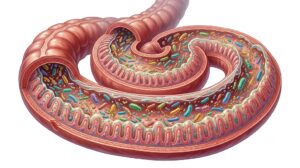
Your colon is home to trillions of bacteria, together known as the gut microbiome. Rather than being passive passengers, these microbes actively break down fiber your body cannot digest on its own, produce compounds that communicate directly with your nervous system, help maintain the protective mucus lining of your gut, and influence how much water ends up in your stool.
When this bacterial community is balanced and diverse, it tends to support smooth, regular bowel movements. When it becomes imbalanced, a state researchers call dysbiosis (simply meaning “an unhealthy mix of gut bacteria”), the downstream effects can include harder stool, slower transit through the colon, and more bloating and gas. A 2019 review of the research found that although the exact bacterial changes seen in constipation are not identical from study to study, people with constipation-predominant irritable bowel syndrome (IBS-C) tend to show lower levels of a beneficial bacterial group called Actinobacteria, which includes Bifidobacteria, and higher levels of another group called Bacteroidetes, compared with healthy people.[1]
The 2026 Discovery: the Concept of “Bacterial Constipation” and the Mucin Connection
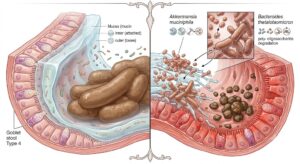
One of the most significant recent developments in this field comes from a 2026 study published in the journal Gut Microbes, which introduced what researchers have termed “bacterial constipation.” The term reflects the study authors’ proposed mechanism and has not yet been adopted in major clinical guidelines. To understand it, it helps to know that your colon is lined with a layer of mucin, the slippery, gel-like mucus that keeps stool moving smoothly while helping keep it hydrated.
Researchers at Nagoya University found that two specific gut bacteria, Akkermansia muciniphila and Bacteroides thetaiotaomicron, can work together to strip away this protective mucus layer.[5] One bacterium removes a chemical coating that normally protects the mucus, and the second bacterium then eats away at the exposed mucus underneath. Together, this leaves the colon drier and less lubricated than it should be, which can produce hard, “stuck” stool that is difficult to pass.
This finding matters because it may help explain why standard treatments, including fiber and typical laxatives, sometimes fail in people with long-standing, treatment-resistant constipation, including some individuals who are later diagnosed with Parkinson’s disease.[5] It is still early-stage research and has not yet changed mainstream treatment guidelines, but it shows how precise the science of gut bacteria and constipation is becoming, well beyond a simple “beneficial versus potentially harmful bacteria” framework.
Short-Chain Fatty Acids: The Real Mechanism Behind Fiber’s Benefits
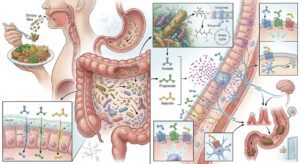
If you have ever wondered why fiber helps with constipation beyond simply adding bulk, the answer largely comes down to short-chain fatty acids, or SCFAs for short. When gut bacteria ferment (digest) fiber, they produce three main SCFAs: acetate, propionate, and butyrate.[8] These are not waste products; they are active signaling molecules that your gut and nervous system respond to directly.
A comprehensive 2025 review in Frontiers in Microbiology describes what researchers now call the gut microbiota–SCFA–motility axis: a fancy way of saying “a chain reaction that starts with your gut bacteria and ends with how well your colon muscles push stool along.”[2] SCFAs appear to influence gut movement in a few key ways:
- Serotonin production: around 90% of the body’s serotonin, the chemical messenger that helps trigger intestinal muscle contractions, is actually made in the gut, and SCFAs help regulate how much of it gets produced.[2]
- Communication with the “gut’s nervous system”: your intestines have their own network of nerve cells, sometimes called the “second brain,” and SCFAs interact directly with it to help coordinate movement.[2]
- Docking onto gut cell receptors: SCFAs attach to specific receptor proteins on the surface of gut cells (known in the research as FFAR2 and FFAR3), which then trigger downstream effects on motility.[2]
- Feeding the gut lining: butyrate in particular is the preferred fuel source for the cells that make up your colon’s inner lining, helping keep that barrier healthy and intact.[8]
This mechanism also helps explain why fecal microbiota transplantation, or FMT, can improve slow-transit constipation in some cases. FMT transfers stool (and the bacteria in it) from a healthy donor into a patient’s colon. A 2025 systematic review and meta-analysis found FMT achieved a pooled remission rate of roughly 51% and an improvement rate of about 65% across nine studies involving 245 patients with chronic constipation, along with significant improvements in stool consistency and quality of life, though the benefit tends to fade over time without repeat treatments or a maintenance plan.[6]
Signs Your Gut Microbiome May Be Contributing to Your Constipation
Not every case of constipation is primarily microbiome-driven. Structural issues, pelvic floor dysfunction, medications, hypothyroidism, and other conditions can all cause or worsen constipation and deserve proper medical evaluation. That said, a few patterns tend to point toward a gut-health component:
- Constipation that developed or worsened after a course of antibiotics
- Frequent bloating, excess gas, or a feeling of fermentation alongside infrequent bowel movements
- Constipation that improves somewhat with fiber but never fully resolves
- A history of low dietary fiber and diversity, such as a highly processed diet
- Constipation-predominant IBS (IBS-C), which has a well-documented microbiome signature[1]
Evidence-Based Ways to Support Gut Health for Constipation Relief
1. Feed Your Bacteria With Fermentable Fiber
Fiber is the primary fuel source for beneficial gut bacteria, and the clinical evidence for fiber in constipation is strong. A 2022 updated systematic review and meta-analysis in the American Journal of Clinical Nutrition, covering 16 randomized controlled trials and 1,251 adults with chronic constipation, found that 66% of participants responded to fiber supplementation compared with 41% on control treatment, with psyllium and pectin showing the most consistent, significant effects.[4] For a full breakdown of which fiber types work best and typical dosing, see our guide to natural fiber supplements for chronic constipation.
If you have already increased fiber intake without seeing the results you expected, the issue may not be the fiber itself. See our deeper explanation of why fiber isn’t working for your constipation for the more likely underlying reasons.
2. Add a Strain-Specific Probiotic
Not all probiotics are created equal for constipation, and the research is now specific enough to name which strains actually help. A meta-analysis of 14 randomized controlled trials involving 1,182 adults with functional constipation found that probiotics reduced whole gut transit time by an average of 12.4 hours and increased stool frequency by 1.3 bowel movements per week.[3] Critically, this benefit was driven almost entirely by Bifidobacterium lactis, which alone accounted for a 1.5 bowel-movement-per-week increase; the same analysis found no significant benefit for Lactobacillus casei Shirota.[3] Stool consistency also improved significantly, particularly with B. lactis strains.[3]
For a strain-by-strain breakdown of which probiotic products have the best supporting evidence, see our guide to the 9 best probiotic supplements of 2026. If you’re curious what meaningful, lasting relief from a probiotic can look like, our related piece on a case-based discussion of long-term probiotic relief covers the research behind that kind of long-term case.
3. Consider Combining Fiber and Probiotics (Synbiotics)
Prebiotics, non-digestible fibers that selectively feed beneficial bacteria, and probiotics can work better together than either alone. This combined approach is called a synbiotic. A 2025 randomized, controlled study found that over 14 days, a prebiotic alone, and a prebiotic-postbiotic combination, both altered microbiota composition, increasing beneficial bacteria such as Bifidobacterium longum and Clostridium leptum while reducing methane-producing organisms associated with slower transit, alongside improvements in stool consistency among responders (the prebiotic-only arm showed the largest stool-consistency gains).[9] For more on how this combined strategy compares with using either approach alone, see our comparison of synbiotics versus probiotics for constipation.
4. Don’t Overlook Hydration
Fiber and probiotics depend on adequate water intake to work properly. Soluble fiber absorbs water to form a gel, and without enough fluid, it can have the opposite of the intended effect. Our detailed breakdown of how dehydration contributes to constipation covers exactly how much water is generally recommended and which groups are at higher risk of fluid-related constipation.
5. Support Motility With Movement
Physical activity gets the muscles of your colon contracting, separately from anything you eat. It may also help support a more diverse gut microbiome over time. You do not need an intense workout: even a daily 20 to 30 minute walk is a reasonable, low-risk starting point alongside the dietary changes above.
6. Ask About Magnesium as a Bridging Strategy
Magnesium does not work through your gut bacteria at all. It pulls water into the colon directly, which softens stool and makes it easier to pass. Because of that, it can be a useful short-term bridge while the fiber- and probiotic-based strategies above take a few weeks to build up their full effect. See our comparison of the best magnesium supplements for constipation for dosing and safety considerations, including who should avoid it.
✔️ Bottom line: The gut microbiome is increasingly recognized as an important contributor to functional constipation for many people, supported by a growing body of clinical evidence. The best-supported strategies combine fermentable fiber (particularly psyllium), a strain-specific probiotic such as Bifidobacterium lactis, and adequate hydration.
These approaches typically take two to four weeks to show their full effect, and they work best as part of a broader plan rather than a stand-alone cure, especially for constipation with a structural or medication-related cause.
When to See a Doctor
Gut-health strategies are not a substitute for medical evaluation. See a healthcare provider if constipation lasts longer than three weeks, if you notice blood in your stool, unexplained weight loss, severe abdominal pain, or if over-the-counter and dietary approaches stop working. Chronic constipation can sometimes point to an underlying condition such as hypothyroidism, IBS, or a colorectal issue that needs its own diagnosis and treatment.
Frequently Asked Questions
Can an unhealthy gut microbiome cause constipation?
Yes. Research shows people with chronic constipation tend to have a different balance of gut bacteria than people with regular bowel movements, including lower levels of certain Bifidobacteria.[1] This imbalance can reduce short-chain fatty acid production and slow colon motility.[2]
How long does it take to improve gut health for constipation relief?
Most clinical trials on probiotics, prebiotics, and fiber for constipation measure results over two to four weeks of consistent daily use.[3],[4] Some people notice softer stools within the first week, but meaningful, lasting microbiome changes typically take three to four weeks or longer.
What is the single best thing to do for gut health and constipation?
There is no single fix, but the combination with the strongest evidence is a fermentable fiber source such as psyllium, paired with adequate water intake.[4] Adding a strain-specific probiotic, particularly Bifidobacterium lactis, provides an additional, largely independent benefit on top of fiber alone.[3]
Can fixing gut health cure chronic constipation completely?
For many people with functional constipation, microbiome-focused strategies meaningfully reduce symptoms, but they are not a guaranteed cure for everyone. Constipation has multiple possible causes, including slow colon transit, pelvic floor dysfunction, medications, and underlying medical conditions, so gut-health strategies work best as one part of a broader, individualized plan.
Medical disclaimer: This article is for general informational and educational purposes only. It does not constitute medical advice and is not a substitute for professional medical consultation, diagnosis, or treatment. Always consult a qualified healthcare provider about your specific situation, especially if you are pregnant, nursing, or managing a chronic health condition.
References
- Ohkusa T, Koido S, Nishikawa Y, Sato N. Gut Microbiota and Chronic Constipation: A Review and Update. Front Med (Lausanne). 2019;6:19. doi: 10.3389/fmed.2019.00019
- Liu SH, Yang XF, Liang L, Song BB, Song XM, Yang YJ, Alhoot MA. Regulatory mechanisms of the gut microbiota-short chain fatty acids signaling axis in slow transit constipation and progress in multi-target interventions. Front Microbiol. 2025;16:1689597. doi: 10.3389/fmicb.2025.1689597 — PMC12683290
- Dimidi E, Christodoulides S, Fragkos KC, Scott SM, Whelan K. The effect of probiotics on functional constipation in adults: a systematic review and meta-analysis of randomized controlled trials. Am J Clin Nutr. 2014;100(4):1075-1084. doi: 10.3945/ajcn.114.089151
- van der Schoot A, Drysdale C, Whelan K, Dimidi E. The effect of fiber supplementation on chronic constipation in adults: an updated systematic review and meta-analysis of randomized controlled trials. Am J Clin Nutr. 2022;116(4):953-969. doi: 10.1093/ajcn/nqac184
- Hamaguchi T, Gibo N, Ohara M, et al. Bacterial constipation: Mucin-degrading intestinal commensal bacteria cause constipation. Gut Microbes. 2026;18(1):2596809. doi: 10.1080/19490976.2025.2596809 — PMC12928629
- Wang K, Gao C, Zhu L, Chen M, Tong YX, Zhang S. Fecal microbiota transplantation for chronic constipation: a systematic review and meta-analysis of clinical efficacy, safety, and microbial dynamics. Front Microbiol. 2025;16:1604571. doi: 10.3389/fmicb.2025.1604571 — PMC12350361
- Suares NC, Ford AC. Prevalence of, and risk factors for, chronic idiopathic constipation in the community: systematic review and meta-analysis. Am J Gastroenterol. 2011;106(9):1582-1591. doi: 10.1038/ajg.2011.164
- McNabney SM, Henagan TM. Short Chain Fatty Acids in the Colon and Peripheral Tissues: A Focus on Butyrate, Colon Cancer, Obesity and Insulin Resistance. Nutrients. 2017;9(12):1348. PMC5748798
- Culqui Lévano D, et al. Impact of prebiotics and postbiotics in the management of constipation: Analysis of their differentiated modulation of intestinal microbiota. Clin Nutr ESPEN. 2025. Clinical Nutrition ESPEN, full text