

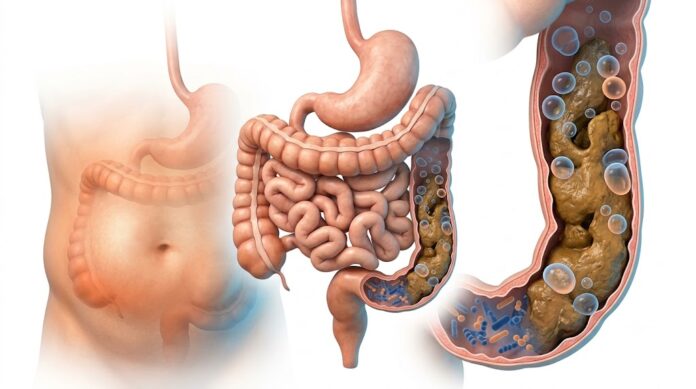
Does constipation cause gas? Yes — and if you’ve noticed the two tend to show up together, that’s not a coincidence. Research points to two distinct reasons why constipation and gas are so closely linked, covered in detail below.2,3
Does constipation cause gas? Yes. Constipation slows the movement of stool through the colon, giving gut bacteria more time to ferment waste and produce gas. Slow transit can also make it harder for gas to pass, leading to bloating and abdominal discomfort.
Constipation causes gas through two separate but overlapping mechanisms.
First, slower colonic transit gives resident gut bacteria extra time to ferment fiber, sugars, and other fermentable material into gas — mainly hydrogen, methane, and carbon dioxide. Second, several studies using intestinal gas infusion techniques have found that people with functional bowel symptoms, including constipation, often have impaired reflex control over how gas moves through and exits the gut, so gas is retained rather than cleared.2,3
Both mechanisms can operate at once, which is part of why gas and bloating are so consistently reported alongside constipation.
Why Does Constipation Cause Gas?
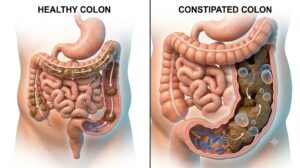
A healthy colon moves waste along through peristalsis, the wave-like muscle contractions that push stool toward the rectum. When this process slows down — whether from low fiber intake, dehydration, inactivity, medication side effects, or an underlying motility disorder — stool and undigested carbohydrate residue sit in the colon for longer. Gut bacteria continuously ferment this material, and longer residence time gives them more opportunity to ferment undigested waste, producing more gas as a natural byproduct.
Methane is a particularly interesting piece of this picture. Research using a canine model found that infusing methane gas into the small intestine slowed transit by close to 60 percent, and separately, contractile activity in isolated intestinal tissue increased significantly when exposed to methane compared with room air.1
In other words, methane does not just result from slow transit — it also appears to actively slow transit further, which can create a self-reinforcing cycle: constipation promotes methane-producing bacteria, and that methane in turn slows the gut down even more. This is one reason methane-predominant breath test results are so strongly associated with constipation-predominant irritable bowel syndrome (IBS-C).
Disclosure: This article contains affiliate links. If you purchase through our links, we may earn a small commission at no extra cost to you. Our recommendations are based on the evidence discussed in this guide.
At a Glance: Best Products to Relieve Constipation-Related Gas
Treating the underlying constipation is the most effective way to relieve gas — not treating gas alone. Here are the most evidence-aligned options for each approach covered in this guide:
- Best low-fermentation fiber (least gas of all fiber types): Citrucel Fiber Therapy Caplets — 180 Count — methylcellulose is non-fermentable, so it relieves constipation without the gas and bloating that typically come with psyllium in the first weeks, recommended by physicians among therapeutic fiber laxatives
- Best osmotic laxative (speeds transit, no fermentation): MiraLAX Laxative Powder (45-Dose) — draws water into the colon to move stool faster, no bacterial fermentation involved, no cramping or urgency, AGA-ACG first-line recommendation for chronic constipation
- Best magnesium (faster transit when you need quicker relief): Natural Vitality CALM Magnesium Citrate Powder — osmotic action speeds transit to reduce the fermentation window, works in 30 minutes to 6 hours — avoid with kidney problems, occasional use only
- Best probiotic (gut motility support long-term): Align Probiotic Supplement — Bifidobacterium 35624, supports gut bacteria balance linked to improved transit time and bowel frequency
- Best for post-meal gas specifically: Enzymedica Digest Gold + ATPro (180 Capsules) — broad-spectrum enzyme blend for bloating after heavy or fatty meals — note: addresses post-meal gas only, not general slow-transit constipation
- Best toilet posture aid (helps evacuate trapped gas): Squatty Potty The Original Toilet Stool 7″ White — straightens anorectal angle to help both stool and trapped gas pass more completely, doctor-recommended, referenced directly in the guide’s toilet posture section
The Second Mechanism: Impaired Gas Transit, Not Just Gas Production
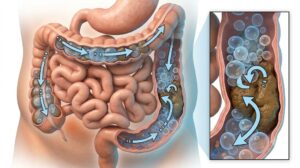
It would be easy to assume that people with more gas simply produce more of it, but controlled studies suggest something more specific is often happening. In a series of experiments using gas infusion techniques, researchers found that gas evacuation depends on reflex mechanisms triggered by distension at different points in the gut, and that these reflexes can be disrupted.2
A related study comparing patients with abdominal bloating to healthy volunteers found that the bloating group retained significantly more infused gas and experienced greater discomfort under identical conditions, pointing to a genuine problem with gas transit rather than gas volume alone.3
This distinction matters practically. It means a person with constipation may not necessarily be producing an unusual amount of gas. Instead, the gas that is normally produced during digestion simply is not moving through and exiting the body efficiently, so it accumulates and stretches the intestinal wall — which is what produces the sensation of bloating and pressure. A broader review of bloating physiology reached a similar conclusion, describing impaired gas handling, gut hypersensitivity, and abnormal reflex responses as overlapping contributors, rather than any single cause.4
The Fiber Paradox
Fiber is usually the first recommendation for constipation, and for good reason, but it is also a common source of gas, which can feel contradictory to someone trying to get relief. The explanation lies in the type of fiber. Soluble, fermentable fiber (found in oats, beans, psyllium, and inulin-type prebiotics) is broken down by colonic bacteria, and that fermentation process produces gas as a direct byproduct.
A 2024 systematic review of 17 randomized controlled trials involving 713 participants found that fructooligosaccharide supplementation reliably improved stool frequency and consistency in people with functional constipation, but the same review noted mild bloating as a common and expected side effect during the adjustment period.5
This does not mean fiber should be avoided. It means gas during the first one to two weeks of increasing fiber intake is a normal, well-documented part of the gut microbiome adjusting to a new fuel source, not necessarily a sign that something is wrong. Starting at a lower dose and increasing gradually, alongside adequate water intake, is the standard way to minimize this adjustment period.
For a full breakdown of which fiber types tend to produce more or less gas, see our guide to fiber foods and fiber therapy for gut health. If fiber alone does not seem to be resolving things, our article on why fiber isn’t working for your constipation walks through the more common reasons.
Comparing Common Fiber Sources
- Psyllium husk (Metamucil): Soluble and partially fermentable; commonly causes gas and bloating in the first week, typically easing as the gut adjusts. See our Benefiber vs. Metamucil comparison for side-by-side detail.
- Wheat dextrin (Benefiber): Also fermentable, but often reported as gentler than psyllium for sensitive digestive systems.
- Methylcellulose (Citrucel): Not fermented by gut bacteria, which is why it tends to produce noticeably less gas and bloating than psyllium-based options.
Constipation, Gas, and SIBO
When gas and bloating are severe, persistent, and paired with constipation, some clinicians also investigate small intestinal bacterial overgrowth (SIBO) — a condition in which bacteria that normally live mainly in the colon migrate into the small intestine and ferment food much earlier in the digestive process. This is closely related to the methane research described above, since methane-producing organisms detected on a breath test are one of the patterns associated with SIBO and constipation-predominant symptoms.1
SIBO is diagnosed with a breath test and treated differently from ordinary functional constipation, so it is worth mentioning to a doctor if gas and bloating feel disproportionate to your usual bowel pattern, especially if they are new or worsening.
How to Relieve Constipation-Related Gas
Because slow transit is the root driver in most cases, the most effective approach is usually to address the constipation itself rather than treating gas symptoms in isolation.
Lifestyle
- Hydration: Adequate fluid intake supports softer stool and more efficient transit. See does dehydration cause constipation for the specifics.
- Movement: Physical activity stimulates peristalsis and has been shown to support gut motility, which reduces the fermentation window.
- Toilet posture: How you sit can affect how completely stool and trapped gas are able to pass. See our guide on the best position to poop for constipation for specifics.
Fiber
- Gradual fiber increases: If you are sensitive to gas, our guide to gentler, lower-fermentation fiber options highlights choices like methylcellulose that tend to cause less gas.
OTC Options
- Magnesium-based osmotic support: Osmotic laxatives draw water into the bowel and speed transit without the fermentation-heavy bulk of fiber. Our magnesium supplement guide covers dosing and forms.
- Reviewing OTC options: Not every laxative works the same way, and some are gentler on gas and bloating than others. Our OTC laxatives guide breaks down the evidence by category.
Supplements
- Probiotics: Certain strains have been studied specifically for constipation and gut motility. See our article on probiotic strains and chronic constipation.
- Digestive enzymes, for a specific subset of cases: If your gas and bloating mainly show up after fatty or heavy meals rather than as a general pattern, an enzyme blend may help alongside — not instead of — the constipation-focused approaches above. Our digestive enzymes for constipation guide covers who is and isn’t a good candidate.
For a broader overview of same-day relief strategies, our fast constipation relief at home guide covers several of these approaches together.
Key Takeaway: Constipation commonly causes gas through two mechanisms: increased bacterial fermentation and impaired gas transit. Treating the underlying constipation usually improves bloating more effectively than treating gas alone.
When to See a Doctor
Constipation-related discomfort isn’t always limited to gas and bloating. If you’re also feeling queasy, see our guide on whether constipation can cause nausea; if you’re noticing discomfort lower down, our article on whether constipation can cause back pain covers that overlap.
Occasional gas and bloating with constipation are common and usually not a cause for alarm. See a healthcare provider if you experience any of the following alongside constipation and gas:
- Constipation lasting longer than three weeks
- Blood in the stool or unexplained weight loss
- Severe or worsening abdominal pain
- Inability to pass gas or stool at all, which can indicate a bowel obstruction
- New-onset symptoms after age 50, or a family history of colorectal cancer
Frequently Asked Questions
Is it normal to have a lot of gas with constipation?
Yes. Slower colonic transit gives bacteria more time to ferment stool, and research also shows impaired gas transit is common in people with functional bowel symptoms, so gas tends to be retained rather than cleared efficiently.2,3
Can fiber make gas worse before it gets better?
Often, yes, especially fermentable fibers like psyllium. This is a documented, temporary adjustment effect as gut bacteria adapt, and it typically improves within one to two weeks if you increase the dose gradually.5
Does trapped gas mean I have SIBO?
Not necessarily. Trapped gas with constipation is common on its own. SIBO is a specific, diagnosable condition confirmed by a breath test, and it is worth discussing with a doctor if gas and bloating are severe, persistent, or disproportionate to your usual symptoms.
What relieves gas from constipation the fastest?
Addressing the underlying constipation — through adequate hydration, movement, and if needed an osmotic laxative — tends to relieve gas more effectively than treating gas symptoms alone, since the gas is a downstream effect of slow transit.
References
- Pimentel M, Lin HC, Enayati P, van den Burg B, Lee HR, Chen JH, Park S, Kong Y, Conklin J. Methane, a gas produced by enteric bacteria, slows intestinal transit and augments small intestinal contractile activity. Am J Physiol Gastrointest Liver Physiol. 2006;290(6):G1089-95. PMID: 16293652. Available at: pubmed.ncbi.nlm.nih.gov/16293652
- Harder H, Serra J, Azpiroz F, Malagelada JR. Reflex control of intestinal gas dynamics and tolerance in humans. Am J Physiol Gastrointest Liver Physiol. 2004;286(1):G89-94. PMID: 12946941. Available at: pubmed.ncbi.nlm.nih.gov/12946941
- Serra J, Azpiroz F, Malagelada JR. Impaired transit and tolerance of intestinal gas in the irritable bowel syndrome. Gut. 2001;48(1):14-19. PMID: 11115817. Available at: pubmed.ncbi.nlm.nih.gov/11115817
- Seo AY, Oh DH, Kim N. Abdominal bloating: pathophysiology and treatment. J Neurogastroenterol Motil. 2013;19(4):433-453. PMID: 24199004. Available at: pubmed.ncbi.nlm.nih.gov/24199004
- Zhen H, Qian H, Liu X, Tan C. Fructooligosaccharides for relieving functional constipation: a systematic review and meta-analysis of randomized controlled trials. Foods. 2024;13(24):3993. doi: 10.3390/foods13243993. Available at: doi.org/10.3390/foods13243993
Medical Disclaimer: The information on ConstipationRelief.net is for general educational purposes only and does not replace professional medical advice. Always consult your physician or gastroenterologist before making significant dietary changes, particularly if you have a diagnosed condition such as IBS, IBD, or a history of bowel obstruction.





[…] gas is also a concern, read does constipation cause gas. For added gut support, see our review of the best probiotic supplements, and our guide to […]
[…] More on this in our guide to constipation and gas. […]
[…] rarely shows up in isolation. If you’re also dealing with gas and bloating, our guide on whether constipation causes gas explains the overlapping mechanisms. If nausea or lower back discomfort are part of the picture, […]