

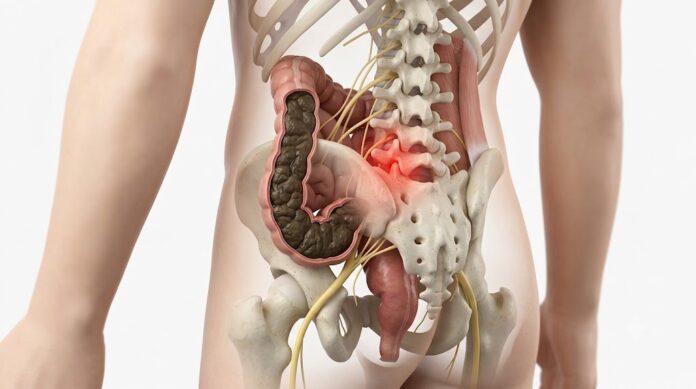
Can constipation cause back pain? Yes, in some cases. But constipation is rarely the main cause of severe back pain on its own.
When it does contribute, the pain is usually a dull, achy pressure in the lower back. It’s rarely sharp or shooting. Doctors typically rule out more common causes first, such as muscle strain, poor posture, or a disc problem. Only after that do they consider constipation. Still, the link is real and easy to explain, especially if your back pain and bowel symptoms tend to show up together.
Quick Answer
- Constipation can cause back pain, most often in the lower back, through pressure that a buildup of stool places on nearby nerves and muscles.
- The pain is usually mild to moderate and dull, and it often improves after a bowel movement.
- Severe constipation with fecal impaction can cause more noticeable back pain and, in rare cases, mimic a spinal emergency.
- Back pain with loss of bladder or bowel control, numbness in the groin area, or leg weakness is a medical emergency and is not typical of ordinary constipation. Seek immediate care.
- If back pain and constipation happen together often, addressing the constipation itself, through fiber, hydration, and appropriate OTC laxatives or natural remedies, is a reasonable first step, alongside a doctor’s evaluation if pain persists.
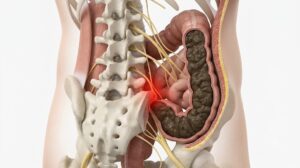
How Can Constipation Cause Back Pain? The Science Explained
Constipation and back pain are both extremely common on their own. Chronic constipation affects an estimated 9% to 20% of adults in the United States,[1] and worldwide prevalence estimates range from about 12% to 19%.[2] Because both conditions are so common, they can simply occur together by coincidence.
But there are several documented ways one can genuinely cause the other. Here’s what the research shows.
1. Stool Buildup Pressing on Spinal Nerves
The colon sits close to the lower spine. When stool builds up and the colon becomes distended, that added bulk can press against nearby nerves. Clinicians describe the result as a dull, achy pressure rather than sharp pain. It tends to ease once a bowel movement relieves the buildup.[3]
2. Straining and Muscle Strain
Pushing hard and repeatedly during bowel movements engages the abdominal wall. That effort also transfers tension into the muscles and ligaments of the lower back. Over time, repeated straining can stretch or mildly sprain those muscles and tissues. The result shows up as persistent back soreness.[4]
3. Bloating and Abdominal Distension
Constipation often comes with gas and bloating. As the abdomen distends, the added pressure can radiate backward and feel like back discomfort. This is especially true for people already prone to lower back tightness.[4]
4. Pelvic Floor Dysfunction
Chronic constipation lasting longer than three months can be linked to pelvic floor dysfunction. In this condition, the muscles controlling the rectum and anus don’t coordinate properly during a bowel movement. That lack of coordination has been linked to referred back discomfort in some patients.[4]
5. Referred Pain from IBS-C
Constipation is a defining symptom of irritable bowel syndrome with constipation (IBS-C). Referred pain, where discomfort that starts in the gut is felt somewhere else in the body, can occasionally show up as lower back pain in people with IBS-C. This is considered uncommon.[5]
Which Part of the Back Does Constipation Affect?
When constipation contributes to back pain, it’s almost always felt in the lower back (the lumbar and lumbosacral region), close to where the colon and rectum sit. Upper back or neck pain is very unlikely to be related to constipation.
A useful clue cited by gastroenterologists: pain that consistently improves shortly after a bowel movement is more likely tied to bowel buildup than to a musculoskeletal or spinal cause.[4]
Fecal Impaction: A More Direct Cause
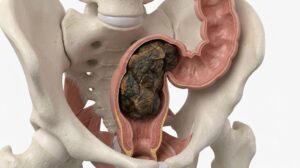
Fecal impaction is a severe form of constipation. A large, hard mass of stool becomes lodged in the rectum and cannot pass on its own. It’s more likely than ordinary constipation to cause noticeable back pain, because the impacted mass creates sustained pressure on the rectum and surrounding nerves.
Fecal impaction is especially associated with reduced mobility, certain neurological conditions, and medication side effects. These factors are more common in older adults.[3] For guidance specific to this higher-risk group, see our article on immediate constipation relief for elderly adults at home, which covers safe ways to address severe constipation before it escalates.
Symptoms that can accompany fecal impaction include abdominal cramping, a swollen or hard abdomen, small amounts of watery stool leaking around the blockage, and in some cases, back pain. Fecal impaction generally needs medical attention rather than home treatment alone.
The Rare but Serious Exception: Cauda Equina Syndrome
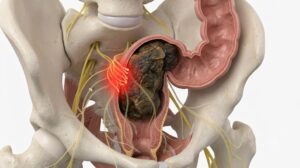
In extremely rare cases, severe constipation with significant fecal impaction can compress the bundle of nerves at the base of the spine, known as the cauda equina. This can happen closely enough to produce symptoms that mimic a spinal emergency.
A published case report describes a young man with neurological symptoms and urinary retention. Both resolved almost immediately once his fecal impaction was treated, after doctors ruled out nerve and bone-related causes.[6] Cauda equina syndrome itself is a well-recognized surgical emergency, typically caused by conditions such as a herniated disc rather than constipation. Bowel or bladder dysfunction, however, is one of its hallmark warning signs regardless of the underlying cause.[7][8]
Seek emergency care immediately if back pain occurs together with any of the following:
- New loss of bladder or bowel control, or difficulty urinating
- Numbness in the groin, inner thighs, or buttocks (saddle anesthesia)
- Weakness or numbness in one or both legs
- Severe, rapidly worsening pain
These symptoms are not typical of ordinary constipation and require prompt evaluation, ideally with urgent imaging.[7][8]
Can Back Pain Cause Constipation Instead?
The relationship can also run in the opposite direction. Certain spinal conditions, nerve injuries, and pain medications used to treat back pain, particularly opioids, can slow colon motility and cause constipation as a side effect.
A tight or dysfunctional psoas muscle, which connects the spine to the legs, has also been linked to both low back pain and constipation.[5] In these cases, the back problem is the primary issue, and constipation develops as a downstream effect rather than a cause.
How to Tell If Your Back Pain Is Related to Constipation
A few practical clues can help you and your doctor sort out the likely connection:
- Timing: Pain that builds over several days of infrequent bowel movements, and eases after passing stool, points toward a constipation-related cause.
- Character: A dull, achy pressure is more typical of constipation-related back pain than sharp, shooting, or radiating pain down one leg.
- Associated symptoms: Bloating, a feeling of incomplete evacuation, and hard or infrequent stools alongside the back pain support a digestive cause.
- No trauma or exertion trigger: Back pain that clearly followed heavy lifting, a fall, or a specific movement is less likely to be constipation-related.
If you’re unsure, a healthcare provider can help distinguish between a musculoskeletal cause, a digestive cause, and, rarely, a more serious underlying condition.
What Helps: Addressing the Constipation
When back pain does appear to be linked to constipation, relieving the constipation itself is usually the most direct way to also relieve the back discomfort. Here are the evidence-based approaches worth trying first.
Fiber and fluids. Gradually increasing dietary fiber to 25–31 grams per day, alongside adequate water intake, softens stool and reduces straining. See our guide to fiber foods and fiber therapy for gut health.
Hydration. Low fluid intake is one of the most overlooked contributors to hard, difficult-to-pass stool. Learn more in our article on how dehydration causes constipation.
Natural remedies. Prunes, kiwifruit, and olive oil all have clinical support for improving stool frequency and consistency. See our natural laxatives guide and our article on olive oil for constipation.
Magnesium. Magnesium citrate and magnesium oxide are commonly used osmotic agents for occasional constipation. See our guide on the best magnesium supplements for constipation.
OTC options when needed. Osmotic laxatives such as polyethylene glycol (PEG/MiraLAX) are generally well tolerated and often a first-line recommendation for chronic constipation. Our complete OTC laxatives comparison covers all the options. A few more specific guides if you want to dig deeper:
- Choosing between a fiber supplement and an osmotic laxative: MiraLAX vs Metamucil
- Comparing a gentle osmotic option against a faster stimulant laxative: MiraLAX vs Dulcolax
- Already tried MiraLAX with no luck? Check why isn’t MiraLAX working before assuming it’s failed — timing, dosage, and hydration are the most common reasons for a delayed response
Toilet posture. Elevating the feet with a footstool changes the anorectal angle. Some clinical research links this simple, low-risk step to reduced straining effort, which may in turn ease the muscular strain that contributes to back discomfort.
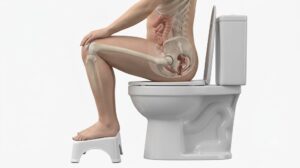
Movement. Regular physical activity supports both colon motility and back muscle health, addressing two contributing factors at once.
When to See a Doctor
Contact a healthcare provider if you experience:
- Back pain and constipation that persist for more than one to two weeks despite home measures
- No bowel movement for more than three days despite trying standard remedies
- Severe abdominal pain, vomiting, or inability to pass gas
- Rectal bleeding or unexplained weight loss alongside constipation
- Any of the emergency warning signs listed above (loss of bladder or bowel control, saddle numbness, leg weakness)
These situations need a clinical evaluation to rule out fecal impaction, an underlying digestive condition, or a spinal problem that requires its own treatment.
Frequently Asked Questions
Can constipation cause lower back pain specifically?
Yes. When constipation contributes to back pain, it’s almost always felt in the lower back, close to where the colon and rectum are located, rather than the upper back or neck.[3][4]
How long does constipation-related back pain usually last?
It typically resolves within a day or so of restoring normal, regular bowel movements. Pain that persists well beyond that point is less likely to be caused by constipation alone and warrants a medical evaluation.
Is back pain from constipation dangerous?
Ordinary constipation-related back pain isn’t dangerous and usually improves with standard constipation treatment. However, the combination of back pain with loss of bladder or bowel control, saddle numbness, or leg weakness is a medical emergency and needs immediate attention, regardless of the underlying cause.[7][8]
Can severe constipation feel like a herniated disc?
In rare, documented cases, severe fecal impaction has produced symptoms resembling spinal nerve compression, including urinary retention and neurological signs. This is uncommon, but it’s why sudden, severe back pain with bowel or bladder changes should always be evaluated urgently rather than assumed to be routine constipation.[6]
Can constipation cause hip pain?
Yes, though it’s less common than lower back pain. Stool buildup and abdominal bloating can put pressure on structures near the hip and pelvis. A tense pelvic floor or psoas muscle, both of which can be affected by chronic constipation, may also refer discomfort into the hip area.[4][5]
Can gas cause back pain?
Yes. Trapped gas can distend the intestines and abdomen, and that pressure can radiate to the lower back. This is a similar mechanism to bloating-related back pain from constipation, and it often improves once the gas or stool passes.[4]
Can constipation cause kidney pain?
Constipation doesn’t directly affect the kidneys, but a distended colon sits close to the kidneys and lower back. Severe stool buildup can sometimes feel like it’s coming from the flank or kidney area. Actual kidney pain, from a kidney stone or infection, usually comes with other signs like fever or blood in the urine, and doesn’t change with bowel movements. It should be evaluated separately by a doctor.
References
- Chronic Constipation in the United States: Results From a Population-Based Survey Assessing Healthcare Seeking and Use of Pharmacotherapy. PMC. Available at: pmc.ncbi.nlm.nih.gov/articles/PMC7269025
- Current Overview on Clinical Management of Chronic Constipation. PMC. Available at: ncbi.nlm.nih.gov/pmc/articles/PMC8073140
- Cleveland Clinic Health Essentials. Can Constipation Cause Back Pain? How To Know. Available at: health.clevelandclinic.org
- HealthCentral (medically reviewed by David Padua, MD). Can Constipation Cause Back Pain? Understanding the Link and How to Find Relief. Available at: healthcentral.com
- Baptist Health. Can Constipation Cause Back Pain? Available at: baptisthealth.com
- Cauda equina syndrome secondary to constipation: an uncommon occurrence. PubMed PMID: 15943746. Available at: pubmed.ncbi.nlm.nih.gov/15943746
- American Association of Neurological Surgeons (AANS). Cauda Equina Syndrome. Available at: aans.org
- Diagnostic accuracy of red flags related to cauda equina syndrome compared to MRI: a systematic review. ScienceDirect. Available at: sciencedirect.com
Medical Disclaimer: This article is for informational purposes only and does not constitute medical advice. It is not a substitute for professional medical advice, diagnosis, or treatment. Always seek the advice of your physician or another qualified health provider with any questions you may have regarding a medical condition, especially back pain accompanied by bladder, bowel, or neurological symptoms.




[…] And if you have noticed dull lower back discomfort alongside your bowel symptoms, our article on whether constipation can cause back pain covers how the two are […]