

You’ve probably heard about castor oil packs — maybe from a wellness influencer, a naturopathic doctor, or a grandmother who swears by them. And the question in the back of your mind is probably the same one most people have: does this actually work, or is it just another health trend dressed up in tradition?
The answer, as with most things in medicine, is nuanced — and actually more interesting than a simple yes or no.
Castor oil packs have been used for thousands of years across ancient Egypt, India, Persia, and the Americas. But for most of that history, nobody truly understood why they worked. That changed in 2012, when researchers at the Max Planck Institute in Germany finally identified the exact molecular mechanism behind castor oil’s effects on the gut — a discovery published in one of the world’s most prestigious scientific journals.
What we now know is this: castor oil contains a fatty acid called ricinoleic acid that activates specific receptors in intestinal smooth muscle, triggering the contractions that move stool through the colon. This is well-proven for oral castor oil. For the external pack, the evidence is more limited — but a peer-reviewed clinical study does show meaningful improvement in constipation symptoms, even if it doesn’t dramatically increase how often you go.
This guide gives you the full picture: the science, the honest limitations, a step-by-step how-to, verified product recommendations from iHerb and Amazon, and clear safety information. No hype, no exaggeration — just what the research actually says, and how to use this remedy wisely.
🔗 New here? Start with our overview: 7 Best Natural Constipation Relief Remedies in 2026 (Doctor-Approved)
Table of Contents
- What Is a Castor Oil Pack?
- The Science: Does It Really Work for Constipation?
- Castor Oil Pack vs. Drinking Castor Oil — Key Differences
- What You Need to Make a Castor Oil Pack at Home
- Step-by-Step: How to Use a Castor Oil Pack for Constipation
- How Long to Leave On & How Often to Use
- Best Castor Oil Products: Honest Reviews (iHerb & Amazon)
- Side Effects & Safety Precautions
- Who Should Avoid Castor Oil Packs?
- Natural Alternatives for Constipation Relief
- Frequently Asked Questions (FAQ)
- Scientific References
1. What Is a Castor Oil Pack?
A castor oil pack is a traditional external therapy where a flannel or cotton cloth is saturated with castor oil and placed directly on the skin — most commonly over the lower abdomen. Gentle heat from a hot water bottle or heating pad is then applied on top to help the oil penetrate into the skin and underlying tissue.
Castor oil comes from the seeds of Ricinus communis, a plant indigenous to the southeastern Mediterranean Basin, East Africa, and India, but now cultivated across tropical regions worldwide. [1] Its medicinal use dates back over 3,500 years — it appears in the ancient Egyptian Ebers Papyrus (circa 1550 BCE) and has been documented in Ayurvedic medicine, Persian healing traditions, and the folk medicine of the Americas. [2]
Today, castor oil packs are getting renewed attention as a gentler, external alternative to oral laxatives — particularly among people who want to avoid the nausea, cramping, and urgent diarrhea that oral castor oil and other stimulant laxatives can cause.
What makes a castor oil pack different from simply rubbing oil on your stomach? The flannel holds the oil in close contact with the skin for an extended period — typically 45–60 minutes. The added heat may improve transdermal absorption of ricinoleic acid, the oil’s active compound. The warmth itself also has a well-established relaxing effect on abdominal muscles and may help reduce gut tension, independent of any chemical action.
🔗 See also: Best OTC Laxatives for Constipation in the US (Fast & Gentle Options) — a comparison of all major over-the-counter options if you need faster relief.
2. The Science: Does It Really Work for Constipation?
How Castor Oil Works — The Ricinoleic Acid Mechanism
Castor oil’s most important fatty acid is ricinoleic acid, which makes up roughly 85–90% of the oil’s total fatty acid content. [2]
When castor oil is taken orally, intestinal lipase enzymes break it down into ricinoleic acid. A landmark 2012 study published in the Proceedings of the National Academy of Sciences (PNAS) by Tunaru et al. at the Max Planck Institute for Heart and Lung Research identified the exact molecular mechanism for the first time:
Ricinoleic acid specifically activates the EP3 prostanoid receptor on the smooth muscle cells lining the intestinal wall. This triggers a calcium surge inside the muscle cells, producing strong peristaltic contractions that propel stool through the colon. [3]
In mice genetically modified to lack the EP3 receptor, castor oil produced zero laxative effect — confirming EP3 as the essential and specific pathway. EP4 receptors were also found to bind ricinoleic acid in cell experiments, but crucially, EP4-deficient mice responded to castor oil normally, meaning EP3 alone mediates the laxative effect in vivo. [3]
The EP3 receptor is also present in uterine smooth muscle, which is why ricinoleic acid stimulates uterine contractions — and why castor oil in any form is contraindicated in pregnancy. [3]
The U.S. Food and Drug Administration (FDA) classifies oral castor oil as a stimulant laxative that is “generally recognized as safe and effective,” placing it in the same pharmacological category as bisacodyl and senna. [2]
What About the Castor Oil Pack Specifically?
A castor oil pack is applied externally, not swallowed — so the question becomes: can ricinoleic acid penetrate the skin in sufficient quantities to have a measurable effect? The honest answer is that transdermal absorption of castor oil has not been robustly studied. However, clinical evidence from external pack use does exist.
The most relevant clinical study was published by Arslan and Eşer (2011) in Complementary Therapies in Clinical Practice. This was a quasi-experimental before-after study (not a randomized controlled trial) conducted with 67 elderly nursing home residents in Manisa, Turkey — 80% of whom had lived with constipation for over 10 years. Participants were monitored for 7 days before treatment, received castor oil packs applied to the abdomen for 60 minutes per day across 3 consecutive days, and then monitored for 4 days afterward.
Results: [4]
| Outcome Measured | Result |
|---|---|
| Number of bowel movements per day | No statistically significant change |
| Stool volume | No significant change |
| Stool consistency (hardness) | Significantly improved (softer stools) |
| Straining during defecation | Significantly reduced |
| Feeling of complete evacuation | Significantly improved |
In plain terms: The pack did not cause people to go to the toilet more often. But it meaningfully reduced the most distressing symptoms of constipation — hard stools, painful straining, and the unsatisfying sense of incomplete emptying.
Whether this improvement is primarily due to transdermal ricinoleic acid absorption, the mechanical effect of abdominal heat, improved local circulation, or a combination of these is not yet established. More research is needed.
Evidence Summary
| Form | Evidence Level | Primary Effect |
|---|---|---|
| Oral castor oil | Strong (FDA-approved, mechanistically confirmed) | Induces bowel movement within 2–6 hours |
| Castor oil pack | Moderate (1 peer-reviewed clinical study in elderly) | Softens stool, reduces straining and discomfort |
| Castor oil pack on bowel frequency | Weak | No significant effect found in published research |
Bottom line: Castor oil packs are best understood as a symptom-relief tool — they can make constipation more manageable and less painful. They are not a replacement for medical treatment of chronic or persistent constipation, which requires a proper evaluation.
3. Castor Oil Pack vs. Drinking Castor Oil — Key Differences
Both forms come from the same oil, but they work differently and have very different safety profiles.
| Feature | Castor Oil Pack (External) | Oral Castor Oil |
|---|---|---|
| How it works | Transdermal / heat-assisted local absorption | EP3 receptor activation in intestinal smooth muscle |
| Speed of action | Slow, gradual | Rapid: 2–6 hours (up to 12 hours in some cases) |
| Primary benefit | Softer stools, less straining | Induces bowel movement |
| Common side effects | Skin irritation (uncommon) | Nausea, abdominal cramping, diarrhea |
| Electrolyte imbalance risk | Very low | Real risk with overuse (hypokalemia — low potassium) |
| Long-term use safety | Relatively safe for short-term use | Not recommended beyond 1 week |
| Risk of bowel dependence | Very low | Possible with chronic overuse |
| Safe in pregnancy | NO | NO — both stimulate uterine EP3 receptors |
For ongoing symptom management, the external pack is the gentler option. For acute, immediate relief (e.g., clinical bowel preparation), oral castor oil is more predictable — but should always be used short-term.
🔗 Related: Olive Oil for Constipation: Dosage, Timing & What Clinical Studies Actually Show — another plant-based oil remedy, but with a different evidence base.
4. What You Need to Make a Castor Oil Pack at Home
No expensive kits are required. Here is what you need:
Essential items:
- High-quality organic castor oil — cold-pressed, hexane-free, in a glass bottle (see product reviews in Section 7)
- Flannel cloth — approximately 30 cm × 30 cm (12″ × 12″). Unbleached wool flannel is the traditional material. Organic cotton flannel is a readily available alternative. Old flannel clothing works perfectly.
- Hot water bottle (preferred) or heating pad set to low or medium
Recommended extras:
- Plastic wrap or a waterproof wrap — to secure the flannel over your abdomen and protect clothing
- Old towel to place under you during the session
- Old clothing — castor oil permanently stains most fabrics and will not wash out
- Sealed glass jar — for storing the reusable flannel between sessions in the refrigerator
⚠️ Staining warning: Castor oil will permanently stain bedding, good clothing, and upholstered furniture. Always use old towels and old clothes before starting.
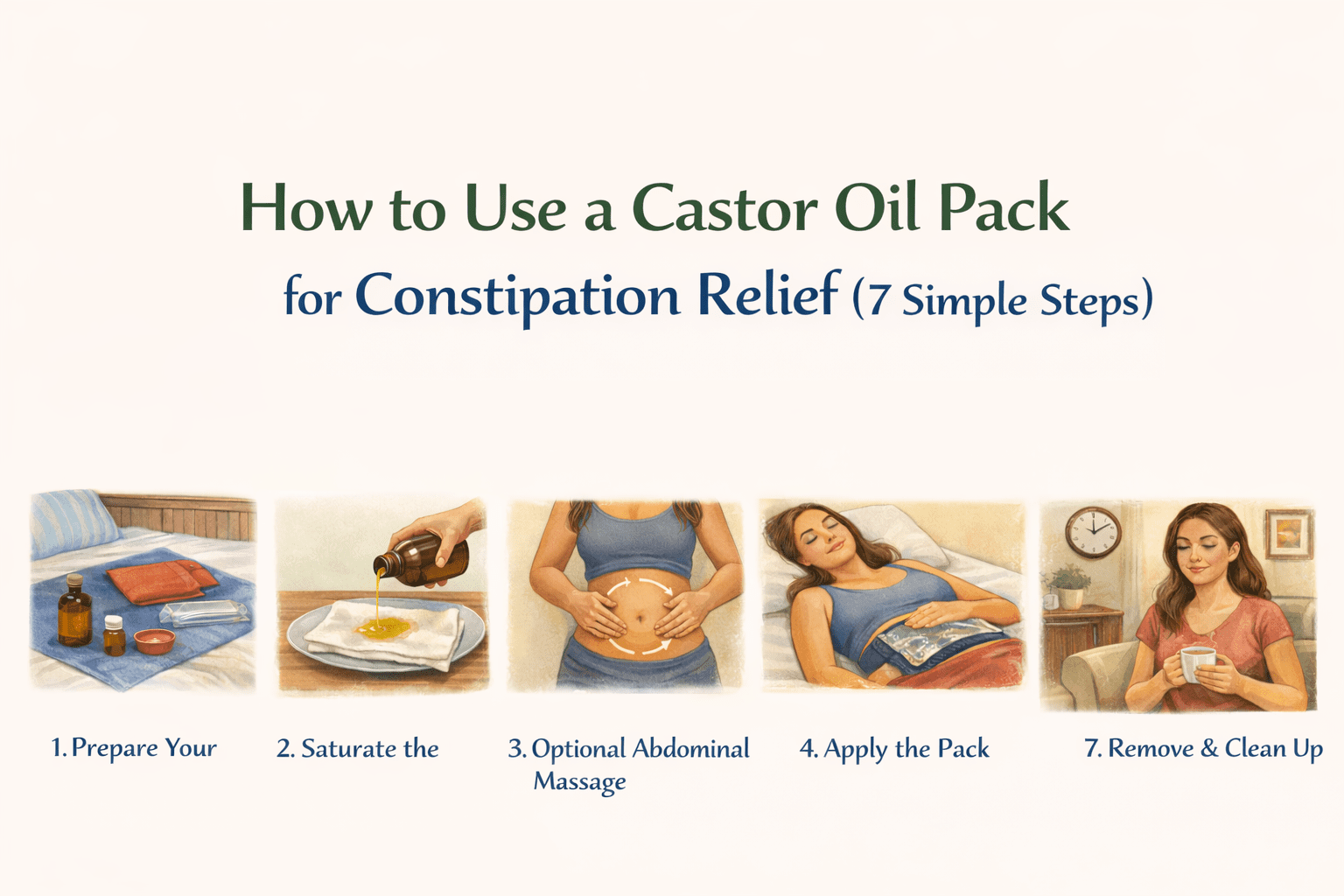
5. Step-by-Step: How to Use a Castor Oil Pack for Constipation
Step 1 — Prepare Your Space
Lay an old towel flat on your bed, sofa, or a yoga mat. Put on old clothing. Keep your oil, flannel, plastic wrap, and hot water bottle nearby before you begin.
Step 2 — Saturate the Flannel
Pour 2–3 tablespoons (approximately 30–45 ml) of castor oil onto the flannel. Spread it evenly so the cloth is thoroughly soaked but not dripping. If this is not your first session, simply top up the stored flannel with a small amount of fresh oil.
Step 3 — Optional Abdominal Massage (Recommended)
Before placing the flannel, gently massage a small amount of castor oil directly into your abdomen using clockwise circular motions for 2–3 minutes. Clockwise follows the anatomical direction of your large intestine: from the lower right (ascending colon) → across the upper abdomen (transverse colon) → down the left side (descending colon) → toward the pelvis (sigmoid colon). This massage may stimulate intestinal motility on its own and enhances the overall benefit of the session.
Step 4 — Apply the Pack
Lie down comfortably. Place the oil-saturated flannel directly onto your lower abdomen, covering the area from just below the ribcage down to just above the pubic bone. This positions the pack over your entire large intestine and liver.
Step 5 — Cover and Apply Heat
Place a sheet of plastic wrap over the flannel to contain the oil and protect your clothing. Then lay your hot water bottle or heating pad (set to low or medium — never high) on top. The heat aids absorption and promotes muscular relaxation in the abdominal wall.
⚠️ Safety: Do not fall asleep with an electric heating pad switched on — this is a genuine fire and burn risk. A hot water bottle is safer if you tend to doze during sessions.
Step 6 — Rest for 45–60 Minutes
Stay still and rest completely. Slow, deep abdominal breathing during this period can enhance the relaxation response. Read, listen to a podcast, or simply rest. Avoid rushing — the session works best with full relaxation.
Step 7 — Remove, Clean Up, and Store the Pack
After the session, remove the flannel and gently wipe off any excess oil from your skin with an old cloth or paper towels. Store the flannel in a sealed glass container in the refrigerator. The flannel can be reused for approximately 25–30 sessions before replacing it. Add a small amount of fresh oil at each session as needed. Discard the flannel if it develops a rancid or off smell.
Step 8 — Stay Close to Home Afterward
Stay at home for at least 1–2 hours following your session. The treatment may gently stimulate bowel activity, and you will want to be near a bathroom.

6. How Long to Leave On & How Often to Use {#6-how-long}
| Purpose | Session Duration | Frequency |
|---|---|---|
| Acute symptom relief | 60 minutes/day | Daily for 3 consecutive days |
| Chronic constipation management | 45–60 minutes | 3 times per week (alternate days) |
| Preventive maintenance | 45–60 minutes | Once per week |
The 3-day daily protocol mirrors the design of the Arslan & Eşer (2011) clinical study, which found significant symptom improvement over that period. [4]
Important: If symptoms do not improve after 1–2 weeks of consistent use, stop and consult a physician. Persistent constipation can have underlying causes — including hypothyroidism, medication side effects, pelvic floor dysfunction, or structural bowel problems — that require proper diagnosis and treatment.
7. Best Castor Oil Products: Honest Reviews (iHerb & Amazon)
For a castor oil pack, oil quality matters. For skin contact over extended periods, you want:
- ✅ Organic (USDA Certified preferred) — avoids pesticide residues on skin
- ✅ Cold-pressed — preserves ricinoleic acid integrity; high heat extraction degrades fatty acid quality
- ✅ Hexane-free — hexane is a petroleum solvent used in cheap extraction; residues are undesirable for prolonged skin contact
- ✅ Glass bottle — plastic containers leach phthalates and BPA into fatty oils over time, especially with heat
Here are four products we recommend, with honest assessments of each:
🥇 Heritage Store Organic Castor Oil (16 fl oz / 32 fl oz)
Buy on iHerb: 16 oz | 32 oz — better value Buy on Amazon: 16 oz
Review: Heritage Store has been producing castor oil since 1969 — longer than virtually any competitor — and is widely considered the gold standard for castor oil pack use. This oil is cold-pressed, hexane-free, USDA Certified Organic, and bottled in a dark amber glass bottle that shields the oil from UV degradation.
The viscosity is ideal for pack use — thick enough to stay on the flannel without dripping, with good skin adherence. The scent is mild and neutral, which matters considerably when you are lying with oil-soaked cloth on your abdomen for an hour.
On iHerb, the product has thousands of verified reviews, with many users specifically mentioning castor oil pack use. The 32 oz size offers much better value per milliliter for anyone using packs more than once per week.
Pros: Established brand (since 1969), USDA Certified Organic, cold-pressed, hexane-free, dark glass bottle, mild scent, widely available on both iHerb and Amazon, largest volume of user feedback specifically for pack use
Cons: The 16 oz size at full price can feel expensive for regular users — opt for the 32 oz or watch for iHerb sales
Best for: Regular pack users and first-time buyers who want a reliable, well-reviewed product Rating: ⭐⭐⭐⭐⭐ (5/5)
🥈 Seven Minerals Organic Castor Oil (16 fl oz)
Buy on iHerb: 16 oz
Review: Seven Minerals is a family-founded brand that produces one of the cleanest castor oils on the market. This product is USDA Certified Organic, cold-pressed, unrefined, hexane-free, and bottled in glass. The ingredient list contains exactly one item: 100% organic Ricinus communis (castor) oil. Nothing else.
The unrefined status means less processing than Heritage Store’s version — the oil has a slightly darker, more golden color and a very faintly earthy smell, both of which are normal indicators of minimal refinement. Consistency and skin performance are excellent.
This is the best choice for users who prioritize minimal processing and absolute ingredient simplicity. No refining steps means no risk of chemical residues from bleaching or deodorizing. Feedback on iHerb is consistently positive from both hair care and body pack users.
Pros: Genuinely unrefined (minimal processing), single-ingredient formula, USDA Organic, glass bottle, excellent ingredient transparency
Cons: Less widely known; smaller review volume than Heritage Store; slightly stronger natural scent (faintly earthy) may not suit everyone
Best for: Users who want the cleanest, most minimally processed option Rating: ⭐⭐⭐⭐½ (4.5/5)
🥉 Queen of the Thrones Organic Castor Oil (500 ml)
Buy on Amazon: 500 ml amber glass
Review: Queen of the Thrones was designed from the ground up specifically for castor oil pack use — it is the only brand on this list whose entire product philosophy centres on this practice. The oil is certified organic, extra virgin, hexane-free, third-party tested for purity and pesticide residues, and bottled in amber glass.
The brand was created by a naturopathic doctor and comes with the most comprehensive educational support of any castor oil brand — detailed instructions, usage guides, and a companion pack wrap system (sold separately) that makes the whole process cleaner and more convenient than DIY flannel-and-plastic-wrap setups.
Oil quality is genuinely excellent. The main barrier is price — this is the most expensive option per milliliter, sometimes nearly double Heritage Store. Unless you want their wrap ecosystem, Heritage Store or Seven Minerals offer comparable oil quality at meaningfully lower cost.
Pros: Third-party tested, practitioner-developed, amber glass, highest-quality educational ecosystem, specifically designed for packs
Cons: Most expensive per ounce; premium price not fully justified by oil quality compared to Heritage Store; companion wrap sold separately
Best for: Beginners who want a complete system and don’t mind paying more for the convenience and educational support Rating: ⭐⭐⭐⭐½ (4.5/5)
4️⃣ Pura D’or Organic Castor Oil (4 fl oz — Trial Size)
Buy on iHerb: 4 oz
Review: If you want to try castor oil packs before committing to a large bottle, Pura D’or’s 4 fl oz glass-bottled organic castor oil is the most sensible starting point. It is organic, cold-pressed, and suitable for skin use at an accessible price point.
The quality is good but not exceptional — fewer verified reviews on iHerb than Heritage Store or Seven Minerals, and the small bottle will last only a few sessions for regular pack use. This is purely a trial-size option.
Pros: Small commitment, affordable entry point, glass bottle, organic, good quality for the price
Cons: Too small for ongoing pack use; runs out after 4–6 sessions; fewer user reviews to draw on
Best for: First-time buyers who want to test castor oil pack use with minimal investment before upgrading to a larger bottle Rating: ⭐⭐⭐⭐ (4/5)
📌 Transparency note: All product links above are direct product pages with no affiliate codes. We receive no commission or payment from any of these purchases.
8. Side Effects & Safety Precautions
Castor oil packs are generally well-tolerated for external use. The following side effects and precautions are worth knowing:
Possible side effects:
- Skin irritation or contact dermatitis — uncommon but possible, especially with sensitive skin. Always do a patch test: apply a small amount of oil to your inner forearm, leave for 24 hours, and check for redness, itching, or swelling before proceeding to full abdominal use.
- Permanent fabric staining — not a health concern, but practically important. Castor oil does not wash out of most fabric. Use only old towels and clothing you do not mind permanently staining.
- Mild warmth or tingling at application site — commonly reported; generally harmless and resolves when the pack is removed.
- Looser or softer stools — some users notice this effect in the hours following a session, consistent with the clinical study findings. This is usually the intended outcome but can be unexpected the first time.
Safety rules:
- Never apply over broken skin, open wounds, active rashes, or inflamed skin
- Always use low or medium heat only — high heat can cause burns, particularly over an extended period
- Never use an electric heating pad overnight — genuine fire and burn risk
- Keep oil away from eyes and mucous membranes
- Do not consume the oil from a used pack — it has been in contact with skin, sweat, and bacteria from the flannel
- Store the used flannel in the refrigerator between sessions to slow oil oxidation and bacterial growth
9. Who Should Avoid Castor Oil Packs? {#9-who-should-avoid}
Castor oil packs are not appropriate for everyone. Do NOT use them if you:
- Are pregnant — Ricinoleic acid activates EP3 receptors in uterine smooth muscle, stimulating contractions. The PNAS 2012 study confirmed this is the same mechanism as the laxative effect. Even external application carries a theoretical risk of triggering premature uterine contractions. Avoid castor oil in ALL forms throughout pregnancy. [3]
- Are trying to conceive and may be in the luteal phase — same EP3 uterine receptor risk applies
- Are actively menstruating with heavy flow — increased pelvic circulation may worsen bleeding
- Have an acute abdominal infection, suspected appendicitis, or an active inflammatory bowel disease flare (Crohn’s disease, ulcerative colitis)
- Have or suspect an intestinal obstruction — this is a medical emergency; do not attempt home remedies
- Have deep vein thrombosis (DVT) or a known clotting disorder — increased local circulation is a potential concern
- Have severe liver or kidney dysfunction
- Are under 12 years of age — no clinical data exists for this group; consult a pediatrician
- Take anticoagulant medications (e.g., warfarin, heparin, newer oral anticoagulants) — discuss with your doctor first
When in doubt, ask your doctor or pharmacist before use. This list is not exhaustive.
10. Natural Alternatives for Constipation Relief
Castor oil packs work best as part of a broader approach to digestive health. Here are the most evidence-supported complementary strategies:
Dietary Approaches (Most Evidence — Start Here)
Increase dietary fiber gradually. The Institute of Medicine recommends 25 g/day for women and 38 g/day for men. Most adults consume only 15 g/day. Increasing fiber too quickly causes gas and bloating — add 3–5 g per week until you reach your target. Vegetables, fruits, legumes, and whole grains are the best sources.
🔗 Constipation Relief: Best Fiber Foods and Fiber Therapy for Gut Health 🔗 Plant Based Diet for Constipation Relief and Better Gut Health
Adequate hydration. Hard stools are often a direct result of insufficient fluid intake. Aim for at least 2 liters (8 glasses) of water daily. A glass of warm water in the morning on an empty stomach can help trigger the gastrocolic reflex.
Prunes. One of the most studied natural laxatives. Prunes contain fiber, sorbitol, and chlorogenic acids that together promote bowel movement. Multiple clinical trials have found prunes comparable or superior to psyllium for chronic constipation in adults.
Supplements
Psyllium husk (soluble fiber). Swells in the colon, bulking and softening stool. Among the best-evidenced natural constipation supplements with an excellent safety profile for long-term use.
🔗 Psyllium Husk vs Wheat Bran for Constipation: Which Is Better?
Magnesium. Functions as an osmotic laxative — draws water into the colon, softening stool. Both magnesium citrate and magnesium oxide have clinical support for constipation relief.
🔗 5 Best Magnesium Supplements for Constipation (2026 Review) 🔗 Magnesium Citrate vs Glycinate for Constipation: The 2026 iHerb Guide
Probiotics. Growing clinical evidence supports specific strains (notably Bifidobacterium lactis and Lactobacillus reuteri) for improving stool frequency and consistency in chronic constipation.
🔗 9 Best Probiotic Supplements 2026: Expert Guide for Gut Health & Immunity
Lifestyle Changes
Regular physical activity. Even 20–30 minutes of walking daily measurably shortens colonic transit time — meaning stool moves through the gut faster, reducing the chance of hard, dry stool accumulating. Physical inactivity is one of the most modifiable risk factors for chronic constipation.
Established toilet routine. Sit on the toilet at the same time every day — ideally 20–30 minutes after a meal, when the gastrocolic reflex is at its strongest. Use a footstool to raise your feet 20–25 cm, which places the body in a more anatomically natural squatting position, relaxing the puborectalis muscle and easing passage.
Abdominal massage. Clockwise circular massage for 10–15 minutes daily has been studied in hospitalized and elderly patients and shown to improve stool frequency. This is easy to combine with castor oil pack use.
🔗 For elderly users: 7 Ways for Immediate Constipation Relief for Elderly at Home (Safe & Natural)
11. Frequently Asked Questions (FAQ)
How long does it take for a castor oil pack to work for constipation?
Results vary. Some users report softer stools and reduced straining after a single session. The published clinical study used 3 consecutive daily sessions (60 minutes each) and found statistically significant symptom improvement across all measured outcomes by day 3. Use consistently for at least 3 sessions before evaluating results.
Can I use a castor oil pack overnight?
You can wear a pack without active heat overnight — body warmth alone is sufficient. However, an electric heating pad should never be left on overnight due to burn and fire risk. If you want extended contact, use the pack without heat or with a hot water bottle that has cooled to a comfortable temperature.
Will a castor oil pack make me go to the bathroom?
Based on the published research, a castor oil pack is unlikely to increase the number of times you go to the toilet. What it does more reliably is soften stool and reduce straining and discomfort. If you need something that reliably induces a bowel movement, oral castor oil or an OTC laxative is more appropriate.
How often should I use a castor oil pack?
For acute symptom relief: once daily for 3 consecutive days. For ongoing management of chronic constipation: 3 times per week (alternating days). For maintenance: once per week. If symptoms persist beyond 2 weeks despite consistent use, consult a doctor.
Is Jamaican black castor oil better for packs?
No. Jamaican black castor oil (JBCO) is produced by roasting the castor beans before pressing, which creates a dark oil with a distinctive smoky, earthy smell. That process also raises the ash content. While JBCO is popular for hair and scalp use, its strong smell makes it uncomfortable for extended abdominal skin contact. Standard cold-pressed organic castor oil is preferable for pack use.
What type of cloth is best for a castor oil pack?
Unbleached wool flannel is the traditional material — it holds oil well and retains heat effectively. Unbleached cotton flannel is a practical and widely available alternative. Avoid synthetic fabrics (polyester, nylon) as they absorb oil poorly and may react unpredictably with prolonged heat. The cloth should feel soft, not scratchy, against bare skin.
Can I reuse the flannel?
Yes. Store it in a sealed glass container in the refrigerator. It can be reused for approximately 25–30 sessions. Add a small amount of fresh oil at the start of each session as needed. Discard the flannel if you detect a rancid, sour, or unusual smell — rancid oil contains oxidized compounds that are not ideal for skin contact.
How do I remove castor oil stains from fabric?
You generally cannot reliably remove castor oil stains from most fabrics — the oil bonds with textile fibres permanently in most cases. This is why old towels and old clothing are non-negotiable from the very first session. Do not risk your good bedding or clothing.
When should I see a doctor about constipation?
Seek medical attention if: you have consistently fewer than 3 bowel movements per week; constipation has persisted for more than 2–3 weeks despite lifestyle and dietary changes; you notice blood in your stool; you experience unexplained weight loss; you have new or severe abdominal pain; or constipation started suddenly without an obvious cause. Sudden-onset constipation in an adult with no prior history should always be evaluated by a doctor.
12. Scientific References
- <a name=”ref1″></a>Wikipedia contributors. Ricinus communis. Wikipedia, The Free Encyclopedia. https://en.wikipedia.org/wiki/Ricinus | Royal Botanic Gardens Kew. Ricinus communis L. Plants of the World Online. https://powo.science.kew.org/taxon/urn:lsid:ipni.org:names:355498-1
- <a name=”ref2″></a>Alookaran J, Tripp J. Castor Oil. [Updated 2024 May 24]. In: StatPearls [Internet]. Treasure Island (FL): StatPearls Publishing; 2026. Available at: https://www.ncbi.nlm.nih.gov/books/NBK551626/
- <a name=”ref3″></a>Tunaru S, Althoff TF, Nüsing RM, Diener M, Offermanns S. Castor oil induces laxation and uterus contraction via ricinoleic acid activating prostaglandin EP3 receptors. Proc Natl Acad Sci U S A. 2012 Jun 5;109(23):9179–84. doi: 10.1073/pnas.1201627109. PubMed | PMC Full Text | PNAS
- <a name=”ref4″></a>Arslan GG, Eşer İ. An examination of the effect of castor oil packs on constipation in the elderly. Complement Ther Clin Pract. 2011 Feb;17(1):58–62. doi: 10.1016/j.ctcp.2010.04.004. PubMed | ScienceDirect
- <a name=”ref5″></a>Max Planck Institute for Heart and Lung Research. G protein-coupled receptor mediates the action of castor oil. https://www.mpg.de/5808639/receptor_castor_oil
- <a name=”ref6″></a>Portalatin M, Winstead N. Medical management of constipation. Clin Colon Rectal Surg. 2012 Mar;25(1):12–9. doi: 10.1055/s-0032-1301754. PMC Full Text
Medical Disclaimer: This article is for informational purposes only and does not constitute medical advice. Consult with a licensed healthcare professional before starting any supplement regimen, especially if you are pregnant, nursing, have kidney disease, or take prescription medications. Individual results may vary. The experiences shared by community members are their own and do not constitute medical claims.
Affiliate Disclosure: This page contains affiliate links to Amazon and iHerb. We may earn a commission at no extra cost to you. Our recommendations are independent and based on research and community feedback.






[…] Castor oil is appropriate only for short-term, one-time use — for example, before a colonoscopy preparation, or when other remedies have failed after several days. It is contraindicated in pregnancy (it may stimulate uterine contractions and risk premature labor), in children under 12, and in anyone with a suspected bowel obstruction. […]