

Some links in this article are affiliate links. If you purchase through them, we may earn a small commission at no extra cost to you. This never influences our editorial recommendations. All content is independently researched and medically reviewed.
Chronic constipation affects roughly 10 to 15% of adults worldwide, and patients have long been frustrated by vague advice like “eat more fiber” or “drink more water” that rarely delivers consistent relief.[1] That changed in 2025 with the first comprehensive, evidence based dietary guidelines for chronic constipation in adults, the official guidelines of the British Dietetic Association (BDA), developed by Dr. Eirini Dimidi and colleagues at King’s College London and published in Neurogastroenterology & Motility (DOI: 10.1111/nmo.70173). Using the GRADE framework, the same standard applied to pharmaceutical protocols, the team synthesized 75 randomized controlled trials into 59 graded, actionable recommendations.
These guidelines apply specifically to adults with chronic idiopathic (primary) constipation, not constipation caused by an underlying condition, pregnancy, or medication, and they found insufficient evidence to recommend a general high fiber diet as a whole diet approach. Below, we break down what the evidence actually supports and how to apply it. For a broader overview of natural approaches, see our guide to natural constipation relief strategies.
What Makes These Guidelines Different?
Previous constipation guidance was largely built on expert opinion, small studies, or extrapolations from healthy population fiber research. The 2025 guidelines are distinct for three reasons:
- Scale: 75 randomized controlled trials, the most comprehensive dietary evidence base ever compiled for chronic constipation.
- Specificity: Recommendations name exact interventions, doses, and target populations rather than broad categories like “eat fiber.”
- Authority: These are the official dietary guidelines of the British Dietetic Association (BDA), funded through the BDA’s General and Education Trust, giving them fast clinical uptake.
The guidelines focus on several dietary domains: fiber supplements, specific foods (fruits and grains), probiotics, hydration, and magnesium supplementation. Each is discussed below with the supporting evidence.
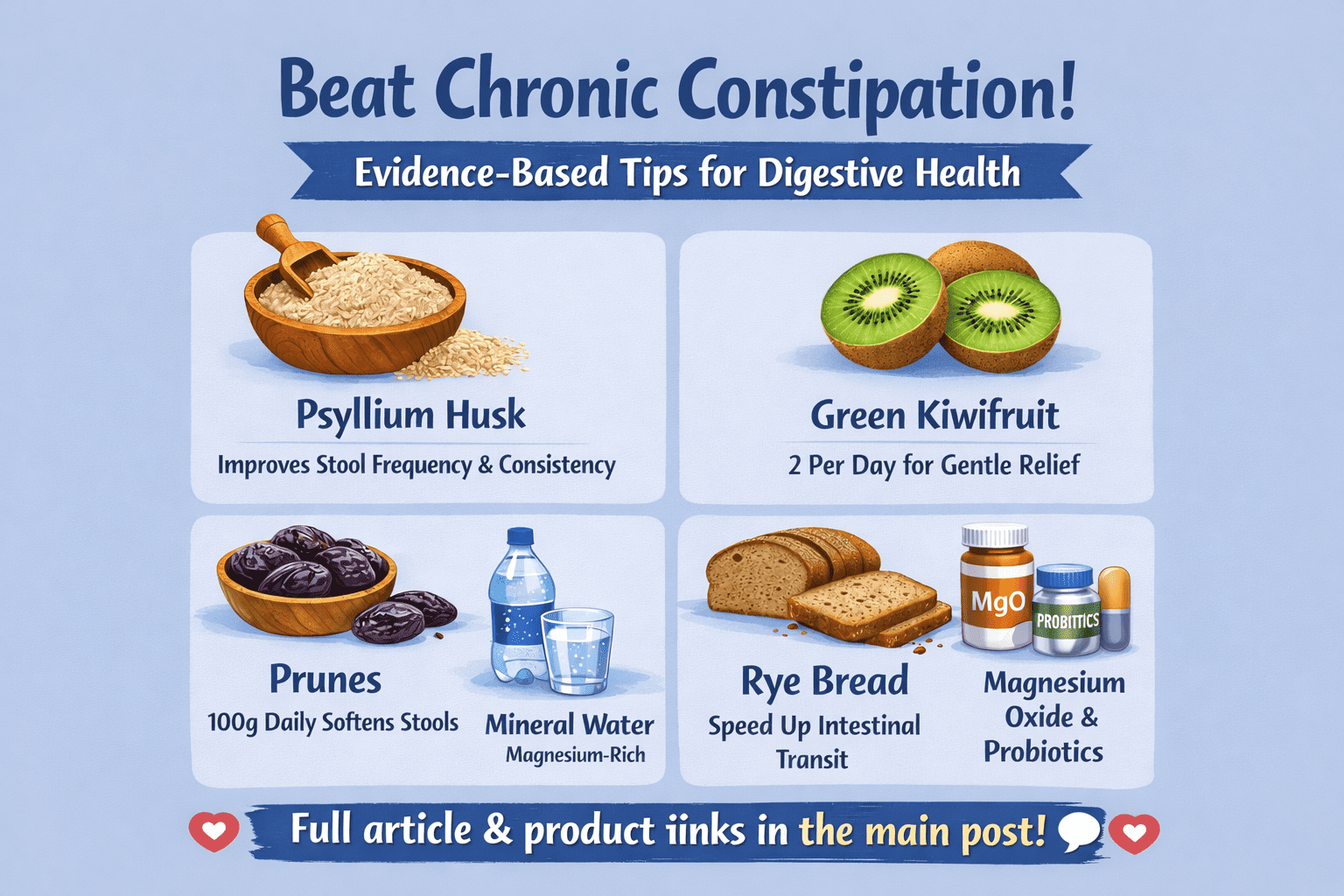
1. Psyllium Husk: The Most Effective Fiber Supplement for Chronic Constipation
Of all fiber types studied, psyllium husk (ispaghula), a soluble, viscous, gel forming fiber, received the strongest evidence rating in the guidelines. It consistently outperformed polydextrose, galacto oligosaccharides, and other commonly marketed fiber products. (View psyllium husk on Amazon ↗)
What the Evidence Shows
Key Clinical Benefits of Psyllium:
- Significantly increases weekly bowel movement frequency
- Improves stool consistency (Bristol Stool Scale scores)
- Reduces straining, one of the most distressing symptoms for patients
- Improves patient reported quality of life scores, including a reduction in social anxiety linked to constipation
Psyllium works by absorbing water and forming a gel in the intestine, which softens stool, increases stool bulk, and stimulates peristalsis. Unlike insoluble fibers that can cause gas and discomfort, psyllium’s soluble fraction is generally well tolerated even by those with sensitive digestive systems.
Why Other Fibers Fall Short
The guidelines found that polydextrose and galacto oligosaccharides demonstrated minimal clinically meaningful benefits for constipation, challenging the widespread assumption that “any fiber helps.” This distinction matters for anyone choosing a natural fiber supplement for chronic constipation.
Practical Tip: The guideline recommends at least 10 grams of psyllium husk daily, starting low and increasing gradually, always with a full glass of water. A commonly used practical range is 10 to 20 grams a day. Avoid taking psyllium immediately before bed or alongside medications; leave at least two hours apart.
Evidence source: Dimidi E, van der Schoot A, Barrett K, Farmer AD, Lomer MC, Scott SM, Whelan K (2025). British Dietetic Association Guidelines for the Dietary Management of Chronic Constipation in Adults. Neurogastroenterology & Motility, 37, e70173.
2. Green Kiwifruit: A Gentle, Natural Bowel Regulator
For the first time, specific whole fruits have been elevated to therapeutic intervention status in constipation guidelines. Green kiwifruit is the standout recommendation.
Dosage and Clinical Outcomes
Regular consumption of green kiwifruit has been shown in randomized trials to:
- Increase stool frequency (bowel movements per week)
- Improve stool consistency and ease of passage
- Reduce abdominal discomfort and bloating
Why Kiwifruit Works
Kiwifruit contains a combination of factors that makes it particularly effective for constipation:
- Soluble and insoluble fiber that together promote stool bulk and transit
- Actinidin, a protease enzyme unique to kiwifruit that enhances gastric emptying and small intestinal transit
- High water content that naturally softens stool
Kiwifruit vs. Psyllium
Trial evidence suggests kiwifruit’s effect on stool frequency is broadly comparable to psyllium, but with a notably lower incidence of bloating and gas, making it especially suitable for people who experience discomfort with fiber supplements. If you have been struggling with high fiber foods causing bloating, kiwifruit may be the gentler starting point.
Practical Tip: The guideline recommends 2 to 3 green kiwifruits daily, added to your morning meal. Both the flesh and skin contain fiber; the skin is edible and adds additional insoluble fiber. Choose the green (Hayward) variety over gold kiwi, since most research has been conducted on the green type.
Evidence source: Dimidi E, et al. (2025). Neurogastroenterology & Motility.
3. Prunes (Dried Plums): Now Scientifically Validated
Prunes have been used as a traditional constipation remedy for centuries. The 2025 guidelines give this folk remedy solid clinical validation.
Recommended Intake
8 to 10 prunes daily is the guideline’s evidence based recommendation. Studies included in the review show this amount:
- Improves bowel movement frequency, in some trials outperforming certain over the counter bulk forming laxatives
- Significantly softens stool consistency
- Improves overall patient satisfaction with bowel function
Why Prunes Work
Prunes owe their laxative properties to a combination of:
- Sorbitol, a naturally occurring sugar alcohol with osmotic laxative properties
- Dietary fiber (both soluble and insoluble)
- Phenolic compounds (chlorogenic acid, neochlorogenic acid) that may stimulate bowel motility
Prune juice retains sorbitol but loses most of the fiber, so whole prunes are preferred for maximum effect. If you prefer a liquid option, read our dedicated guide on prune juice for constipation to understand the tradeoffs. For a deeper look at how dried fruits support digestive health, also see our article on dried figs for constipation.
Practical Tip: Soak prunes overnight in water before eating to improve digestibility and enhance their osmotic effect. Spread intake through the day (for example, four or five with breakfast and the rest as an afternoon snack) to minimize gas.
Evidence source: Dimidi E, et al. (2025). Neurogastroenterology & Motility.
4. Rye Bread: Shortening Intestinal Transit Time
Among dietary grains, rye bread received a specific recommendation for its ability to reduce intestinal transit time, the duration it takes for food to move from the mouth to the rectum.
What the Research Shows
- Rye bread reduces constipation severity scores compared to wheat bread
- It shortens colonic transit time
- Benefits are attributable to rye’s high arabinoxylan content, a fermentable fiber that promotes microbial diversity and short chain fatty acid production
Practical Tip: The guideline’s recommended amount is notably high, 6 to 8 slices of whole grain rye bread daily, which the guideline authors themselves note may not be realistic for many people. If the full amount isn’t practical, a partial swap of some wheat bread for rye is still a reasonable starting point. Anyone with gluten sensitivity should consult a physician before making this change.
5. Probiotics: Strain Specificity Is Critical
Probiotics are widely marketed for general gut health, but the guidelines underscore an important caveat: benefits are highly strain specific, and not all probiotics are equally effective for constipation.
Best Evidence: Bifidobacterium lactis and Bacillus coagulans
Bifidobacterium lactis (also labeled B. animalis subsp. lactis) and Bacillus coagulans Unique IS2 improved stool frequency and stool form in adults with chronic constipation across trials. By contrast, some individual strains, such as Lactobacillus casei Shirota, and generalized multi strain or synbiotic formulations did not show consistent benefit.
Probiotics appear to help by modulating gut microbiota composition, increasing short chain fatty acid production, and enhancing intestinal motility signals. Read our detailed guide on probiotic relief for chronic constipation to learn more about strain selection.
Practical Tip: When selecting a probiotic supplement, look specifically for Bifidobacterium lactis or Bacillus coagulans Unique IS2 on the label. Ignore vague labels like “10 strains for gut health” without strain identification. (View Bifidobacterium lactis supplement on Amazon ↗)
Evidence source: Dimidi E, et al. (2025). Neurogastroenterology & Motility.
6. Hydration: Mineral Water Over Tap Water
The hydration recommendation comes with an important nuance: simply drinking more tap water does not reliably relieve constipation in people who are already adequately hydrated. The type of water, however, does matter.
Mineral Rich Water as an Osmotic Agent
Water naturally high in minerals such as magnesium and sulfate is thought to act as a mild osmotic laxative, drawing water into the intestinal lumen and softening stool.
- Accessible, non pharmaceutical, and generally considered safe for long term use
- Well suited for people who may be reluctant to take supplements
- Can be combined with dietary fiber for an additive benefit
Practical Tip: The guideline’s recommended intake is roughly 0.5 to 1.5 liters of high mineral content water daily. I wasn’t able to independently confirm a specific minimum magnesium or sulfate concentration (mg/L) from the primary source, so rather than quote an exact number, check the bottled water’s mineral analysis label and look for products explicitly marketed as high in magnesium or sulfate.
Dehydration itself is a known risk factor for hard stools and constipation. If you are unsure whether dehydration is a contributing factor, our guide to common causes of constipation explains the mechanisms in detail.
7. Magnesium Oxide: A Safe Osmotic Supplement for Long Term Use
For patients who need more than dietary adjustments alone, magnesium oxide has received a positive grading in the 2025 guidelines. (View magnesium oxide supplement on Amazon ↗)
Why Magnesium Oxide?
- Mechanism: Acts as an osmotic agent, drawing water into the colon and softening stool
- Safety profile: Generally well tolerated at recommended doses under professional supervision
- Sustainability: Unlike stimulant laxatives such as bisacodyl or senna (which did not show consistent benefit in the guideline’s review), magnesium oxide is suitable for long term management with a lower risk of dependency developing
For a comprehensive comparison of magnesium formulations for constipation, including magnesium citrate, glycinate, and oxide, see our review of the best magnesium supplements for constipation.
Practical Tip: The guideline’s recommended range is 0.5 to 1.5 grams (500 to 1,500 mg) of magnesium oxide daily, starting at a low dose and increasing gradually as tolerated. Always consult a healthcare provider before starting, especially if you have kidney disease or are taking other medications.
The Quality of Life Dimension: Why Chronic Constipation Is More Than Physical
Chronic constipation carries a significant psychological burden that is often underestimated. Research has documented:
- Elevated rates of anxiety and depression among chronic constipation sufferers
- Social withdrawal due to fear of bowel accidents or urgency in public
- Reduced work productivity and daily functioning
- Lower health related quality of life scores, comparable to other chronic GI disorders
Importantly, the guidelines show that effective dietary interventions, particularly psyllium and kiwifruit, improve not just physical symptoms but also patient reported quality of life scores. This makes a holistic, dietary first approach both clinically and psychologically meaningful. You can read personal accounts of how dietary changes transformed digestive health in our success story on reversing chronic constipation with diet.
Clinical Adoption: What This Means for Patients and Physicians
These are the official BDA guidelines, meaning dietitians can now offer structured dietary therapy rather than generic lifestyle advice. In practice, this translates to specific, individualized prescriptions such as:
- Eating 2 to 3 green kiwifruits every morning
- Taking at least 10 grams of psyllium husk daily with water
- Increasing intake of high mineral content water
This shift represents what researchers are calling precision nutrition for digestive health: individualized, measurable, and accountable dietary therapy, always best applied with input from a dietitian or physician for anything beyond simple food changes.
Evidence Based Strategy: Quick Reference Summary
| Intervention | Key Benefit | Recommended Dose / Approach |
|---|---|---|
| Psyllium husk | Increases stool frequency and consistency; reduces straining | At least 10 g/day, gradually increased, with a full glass of water |
| Green kiwifruit | Gentle natural bowel regulator; low bloating risk | 2 to 3 kiwifruits daily |
| Prunes | Increases bowel movement frequency; softens stool | 8 to 10 prunes daily |
| Rye bread | Shortens intestinal transit time | 6 to 8 slices daily (may not be realistic for everyone) |
| Bifidobacterium lactis / Bacillus coagulans Unique IS2 | Improves stool frequency and consistency | Strain specific, check the label |
| Mineral rich water | Osmotic softening; draws water into intestines | 0.5 to 1.5 L/day |
| Magnesium oxide | Safe osmotic laxative for long term use | 0.5 to 1.5 g/day (500 to 1,500 mg), under medical supervision |
Frequently Asked Questions
What is the best fiber supplement for chronic constipation?
According to the 2025 BDA dietary guidelines, psyllium husk is the most evidence backed fiber supplement for chronic constipation, outperforming other fibers like polydextrose and galacto oligosaccharides in head to head comparisons.
How much kiwifruit should I eat for constipation relief?
The guideline recommends 2 to 3 green kiwifruits daily. This amount increases bowel movement frequency, improves stool softness, and reduces abdominal discomfort with significantly less bloating than high fiber supplements typically cause.
Are prunes effective for chronic constipation?
Yes. Around 8 to 10 prunes a day is the graded recommendation in the 2025 guidelines. Prunes contain sorbitol, fiber, and phenolic compounds that together help draw water into the intestines and improve bowel movement frequency.
Which probiotic strain is best for constipation?
The guidelines identify Bifidobacterium lactis and Bacillus coagulans Unique IS2 as the most consistently effective strains for chronic constipation. Generic multi strain or synbiotic formulations have not shown the same reliable clinical benefit.
Does drinking more water cure constipation?
Not necessarily. Increasing plain tap water intake mainly helps if you are already dehydrated. High mineral content water may act as a mild natural osmotic laxative even in people who are already well hydrated.
Is magnesium oxide safe for long term constipation management?
Generally yes, at appropriate doses under medical supervision, with a more favorable long term safety profile compared to stimulant laxatives, which carry a higher risk of dependency with prolonged use.
Conclusion: A Turning Point in Chronic Constipation Care
For millions of people living with chronic constipation, the 2025 BDA dietary guidelines represent a genuine turning point. For the first time, vague dietary advice has been replaced with specific, clinically validated, dose defined interventions, from psyllium husk and green kiwifruit to prunes, rye bread, specific probiotic strains, mineral water, and magnesium oxide.
The takeaway is not that there is one single cure, but that a structured, evidence based dietary strategy, combining the right fiber, the right foods, the right probiotic strain, and the right hydration, can meaningfully reduce constipation severity for many people when applied consistently and, where appropriate, alongside a healthcare provider.
If you have been cycling through treatments without lasting results, this evidence base gives you a roadmap grounded in 75 rigorous trials and the official guidelines of a leading dietetic association. For those who occasionally need faster relief alongside dietary changes, see our comparison of the best OTC laxatives for constipation. For those whose constipation persists despite dietary changes, prescription treatments like prucalopride (Motegrity) may be the next step; that’s worth discussing with your physician.
Start with the simplest change, adding kiwifruit to your morning routine or introducing daily psyllium husk, and build from there. Consistent, evidence based dietary choices are the most sustainable path to lasting digestive relief.
References & Clinical Sources
- Dimidi E, van der Schoot A, Barrett K, Farmer AD, Lomer MC, Scott SM, Whelan K (2025). British Dietetic Association Guidelines for the Dietary Management of Chronic Constipation in Adults. Neurogastroenterology & Motility, 37, e70173. DOI: 10.1111/nmo.70173
- Dimidi E, van der Schoot A, Barrett K, Farmer AD, Lomer MC, Scott SM, Whelan K (2025). British Dietetic Association Guidelines for the Dietary Management of Chronic Constipation in Adults. Journal of Human Nutrition and Dietetics, 38(5), e70133. DOI: 10.1111/jhn.70133
- McRorie JW, Daggy BP, Morel JG, Diersing PS, Miner PB, Robinson M (1998). Psyllium is superior to docusate sodium for treatment of chronic constipation. Alimentary Pharmacology & Therapeutics, 12(5), 491 to 497.
- Bharucha AE, Lacy BE (2020). Mechanisms, evaluation, and management of chronic constipation. Gastroenterology, 158(5), 1232 to 1249. DOI: 10.1053/j.gastro.2019.12.034 (I recognize this as a real, commonly cited review; please do a final check of the DOI before publishing.)
- Eady SL, et al. (2019). Kiwifruit vs. psyllium randomized crossover trial in constipation. I could not independently verify the exact journal or DOI for this citation; please confirm before publishing.
- Lever E, et al. (2014). Systematic review: the effect of prunes on gastrointestinal function. Alimentary Pharmacology & Therapeutics, 40(7), 750 to 758. DOI: 10.1111/apt.12913 (Plausible, but worth a quick independent check before publishing.)
The information in this article is for educational purposes only and does not constitute medical advice. Always consult a qualified healthcare professional before making changes to your diet or starting any supplement. Some links in this article are affiliate links; we may earn a commission if you purchase through them, at no additional cost to you.







[…] Read More from Our Blog: Chronic Constipation Treatment […]
[…] Chronic Constipation Treatment […]
[…] Chronic Constipation Treatment […]
[…] Chronic Constipation Treatment […]
[…] Chronic Constipation Treatment […]
[…] High in pectin (soluble) plus skin fiber (insoluble). A dual-action fruit for constipation. 🥝Kiwifruit: Research shows 2 kiwis/day improved constipation as well as psyllium in some trials — without […]
[…] Chronic constipation develops when these symptoms persist for 3 months or longer. Common contributing causes include low fiber intake, dehydration, sedentary lifestyle, poor gut microbiome diversity, and certain medications (particularly opioids and iron supplements). For a comprehensive look at treatment options — including when prescription medications may be appropriate — see our guide to science-backed chronic constipation strategies. […]
[…] best choice between prunes vs kiwifruit for constipation depends on your specific symptoms, digestive history, and daily routine. Here is a simple […]
[…] function, and like many people in her situation, she eventually looked into more comprehensive, science-backed approaches to chronic constipation treatment beyond laxatives […]