

📋 Table of Contents
1. Introduction: The Crisis of Chronic Constipation in America
Every day, millions of Americans wake up feeling heavy, bloated, and uncomfortable — not from anything they ate the night before, but from something their body is not doing: moving waste efficiently through the digestive system. Constipation is one of the most common yet least openly discussed health problems in the United States, accounting for over 3 million doctor visits and 800,000 emergency room visits every year. And yet, for most sufferers, the answer has always been the same: grab a box of MiraLax, pop a Dulcolax, and hope for the best.
But that approach is quietly failing millions of people — and Americans are beginning to realize it. Increasingly, people are turning to natural constipation relief strategies that work with the body’s own systems rather than forcing a chemical response. This shift is backed by a growing body of clinical evidence showing that whole foods, probiotics, and fiber-based systems offer safer and more sustainable outcomes than pharmaceutical laxatives for the vast majority of chronic sufferers.
A growing body of clinical research now confirms what traditional medicine has known for centuries: the health of the gut is central to the health of the whole body. The trillions of microorganisms living in your digestive tract — your gut microbiome — are not passive passengers. They regulate bowel motility, produce essential vitamins, train the immune system, and even influence mood and cognitive function through the gut-brain axis. When this ecosystem is disrupted, the ripple effects go far beyond a missed morning trip to the bathroom.
A Shift Is Happening in America Market research published in 2024 confirms that the fastest-growing segment of the U.S. digestive health market is natural and plant-based alternatives to conventional pharmaceutical laxatives. Consumers are increasingly seeking natural constipation relief solutions that work with the body’s systems — not around them.
2. Why Americans Are Leaving Pharmaceutical Laxatives Behind
For decades, the standard American response to constipation has been pharmaceutical: osmotic agents like polyethylene glycol (MiraLax), stimulant laxatives like bisacodyl (Dulcolax) and senna (Senokot), lubricant laxatives like mineral oil, and prescription secretagogues like lubiprostone (Amitiza) or linaclotide (Linzess). These drugs work — but increasingly, patients and healthcare providers are acknowledging their serious limitations. The rise of natural constipation relief solutions is a direct response to these shortcomings.
The Side Effect Problem
A landmark multinational survey of over 20,000 respondents published in Therapeutic Advances in Gastroenterology (2024) found that 28% of constipation patients were dissatisfied with their current treatment. The reasons are consistent: side effects, dependency, and the fundamental failure of laxatives to address why the bowel became sluggish in the first place.
| Drug / Laxative Type | Common Side Effects | Long-Term Risk |
|---|---|---|
| Bisacodyl (Dulcolax) — Stimulant | Severe cramping, electrolyte loss, diarrhea, nausea | Bowel dependence, “lazy bowel syndrome,” nerve desensitization |
| Senna (Senokot) — Stimulant | Abdominal pain, diarrhea, potassium loss, dehydration | Melanosis coli (colon discoloration), possible dependency |
| PEG 3350 (MiraLax) — Osmotic | Bloating, flatulence, nausea, diarrhea | Electrolyte imbalance with prolonged use; not intended for daily indefinite use |
| Lactulose — Osmotic | Severe gas, bloating, cramping, diarrhea | Electrolyte disturbances; not suitable for diabetics without monitoring |
| Lubiprostone (Amitiza) — Rx | Nausea (up to 29%), diarrhea, abdominal pain, headache | Not studied beyond 48 weeks; costly; Rx required |
| Linaclotide (Linzess) — Rx | Severe diarrhea (most common reason for discontinuation) | Contraindicated in children under 6; costly |
| Mineral Oil — Lubricant | Anal leakage, decreased absorption of fat-soluble vitamins (A, D, E, K) | Aspiration pneumonia risk; not for children or elderly |
The Growing American Shift to Natural Solutions
These documented risks are driving a measurable cultural shift. Market research from Data Bridge (2024) confirms: the natural segment is expected to witness the fastest growth in the North American laxative market through 2032. The global constipation treatment market — valued at $19.5 billion in 2024 — is being reshaped by this preference for natural constipation relief.
The explosion of microbiome science has educated consumers that a healthy gut is a living ecosystem — one that drugs can disrupt but only natural interventions can truly restore. Pharmaceutical laxatives kill the symptom; whole foods and probiotics rebuild the system.
Prescription laxatives like Linzess cost $400–$600/month without insurance. A high-quality probiotic + fiber system costs $50–$80/month and addresses root causes. Americans are choosing value-driven, holistic options.
Nearly 1 in 3 treated constipation patients report dissatisfaction with pharmaceutical treatments. Side effects cause many to abandon treatment and seek gentler alternatives.
Foods like prunes, figs, and kiwi have been used for digestive health for thousands of years. Clinical trials confirm they are not just folk remedies. Even olive oil and pomegranate seeds have emerging clinical support for gut health and natural constipation relief.
3. Why Gut Systems Beat Single Laxatives
Walk into any American pharmacy and you’ll find shelves stocked with MiraLax, Dulcolax, Senokot, and Colace. So why are millions of Americans increasingly turning their backs on them in favor of natural constipation relief approaches?
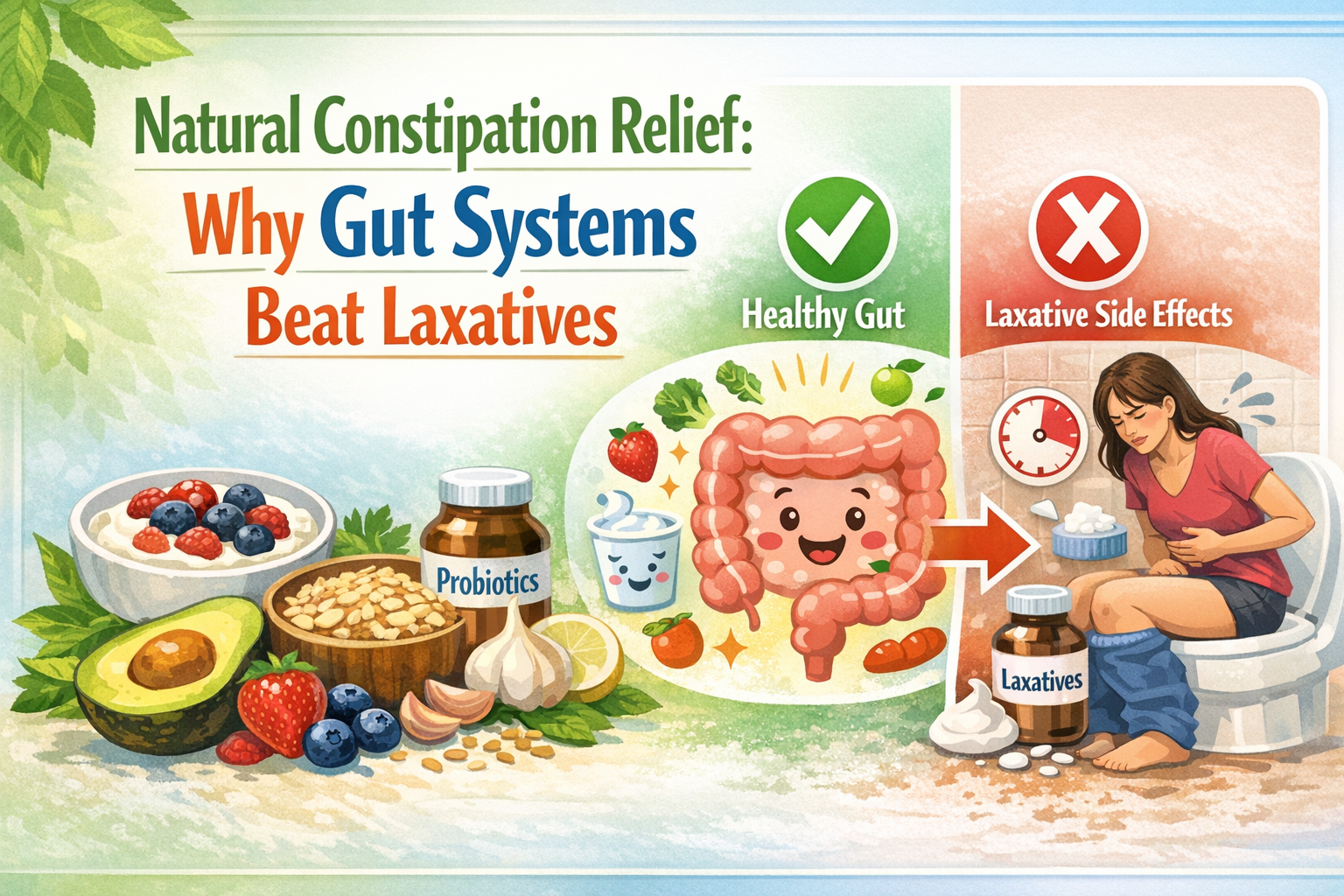
The answer is simple: laxatives treat the symptom. Gut health systems treat the cause.
Constipation is rarely just about “not having enough water in your stool.” It is a complex dysfunction involving the gut microbiome, the enteric nervous system, bowel motility, and intestinal flora balance. A pill that forces your colon to contract or pulls water into your bowel can provide temporary relief — but it does nothing to restore the underlying system that keeps your bowels moving naturally every day.
| Statistic / Metric | Finding | Context / Source |
| Prevalence | 20% | American adults suffering from chronic constipation |
| Probiotic Success Rate | 70% | Clinical studies reporting positive outcomes |
| Weekly Improvement | +0.93 | Extra bowel movements per week (vs. Placebo) |
| Clinical Reference | 2024 Meta-analysis | Recent large-scale data on probiotic effectiveness |
| Psyllium Husk Timeline | 4 Weeks | Time required for measurable constipation relief |
Gut health “systems” — bundles or complementary products sold by brands like Bio.me, Seed, Plexus, UMZU, and BIOHM — work on multiple levels at once. This multi-pronged approach is why they are increasingly favored by health-conscious Americans seeking lasting natural constipation relief without pharmaceutical dependency.
4. The Science: Microbiome, Motility & Constipation
How an Imbalanced Gut Microbiome Causes Constipation
Your gut is home to an estimated 38 trillion microorganisms. Among their most important jobs: fermenting dietary fiber to produce short-chain fatty acids (SCFAs) — particularly butyrate, propionate, and acetate. These SCFAs signal your colon to contract rhythmically, pushing waste forward.
When gut dysbiosis occurs — a shift away from healthy bacterial populations dominated by Bifidobacterium and Lactobacillus — SCFA production falls. The colon slows. Stool hardens. Constipation takes hold. This is precisely why natural constipation relief strategies that restore the microbiome are more effective long-term than drugs that bypass it entirely.
The Gut–Motility Connection
The enteric nervous system — sometimes called the “second brain” — controls gut motility through a network of 500 million neurons embedded in your intestinal walls. Beneficial bacteria produce neurotransmitters including serotonin (95% of the body’s serotonin is made in the gut), which regulates peristalsis. Natural constipation relief strategies support and restore this signaling pathway rather than overriding it with stimulant chemicals.
5. Nature’s Most Powerful Constipation Foods
Before reaching for any supplement, consider this: some of the most clinically proven natural constipation relief remedies in the world grow on trees. Whole foods like prunes, figs, kiwi, olive oil, and pomegranate have been used across cultures for millennia — and modern clinical trials now confirm their efficacy in rigorous, peer-reviewed settings.
Prunes (Dried Plums) — The Gold Standard of Natural Constipation Relief
Among all natural foods studied for constipation, prunes have the strongest and most consistent clinical evidence. A systematic review of RCTs published in Alimentary Pharmacology & Therapeutics found that consuming 100g of prunes daily for three weeks improved stool frequency (3.5 vs. 2.8 complete spontaneous bowel movements per week, P = 0.006) — results that outperformed psyllium as an active comparator. Prunes operate through three distinct mechanisms simultaneously:
Prunes contain sorbitol, a sugar alcohol that draws water into the intestinal lumen — functioning like a gentle, natural osmotic laxative.
Prunes provide both fiber types: soluble fiber forms a gel that softens stool; insoluble fiber adds bulk and accelerates transit time through the colon.
Prunes are rich in phenolic compounds that stimulate gut contractions and feed beneficial gut bacteria, including Bifidobacteria — a key probiotic genus for natural constipation relief.
How to use: Start with 5–6 prunes daily and gradually increase to 8–12. Soak overnight in warm water and drink the soaking water for additional sorbitol benefit. Learn more about the science-backed benefits of prunes here.
🌿 Figs (Anjeer / Dried Figs) — Nature’s Gut Lubricant
Figs have been used as a digestive remedy since antiquity. Dried figs contain approximately 9.8–10g of fiber per 100g, making them one of the most fiber-dense foods available. They stimulate specialized cells in the colon to produce more mucin — a slippery glycoprotein that coats the intestinal walls and reduces the friction of stool passage. A randomized, double-blind trial found that fig paste reduced gut transit time by a full 8 hours (38.7h vs. 46.7h, P = 0.045) compared to placebo.
Figs vs. Prunes: Both are excellent for natural constipation relief. Prunes are superior for acute relief (12–24 hours). Figs are better for long-term daily maintenance — higher fiber, less gas, and lower sorbitol make them gentler for daily use.
How to use: Soak 3–5 dried figs overnight in water. Eat them in the morning on an empty stomach and drink the soaking water. Learn more about the science-backed benefits of Dried Figs here. Shop Dried Figs on Amazon [As an Amazon Associate, I earn from qualifying purchases.]
🥝 Kiwifruit — The Enzyme-Powered Constipation Fighter
Kiwifruit contains actinidin — a proteolytic enzyme unique to kiwi that speeds gastric emptying and accelerates transit through the small intestine. A major international RCT across Italy, Japan, and New Zealand found that eating 2 kiwis daily increased complete bowel movements by 1.5+ per week with significantly less bloating than psyllium — making kiwi the best-tolerated natural constipation relief food for sensitive guts.
How to use: Eat 2 green kiwis first thing in the morning. Expect improvement over 1–3 weeks of consistent daily use.
🫒 Olive Oil — The Mediterranean Gut Lubricant
Olive oil is one of the most underrated tools for natural constipation relief. Its mechanism is distinct from fiber: olive oil lubricates the intestinal walls and stimulates bile production in the gallbladder, which acts as a natural laxative by increasing bowel motility. One tablespoon of extra virgin olive oil taken on an empty stomach in the morning is the traditional and clinically referenced dose. For a comprehensive review of the evidence and dosing protocols, see our dedicated guide: Olive Oil for Constipation: What the Science Says →
🍑 Pomegranate Seeds — The Prebiotic Powerhouse
Pomegranate seeds and peel contain punicalagins — a class of large polyphenol compounds that function as novel prebiotics. Unlike standard prebiotics, punicalagins are broken down by gut bacteria into urolithins, potent anti-inflammatory compounds that improve gut barrier integrity and reduce dysbiosis without the gas and bloating associated with fermentable fibers. This is precisely why Seed DS-01 uses pomegranate-derived punicalagins as their prebiotic component. For more detail on this mechanism: Pomegranate Seeds and Gut Health: Full Guide →
🌾 Flaxseed — The Multipurpose Digestive Powerhouse
Ground flaxseed contains both soluble and insoluble fiber, plus mucilage that reduces intestinal friction. In one clinical trial, participants increased their bowel movements from an average of 2 per week to 7 per week with flaxseed supplementation. Always use ground (milled) flaxseed — whole seeds pass through largely undigested. One to two tablespoons daily is the evidence-based dose.Shop Ground Flaxseed on Amazon[As an Amazon Associate, I earn from qualifying purchases.]
| Natural Food | Key Mechanism | Best For | Speed of Relief | Clinical Evidence |
|---|---|---|---|---|
| Prunes | Sorbitol + polyphenols + fiber | Acute constipation; quick relief | 12–24 hours | ⭐⭐⭐⭐⭐ Multiple RCTs; outperformed psyllium |
| Figs (Anjeer) | Mucin stimulation + peristalsis + high fiber | Long-term daily maintenance; IBS-C | 24–48 hours | ⭐⭐⭐⭐ RCT-confirmed transit time improvement |
| Kiwifruit | Actinidin enzyme + water-retaining fiber | Low-gas, gentle daily support; sensitive guts | 1–3 weeks consistent use | ⭐⭐⭐⭐⭐ International multi-country RCT; best tolerated |
| Olive Oil | Lubricates intestinal walls + stimulates bile flow | Gentle daily lubricant; Mediterranean diet users | 6–24 hours | ⭐⭐⭐ Clinical support for fasting morning use |
| Pomegranate Seeds | Punicalagins feed gut microbiome; anti-inflammatory | Microbiome diversity + digestive support | 2–4 weeks | ⭐⭐⭐ Emerging RCT support; used in Seed DS-01 formula |
| Flaxseed | Mucilage + insoluble fiber + omega-3s | Constipation + blood sugar + inflammation | 1–2 weeks | ⭐⭐⭐⭐ RCT: bowel movements up from 2 to 7/week |
| Mango | Fiber + amylase + polyphenols | Gentle stool softening; palatability | 2–4 weeks | ⭐⭐⭐ 1 RCT: significant stool softening vs. psyllium |
| Rye Bread / Oat Bran | Insoluble fiber + fermentable fiber for SCFA | Dietary fiber baseline; microbiome nourishment | 4+ weeks | ⭐⭐⭐ RCT support; especially for older adults |
6. Key Supplement Ingredients That Work
The best gut health systems are built on ingredients with real clinical evidence behind them. Here’s what the research says about the most effective natural constipation relief ingredients — many of which are combined in the products reviewed below.
| Ingredient | Mechanism | Evidence Level | Typical Dose |
|---|---|---|---|
| Psyllium Husk | Soluble fiber; absorbs water, bulks and softens stool, improves transit time | ⭐⭐⭐⭐⭐ Strong RCT support | 10–15g/day for ≥4 weeks |
| Magnesium (Citrate/Hydroxide/Oxide) | Osmotic agent; draws water into the intestinal lumen, stimulates bowel motility | ⭐⭐⭐⭐⭐ Multiple RCTs | 300–500mg elemental Mg/day |
| Bifidobacterium lactis | Probiotic; improves gut motility, stool consistency; produces SCFAs | ⭐⭐⭐⭐ Strong evidence for constipation | ≥1 billion CFU/AFU daily |
| Lactobacillus rhamnosus | Probiotic; modulates gut immune response, improves transit | ⭐⭐⭐⭐ Good RCT support | ≥1 billion CFU/AFU daily |
| Inulin / FOS | Prebiotic; fermented by gut flora into SCFAs, feeds Bifidobacteria, stimulates motility | ⭐⭐⭐⭐ Good evidence | 5–10g/day |
| Resistant Starch (Potato/PHGG) | Prebiotic; reaches colon intact, feeds beneficial bacteria, improves microbiome diversity | ⭐⭐⭐ Growing evidence | 4–8g/day |
| Slippery Elm Bark | Mucilaginous; soothes gut lining, may reduce irritation and ease passage | ⭐⭐⭐ Traditional use + early studies | 400–500mg/day |
| Cascara Sagrada | Stimulant laxative; directly stimulates colon contractions | ⭐⭐⭐ Effective but short-term only | Occasional use only |
| Vitamin C (High dose) | Osmotic effect at high doses; antioxidant; supports gut lining integrity | ⭐⭐⭐ Supporting evidence | Used adjunctively |
| Punicalagins (Pomegranate) | Novel prebiotic; feeds gut microbiome without fermentation side effects | ⭐⭐⭐ Emerging clinical data (Seed trials) | 400mg/day |
7. Top Gut Health System Brands — Reviewed
Below are the leading American brands offering multi-supplement gut health systems specifically beneficial for natural constipation relief. Each has been assessed for ingredient quality, clinical backing, consumer reviews, and value.
Brand Review
Bio.me — Daily Prebiotic Fiber System
What is Bio.me? Bio.me is an American supplement brand focused entirely on gut health through fiber-based prebiotic products. Their system centers on three core products: Daily Prebiotic Fiber, Fiber Rescue (psyllium husk), and Gut Remedy (a 5-day cleanse). The brand emphasizes clean, glyphosate-free ingredients.
How it helps constipation: Bio.me’s Daily Prebiotic Fiber combines psyllium husk, partially hydrolyzed guar gum (PHGG), and resistant potato starch (Solnul™) — three fiber types with different mechanisms. Their Gut Remedy adds magnesium citrate, berberine, L-glutamine, and immunolin for a deeper 5-day reset.
✅ Pros
- Three fiber types for comprehensive action
- Glyphosate-free certified
- Solnul™ (resistant starch) clinically studied for microbiome balance
- Works well for GLP-1 medication-related constipation
- Easy to dissolve powder format
❌ Cons
- No probiotic component in main fiber product
- Gut Remedy has temporary initial binding effect (days 1–2)
- Some ingredients interact with medications
- Not ideal for those on blood thinners without physician guidance
Our Verdict: Bio.me is an excellent choice for clean, fiber-forward natural constipation relief. Pair with a quality probiotic (like Seed DS-01) for best results.
Check Bio.me Products on Amazon Prices and availability vary. Check Amazon for current offers.
Top Rated — Synbiotic System [As an Amazon Associate, I earn from qualifying purchases.]
Seed DS-01 — Daily Synbiotic (Probiotic + Prebiotic)
What is Seed DS-01? Seed DS-01 Daily Synbiotic combines 24 clinically studied probiotic strains (53.6 billion AFU) with a novel pomegranate-derived prebiotic — all in a patented ViaCap® capsule-in-capsule system engineered to survive stomach acid. The pomegranate punicalagins used as the prebiotic are the same class of compound reviewed in our pomegranate seeds and gut health guide.
How it helps constipation: In multiple randomized, placebo-controlled clinical trials, DS-01 improved stool quality, reduced constipation-related discomfort, and supported regularity. It is the most clinically validated probiotic for natural constipation relief currently on the market.
✅ Pros
- 4 randomized, placebo-controlled clinical trials on full formulation
- Innovative ViaCap® delivery ensures probiotic survival to colon
- 24 strains — covers digestive, immune, skin & cardiovascular health
- Shelf-stable; vegan, gluten-free, allergen-free
- Results in as little as 2 weeks for some users
❌ Cons
- Most expensive probiotic reviewed (~$1.66/serving)
- Subscription model (though can be paused)
- Temporary acclimation period (bloating/gas in first 1–2 weeks)
- Slight earthy taste
Our Verdict: If investing in one product for long-term natural constipation relief, Seed DS-01 is the most clinically validated option. Best paired with dietary fiber for maximum effect.
Buy Seed DS-01 on Amazon *Also available directly at seed.com. Amazon pricing may vary.
Popular System — Magnesium Cleanse. [As an Amazon Associate, I earn from qualifying purchases.]
Plexus Bio Cleanse — Gut Cleanse System
What is Plexus Bio Cleanse? Plexus Bio Cleanse is a daily digestive support supplement by Plexus Worldwide. Its core mechanism is magnesium hydroxide — the same osmotic agent found in Milk of Magnesia — combined with vitamin C, sodium bicarbonate, and citrus bioflavonoids.
How it helps constipation: Magnesium ions draw water into the intestine, gently stimulating the elimination process. Unlike stimulant laxatives, this osmotic action carries a lower risk of bowel dependence, making it a more suitable option for daily natural constipation relief.
✅ Pros
- Gentle osmotic mechanism — not a stimulant laxative
- No artificial colors, flavors, or preservatives
- Well-tolerated for long-term daily use in many individuals
- Works within 24–48 hours for most users
- 60-day money-back guarantee from Plexus
❌ Cons
- Does not contain probiotics — microbiome not addressed
- Some users experience cramping or loose stool at full dose
- Higher price vs. basic magnesium citrate supplements with similar action
- Magnesium excess risk if used alongside other magnesium supplements
- Not for people with kidney disease
Our Verdict: Plexus Bio Cleanse is a solid, well-tolerated daily magnesium supplement. Its biggest limitation is the absence of probiotics. For chronic constipation, pair it with a quality probiotic for a more complete system.
Check Plexus Bio Cleanse on Amazon *Also available at plexusworldwide.com directly.
Occasional Use — Colon Cleanse [As an Amazon Associate, I earn from qualifying purchases.]
UMZU zuPOO — 7-Day Colon Cleanse
What is UMZU zuPOO? zuPOO is a 7-day colon cleanse supplement featuring a 1,270mg proprietary herbal blend including cascara sagrada bark extract, senna leaf powder, cape aloe leaf extract, fennel seed, burdock root, bentonite clay, slippery elm bark, milk thistle seed, and cayenne pepper. Three of these are stimulant laxatives that promote bowel contractions.
✅ Pros
- Rapid, dramatic results for acute constipation
- Diverse herbal blend with multiple laxative mechanisms
- Slippery elm soothes gut lining
- Milk thistle adds liver support
❌ Cons
- Contains 3 stimulant laxatives — not for daily or chronic use
- Risk of electrolyte imbalance with frequent use
- Not vegan (bovine gelatin capsule)
- Does not address gut microbiome at all
- Some users report intense cramping and urgent bowel movements
- Not suitable for IBS, ulcerative colitis, or pregnancy
Our Verdict: zuPOO works because it contains strong herbal laxatives. For occasional acute constipation or a quarterly reset, it’s effective. For chronic constipation, it is not appropriate.
Buy UMZU zuPOO on Amazon *30 capsules per bottle (7-day supply). Use only as directed.
Comprehensive System — Pre + Pro + Cleanse [As an Amazon Associate, I earn from qualifying purchases.]
BIOHM Health — Total Gut Reset System
What is BIOHM? BIOHM Health is a science-driven gut health brand founded by microbiome researchers. Their signature Total Gut Probiotic uniquely combines beneficial bacteria, beneficial fungi (Saccharomyces boulardii), and digestive enzymes — targeting the entire gut environment. Their Reset Regimen bundles a 3-Day Colon Cleanse, Total Gut Probiotic, and Prebiotics together.
How it helps constipation: BIOHM’s probiotic targets digestive plaque and biofilm. In a randomized placebo-controlled clinical trial, BIOHM’s probiotic significantly improved gut function and abdominal discomfort (P<0.05). The 3-Day Colon Cleanse uses cascara sagrada plus 1 billion CFUs of probiotics to clear and immediately rebuild — a more thoughtful approach than cleanse-only products.
✅ Pros
- Only brand addressing bacteria AND fungi in the gut
- Digestive enzymes included for improved nutrient absorption
- Colon cleanse contains probiotics to rebuild immediately after clearing
- Prebiotic includes 4 types of prebiotic fiber for diversity
- Clinical trial conducted on actual full formula
❌ Cons
- Colon Cleanse contains cascara sagrada — not for chronic daily use
- Full system (Reset Regimen) can be expensive
- Not recommended with abdominal pain without physician guidance
- California Prop 65 lead warning on label
Our Verdict: BIOHM offers the most complete gut ecosystem approach for natural constipation relief. The Total Gut Probiotic addresses fungal dysbiosis — an often overlooked contributor to digestive issues.
Check BIOHM Products on Amazon *Also available at biohmhealth.com. [As an Amazon Associate, I earn from qualifying purchases.]
8. Plexus Bio Cleanse vs. OTC Laxatives: Honest Comparison
One of the most common questions we get: “Should I just use MiraLax or Dulcolax? Why bother with something like Plexus Bio Cleanse for natural constipation relief?” Here’s the honest breakdown:
| Feature | Plexus Bio Cleanse | MiraLax (Polyethylene Glycol) | Dulcolax (Bisacodyl) | Senokot (Senna) |
|---|---|---|---|---|
| Mechanism | Osmotic (Mg hydroxide) | Osmotic (PEG 3350) | Stimulant laxative | Stimulant laxative |
| Natural Ingredients | Yes | No (synthetic polymer) | No (synthetic) | Semi (senna plant) |
| Safe for Daily Use | Generally Yes | Up to 7 days per label | Occasional only | Occasional only |
| Bowel Dependence Risk | Low | Moderate | High | High |
| Addresses Microbiome | No | No | No | No |
| Antioxidant Support | Yes (Vit C, bioflavonoids) | No | No | No |
| Artificial Additives | None | Minimal | Contains additives | Some |
| Speed of Relief | 24–48 hours | 24–72 hours | 6–12 hours | 6–12 hours |
| Approximate Monthly Cost | ~$16–$22/month | ~$12–$18/month | ~$8–$12/month | ~$8–$12/month |
Bottom line: Plexus Bio Cleanse is genuinely superior to stimulant OTC laxatives for daily maintenance use. It is comparable in mechanism to MiraLax but with natural ingredients and supporting antioxidants. However, neither addresses the gut microbiome. For true long-term natural constipation relief, a gut system combining fiber + probiotics is the evidence-based winner.
9. Your Complete Natural Constipation Protocol
Based on the clinical evidence and product reviews above, here is a practical, research-grounded protocol for lasting natural constipation relief — combining supplements, diet, and lifestyle.
Take 10–15g of soluble fiber daily — psyllium husk is the gold standard for natural constipation relief. Bio.me Daily Prebiotic Fiber, Metamucil, or Konsyl are good options. Start low and increase gradually. Always drink 8–10oz of water with each serving.
Choose a clinically studied probiotic containing both Bifidobacterium and Lactobacillus strains. Seed DS-01 is our top pick for its delivery technology and clinical data. Allow 2–4 weeks for measurable improvement in bowel habits.
Magnesium citrate or magnesium glycinate at 200–400mg/day can gently maintain bowel regularity through osmotic action. Plexus Bio Cleanse (magnesium hydroxide) is a convenient natural constipation relief option.
For an acute reset, a 5–7 day cleanse cycle using Bio.me Gut Remedy or BIOHM’s 3-Day Colon Cleanse can help clear accumulated waste while starting microbiome restoration simultaneously.
Supplements work best alongside: 25–35g dietary fiber/day from whole foods including olive oil, prunes, figs, and pomegranate; 8–10 cups of water daily; 30 minutes of moderate movement; and stress management. Certain yoga poses are particularly effective at stimulating bowel motility.
10. Frequently Asked Questions
What is the best natural constipation relief remedy?
How does gut microbiome imbalance cause constipation?
Is Plexus Bio Cleanse better than OTC laxatives like MiraLax?
How long does it take for probiotics to relieve constipation?
Can I use zuPOO or colon cleanse supplements every day?
Does olive oil help with constipation?
Is psyllium husk safe for daily use?
11. Conclusion: Your Path to Lasting Natural Constipation Relief
Constipation is not a disease you simply treat and forget — it is a signal from your body that something in your digestive ecosystem needs attention. Whether the cause is a disrupted gut microbiome, insufficient dietary fiber, inadequate hydration, or a sedentary lifestyle, the solution is almost always a return to supporting the body’s natural systems rather than overriding them with chemicals.
The evidence reviewed in this guide points consistently in one direction: natural constipation relief strategies that work with the gut — through fiber, probiotics, prebiotics, and whole foods — are safer, more sustainable, and often more effective than pharmaceutical laxatives for the millions of Americans dealing with chronic, functional constipation. Prunes have outperformed psyllium in head-to-head trials. Kiwi has outperformed psyllium in tolerability. Synbiotics have outperformed single-agent probiotics. Natural osmotic agents like magnesium citrate outperform stimulant laxatives in long-term safety profiles. And foods like olive oil and pomegranate, long valued in traditional medicine, now have emerging clinical data validating their roles in gut health.
At the same time, this is not a space where one-size-fits-all solutions work. Your gut is unique. Your microbiome is unique. Your diet, stress levels, and medication history all influence what will work best for you. The protocol outlined in this guide — daily fiber, a quality multi-strain probiotic, magnesium support, occasional cleanse resets, and a diet rich in natural constipation-relieving foods like prunes, figs, olive oil, and pomegranate — gives you a comprehensive, layered system that addresses constipation from multiple angles simultaneously.
Start with the simplest interventions first: add 2 kiwis to your morning routine. Soak some figs overnight. Take a tablespoon of extra virgin olive oil on an empty stomach. Drink more water. These are free, evidence-backed, and can produce measurable results within days to weeks. Then layer in a high-quality fiber supplement and a clinically validated probiotic like Seed DS-01 for deeper, longer-lasting microbiome restoration.
You do not have to settle for a lifetime of laxative dependency, medication side effects, or the discomfort of untreated chronic constipation. The science of natural constipation relief has never been stronger — and the tools available to you have never been better. Start where you are, add one layer at a time, and give your gut the consistent support it needs to function as nature intended.
🌿 Key Takeaways: Natural Constipation Relief
- Natural constipation relief strategies address root causes — not just symptoms
- Prunes, figs, kiwi, olive oil, and pomegranate are the most clinically backed food-based solutions
- Synbiotics (pre + probiotics) outperform single-agent approaches in stool frequency improvement
- Magnesium citrate/hydroxide is a safer daily option than stimulant OTC laxatives
- Seed DS-01 is the most clinically validated probiotic for constipation support on the market
- Plexus Bio Cleanse is a well-tolerated natural magnesium option — best paired with a probiotic
- Cleanse products like zuPOO and BIOHM Reset are “jump-starts,” not long-term natural constipation relief solutions
- Hydration, movement, sleep, and stress reduction amplify every supplement you take
- Consistency matters: most natural interventions require 2–4 weeks of daily use to show results
- Always consult your healthcare provider if constipation persists beyond 3 weeks or is accompanied by bleeding or pain
Disclosure
ConstipationRelief.net is reader-supported. We may earn a commission from purchases made through our links, at no extra cost to you. This information is for educational use only and is not a substitute for professional medical advice. Reviewed for accuracy by Dr. ABM Sadikullah. Always consult your doctor before starting any new supplement, particularly if you have underlying health conditions.






[…] In this article, we break down the key findings—and explain exactly how you can apply them to get lasting relief from chronic constipation. For a broader overview of natural approaches, see our guide to natural constipation relief strategies. […]
[…] See our full guide to Natural Constipation Relief: Why Gut Systems Beat Laxatives. […]