


Can constipation cause fatigue? Yes, research shows a real and measurable connection. People with constipation consistently report higher levels of fatigue than those without constipation, and this link runs through shared biological pathways rather than constipation simply feeling unpleasant.
Quick Answer
- Multiple studies confirm that people with constipation report higher fatigue scores than people without it (see references below).
- The connection works through several overlapping mechanisms: gut-brain axis inflammation, dehydration, disrupted sleep from bloating and discomfort, and in some cases nutrient absorption problems.
- Fatigue paired with constipation can also be an early sign of an underlying condition such as hypothyroidism, anemia, or IBS. Persistent tiredness alongside bowel changes is worth mentioning to a doctor.
- Addressing constipation through hydration, fiber, movement, and appropriate treatment may improve energy levels within days to several weeks, depending on the underlying cause.
Key Takeaway
Constipation can contribute to fatigue through dehydration, poor sleep, low-grade inflammation, and underlying health conditions. In many cases, improving bowel regularity also improves energy levels, though persistent or unexplained fatigue is worth discussing with a doctor.
Affiliate Disclosure: The links below are affiliate links. If you purchase through them, Constipation Relief may earn a small commission at no additional cost to you. Products are selected based on ingredient quality and available research, not commission rates.
At a Glance: Best Products to Break the Constipation-Fatigue Cycle
Because constipation and fatigue share overlapping root causes — dehydration, poor gut motility, and microbiome imbalance — the most effective approach addresses several factors together:
- Best for fast osmotic relief (dehydration + constipation together): Natural Vitality CALM Magnesium Citrate Powder — draws water into the intestines to relieve constipation, and magnesium also supports better sleep quality — works in 30 minutes to 6 hours, avoid with kidney problems, occasional use only
- Best probiotic (gut-brain axis + microbiome support): Seed DS-01 Daily Synbiotic — 24 clinically studied strains plus built-in prebiotic, supports gut microbiome diversity linked to the fatigue-constipation gut-brain pathway covered in this guide, shelf-stable
- Best daily fiber supplement (regularity without urgency): Konsyl Daily Psyllium Fiber Powder (19oz, 90 Servings) — 100% pure psyllium husk, single ingredient, no additives, builds regularity over 1-2 weeks, the most clinically studied fiber for chronic constipation
- Best gentle osmotic for daily use: MiraLAX Laxative Powder (45-Dose) — PEG 3350 tasteless osmotic laxative, mixes into any drink, AGA-ACG first-line recommendation for chronic constipation, safe for extended use under medical guidance
1. What Counts as Constipation?
Before connecting constipation to fatigue, it helps to define the symptom clearly. Constipation is generally diagnosed using the Rome IV criteria, the current diagnostic standard. Doctors look for two or more of the following signs over at least three months:
- Fewer than three bowel movements per week
- Straining during more than a quarter of bowel movements
- Hard or lumpy stools
- A sense of incomplete evacuation
- A sense of blockage in the rectum
- Needing manual help to pass stool
Constipation affects a large share of adults worldwide, with women and people over 65 at higher risk. Still passing stool but feeling backed up? Our guide on why you can feel constipated but still poop breaks down that specific pattern.
2. Can Constipation Cause Fatigue? What the Research Shows
A study of community-dwelling older adults during the COVID-19 pandemic examined the relationship between self-perceived constipation and fatigue. Participants who reported constipation symptoms scored measurably higher on fatigue assessments than those without constipation.[1]
The researchers noted that fatigue in this population is driven by overlapping biological, psychological, behavioral, and social factors. These include inflammation, poor sleep, reduced physical activity, and low food intake, several of which also worsen constipation itself.[1]
This means the relationship isn’t simply “constipation feels bad, so I’m tired.” There are specific, testable mechanisms connecting the two, which is worth unpacking one at a time.
3. Why Constipation Can Make You Feel Tired: 4 Mechanisms
Mechanism 1: The Gut-Brain Axis and Low-Grade Inflammation
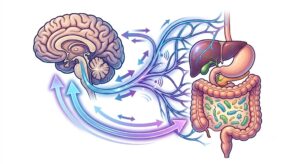
The gut and the brain communicate constantly through what researchers call the gut-brain axis, a network involving the nervous system, immune signaling, and gut bacteria.[2] In conditions where bowel function is disrupted, such as irritable bowel syndrome and inflammatory bowel disease, chronic fatigue is a well-documented and common complaint.
Researchers link it to ongoing activation of the gut-brain axis, along with systemic inflammation and autonomic nervous system changes.[3,4] A 2024 review focused specifically on inflammatory bowel disease found that fatigue often persists even when gut inflammation has settled down. This suggests the gut-brain axis keeps driving tiredness independently of visible digestive symptoms.[3]
The practical takeaway is that chronic constipation is not purely a “plumbing” problem. When stool sits in the colon for extended periods, it can contribute to shifts in gut bacteria and low-grade inflammatory signaling that reach beyond the digestive tract. This may partly explain why fatigue so often travels alongside constipation. For a deeper look at how gut bacteria influence bowel regularity, see our guide on fiber, gut health, and constipation relief.
Mechanism 2: Dehydration, a Shared Root Cause
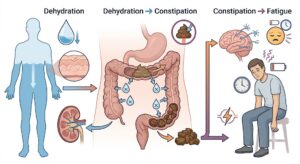
Dehydration is one of the most common, and most correctable, causes of constipation. When the body is short on fluids, the colon pulls extra water out of stool, producing harder, slower-moving stool. Separately, dehydration is also a well-studied cause of fatigue on its own. Controlled trials in both men and women looked at mild dehydration, a loss of roughly 1 to 1.6 percent of body mass through fluid.
Even at this mild level, dehydration measurably increased self-reported fatigue and reduced vigor, both at rest and during exercise.[5,6] In other words, dehydration can independently worsen both constipation and tiredness at the same time. This is one reason the two symptoms so often appear together. Our detailed breakdown on how dehydration causes constipation covers the research on fluid intake and gut transit time in more depth.
Mechanism 3: Disrupted Sleep From Bloating and Discomfort
Constipation frequently comes with bloating, abdominal discomfort, and a general sense of physical heaviness. All of these can interfere with falling asleep and staying asleep. Poor sleep quality is, unsurprisingly, one of the most direct paths to daytime fatigue.
This is a more mechanical explanation than the gut-brain axis pathway, but it’s often the most immediately noticeable one. A night of restless sleep from abdominal discomfort tends to produce a familiar, groggy kind of tiredness the next day.
Mechanism 4: Reduced Physical Activity
Fatigue and constipation can reinforce each other in a straightforward feedback loop. Feeling tired makes people less likely to move around. Reduced physical activity is itself a known contributor to slower gut motility. Movement helps stimulate the wave-like colon contractions, called peristalsis, that push stool along.
That, in turn, worsens constipation, which can further disrupt sleep and energy levels. Breaking this cycle usually means addressing hydration, movement, and bowel regularity together rather than tackling fatigue and constipation as separate problems.
4. When Fatigue and Constipation Point to Something Else
Constipation and fatigue are both nonspecific symptoms, meaning several underlying conditions can cause both at once. If tiredness is significant, persistent, or unexplained, it’s worth considering whether something beyond simple lifestyle factors is involved.
Hypothyroidism
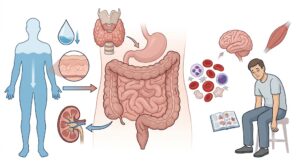
An underactive thyroid gland slows the body’s metabolic rate, which affects gut motility. This commonly produces both constipation and fatigue as core symptoms, alongside cold intolerance, dry skin, and weight gain.[7,8] Research using U.S. national health survey data has also found a measurable association between markers of thyroid hormone resistance and the likelihood of chronic constipation.
This association held even in people without a formal hypothyroidism diagnosis.[8] Clinical studies on hypothyroid patients further show that fatigue severity correlates with thyroid hormone levels. Fatigue also meaningfully improves for most patients after starting thyroid hormone replacement therapy.[9] If you’re managing constipation as an older adult, our guide on immediate constipation relief for elderly adults at home also touches on thyroid-related causes that are more common in that age group.
Iron Deficiency Anemia
Low iron levels reduce the blood’s oxygen-carrying capacity, which commonly produces fatigue as a primary symptom. Iron supplements themselves are also a frequent cause of constipation, so anemia and its treatment can contribute to both symptoms through two separate pathways at once.
Irritable Bowel Syndrome and Fibromyalgia
IBS with constipation is strongly associated with chronic fatigue. Researchers studying the overlap between IBS and conditions like fibromyalgia and chronic fatigue syndrome point to shared gut microbiome disruptions and gut-brain axis dysfunction as likely contributors.[6] If bloating and irregular bowel habits are prominent alongside your fatigue, it may be worth discussing IBS specifically with a healthcare provider rather than treating the constipation in isolation.
Medication Side Effects
Several common medication classes cause constipation and fatigue simultaneously as side effects, including opioid pain medications, certain antidepressants, and some blood pressure drugs. If both symptoms started or worsened after beginning a new medication, that timing is a useful clue worth mentioning to whoever prescribed it.
5. Breaking the Constipation-Fatigue Cycle
Dehydration, inactivity, and poor sleep all reinforce both constipation and fatigue at the same time. Because of this overlap, the most effective approach usually addresses several factors together rather than picking just one.
- Rehydrate consistently. Aim for roughly 8 to 10 glasses of water daily, spread throughout the day rather than consumed all at once. See our full guide on dehydration and constipation for the research behind this recommendation.
- Prioritize fiber from food first. Whole grains, legumes, fruits, and vegetables support both regularity and a healthier gut microbiome. Our fiber and gut health guide walks through practical food sources and targets.
- Move your body, even briefly. A daily 20 to 30 minute walk stimulates peristalsis and has been shown in clinical research to improve constipation symptoms, while also supporting better sleep quality.
- Consider a magnesium supplement if fiber and water aren’t enough. Magnesium draws water into the intestines and is generally well tolerated for occasional or ongoing use. Our magnesium supplement guide compares the most commonly recommended options.
- Support your gut microbiome with probiotics. Since gut bacteria are part of the fatigue-constipation pathway, probiotic supplementation is a reasonable addition for people with ongoing symptoms. See our probiotic supplement guide for evidence-based picks.
- Rule out an underlying cause if symptoms persist. If fatigue is significant, unexplained, or accompanied by other symptoms like cold intolerance, hair changes, or heavy periods, ask your doctor about thyroid and iron testing.
6. When to See a Doctor
Most cases of constipation-related fatigue improve with hydration, fiber, movement, and time. However, contact a healthcare provider if you experience any of the following:
- Constipation lasting longer than three weeks despite lifestyle changes
- Fatigue that is severe, worsening, or unexplained by sleep or lifestyle factors
- Blood in the stool or unexplained rectal bleeding
- Unintentional weight loss
- New constipation onset after age 50
- Symptoms suggesting a thyroid problem, such as cold intolerance, hair thinning, or unexplained weight changes
These can indicate an underlying condition that needs proper diagnosis rather than at-home management alone.
7. Frequently Asked Questions
Can constipation cause extreme fatigue?
Constipation is associated with measurably higher fatigue in research studies. However, “extreme” fatigue that significantly limits daily function is less commonly explained by constipation alone, and is worth discussing with a doctor, since it may point to anemia, thyroid dysfunction, or another underlying cause.[1,7]
How long does it take to feel less tired after constipation resolves?
There’s no single clinically established timeline, since it depends heavily on the underlying cause. Fatigue tied mainly to dehydration or poor sleep from bloating tends to improve within days of restoring regular bowel movements and hydration. Fatigue tied to an underlying condition like hypothyroidism improves on the timeline of that condition’s treatment, which can take weeks.[9]
Does dehydration cause both constipation and fatigue?
Yes. Dehydration directly hardens stool by causing the colon to reabsorb more water. Separately, controlled studies show that even mild dehydration increases self-reported fatigue and reduces vigor.[5,6] This makes dehydration one of the clearest shared causes of both symptoms.
Should I get my thyroid checked if I have constipation and fatigue?
If both symptoms are persistent, or accompanied by other signs like cold intolerance, dry skin, or unexplained weight gain, a thyroid function test (TSH) is a reasonable and simple first step to discuss with your doctor. Hypothyroidism is a well-documented cause of both symptoms together.[7,8]
The Bottom Line
Constipation can genuinely contribute to fatigue. The evidence points to several overlapping mechanisms rather than one single explanation: gut-brain axis inflammation, shared dehydration, disrupted sleep from bloating, and reduced physical activity all play a role.
For most people, addressing hydration, fiber intake, movement, and gut health together improves both bowel regularity and energy levels. If fatigue is severe, persistent, or paired with other symptoms like cold intolerance or unexplained weight changes, it’s worth ruling out an underlying condition such as hypothyroidism or anemia with your doctor. Don’t assume constipation alone explains it.
Still struggling with constipation?
Explore our evidence-based constipation guides to learn which foods, supplements, and daily habits may help improve regular bowel movements.
Related Reading
- Why Do I Feel Constipated but Still Poop? 5 Common Causes and What Helps
- Does Constipation Cause Gas? Causes, Symptoms, and Relief
- 7 Best Digestive Enzymes for Constipation (2026)
References
- Chen KM, et al. Relationship between Fatigue and Self-Perception of Constipation in Community-Dwelling Older Adults during the COVID-19 Pandemic. Available from: https://www.ncbi.nlm.nih.gov/pmc/articles/PMC9323158/
- Gut bless you: The microbiota-gut-brain axis in irritable bowel syndrome. Available from: https://pmc.ncbi.nlm.nih.gov/articles/PMC8790555/
- Truyens M, Lernout H, De Vos M, Laukens D, Lobaton T. Unraveling the fatigue puzzle: insights into the pathogenesis and management of IBD-related fatigue including the role of the gut-brain axis. Front Med. 2024. Available from: https://www.ncbi.nlm.nih.gov/pmc/articles/PMC11252009/
- When the gut speaks: The hidden toll of irritable bowel syndrome on body and mind. ScienceDirect. Available from: https://www.sciencedirect.com/science/article/pii/S2949752325000561
- Ganio MS, Armstrong LE, Casa DJ, et al. Mild dehydration impairs cognitive performance and mood of men. Br J Nutr. Available from: https://pubmed.ncbi.nlm.nih.gov/21736786/
- Armstrong LE, Ganio MS, Casa DJ, et al. Mild Dehydration Affects Mood in Healthy Young Women. J Nutr. Available from: https://jn.nutrition.org/article/S0022-3166(22)02889-9/fulltext
- Thyroid disorders and gastrointestinal dysmotility. Available from: https://pmc.ncbi.nlm.nih.gov/articles/PMC11129086/
- Association Between Indices of Thyroid Hormone Resistance and Constipation Prevalence in the US Population: NHANES 2007-2010. Available from: https://pmc.ncbi.nlm.nih.gov/articles/PMC12401130/
- Severity of Fatigue and Its Relationship with TSH before and after Levothyroxine Replacement Therapy in Patients with Primary Hypothyroidism. Available from: https://www.ncbi.nlm.nih.gov/pmc/articles/PMC10045891/
Medical Disclaimer: This article is for informational purposes only and does not constitute medical advice. It is not a substitute for professional medical advice, diagnosis, or treatment. Always seek the advice of your physician or another qualified health provider with any questions you may have about a medical condition.