

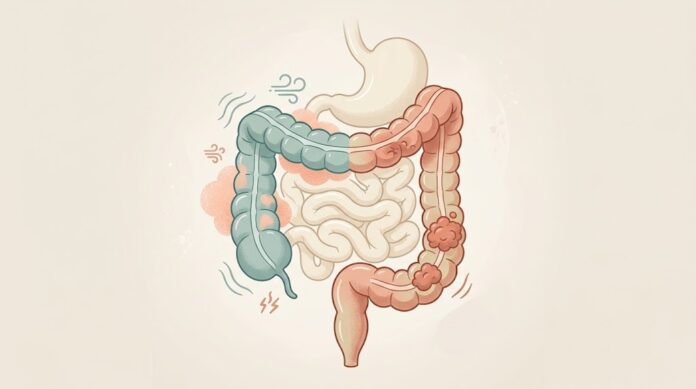
Two people can sit across from the same doctor and say the same sentence: “I’m constipated all the time.” One leaves with a diagnosis of chronic constipation. The other leaves with a diagnosis of irritable bowel syndrome with constipation, better known as IBS-C. On the surface the bowel habit looks alike, yet the label changes what the doctor looks for and, in some cases, which treatment gets tried first.[1][2]
The line between IBS-C vs chronic constipation is also blurrier than most articles admit. Guideline authors describe these conditions as sitting on a continuum rather than in separate boxes.[1][2] This guide explains where the line is drawn, which symptoms need a prompt medical visit, and which relief options have guideline support. It is educational and cannot replace an exam by a clinician.
Quick answer
Chronic constipation is mainly about hard, difficult or infrequent bowel movements. IBS-C adds recurring abdominal pain that is tied to bowel habits. Doctors separate them with Rome IV criteria, but the two overlap heavily, and a person’s label can change over time.[1][2]
Why IBS-C and Chronic Constipation Get Confused
Both belong to a group called functional bowel disorders, which means routine testing does not turn up a structural or chemical explanation for the symptoms.[2] The Spanish clinical practice guideline, written to match Rome IV, handles the two together because they share more similarities than differences, including overlapping mechanisms and similar responses to commonly used medicines.[2]
The question that does most of the dividing is abdominal pain, and even that is not clean cut.[2][3]
Underneath, the guideline suggests one real biological difference may be how sensitive the gut is. Colonic hypersensitivity is more common in IBS, while reduced rectal sensitivity is more often seen in functional constipation.[2] That helps explain why one person feels pain from normal gut activity and another mostly feels stuck.
What Doctors Mean by Chronic Constipation
“Chronic constipation” is a broad clinical term for constipation that keeps coming back. In Rome IV, the matching diagnostic category is functional constipation, while US treatment guidelines commonly use the term chronic idiopathic constipation (CIC) for a related group of adults.[1][4] For a broader overview, see our guide on what chronic constipation is, its causes and treatment. Under Rome IV, a person needs two or more of the following over the last three months, with symptoms starting at least six months earlier:[1][2]
- Straining during at least a quarter of bowel movements
- Hard or lumpy stools in at least a quarter of bowel movements
- A feeling of incomplete emptying in at least a quarter of bowel movements
- A sense of blockage in the rectum or anus in at least a quarter of bowel movements
- Needing manual help, such as pressing with a finger, in at least a quarter of bowel movements
- Fewer than three spontaneous bowel movements a week
Loose stools should rarely appear unless a laxative is involved, and the person should not meet the criteria for IBS.[1][2]
What Doctors Mean by IBS-C
IBS is diagnosed when someone has recurrent abdominal pain, on average at least one day a week over the last three months, plus two or more of these: pain linked to bowel movements, a change in how often you go, or a change in stool form.[1][2] Symptoms should also have begun at least six months before the diagnosis.[2]
One detail explains why older studies and newer ones do not always agree. Earlier Rome III criteria asked about “pain or discomfort,” while Rome IV requires pain itself.[1] Overlap figures from older work may therefore not match what you would find today.
The “C” subtype is assigned when stools are mostly hard. In practice, more than 25% of the abnormal bowel movements are Bristol type 1 or 2, and fewer than 25% are type 6 or 7.[2] The Bristol scale itself grew out of a 1997 study that linked stool form to how fast food moves through the gut.[5] If you have never used it, our walkthrough of the Bristol Stool Chart explains all seven types.
IBS-C vs Chronic Constipation at a Glance
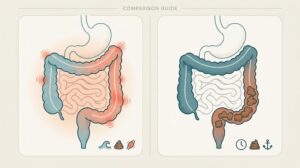
| Feature | Chronic (functional) constipation | IBS-C |
|---|---|---|
| Main complaint | Hard stools, straining or infrequent bowel movements | Recurrent abdominal pain together with constipation |
| Abdominal pain | May occur, but it is not the leading symptom | Required for the diagnosis, at least one day a week on average |
| Link to bowel habit | Not part of the definition | Pain plus at least two of three features: a link to defecation, a change in stool frequency, or a change in stool form |
| Bloating | Common | Common, often a big part of the complaint |
| Stool form | Hard or lumpy stools in at least 25% of bowel movements is one possible criterion | More than 25% Bristol type 1 or 2 and fewer than 25% type 6 or 7 |
| Rome IV label | Functional constipation | IBS with constipation |
| Treatment focus | Getting stool moving and easier to pass | Bowel habit plus pain and bloating |
Sources: Rome IV criteria and the Spanish clinical practice guideline.[1][2]
Do not use the table to diagnose yourself. Belly pain can also occur with functional constipation, so pain alone does not mean IBS-C. What matters is the pattern: how often, how long, how it relates to bowel movements, and whether other causes have been ruled out.

The Difference Between IBS-C and Constipation in Daily Life
With chronic constipation, the story is mostly mechanical. Stools are hard, you strain, you feel a block, or you feel unfinished after you go. Some people only go a couple of times a week, while others go daily and still struggle.[2]
With IBS-C, the pain is usually what people mention first. It shows up as cramping or aching in the belly that is tangled up with bathroom habits, along with bloating and the sense that you have not finished. The National Institute of Diabetes and Digestive and Kidney Diseases (NIDDK) also lists whitish mucus in the stool as a possible symptom, and notes that IBS is long-lasting but the symptoms can come and go.[6] Women with IBS often notice more symptoms around their periods.[6] Both conditions are most common in middle-aged women.[2]
A simple two-week symptom diary can make an appointment far more productive. Note stool type using the Bristol chart, days with pain, bloating, medicines, and anything that seems to set off a flare. Stress is a common suspect; see can stress cause constipation.
Can You Have Both? Why the Label Can Change
The two diagnoses overlap more than most people expect. In a primary care study of 432 people described in the Spanish guideline, about 90% of those who met the older criteria for IBS-C also met criteria for functional constipation, and about 44% of people with functional constipation met the IBS-C criteria. Up to a third changed label over 12 months.[2] Those figures came from older criteria than Rome IV, so today’s overlap may differ. A separate paper reported that the earlier Rome III criteria could not reliably tell the two apart.[7]
A shift between the two labels does not by itself mean something sinister, and the guideline says it should not trigger extra testing unless alarm features appear.[2]
Red Flags That Should Not Wait
Neither label should be assumed when warning signs are present. The alarm features listed in the Spanish guideline’s diagnostic algorithm include:[2]
- Blood in the stool
- Unexplained weight loss
- Anemia
- A family history of colon cancer or inflammatory bowel disease
- A new or persistent change in bowel habits, particularly later in adulthood (the Spanish guideline uses a sudden start after age 50 as its cutoff)
Any of these calls for medical evaluation rather than self-treatment.[2] Whether you need a colonoscopy or other tests depends on your symptoms, history, age and the clinician’s assessment. Seek urgent care if you also have severe or worsening belly pain, repeated vomiting, or cannot pass stool or gas at all, since these can signal a blockage.
How Doctors Sort It Out
The American College of Gastroenterology (ACG) IBS guideline suggests a positive diagnostic strategy. That means clinicians recognize IBS from its symptom pattern instead of ruling out everything else first, with the aim of starting suitable treatment sooner.[8] For both conditions the visit starts with a history and a physical exam, including a check for medicines or other conditions that could cause constipation, because Rome IV labels apply only when no such cause explains the symptoms.[2] Constipation caused by opioid pain medicines is classed separately from these functional disorders.[1]
Without alarm features, the Spanish guideline sees little value in tests beyond a basic blood count, unless a specific problem is suspected. Routine colonoscopy is also not advised for constipation alone, but that changes if red flags, a family history or other clinical concerns are present, and age-appropriate colorectal cancer screening still applies.[2]
If basic measures fail, doctors may look for a pelvic floor problem. In dyssynergic defecation, the muscles that should relax during a bowel movement tighten instead. The Spanish guideline reports it in roughly 15% to 53% of people with functional constipation across studies.[2] A balloon expulsion test or anorectal manometry can confirm it, and anorectal biofeedback is the guideline’s technique of choice when this kind of defecation disorder is confirmed. It is not a treatment for every type of constipation.[2]
Another subgroup has slow colonic transit. In some of these people, adding fiber may worsen bloating or give only limited relief.[2] If symptoms persist despite appropriate treatment, a clinician may check colonic transit and pelvic floor function. If fiber has backfired for you, see why fiber supplements can make you more constipated.
This article contains Amazon affiliate links. If you buy through them we may earn a small commission at no extra cost to you. As an Amazon Associate, we earn from qualifying purchases.
Relief That Helps Both Conditions
- Fiber, added slowly. The Spanish guideline calls dietary or supplemental fiber a rational first step for constipation with or without pain, with soluble fiber such as psyllium having the better evidence and a trial of about six weeks to judge it.[2] Increase gradually, because fast jumps can bring gas and distension. The ACG IBS guideline also favors soluble fiber for overall IBS symptoms.[8] In IBS, insoluble fiber such as bran showed no clear benefit over placebo in a pooled analysis of five studies, and a high-fiber diet can worsen pain and distension in some people.[2] More in our guide to fiber supplements for chronic constipation.
- Fluids. Evidence that drinking more water alone fixes constipation is thin, except in people who are dehydrated. It does seem to help when paired with enough fiber.[2] If a doctor has told you to limit fluids, follow that advice instead. See does dehydration cause constipation for the details.
- Regular movement. Walking or cycling may improve constipation, gas and distension, and a couple of IBS trials reported better overall symptoms with more physical activity.[2]
- Prunes and other whole foods. An analysis summarized in the guideline found about 100 grams of prunes a day helpful for constipation, with an effect reported to be greater than psyllium. That is the amount studied, not a dose for everyone.[2] Start with a smaller portion and watch how your belly reacts, because prunes can add gas and bloating, which matters more if you have IBS-C. Our list of the best fruits for chronic constipation has more options.
- Toilet routine and posture. Giving yourself unhurried time and a comfortable position can help. Here is how to set that up: best position to poop for constipation.
- Mind and gut. The ACG IBS guideline supports gut-directed psychotherapy as part of a full management plan instead of a last resort.[8] The Spanish guideline adds that cognitive behavioral therapy and hypnosis may help abdominal pain in IBS.[2]
- Food triggers. Low-FODMAP and gluten-free diets seem to ease pain and distension in IBS but not constipation itself, and the evidence for routine use is limited.[2] If you try one, working with a dietitian helps you avoid an overly narrow diet.
For a broader menu of gentle options, see our pillar guide on how to relieve constipation without laxatives.

Where Treatment Starts to Split
Chronic constipation
The 2023 joint guideline from the American Gastroenterological Association (AGA) and the ACG on chronic idiopathic constipation made strong recommendations for polyethylene glycol (PEG), sodium picosulfate, linaclotide, plecanatide and prucalopride. It made conditional recommendations for fiber supplements, lactulose, senna, magnesium oxide and lubiprostone.[4] Of the stimulant laxatives, sodium picosulfate and bisacodyl were recommended strongly for short-term use (under 4 weeks) or as rescue therapy, not for continuous long-term use.[4]
PEG is the ingredient in MiraLAX, and you can see how it compares with psyllium in our MiraLAX vs Metamucil guide. Prucalopride is a prescription option when other steps fall short, covered in prucalopride for chronic constipation. Over-the-counter choices are compared in best OTC laxatives for constipation. Keep in mind that this guideline covers adults with chronic idiopathic constipation, not IBS-C.
IBS-C
The 2022 AGA guideline for IBS-C made a strong recommendation for linaclotide. It made conditional recommendations for tenapanor, plecanatide, tegaserod, lubiprostone, PEG laxatives, tricyclic antidepressants and antispasmodics, and a conditional recommendation against SSRIs.[10] Most of these are prescription medicines, so the choice and the dose belong to a clinician. Availability can change, so ask your prescriber about what is currently on the market, for example for tegaserod.
PEG shows why the label matters. It softens stool and increases frequency, but trials suggest it does not reliably ease abdominal pain, and the ACG IBS guideline conditionally recommends against it for overall IBS symptoms.[2][8] The AGA guideline treats it more favorably, so societies do not fully agree. The MiraLAX package label itself says to ask a doctor before use if you have irritable bowel syndrome, and it limits self-directed over the counter use to about 7 days.[11] That label limit does not mean PEG can never be used longer. Longer use can be part of a plan directed by a clinician.
Peppermint oil is another IBS specific option. Two systematic reviews, including a 2008 BMJ meta analysis, found it better than placebo for IBS symptoms. The Spanish guideline reports a number needed to treat of about 3 while warning that the studies varied a lot.[2][9] Heartburn and headache are possible side effects, and safety in pregnancy and breastfeeding is unknown.[2]
Probiotics come up often with IBS-C. Results across trials are mixed, and the Spanish guideline did not recommend them for either condition because of inconsistent evidence.[2] If you want strain level detail, read our review of probiotics for IBS-C and constipation.
Everyday Products People Ask About
None of these replaces a diagnosis. They are three products people may come across when researching these options. Prices and availability change, so check the listing before you buy.
- Metamucil Sugar Free Psyllium Fiber Powder (orange) is a widely used source of psyllium, the soluble fiber guidelines discuss most for both conditions. Start small, build up slowly and take each dose with a full glass of water; avoid it if you have trouble swallowing. This orange version contains aspartame, so read the label if you avoid it, and the label notes that bulk fibers can affect how medicines work, so ask a pharmacist about timing. See how long psyllium takes to work.
- IBgard peppermint oil capsules (48 count) is sold as a medical food for the dietary management of IBS, and its maker says to use it under medical supervision. It contains peppermint oil in a sustained-release form. The studies behind the guideline findings above used various peppermint oil products, so results for this specific brand may differ. Check in with a clinician first, especially if you have reflux, are pregnant or take regular medicines.
- Squatty Potty Original 7 inch toilet stool raises the feet to create a more supported toileting posture. Evidence for toilet-positioning aids is limited, so consider it an optional comfort aid rather than a proven treatment. Check the product dimensions against your toilet before buying.
When to See a Doctor
Book a visit promptly if you notice any of the alarm features listed above.[2] It is also worth seeing a clinician if basic measures and routine laxatives have not helped, or if symptoms that were under control worsen without a clear reason. Those situations may call for pelvic floor testing, prescription treatment or a second look at the diagnosis.
Frequently Asked Questions
What is the main difference between IBS-C and chronic constipation?
The main difference is abdominal pain. IBS-C requires recurrent belly pain, on average at least one day a week, together with constipation. Chronic constipation, also called functional constipation, is defined by difficult or infrequent bowel movements, and pain is not the leading symptom. The two overlap a lot, so a clinician decides the best label.
Can you use MiraLAX for IBS-C?
MiraLAX contains polyethylene glycol, which can soften stool and increase how often you go, but trials suggest it does not reliably relieve abdominal pain. Guideline groups differ on its role in IBS-C, the product label advises asking a doctor before use if you have irritable bowel syndrome, and over the counter use is limited to about 7 days. Speak with a clinician before starting it.
Can stress make IBS-C or chronic constipation worse?
The Spanish clinical practice guideline links psychological stress with worse symptoms in IBS, while noting that psychological therapies play no role in managing functional constipation. Stress management is a reasonable add-on for IBS-C, not a replacement for medical care.
This article is for general education and is not medical advice. It cannot diagnose your condition. Please speak with a qualified healthcare professional before changing your treatment, especially if you have warning signs, are pregnant, or take regular medicines.
References
- Lacy BE, Mearin F, Chang L, Chey WD, Lembo AJ, Simren M, et al. Bowel disorders. Gastroenterology. 2016;150(6):1393-407. doi:10.1053/j.gastro.2016.02.031. PMID: 27144627. https://doi.org/10.1053/j.gastro.2016.02.031
- Mearin F, Ciriza C, Minguez M, Rey E, Mascort JJ, Pena E, et al. Clinical practice guideline: irritable bowel syndrome with constipation and functional constipation in the adult. Rev Esp Enferm Dig. 2016;108(6). doi:10.17235/reed.2016.4389/2016. https://reed.es/clinical-practice-guideline-irritable-bowel-syndrome-with-constipation-and-functional-constipation-in-the-adult1315
- Rey E, Balboa A, Mearin F. Chronic constipation, irritable bowel syndrome with constipation and constipation with pain/discomfort: similarities and differences. Am J Gastroenterol. 2014;109(6):876-84. doi:10.1038/ajg.2014.18. https://doi.org/10.1038/ajg.2014.18
- Chang L, Chey WD, Imdad A, Almario CV, Bharucha AE, et al. American Gastroenterological Association-American College of Gastroenterology clinical practice guideline: pharmacological management of chronic idiopathic constipation. Am J Gastroenterol. 2023;118(6):936-54. doi:10.14309/ajg.0000000000002227. https://doi.org/10.14309/ajg.0000000000002227
- Lewis SJ, Heaton KW. Stool form scale as a useful guide to intestinal transit time. Scand J Gastroenterol. 1997;32(9):920-4. doi:10.3109/00365529709011203. https://doi.org/10.3109/00365529709011203
- National Institute of Diabetes and Digestive and Kidney Diseases. Symptoms and causes of irritable bowel syndrome. Bethesda (MD): NIDDK; [cited 2026 Oct 17]. https://www.niddk.nih.gov/health-information/digestive-diseases/irritable-bowel-syndrome/symptoms-causes
- Wong RK, Palsson OS, Turner MJ, et al. Inability of the Rome III criteria to distinguish functional constipation from constipation-subtype irritable bowel syndrome. Am J Gastroenterol. 2010;105(10):2228-34. doi:10.1038/ajg.2010.200. https://doi.org/10.1038/ajg.2010.200
- Lacy BE, Pimentel M, Brenner DM, Chey WD, Keefer LA, Long MD, et al. ACG clinical guideline: management of irritable bowel syndrome. Am J Gastroenterol. 2021;116(1):17-44. doi:10.14309/ajg.0000000000001036. https://pubmed.ncbi.nlm.nih.gov/33315591/
- Ford AC, Talley NJ, Spiegel BM, et al. Effect of fibre, antispasmodics, and peppermint oil in the treatment of irritable bowel syndrome: systematic review and meta-analysis. BMJ. 2008;337:a2313. doi:10.1136/bmj.a2313. https://doi.org/10.1136/bmj.a2313
- Chang L, Sultan S, Lembo A, Verne GN, Smalley W, Heidelbaugh JJ. AGA clinical practice guideline on the pharmacological management of irritable bowel syndrome with constipation. Gastroenterology. 2022;163(1):118-36. doi:10.1053/j.gastro.2022.04.016. PMID: 35738724. https://pubmed.ncbi.nlm.nih.gov/35738724/
- MiraLAX (polyethylene glycol 3350) powder for solution: over the counter drug label. Bayer HealthCare LLC; [cited 2026 Oct 17]. https://otclabels.com/lib/otc/otc-meds/miralax-1/




[…] your constipation comes with cramping and bloating, our guide to IBS-C vs chronic constipation can help you work out which type you […]
[…] watery) [3]. Diagnosis depends on the overall symptom pattern, not constipation alone. Our guide to IBS-C vs chronic constipation explains the overlap, and tracking your stools with the Bristol Stool Chart gives your doctor […]