


Quick answer
Does coffee help with constipation? For some people, yes: coffee can stir up colon activity within minutes. But the evidence that it reliably relieves constipation is limited, and responses vary from person to person.
- In a large US survey, adults who drank about 1 to 2 cups (6 ounces each) of caffeinated coffee a day were less likely to be constipated. Surveys show an association, not proof.
- A 2025 systematic review found the evidence mixed.
- Treat coffee as a gentle nudge on top of fiber, fluids and movement, not as a treatment.
- It may not suit people with IBS or reflux, or anyone drinking a lot of it.
Ask a room full of coffee drinkers whether their first cup sends them to the bathroom and the room splits. Some say it works like clockwork. Others have never noticed a thing. The research matches that split.
We went through the lab studies, two analyses of US national survey data, a 2025 systematic review and the main safety guidance. Below you will find what the evidence supports, what it does not, and how to use coffee sensibly if you decide to try it. If you want the bigger picture first, our guide to what causes constipation is a good place to start.
Does coffee help with constipation? The short version
For some people, yes. For others, not really. The most direct evidence comes from small studies in healthy volunteers, which measured how the colon and rectum respond within the first hour after a cup of coffee. Evidence in people who actually have constipation is thin.
A 2025 systematic review (published online in December 2024) pulled together eight studies of caffeine in different forms, including coffee, tea, energy drinks, cocoa and kombucha. Four suggested a benefit. Four found no improvement or more constipation. The review included only one randomized trial, could not combine the results, and called for better trials.[1] Anyone who says coffee “cures” constipation is going further than the science does.
What happens in your gut after a cup of coffee
A 1990 study asked 99 healthy young volunteers (aged 17 to 27) about their bowel habits. About 29 percent said coffee gave them a desire to go. The team then measured pressure activity in the rectum and lower colon of 14 volunteers.
- In the eight who said coffee worked for them, activity rose within four minutes of drinking either regular or decaf black coffee, and stayed up for at least 30 minutes.
- The six who said it did nothing showed no change.
- Nobody responded to a drink of plain hot water.[2]
A 1998 study used a probe placed up to the middle of the transverse colon in 12 healthy adults. Over 10 hours, each person received four stimuli in random order: three warm 240 ml drinks (black coffee with 150 mg of caffeine, decaf and water) and a 1,000-calorie meal.
Regular coffee and the meal both stimulated the colon more than water. Regular coffee was about as strong as the meal, roughly 60 percent stronger than water and 23 percent stronger than decaf. Decaf fell in between: the authors report it was not significantly different from water or from regular coffee, and it was weaker than the meal.[3]
Two limits are worth keeping in mind. Both studies were small, and both used healthy volunteers rather than people with constipation. The Center for Science in the Public Interest also notes that the 1998 study was funded in part by a coffee industry group.[4]
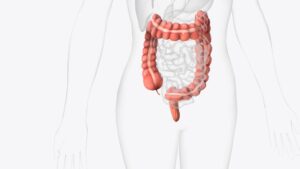
Is it the caffeine, the warmth, or something else?
Researchers are still working this out. A 1999 review of coffee and digestive function concluded that caffeine alone cannot explain coffee’s effects on the gut. Coffee has no calories, and its effects could not be put down to its volume, acidity or osmolality, so the reviewers argued it must act through other pharmacological effects.
The review also notes that coffee triggers release of the hormones gastrin and cholecystokinin, which are involved in the body’s response to food. One idea is therefore that coffee sets off a reaction similar to a meal.[5] The colon responds within minutes, so the trigger is probably higher up in the digestive tract. That part is our inference, not a proven fact.
Temperature may matter too, but the evidence conflicts. The 1990 study found no effect from hot water. In a small 2005 Dutch study, rectal tone rose 45 percent half an hour after strong coffee and 30 percent after warm water, and the difference between the two was not statistically significant.[6]
With only eight people in the coffee experiment, it could easily have missed a real difference. It hints that part of the “coffee effect” may simply be a warm drink first thing in the morning.
What large surveys say about coffee and constipation
Lab studies tell us what happens in the first half hour. Surveys ask a different question: are regular coffee drinkers less likely to be constipated?
A 2024 analysis of 7,844 US adults from the National Health and Nutrition Examination Survey (NHANES, 2007 to 2010) counted someone as constipated if their usual stool was Bristol type 1 or 2, the hard and lumpy types (see our guide to the Bristol Stool Chart). Coffee intake came from a single 24-hour diet recall. One cup meant 6 fluid ounces, which is smaller than most mugs.
After adjusting for other factors, people who drank 1 to 2 cups of caffeinated coffee a day had lower odds of constipation than people who drank less than a cup (odds ratio 0.57, 95 percent confidence interval 0.35 to 0.95). Odds were lowest at about 1.4 cups a day. The curve was J-shaped: among heavier drinkers the advantage faded and was no longer statistically significant.
For total coffee, the 1 to 2 cup result narrowly missed significance (odds ratio 0.61, 95 percent confidence interval 0.35 to 1.06). Decaf showed no link, but 96.6 percent of participants drank little or none, so the study could not say much either way. Unadjusted, about 9.6 percent of people who drank less than one cup were constipated, compared with 6.1 to 6.7 percent in the higher coffee groups.[7]
A second NHANES analysis covered 13,816 adults aged 20 and over (2005 to 2010) and looked at caffeine from all sources, not just coffee. After adjustment, the middle and higher intake groups had lower odds of constipation than the lowest group (odds ratios between 0.60 and 0.77).
The lower intake groups did not differ significantly, so it was not a smooth dose-response. The link held in adults under 65 but not in those 65 and older, who made up only about 16 percent of the sample, so the study may simply have lacked the numbers to detect it.[8]
These are encouraging numbers, but they come with big caveats:
- The two analyses draw on overlapping NHANES cycles, so they are not two independent confirmations.
- A survey captures one snapshot. It cannot show that coffee prevents constipation, and both analyses rely on a single day of diet recall.
- The authors of the coffee study acknowledge possible reverse causation (for example, people with existing gut problems changing what they drink) and residual confounding, and they did not account for total fluid intake. Coffee drinkers also differ from non-drinkers in other ways, such as smoking and alcohol use.[7]
The main studies at a glance
| Study | Who | What it found | Main limit |
|---|---|---|---|
| Brown, 1990[2] | 99 young adults surveyed, 14 tested | 29 percent said coffee prompts the urge to go. Regular and decaf raised lower colon activity in those who responded. | Tiny test group of healthy volunteers |
| Rao, 1998[3] | 12 healthy adults | Regular coffee stimulated the colon about as strongly as a meal. | Small, partly industry funded, no one with constipation |
| Sloots, 2005[6] | 16 healthy adults, 8 in the coffee test | Rectal tone rose 45 percent after coffee and 30 percent after warm water, a difference that was not significant. | Very small |
| Kong, 2024[7] | 7,844 US adults | 1 to 2 cups of caffeinated coffee a day went with lower odds of constipation. Total coffee narrowly missed significance. | Cross-sectional, single-day diet recall |
| Kang, 2024[8] | 13,816 US adults, NHANES 2005 to 2010 | Moderate to high caffeine intake went with lower odds. No clear link at age 65 and over. | Cross-sectional, overlaps with Kong’s data |
| Latthe, 2025[1] | Systematic review of 8 studies of caffeine | Four studies suggested benefit and four showed none or more constipation. | Mixed interventions, only one randomized trial |
Does decaf coffee help constipation?
Possibly, but less reliably than regular coffee. In the 1990 study, decaf raised lower colon activity in people who responded to coffee. In the 1998 study, regular coffee was 23 percent stronger than decaf, and decaf was not significantly different from water. In the large survey, decaf showed no link to constipation, though few people drank it.[2,3,7]
Decaf is not caffeine free either. The FDA says a typical 8-ounce cup of decaf coffee holds 2 to 15 mg of caffeine.[9] If caffeine makes you jittery or keeps you up at night, decaf is a fair thing to try. Just don’t count on the same effect.

Can coffee make constipation worse?
Possibly, for some people. Coffee is not a proven cause of constipation, but a few situations are worth knowing about.
Coffee and dehydration
The old warning that coffee dries you out is weaker than it sounds. In a crossover study of 50 men aged 18 to 46 who already drank 3 to 6 cups a day, four 200 ml servings of coffee a day for three days produced no significant difference in hydration markers compared with the same amount of water. That study was short, included only men used to caffeine, and was funded by the Institute for Scientific Information on Coffee, so it may not apply equally to everyone.[10]
Where coffee can cause trouble is when it pushes water out of your day. NIDDK lists not drinking enough liquids as one cause of constipation,[11] although the evidence that extra water helps people who are not already dehydrated is weak. One small study found that doubling or tripling fluid intake in people without constipation did not change their stool output.[4] So the aim is to stay comfortably hydrated, not to guzzle. Our guide on how dehydration affects constipation covers the details.
How much is too much?
The surveys hint that more is not better, since the benefit faded at higher intakes. Because the survey’s “cup” was 6 ounces, the lowest odds sat near 8 ounces a day, roughly one regular mug.
For general caffeine safety, the FDA says 400 milligrams a day, about two to three 12-ounce cups of coffee, is not generally associated with negative effects in most healthy adults, but sensitivity varies a lot.[9] That is a general caffeine-safety reference, not a target or recommended dose for constipation. Children and teenagers should not use the adult limit as their own caffeine target.
Too much caffeine can cause a faster heart rate, palpitations, high blood pressure, insomnia, anxiety, jitters, an upset stomach, nausea and headache.[9] The FDA advises talking to a health care provider about limiting caffeine if you are pregnant, trying to become pregnant or breastfeeding, or if you have a condition or take a medicine that makes you more sensitive. The same FDA page, citing the Dietary Guidelines, says caffeinated drinks should be avoided for children younger than 2.[9]
Caffeine per cup also varies a lot with the bean, the brew method and the size of the cup (113 to 247 mg per 12 ounces for regular brewed coffee), so counting cups is only a rough guide.[9]
IBS and coffee
With irritable bowel syndrome (IBS), coffee is harder to predict. UK guidance from NICE suggests limiting caffeinated tea and coffee to 3 cups (about 750 ml) a day as part of general IBS dietary advice. It also advises drinking at least 8 cups of fluid a day, especially water or other non-caffeinated drinks.[12]
The research on coffee and IBS points in different directions:
- A cross-sectional study of Iranian adults, where coffee is not a usual drink, found about 50 percent higher odds of IBS in the top third of caffeine intake.[13]
- A 2023 meta-analysis of eight observational studies (432,022 participants) found that coffee drinkers had slightly lower odds of developing IBS (pooled odds ratio 0.84), although some of the included studies pointed the other way.[14]
These studies look at who develops IBS, not at symptom flares in people who already have it, and none of them shows that coffee causes IBS. A two-week log of what you drink and how your gut feels will tell you more than any general rule.
Reflux, cramps and what goes in the cup
A review of coffee and digestive function found that heartburn was the symptom people reported most often after drinking coffee, and concluded that coffee promotes acid reflux.[5] If coffee gives you heartburn or cramps, it isn’t worth forcing as a bowel aid. And if bloating or loose stools only show up when you add milk, creamer or sweeteners, one of those may be the trigger rather than the coffee. Try a few days of black coffee to see whether it makes a difference, though it may not pinpoint the cause.
When coffee turns into a crutch
If you need coffee every single day just to have a bowel movement, mention it to a doctor. Constipation has several possible causes, including slow movement of stool through the colon, pelvic floor problems, IBS, and certain medicines and supplements such as opioid pain relievers, iron supplements, some antacids, some antidepressants and some blood pressure medicines. A daily cup of coffee may temporarily ease symptoms without addressing the underlying cause.[11,15]
How to use coffee sensibly if it works for you
There is no established coffee dose for constipation, so treat these as practical ideas rather than a prescription.
- Keep your usual amount. Drinking more to speed things up is not supported by the surveys.[7]
- Give it a calm window. In the 1990 study the colon response began within four minutes and lasted at least half an hour,[2] so don’t rush out the door. Gastroenterologists quoted by CSPI also note that colon contractions are stronger first thing in the morning, which is why a morning coffee, breakfast and light movement can work together.[4] Mayo Clinic advises not ignoring the urge to go and keeping a regular schedule, especially after a meal.[15]
- Keep drinking plain water. Coffee is not a replacement for it, and it matters even more if you take fiber.
- Build the basics underneath. Fiber from food, a daily walk and a good toilet posture are the standard first steps, and they work whether or not coffee does anything for you. Our guide to the best position to poop for constipation shows how to set up a footstool.
Where coffee fits next to better-studied options
Coffee is a small nudge. The options below are better studied for ongoing constipation.
- Fiber. The 2023 AGA and ACG guideline for chronic idiopathic constipation in adults made a conditional recommendation for fiber supplements (such as psyllium, bran or inulin), based on low-certainty evidence.[16] If fiber hasn’t helped you, read why fiber sometimes stops working. For food-based options, see our guide to relieving constipation without laxatives and our list of the best fruits for chronic constipation.
- Movement. A short walk costs nothing. Our morning habits guide shows how to fit it into a routine.
- Tracking. A simple stool log makes it much easier to see whether coffee, or anything else you try, is changing things.
- Laxatives when needed. If food and lifestyle changes are not enough, medication is a legitimate next step. In the same guideline, polyethylene glycol (PEG) received a strong recommendation for chronic use, and bisacodyl a strong recommendation for short-term use (under 4 weeks) or rescue therapy.[16] Our overview of the best OTC laxatives explains the options. If you are pregnant, check with your clinician first, then see our guide to safe laxatives during pregnancy.
Coffee and gear worth a look
Disclosure: As an Amazon Associate, Constipation Relief earns from qualifying purchases at no extra cost to you. Product links are included for convenience, not as medical recommendations.
You don’t need anything special to try coffee as part of a regular routine. If you are shopping anyway, these items fit what the research above does and does not support. Prices change, so check each listing and read the label.
- Kicking Horse Decaf, Swiss Water Process, Dark Roast, Whole Bean. A decaf option if caffeine keeps you up. Decaf stimulated the colon in some studies, though less reliably than regular coffee, and it has not been shown to treat constipation.
- Cuisinart DCC-3200P1 PerfecTemp 14 Cup Programmable Coffee Maker. If you like your coffee ready when you wake up, a programmable brewer makes the routine easy. It is a convenience, not a gut remedy.
- NOW Foods Psyllium Husk Powder. For people whose food fiber is not enough and whose clinician agrees. Take it with a full glass of water and keep it apart from other medicines. Our psyllium husk review has the details.
- Squatty Potty Original Toilet Stool, 7-inch. A simple option for trying a different toilet posture.
When to see a doctor
Coffee is a minor lever, not a diagnostic tool, and it should never be used to cover up symptoms that need attention. The National Institute of Diabetes and Digestive and Kidney Diseases (NIDDK) says to see a doctor right away if you have constipation and any of the following:[11]
- Bleeding from your rectum or blood in your stool
- Constant pain in your abdomen
- Inability to pass gas
- Vomiting
- Fever
- Lower back pain
- Losing weight without trying
NIDDK also advises seeing a doctor if your symptoms do not go away with self care, or if you have a family history of colon or rectal cancer.[11] Mayo Clinic adds black stools, other unusual changes in the shape or color of your stools, constipation that lasts longer than three weeks, and constipation that makes everyday activities difficult.[15]
Frequently asked questions
Why does coffee make you poop?
In some people coffee appears to trigger a meal-like response in the digestive tract, and the colon becomes more active within minutes. Caffeine seems to add to the effect, but decaf and even warm water can do something similar, and researchers have not pinned down the exact mechanism.
Does decaf coffee help constipation?
Possibly, but less reliably than regular coffee. Decaf raised colon activity in some people in a 1990 study, but a large US survey found no link between decaf and constipation, although very few participants drank decaf.
Can coffee make constipation worse?
Possibly, for some people. Coffee is not a proven cause of constipation, and moderate intake did not dehydrate habitual male drinkers in one trial. But it can crowd out plain water, trigger reflux or cramping, and may bother some people with IBS.
How much coffee should I drink for constipation?
No coffee dose has been established for treating constipation. The survey that found lower odds looked at about 1 to 2 cups of caffeinated coffee a day, with a cup defined as 6 fluid ounces, and the advantage faded at higher intakes. The FDA says up to 400 milligrams of caffeine a day, about two to three 12-ounce cups of coffee, is not generally associated with negative effects in most healthy adults. That is a general caffeine-safety reference, not a target or recommended dose for constipation. Children and teenagers should not use the adult limit as their own caffeine target.
Can I use coffee instead of fiber or a laxative?
No. Coffee may give a short-term nudge to some people, but it does not address the usual causes of chronic constipation, such as low-fiber intake, medicines or pelvic floor problems. Fiber and, when needed, laxatives have much stronger evidence behind them, and extra fluids help mainly if you are not drinking enough.
This article is for educational and informational purposes only and does not constitute medical advice. Always consult a qualified healthcare provider before making significant dietary changes, especially if you have a chronic health condition, are pregnant, or take regular medications.
References
- Latthe A, Tan A, Latthe P. The effectiveness of caffeine in reducing constipation in adults: a systematic review. Int Urogynecol J. 2025;36(2):253-64. doi:10.1007/s00192-024-06003-y. Abstract
- Brown SR, Cann PA, Read NW. Effect of coffee on distal colon function. Gut. 1990;31(4):450-3. doi:10.1136/gut.31.4.450. PMID 2338272
- Rao SS, Welcher K, Zimmerman B, Stumbo P. Is coffee a colonic stimulant? Eur J Gastroenterol Hepatol. 1998;10(2):113-8. doi:10.1097/00042737-199802000-00003. PMID 9581985
- Dow C. Can coffee, fluids, or physical activity help with constipation? Nutrition Action. Washington (DC): Center for Science in the Public Interest; updated 2020 May 30 [cited 2026 Oct 12]. Available from: https://www.cspi.org/daily/gut-health/can-coffee-fluids-or-physical-activity-help-with-constipation
- Boekema PJ, Samsom M, van Berge Henegouwen GP, Smout AJ. Coffee and gastrointestinal function: facts and fiction. A review. Scand J Gastroenterol Suppl. 1999;230:35-9. doi:10.1080/003655299750025525. PMID 10499460
- Sloots CE, Felt-Bersma RJ, West RL, Kuipers EJ. Stimulation of defecation: effects of coffee use and nicotine on rectal tone and visceral sensitivity. Scand J Gastroenterol. 2005;40(7):808-13. doi:10.1080/00365520510015872. PMID 16109656
- Kong W, Sheng W, Zheng Y. Modification of the association between coffee consumption and constipation by alcohol drinking: a cross-sectional analysis of NHANES 2007 to 2010. PLoS One. 2024;19(10):e0311916. doi:10.1371/journal.pone.0311916. PMID 39453914
- Kang Y, Yan J. Exploring the connection between caffeine intake and constipation: a cross-sectional study using national health and nutrition examination survey data. BMC Public Health. 2024;24:3. doi:10.1186/s12889-023-17502-w. Full text
- US Food and Drug Administration. Spilling the beans: how much caffeine is too much? [Internet]. Silver Spring (MD): FDA; content current as of 2024 Aug 28 [cited 2026 Oct 12]. Available from: https://www.fda.gov/consumers/consumer-updates/spilling-beans-how-much-caffeine-too-much
- Killer SC, Blannin AK, Jeukendrup AE. No evidence of dehydration with moderate daily coffee intake: a counterbalanced crossover study in a free living population. PLoS One. 2014;9(1):e84154. doi:10.1371/journal.pone.0084154. Full text
- National Institute of Diabetes and Digestive and Kidney Diseases. Symptoms and causes of constipation [Internet]. Bethesda (MD): National Institutes of Health; last reviewed 2018 May [cited 2026 Oct 12]. Available from: https://www.niddk.nih.gov/health-information/digestive-diseases/constipation/symptoms-causes
- National Institute for Health and Care Excellence. Irritable bowel syndrome in adults, quality standard QS114: quality statement 3, dietary management [Internet]. London: NICE; [cited 2026 Oct 12]. Available from: https://www.nice.org.uk/guidance/QS114/chapter/Quality-statement-3-Dietary-management
- Koochakpoor G, Salari-Moghaddam A, Hassanzadeh Keshteli A, Esmaillzadeh A, Adibi P. Association of coffee and caffeine intake with irritable bowel syndrome in adults. Front Nutr. 2021;8:632469. doi:10.3389/fnut.2021.632469. Full text
- Lee JY, Yau CY, Loh CYL, et al. Examining the association between coffee intake and the risk of developing irritable bowel syndrome: a systematic review and meta-analysis. Nutrients. 2023;15(22):4745. doi:10.3390/nu15224745. Full text
- Mayo Clinic. Constipation: symptoms and causes [Internet]. Rochester (MN): Mayo Foundation for Medical Education and Research; 2025 Apr 15 [cited 2026 Oct 12]. Available from: https://www.mayoclinic.org/diseases-conditions/constipation/symptoms-causes/syc-20354253
- Chang L, Chey WD, Imdad A, et al. American Gastroenterological Association and American College of Gastroenterology clinical practice guideline: pharmacological management of chronic idiopathic constipation. Am J Gastroenterol. 2023;118(6):936-54. doi:10.14309/ajg.0000000000002227. PMID 37211380