

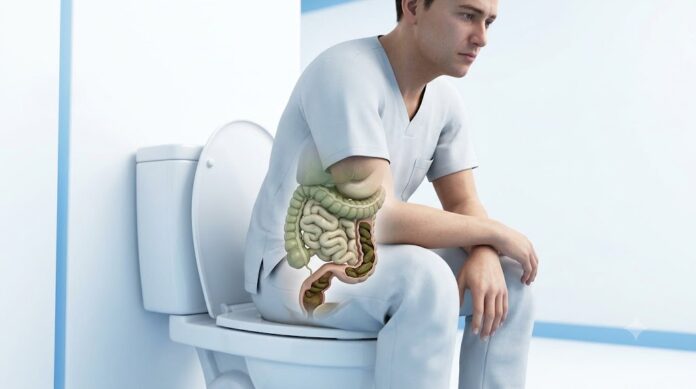
Feeling constipated but still pooping can be frustrating and confusing. Many people wonder, “Why do I feel constipated but still poop every day?” Most people assume constipation only means going less often, but you can have a bowel movement every day and still meet the medical definition of constipation. The missing piece is a symptom called incomplete evacuation, and it has real, identifiable causes.
This guide explains what it means to feel constipated but still poop, the five most common reasons behind it, and what actually helps for each one.
⚡ Quick Answer:
Yes, you can be constipated even if you poop every day. The most common reason is incomplete evacuation, where the rectum does not empty completely during a bowel movement, an official symptom of functional constipation under the Rome IV diagnostic criteria.[1] The leading causes are dyssynergic defecation (pelvic floor muscles that will not relax during a bowel movement), slow colon transit, and, less often, a partial fecal impaction that lets only small amounts of stool pass around a larger blockage.
Disclosure: This article contains affiliate links. If you purchase through our links, we may earn a small commission at no extra cost to you. Our recommendations are based on the evidence discussed in this guide.
At a Glance: Products That May Help When You Feel Constipated but Still Poop
The right product depends entirely on which cause applies to you — see the comparison table above first. Here are the most evidence-aligned options for each mechanism covered in this guide:
- Best for slow transit (gentle daily osmotic support): MiraLAX Laxative Powder (45-Dose) — PEG 3350 draws water into the colon to move stool more completely, AGA-ACG first-line recommendation for chronic constipation, no cramping or urgency
- Best for faster osmotic relief (when stool is hard and incomplete): Natural Vitality CALM Magnesium Citrate Powder — works in 30 minutes to 6 hours, softens and moves stool more completely — avoid with kidney problems, occasional use only
- Best toilet posture aid (straightens anorectal angle for complete emptying): Squatty Potty The Original Toilet Stool 7″ — recreates the squatting position shown to reduce active straining time and improve complete evacuation, directly referenced in this guide’s posture section
- Best fiber for slow transit (when impaction is NOT suspected): Konsyl Daily Psyllium Fiber Powder — 100% pure psyllium husk, adds bulk and water to help stool clear more completely — ⚠️ do NOT use if partial impaction or blockage is suspected, as bulk fiber can worsen a blockage
Why You Feel Constipated but Still Poop
Doctors do not define constipation by frequency alone. Under the Rome IV criteria, the standard used by gastroenterologists worldwide, a person has functional constipation if they experience two or more of the following on at least a quarter of their bowel movements over three months:[1]
- Straining
- Lumpy or hard stool
- A sensation of incomplete evacuation
- A sensation of anorectal blockage
- Needing a finger or manual maneuver to help stool pass
- Fewer than three bowel movements per week
Look closely at that list. Four of the six criteria have nothing to do with how often you go. Someone can have a bowel movement daily and still meet the diagnostic bar for constipation if they consistently strain, feel blocked, or leave the bathroom feeling like stool is still there. This is exactly why so many people feel constipated but still poop every day, and why “just eat more fiber” often does not fix it.
5 Real Causes of Feeling Constipated but Still Pooping
1. Dyssynergic Defecation (Pelvic Floor Dysfunction)
This is the single most common reason people feel constipated despite regular bowel movements.
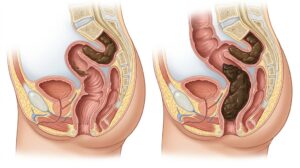
During a normal bowel movement, the puborectalis muscle and anal sphincter relax while the abdominal muscles push. In dyssynergic defecation, these muscles do the opposite. They tighten, or fail to relax, during the attempt to defecate. This creates a functional roadblock even though nothing is physically obstructing the rectum.[2,3]
Dyssynergic defecation affects roughly one-third of people evaluated for chronic constipation.[3,4] It produces exactly the symptom pattern in this article: straining, a sense of incomplete emptying, a feeling of blockage, and sometimes the need to use a finger to assist stool passage. Fiber and most laxatives do not fix it, and a large, bulky stool can even make the straining worse.
The evidence-based treatment is biofeedback therapy. It retrains the pelvic floor muscles to relax properly during defecation. A randomized controlled trial found that biofeedback produced sustained improvement in bowel symptoms for a full year, while standard therapy with diet and laxatives alone did not.[5]
If you have already tried increasing fiber without success, our guide on why fiber isn’t working for your constipation covers this exact mechanism, including who should be evaluated for pelvic floor dysfunction.
2. Slow Transit Constipation
Some people have colon muscles that contract too weakly, or too infrequently, to move stool along efficiently.
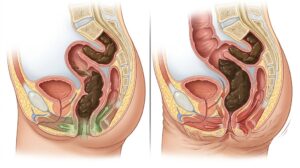
Stool sits in the colon longer than it should. The colon keeps absorbing water from it, making it harder to pass completely. Even after a bowel movement, stool can remain higher in the colon, which produces a lingering sense of not being finished.
Slow transit constipation and dyssynergic defecation frequently overlap in the same patient.[2] Telling them apart usually requires specialized testing, such as a colonic transit study or anorectal manometry, rather than guesswork at home.
3. Partial Blockage and Fecal Impaction
When constipation goes untreated for a while, a large, hardened mass of stool can lodge in the rectum or lower colon.
Only smaller or softer amounts of stool can squeeze past this kind of blockage. That is exactly why someone can feel a strong urge, pass something, and still feel completely unrelieved afterward.[6]
In more advanced cases, liquid stool can leak around the impacted mass entirely. This is called paradoxical or overflow diarrhea, and it is often mistaken for an unrelated stomach bug.[7] This pattern shows up most in older adults, people with limited mobility, and anyone taking medications that slow the gut, such as opioids or certain antidepressants.
If you are caring for an elderly parent showing these signs, our guide to immediate constipation relief for elderly at home outlines the warning signs of impaction and when emergency care is needed.
4. Structural Causes (Rectocele and Rectal Prolapse)
Less commonly, physical changes in the rectal area can trap stool during defecation and produce the same feeling of incomplete emptying.
A rectocele is a bulge of the rectal wall into the vagina. It is a common finding on imaging in people with obstructed defecation, but clinical reviews are careful to note that a rectocele by itself rarely causes constipation. It usually needs to be considered alongside other findings, not treated as the automatic explanation.[6] Rectal prolapse can trap stool in a similar way. Both are typically identified through a physical exam or defecography, and both usually need evaluation by a gastroenterologist or colorectal specialist rather than home remedies.
5. Diet, Hydration, and Toilet Posture
Even without an underlying disorder, everyday habits can add to the feeling of incomplete emptying.
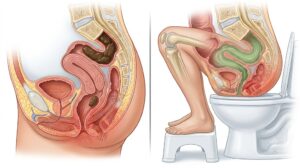
Chronic dehydration hardens stool and makes complete evacuation harder. A Western-style seated toilet also keeps the puborectalis muscle in a position that partially kinks the rectum instead of straightening it. A study that compared sitting and squatting found that active straining time was cut to about 51 seconds while squatting, compared to roughly 130 seconds on a standard-height toilet, and many people also reported less sense of incomplete evacuation in the squatting position.[8]
Our guide on the best position to poop for constipation covers exactly how to recreate this posture with a footstool on a normal toilet. Our piece on whether dehydration causes constipation covers the hydration side of the equation.
Quick Comparison: Which Cause Fits You?
| Cause | Key signs | What typically helps |
|---|---|---|
| Dyssynergic defecation | Straining, feeling blocked, needing to use a finger, no relief from fiber | Anorectal manometry, balloon expulsion test, biofeedback therapy[3,5] |
| Slow transit constipation | Infrequent urges, stool feels like it never fully clears, sluggish overall | Colonic transit testing, osmotic laxatives, lifestyle changes[2] |
| Partial impaction / overflow | Small amounts pass despite a strong urge, occasional watery leakage | Medical evaluation, disimpaction if needed, not more fiber[6,7] |
| Structural (rectocele, prolapse) | Need to press on the vagina or perineum to complete a bowel movement | Physical exam, defecography, specialist referral[6] |
| Diet, hydration, posture | Mild, inconsistent symptoms with no other red flags | Water intake, toilet posture, gradual dietary changes |
When This Is a Sign of Something More Serious
Occasional incomplete evacuation is common and usually not dangerous. See a doctor if you notice any of the following:
- The sensation of incomplete evacuation lasts more than three months
- You regularly need to press on your abdomen or use a finger to help stool pass
- Blood in the stool or on toilet paper
- Unexplained weight loss
- New-onset constipation after age 50 with no clear cause
- Alternating episodes of constipation and sudden watery or leaking stool
- Severe abdominal pain, vomiting, or inability to pass gas at all
These symptoms warrant a proper medical workup. This may include a digital rectal exam, anorectal manometry, or a balloon expulsion test to check specifically for dyssynergic defecation before any other treatment is tried.[3,4]
How to Fix Feeling Constipated but Still Pooping
Because the five causes above are mechanically different, the right fix depends on which one applies to you.
- If straining and a sense of blockage are the main issue: a physical exam to rule out dyssynergic defecation is more useful than more fiber or a stronger laxative. Biofeedback therapy has the strongest evidence for this specific pattern.[5]
- If stool is simply moving too slowly: an osmotic option such as polyethylene glycol or magnesium can help draw water into the colon. Our reviews of best OTC laxatives for constipation and best magnesium supplements for constipation break down which options have the strongest clinical backing.
- If you suspect a partial impaction: avoid adding more bulk-forming fiber, since it can worsen the blockage. This situation typically needs a softening approach and, in some cases, direct medical disimpaction.
- For everyday posture and hydration support: a footstool to adjust toilet posture and consistent water intake are low-risk starting points covered in our guides on how to soften stool naturally and fiber therapy for gut health.
Incomplete evacuation often shows up alongside other symptoms. If constipation is also accompanied by nausea, our guide on whether constipation can cause nausea explains when that combination needs closer attention. If bloating and trapped gas are part of the picture, see does constipation cause gas for the two main mechanisms behind it. And if you have noticed dull lower back discomfort alongside your bowel symptoms, our article on whether constipation can cause back pain covers how the two are connected.
The Bottom Line
Feeling constipated but still pooping is not a contradiction. It is a recognized pattern of functional constipation, and in most cases it points to dyssynergic defecation, slow transit, or an early partial blockage rather than a simple lack of fiber or water. Figuring out which mechanism applies to you, instead of defaulting to more fiber or a stronger laxative, is the most direct path back to feeling fully relieved after a bowel movement.
If your symptoms continue despite dietary changes or over-the-counter treatments, don’t ignore them. Persistent incomplete evacuation may need evaluation by a healthcare professional to identify the underlying cause and choose the right treatment.
Frequently Asked Questions
Why do I feel constipated even after I poop?
This feeling is called incomplete evacuation. It happens when the rectum does not fully empty during a bowel movement, and it is one of the official Rome IV symptoms of functional constipation. It can occur even if you pass stool every day. The most common causes are dyssynergic defecation, slow colon transit, or a partial blockage of hard stool that only lets small amounts pass.
Can you be constipated and still have regular bowel movements?
Yes. The Rome IV criteria also count straining, lumpy or hard stool, a sensation of incomplete evacuation, and a feeling of anorectal blockage as core symptoms. A person can have a bowel movement most days and still meet the clinical definition of constipation if these symptoms show up at least a quarter of the time.[1]
What is dyssynergic defecation?
Dyssynergic defecation, also called pelvic floor dyssynergia or anismus, happens when the pelvic floor and anal sphincter muscles contract instead of relaxing during a bowel movement. It affects roughly one-third of people evaluated for chronic constipation and is diagnosed with anorectal manometry and a balloon expulsion test. The first-line treatment is biofeedback therapy, not laxatives or fiber.[3,5]
Why does only a little bit of stool come out even though I feel like I need to go?
Passing only a small amount despite a strong urge can happen when a larger, harder stool mass sits higher in the rectum or colon and only softer stool can move around it. In more severe cases, this can progress to fecal impaction with overflow leakage, which is sometimes mistaken for diarrhea.[6,7]
When should I see a doctor about feeling constipated but still pooping?
See a doctor if the sensation lasts more than three months, if you need to press on your abdomen or use a finger to help stool pass, if you notice blood in the stool, unexplained weight loss, new symptoms after age 50, or alternating constipation and sudden watery stool.
Medical Disclaimer: This article is for informational purposes only and does not constitute medical advice. Always consult a qualified healthcare provider for diagnosis and treatment of constipation, especially if symptoms are persistent, severe, or accompanied by any of the warning signs listed above.
Scientific References
References are numbered in order of first appearance.
- Rome Foundation. Rome IV Criteria for Functional Constipation. Available at: theromefoundation.org/rome-iv/rome-iv-criteria
- Bharucha AE, Lacy BE. Mechanisms, Evaluation, and Management of Chronic Constipation. Gastroenterology. 2020;158(5):1232-1249. PubMed PMID: 31945360
- Rao SS, Patcharatrakul T. Diagnosis and Treatment of Dyssynergic Defecation. J Neurogastroenterol Motil. 2016;22(3):423-435. PubMed PMID: 27270989
- Sadeghi A, Akbarpour E, Majidirad F, Bor S, Forootan M, Hadian MR, Adibi P. Dyssynergic Defecation: A Comprehensive Review on Diagnosis and Management. Turk J Gastroenterol. 2023;34(3):182-195. PubMed PMID: 36919830
- Rao SSC, Valestin J, Brown CK, Zimmerman B, Schulze K. Long-term efficacy of biofeedback therapy for dyssynergic defecation: randomized controlled trial. Am J Gastroenterol. 2010;105(4):890-896. PubMed PMID: 20179692
- Prather CM, Ortiz-Camacho CP. Evaluation and treatment of constipation and fecal impaction in adults. Mayo Clin Proc. 1998;73(9):881-887. PubMed PMID: 9737226
- Fecal Impaction. StatPearls [Internet]. NCBI Bookshelf. Available at: ncbi.nlm.nih.gov/books/NBK448094
- Sikirov D. Comparison of straining during defecation in three positions: results and implications for human health. Dig Dis Sci. 2003;48(7):1201-1205. PubMed PMID: 12870773





[…] women and people over 65 at higher risk. Still passing stool but feeling backed up? Our guide on why you can feel constipated but still poop breaks down that specific […]