


📌 Who This Article Is ForMillions of Americans are now on Ozempic, Wegovy, Mounjaro, or another GLP-1 injection for diabetes management or weight loss. These medications have been genuinely life-changing — people are losing significant weight, controlling blood sugar, and reducing cardiovascular risk. But there is a side effect that many patients don’t hear enough about before they start: severe, persistent constipation that can last for weeks or months.
If you started a GLP-1 injection and suddenly find yourself going days without a bowel movement, straining painfully, or feeling bloated and backed up despite eating far less food than before — you are not alone, and this is not a coincidence. These injections pharmacologically slow your entire digestive system as a deliberate part of how they work. The same mechanism that reduces your appetite and controls your blood sugar also suppresses the gut contractions that keep you regular.
Standard advice like “eat more fiber and drink more water” is a start — but it is often not enough on its own when your colon’s motility is being actively suppressed by medication. That’s where targeted supplementation comes in. This guide covers the best iHerb supplements for Ozempic constipation — chosen specifically for the mechanisms that GLP-1 drugs disrupt, not just generic constipation relief. Every product on this list is available on iHerb, independently tested for quality, and selected based on clinical evidence.
Quick Facts: GLP-1 Medications & Constipation Impact
| Category | Key Statistic | Source/Context |
| Wegovy Users Affected | Up to 24% | Clinical trials show nearly 1 in 4 users experience constipation. |
| Median Duration | 47 Days | How long constipation typically lasts for GLP-1 users. |
| Standard Ozempic Dose | 3–13% | The percentage of users affected at standard dosages. |
The short answer: Ozempic (semaglutide) pharmacologically slows your colon — and the standard “eat more fiber” advice often isn’t enough on its own. The 7 supplements below target the specific GLP-1 gut mechanisms behind the problem. They’re all available on iHerb, third-party tested, and chosen based on clinical evidence.
📚 Related Articles on ConstipationRelief.net:
Why Ozempic Causes Constipation: The Science Explained
Ozempic (semaglutide), Wegovy (higher-dose semaglutide), Mounjaro, and Rybelsus all belong to a drug class called GLP-1 receptor agonists. These medications mimic a natural gut hormone called glucagon-like peptide-1, which helps regulate blood sugar and appetite. They work remarkably well for type 2 diabetes and weight loss — but they come with a significant digestive cost.
Here is what GLP-1 medications actually do to your digestive system:
1. Delayed Gastric Emptying
GLP-1 drugs dramatically slow how fast food leaves your stomach. In one clinical study, 37% of a solid meal was still sitting in the stomach 4 hours after eating in patients who had been on semaglutide for 12 weeks — compared to 0% in the placebo group. This alone creates a domino effect throughout the entire gut.
2. Suppressed Colonic Motility
GLP-1 receptors are found throughout the entire gastrointestinal tract, including on the smooth muscle cells of the colon. When these receptors are activated by semaglutide, colonic contractions slow down. The coordinated peristaltic waves that normally propel stool forward become weak and disorganized. Your colon’s ability to move waste is pharmacologically suppressed.
3. Dehydration of Stool
As waste material spends more time in your colon, your body continues drawing water out of it. The longer it sits, the harder and drier your stool becomes — making it painful and difficult to pass.
4. Reduced Fluid Intake
Because Ozempic significantly reduces hunger and the sensation of thirst, many users unintentionally drink far less water. This dehydration compounds the constipation problem significantly.
5. Gut Microbiome Disruption
Emerging research shows that GLP-1 medications alter the composition of gut bacteria over time — including reducing populations of beneficial strains like Akkermansia muciniphila that help maintain the intestinal lining and support normal motility signaling. This microbiome shift may contribute to ongoing constipation and bloating even in patients whose gastric emptying has partially normalized.
6. Gut-Brain Axis Disruption
GLP-1 drugs also appear to interfere with the gut-brain axis — the communication superhighway between your digestive system and your brain that helps coordinate bowel movements. This disruption can further impair motility in ways that go beyond simple “slowdown.”
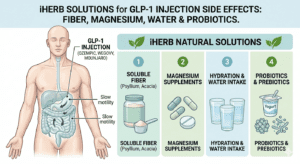
📊 Key Statistics:
- Constipation affects approximately 3–13% of standard-dose Ozempic users
- At Wegovy’s weight-loss dose (2.4 mg), constipation rates jump to up to 24% — nearly 1 in 4 people
- Constipation from semaglutide lasts a median of 47 days — far longer than nausea (8 days)
- Research confirms constipation rates increase the longer you stay on GLP-1 therapy
- Dose escalation periods are when constipation is most likely to worsen suddenly
For a deeper look at how different types of constipation develop and how to identify yours, read our guide: Best Magnesium Supplements for Constipation (2026 Review).
The Real Dangers of Ignoring Ozempic Constipation
Most people assume constipation is just uncomfortable. When it’s caused by GLP-1 medications, the risks can escalate if left unmanaged:
Ozempic can worsen — and in rare cases, even trigger — gastroparesis (severe stomach paralysis). Symptoms include chronic constipation, severe bloating, abdominal pain, and vomiting of undigested food. A 2024 review in Cureus confirmed that semaglutide has a documented tendency to induce gastroparesis in susceptible individuals. If you experience these symptoms, contact your doctor immediately.
- Intestinal obstruction risk: A peer-reviewed study found that the risk of chronic intestinal obstruction increases over time with GLP-1 therapy, with the highest occurrence appearing around 1.6 years into treatment.
- Fecal impaction: Severely hardened stool that cannot be passed normally, sometimes requiring medical intervention including manual disimpaction.
- Hemorrhoids: Straining to pass hard stool repeatedly puts enormous pressure on rectal veins. Learn more in our article on constipation and hemorrhoids.
- Cardiovascular strain: Straining during bowel movements temporarily increases blood pressure (Valsalva maneuver), which can be risky for people with heart disease — a population that overlaps significantly with Ozempic users.
- Nutritional gaps: Constipation can interfere with nutrient absorption, compounding the nutritional challenges already present when eating less food on GLP-1 therapy. Deficiencies in magnesium, B vitamins, and zinc are particularly common.
- Medication non-adherence: Many patients quietly stop taking their GLP-1 medication because of intolerable constipation — losing the cardiovascular and metabolic benefits — when targeted supplementation could have made it manageable.
Important: If you are experiencing severe abdominal pain, vomiting, no bowel movements for 5+ days, or blood in your stool while on Ozempic — stop using OTC remedies and call your doctor or go to urgent care immediately.
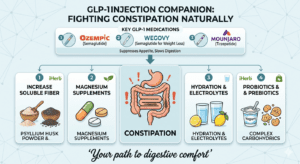
The 7 Best iHerb Supplements for Ozempic Constipation
These supplements were selected based on: (1) clinical evidence for the specific mechanisms behind GLP-1 constipation, (2) quality and third-party testing available on iHerb, and (3) real-world suitability for people eating significantly less food while on these medications. This is not a list of generic constipation supplements — each one is matched to what GLP-1 drugs actually break.
#1 Top Pick 🏆 Best Overall for GLP-1 Users
California Gold Nutrition – Akkermansia + Probiotics GLP-1 Complex
California Gold Nutrition | 60 Veggie Capsules | 30 Billion CFU
This is the most targeted probiotic on iHerb specifically designed for people on GLP-1 medications. It combines 30 billion CFU of gut-supporting probiotic strains with 5 billion TFU of pasteurized Akkermansia muciniphila — a next-generation gut bacterium that helps maintain the gut lining, supports metabolism, and has been directly linked to GLP-1 pathway support in emerging research.
Akkermansia lives in the mucus layer of your gut. GLP-1 medications alter the gut environment, which can reduce Akkermansia populations over time. Restoring this bacterium may help maintain gut barrier integrity and support motility signaling. Each capsule is individually double-foil blister-sealed for stability without refrigeration — ideal for travelers or those who don’t want to manage refrigerated supplements.
Important note on timing: Take this probiotic at least 2 hours apart from your Ozempic injection and other medications for best results. Because GLP-1 drugs slow gastric emptying, the probiotic organisms spend more time in the stomach — taking it with a small amount of food may improve tolerability.
✅ Pros
- Specifically formulated for GLP-1 medication users
- Contains Akkermansia muciniphila — a research-backed next-gen strain
- 30 billion CFU from 4 live + 1 pasteurized strains
- Shelf-stable, no refrigeration needed
- iHerb iTested — third-party verified for purity and potency
- Well-tolerated per user reviews
❌ Cons
- Contains maltodextrin as a filler (noted by some users)
- Capsule size is large for some people
- Results typically take 2–4 weeks to show
- Higher price point than basic probiotics
*Affiliate link — we may earn a commission at no cost to you.
#2 💊 Best Magnesium for Constipation
Doctor’s Best – High Absorption Magnesium Lysinate Glycinate
Doctor’s Best | 240 Tablets | 100 mg per tablet | Albion® TRAACS® Chelate
Magnesium is one of the most well-supported natural remedies for constipation, and this is the best form for people on Ozempic. Magnesium glycinate works as an osmotic agent, drawing water into the intestines to soften stool and stimulate peristalsis — the exact type of gut movement that GLP-1 drugs suppress.
Unlike magnesium oxide (which can cause cramping and is poorly absorbed) or magnesium citrate (which can be too aggressive for regular use), magnesium glycinate is gentle, highly bioavailable (up to 6x better absorbed), and much less likely to cause urgency or loose stools. It also supports sleep quality — a genuine bonus, since poor sleep worsens gut motility through its effect on the enteric nervous system. The Albion® TRAACS® chelate technology is the gold standard for mineral absorption. Perfect for the daily ongoing use that Ozempic constipation requires.
For a comprehensive comparison of all magnesium forms, see our guide: Best Magnesium Supplements for Constipation (2026).
✅ Pros
- Gentle, no cramping or urgency
- Up to 6x more bioavailable than magnesium oxide
- Supports sleep quality (bonus for gut health)
- Non-GMO, gluten-free, soy-free, vegan
- 240 tablets — excellent value for long-term use
- Albion® TRAACS® — clinically validated chelated form
❌ Cons
- Tablets are large — harder to swallow for some
- Works gradually over days, not an overnight fix
- Requires 2 tablets daily for full benefit
- Not for people with kidney disease without medical advice
*Affiliate link — we may earn a commission at no cost to you.
#3 🌿 Best Fiber Supplement
NOW Foods – Psyllium Husk Powder (Organic)
NOW Foods | 24 oz (680 g) | Certified Organic | Non-GMO
Psyllium husk is the most clinically proven fiber supplement for constipation — and it’s particularly well-suited for Ozempic users because it adds bulk and moisture to stool without requiring large food intake. Since GLP-1 medications drastically reduce how much you eat, many users don’t get anywhere near the recommended 25–38 grams of dietary fiber from food alone.
Psyllium is a gel-forming soluble fiber from Plantago ovata seeds. When mixed with water, it expands up to 50x its original volume, forming a gel that softens stool and helps propel it through the colon. Multiple studies confirm it increases stool frequency, improves consistency, and reduces food transit time — all the exact metrics that suffer on Ozempic. One tablespoon mixed vigorously into 12+ oz of water provides 6 grams of soluble fiber.
Critical note for Ozempic users: Always drink psyllium with a full glass of water (at least 12 oz) and take it at least 2 hours apart from your Ozempic dose and any other medications, as fiber can reduce drug absorption. Never take psyllium without adequate water — in a GLP-1-slowed gut, an under-hydrated psyllium bolus can worsen constipation or, rarely, cause an esophageal blockage.
✅ Pros
- Most evidence-backed fiber type for constipation
- Swells up to 50x in water — powerful bulking action
- Certified Organic, non-GMO, no additives
- FDA-recognized heart health claim for soluble fiber
- Excellent value for 24 oz size
- Versatile — can stir into water, juice, or smoothies
❌ Cons
- Must be taken with ample water or risk choking/blockage
- Gritty texture — some find it unpleasant
- Can cause initial bloating — start with half dose and increase slowly
- Timing around medications is critical
*Affiliate link — we may earn a commission at no cost to you.
#4 🔬 Best Metabolic + Gut Support
California Gold Nutrition – GLP-1 Supreme™
California Gold Nutrition | 60 Veggie Capsules | With Akkermansia, Berberine, Quercetin & Curcumin
This is one of the most innovative GLP-1 support supplements on iHerb. It is not a constipation-specific supplement — instead, it addresses the metabolic environment around GLP-1 therapy with a synergistic formula that includes pasteurized Akkermansia muciniphila, dihydroberberine (DHB), quercetin, amorphous turmeric curcumin complex, chromium, and cinnamon extract.
Why does this matter for constipation? Berberine has documented effects on gut motility and has been studied as a treatment for both diarrhea and constipation depending on dosage and context — its net effect in most users is gut-normalizing. Quercetin and curcumin have anti-inflammatory gut effects that may reduce the visceral discomfort accompanying GLP-1 constipation. Akkermansia supports the gut mucus layer and may help restore normal gut signaling. Together, these ingredients work on the underlying gut environment that GLP-1 drugs disrupt — rather than just mechanically pushing stool along.
This is the supplement to consider if your Ozempic stomach pain and bloating are as bothersome as the constipation itself. Note: berberine may interact with certain medications including blood thinners and blood sugar medications — consult your doctor if you take these.
✅ Pros
- Targets GLP-1 gut environment holistically
- Effective for bloating relief in Wegovy users
- Anti-inflammatory ingredients (quercetin, curcumin)
- Unique formula not found elsewhere
- iHerb iTested — third-party certified
❌ Cons
- Not a direct laxative — works gradually over weeks
- Berberine interacts with some medications (blood thinners, diabetes meds)
- Take with food to avoid nausea
- Not suitable during pregnancy
*Affiliate link — we may earn a commission at no cost to you.
#5 🦠 Best Multi-Strain Probiotic
Garden of Life – RAW Probiotics Colon Care
Garden of Life | 30 Vegetarian Capsules | 50 Billion CFU | 33 Probiotic Strains
If you’re looking for a broad-spectrum probiotic that specifically supports colon health, Garden of Life’s RAW Probiotics Colon Care is hard to beat. With 50 billion CFU from 33 strains including targeted colon-supporting bacteria, digestive enzymes, and prebiotics, this is a complete colon rehabilitation formula.
Research consistently shows that an imbalanced gut microbiome contributes to constipation — and GLP-1 medications alter gut bacteria composition over time. The high strain diversity here ensures broad microbiome support. Multiple clinical reviews confirm that probiotics containing Lactobacillus and Bifidobacterium species increase stool frequency and reduce transit time in constipated adults. The inclusion of digestive enzymes is particularly valuable for GLP-1 users who are eating smaller meals that may be harder to digest efficiently due to reduced stomach acid production. Does not require refrigeration.
✅ Pros
- 33 probiotic strains — broadest microbiome coverage
- 50 billion CFU — clinical therapeutic dose
- Includes digestive enzymes + prebiotics (3-in-1)
- No refrigeration required
- Clean ingredients — RAW, non-GMO, gluten-free
- Strong user reviews specifically for constipation relief
❌ Cons
- Higher cost per capsule than budget alternatives
- Only 30 capsules per bottle (1-month supply)
- Some users with sensitive systems report initial gas
*Affiliate link — we may earn a commission at no cost to you.
#6 ⚡ Best Budget Probiotic
California Gold Nutrition – Probiotics 25 Billion CFU (10-Strain Blend)
California Gold Nutrition | 60 Veggie Capsules | 25 Billion CFU | 10 Strain Blend
If the GLP-1 Complex or Colon Care is over your budget, this is the best affordable probiotic for Ozempic constipation on iHerb. With 25 billion CFU across 10 strains — including Lactobacillus acidophilus, Bifidobacterium lactis, Lactobacillus plantarum, and Lactobacillus casei — it covers the key strains shown in clinical reviews to improve stool frequency and consistency.
Bifidobacterium lactis in particular has been highlighted in multiple systematic reviews as one of the most consistently effective probiotic strains for chronic constipation. California Gold Nutrition products are independently tested via iHerb’s iTested program for purity, potency, and heavy metals — exceptional quality assurance for a budget-friendly product. At 60 capsules, this provides a full 2-month supply at an accessible price point.
✅ Pros
- Excellent value — 60 capsules (2-month supply)
- 10 clinically relevant probiotic strains
- 25 billion CFU — effective therapeutic dose
- iTested third-party verified for purity and potency
- Non-GMO, soy-free, gluten-free, vegan
- Trusted California Gold Nutrition brand on iHerb
❌ Cons
- No Akkermansia, digestive enzymes, or prebiotics
- Less comprehensive than premium GLP-1 specific options
- May need refrigeration after opening for best potency
*Affiliate link — we may earn a commission at no cost to you.
#7 🌱 Best Fiber + Probiotic Combo
Organic India – Psyllium Pre & Probiotic Fiber
Organic India | 10 oz (283.5 g) | USDA Certified Organic | Vegan & Gluten-Free
For those who want fiber and probiotics in a single, convenient product, Organic India’s psyllium blend is a standout. It combines organic whole psyllium husk with Bacillus coagulans (a heat-stable probiotic) and Ayurvedic herbs including Triphala — all in a powder that mixes into water or juice.
Triphala has a centuries-long history as a gentle digestive tonic in Ayurvedic medicine and contains compounds (particularly gallic acid and chebulinic acid) with mild prokinetic and laxative properties. Unlike senna-based stimulant laxatives, Triphala works through a gentler mechanism that is more compatible with long-term use. Bacillus coagulans is a spore-forming probiotic that survives stomach acid far more reliably than standard Lactobacillus strains — an important advantage for GLP-1 users whose food and supplements spend more time in an acidic stomach. This combo product is ideal for Ozempic users who want to simplify their supplement routine into one morning shake rather than multiple capsules.
✅ Pros
- Fiber + probiotic in one convenient product
- USDA Certified Organic
- Triphala adds gentle, non-stimulant laxative support
- Bacillus coagulans survives stomach acid reliably
- Clean label — no sugar or artificial flavors
- Highly rated for normalizing digestion without bloating
❌ Cons
- More expensive per serving than plain psyllium powder
- Powder must be consumed quickly before it thickens into gel
- Triphala: some Ayurvedic practitioners recommend cycling use (e.g., 3 months on, 1 month off)
*Affiliate link — we may earn a commission at no cost to you.
Quick Comparison Table
Here’s how all 7 best iHerb supplements for Ozempic constipation compare at a glance:
| # | Product | Type | GLP-1 Specific | 3rd-Party Tested | Best For |
|---|---|---|---|---|---|
| 1 | CGN Akkermansia + Probiotics GLP-1 Complex | Probiotic | ✓ Yes | ✓ iTested | All GLP-1 users |
| 2 | Doctor’s Best Magnesium Glycinate | Mineral | — | ✓ Albion® | Gentle daily relief |
| 3 | NOW Foods Psyllium Husk Powder | Fiber | — | ✓ Non-GMO/Organic | Stool bulking |
| 4 | CGN GLP-1 Supreme™ | Metabolic | ✓ Yes | ✓ iTested | Bloating + pain |
| 5 | Garden of Life RAW Probiotics Colon Care | Probiotic | — | ✓ RAW / Non-GMO | Microbiome rebuild |
| 6 | CGN Probiotics 25B CFU 10-Strain | Probiotic | — | ✓ iTested | Budget option |
| 7 | Organic India Psyllium Pre & Probiotic | Fiber + Probiotic | — | ✓ USDA Organic | Simplify routine |
How to Use These Supplements Together: A Practical Protocol
For the best results against Wegovy constipation relief or Ozempic-related gut issues, here is how to layer these supplements effectively:
The Core Stack (Most People)
- Morning (at least 2 hours before Ozempic injection or other meds): Psyllium husk powder (1 tbsp) stirred into 12+ oz water — drink immediately before it gels
- With lunch: CGN Akkermansia + Probiotics GLP-1 Complex (1 capsule with a small amount of food)
- Before bed: Doctor’s Best Magnesium Glycinate (2 tablets, ~200 mg elemental magnesium)
Add-On for Bloating & Stomach Pain
- Add CGN GLP-1 Supreme™ (2 capsules with food, lunch or dinner) to address the underlying metabolic gut environment and reduce visceral discomfort
Budget-Friendly Alternative Stack
- Morning: Organic India Psyllium Pre & Probiotic Fiber (1 serving in water) — covers fiber and probiotic in one step
- Before bed: Doctor’s Best Magnesium Glycinate (2 tablets)
Hydration — The Most Important Non-Supplement Step
None of these supplements will work optimally if you’re dehydrated. Because Ozempic reduces thirst sensation, you need to drink water intentionally throughout the day. Aim for 8–10 cups (64–80 oz) of fluid daily even if you don’t feel thirsty. Set phone reminders if needed. Electrolyte drinks (low-sugar varieties) can help if you find plain water difficult to consume in these quantities.
Lifestyle Additions That Amplify Results
- Movement: Even a 20-minute walk after meals significantly stimulates colon motility through the gastrocolic reflex
- Squat position: Using a footstool (like a Squatty Potty) while on the toilet straightens the anorectal angle for easier, strain-free passage
- Meal timing: Eating smaller, more frequent meals is gentler on a GLP-1-slowed stomach and keeps the gut more consistently active than one or two large meals
- Morning routine: A warm beverage (water, coffee, or herbal tea) first thing in the morning stimulates the gastrocolic reflex — take advantage of this natural motility window
⚠️ Why stimulant laxatives and GLP-1 medications don’t mix well: Many people reach for senna or bisacodyl (stimulant laxatives) when constipated on Ozempic. However, these work by irritating the intestinal lining to force contractions. When your colon’s motility is already pharmacologically suppressed by GLP-1 drugs, stimulant laxatives create dysrhythmic, chaotic contractions that provide short-term relief but do not restore normal function. Regular use can also lead to dependency and, over time, further impair natural motility. The fiber + magnesium + probiotic approach is more appropriate for the long-term management that GLP-1 constipation requires.
For a full overview of laxative options — including which ones are safest on GLP-1 drugs — see our Best OTC Laxatives Guide.
When to See a Doctor About Ozempic Constipation
Supplements and lifestyle changes help manage typical Ozempic constipation, but there are situations that require prompt medical attention:
- No bowel movement for 5 or more days despite consistent use of supplements and hydration
- Blood in your stool — whether bright red (lower GI) or black/tarry (upper GI bleed)
- Severe or worsening abdominal pain or cramping
- Symptoms of gastroparesis: vomiting of undigested food, persistent early satiety, or severe upper abdominal bloating
- Unintended significant weight loss beyond what is expected from the medication
- Constipation that does not improve after 3–4 weeks of consistent supplementation
- New onset of severe nausea and vomiting after previously tolerating the medication well
Your doctor may consider adjusting your Ozempic dose (higher doses cause more GI side effects), prescribing a motility agent such as prucalopride or low-dose naloxegol, or evaluating for gastroparesis with a gastric emptying study. Do not stop taking Ozempic or Wegovy without medical guidance — abrupt discontinuation can cause rapid blood sugar changes and rebound weight gain.
Frequently Asked Questions
Why does Ozempic cause constipation?
Ozempic activates GLP-1 receptors throughout the digestive tract, slowing gastric emptying, suppressing colonic motility, disrupting gut microbiome composition, and reducing hydration levels (through appetite and thirst suppression). Together these factors cause stool to become hard, dry, and slow-moving. At the higher Wegovy dose (2.4 mg), constipation affects up to 24% of users and lasts a median of 47 days.
What is the best supplement for Ozempic constipation from iHerb?
For most people, the combination of Doctor’s Best Magnesium Glycinate (at bedtime) and California Gold Nutrition’s Akkermansia + Probiotics GLP-1 Complex (daytime) gives the best balance of gentle osmotic relief and gut microbiome restoration. Add psyllium husk in the morning if stool is consistently hard and dry. This three-part stack addresses the three main mechanisms of GLP-1 constipation: reduced motility, microbiome disruption, and dehydrated stool.
Can I take magnesium with Ozempic?
Yes, magnesium glycinate is generally safe alongside Ozempic. However, consult your doctor if you have kidney disease — the kidneys excrete excess magnesium and impaired kidney function can cause magnesium accumulation to dangerous levels. Start with 100–200 mg before bed and increase gradually if needed. People with stage 4–5 chronic kidney disease should always get medical clearance before using magnesium supplements.
How long does constipation from Ozempic last?
Clinical studies show Ozempic constipation lasts a median of 47 days — much longer than nausea (8 days). For many users it improves as the body partially adapts to the medication, particularly after the dose stabilizes. Constipation is worst immediately after dose escalation points. Consistent supplementation can significantly reduce severity even if the underlying cause (GLP-1 receptor activation) persists.
Are iHerb probiotics for weight loss drugs actually effective?
Yes, with important nuance. Standard probiotics help restore gut microbiome balance and modestly improve stool frequency — clinical meta-analyses confirm this for Bifidobacterium lactis and Lactobacillus strains. However, GLP-1-specific products like the CGN Akkermansia + Probiotics GLP-1 Complex go further by restoring Akkermansia muciniphila, which specifically supports gut lining health and motility signaling that GLP-1 drugs disrupt. Expect results after 2–4 weeks of consistent use.
Does Wegovy cause more constipation than Ozempic?
Yes. Both contain semaglutide, but Wegovy is prescribed at a higher dose (up to 2.4 mg weekly) for weight management versus Ozempic’s standard doses (0.5–2 mg) for diabetes. Constipation rates are approximately 3–13% at standard Ozempic doses versus up to 24% at Wegovy’s full maintenance dose. The dose-dependent effect means people on Mounjaro (tirzepatide) experience similar or higher rates of constipation at its highest doses.
Is it safe to take psyllium husk with Ozempic?
Yes, but timing and hydration are critical. Take psyllium husk at least 2 hours before or after your Ozempic injection and other medications — fiber can reduce the absorption of some drugs if taken simultaneously. Always drink a minimum of 12 oz (350 ml) of water with every psyllium dose. In a GLP-1-slowed gut, taking psyllium with insufficient water creates a risk of worsening constipation or, in rare cases, esophageal obstruction.
Can vitamin deficiencies make Ozempic constipation worse?
Yes. Because GLP-1 medications significantly reduce food intake, many users become deficient in magnesium, B vitamins (particularly B1 and B12), zinc, and vitamin D — all of which play roles in gut motility and nerve function. This is an underappreciated reason why Ozempic constipation can worsen over time on the medication. Consider a comprehensive multivitamin alongside the gut-specific supplements above, and discuss nutrient monitoring with your doctor.
The Bottom Line
Ozempic and Wegovy constipation is not just a nuisance — it’s a predictable, physiological consequence of how GLP-1 receptor agonists work on your gut. The best iHerb supplements for this problem address the specific mechanisms at play: suppressed motility, altered gut bacteria, insufficient fiber intake, and dehydration of stool.
The most effective approach for most people is the core stack: psyllium husk in the morning (at least 2 hours before meds), California Gold Nutrition Akkermansia + Probiotics GLP-1 Complex during the day, and Doctor’s Best Magnesium Glycinate before bed — combined with consistent hydration (8–10 cups daily), daily movement, and smaller more frequent meals. Add the CGN GLP-1 Supreme™ if bloating and stomach pain are your primary complaints alongside constipation.
If constipation persists despite these measures, or you experience any of the warning signs listed above, consult your prescribing doctor. These supplements are supportive tools — not a substitute for medical care. The goal is to make your GLP-1 therapy manageable so you can stay on it long enough to capture its remarkable metabolic and cardiovascular benefits.
- Smits MM, et al. (2021). Safety of semaglutide. Frontiers in Endocrinology. PMC8294388. PubMed
- Gorgojo-Martínez JJ, et al. (2022). Clinical recommendations to manage GI adverse events in GLP-1 RA patients. Journal of Clinical Medicine. PMC9821052. PMC
- Marathe CS, et al. (2011). Effects of GLP-1 and incretin-based therapies on gastrointestinal motor function. Experimental Diabetes Research. doi:10.1155/2011/279530
- Wharton S, et al. (2021). Gastrointestinal tolerability of once-weekly semaglutide 2.4 mg in adults with overweight or obesity. Diabetes, Obesity and Metabolism. PMC
- PMC review on GLP-1RA constipation and intestinal obstruction risk (2023). PMC10213739
- Lambeau KV, McRorie JW. (2017). Fiber supplements and clinically proven health benefits. Journal of the American Association of Nurse Practitioners. doi:10.1002/2327-6924.12447
- Latif A, et al. (2023). Probiotics: mechanism of action, health benefits. Frontiers in Microbiology. doi:10.3389/fmicb.2023.1216674
- Chaudhry A, et al. (2024). Tendency of semaglutide to induce gastroparesis. Cureus. PMC10874596. PMC
- Davani-Davari D, et al. (2019). Prebiotics: Definition, Types, Sources, Mechanisms. Foods. doi:10.3390/foods8030092
- Derosa G, et al. (2016). Effect of Berberine on gut motility. Expert Opinion on Biological Therapy. doi:10.1517/14712598.2016.1085510
- iHerb Wellness Hub — Natural Approaches to Constipation. iHerb
Disclosure
ConstipationRelief.net is reader-supported. We may earn a commission from purchases made through our links, at no extra cost to you. This information is for educational use only and is not a substitute for professional medical advice. Reviewed for accuracy by Dr. ABM Sadikullah. Always consult your doctor before starting any new supplement, particularly if you have underlying health conditions.







[…] for a broader comparison of gut-support supplements for Ozempic users? See our full guide: Best iHerb Supplements for Ozempic Constipation (2026 Ranked List) — where the CGN GLP-1 Complex ranks among our top […]