
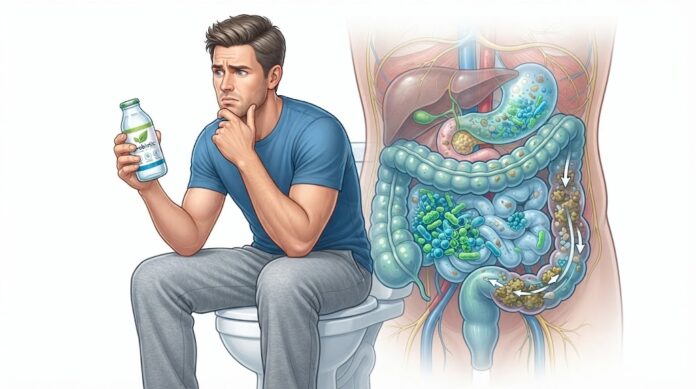
Can probiotics make constipation worse? For most people, probiotics improve bowel regularity over time, but yes, in certain situations they can temporarily or genuinely make constipation worse, particularly during the first one to two weeks of use, when the wrong strain is chosen, or when an underlying condition like small intestinal bacterial overgrowth (SIBO) is present.
This can be confusing because probiotics are often marketed as a simple solution for constipation. The research is more nuanced than that. Some clinical trials show real benefit for specific strains. Others show no meaningful difference from placebo. And a smaller body of research points to a real, though still debated, mechanism by which probiotics can worsen bloating, gas, and constipation rather than relieve it.
This guide breaks down what is actually happening in your gut, which situations are just temporary adjustment versus a genuine problem, and what to do if a probiotic seems to be backfiring.
Quick Answer
Probiotics can make constipation worse in four main scenarios: (1) a normal, short-lived adjustment period as gut bacteria shift, (2) using a strain that is not well-matched to your type of constipation, (3) underlying SIBO or methane-dominant intestinal methanogen overgrowth (IMO), where adding more bacteria to an already overcrowded small intestine can increase gas and slow transit, and (4) probiotic or synbiotic supplements that contain highly fermentable prebiotic fibers (inulin, FOS, GOS) introduced too quickly. Outside of these situations, most clinical evidence suggests that probiotics are more likely to help than harm people with constipation.
Why Probiotics Are Usually Recommended for Constipation
Before getting into when probiotics go wrong, it helps to understand why they are recommended in the first place. Constipation is often linked to an imbalance in gut bacteria, sometimes called dysbiosis. Certain probiotic strains are thought to help by producing short-chain fatty acids that soften stool and stimulate colon contractions, and by interacting with the enteric nervous system to support motility.
A randomized, double-blind, placebo-controlled trial found that adults with chronic functional constipation who took Lactobacillus reuteri DSM 17938 for four weeks saw an average of 2.6 additional bowel movements per week compared with baseline, a statistically significant improvement over the placebo group [1]. For a full breakdown of this strain, see our guide on whether L. reuteri helps constipation and bloating.
Separately, a randomized, double-blind, placebo-controlled trial of a multi-strain probiotic formula (Lacto-5X) reported significant improvements in stool consistency, stool frequency, straining, and abdominal pain compared with placebo after four weeks, along with a significant increase in beneficial Lactobacillus species in the gut microbiome [2]. Findings like these are the basis for probiotics being included in most evidence-based constipation protocols, alongside fiber and hydration. Our broader review of how probiotics may support chronic constipation relief covers this research in more depth.
Affiliate Disclosure: This article links to other guides on Constipationrelief.net, some of which contain affiliate links to products on Amazon. If you click through and make a purchase from one of those linked guides, Constipationrelief.net may earn a small commission at no additional cost to you. Our editorial opinions are never influenced by affiliate relationships.
At a Glance: Probiotics That Actually Help (Without Making Constipation Worse)
Because probiotic effects on constipation are strain-specific and picking the wrong one can trigger the exact gas, bloating, or slowdown you’re trying to avoid — matching the strain to your situation matters more than the brand:
- Best for chronic functional constipation (strongest single-strain evidence): BioGaia Gastrus, L. reuteri DSM 17938 & ATCC PTA 6475 — the exact strain shown in a randomized, placebo-controlled trial to add 2.6 extra bowel movements per week over baseline; a single well-characterized strain, easy to isolate if you need to troubleshoot
-
Best for SIBO-prone or IBS-C guts (no added prebiotic fiber): Florastor Daily Probiotic, Saccharomyces boulardii CNCM I-745 — yeast-based probiotic, excellent for lowering gas in SIBO and balancing IBS-C symptoms; no fermentable fibers, very safe for sensitive guts.
- Best for SIBO-prone or IBS-C guts (no added prebiotic fiber): Thorne Bacillus Coagulans, Bacillus coagulans — resilient spore-forming strain with strong evidence for reducing bloating, gas and pain while supporting regularity; no prebiotics, highly tolerated in SIBO/IBS-C.
-
Best for SIBO-prone or IBS-C guts (no added prebiotic fiber): MegaSporeBiotic, Bacillus clausii + coagulans + subtilis — multi-strain spore-based probiotic without added prebiotic fibers; supports gut barrier and symptom relief in SIBO/IBS-C.
- If you’re combining a probiotic with new fiber: don’t increase both at once. See our guide on why fiber sometimes fails to relieve constipation for how to sequence the two.
For a full breakdown of which strains have the strongest clinical evidence, see our guide on the best probiotics for constipation and bloating, and for the bigger picture on how probiotics fit into a constipation plan, see our guide on chronic constipation and probiotic relief.
The Adjustment Period: Why Constipation Can Feel Worse in the First Week or Two
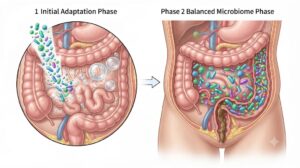
The most common reason people report that probiotics made their constipation worse has nothing to do with a bad reaction. It is a temporary adjustment period. When you introduce new bacterial strains, they compete with existing gut flora for resources, and this shift in the microbial ecosystem can produce extra gas, bloating, and a temporary slowing of bowel movements.
This adjustment phase typically resolves within one to three weeks as the gut stabilizes. It tends to be more noticeable in people who simultaneously increase their fiber intake, since new fiber sources also need time for gut bacteria to adapt to fermenting them efficiently. If you are combining a new probiotic with new fiber, our guide on why fiber sometimes fails to relieve constipation explains how to introduce both without overwhelming your gut at once.
When Probiotics May Genuinely Worsen Constipation
1. Not All Strains Work the Same Way
Probiotic effects are strain-specific, not a generic category effect. A strain that clearly helps one type of constipation may do nothing, or even feel counterproductive, for another. A scientific review by the International Scientific Association for Probiotics and Prebiotics noted that while certain Bifidobacterium lactis strains have shown benefit for symptoms like infrequent bowel movements and hard stools, other probiotic species tested in the same body of research did not improve constipation symptoms at all [3].
This inconsistency shows up clearly in the clinical trial record for Bifidobacterium lactis HN019, one of the most studied constipation-related strains. A large, triple-blind, placebo-controlled trial conducted across five hospitals in Shanghai found that HN019 supplementation did not significantly increase complete spontaneous bowel movements compared with placebo over eight weeks, even though both groups improved somewhat during the study [4]. An earlier 28-day dose-ranging trial testing the same strain at two different doses similarly found no statistically significant differences between the HN019 groups and placebo across the study’s primary and secondary outcomes [5].
The takeaway is not that HN019 is ineffective in all cases (other trials have shown benefit at different doses and durations), but that expecting any single strain to reliably relieve constipation can set you up for disappointment. In some cases, the sensation of “it’s not working, if anything I feel more backed up” reflects a mismatch between strain and cause rather than the probiotic actively worsening things. Our comparison of the best probiotics for constipation and bloating breaks down which specific strains have the strongest evidence.
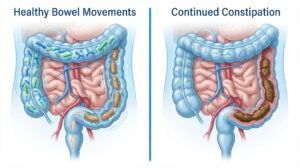
2. SIBO and Methane-Dominant Overgrowth
This is the scenario where probiotics can most plausibly make constipation genuinely worse rather than just temporarily uncomfortable. Small intestinal bacterial overgrowth (SIBO) occurs when bacteria that normally live in the large intestine migrate into the small intestine and proliferate there. In the methane-dominant subtype (now often called intestinal methanogen overgrowth, or IMO), this overgrowth is strongly associated with slower gut transit and constipation.
Adding a probiotic to a gut that already has bacterial overgrowth can, in some individuals, further increase an already active fermentation process, raising gas production and slowing motility even more. A widely discussed clinical study examined patients with unexplained brain fogginess, gas, and bloating and found that all of the affected patients in the study were taking probiotics. SIBO was substantially more common in this group than in a comparison group without brain fogginess (68% versus 28%), and a related metabolic marker, D-lactic acidosis, was also significantly more prevalent (77% versus 25%). Symptoms improved significantly in most patients after they stopped taking probiotics and completed a course of antibiotics [6].
This study generated real debate in the gastroenterology field. A subsequent published response raised questions about the diagnostic criteria used, noting that only a minority of the brain-fogginess patients tested positive for SIBO by duodenal culture or breath test, and that very few showed clearly elevated D-lactic acid at baseline, which the authors argued weakens how tightly the proposed syndrome could be linked together [7]. In other words, this is a real, documented hypothesis worth being aware of, particularly if you already suspect SIBO, but it remains actively debated among specialists and should not be read as proof that probiotics are broadly unsafe for the general population with ordinary constipation.
If you have chronic bloating alongside your constipation and suspect SIBO may be involved, our article on how gut health affects constipation covers the broader dysbiosis picture, and it is worth discussing SIBO testing with a gastroenterologist before continuing or starting a new probiotic.
3. Prebiotic Fibers Added to Probiotic Formulas
Many commercial probiotic and synbiotic supplements include prebiotic fibers such as inulin, fructooligosaccharides (FOS), or galactooligosaccharides (GOS) to help feed the bacterial strains. These fibers are highly fermentable, and introducing too much too quickly, especially without adequate water, can cause a spike in gas and bloating that some people interpret as the probiotic itself backfiring. This is more likely to affect people with IBS-C or a known sensitivity to FODMAP-type carbohydrates.
The fix here is usually dosing, not avoidance. Starting with a lower serving size, increasing gradually over one to two weeks, and pairing the supplement with sufficient fluid intake tends to resolve this. Our guide on how dehydration contributes to constipation explains why water intake matters so much during any gut microbiome adjustment.
How to Tell the Difference: Temporary Adjustment vs. a Real Problem
| Sign | Likely Temporary Adjustment | Likely a Genuine Issue |
|---|---|---|
| Timing | Starts in the first few days, improves by week 2 to 3 | Persists or worsens beyond 3 weeks |
| Bloating pattern | Mild, intermittent | Severe or rapidly worsening bloating, or accompanied by significant abdominal pain |
| Other symptoms | None beyond mild gas | Brain fog, unusual fatigue, worsening cramping |
| Known risk factors | None | Suspected or diagnosed SIBO, IBS-C, recent antibiotic use |
If your symptoms fall clearly into the “genuine issue” column, or if you notice blood in your stool, unexplained weight loss, or severe pain at any point, stop the supplement and speak with a doctor rather than pushing through.
What to Do If a Probiotic Seems to Be Making Your Constipation Worse
- Give it up to three weeks if symptoms remain mild. That is generally enough time to know whether you are dealing with normal adjustment or a real mismatch.
- Choose a single, well-characterized strain first. Multi-strain, high-CFU blends are harder to troubleshoot if something goes wrong. Starting with one clinically studied strain, such as L. reuteri DSM 17938 or B. lactis HN019, makes it easier to identify what is and is not working.
- Start at a lower dose than the label suggests. Half-dosing for the first week, then increasing, reduces the intensity of the initial adjustment period.
- Check the ingredient list for added prebiotic fibers. If you have IBS-C or suspected SIBO, a probiotic without high-dose inulin or FOS may be gentler to start with.
- Prioritize hydration and gradual fiber increases alongside the probiotic, rather than changing your entire diet and supplement routine at once.
- Get evaluated for SIBO if bloating is severe, rapid in onset, or paired with cognitive fogginess, especially if you have a history of slow transit or previous digestive surgery.
For general strategies that work regardless of probiotic use, our guide on fast constipation relief at home covers complementary options like hydration targets and movement, and our magnesium supplement guide is a reasonable short-term option while your gut adjusts to a new probiotic.
Frequently Asked Questions
Can probiotics cause constipation instead of relieving it?
Yes, in some people, especially during the first one to two weeks of use, as gut bacteria adjust. In rarer cases involving SIBO or a poorly matched strain, the effect can persist longer and reflects a genuine mismatch rather than normal adjustment.
How long does the probiotic adjustment period usually last?
Most people experience temporary gas, bloating, or mild constipation for one to three weeks after starting a new probiotic. If symptoms have not improved by three weeks, it is reasonable to reconsider the strain, dose, or whether an underlying condition like SIBO is present.
Which probiotic strains are least likely to worsen constipation?
Lactobacillus reuteri DSM 17938 and Bifidobacterium lactis have the most consistent published evidence for supporting bowel regularity rather than worsening it, though individual response still varies based on the underlying cause of constipation.
Should I stop taking probiotics if I have SIBO?
Not necessarily, but timing and strain choice matter more if you have SIBO. Adding probiotics during an active flare can worsen gas and constipation, so it is best to work with a gastroenterologist to sequence SIBO treatment and probiotic use appropriately.
Can prebiotic fiber in probiotic supplements make bloating worse?
Yes. Prebiotic fibers like inulin and FOS are highly fermentable and can cause gas and bloating if introduced too quickly or in high amounts, particularly in people with IBS-C. Starting at a lower dose and increasing gradually usually resolves this.
Conclusion
Can probiotics make constipation worse? In most cases, no, and the clinical evidence generally supports their role as a helpful, low-risk addition to a broader constipation management plan. However, there are important exceptions: a short adjustment window that feels uncomfortable before it helps, strain-specific effects that mean one product may simply not be the right fit, and a smaller, debated but documented risk in people with SIBO or methane-dominant overgrowth. Paying attention to timing, strain selection, and your own gut history is the difference between riding out a normal adjustment and recognizing a genuine problem worth discussing with a doctor.
References
- Ojetti V, Ianiro G, Tortora A, D’Angelo G, Di Rienzo TA, Bibbò S, et al. The effect of Lactobacillus reuteri supplementation in adults with chronic functional constipation: a randomized, double-blind, placebo-controlled trial. J Gastrointestin Liver Dis. 2014.
PMID: 25531996 - Impact of Probiotic Formula (Lacto-5X) on Constipation: Improvements in Gastrointestinal Symptoms, Gut Microbiome, and Metabolites.
PMID: 40223270
Available from: https://pmc.ncbi.nlm.nih.gov/articles/PMC12010067/ - International Scientific Association for Probiotics and Prebiotics (ISAPP). Are probiotics effective in improving symptoms of constipation?
Available from: https://isappscience.org/are-probiotics-effective-in-improving-symptoms-of-constipation/ - Cheng J, et al. Eight-Week Supplementation With Bifidobacterium lactis HN019 and Functional Constipation: A Multi-Center, Triple-Blind, Randomized, Placebo-Controlled Trial. JAMA Netw Open. 2024.
DOI: 10.1001/jamanetworkopen.2024.36888
Available from: https://doi.org/10.1001/jamanetworkopen.2024.36888 - Ibarra A, Latreille-Barbier M, Donazzolo Y, Pelletier X, Ouwehand AC. Effects of 28-Day Bifidobacterium animalis subsp. lactis HN019 Supplementation on Colonic Transit Time and Gastrointestinal Symptoms in Adults With Functional Constipation: A Double-Blind, Randomized, Placebo-Controlled, Dose-Ranging Trial. Gut Microbes. 2018;9(3):236-251.
PMID: 29227175 - Rao SSC, Rehman A, Yu S, Martinez de Andino N. Brain fogginess, gas and bloating: a link between SIBO, probiotics and metabolic acidosis. Clin Transl Gastroenterol. 2018;9(6):e162.
PMID: 29915215 - Sachdeva S, Puri AS, Kumar A, Dalal A, Dahale AS. Brain fogginess and SIBO: a link or just a mirage? Clin Transl Gastroenterol. 2018;9(9):e184.
PMID: 30237404