

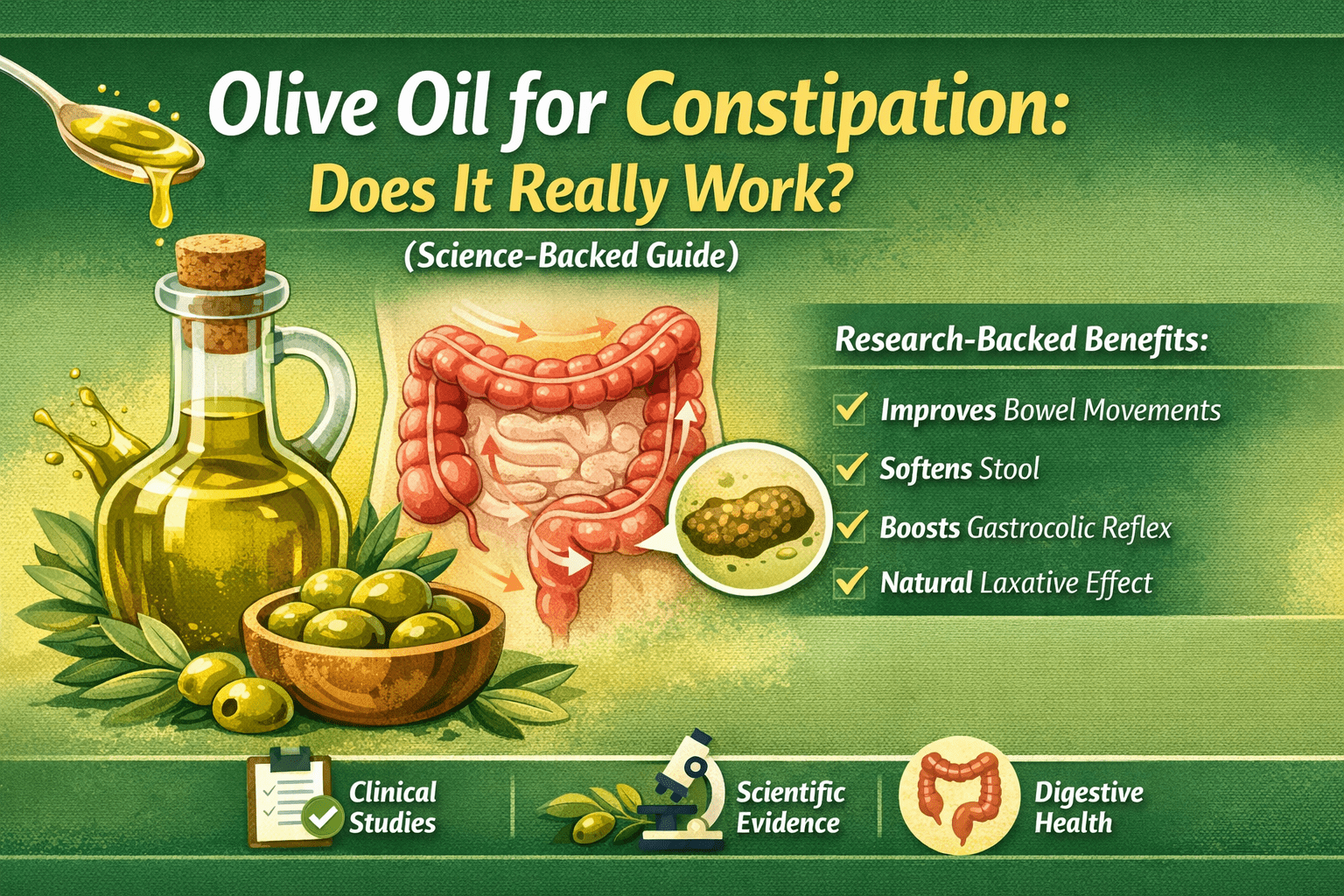
Struggling with hard stools or going days without a bowel movement? If you’re looking for a natural remedy for constipation, olive oil might already be sitting in your kitchen cabinet. Using olive oil for constipation is not a new idea. For centuries, Mediterranean cultures have used extra virgin olive oil as a digestive aid. And now, several small randomized controlled trials suggest that olive oil may offer a gentle benefit, though the evidence base is still limited compared with established constipation treatments.
But how much do you actually need? Which type is best? And what does the research actually show? This guide breaks down the doses used in clinical studies, the proposed mechanisms behind it, and what to realistically expect before trying it.
⚡ Quick Answer
- A commonly used starting amount is 1 tablespoon (15 mL) of extra virgin olive oil on an empty stomach in the morning
- Studies have used up to 1–2 tablespoons daily
- Response varies by person; clinical trials measured improvement over several weeks rather than establishing a specific onset time
1. What Is Constipation?
Before diving into olive oil specifically, it helps to understand what constipation actually is. According to the widely accepted Rome IV diagnostic criteria, the current standard used in both clinical practice and research, constipation involves two or more of the following symptoms for at least three months:
- Fewer than three bowel movements per week
- Straining during more than 25% of defecations
- Lumpy or hard stools
- A sensation of incomplete evacuation
- A sensation of anorectal obstruction or blockage
- Need to use manual maneuvers to facilitate defecation
Globally, constipation affects between 8% and 30% of the population, making it one of the most common gastrointestinal complaints worldwide. Women and people over the age of 65 tend to be at higher risk, though it can affect anyone at any age.
Standard first-line recommendations, increasing fiber and fluid intake, exercising regularly, and using bulk-forming agents, work for many people. But when these approaches fall short, most people reach for natural remedies or over-the-counter laxatives. The problem? Many laxatives come with uncomfortable side effects, dependency risks, and are not suitable for people with certain health conditions. This makes olive oil an interesting dietary option worth exploring for people with mild, occasional constipation.
How to Choose an Extra Virgin Olive Oil
No specific brand of olive oil has been clinically tested for constipation; the trials discussed in this article used extra virgin olive oil generally, not a particular product. When choosing one for the “morning shot” method, look for:
- A genuine extra virgin label (not a blend or “light” olive oil)
- A recent harvest date, since polyphenol content declines over time
- A reputable producer with third-party quality testing where available
- Storage in a dark bottle or tin, which helps protect the oil from light degradation
- Optional: “high-phenolic” labeling or a lab-tested polyphenol certificate, if you specifically want an oil closer to what the 2025 RCT used
A few widely available EVOO options that meet these general criteria:
- Laconiko Extra Virgin Olive Oil. Single-estate Greek Koroneiki, ~578 mg/kg polyphenols per the producer’s listing, cold-extracted within hours of harvest
- California Olive Ranch Extra Virgin Olive Oil. Fresh-pressed, 100% California-grown, widely available
- Bragg Organic Extra Virgin Olive Oil. USDA organic, cold-pressed, unrefined
- Partanna Extra Virgin Olive Oil. Sicilian, single-origin, robust peppery flavor typically associated with higher polyphenol content
- Pompeian Robust Extra Virgin Olive Oil. Bold flavor profile, widely stocked, budget-friendly
2. How Olive Oil Works for Constipation: 4 Mechanisms
Olive oil does not act in the same way as stimulant laxatives, which increase intestinal contractions. Instead, it may influence stool passage and gastrointestinal function through several proposed mechanisms.
Mechanism 1: Possible Role in Stool Passage
Olive oil may help make stool easier to pass, though the exact mechanism in humans is not fully established. The commonly proposed explanation is that its fat content coats the intestinal lining and reduces friction as waste moves through the digestive tract, particularly with hard, dry stool. It has also been suggested that olive oil may help stool retain some water through a light emulsion effect.
These are plausible, widely repeated explanations rather than mechanisms confirmed by direct human studies. The effects observed in clinical trials may involve a combination of factors, including changes in fat handling and gut motility, rather than simple lubrication alone.
Mechanism 2: Stimulates Bile Secretion
When you consume olive oil, your digestive system signals the gallbladder to release bile into the small intestine.
A small portion of these bile acids may reach the colon, where they are thought to have a mild laxative-like effect by increasing water secretion and gently stimulating bowel movement.
Some research has found that people with chronic constipation tend to have lower bile acid levels, which has led researchers to propose that improving bile flow could support bowel function. This connection is a proposed mechanism rather than a proven treatment pathway for constipation specifically.
Olive oil, including extra virgin olive oil, stimulates digestive hormones like cholecystokinin (CCK), which triggers gallbladder contraction and bile release. Whether this translates into a meaningful, reliable reduction in transit time for constipation has not been directly established in human trials.
Mechanism 3: Triggers the Gastrocolic Reflex
Olive oil also helps activate the gastrocolic reflex, a natural response where the colon becomes more active after you eat.
This is why many people feel the urge to have a bowel movement shortly after meals.
Eating or drinking in the morning can coincide with the gastrocolic reflex, which may help some people establish a regular bowel routine. However, olive oil itself has not been shown in clinical trials to specifically enhance this reflex.
Mechanism 4: Polyphenols Improve Gut Motility and Microbiota
This is where extra virgin olive oil (EVOO) has a clear advantage over refined olive oil.
EVOO generally contains more polyphenols than refined olive oil, natural antioxidant compounds such as hydroxytyrosol and oleuropein, which are largely removed during refining, although amounts vary substantially among individual oils depending on cultivar, harvest timing, and processing.
Researchers writing in the Caspian Journal of Internal Medicine (2025) proposed that these compounds may contribute to gut motility through several pathways, including:
- Possible stimulation of large intestine contractions
- Possible effects on water and electrolyte secretion in the gut
- Possible support for serotonin activity involved in gut movement
- Possible effects on gut bacteria composition
- Possible effects on bile acid secretion and intestinal inflammation
It’s worth being clear that these are proposed, plausible explanations for why EVOO outperformed refined olive oil in the trial, not individually confirmed mechanisms. The trial itself measured outcomes, not the biological pathway behind them.
Separately, a 2021 clinical trial published in the International Journal of Community Based Nursing and Midwifery found that abdominal massage using extra virgin olive oil reduced constipation symptoms in elderly individuals compared to massage with plain water. Because the intervention combined massage with EVOO, it isn’t possible to say from this study whether the oil itself contributed beyond its role as a massage medium, or whether the benefit came mainly from the massage.
3. What Clinical Research Actually Shows
The evidence for olive oil as a constipation remedy is not just theoretical. Multiple randomized controlled trials have directly tested it in human populations.
Study 1: Olive Oil vs. Mineral Oil, The Benchmark Trial
One of the most rigorous studies on this topic was a 4-week, double-blind, randomized controlled trial involving 50 constipated patients undergoing hemodialysis, diagnosed using the Rome III criteria (the standard diagnostic tool at the time of the 2015 study). Patients were randomly assigned to receive either mineral oil (the established pharmaceutical control), olive oil, or flaxseed oil, starting at 4 mL (~1 teaspoon) per day.
Results:
- Olive oil group: Rome III constipation score dropped from 10.3 ± 4.2 to 3.2 ± 3.8 (~69% improvement)
- Mineral oil group: Score dropped from 10.5 ± 5.0 to 4.1 ± 4.0
- Flaxseed oil group: Score dropped from 9.6 ± 4.2 to 6.0 ± 5.1
Olive oil performed comparably to mineral oil (a lubricant laxative, not a broader “pharmaceutical standard”) across five of six constipation symptoms evaluated, including incomplete evacuation, hard stools, and anorectal obstruction. The researchers concluded that olive oil was comparable to mineral oil for improving constipation symptoms in this specific hemodialysis population. Because this trial was conducted in patients undergoing dialysis, a group with distinct gastrointestinal and fluid-handling physiology, the results may not translate directly to the general population.
Study 2: EVOO vs. Refined Olive Oil, 140-Participant RCT (2025)
A more recent double-blind randomized clinical trial published in the Caspian Journal of Internal Medicine (2025) enrolled 140 participants with chronic constipation diagnosed by a gastroenterologist using the Rome III questionnaire, divided into two groups. Each group consumed two tablespoons (~28 mL) per day of either EVOO or refined olive oil for four weeks.
Key findings:
- EVOO outperformed refined olive oil on bowel movement frequency, stool consistency (Bristol Stool Form Scale), and sensation of incomplete evacuation
- Both types improved constipation scores, but EVOO’s effects were significantly more pronounced
- Researchers suggested that EVOO’s higher polyphenol content may partly explain its greater effect, though the exact mechanism remains uncertain
Note that this trial tested two tablespoons per day, not one. Its results support two tablespoons daily as an evidence-informed amount; they don’t establish that a smaller, one-tablespoon dose produces the same effect.
Study 3: EVOO for Inflammatory Bowel Symptoms
A randomized crossover trial found that consuming 50 mL of EVOO daily for 20 days significantly reduced bloating, constipation, fecal urgency, and incomplete defecation in patients with ulcerative colitis, as measured by the gastrointestinal symptom rating scale (GSRS) [4]. While this focused on a specific population, the findings provide additional evidence that EVOO may influence gastrointestinal symptoms, although the study did not establish the underlying mechanism.
4. Extra Virgin vs. Refined Olive Oil: Which Is Better for Constipation?
Based on the available evidence, EVOO may be the preferable choice over refined olive oil for constipation.
| Feature | Extra Virgin Olive Oil ✅ | Refined Olive Oil |
|---|---|---|
| Polyphenol content | High (hydroxytyrosol, oleuropein) | Low, removed in refining |
| Processing | Cold-pressed, minimal | Chemical/heat processing |
| Proposed mechanisms | Fat content + bile response + polyphenols | Lower polyphenol content |
| Clinical evidence in constipation | Limited but promising (2025 RCT found it outperformed refined oil) | Limited |
| Taste | Slightly peppery/grassy | Mild, neutral |
| Recommended for constipation? | May be preferable based on the available trial evidence | Some benefit observed, but evidence is limited |
When shopping for EVOO, “high-phenolic” labeling or a lab-tested polyphenol certificate is a more reliable indicator of polyphenol content than “first cold press” alone; cold-pressing is a production method and doesn’t by itself guarantee a high polyphenol count. View top-rated high-phenolic EVOO on Amazon*.
5. How to Use Olive Oil for Constipation: Dosage & Methods
📋 Dosage Summary
- Practical starting amount: 1 tablespoon (15 mL) per day (a general suggestion, not a dose specifically tested on its own in a trial)
- Dose studied in the 2015 RCT: starting at 4 mL/day, adjusted as needed over 4 weeks
- Dose studied in the 2025 RCT: 2 tablespoons (~28 mL) per day for 4 weeks
- Common timing: Morning, on an empty stomach
- Note: There is no medically established maximum dose of olive oil specifically for constipation. Larger amounts are more likely to cause loose stools or digestive discomfort.
Tip: Start with a smaller amount and adjust gradually based on how your body responds.
🥄 Methods of Use
Method 1: The Classic “Morning Shot” (A Commonly Used Approach)
Take 1 tablespoon of extra virgin olive oil (EVOO) on its own, first thing in the morning before eating or drinking anything.
This is a commonly used approach, although no clinical trial has directly compared morning fasting use with other methods for effectiveness.
Best for: People who want the simplest, most straightforward routine
Method 2: Olive Oil with Lemon Juice
Mix:
- 1 tablespoon of EVOO
- Juice of half a lemon
This combination is widely used in traditional Mediterranean practices. Lemon juice can make the mixture easier to drink, but there is no good clinical evidence that adding lemon makes olive oil more effective for constipation specifically.
Best for: Those who find plain olive oil difficult to consume
Method 3: Olive Oil in Warm Water or Herbal Tea
Stir 1 tablespoon of EVOO into a cup of warm (not hot) water or mild herbal tea.
Some people find warm liquids more palatable and easier to consume than plain oil.
Method 4: Olive Oil with Light Breakfast Foods
Drizzle olive oil over:
- Plain yogurt
- A small salad
- Whole-grain toast
Taking olive oil with food may be easier to tolerate for people who experience nausea when consuming it on an empty stomach.
Works well when combined with a high-fiber or plant-based diet
Method 5: Olive Oil Abdominal Massage (Supportive Method)
Apply a small amount of EVOO to the abdomen and gently massage in slow, clockwise circular motions for 10–15 minutes.
A clinical study found that abdominal massage using EVOO reduced constipation symptoms in elderly individuals compared to massage with plain water. Since the intervention combined massage with EVOO, the benefit may be related to the massage technique itself rather than to the oil specifically; the trial design can’t separate the two.
Important:
- This should be used as a supportive method, not a replacement for oral intake
- It may be particularly helpful for individuals who have difficulty tolerating oral remedies
6. How Long Does Olive Oil Take to Work for Constipation?
There isn’t good clinical evidence establishing a specific onset time (such as a number of hours) for olive oil’s effect on constipation. The RCTs that exist measured results after weeks of consistent daily use, not after a single dose, so any hour-by-hour timeframe you may see elsewhere isn’t something these trials actually tested.
| Scenario | What the Evidence Shows |
|---|---|
| Occasional, one-time use | Onset timing varies by person and hasn’t been established in trials |
| Regular daily use (2015 RCT) | Meaningful improvement measured after 4 weeks in hemodialysis patients |
| Regular daily use (2025 RCT) | Significant improvement measured after 4 weeks in adults with chronic constipation |
Based on the available trials, olive oil appears to work best as a consistent daily habit evaluated over several weeks rather than as a fast-acting, single-dose remedy. If you need relief from an acute, occasional episode, other natural remedies or physician-recommended options may be better suited to that situation.
7. Olive Oil for Constipation During Pregnancy and in Children
Pregnancy
Constipation affects up to 40% of pregnant women, driven by hormonal changes (elevated progesterone slows gut motility), pressure from the growing uterus, and iron supplementation. Olive oil in normal dietary quantities (drizzled on food, used in cooking) is generally considered safe during pregnancy and may provide mild relief.
There is insufficient evidence to recommend concentrated, therapeutic doses of olive oil (1–2 tablespoons daily on an empty stomach) as a deliberate constipation treatment during pregnancy, since none of the clinical trials discussed in this article included pregnant participants. Pregnant patients dealing with persistent constipation should discuss it with their healthcare provider, who can advise on options such as increased fluid intake, dietary fiber-rich foods, gentle exercise, or other pregnancy-appropriate approaches. For those looking for supplement support during pregnancy, see our guide on safe probiotics for pregnancy-related constipation.
Children
Constipation is one of the most common gastrointestinal complaints in children, accounting for up to 25% of pediatric gastroenterology visits (roughly 1 in 4). While olive oil in food amounts is safe for children, it should not be used therapeutically for constipation in children without the guidance of a pediatrician or healthcare provider.
Children’s digestive systems, caloric needs, and appropriate laxative thresholds differ significantly from adults. Pediatric constipation guidelines generally recommend dietary and behavioral measures first, and, when medication is needed, physician-guided treatment such as polyethylene glycol.
8. Potential Side Effects and Who Should Be Cautious
Olive oil is generally very safe for most healthy adults when used in food-appropriate quantities. However, there are important considerations to be aware of.
Possible Side Effects
- Diarrhea or loose stools: Larger amounts are more likely to cause loose stools than smaller ones. Start with 1 tablespoon and increase gradually if needed.
- Stomach upset or nausea: More common when taken on an empty stomach in sensitive individuals. Taking it with a small amount of food can help.
- Weight gain: Olive oil contains approximately 120 calories and 14 grams of fat per tablespoon. Regular use should be factored into your daily caloric intake.
Who Should Consult a Doctor First
- People with gallbladder disease: Olive oil stimulates bile secretion, which may not be appropriate for individuals with gallstones or gallbladder dysfunction.
- People with conditions requiring medically restricted fat intake: Consult your healthcare provider before using larger, therapeutic amounts of olive oil.
- Pregnant women: Consult a healthcare provider before using olive oil therapeutically during pregnancy (see Section 7).
- Children: Only use under medical supervision.
9. Olive Oil vs. Other Natural Constipation Remedies
How does olive oil compare to other commonly used natural remedies?
| Remedy | Mechanism | Best For | vs. Olive Oil |
|---|---|---|---|
| Mineral oil | Lubrication | Short-term use | Comparable in the 2015 RCT, but no nutritional benefits |
| Flaxseed oil | Lubrication + omega-3 | General use | Olive oil outperformed it in the 2015 RCT |
| Castor oil | Stimulant laxative | Occasional acute use only | A different, faster-acting class of laxative not recommended for daily use |
| Psyllium husk / fiber | Bulk-forming | Long-term daily use | Complementary, different mechanisms |
| Probiotics | Microbiome support | Chronic constipation | Complementary, different mechanisms |
Key insight: Olive oil and fiber supplements are thought to work through different mechanisms. There isn’t a clinical trial directly testing whether combining them outperforms either alone, so this remains a reasonable but unproven assumption. Olive oil should be viewed as one dietary option among several, not a replacement for the basics of constipation management: adequate fluid intake, sufficient dietary fiber, physical activity, and a consistent toileting routine.
10. Lifestyle Tips to Maximize Olive Oil’s Effectiveness
For best results, combine olive oil with these evidence-based habits:
- Stay adequately hydrated: Individual fluid needs vary, so drink enough fluids to stay adequately hydrated unless your healthcare provider has advised you to restrict fluids. Learn more about the link between dehydration and constipation.
- Eat fiber-rich foods: Aim for an appropriate amount of dietary fiber, often around 25–30 grams a day for adults, increasing gradually from fruits, vegetables, legumes, and whole grains. See our complete guide to fiber foods for constipation relief.
- Exercise regularly: Regular physical activity may support bowel regularity as part of an overall healthy routine.
- Establish a bathroom routine: The gastrocolic reflex is strongest in the morning. Try to use the bathroom around the same time each morning.
- Consider a plant-based diet: A plant-based diet naturally delivers fiber and other beneficial plant compounds.
- Manage stress: Stress may affect gut motility. Practices like yoga or deep breathing can complement dietary changes.
11. When Should You See a Doctor?
Olive oil is generally regarded as a low-risk dietary option for mild, occasional constipation, but some situations call for professional medical evaluation rather than self-treatment. See a healthcare professional if constipation is persistent, recurrent, worsening, or not improving with appropriate self-care, and seek prompt evaluation if you notice any of the following:
- Blood in the stool or rectal bleeding
- Unexplained weight loss alongside constipation
- Severe abdominal pain
- Constipation that alternates with diarrhea
- New onset of constipation in people over 50
These symptoms may indicate an underlying condition, such as irritable bowel syndrome (IBS), hypothyroidism, or in rare cases, colorectal issues, that requires proper diagnosis and treatment. Do not rely solely on olive oil if any of the above apply to you.
12. Frequently Asked Questions
How much olive oil should I take for constipation?
A common practical starting amount is 1 tablespoon (15 mL) per day, ideally in the morning on an empty stomach. Clinical studies have used 1–2 tablespoons daily, but there is no medically established maximum dose specifically for constipation.
How fast does olive oil work for constipation?
There’s no well-established onset time backed by clinical evidence. The trials that studied olive oil for constipation evaluated improvement over several weeks of regular use rather than measuring how quickly a single dose worked, so specific hour-based timeframes you may see elsewhere aren’t something these studies actually tested.
Is extra virgin olive oil better than regular olive oil for constipation?
Yes. In a 2025 randomized trial involving 140 participants, EVOO improved several constipation outcomes more than refined olive oil. The researchers suggested that EVOO’s higher polyphenol content may partly explain the difference, but the exact mechanism has not been established.
Can I mix olive oil with lemon juice for constipation?
Yes. Combining 1 tablespoon of EVOO with the juice of half a lemon is a popular traditional remedy that many people find more palatable than olive oil alone. There isn’t good clinical evidence that adding lemon makes it more effective for constipation specifically; the main benefit is taste.
Can olive oil make constipation worse?
Olive oil does not usually worsen constipation, but individual responses vary. Larger amounts may cause diarrhea, nausea, bloating, or abdominal discomfort in some people. Start with a small amount and increase gradually as needed.
Can I use olive oil for constipation every day?
Short-term daily use, including doses tested over 4-week clinical trials, has been studied and generally well tolerated. There isn’t enough long-term trial data to establish olive oil as a proven long-term constipation treatment, so if you plan to use it regularly for an extended period, it’s worth mentioning to your healthcare provider, especially given its calorie content.
Does olive oil help with constipation during pregnancy?
Olive oil in normal dietary amounts is generally safe during pregnancy. However, therapeutic doses (1–2 tablespoons daily on an empty stomach) should only be used after consulting your healthcare provider. First-line approaches during pregnancy often include adequate fiber and fluid intake, physical activity, and healthcare-provider-guided treatment when needed.
Can olive oil help with constipation in children?
Olive oil should only be used for constipation relief in children under the guidance of a pediatrician or healthcare provider. Do not self-administer therapeutic doses to children without medical advice.
13. The Bottom Line
Current research suggests that olive oil for constipation may offer a modest benefit, and small randomized trials have found improvements compared with mineral oil, flaxseed oil, and refined olive oil. However, the evidence base remains limited: the trials involved relatively small numbers of participants, one was conducted specifically in hemodialysis patients, and none have directly established a fast-acting onset time or a proven maximum safe dose. Olive oil is best viewed as a reasonable dietary option to try alongside, not a replacement for, established constipation management.
The proposed mechanisms, coating and easing stool passage, a mild bile-mediated effect, activating the gastrocolic reflex, and, in the case of EVOO, polyphenol-related effects on gut motility, are plausible explanations for the results seen in these trials, but they haven’t been individually confirmed in humans.
A reasonable approach: Try 1–2 tablespoons of extra virgin olive oil in the morning on an empty stomach, adjusting based on how you respond. Pair it with adequate hydration, a fiber-rich diet, and regular physical activity, the established basics of constipation management, rather than relying on olive oil alone.
If constipation is persistent, recurrent, or accompanied by any of the warning signs in Section 11, consult your healthcare provider to rule out any underlying conditions.
Want more natural constipation remedies? Read our next guide on 10 Best Natural Ways to Relieve Hemorrhoids and Constipation, another science-backed, comprehensive solution.
Affiliate Disclosure: This article contains links marked with * that are affiliate links. Constipation Relief earns a small commission if you purchase through these links at no additional cost to you. Our editorial team selects products based on research merit and reader value, never on commission rates.
Medical Disclaimer: This article is for informational purposes only and does not constitute medical advice. The content is not intended to be a substitute for professional medical advice, diagnosis, or treatment. Always seek the advice of your physician or other qualified health provider with any questions you may have regarding a medical condition. Never disregard professional medical advice or delay in seeking it because of something you have read on this website.
References
- Ramos CI, Andrade de Lima AF, Grilli DG, Cuppari L. “The Short-Term Effects of Olive Oil and Flaxseed Oil for the Treatment of Constipation in Hemodialysis Patients.” Journal of Renal Nutrition, 2015; 25(1): 50–56.
🔗 PubMed: https://pubmed.ncbi.nlm.nih.gov/25238699/ - Joukar F, Mozaffari Chenijani SN, Maroufizadeh S, et al. “Comparative Efficacy of Extra Virgin Olive Oil versus Refined Olive Oil in the Treatment of Individuals Suffering from Constipation: A Double-Blind Randomized Clinical Trial Study.” Caspian Journal of Internal Medicine, 2025; 16(4): 674–685.
🔗 PubMed: https://pubmed.ncbi.nlm.nih.gov/41383802/
🔗 PMC: https://pmc.ncbi.nlm.nih.gov/articles/PMC12694839/ - Faghihi A, et al. “The Effect of Abdominal Massage with Extra-Virgin Olive Oil on Constipation among Elderly Individuals: A Randomized Controlled Clinical Trial.” International Journal of Community Based Nursing and Midwifery, 2021; 9(4): 268–277.
🔗 PubMed: https://pubmed.ncbi.nlm.nih.gov/34604396/
🔗 PMC: https://pmc.ncbi.nlm.nih.gov/articles/PMC8479287/ - Morvaridi M, Jafarirad S, Seyedian SS, Alavinejad P, Cheraghian B. “The Effects of Extra Virgin Olive Oil and Canola Oil on Inflammatory Markers and Gastrointestinal Symptoms in Patients with Ulcerative Colitis.” European Journal of Clinical Nutrition, 2020; 74(6): 891–899.
🔗 PubMed: https://pubmed.ncbi.nlm.nih.gov/31901082/






[…] 🔗 Olive Oil for Constipation: Does It Really Work? […]
[…] A teaspoon with warm milk before bed lubricates the intestines. See also: olive oil for constipation — a modern parallel to this traditional […]
[…] Olive oil synergy: Research supports combining extra-virgin olive oil with dried figs for a stronger laxative effect than either alone — their mechanisms are complementary. Read our full guide: Olive Oil for Constipation — Science, Dosage & Protocol […]
[…] 📖 Related Read: Olive Oil for Constipation: Can It Really Help? […]
[…] Olive Oil for Constipation: Does It Really Work? — How this close relative of MCT oil compares […]
[…] more natural ways to support your gut health alongside either supplement, check out our guides on olive oil for constipation and prune juice for constipation — both are well-supported and can complement either […]
[…] Related: Olive Oil for Constipation: Dosage, Timing & What Clinical Studies Actually Show — another plant-based oil remedy, but with a different evidence […]
[…] the same outcomes we see reinforced by other natural approaches covered on this site, including olive oil for constipation, which supports the same gut lining that fiber-fed bacteria […]
[…] Olive Oil for Constipation: Does It Really Work? […]
[…] Olive Oil for Constipation: Dosage, Timing & What Clinical Studies Actually Show […]
[…] transit time. Even light movement after meals activates the gastrocolic reflex. Our guide on olive oil for constipation notes that combining exercise with dietary changes produces the most sustainable long-term […]
[…] For a full breakdown of dosage, timing, and what clinical studies show, see our detailed guide: Olive Oil for Constipation: How It Works. Individual responses […]
[…] may coat the stool and intestinal walls, reducing friction and making passage easier. Olive oil is the most commonly referenced lubricant-type digestive support option, though evidence in […]
[…] in some individuals in research settings; the effect is not universal and timing varies widely. † Olive oil onset is based on traditional use and limited clinical data; not reliably observed in all […]
[…] Olive oil […]