

Quick answer: Constipation after diarrhea can occur, and it’s often temporary. It’s generally explained by a combination of factors: the gut needing time to settle after a bout of rapid transit, dehydration, changes in eating, and sometimes the medicines used during the illness. In many mild cases, it improves over several days as hydration, eating, and normal bowel habits return. If it drags on for more than a few weeks, or comes with pain, blood, fever, or unintended weight loss, that is a reason to see a doctor rather than wait it out.
Why Does Constipation Happen After Diarrhea?
This is a fairly specific case within our broader coverage of constipation causes, since most of what triggers it is temporary rather than a chronic underlying condition. It can feel backwards: your gut was moving too fast for days, and now it will not move at all. No single study has tracked people from diarrhea into constipation and measured exactly why, so what follows draws on research into the individual pieces, post infectious gut changes, dehydration, and medication effects, rather than one definitive mechanism.
Your Gut May Take Time to Settle
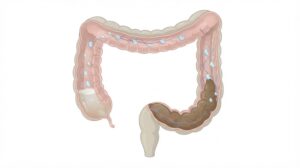
During diarrhea, stool moves through the digestive tract more quickly than usual, leaving less time for the colon to absorb water. After the illness settles, bowel movements may not immediately return to their usual pattern. Studies following patients after bacterial gastroenteritis have documented slower, disrupted gut function in the weeks after infection, which may help explain why some people notice a temporary swing toward sluggish bowel movements before things settle back to normal.1,2
Dehydration and Electrolyte Loss
Diarrhea can leave you dehydrated, and dehydration can make stools harder and more difficult to pass. It also depletes electrolytes lost through the fluid itself, which is part of why oral rehydration solution, not water alone, is generally recommended for replacing what is lost during a significant bout of diarrhea.3
Antibiotics and Anti Diarrheal Medication
Two categories of medication are commonly involved. Loperamide (Imodium) works by slowing intestinal contractions, which is its intended effect as an anti diarrheal. Because it slows intestinal movement, some people may experience constipation after using it, particularly if they continue taking it after the diarrhea has resolved.
Antibiotics, when the diarrhea was caused by a bacterial infection that required them, can temporarily alter the gut microbiome, and research examining gut recovery after bacterial gastroenteritis has found that some people experience ongoing changes in bowel habits during this recovery period.1
Gut Microbiome Disruption
An infection does not just pass through the gut, it temporarily reshapes it. Research following patients after Campylobacter gastroenteritis found that those who went on to develop persistent bowel symptoms had measurably lower microbial diversity than people whose bowel habits returned to normal, and that this reduced diversity did not always recover quickly, even months later.1
A separate review of post infectious irritable bowel syndrome describes a similar pattern: infection triggers a shift in gut bacteria that can affect motility, gut sensitivity, and the intestinal lining well after the original bug is gone.2 For most people these changes are mild and short lived, but they help explain why bowel habits can stay unsettled for a week or two after a stomach bug rather than resolving the moment the diarrhea stops.
How Long Does Post Diarrhea Constipation Usually Last?
There is no single published timeline for this specific pattern, since it has not been studied as its own condition the way chronic constipation has. In general, mild constipation that follows a short stomach bug tends to improve over several days as hydration and normal eating resume. If it stretches past two to three weeks, or if it settles into a repeating pattern of loose stools followed by hard stools, it is worth mentioning to a doctor, since that pattern can sometimes point toward irritable bowel syndrome with mixed bowel habits (IBS-M) or a longer lasting post infectious bowel disturbance.
When It Might Be More Than a Simple Rebound
Most cases of constipation after diarrhea are temporary and improve as the gut returns to its usual routine. A few situations point toward something that deserves a closer look:
- Alternating pattern that keeps repeating. Bowel habits that keep swinging between loose and hard stools over weeks, rather than settling, can occur with IBS-M, a subtype of irritable bowel syndrome involving both constipation and diarrhea, although recurring symptoms can have other causes as well and are worth discussing with a doctor rather than self diagnosing.
- Symptoms that started right after a specific infection and have not fully resolved. This can reflect post infectious bowel dysfunction, where gut motility and the gut microbiome take longer than expected to return to baseline after gastroenteritis.1,2
- Recurring or persistent symptoms. Inflammatory bowel disease, celiac disease, thyroid disorders, and some other chronic conditions can occasionally produce a mixed pattern of diarrhea and constipation. This does not mean every case needs to be worked up for these conditions, but symptoms that keep recurring or do not resolve are worth discussing with a doctor rather than managing indefinitely on your own.
How to Relieve Constipation After Diarrhea
Rehydrate First
Because fluid loss during diarrhea can contribute to harder stools, replacing fluids and electrolytes is a reasonable first step. Water helps, but an oral rehydration solution, the kind that combines water with a measured amount of salt and sugar, replaces electrolytes more effectively than water alone and is generally recommended for significant fluid loss due to diarrhea.3 If plain water and ORS have not been enough to get things moving again, that is a reasonable point to check in with a doctor or pharmacist rather than experimenting further on your own.
Reintroduce Fiber Gradually
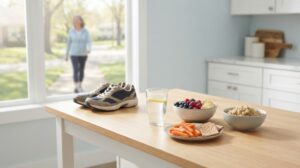
Jumping straight to a high fiber diet right after a bout of diarrhea can sometimes cause bloating or discomfort, since the gut is still settling. A gradual increase, adding a serving of fruit, vegetables, or whole grains every day or two rather than all at once, tends to be better tolerated. If you already eat a reasonably fiber rich diet and it still is not helping once your gut has had a few days to settle, our guide on why fiber isn’t working for your constipation covers the more common reasons that happens.
Move Your Body
Light activity, such as walking, can help support normal bowel movement. You do not need intense exercise here, especially if you are still recovering from a stomach bug. A short walk after meals is a reasonable, low effort place to start.
Consider a Probiotic
Since antibiotics and the infection itself can both disrupt the gut’s bacterial balance, some people look to probiotics to help restore regularity during this recovery window. The evidence here is genuinely mixed rather than a clean yes, so it is worth understanding what it actually says before choosing a product.
Several systematic reviews and meta analyses of randomized controlled trials have looked at probiotics for constipation specifically. A 2014 review of 14 trials found that probiotics as a group reduced whole gut transit time and increased stool frequency by roughly 1.3 bowel movements per week, with a significant benefit isolated to Bifidobacterium lactis rather than to probiotics generally.4
A 2022 systematic review and meta analysis focused on chronic constipation in adults reached a similar conclusion, again finding a significant stool frequency benefit for B. lactis specifically, while cautioning that the certainty of the evidence varies and that mixtures of multiple probiotic strains did not show the same clear effect.5
A more recent 2024 meta analysis of 17 trials involving over 1,200 adults with functional constipation found that probiotic containing products increased stool frequency by about 0.93 bowel movements per week compared with placebo, but graded the overall certainty of that evidence as low.6
Among the probiotics studied for constipation, some Bifidobacterium lactis strains have shown relatively consistent improvements in stool frequency, although results have varied considerably across strains and formulations. Importantly, these studies mainly involved adults with functional or chronic constipation, not people with short-term constipation immediately after diarrhea, so they are best read as background on probiotics for constipation generally rather than direct evidence for this specific situation.
That context matters if you are considering a multi strain product like a Garden of Life probiotic for constipation, since the specific Garden of Life formula discussed in our review contains a B. lactis strain alongside other probiotic strains, but no published trial has tested that formula in people with constipation, let alone constipation following diarrhea specifically. Our full review looks at the product’s strains and CFU count and separates what has actually been studied from what the label claims.
For a broader comparison across brands, our guide to research backed probiotic strains for constipation and bloating and our evidence based roundup of the best probiotics for constipation and bloating are both useful starting points if you want to compare options rather than commit to one product.
If you are considering a probiotic for ongoing constipation, keep in mind that clinical trials have generally evaluated probiotics over two to four weeks or longer, so a short trial of a few days is unlikely to tell you much either way. That evidence does not specifically establish a benefit for short-term constipation immediately after diarrhea, and a probiotic is not a substitute for the hydration and fiber steps above.
Track Your Stool
It is easy to lose track of whether things are actually improving day to day, especially when you are also trying to recover from the original stomach bug. Using the Bristol Stool Chart to note stool form each day can help you see whether your stool is gradually returning to its usual form, rather than relying on memory alone.
When to See a Doctor
Most post diarrheal constipation resolves on its own with basic supportive care. Contact a doctor if you notice any of the following:
- Repeated vomiting together with an inability to pass gas or stool, or a swollen, tender abdomen. This combination needs prompt medical attention rather than home management.
- No bowel movement for several days with worsening discomfort, abdominal swelling, or symptoms that are not improving despite basic measures like rehydration, fiber, and movement
- Constipation that doesn’t resolve within a couple of weeks
- Severe abdominal pain
- Blood in the stool or black, tarry stools
- Fever that returns or persists
- Unintended weight loss
- A repeating pattern of alternating diarrhea and constipation over several weeks
These can be signs of ongoing infection, fecal impaction, bowel obstruction, or an underlying condition that needs proper evaluation rather than home management.
Frequently Asked Questions
Is it normal to be constipated after having diarrhea?
Yes. It can happen after diarrhea and is often temporary, caused by a combination of the gut needing time to settle after a period of rapid transit, fluid and electrolyte loss, and in some cases the medications used to treat the diarrhea.
How long does constipation after diarrhea usually last?
There is no single established timeline, since this pattern has not been studied on its own. In general, mild constipation following a short bout of diarrhea tends to improve over several days as hydration, eating, and normal bowel habits return. If it persists beyond two to three weeks, it is worth discussing with a doctor.
Should I take a laxative for constipation after diarrhea?
Rehydration, gradual fiber, and movement are usually the first steps rather than a laxative. If constipation persists after a few days despite these measures, a doctor or pharmacist can advise on whether a gentle osmotic laxative is appropriate for your situation.
Can probiotics help with constipation after diarrhea?
Some Bifidobacterium lactis strains have shown relatively consistent improvements in stool frequency in constipation research, although effects vary by strain and most of that research involved adults with ongoing or chronic constipation rather than short-term constipation right after diarrhea. Evidence for specific multi strain commercial products, including a Garden of Life probiotic for constipation, is more limited, since finished blends are rarely tested directly. A probiotic should be viewed as an optional addition rather than a replacement for hydration and fiber.
When should I worry about constipation after diarrhea?
See a doctor if constipation persists beyond a couple of weeks, if you have repeated vomiting along with an inability to pass gas or stool, or if you develop severe pain, blood in the stool, fever, or unintended weight loss.
This article is for general informational purposes and is not a substitute for professional medical advice. If your symptoms are severe, persistent, or accompanied by warning signs such as fever, blood in the stool, or significant pain, consult a doctor.
References
- Jalanka J, Gunn D, Singh G, et al. Postinfective bowel dysfunction following Campylobacter enteritis is characterised by reduced microbiota diversity and impaired microbiota recovery. Gut. 2023;72(3):451-459. doi: 10.1136/gutjnl-2021-326828. PMID: 36171082. pmc.ncbi.nlm.nih.gov/articles/PMC9933158
- Lupu VV, Ghiciuc CM, Stefanescu G, et al. Emerging role of the gut microbiome in post infectious irritable bowel syndrome: a literature review. World J Gastroenterol. 2023;29(21):3241-3256. doi: 10.3748/wjg.v29.i21.3241. PMID: 37377581. pmc.ncbi.nlm.nih.gov/articles/PMC10292139
- Mayo Clinic. Viral gastroenteritis (stomach flu): diagnosis and treatment, self-care section on staying hydrated and oral rehydration solutions. mayoclinic.org/diseases-conditions/viral-gastroenteritis
- Dimidi E, Christodoulides S, Fragkos KC, Scott SM, Whelan K. The effect of probiotics on functional constipation in adults: a systematic review and meta-analysis of randomized controlled trials. Am J Clin Nutr. 2014;100(4):1075-1084. doi: 10.3945/ajcn.114.089151. PMID: 25099542. pubmed.ncbi.nlm.nih.gov/25099542
- van der Schoot A, Helander C, Whelan K, Dimidi E. Probiotics and synbiotics in chronic constipation in adults: a systematic review and meta-analysis of randomized controlled trials. Clin Nutr. 2022;41(12):2759-2777. PMID: 36372047. pubmed.ncbi.nlm.nih.gov/36372047
- Ding F, Hu M, Ding Y, Meng Y, Zhao Y. Efficacy in bowel movement and change of gut microbiota on adult functional constipation patients treated with probiotics-containing products: a systematic review and meta-analysis. BMJ Open. 2024;14(1):e074557. doi: 10.1136/bmjopen-2023-074557. PMID: 38238054. pubmed.ncbi.nlm.nih.gov/38238054