


You have probably heard someone online rave about L. Reuteri — a probiotic strain credited with fixing digestion, clearing skin, and improving sleep. But if you are struggling with constipation and bloating, the real question is: does it actually help?
The honest answer: for many people, it may — but not for everyone, and not overnight. Clinical research shows real promise, but L. Reuteri is not a laxative. In this guide we break down exactly what the science shows, how it may work in your gut, who tends to benefit most, and which products are worth considering in 2026.
If you are new to probiotics for gut health, this broader guide on probiotics for chronic constipation covers how different strains compare and what to realistically expect.
1. What Is L. Reuteri?
Lactobacillus reuteri — now officially reclassified as Limosilactobacillus reuteri — is a beneficial bacterium that naturally lives in the human digestive tract. Unlike many probiotic strains derived from dairy fermentation or soil, L. Reuteri has been isolated from human breast milk and intestinal tissue, which may help it colonize the gut more readily than some other strains.
Products containing L. reuteri DSM 17938 have been evaluated in numerous human clinical trials involving thousands of participants, making it one of the more extensively studied probiotic strains on the market. Unlike some OTC laxatives that force a bowel movement acutely, L. Reuteri may work by gradually supporting the conditions inside your gut — a potentially more sustainable, long-term approach.
The two most clinically validated strains used in supplements are:
- L. reuteri DSM 17938 — primarily studied for gut motility, constipation support, and digestive comfort
- L. reuteri ATCC PTA 6475 — studied for immune health, bone density, and digestive benefits

2. Does L. Reuteri Help Constipation and Bloating? (Direct Answer)
Short answer: It may help — especially with constipation — but individual results vary.
A randomized, double-blind, placebo-controlled trial (NCT01870700) found that adults with functional constipation who took L. reuteri DSM 17938 for 4 weeks saw weekly bowel movements increase by an average of 2.6 compared to baseline — significantly more than the placebo group. That is a meaningful shift for someone who normally goes once every 3–4 days.
For bloating and gas, a 2024 randomized controlled trial published in Frontiers in Gastroenterology tested the combined DSM 17938 and ATCC PTA 6475 blend in adults with moderate-to-severe IBS over 14 weeks. The L. reuteri group showed significant reductions in bloating, gas, abdominal pain, and visible distension compared to placebo.
Anecdotal reports from probiotic users suggest that some people notice softer stools and more regular mornings within 3–4 weeks of consistent use — broadly in line with the clinical data. Those who also addressed hydration and fiber intake alongside L. Reuteri tended to report better outcomes than those relying on the probiotic alone.
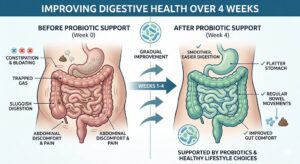
3. How L. Reuteri May Work in Your Gut
Research points to several mechanisms, though the science is still evolving.
Supporting Bacterial Balance
Your gut hosts trillions of microbes. When that balance tips — due to antibiotics, poor diet, or chronic stress — digestion can slow, producing constipation and excess gas. L. Reuteri produces compounds called bacteriocins that may suppress harmful bacteria and support a healthier microbial environment.
Influencing Gut Motility
Research published in Frontiers in Cellular and Infection Microbiology suggests L. reuteri DSM 17938 may support intestinal transit through gut-brain signaling pathways, potentially influencing how the colon contracts and moves stool forward. A 2020 study in PLOS One also found that compounds produced by L. reuteri DSM 17938 were associated with improved colon movement in animal models — though broader human data is still accumulating.
Reducing Fermentation-Related Gas
Bloating often results from undigested carbohydrates fermenting in the colon. L. Reuteri produces a compound called reuterin, which may limit overgrowth of gas-producing bacteria. It also generates lactic acid and short-chain fatty acids that may create a less gas-prone colon environment.
Calming Gut Inflammation
Chronic low-grade gut inflammation can slow digestion and heighten sensitivity to bloating. L. Reuteri has been studied for its potential to reduce certain pro-inflammatory markers and support gut lining integrity — effects that, if confirmed in larger human trials, could reduce digestive discomfort over time.
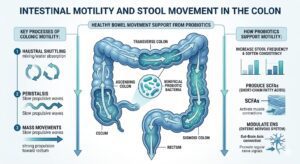
4. Common Causes of Constipation and Bloating
L. Reuteri may work better for some causes than others, so it is worth understanding the likely root of your symptoms first.
Low Fiber Intake
Without enough fiber, stool becomes hard and slow-moving. Most adults eat only 10–15 g per day — well below the recommended 25–38 g. This article on fiber foods for gut health covers practical ways to close that gap.
Gut Microbiome Imbalance (Dysbiosis)
This is where L. Reuteri may make the most difference. Dysbiosis — caused by antibiotics, highly processed diets, or illness — slows transit, increases gas, and disrupts regularity. Restoring bacterial balance is L. Reuteri’s primary area of research.
Slow Transit Constipation
When the colon moves too slowly, stool absorbs excess water and becomes hard and difficult to pass. L. Reuteri’s motility-supporting effects may be particularly relevant here. For more immediate stool-softening support, some people find prune juice or olive oil useful alongside a probiotic.
Dehydration
When the body is dehydrated, it pulls water from stool in the colon, making it harder to pass. This is one of the most overlooked drivers of constipation. More on that here: Does Dehydration Cause Constipation?
Stress and the Gut-Brain Axis
Chronic stress disrupts communication between the brain and gut, slowing transit and worsening bloating. Because L. Reuteri may influence gut-brain signaling pathways, it could offer indirect support here — though lifestyle changes remain essential.
Sedentary Lifestyle
Physical movement naturally stimulates intestinal contractions. Even gentle activity helps. This guide on yoga for constipation outlines positions that specifically support gut motility, and pairs well with a plant-based diet and probiotic support.

5. What Clinical Research Actually Says
Below are the key human trials — not animal studies or marketing claims.
Study 1 — Adults with Functional Constipation (2014)
A double-blind, placebo-controlled trial (NCT01870700) enrolled 40 adults with chronic functional constipation. After 4 weeks of twice-daily L. reuteri DSM 17938, the probiotic group experienced 2.6 more bowel movements per week compared to baseline — a statistically significant improvement over placebo, with no serious adverse events reported.
Study 2 — IBS Bloating and Gas (2024)
A 14-week randomized controlled trial in Frontiers in Gastroenterology tested the DSM 17938 + ATCC PTA 6475 combination in adults with moderate-to-severe IBS. The L. reuteri group showed significant reductions in bloating, gas, abdominal pain, and visible distension versus placebo, with improvements often emerging around week 6.
Study 3 — Systematic Review (2021)
A review published in Medicine (PMC8306447) analyzed PubMed data from 2011–2021 and concluded that L. reuteri may help modulate gut microbiota and reduce gastrointestinal symptoms including constipation, while acknowledging that optimal dose and duration still need further investigation.
Study 4 — Children with Chronic Constipation
Multiple Phase 3 trials (NCT01388712, NCT01587846) consistently showed improved bowel frequency in children taking L. reuteri DSM 17938. The pediatric evidence base is currently more robust than the adult data, though adult trials are catching up.
Overall takeaway: L. reuteri DSM 17938 has consistent, replicated evidence for supporting bowel frequency. The bloating and gas evidence is strong for IBS patients and growing for functional constipation. It complements — but does not replace — lifestyle changes such as adequate fiber supplementation and hydration.
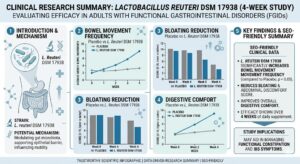
6. Reality Check: It Does Not Work for Everyone
Who Tends to Respond Well
People most likely to benefit have gut dysbiosis as an underlying factor — for example, those who have recently completed antibiotic treatment or have had a prolonged period of poor diet. In these cases, noticeable change within 2–4 weeks is plausible.
Who May See Little Change
If constipation is primarily structural (pelvic floor dysfunction), driven by severe dehydration, or linked to very low fiber intake, L. Reuteri alone is unlikely to be sufficient. OTC laxatives or other natural remedies may provide more immediate relief in those cases.
Bloating May Temporarily Increase First
As L. Reuteri shifts the microbiome, competing bacteria produce gas during adjustment. This gut adjustment reaction typically lasts 1–2 weeks. If bloating remains severe after 3 weeks, halving the dose temporarily before increasing again often helps. Persistent symptoms beyond that warrant a conversation with your doctor.
Consistency Is Non-Negotiable
L. Reuteri is a long-term gut health strategy, not an acute remedy. Studies showing the best results used it daily for 4–14 weeks. Taking it sporadically for a few days will not produce meaningful change.
Affiliate disclosure: This article may contain affiliate links. If you purchase through these links, we may earn a small commission at no extra cost to you. This helps support our research and content creation.
7.Best Evidence-Backed L. Reuteri Probiotics for Constipation (2026)
Strain identity, manufacturing quality, and delivery method matter far more than raw CFU counts. Here are six well-regarded options, with honest pros and cons for each.
🏆 #1 — BioGaia Gastrus (Most Clinically Studied)
Strains: L. reuteri DSM 17938 + ATCC PTA 6475 | CFU: 200 million per tablet | Form: Chewable tablet or capsule | Price: ~$28–$40 / 30 servings
BioGaia Gastrus contains the exact two strains used in the clinical trials described in this article — DSM 17938 for gut motility and regularity, and ATCC PTA 6475 for broader gut and immune support. BioGaia has focused on L. Reuteri research for over 35 years, and these strains are among the most evaluated probiotics in published human trials. The Canadian Digestive Health Foundation (CDHF) has independently certified Gastrus for constipation support and IBS symptom management. Tablets are shelf-stable, FODMAP-friendly, and require no refrigeration.
✅ Pros: Exact strains from constipation and IBS trials · CDHF certified · shelf-stable · no refrigeration · chewable or capsule forms available
❌ Cons: Higher price than generic options · mandarin flavor not for everyone (capsules available) · 200M CFU is lower than some competitors, though strain quality matters more than count alone
Best for: Adults with functional constipation, IBS-C, or persistent bloating who want the most research-backed option.

#2 — BioGaia Osfortis (Bone Health + Gut Support)
Strain: L. reuteri ATCC PTA 6475 + Vitamin D3 | CFU: 200 million × 2 daily | Form: Vegan capsule | Price: ~$35–$50 / 30 days
Osfortis focuses on ATCC PTA 6475 — the strain with the strongest research in bone density and immune balance — paired with Vitamin D3 for calcium absorption and immune function. It is a good choice for older adults or postmenopausal women who want combined gut and skeletal support. For constipation specifically, Gastrus carries stronger direct evidence; Osfortis is the better pick when bone health is also a priority.
✅ Pros: Clinically studied ATCC PTA 6475 strain · Vitamin D3 included · tasteless, odorless, vegan-friendly capsules
❌ Cons: Missing DSM 17938 (stronger constipation strain) · primarily marketed for bone health · higher price
Best for: Older adults and postmenopausal women wanting combined gut, bone, and immune support.

#3 — Toniiq L. Reuteri (High-CFU Budget Option)
Strain: L. reuteri LR08 | CFU: 50 Billion per serving | Form: Delayed-release vegetarian capsule | Price: ~$25–$35 / 60 capsules
Toniiq stands out for its very high CFU count, USA manufacturing in a GMP-certified facility, and independent third-party testing for purity and potency. The delayed-release capsules are designed to survive stomach acid and deliver bacteria to the colon. An FOS prebiotic is included to support bacterial growth. Note that Toniiq uses the LR08 strain, which differs from the clinically most-studied DSM 17938 and has less published human constipation-specific evidence — though many users report positive digestive outcomes.
✅ Pros: Very high CFU · third-party tested · GMP certified · delayed-release capsules · includes FOS prebiotic · affordable · good for home yogurt-making
❌ Cons: LR08 strain has less constipation-specific human trial data · refrigeration recommended for maximum potency
Best for: Budget-conscious buyers wanting high CFU, or those interested in making L. Reuteri yogurt at home.

#4 — Swanson L. Reuteri Plus (Affordable Multi-Strain Formula)
Strains: L. reuteri (5B) + L. rhamnosus (1B) + L. acidophilus (1B) | CFU: 7 Billion total | Form: Vegan EMBO Caps® | Price: ~$10–$18 / 30 capsules
Swanson combines L. reuteri with two other well-documented probiotic strains plus NutraFlora FOS prebiotic, offering broader gut support at a low entry price. EMBO Caps® technology is designed to release content in the lower GI tract, bypassing much of the stomach acid. A solid choice for first-time probiotic users. The specific L. reuteri sub-strain is not disclosed on packaging, and the overall CFU count is on the lower end.
✅ Pros: Highly affordable · multi-strain formula · EMBO Caps® lower GI delivery · GMP certified · vegan capsules · prebiotic included
❌ Cons: L. reuteri sub-strain not specified · lower CFU · 12-month shelf life
Best for: First-time probiotic users or those wanting a budget-friendly multi-strain daily formula.

#5 — MyReuteri by Dr. William Davis (Flexible Dosing + Yogurt-Making)
Strain: L. reuteri LRDR™ (proprietary) | CFU: 10B / 20B / 50B options | Form: Vegan capsule with FOS | Price: ~$30–$50 depending on strength
Formulated by Dr. William Davis, MD (author of Super Gut), MyReuteri offers three CFU tiers — foundational, enhanced, and intensive — making it easy to adjust dosing for different needs. It is also designed for making L. Reuteri fermented yogurt at home, which Dr. Davis promotes as a way to achieve higher bacterial concentrations than capsules alone provide. The formula is free from dairy, gluten, soy, nuts, and artificial additives. The proprietary LRDR™ strain has limited published clinical trial data compared to DSM 17938.
✅ Pros: Three dosing strengths · physician-formulated · suitable for home yogurt-making · clean label · vegan
❌ Cons: LRDR™ strain has limited published human trial data · higher price at upper tiers · limited retail availability
Best for: Health enthusiasts following Dr. Davis’s protocol or those who want flexible dosing and yogurt-making capability.

#6 — Nature’s Way Primadophilus Reuteri (Best In-Store Availability)
Strains: L. reuteri UALre-16™ + L. acidophilus DDS®-1 + L. rhamnosus UALr-18™ | CFU: 5 Billion | Form: Enteric-coated capsule | Price: ~$18–$28 / 90 capsules
Nature’s Way is widely available at Walmart, Target, CVS, and most health stores — a practical advantage for those who prefer not to order online. The True Potency® enteric coating is designed to resist stomach acid and release probiotics in the intestines. The 90-capsule bottle offers three months of supply at a very low per-dose cost. Refrigeration is required, and the UALre-16™ strain carries less published constipation-specific human trial data than DSM 17938.
✅ Pros: Available in physical stores nationwide · enteric coating for acid resistance · 3-month supply · NutraFlora® scFOS prebiotic · no dairy, gluten, or artificial additives
❌ Cons: Requires refrigeration · UALre-16™ has less direct constipation evidence · lower 5B CFU
Best for: Those who prefer buying locally or want a long-lasting supply at a low per-dose cost.

Quick Comparison
| Product | Strain(s) | CFU | Best For | Price / Month |
|---|---|---|---|---|
| BioGaia Gastrus | DSM 17938 + ATCC PTA 6475 | 200M | Constipation + IBS bloating | ~$28–$40 |
| BioGaia Osfortis | ATCC PTA 6475 + Vit D3 | 200M×2 | Bone + immune + gut | ~$35–$50 |
| Toniiq L. Reuteri | LR08 | 50B | High-CFU / yogurt-making | ~$25–$35 |
| Swanson L. Reuteri Plus | L. reuteri + 2 others | 7B | Budget multi-strain | ~$10–$18 |
| MyReuteri | LRDR™ | 10B–50B | Flexible dosing / yogurt | ~$30–$50 |
| Nature’s Way Primadophilus | UALre-16™ + 2 others | 5B | In-store availability | ~$7–$10 |
8.How Much L. Reuteri Should You Take? (Recommended Dosage)
There is no single universally agreed dose for L. reuteri — the right amount depends on the strain, the product form, and your specific digestive concern. That said, clinical trials give us a reliable starting point. In the adult constipation trial by Ojetti et al. (2014), L. reuteri DSM 17938 was given at 100 million CFU (1×10⁸) twice daily — taken 30 minutes after meals — totaling 200 million CFU per day for 4 weeks. The 2024 IBS trial used the combined DSM 17938 and ATCC PTA 6475 blend at 200 million CFU once or twice daily, with meaningful improvements typically emerging around week 6.
For most healthy adults, a daily dose in the 100–200 million CFU range aligns with what published research supports. Higher CFU counts are not necessarily better — strain quality and survivability through the digestive tract matter more than raw numbers alone. If you are new to probiotics or tend to be sensitive, start at half the label dose for the first week to allow your gut to adjust, then increase to the full dose. Always follow the specific product label instructions and consult your doctor before starting if you have an underlying health condition.
9. How to Take L. Reuteri for Best Results
- Time it after meals: Take 30 minutes after eating. Food buffers stomach acid, which may improve bacterial survival.
- Be consistent: Trials showing positive results used L. Reuteri every day for 4–14 weeks. Sporadic use is unlikely to produce meaningful change.
- Follow the label dose: Do not assume more is better. Standard dosing for BioGaia Gastrus is 1 tablet daily; 2 tablets for more intensive use or IBS, as directed.
- Start low if you are sensitive: Half-dosing for the first week can reduce early gas and bloating during the adjustment period.
- Pair with fiber and water: For a fuller picture of why fiber intake matters alongside probiotics, this article explains why fiber sometimes fails to relieve constipation.
- Avoid heat: Heat degrades live bacteria. Let food and drinks cool before taking your supplement.
- Space away from antibiotics: Take L. Reuteri at least 2 hours apart from antibiotics, or begin after the antibiotic course ends.
10. Who Should Be Careful or Avoid L. Reuteri
L. Reuteri is generally considered safe for healthy adults, but caution is warranted in these situations:
- Immunocompromised individuals: People on chemotherapy, immunosuppressants, or living with HIV/AIDS should consult their doctor before taking any probiotic. Live bacteria can potentially cause infections when immunity is severely compromised.
- SIBO (Small Intestinal Bacterial Overgrowth): Adding bacteria — even beneficial strains — can sometimes worsen SIBO symptoms. Work with a gastroenterologist if SIBO is suspected.
- Pregnancy and breastfeeding: Generally considered safe, but always check with your OB-GYN before starting any new supplement during pregnancy.
- Serious heart valve conditions: Rarely, probiotics have been associated with bacteremia in people with significant cardiac conditions. Cardiologist clearance is advisable.
- Infants under 1 year: Probiotic use in this age group should always be guided by a pediatrician.
If your constipation is severe, persistent, or accompanied by blood in stool, unexplained weight loss, or significant abdominal pain, see a doctor promptly — these can indicate conditions that require medical evaluation beyond a probiotic supplement. If the issue is stool that feels stuck and will not pass, this dedicated guide may help: Poop Stuck But Won’t Come Out. For older adults specifically, you can also explore immediate constipation relief strategies for the elderly.
11. Frequently Asked Questions
How long does L. Reuteri take to work for constipation?
Most clinical trials show improvement within 2–4 weeks of consistent daily use. Some people notice changes within 7–10 days, but results depend heavily on gut bacteria balance, diet, and hydration. Give it a full 4 weeks before drawing conclusions.
Does L. Reuteri have side effects?
Common early effects include temporary gas, bloating, or mild stomach discomfort lasting 1–2 weeks as your gut adjusts. These generally resolve on their own. People with weakened immune systems should consult a doctor before starting any probiotic.
When is the best time to take L. Reuteri?
Most clinical studies used twice-daily dosing 30 minutes after meals. Taking it with food may improve bacterial survival through the stomach. Consistency matters more than the exact time — choose a schedule you can maintain daily.
Can L. Reuteri make bloating worse at first?
Yes — temporary worsening is common and expected in the first 1–2 weeks as the microbiome shifts. If severe bloating persists beyond 3 weeks, try halving the dose for a week. Ongoing symptoms warrant a conversation with your doctor.
Which L. Reuteri strain is best for constipation?
L. reuteri DSM 17938 has the most published evidence for constipation support. BioGaia Gastrus pairs it with ATCC PTA 6475 — the combination tested in the most rigorous published trials for constipation and IBS.
Is L. Reuteri safe for long-term daily use?
Yes. L. Reuteri is generally recognized as safe (GRAS) for healthy adults. Clinical studies have used it daily for up to 14 weeks without safety concerns, and many people take it as part of an ongoing gut health routine. Those with serious or chronic illness should seek medical guidance first.
Can I take L. Reuteri and magnesium together?
Yes — this combination is popular because they work through different mechanisms. Magnesium citrate or glycinate draws water into the colon for more immediate softening; L. Reuteri may support the underlying gut environment over time. Both can complement each other well. For guidance on choosing a form, this article covers the best magnesium supplements for constipation.
Is L. Reuteri helpful for IBS-C?
The evidence is encouraging. The 2024 trial in Frontiers in Gastroenterology specifically tested the Gastrus combination in IBS patients and found significant improvements in bloating, abdominal pain, gas, and bowel regularity. Based on current data, IBS-C patients may be among the better candidates for L. Reuteri supplementation.
12. Conclusion: Is L. Reuteri Worth Trying?
L. Reuteri is not a quick fix. It will not produce overnight results the way a laxative might. But it is one of the more thoroughly studied probiotics for long-term digestive support, with consistent clinical evidence for constipation frequency and IBS-related bloating.
- If your constipation or bloating may involve gut microbiome imbalance, L. Reuteri is a well-researched, reasonable choice
- DSM 17938 (found in BioGaia Gastrus) carries the strongest published evidence for constipation support
- Allow at least 4 weeks of consistent use before evaluating results
- Temporary gas or bloating in the first 1–2 weeks is normal and usually self-resolving
- Best results come from pairing it with adequate fiber, hydration, physical movement, and stress management
For faster relief while L. Reuteri builds up in your system, it is worth exploring fast constipation relief remedies at home. If you have already been using probiotics and still see no improvement, this article on why fiber sometimes fails to relieve constipation may reveal other factors worth addressing.
Bottom line: A genuine, consistent 4-week trial of L. Reuteri alongside a gut-supportive lifestyle is a reasonable, evidence-grounded approach for most adults dealing with functional constipation or IBS-related bloating.
While L. Reuteri is effective, you might also want to check our top-rated Probiotics for Constipation and Bloating.
References
- Ojetti V, et al. (2014). The effect of Lactobacillus reuteri supplementation in adults with chronic functional constipation: a randomized, double-blind, placebo-controlled trial. J Gastrointestin Liver Dis. PMID: 25531996.
pubmed.ncbi.nlm.nih.gov/25531996 - Cruchet S, et al. (2024). Limosilactobacillus reuteri DSM 17938 and ATCC PTA 6475 for the treatment of moderate to severe irritable bowel syndrome in adults: a randomized controlled trial. Front. Gastroenterol. 2:1296048.
doi.org/10.3389/fgstr.2023.1296048 - Borrelli O, et al. (2021). Lactobacillus reuteri DSM 17938 in diarrhea and constipation: two sides of the same coin? Medicine. PMC8306447.
pmc.ncbi.nlm.nih.gov/articles/PMC8306447 - Peng Y, et al. (2023). Lactobacillus reuteri in digestive system diseases: focus on clinical trials and mechanisms. Front. Cell. Infect. Microbiol. PMC10471993.
ncbi.nlm.nih.gov/pmc/articles/PMC10471993 - West CL, et al. (2020). Microvesicles from Lactobacillus reuteri (DSM-17938) completely reproduce modulation of gut motility by bacteria in mice. PLOS One. PMC6946587.
journals.plos.org/plosone — DOI: 10.1371/journal.pone.0225481 - Riezzo G, et al. (2019). Effects of long-term administration of Lactobacillus reuteri DSM-17938 on circulating levels of 5-HT and BDNF in adults with functional constipation. Beneficial Microbes.
doi.org/10.3920/BM2018.0010 - BioGaia AB. (2024). BioGaia Gastrus PURE ACTION — Product page.
biogaia.com/products/gastrus - Canadian Digestive Health Foundation. BioGaia Gastrus PURE ACTION — CDHF Certified Product.
cdhf.ca — CDHF Certified Products






[…] Gut motility support: L. reuteri may influence the enteric nervous system, supporting colonic muscle contractions. See: L. reuteri for constipation and bloating. […]
[…] worth reading: Does L. Reuteri Help Constipation and Bloating? — another commonly compared probiotic […]
[…] Lactobacillus reuteri (DSM 17938): Shown in a randomized, double-blind, placebo-controlled trial to improve bowel movement frequency in adults with chronic functional constipation.[11] We cover this strain in depth in Does L. Reuteri Help Constipation and Bloating? […]
[…] A bacterium naturally found in the human gut and breast milk, L. reuteri DSM 17938 is one of the more thoroughly studied probiotic strains for constipation. A randomized controlled trial found that adults taking it twice daily for 4 weeks experienced an average of 2.6 more bowel movements per week compared to baseline. A 2024 trial also reported significant reductions in bloating and abdominal pain in IBS patients. For a full breakdown of the research and top products, see: Does L. Reuteri Help Constipation and Bloating? […]
[…] A randomized, double-blind, placebo-controlled trial found that adults with chronic functional constipation who took Lactobacillus reuteri DSM 17938 for four weeks saw an average of 2.6 additional bowel movements per week compared with baseline, a statistically significant improvement over the placebo group [1]. For a full breakdown of this strain, see our guide on whether L. reuteri helps constipation and bloating. […]