


What does it feel like to go four years without a normal bowel movement?
For one young woman — healthy, active, and only 23 years old when it began — chronic constipation arrived suddenly and without warning. What followed was four years of hemorrhoids, anal fissures, a perianal abscess, a fistula, complete laxative dependency, hospitalizations, and a mental health crisis so severe she considered ending her life.
Then, after trying everything medicine and the internet had to offer, she reversed her condition in less than one week — by switching to a whole-foods, plant-based (WFPB) diet.
Her story is not a miracle. It is not a fluke. And it is increasingly supported by cutting-edge gut science. This article explores exactly what happened, what the research says about why it worked, and provides a clear roadmap on how to reverse chronic constipation with diet.
If you are already familiar with the science of plant-based eating for gut health, our comprehensive guide — Plant-Based Diet for Constipation Relief and Better Gut Health — covers the full clinical framework in detail. This article focuses specifically on one person’s documented journey and what it reveals about chronic constipation that conventional medicine often misses.
1. Her Success Story: How to Reverse Chronic Constipation with Diet After 4 Years of Suffering
She was 23, otherwise perfectly healthy, when her bowel movements — without any apparent cause — slowed to a near-halt. She didn’t notice immediately. The first sign was hemorrhoids. She treated them with over-the-counter Prep-H and attributed the flare to a high-stress job. But the hemorrhoids didn’t go away, because the underlying problem — rock-hard stools from chronic constipation — was never addressed.
Over the following months, the hemorrhoids progressed to anal fissures. She saw a doctor, who recommended MiraLax (polyethylene glycol). It softened her stools. And then, slowly and almost imperceptibly, it became the only thing keeping her functional. Miss a dose, and she’d go 3–5 days without a bowel movement. Resume it, and it would take days more to recover. She became completely dependent on an osmotic laxative at age 24.
By the three-year mark, the fissures had become a perianal abscess, which eventually developed into a fistula — a tunnel-like infection in the tissue between the rectum and the perineum. The abscess resurfaced every 2–3 months, leaving her bedridden in unbearable pain for days or weeks at a time. Because the fistula was located in her perineum, it devastated her vaginal health, causing repeated, severe bacterial vaginosis infections. Her long-term relationship and sex life suffered enormously. At this point, she writes, she heavily considered taking her life.
“I say all of this in case there is someone else out there suffering the way I have. You are not alone.”
— Anonymous community member, shared online
She tested everything her doctors and her own extensive research could suggest. She went to specialists. She spent thousands of dollars on blood tests. She changed her diet, her exercise habits, her supplements, her birth control. Nothing moved the needle — until she discovered the whole-foods, plant-based diet.
Within less than one week of switching to WFPB eating, her bowel movements normalized completely. She went from near-total laxative dependency to 2–3 effortless bowel movements per day — naturally, without medication. Six months later, she remains off MiraLax entirely and describes her digestion as the best it has ever been.
2. Everything She Tried First (And Why It Didn’t Work)
Before dismissing her story as an anomaly, it’s worth cataloguing what she tried — because her list reads like the standard medical playbook for constipation management:
- Hydration: 2+ litres of water per day — no improvement
- Milk of Magnesia: Softened stools short-term; caused severe side effects with daily use; stools immediately reverted when stopped
- MiraLax (polyethylene glycol): Effective only while taken continuously; stopped working unpredictably; led to 3.5 years of full dependency
- Diet overhaul: More vegetables, flax seeds, less processed food — no meaningful change in bowel function
- Exercise: 3–5 times per week — no improvement
- Giving up caffeine and stimulants: Stopped coffee, energy drinks, Adderall — no change
- Fiber supplements: Taken regularly — no change
- Magnesium supplements: No lasting improvement
- Elimination diets: Cut out dairy and gluten — no change
- Coming off hormonal birth control: No improvement
- Comprehensive blood testing: Blood sugar, thyroid, vitamins, hormones — all normal
- Multiple GP visits and a GI specialist: Consistent advice — “keep drinking water and taking MiraLax”
This is not a story of someone who gave up too early or didn’t try. She methodically worked through everything conventional medicine and popular health advice offers. And still, nothing worked — until she fundamentally changed the composition of what she ate.
It’s worth noting that over-the-counter laxatives like MiraLax are genuinely useful for short-term relief, and magnesium supplements can help many people. But for a subset of patients — particularly those with gut microbiome dysbiosis driving their constipation — these interventions address only the symptom, not the root cause.
3. The Turning Point: Discovering WFPB
At the four-year mark, she stumbled onto a podcast featuring Dr. Will Bulsiewicz, a board-certified gastroenterologist and author of Fiber Fueled. What caught her attention was not veganism — that had never appealed to her — but his explanation of the whole-foods component: the idea that it’s not just about eating plants, but about eating plants in their minimally processed, fiber-rich, microbiome-nourishing form.
She decided to try it for a month.
Within four to six days, her bowel movements returned to normal — soft, bulky, and effortless. She had to give it time before allowing herself to hope. But a month passed, then two, then six. She remained off MiraLax entirely. Her digestion continued to improve.
It is worth acknowledging what this story is and what it is not. It is one person’s experience, not a clinical trial. Individual responses to dietary change vary enormously. But her story aligns precisely with what an emerging body of large-scale research is now showing about the relationship between diet pattern, gut microbiome health, and chronic constipation — and that alignment is worth taking seriously.
4. The Science: How to Reverse Chronic Constipation with Diet Using Whole-Foods and Plants
The most important word in “whole-foods, plant-based” is whole-foods. This is the key that most people — and many doctors — miss when they advise simply “eating more fiber” or “drinking more water.”
Whole plant foods contain not just fiber, but a complex matrix of nutrients that interact synergistically with the gut microbiome: diverse types of fiber (soluble, insoluble, and resistant starch), polyphenols, prebiotics, and water-binding compounds that collectively reshape the microbial environment of the colon in ways that isolated fiber supplements simply cannot replicate.
What Whole Plant Foods Actually Deliver
When you eat an apple, you’re not just eating fiber. You’re eating pectin (a soluble fiber that dissolves into a gel in the gut, adding bulk to stool and feeding beneficial bacteria), quercetin (a polyphenol with anti-inflammatory and prebiotic effects), water bound within the cell structure of the fruit, and dozens of other phytonutrients that act on the gut lining, gut immune system, and microbial community simultaneously.
When gut bacteria ferment the diverse fibers in whole plant foods, they produce short-chain fatty acids (SCFAs) — particularly butyrate, propionate, and acetate. These SCFAs are not merely byproducts; they are primary signals that regulate colonic motility, reduce inflammation, maintain the integrity of the gut barrier, and support serotonin production in the gut. Serotonin, often called the “happiness chemical,” is actually produced predominantly in the gut, where it plays a critical role in coordinating intestinal muscle contractions.
In other words: more diverse plant food → more diverse gut bacteria → more SCFA production → better gut motility → regular, comfortable bowel movements.
A 2025 randomized controlled trial published in Microorganisms found that high-fiber supplementation significantly improved bowel-related quality of life and increased populations of beneficial bacteria including Bifidobacterium, Anaerostipes, and Fusicatenibacter — all of which contribute to butyrate production and colon health.
For a full breakdown of the four nutritional pillars that drive this process — fiber, polyphenols, healthy fats, and fermented foods — see our detailed guide: Plant-Based Diet for Constipation Relief.
5. The Gut Microbiome Connection
One of the most important — and underappreciated — aspects of chronic constipation is its relationship to gut microbiome dysbiosis: an imbalance in the composition of the trillions of microorganisms that live in the colon.
Research suggests that people with functional constipation often show altered microbial profiles compared to healthy controls. Several studies have reported reduced populations of beneficial bacteria including Bifidobacterium, Lactobacillus, Roseburia, and Coprococcus — genera that ferment dietary fiber and produce short-chain fatty acids. At the same time, many studies find increased abundance of methane-producing archaea, which slow colonic transit. It is important to note that findings across studies are not fully consistent, likely due to differences in methodology, patient populations, and sample sources — and no single, universally agreed-upon microbial profile of constipation has been established. The gut microbiome’s role in constipation is almost certainly bidirectional: dysbiosis may contribute to constipation, and constipation may in turn worsen dysbiosis.
This matters enormously, because it suggests a fundamental reason why drinking more water or taking a fiber supplement alone often fails for people with chronic constipation: if the bacterial communities needed to ferment that fiber are depleted, the fiber cannot do its job. The microbiome has to be rebuilt first — and the most effective known way to rebuild it is through sustained, diverse plant food intake.
A landmark 2025 systematic review published in Frontiers in Microbiology — focused on fecal microbiota transplantation (FMT) for refractory constipation — noted that standard first-line therapies such as osmotic laxatives and stimulants demonstrate only 30–50% response rates in clinical trials, with high relapse rates after discontinuation. This is consistent with the broader literature on functional constipation treatment and maps directly onto this woman’s experience: MiraLax managed her symptoms while she took it, but the underlying drivers of her constipation were never addressed, so her condition returned whenever she stopped.
A whole-foods, plant-based diet, by contrast, directly nourishes the gut microbial ecosystem. By providing diverse fermentable fibers, polyphenols, and prebiotics across many plant species, it creates the conditions needed for beneficial bacterial populations to expand, outcompete methane-producing organisms, and restore normal SCFA-mediated colonic motility. This is the most plausible biological explanation for why her results were so dramatic: years of a relatively low-fiber, low-diversity diet had likely starved key microbial communities, and the WFPB shift gave those communities the substrate they needed to recover and reshape gut function.
You can learn more about supporting your gut bacteria through diet and supplementation in our guide to the 9 Best Probiotic Supplements of 2026 and our deep dive into fiber-rich foods and gut health.
6. What 96,000 Adults Taught Us About Diet and Constipation
In 2025, one of the most compelling large-scale studies on diet and constipation was published in Gastroenterology — a flagship journal of the American Gastroenterological Association. Researchers from Massachusetts General Hospital and Harvard Medical School tracked the dietary patterns of nearly 96,000 middle-aged and older adults across three large cohorts (the Nurses’ Health Study, Nurses’ Health Study II, and the Health Professional Follow-up Study) and examined who developed chronic constipation over time.
The findings were striking:
- People who consistently followed a plant-based diet or a Mediterranean diet were significantly less likely to develop chronic constipation.
- People following a Western diet (high in red meat, processed meats, and refined grains) or a pro-inflammatory diet (rich in ultra-processed foods) were significantly more likely to develop it.
- Crucially, the protective effect of plant-based eating was not fully explained by fiber intake alone. Something beyond fiber — likely polyphenols, the microbiome-reshaping effect of diverse plant foods, or the overall anti-inflammatory pattern — was driving the benefit.
This finding has profound clinical implications. It suggests that when we advise constipation patients to simply “eat more fiber,” we may be giving them a dramatically incomplete picture. The broader dietary pattern — and the community of gut microbes it sustains — appears to matter as much as, or more than, fiber quantity alone.
The study was published as: Wang Y, et al. “Dietary Patterns and Incident Chronic Constipation in Three Prospective Cohorts of Middle- and Older-Aged Adults.” Gastroenterology 2025; 169(7): 1475–1488. DOI: 10.1053/j.gastro.2025.06.020.
7. Why Fiber Alone Isn’t Enough — But Plants Are
This is perhaps the most clinically important insight in this entire article, and it deserves its own section.
She had been taking fiber supplements for years. They did nothing. Why?
Researchers at King’s College London published the first comprehensive evidence-based dietary guidelines specifically for chronic constipation in 2025, endorsed by the British Dietetic Association. Their systematic review of the available clinical evidence found that certain specific foods — kiwifruit, rye bread, prunes, high-mineral water, psyllium, and magnesium oxide — showed meaningful benefit in controlled trials. But a generic “high-fiber diet,” in which fiber comes from a wide and varied range of foods without structure, was not consistently supported by the same level of evidence.
The guidelines were published in two journals simultaneously: the Journal of Human Nutrition and Dietetics and Neurogastroenterology & Motility (DOI: 10.1111/jhn.70133 and 10.1111/nmo.70173).
The lesson is nuanced but important: isolated fiber supplementation (a scoop of psyllium or a fiber gummy) is not the same as eating a diet built around whole plant foods. The latter provides:
- Fiber diversity — different types of fiber feed different bacterial species, creating a more resilient, diverse microbiome
- Polyphenols — act as prebiotics and have direct anti-inflammatory effects on the gut lining
- Natural water content — fruits and vegetables contain water bound within plant cells, which integrates with fiber differently than water drunk separately
- Resistant starch — found in whole grains, legumes, and cooked-then-cooled potatoes; one of the most potent fuels for butyrate-producing bacteria
- Fermentable oligosaccharides — in foods like garlic, onions, asparagus, and leeks; feed Bifidobacterium specifically
A fiber supplement gives the gut one type of fiber. A WFPB diet gives it dozens — simultaneously rebuilding the microbial ecosystem from the ground up.
8. The Complications She Developed — And Why They Are Preventable
Her story is an important reminder that chronic constipation, left untreated or inadequately managed, is not merely uncomfortable. It carries real, serious medical complications. Understanding the progression helps illustrate how much is at stake:
Hemorrhoids
Repeated straining to pass hard stools increases pressure on the venous plexuses around the rectum, causing them to swell and prolapse. This is one of the most common complications of chronic constipation and often the first sign that something is seriously wrong with bowel function.
Anal Fissures
Hard, dry stool can tear the mucosal lining of the anal canal, creating painful fissures. These often fail to heal because every subsequent bowel movement reopens them. The result is a cycle of tearing, partial healing, and retearing that can persist for months or years.
Perianal Abscess
Most perianal abscesses develop from an infection originating in the small glands just inside the anal canal (the cryptoglandular theory). Chronic straining, hard stools, and anal fissures can all stress the anorectal tissue and create conditions that facilitate this type of infection. The abscess forms as a pus-filled cavity that is extremely painful and typically requires surgical drainage. She experienced recurrent abscesses every 2–3 months for over a year.
Anal Fistula
An untreated or recurrent abscess can burrow through tissue and form a fistula — an abnormal tunnel connecting the anal canal to the skin near the anus or, in her case, the perineum. This is a surgical condition. It devastated her quality of life and her sexual health for over a year.
None of these complications are inevitable. They are, in most cases, downstream consequences of prolonged, inadequately managed constipation. The earlier the root cause is addressed — ideally through dietary and lifestyle intervention — the lower the risk of developing them.
9. Her 6-Month Update: Sustainable, Balanced Recovery
Six months after beginning her WFPB journey, she shared an update: her bowel function was approximately 80–90% restored — close to what it was before her constipation began five years earlier. She had not taken a single dose of MiraLax in over seven months.
Critically, she was not eating 100% plant-based. By the six-month mark, she had settled into an approach she described as 50–70% plant-based: nearly 100% at home, with flexibility to eat freely when dining with friends. She noted that for the first three months, her body would not tolerate anything less than roughly 95% plant-based — meaning the transition required a gradual, sustained commitment before her gut microbiome had stabilized enough to handle a wider range of foods without consequences.
This is entirely consistent with what we know about microbiome recovery. Rebuilding a depleted gut ecosystem takes time. The bacteria need weeks to months of sustained fiber exposure to re-establish themselves at the population levels needed to reliably regulate colonic motility. Reducing plant intake too quickly — before the ecosystem has stabilized — tends to cause a regression. This is probably why her years of eating “not that bad” had failed to help: occasional healthy eating cannot compensate for a fundamentally low-diversity, low-fiber dietary baseline.
Her 50–70% plant-based maintenance approach reflects a practical middle ground that appears to have worked for her biology. The 2025 Harvard study identified a plant-based dietary pattern — not a strict percentage — as protective against chronic constipation, suggesting that consistent plant-forward eating matters more than achieving a precise numerical target.
10. Practical Guide: How to Start a WFPB Diet for Constipation
If her story resonates with you, here is a research-informed framework for beginning a whole-foods, plant-based approach to chronic constipation. This is not a prescription — please speak with your doctor, especially if you have a diagnosed condition or are taking medication. But it is a practical starting point grounded in the evidence.
Step 1: Start Low and Go Slow
Dramatically increasing plant food intake too rapidly causes bloating, gas, and cramping for most people — because the bacteria needed to ferment the new fiber loads take time to grow. Begin with modest increases and add new plant foods one at a time. A good starting target is 10 or more different plant foods per week (across all plant categories: fruits, vegetables, legumes, whole grains, nuts, and seeds).
Step 2: Prioritize Fiber Diversity, Not Quantity
Aim for variety, not just volume. Eating the same high-fiber food every day feeds the same bacterial species. Rotating through a wide range of plant foods feeds a wider array of beneficial microbes, leading to a more robust, diverse ecosystem. Aim to eat 30 different plant foods per week — the target associated with significantly higher microbiome diversity in research.
Step 3: Include These Evidence-Backed Foods Daily
Note: The amounts below are based on quantities used in clinical studies. Individual tolerance varies — start at a lower amount and increase gradually. Consult your doctor or a registered dietitian before making significant dietary changes, especially if you take medication or have a diagnosed condition.
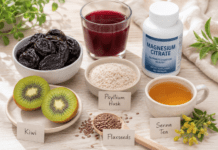
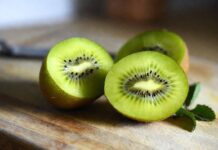
- Kiwifruit (2 per day): Among the most strongly evidence-backed foods for improving bowel movement frequency and stool consistency, per the 2025 British Dietetic Association guidelines
- Prunes (around 100g per day): Natural laxative effect supported by multiple controlled trials
- Psyllium husk (12g per day): Soluble fiber with both bulk-forming and prebiotic effects; mix into water, smoothies, or yogurt
- Legumes: Lentils, chickpeas, black beans — among the richest sources of fermentable fiber for gut bacteria
- Fermented foods: Yogurt, kefir, kimchi, sauerkraut, miso — directly introduce beneficial bacteria
- Flaxseeds or chia seeds: Provide both soluble and insoluble fiber along with omega-3 fatty acids
- Whole grains: Oats, brown rice, quinoa, rye bread — contain resistant starch and beta-glucan
Step 4: Don’t Neglect Hydration — But Understand Its Role
Drinking adequate water matters, but it is not sufficient on its own — as she discovered after months of consuming 2+ litres daily. Water works with fiber, not independently of it. Water bound within plant cell structures (as in fruits and vegetables) is particularly effective at softening stool because it is absorbed more gradually and interacts directly with fiber in the colon.
Step 5: Reduce Ultra-Processed Foods
The 2025 Harvard cohort study found that a diet high in ultra-processed foods was one of the strongest predictors of developing chronic constipation. Ultra-processed foods are low in fiber, low in polyphenols, and often contain emulsifiers that can disrupt the gut mucus layer and alter microbial balance. Reducing them is not optional if gut microbiome restoration is the goal.
Step 6: Give It Time
She saw results in under a week — which is remarkably fast. Most people will need 2–6 weeks of sustained dietary change to notice meaningful improvement in bowel function. The microbiome requires time to shift. Commit to at least four weeks before assessing whether the approach is working.
For a complete, structured three-phase protocol — including meal plans, recipes, and supplement guidance — see our full article: Plant-Based Diet for Constipation Relief: The Complete Guide. It covers Dr. Will Bulsiewicz’s Plant Powered Plus Protocol in detail, with phase-by-phase nutritional guidance and sample weekly menus.
You may also find our guide to the best fiber-rich foods for constipation helpful as a companion resource.
11. When to See a Doctor
Dietary change is powerful, but it is not a substitute for medical care. Please consult a healthcare provider if you experience any of the following:
- Constipation that has persisted for more than 3–4 weeks without any identified cause
- Blood in your stool or rectal bleeding (though hemorrhoids and fissures are common, bleeding always warrants assessment)
- Unintentional weight loss alongside constipation
- Severe abdominal pain
- Symptoms of a perianal abscess: localized swelling, throbbing pain, fever near the anus
- Constipation that developed suddenly in someone over 50 with no prior history
- No improvement after 6–8 weeks of sustained dietary change
Chronic constipation can be a symptom of underlying conditions — including hypothyroidism, diabetes, neurological disorders, or colorectal disease — that require medical diagnosis and management. Dietary intervention is most appropriate as a primary or adjunctive strategy for functional constipation without a serious underlying cause. If your doctor has already ruled out secondary causes (as hers had), a WFPB dietary trial is a reasonable next step to discuss with them.
For information about medically supervised laxative options, including when they are appropriate and how to use them safely, see our guide to the best OTC laxatives for constipation.
12. Conclusion: How to Reverse Chronic Constipation with Diet
If you are struggling, knowing how to reverse chronic constipation with diet can be the first step toward a pain-free life.
One woman reversed four years of severe, laxative-dependent chronic constipation in less than one week by switching to a whole-foods, plant-based (WFPB) diet — and maintained that improvement for six months and counting. Her story aligns with a large and growing body of clinical research: a 2025 study of 96,000 adults in Gastroenterology found that plant-based and Mediterranean dietary patterns significantly reduce the risk of developing chronic constipation — independent of fiber intake alone.
Drinking more water and taking fiber supplements often fail for people with chronic constipation because the root cause is gut microbiome dysbiosis. Without the right bacteria to ferment fiber, fiber cannot do its job. A WFPB diet provides not just fiber, but the full matrix of polyphenols, diverse fermentable substrates, and natural prebiotics that allow the gut microbial ecosystem to rebuild — which is why it can succeed where isolated interventions fail.
The transition requires patience and a “start low, go slow” approach. Most people need 2–6 weeks to see meaningful improvement; some, like her, see dramatic results within days. A sustainable 50–70% plant-based maintenance approach may be sufficient for long-term benefit.
If you are suffering with chronic constipation and have exhausted conventional options, a carefully implemented WFPB diet — done under medical supervision — is one of the most evidence-supported interventions available.
If you or someone you know is struggling with the mental health toll of chronic illness, please reach out to a mental health professional. The psychological suffering she describes is real, valid, and deserves proper care alongside physical treatment.
You are not alone. Other people have been where she was — and found their way back. Read more real stories from people managing how to reverse chronic constipation with diet at our Stories section.
References
- Wang Y, Kuo B, Berschback M, et al. Dietary Patterns and Incident Chronic Constipation in Three Prospective Cohorts of Middle- and Older-Aged Adults. Gastroenterology. 2025;169(7):1475–1488. doi:10.1053/j.gastro.2025.06.020
- Dimidi E, van der Schoot A, Barrett K, et al. British Dietetic Association Guidelines for the Dietary Management of Chronic Constipation in Adults. Journal of Human Nutrition and Dietetics. 2025;38(5). doi:10.1111/jhn.70133
- Dimidi E, et al. British Dietetic Association Guidelines for Chronic Constipation. Neurogastroenterology & Motility. 2025. doi:10.1111/nmo.70173
- Wang K, Gao C, Zhu L, et al. Fecal microbiota transplantation for chronic constipation: a systematic review and meta-analysis of clinical efficacy, safety, and microbial dynamics. Frontiers in Microbiology. 2025;16:1604571. doi:10.3389/fmicb.2025.1604571
- Miura H, Oda M, Abe K, et al. Effects of Dietary Fiber Supplementation on Gut Microbiota and Bowel Function in Healthy Adults: A Randomized Controlled Trial. Microorganisms. 2025;13(9):2068. doi:10.3390/microorganisms13092068
- Chiba M, Tsuda S, Tozawa H. Efficacy of a Plant-based Diet (Semi-lacto-ovo-vegetarian Diet) for Treating Constipation. Recent Progress in Nutrition. 2022;2(2):012. doi:10.21926/rpn.2202012
- Storz MA, et al. Bowel health, defecation patterns and nutrient intake following adoption of a vegan diet: a randomized-controlled trial. Annals of Medicine. 2024;56(1):2305693. doi:10.1080/07853890.2024.2305693
- Wang Z, Zhang X, et al. Short-chain fatty acids: bridges between diet, gut microbiota, and health. Journal of Gastroenterology and Hepatology. 2024. doi:10.1111/jgh.16619
- Zhang S, Wang R, Li D, Zhao L, Zhu L. Role of gut microbiota in functional constipation. Gastroenterology Report. 2021;9(5):392–401. doi:10.1093/gastro/goab035
- Bulsiewicz W. Fiber Fueled. Avery, 2020. ISBN: 978-0593084564.
- Bulsiewicz W. Plant Powered Plus: Activate the Power of Your Gut to Tame Inflammation and Reclaim Your Health. 2026.
- Harvard Health Publishing. Plant-based diets may help lower the risk of chronic constipation. October 2025. Available at: health.harvard.edu





I suffer bad constipation been taking gummys because other ones Dr gives you to strong cause me worse pain when been loo no meds help
I’m so sorry to hear about the pain you’re going through. It’s very common for laxatives and gummies to cause more cramping or pain because they often don’t fix the root cause—gut microbiome dysbiosis.
The story in this post explains how a Whole-Foods, Plant-Based (WFPB) diet helped someone in a similar situation by rebuilding the gut’s natural bacteria. It’s not a quick-fix pill, but a way to heal the gut naturally. I’d really recommend reading the full story in the link—it might offer a different perspective that meds haven’t provided yet. Stay strong!
[…] for gastrointestinal discomfort, though most research focuses on gastric emptying rather than constipation […]
[…] daily may improve bowel movement frequency, stool consistency, and digestive comfort in people with chronic constipation and IBS-C.12 Most people notice improvement within 1 to 2 weeks of consistent daily […]