

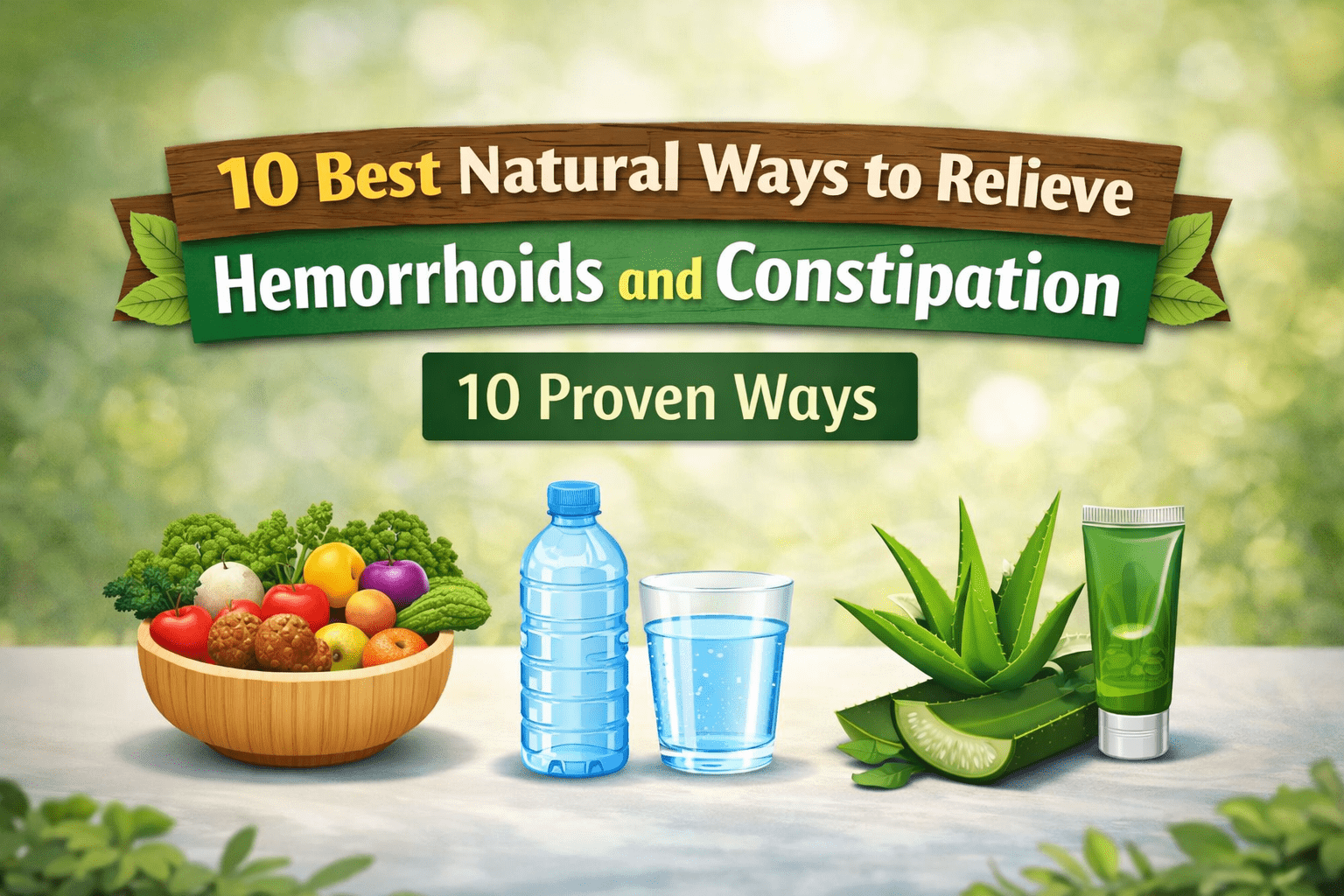
Hemorrhoids and constipation are two of the most common, and most quietly suffered, digestive problems in the country. According to clinical data, the global prevalence of symptomatic hemorrhoids is estimated to range from 4.4% to 39% of adults, with rates climbing sharply after age 45. Chronic constipation affects about 16% of adults worldwide.
What most people don’t realize is that these two problems are closely connected. Chronic constipation, specifically the straining it causes, is one of the biggest controllable risk factors for hemorrhoids. That means the same natural ways to relieve hemorrhoids and constipation often involve the exact same diet and lifestyle changes.
In this guide, we’ve pulled together the best current evidence, including the 2024 ASCRS guidelines, Cochrane-registered systematic reviews, and PubMed-indexed clinical trials, to give you a practical, honest, research-backed plan. Whether you need relief now or want to prevent flare-ups long term, these strategies are designed to help your gut heal and get you comfortable again.
📊 Key Statistics at a Glance
| Stat | Number | What It Means |
|---|---|---|
| Hemorrhoid prevalence | 4.4% – 39% | Global range for adults (including Austrian studies) |
| Chronic constipation | 16% | Adults affected globally |
| Surgery Avoidance | 87.1% | Patients who improved without surgery (WJGS 2025) |
| Patient Satisfaction | 81.9% | Patients highly or moderately satisfied with conservative treatment (WJGS 2025) |
| Daily Fiber Target | 25–35g | General clinical first-line target (fiber is ASCRS 2024’s first-line recommendation; this specific range reflects standard dietary-fiber guidance) |
What Are Hemorrhoids and Constipation?
Hemorrhoids (Piles)
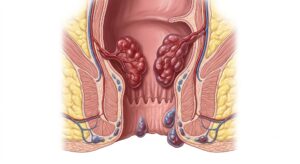
Hemorrhoids are clusters of swollen blood vessels, muscle, and tissue inside your anal canal. Everyone has them, and they’re a normal part of your body. The problem only starts when they get too swollen, slip out of place, or cause symptoms. There are two types: internal hemorrhoids (inside the canal, usually painless) and external hemorrhoids (near the opening, often painful and itchy).
Internal hemorrhoids are graded I–IV using the Goligher classification: Grade I (swell but stay in place), Grade II (slip out but go back on their own), Grade III (have to be pushed back in manually), Grade IV (stay pushed out). Natural remedies work best for Grades I and II.
Constipation
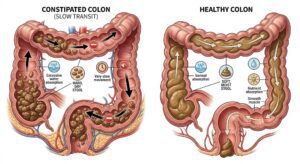
Constipation means fewer than three bowel movements per week, along with symptoms like hard stools, straining, feeling like you can’t fully empty out, or bloating. When it lasts more than three months, it’s called chronic constipation. Doctors use the Rome IV criteria to diagnose it: you need at least two of these symptoms in more than a quarter of your bathroom visits over the past 12 weeks. If constipation is your main concern, our guide to the best fiber foods and fiber therapy for gut health goes deeper into building up daily fiber intake safely.
Root Causes: Why Do They Happen?
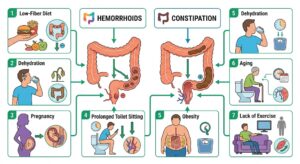
The 2024 ASCRS Clinical Practice Guidelines identify these as the main controllable risk factors:
1. Low-Fiber Diet
The average American only eats 10–15g of fiber a day, less than half of the commonly recommended 25–35g daily target. Without enough fiber, stools become hard and dry, forcing you to strain harder to pass them. That extra straining puts direct pressure on the blood vessels that become hemorrhoids.
A 2022 systematic review in the American Journal of Clinical Nutrition confirmed that fiber supplementation, especially psyllium at doses above 10g/day, significantly helps with chronic constipation.
2. Straining During Bowel Movements
When you strain, you increase pressure inside your belly and rectum, and that pressure swells the blood vessels that turn into hemorrhoids. A PubMed-indexed study by Garg & Singh (2017) showed that fixing straining habits, combined with enough fiber, helped most patients with even Grade III hemorrhoids avoid surgery.
3. Spending Too Long on the Toilet
Sitting on the toilet for more than 10 minutes at a stretch, especially while scrolling your phone or reading, puts direct pressure on the blood vessels around your bottom. Cutting down toilet time is a common first-line behavioral recommendation in colorectal guidance.
4. Pregnancy
As the uterus grows, it presses on the veins in the pelvis. On top of that, higher progesterone levels during pregnancy relax the walls of blood vessels, both of which dramatically raise the risk of hemorrhoids in the third trimester and after delivery.
5. Sitting Too Much and Carrying Extra Weight
Not moving enough slows down the natural contractions your colon uses to push stool through. Carrying extra weight increases pressure in your belly and slows blood flow out of the pelvic area, making hemorrhoids worse. That’s why exercise shows up as a first-line recommendation in every major clinical guideline.
6. Not Drinking Enough Water
When you’re dehydrated, your colon pulls extra water out of your stool to compensate, leaving behind dry, hard stool that’s much harder to pass. Drinking 6–8 glasses of fluid a day is essential for dietary fiber to do its job.
7. Getting Older
The tissue that holds hemorrhoids in place naturally weakens with age, making them more likely to slip out of position after age 45–50. That’s why hemorrhoid rates climb so sharply as people get older. Diet plays a role too, and not always an obvious one; we’ve also looked at whether cooking oil stored in plastic bottles could be a hidden contributor to constipation.
Symptoms: How to Recognize Them
Hemorrhoid Symptoms
The classic sign of internal hemorrhoids is bright-red, painless rectal bleeding during or after a bowel movement; you’ll see it on toilet paper or in the bowl. Other symptoms include itching around your bottom, mucus discharge, and a feeling like you haven’t fully emptied out. In Grades III–IV, tissue pushes out through the anal opening.
External hemorrhoids are painful because the skin around the anal opening has a lot of nerve endings. A blood clot forming inside an external hemorrhoid (called a thrombosed hemorrhoid) shows up as a sudden, very painful lump near your bottom.
Constipation Symptoms
Beyond fewer than three bowel movements a week, symptoms include hard or lumpy stools, feeling like something is blocking you, having to strain a lot, and a sense that you still need to go after you’re done. Bloating and belly discomfort are also common.
Worth getting checked by a doctor: dark or maroon-colored rectal blood; blood mixed into the stool rather than just on the paper; unexplained weight loss; a bathroom-habit change that’s lasted 3+ weeks; or a hard lump near your bottom that won’t go back in. These can sometimes point to something other than simple hemorrhoids, so it’s worth getting bleeding checked rather than assuming.
10 Natural Ways to Relieve Hemorrhoids and Constipation
Every remedy below is backed by published research; the full source list is at the end of the article.
Remedy #1: High-Fiber Diet (The Most Important Step)
Cochrane Meta-Analysis | ASCRS Grade A Recommendation
A Cochrane-registered systematic review looked at 7 randomized controlled trials and found that adding fiber to your diet cut the risk of persistent hemorrhoid symptoms by 53% and reduced bleeding as well. This is some of the strongest evidence behind any non-surgical hemorrhoid treatment.
The 2024 ASCRS guidelines identify adequate dietary fiber as the foundation of first-line management. A common target is 25–35g of fiber per day to effectively manage symptoms and prevent flare-ups.
Best food sources: oat bran, lentils, chickpeas, kidney beans, split peas, raspberries, blackberries, pears, prunes, whole grain bread, and flaxseed. Our fiber foods and fiber therapy guide has a longer list along with serving sizes.
⚡ How to Start Safely: Increase fiber by no more than 5g per week to avoid bloating and gas. Every increase in fiber needs to come with more water too: fiber without enough water can actually make constipation worse. see Why Fiber Isn’t Working for Constipation.
Remedy #2: Consistent Hydration
Clinical Consensus | Essential Partner to Fiber
Water is fiber’s best friend. Without enough fluid, even a high-fiber diet can create a bulky, dry mass that’s hard to pass. All major guidelines recommend 6–8 glasses (about 1.5–2 liters) of non-caffeinated fluids daily alongside fiber for both constipation and hemorrhoid management.
Warm water, especially first thing in the morning, triggers your gastrocolic reflex, a natural body response that sets off contractions in your colon and gets things moving. Adding a squeeze of lemon (mild acidity) can help kick-start this reflex even more. Read our other article Does Dehydration Cause Constipation?
⚡ Daily Routine: Drink a large glass (about 10–14 oz) of warm water when you wake up, before coffee or food. Aim for 2 liters total throughout the day. Cut back on alcohol and caffeine: both pull water out of your body and can make constipation worse.
Remedy #3: Warm Sitz Baths
ASCRS Recommended | Symptom Relief Confirmed
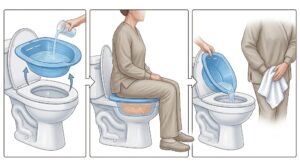
A warm sitz bath (soaking your bottom in plain warm water for 10–15 minutes, 2–3 times a day) is one of the most consistently recommended home treatments by colorectal surgeons. Here’s why it works: warm water relaxes the muscle ring around your anal opening (reducing spasms), improves blood flow to the area, and helps bring down swelling in hemorrhoid tissue. The result is direct relief from pain, itching, and burning.
One important note: no additive (Epsom salt, essential oils, soap) has been shown in clinical trials to work better than plain warm water. Some additives can actually irritate sensitive skin down there. Plain warm water is both the evidence-based and safest choice.
⚡ How to Do It Right: Fill a bathtub or sitz bath basin (available at any pharmacy for around $10) with 3–4 inches of comfortably warm (not hot) water. Soak for 10–15 minutes. Pat dry (don’t rub) with a soft towel afterward. Most helpful right after a bowel movement during a flare.
Remedy #4: Psyllium Husk Fiber Supplement
The Only Fiber Recommended by Both AGA & ACG for Constipation
Psyllium husk is the most well-researched fiber supplement you can buy, and if you’re weighing it against other options, our psyllium husk vs. wheat bran comparison breaks down which works better for constipation. It’s the only isolated fiber that both the American College of Gastroenterology and the American Gastroenterological Association explicitly recommend for chronic constipation. A Cochrane-registered review confirms fiber overall reduces hemorrhoid symptoms and bleeding, and a 2022 meta-analysis (16 RCTs, 1,251 participants) confirmed that psyllium specifically, at doses above 10g/day, significantly improved constipation outcomes.
A 2017 study by Garg et al. demonstrated the effectiveness of fiber and habit correction in managing advanced hemorrhoids. Building on this, a WJGS 2025 paper reports that 87.1% of patients avoided surgery through consistent conservative management, with an 81.9% patient satisfaction rate (highly or moderately satisfied) over the follow-up period.
⚡ How to Use It: Start with 1 teaspoon (5g) in a full glass of water once a day. Gradually work up to 2–3 teaspoons twice daily as your body adjusts. Always drink a second full glass of water right after: psyllium that doesn’t get enough water can swell in your throat. Take it at least 2 hours away from any medications.
Remedy #5: Witch Hazel
Evidence-Based Topical Treatment | PMC Literature Review 2024
Witch hazel is one of the most well-studied herbal treatments for hemorrhoids. A 2024 PMC literature review confirmed that its active compounds (tannins and gallic acid) tighten swollen blood vessel walls, reduce inflammation, and create a temporary protective layer on irritated skin around the bottom.
This cuts down on itching, burning, and swelling in both internal and external hemorrhoids, and it’s gentle enough to use after every bowel movement. Witch hazel is the active ingredient in TUCKS medicated pads and is used in hospitals for post-surgical care.
⚡ How to Use It: Apply a pure witch hazel solution (at least 14% tannin concentration) on a soft cotton pad. Press gently (don’t rub) against the affected area after each bowel movement. Can be used 3–6 times a day. Pre-soaked medicated pads (TUCKS) give you a consistent dose and are very convenient.

Remedy #6: Aloe Vera (Topical Anti-Inflammatory)
Traditional Medicine + Plant-Based Evidence
Aloe vera has been used to treat anal and rectal conditions across multiple cultures, and modern research backs it up. Aloe gel contains plant compounds, polysaccharides, and soothing mucilage that work together to reduce inflammation, fight bacteria, and support skin healing. Applied on the outside, aloe vera eases the burning and inflammation of external hemorrhoids and helps heal irritated skin around the bottom. The cooling effect of refrigerated aloe gel also gives fast symptom relief.
Note: concentrated aloe latex (from the inner rind of the leaf) contains strong laxative compounds and is not recommended for internal use without medical supervision.Read our other article Best Natural Laxatives for Constipation.
⚡ How to Use It: Apply 100% pure, cold-pressed aloe vera gel (no alcohol, fragrance, or dyes) directly to the external hemorrhoid 2–3 times a day. Putting the gel in the fridge for 30 minutes before applying makes the cooling, anti-inflammatory effect even stronger.
Remedy #7: Bioflavonoids, Diosmin + Hesperidin (MPFF)
Multiple RCTs | ASCRS 2024 Guidelines: Strongest Herbal Evidence
Among all oral natural supplements for hemorrhoids, diosmin and hesperidin (Micronized Purified Flavonoid Fraction, or MPFF) have the strongest body of clinical trial evidence. The 2024 ASCRS guidelines cite flavonoids (phlebotonics) as having solid evidence for improving acute hemorrhoid flares and reducing how often they come back.
Key trial data: a 120-person double-blind study found meaningful cuts in how often and how severely hemorrhoid flares happened; a 100-person trial showed real symptom relief during acute episodes; a 90-day trial in 100 patients with bleeding hemorrhoids found benefits for both acute treatment and preventing recurrence.
How they work: diosmin and hesperidin strengthen vein walls, reduce leakiness in blood vessels, and ease swelling in hemorrhoid tissue. Horse chestnut seed extract (standardized to 20% aescin) works in a similar way and falls into the same evidence category.
⚡ Dosage Used in Trials: 450mg diosmin + 50mg hesperidin (= 500mg MPFF) twice daily with meals during an acute flare. For prevention: once daily for 3–6 months. Always choose products labeled “micronized”: regular-size diosmin particles are poorly absorbed by the body.
Remedy #8: Regular Physical Activity
Improves Gut Movement | Reduces Blood Pooling
Exercise helps both constipation and hemorrhoids in two direct ways: (1) it speeds up how quickly your colon moves stool (the natural muscle contractions that push things forward), which significantly cuts down on constipation; (2) it improves blood flow out of the pelvic area, reducing the blood pooling in rectal vessels that causes hemorrhoids to swell. Even moderate walking has been shown in clinical studies to meaningfully reduce how often and how severely constipation occurs.
Not all exercise is equally helpful during an active flare, though. Heavy weightlifting and intense cycling temporarily increase pressure in your belly and may make symptoms worse in the short term.
⚡ Exercise Plan: Aim for 30 minutes of moderate cardio (brisk walking, swimming, elliptical) five days a week. During a flare: stick to gentle walking and yoga. Avoid heavy squats, deadlifts, or cycling until symptoms calm down.
Remedy #9: Prunes, Kiwi & Natural Laxative Foods
RCT Evidence for Prunes vs. Psyllium | Kiwi Enzyme Research
Prunes (dried plums) contain both soluble fiber and sorbitol, a natural sugar alcohol with a well-documented osmotic laxative effect that draws water into the colon to soften stool. A randomized clinical trial compared dried prunes directly against psyllium in constipated adults and found prunes were better at increasing stool frequency and improving consistency.
Kiwi fruit contains actinidin, a natural enzyme shown in multiple clinical trials to speed up digestion and improve how quickly stool moves through your gut. It also contains pectin (a soluble fiber) and is one of the most well-studied whole foods for constipation relief.
⚡ How to Use Them: Eat 3–5 dried prunes with breakfast daily (or drink 4–6 oz of pure prune juice); and/or eat 2 kiwi fruits daily. Most people notice a difference in stool consistency within 24–72 hours of starting regularly.
📖 Related: How Long Does It Take for Prune Juice to Work? (1–3 Hours?)
Remedy #10: Probiotics for Gut Health
Strong and Growing Evidence | Especially Helpful After Antibiotics
The bacteria living in your gut play a key role in keeping your bowel movements regular, your stools soft, and your colon calm. Randomized controlled trials show that specific probiotic strains, particularly Lactobacillus rhamnosus GG, Bifidobacterium longum, Bifidobacterium lactis, and Lactobacillus acidophilus, significantly speed up gut transit, improve how often you go, and improve stool consistency in constipated adults. All of this directly cuts down on straining and hemorrhoid risk.
Probiotics are especially helpful after antibiotic use (which wipes out good gut bacteria and commonly triggers constipation) and during pregnancy (when many standard laxatives are off the table).
⚡ What to Look For: A multi-strain formula with at least 10 billion CFUs; should contain both Lactobacillus and Bifidobacterium strains. Take with a meal: food protects the probiotics from stomach acid and helps more survive to reach your gut. Give it at least 4–8 weeks before judging whether it’s working.
📖 Related: 9 Best Probiotic Supplements 2026: Expert Guide for Gut Health & Immunity | Safe Probiotics for Pregnancy-related Constipation
The 10 remedies above give you a research-backed foundation for long-term gut healing. If you want to get there faster, the right over-the-counter products can work hand-in-hand with everything above.
At a Glance: Best OTC Products for Hemorrhoids and Constipation Relief
If you’re ready to start treatment, here are the most evidence-backed products for each category covered in this guide:
🧴 Topical Relief
- Best for immediate topical relief (witch hazel): TUCKS Medicated Cooling Pads (100 Count) — 50% pharmaceutical-grade witch hazel, soothes burning and itching within minutes, hospital-used, pH balanced, hypoallergenic, safe during pregnancy and post-surgery
- Best for acute flare (pain + swelling together): Doctor Butler’s Hemorrhoid & Fissure Ointment (1 oz) — lidocaine + phenylephrine HCl dual-action formula, works within minutes, ASCRS 2024-aligned ingredients, proctologist-developed, acute use only
💊 Oral Supplements
- Best fiber supplement (strongest evidence): Metamucil Psyllium Husk Powder — 16 RCTs and Cochrane-registered review confirm it reduces hemorrhoid bleeding AND constipation simultaneously, ASCRS 2024 first-line recommendation
- Best oral hemorrhoid supplement (phlebotonic): HemRid Max — horse chestnut, hesperidin, butcher’s broom, bilberry, witch hazel powder — ASCRS 2024 recognized phlebotonic ingredient class, 120-day money-back guarantee
- Best probiotic (high-potency, post-antibiotic): Garden of Life Dr. Formulated Probiotics (50B CFU) — 50 billion CFUs, 16 strains including L. acidophilus, B. lactis, and L. rhamnosus, shelf-stable, USDA organic, no refrigeration needed
- Best osmotic laxative (daily use): MiraLAX Laxative Powder (45-Dose) — prevents the straining that worsens hemorrhoids, ASCRS 2024 and ACG first-line recommendation for chronic constipation, tasteless and odorless
- Best toilet posture aid (reduces straining): Squatty Potty The Original Toilet Stool (7″) — straightens anorectal angle, directly reduces the straining listed as a primary hemorrhoid risk factor in ASCRS 2024 guidelines, 55,000+ Amazon reviews
📖 Related 5 Best Magnesium Supplements for Constipation (2026 Review) | Best OTC Laxatives for Constipation in the US
🌿 A Few More OTC Options Worth Knowing
The seven products above cover most situations. A handful of other well-known, widely available options round out the picture:
- Citrucel (Methylcellulose): a gentler fiber alternative if psyllium causes too much gas. It forms a non-fermentable gel that softens stool with less bloating, though it delivers slightly less fiber per dose. View on Amazon
- Milk of Magnesia (Magnesium Hydroxide): a fast-acting osmotic laxative (30 minutes to 6 hours) for occasional constipation that needs quick relief. Not for daily use, and not appropriate with kidney disease, since magnesium can build up to unsafe levels. View on Amazon
- Dulcolax (Bisacodyl): a stimulant laxative for occasional, severe constipation only, working within 6–12 hours. Daily use risks dependence and electrolyte imbalance. View on Amazon
- Senokot (Senna): a plant-derived stimulant laxative with a gentler profile than Dulcolax, though the same as-needed-only caution applies. View on Amazon
📌 Quick Reference: Which One Should You Choose?
- Long-term daily management: Metamucil (Psyllium)
- Psyllium causes too much gas: Citrucel (Methylcellulose)
- Fiber isn’t enough, need daily support: MiraLax (PEG 3350)
- Need fast relief today: Milk of Magnesia
- Hemorrhoids: prevent straining: Colace (Docusate Sodium)
- Occasional severe constipation: Dulcolax or Senokot (once only)
- Pregnant: MiraLax or Psyllium (physician-approved)
- Post-antibiotic gut disruption: Probiotics + Psyllium
Prevention: How to Stop Them From Returning
The ASCRS 2024 guidelines and the broader colorectal surgery literature agree: conservative management is not just a temporary fix: it is the most effective long-term strategy for preventing recurrence, including after interventional procedures.
| Area | ✅ DO | ❌ AVOID |
|---|---|---|
| Diet | 30–35g fiber/day; whole grains, legumes, fruits; 2L water; prunes and kiwi regularly | Processed, low-fiber foods; excess red meat; alcohol; refined sugar; highly caffeinated drinks |
| Toilet habits | Go when you feel the urge; limit sessions to <10 minutes; use a footstool to align colon | Delay or suppress urges; read or scroll on your phone on the toilet; strain or breath-hold |
| Exercise | 30 min brisk walking 5x/week; yoga; swimming; Pilates | Prolonged sitting; heavy squats/deadlifts during a flare; vigorous cycling during a flare |
| Hygiene | Use witch hazel pads after BMs; pat dry with soft cotton; sitz baths during flares | Dry rough toilet paper; scented wipes; harsh soaps on perianal skin |
| Posture | Use a toilet footstool (6–9 inches) to simulate a squat position | Standard upright toilet posture with no support: creates anorectal kinking |
The TONE Method: A Clinically Proven Behavioral Protocol
Garg (2017) proposed the TONE mnemonic, validated in multiple PubMed-indexed studies: Three minutes maximum at defecation; Once-a-day bowel frequency goal; No straining, no phone, no newspaper; Enough fiber (30–35g/day with 500ml water). Following TONE corrects the three root defecation behaviors responsible for hemorrhoid development and progression, and has been shown to help even advanced-grade hemorrhoid patients avoid surgery when maintained consistently.
📖 Related 7 Natural High-Fiber Foods for Pregnancy Constipation Relief
When to See a Doctor
Natural and OTC treatments are appropriate for Grade I–II hemorrhoids and mild-to-moderate constipation. The following situations always call for prompt professional medical evaluation rather than self-treatment:
▸ Any rectal bleeding, particularly if blood is dark, maroon, or mixed into stool
▸ Hemorrhoids that cannot be manually reduced (Grade III–IV)
▸ A hard, painful perianal lump that comes on suddenly (possibly a thrombosed external hemorrhoid, may need drainage within 72 hours for best outcomes)
▸ Constipation that hasn’t responded to lifestyle changes after 3+ weeks
▸ Unexplained weight loss, persistent abdominal pain, or pencil-thin stools
▸ OTC treatments providing no relief after 7 days of consistent use
For Grade II–III hemorrhoids unresponsive to conservative management, minimally invasive office procedures, such as rubber band ligation, sclerotherapy, or infrared coagulation, are effective and typically performed without anesthesia. Surgical hemorrhoidectomy is reserved for Grade III–IV disease failing all other treatments.
Frequently Asked Questions
Q: Can hemorrhoids go away on their own?
Grade I–II internal hemorrhoids can clear up within days to a couple of weeks with prompt dietary and behavioral changes. Small external hemorrhoids may also go away on their own, though it takes longer. Thrombosed external hemorrhoids and Grade III–IV internal hemorrhoids rarely go away without medical treatment and should be checked promptly.
Q: How quickly do the natural remedies in this guide work?
Sitz baths and witch hazel pads typically relieve symptoms within minutes to hours. Psyllium fiber starts softening stool within 12–72 hours. Prunes and kiwi can improve stool consistency within 24–72 hours of starting regularly. Oral bioflavonoid supplements (diosmin/hesperidin) need 1–2 weeks of consistent use to show meaningful benefit. Probiotics need 4–8 weeks.
Q: Does spicy food make hemorrhoids worse?
A double-blind controlled study found no statistically significant difference in hemorrhoid symptoms between people who ate hot capsaicin versus a placebo. While individual sensitivity varies, spicy food isn’t a clinically confirmed trigger. Low fiber, not drinking enough water, and straining are far more important factors you can control.
Q: What’s the fastest natural way to relieve constipation?
The fastest natural approaches: 4–6 oz of prune juice (works within 1–3 hours for most people), a large glass of warm water with lemon first thing in the morning (triggers your gut’s natural movement reflex), and a 20-minute brisk walk (gets colonic contractions going). Magnesium citrate can work within 30 minutes to 3 hours but should be used occasionally, not daily, unless a doctor tells you otherwise.
Q: Can I use hemorrhoid cream every day long-term?
Products with hydrocortisone (a steroid) shouldn’t be used for more than 7 days in a row without medical supervision: long-term use can thin the delicate skin in that area. Products containing only witch hazel, aloe vera, or zinc oxide are gentler and can generally be used longer. Always follow the product label, and see a doctor if symptoms haven’t improved after 7 days.
Q: Is it safe to take psyllium fiber during pregnancy?
Yes, psyllium is consistently considered one of the safest, most appropriate first-line treatments for constipation during pregnancy. It’s not absorbed into your body and works mechanically in the gut. Always check with your OB/GYN before starting any supplement, especially in the first trimester.
🌿 Your Gut Health Is Worth the Effort
Hemorrhoids and constipation aren’t inevitable, and they’re not something you just have to live with. The same consistent habits, enough fiber, enough water, regular movement, and gentle toilet behavior, address both conditions at once, since they share the same root causes.
Start with the fiber, water, and exercise basics from earlier in this guide, add targeted treatments like psyllium, witch hazel, or bioflavonoids where they fit your symptoms, and give it time: some relief comes within minutes, but lasting improvement in chronic constipation and hemorrhoid disease typically takes 4–8 weeks of consistent effort.
And know when to stop self-treating. Dark or maroon rectal blood, a hard painful lump near your bottom, or no improvement after 7 days of consistent OTC treatment are all reasons to see a doctor rather than wait it out. Most people, though, see real improvement within weeks, without surgery and without silently living with something very treatable.
Disclaimer & Disclosure
The product recommendations and health information in this article are based on peer-reviewed clinical evidence, ASCRS 2024 guidelines, Cochrane-registered reviews, and ACG recommendations. They are for informational purposes only and are not a substitute for professional medical advice, diagnosis, or treatment. Always talk to a qualified physician before starting any new supplement or medication, especially if you are pregnant, have kidney disease, or are taking prescription drugs.
This article contains Amazon affiliate links. If you make a purchase through these links, we may earn a small commission at no extra cost to you. This disclosure is made in compliance with FTC endorsement guidelines and Google’s affiliate program policies. Our editorial recommendations are based solely on clinical evidence and verified customer data, never on commission potential.
References
- Hawkins AT, Davis BR, Bhama AR, et al. The American Society of Colon and Rectal Surgeons Clinical Practice Guidelines for the Management of Hemorrhoids. Dis Colon Rectum. 2024;67(5):614–623. doi: 10.1097/DCR.0000000000003276
- Alonso-Coello P, Mills E, Heels-Ansdell D, et al. Fiber for the treatment of hemorrhoids complications: a systematic review and meta-analysis. Am J Gastroenterol. 2006;101(1):181–8. doi: 10.1111/j.1572-0241.2005.00359.x
- van der Schoot A, et al. The effect of fiber supplementation on chronic idiopathic constipation. Am J Clin Nutr. 2022;116(4):953–969. doi: 10.1093/ajcn/nqac184
- Garg P, Singh P. Adequate dietary fiber supplement and TONE can help avoid surgery in most patients with advanced hemorrhoids. Minerva Gastroenterol Dietol. 2017;63(2):92–96. doi: 10.23736/S1121-421X.17.02364-9
- Attaluri A, et al. Randomised clinical trial: dried plums (prunes) vs. psyllium for constipation. Aliment Pharmacol Ther. 2011;33(7):822–828. doi: 10.1111/j.1365-2036.2011.04594.x
- Garg P, Tulina I, Ren DL, Bhattacharya K, Yagnik VD, Mahak G. TONEFACT: Can even advanced hemorrhoids be treated without surgery? A paradigm shift in the management of hemorrhoids. World J Gastrointest Surg. 2025;17(7):107099. doi: 10.4240/wjgs.v17.i7.107099






[…] → Related: 10 Best Natural Ways to Relieve Hemorrhoids and Constipation […]
[…] Hemorrhoid patients: Prefer PEG or psyllium to avoid straining — see Natural Ways to Relieve Hemorrhoids and Constipation […]
[…] — soften stool effectively and directly relieve hemorrhoid discomfort. Our dedicated article on natural ways to relieve hemorrhoids and constipation covers this topic in full […]
[…] agents — work for many people. But when these approaches fall short, most people reach for natural remedies or over-the-counter laxatives. The problem? Many laxatives come with uncomfortable side effects, […]
[…] Constipation and Hemorrhoids: What to Do […]
[…] you’re looking for a practical treatment plan, our companion guide, 10 Best Natural Ways to Relieve Hemorrhoids and Constipation, covers the most effective evidence-based strategies in […]