

Quick Answer
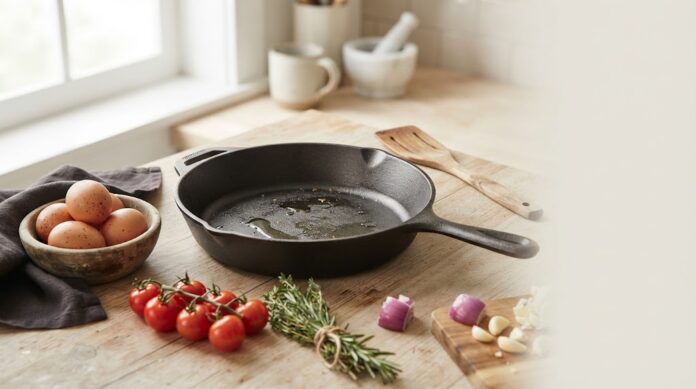
Looking for the best non-toxic cast iron skillet for beginners? Based on its listed features, the 10.25 inch Lodge preseasoned skillet is our starting-point pick for most beginners. It has no synthetic nonstick coating, it is relatively affordable, and it can last for decades. One honest caveat: we did not find any study showing that switching pans improves gut health or constipation on its own. The case for cast iron is about avoiding a synthetic coating, the fact that it can increase the iron content of some foods, and building a kitchen routine that makes simple, gut friendly meals easier to cook.
A skillet is one of those tools you use almost every day and rarely question. The pan sits on the burner, the food goes in, and dinner happens. But in the last few years, more people have started asking what their cookware is made of, especially people already paying close attention to digestion.
That curiosity is reasonable, and it deserves a straight answer rather than a scare. So this guide does three things. It explains what the research does and does not say about cookware and gut health. It looks at what cast iron adds to your food, including iron, and why that matters if you take iron supplements or have an iron related condition. And it helps you choose and use your first cast iron skillet without the usual beginner frustration.
Does Your Skillet Really Affect Your Gut?
Here is where we need to be careful, because the internet tends to oversell this idea.
Some traditional nonstick cookware uses PTFE, a fluoropolymer in the broader PFAS family, which is one reason people looking for cookware without synthetic coatings consider cast iron. PFAS is a large family of persistent synthetic chemicals. The U.S. Food and Drug Administration has authorized specific PFAS-containing substances for certain food-contact uses, including some nonstick cookware coatings.
The agency states that these coatings are highly polymerized and bound to the pan, and that studies show only negligible amounts of PFAS can migrate into food.[1] Health Canada advises that nonstick cookware should not be preheated empty or used above 260 °C (500 °F).[2]
On the gut side, laboratory and animal research has raised questions about PFAS in general. A lab study using a simulated human colon found that PFAS exposure, at the concentrations tested, changed the makeup of gut bacteria.[3] Mouse studies have reported similar disturbances in the intestine.[4]
A recent review of this area also notes that human evidence is mostly observational, linking higher blood PFAS levels with conditions such as inflammatory bowel disease and metabolic syndrome, and it calls for human studies that follow people over many years to sort out cause and effect.[5] A separate review focused on colorectal cancer notes that epidemiologic findings there remain inconsistent.[6]
Put plainly, the findings above are about PFAS exposure from all sources, including drinking water, food packaging, and household dust. They are not tests of whether cooking on a nonstick pan changes your microbiome. PFAS is also a very broad group of chemicals, and individual substances behave differently, so findings about one PFAS do not automatically apply to the polymerized coatings used on cookware.
So the fair summary is this: there are ongoing scientific questions about PFAS and the gut, but current evidence does not show that using a conventional nonstick pan causes gut problems. The regulatory view is that intact nonstick coatings release very little, and nobody can yet say how much a pan matters compared with everything else you are exposed to.
Choosing cast iron is a simple way to avoid a synthetic nonstick coating altogether. There is no synthetic nonstick coating to scratch or wear out, although the oil based seasoning can wear down and may need to be rebuilt. That is a modest benefit, and we want to describe it that way.
If you would like a wider view of materials such as aluminum, stainless steel, ceramic, and clay, or you are weighing a full pan set rather than one skillet, see our guide on whether cookware affects constipation.
What Cast Iron Adds to Your Food: Iron
Cast iron does something few other pans do. It releases a little iron into food. In a classic 1986 study of 20 foods, researchers found that most foods contained significantly more iron after cooking in iron utensils than in noniron ones, and that acidity, moisture, and cooking time all mattered.[7] A later study found that applesauce and spaghetti sauce still picked up iron after the pan had been used 50 times.[8] The amount varies substantially depending on the food, its acidity and moisture, the cooking time, and the cookware itself.
For context, the U.S. recommended daily intake of iron is 8 mg for adult men and for women over 50, and 18 mg for women aged 19 to 50.[9] A systematic review of trials in developing countries found some evidence that eating food cooked in iron pots raised hemoglobin in people who were anemic or iron deficient, though the evidence was limited and the effect depended on factors such as how consistently the pots were used.[10]
These numbers come from a small number of older studies, so treat them as rough. The takeaway is that cast iron can be a modest extra source of iron, not a replacement for a balanced diet or for treatment if a doctor has diagnosed a deficiency.
Does the Iron From a Skillet Affect Constipation?
This is a fair question for readers of this site, because iron supplements are a well known cause of constipation. The NIH Office of Dietary Supplements notes that high doses of supplemental iron can cause gastrointestinal side effects, including nausea and constipation. For healthy adults, the tolerable upper intake level for iron is 45 mg per day from food and supplements combined, although this limit is based largely on gastrointestinal effects from supplemental iron.[9]
The amount transferred from cookware varies widely and cannot be directly compared with a standard iron supplement dose. The NIH notes that healthy adults with normal intestinal function generally have little risk of iron overload from dietary iron.[9] That does not tell us how much iron a particular cast iron skillet adds to a meal, which can vary considerably by food and cooking conditions.
We could not find research that directly measures constipation in people who cook with cast iron, so we cannot tell you it never happens. If you already take iron pills and struggle with stool that is hard to pass, our guide on the best laxatives for constipation from iron pills covers the options in detail.
Who Should Check With a Doctor First
People with hemochromatosis, a condition that causes the body to store too much iron, are generally advised to avoid iron supplements.[9] If you have hemochromatosis or have been told that your iron stores are high, ask your healthcare professional whether any changes to your overall dietary iron intake are appropriate. If your constipation is new, severe, painful, or comes with blood in the stool or unexplained weight loss, please see a healthcare professional rather than trying to solve it in the kitchen.
How to Choose a Cast Iron Skillet as a Beginner
You do not need an expensive pan. What matters is a short list of practical features.
- Size: A 10 to 12 inch skillet handles most meals for one to four people. The 10.25 inch size is a popular first pan.
- Preseasoned surface: Seasoning is a thin layer of oil baked onto the surface that protects the iron from rust and helps food release. A preseasoned pan can be used right out of the box, which removes the biggest early hurdle.
- Clear materials information: Look for a brand that tells you plainly what is on the pan. Lodge says its cookware comes preseasoned and ready to use.[11]
- A handle you can grip: Cast iron is heavy. A helper handle or a silicone handle holder makes a real difference when the pan is hot.
- A realistic budget: Basic preseasoned skillets are usually among the cheaper cookware options. Prices change often, so check the current listing.
Our 4 Recommended Cast Iron Skillets for Beginners
You do not need to hunt for a specialty pan. These four are established options with current manufacturer information available online, have no synthetic nonstick coating, and suit different kitchens. A quick note on how we chose: we have not tested these skillets hands on, so “best” here means a good fit for beginners based on the makers’ listed features, not the winner of a head-to-head test.
The details below come from the makers’ own product information and retailer listings, so please check the current listing for size, price, and cooktop compatibility before you buy.
| Skillet | Recommended for | Size | Seasoned with | Made in |
|---|---|---|---|---|
| Lodge 10.25 inch preseasoned | Starting-point pick for most beginners | 10.25 inch | Vegetable oil | USA |
| Lodge Blacklock 10.25 inch | Anyone who wants a lighter pan | 10.25 inch | Vegetable oil, triple seasoned[12] | USA |
| Lodge 12 inch with handle holder | Larger meals and families | 12 inch | Vegetable oil | USA |
| Victoria 12 inch | A budget friendly alternative | 12 inch | Flaxseed oil[13] | Colombia |
Product details are based on manufacturer information checked October 1, 2026.
1. Lodge 10.25 Inch Preseasoned Skillet: Our Starting-Point Pick, Based on Listed Features
Judging by its listed features rather than hands-on testing, the 10.25 inch Lodge preseasoned skillet* is our starting-point pick. Lodge has made cast iron in the USA for well over a century, and this size works well for everyday meals such as eggs, vegetables, chicken thighs, and cornbread. Lodge’s current product information describes its 10.25 inch cast iron skillets as preseasoned with vegetable oil and made without PFAS,[14] and the listing describes this one as suitable for the stovetop, the oven, and induction cooktops.
- Why we like it: a long established design, an easy size, and a relatively low price compared with many premium cast iron options.
- Keep in mind: it is heavy, and it should be hand washed and dried promptly.
2. Lodge Blacklock 10.25 Inch Skillet: Recommended for a Lighter Pan
Lodge describes its Blacklock line, including the 10.25 inch Blacklock skillet*, as thin and lightweight, triple seasoned with vegetable oil, and made in the USA, with an extended raised handle that it says stays cooler longer, and two pour spouts.[12] That makes it easier to lift and handle, which matters if heavy cookware is the thing holding you back.
- Why we like it: Lodge says it is lighter than traditional cast iron, which makes it easier to lift and pour.
- Keep in mind: it usually costs noticeably more than the classic Lodge skillet, and it still needs hand washing and drying.
3. Lodge 12 Inch Preseasoned Skillet With Silicone Handle Holder: Recommended for Larger Meals
A 12 inch Lodge skillet with a silicone handle holder* gives you room to cook for three or four people, or to brown a full batch of chicken without crowding. The listing describes it as preseasoned with vegetable oil and as including a silicone handle holder, which is useful for beginners who are not yet used to hot iron handles. Check that the listing you open matches this 12 inch model before you buy.
- Why we like it: plenty of cooking surface for family meals, and a handle holder for safer lifting.
- Keep in mind: it is large and heavy, and it may be too much pan for one person or a small burner.
4. Victoria 12 Inch Cast Iron Skillet: A Budget Friendly Alternative
Victoria has made cast iron in Colombia since 1939. The brand says the 12 inch Victoria skillet* is seasoned with non-GMO, kosher-certified flaxseed oil and made without synthetic coatings, PTFE, or PFOA.[13] It is a good fit if you want a second brand to compare, or if you prefer a flaxseed oil seasoning.
- Why we like it: a clear materials statement from the maker, a long curved handle, and dual pour spouts.
- Keep in mind: it is made outside the USA, and the 12 inch size is large and heavy for a first pan.
* These are affiliate links. If you buy through them, we may earn a small commission at no extra cost to you. Product details were last checked on October 1, 2026 and can change.
How to Use Cast Iron Without the Beginner Mistakes
- Start with fatty or lightly oiled foods. Eggs, sausages, roasted vegetables, and cornbread are forgiving. Add a bit more oil than you would in a nonstick pan while the surface is still developing.
- Preheat gradually. Warm the pan on low to medium heat for a few minutes before adding food. Cast iron holds heat well, so you rarely need a high flame.
- Go easy on acidic dishes at first. Lodge notes that tomato sauce and lemon juice can break down the seasoning on new cast iron, and suggests introducing acidic ingredients once the seasoning is built up, keeping cook times under about 45 minutes.[11] Acidic, moist foods and longer cooking times can also increase how much iron transfers into food, so it is worth keeping in mind.
- Clean it while it is still warm. Use warm water and a brush or scraper. A little mild soap is fine for most modern pans.
- Dry it completely and add a thin film of oil. Lodge recommends a very light layer, just enough to look glossy, not enough to drip. For reseasoning, it suggests an oil with a high smoke point.[11]
- Do not soak it or leave it in the sink. Standing water is the fastest route to rust. If rust appears, scrub it off and reseason the pan. It is fixable.
Cooking Gut-Friendly Meals in Your Skillet
The pan is only one part of the picture. What you eat matters far more to your digestive health. A few ideas that pair well with a cast iron skillet:
- Roast or sauté vegetables in a spoonful of olive oil.
- Bake a skillet of apples or pears with the skin on. Our list of the best fruits for chronic constipation explains which ones tend to help and who might need to go easy.
- Build meals around beans, lentils, whole grains, and vegetables. We break down fiber sources and how to increase them gradually in our guide to fiber foods and fiber therapy for gut health.
When food and routine are not enough, it helps to know your options. Our overview of fast constipation relief at home covers practical steps. If you are thinking about gut bacteria more broadly, see our guide to probiotics for constipation and bloating, which is built on the clinical evidence.
Cast Iron vs Nonstick: A Fair Comparison
| Feature | Cast iron | Traditional nonstick |
|---|---|---|
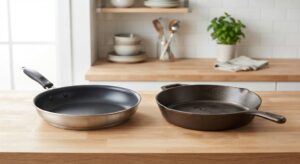
| Typical surface | Oil based seasoning, no synthetic coating | PTFE, a fluoropolymer |
| Heat limits | Suitable for stovetop and oven cooking; follow the manufacturer’s temperature and care instructions | Keep below about 260 °C (500 °F) and do not preheat empty[2] |
| Adds iron to food | Yes; it can release more iron into some foods depending on acidity, moisture, and cooking time[7] | No |
| Upkeep | Needs drying and occasional reseasoning | Needs different care, including avoiding high heat and empty preheating[2] |
| Weight | Heavy | Light |
PTFE is a fluoropolymer used in many traditional nonstick coatings. Cookware formulations and regulatory classifications can vary, so this table describes the typical case rather than every nonstick pan.
Neither pan is a villain. Many people use both: a nonstick pan for delicate eggs at low heat and cast iron for searing, roasting, and baking. If you keep nonstick, the practical rules are simple: avoid high heat, never preheat it empty, and use nonmetal utensils to prevent surface damage.[2]
Frequently Asked Questions
Does cast iron have a synthetic nonstick coating?
Bare cast iron does not have a synthetic nonstick coating. Preseasoned cast iron has an oil based seasoning layer rather than a PTFE type coating. It can also release some iron into food, and may release more when cooking conditions such as acidity, moisture, and cooking time favor iron transfer. For most healthy adults, dietary iron from food is generally not a major concern, but people with iron overload conditions should discuss their overall iron intake with a healthcare professional.
Will cooking in cast iron help my gut health?
We did not find direct evidence that switching to cast iron improves gut health or constipation. The reasons to choose it are avoiding a nonstick coating, possible extra iron in some foods, and durability.
Can the iron from a cast iron skillet cause constipation?
High doses of supplemental iron can cause gastrointestinal side effects, including constipation. However, the amount of iron transferred from cookware varies widely, and we did not find studies directly showing that cast iron cookware causes constipation. Talk to a healthcare professional if you notice a pattern.
Can I cook tomato sauce in cast iron?
Yes, especially in a well-seasoned pan. Acidic foods can affect the seasoning of a newer pan and may increase iron transfer into food. Lodge recommends limiting acidic cooking in newer cast iron and building the seasoning before making longer acidic dishes.
How often do I need to season a cast iron skillet?
A preseasoned skillet can be used right away, and the seasoning builds each time you cook. Reseason in the oven only when the surface looks dull, patchy, or starts to rust.
The Bottom Line
A cast iron skillet is a practical cookware choice for a beginner, not a constipation treatment. It avoids synthetic nonstick coatings, it can increase the iron content of some foods, and it rewards a small amount of care with decades of use. What it will not do is fix constipation by itself, and people with an iron overload condition should discuss their overall dietary iron intake with a healthcare professional.
If you want a practical next step, pick a single pan and use it for simple meals built around whole foods, alongside the fiber, fluid, and movement habits that have stronger evidence behind them.
References
- U.S. Food and Drug Administration. Authorized uses of PFAS in food contact applications. FDA; accessed 2026 Oct 1. Available from the FDA website.
- Health Canada. The safe use of cookware and bakeware. Government of Canada; accessed 2026 Oct 1. Available from the Government of Canada website.
- PFAS disrupt gut microbiome composition and metabolism in metabolic syndrome: evidence from a host free in vitro colonic model. PubMed record 41038555. Available from PubMed.
- Gut microbiome host metabolome homeostasis upon exposure to PFOS and GenX in male mice. PubMed Central record PMC10051855. Available from PubMed Central.
- Brunetti K, et al. From exposure to dysfunction: the intestinal toxicity of per- and polyfluoroalkyl substances. Toxics. 2025;14(1):39. doi:10.3390/toxics14010039. PMID: 41600588. Available from the publisher.
- Tang X, et al. Toxic effects of perfluoroalkyl and polyfluoroalkyl substances (PFAS) on the gut microenvironment and their potential association with colorectal cancer. Toxicol Mech Methods. 2026. doi:10.1080/15376516.2026.2695156. PMID: 42358094. Available from PubMed.
- Brittin HC, Nossaman CE. Iron content of food cooked in iron utensils. J Am Diet Assoc. 1986;86(7):897 to 901. PMID: 3722654. Available from PubMed.
- Cheng YJ, Brittin HC. Iron in food: effect of continued use of iron cookware. J Food Sci. 1991;56(2):584 to 585. doi:10.1111/j.1365-2621.1991.tb05331.x. Available from the publisher.
- National Institutes of Health, Office of Dietary Supplements. Iron: fact sheet for health professionals. Updated 2025 Sep 4. Available from NIH ODS.
- Geerligs et al. Food prepared in iron cooking pots as an intervention for reducing iron deficiency anaemia in developing countries: a systematic review. J Hum Nutr Diet. 2003. doi:10.1046/j.1365-277X.2003.00447.x. Available from the publisher.
- Lodge Cast Iron. How to season cast iron cookware, accessed 2026 Oct 1. Available from Lodge.
- Lodge Cast Iron. Blacklock skillet set product page, accessed 2026 Oct 1. Available from Lodge.
- Victoria Cookware. 12 inch cast iron skillet product page, accessed 2026 Oct 1. Available from Victoria Cookware.
- Lodge Cast Iron. Product information for 10.25 inch seasoned cast iron skillets (the USA Icons edition page is cited as an example; it states the skillet is made without PFAS), accessed 2026 Oct 1. Available from Lodge.
Affiliate disclosure: This article contains affiliate links marked with an asterisk. We may earn a commission from qualifying purchases at no extra cost to you.
Medical disclaimer: This article is for general information and is not medical advice. It does not replace guidance from a qualified healthcare professional. Talk to a doctor before changing your diet or cookware if you have an iron related condition, take iron supplements, or have persistent digestive symptoms.