

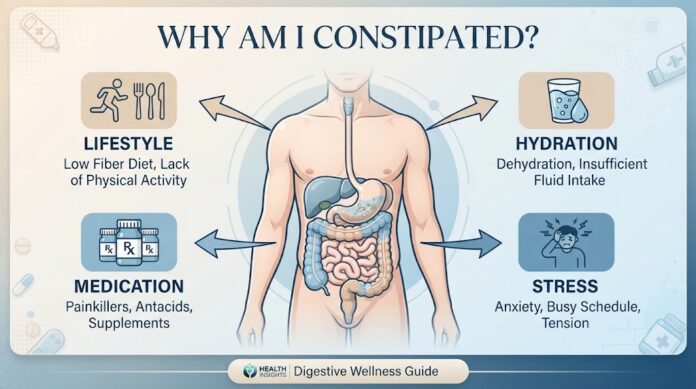
If you’ve been asking “why am I constipated?”, you’re far from alone. Roughly 16 out of every 100 adults in the United States have symptoms of constipation, and that number rises to about 33 out of 100 among adults 60 and older (NIDDK). But constipation isn’t one single problem with one single cause — it’s a symptom that can have many different causes, and figuring out the likely cause can help you choose a more appropriate approach to relief.
This guide covers the major causes of constipation, grouped the way doctors actually think about them: lifestyle, diet, medications, hormones, structural issues, and underlying medical conditions.
What Counts as Constipation, Exactly?
Bowel habits vary a lot from person to person, so doctors don’t use a single fixed number. According to the NIDDK, constipation generally means:
- Fewer than three bowel movements a week
- Stools that are hard, dry, or lumpy
- Stools that are difficult or painful to pass
- A feeling that not all the stool has passed
Constipation itself is not a disease — it’s usually a symptom of something else going on in the body.
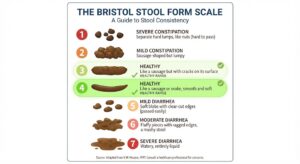
If you’re not sure whether your stool looks normal, it’s worth checking our Bristol Stool Chart explained guide, a commonly used tool for describing stool consistency.
How Constipation Happens
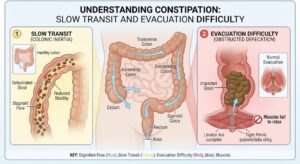
Most causes of constipation come down to one of two mechanisms:
- Slow transit — stool moves too slowly through the colon
- Evacuation difficulty — stool reaches the rectum fine, but the body struggles to push it out
When stool moves too slowly through the colon, the body absorbs too much water from it, so the stool becomes hard, dry, and difficult to pass (Mayo Clinic). This mechanism helps explain why causes as different as low fiber, dehydration, certain medications, and medical conditions can all lead to similar symptoms.
1. Lifestyle Causes
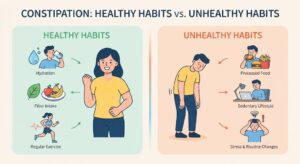
Lifestyle factors are a common, well-documented contributor to occasional constipation. Slow stool movement often happens when someone doesn’t drink enough fluids, doesn’t eat enough fiber, doesn’t exercise regularly, or ignores the urge to go (Mayo Clinic).
- Low fiber intake. Fiber adds bulk to stool and helps it retain water, making it easier to pass. NIDDK notes fiber works best alongside plenty of fluids, since liquids help the fiber do its job.
- Not drinking enough fluids. This can contribute to constipation, though hydration is only one of several factors at play. Plenty of people drink water and are still constipated — if that’s you, see our guide on why you’re constipated even though you drink water.
- Sedentary lifestyle. Physical activity helps stimulate the muscle contractions (peristalsis) that move stool along.
- Ignoring the urge. Repeatedly ignoring the urge may make it harder to recognize or respond to it over time.
- Travel and routine changes. New time zones, unfamiliar toilets, and disrupted schedules are a well-known trigger — see why you’re constipated after traveling.
2. Dietary Causes
Diet-related constipation isn’t only about “not enough fiber” — the type of fiber and other dietary patterns matter too.
- Fiber type differences. Different fiber types affect the body differently, and increasing fiber too quickly can cause bloating or discomfort. See our breakdown of soluble vs. insoluble fiber for constipation.
- Low-fiber, processed eating patterns. NIDDK advises limiting foods with little to no fiber, such as chips, fast food, and many processed or frozen meals.
- Still hard despite more fiber. If you’ve upped your fiber and stool is still hard, see why is my stool hard even after eating fiber?
- Coffee. Coffee has a mixed relationship with bowel movements — for some it stimulates the colon, for others it has little effect. See our full breakdown on coffee and constipation.
For a broader look at food-based strategies, see our Diet section.
3. Medications
This is one of the most overlooked causes. Constipation can be a side effect of certain medicines — particularly opioid pain relievers — along with some medicines used to treat pain, high blood pressure, seizures, depression, nervous system disorders, and allergies (Mayo Clinic). NIDDK specifically lists the following as commonly linked to constipation (NIDDK):
- Opioid or narcotic pain medicines
- Calcium- or aluminum-based antacids
- Anticonvulsants
- Calcium-channel blockers
- Iron supplements
- Some antidepressants
If a medication appears to be causing constipation, a healthcare professional may adjust the dose, switch the medicine, or recommend treatment for the constipation. Do not stop or change a prescription medicine on your own.
4. Pelvic Floor and Evacuation Problems
Sometimes stool reaches the rectum without trouble, but the body has difficulty pushing it out. The pelvic floor muscles support the organs at the bottom of the torso, and both relaxing these muscles and bearing down properly are necessary to pass stool. Weakness or poor coordination of these muscles can cause chronic constipation (Mayo Clinic) — sometimes called dyssynergic defecation, where the muscles that should relax during a bowel movement instead tighten.
Toilet posture may also play a role. Using a footstool to raise your feet may help some people find a more natural position — see our guide on the best position to poop for constipation.
5. Structural Causes
Less common, but important to rule out. Damage or changes to tissues in the colon or rectum can physically block the passage of stool, and tumors in the colon, rectum, or nearby tissue can also cause a blockage (Mayo Clinic). Other possible causes include intestinal obstruction and other anatomic abnormalities. These may come with the warning signs listed below and need a doctor’s evaluation.
6. Underlying Medical Conditions
Chronic constipation is sometimes a signal of a broader health issue rather than a standalone problem:
- Irritable bowel syndrome (IBS). IBS with predominant constipation (IBS-C) is generally categorized as its own condition and can contribute to chronic constipation.
- Hypothyroidism. An underactive thyroid can slow gut motility and contribute to constipation.
- Diabetes. Long-term high blood sugar can damage nerves that help control bowel function.
- Parkinson’s disease and multiple sclerosis. Both affect the nerve signals involved in digestion.
- Neurological and systemic conditions. Stroke, spinal cord injuries, lupus, and scleroderma can all contribute as well.
7. Hormonal and Life Stage Causes
Certain life stages are more commonly associated with constipation, though the reasons are often multifactorial rather than hormones acting alone:
- Pregnancy. Women, especially during or shortly after pregnancy, are more likely to become constipated (NIDDK), thought to be related in part to rising progesterone and, later, pressure from the growing uterus.
- Menopause. Some women report changes in bowel habits around menopause, though this isn’t something the major medical sources referenced here address in detail — any link is likely influenced by several factors together (aging, diet, activity, medications). See our explainer on menopause and constipation.
- Aging. Older adults are more likely to experience constipation, partly from slower gut motility, reduced physical activity, and higher medication use.
8. Psychological and Situational Factors
Stress and changes in routine can affect bowel habits in some people. The brain and gut are closely linked through the nervous system — often called the gut-brain axis — which is part of why travel, big life changes, or acute stress are commonly linked to short-term constipation.
Who’s Most Likely to Get Constipated?
According to NIDDK, people more likely to become constipated include women (especially during or after pregnancy), older adults, people who eat little to no fiber, people taking certain medicines or supplements, and people with underlying health problems such as functional gastrointestinal disorders (NIDDK).
When Constipation Needs a Doctor
Most constipation is manageable at home, but certain signs mean it’s time to get checked rather than self-treat (NIDDK):
- Rectal bleeding or blood in the stool
- Unexplained weight loss
- Severe, worsening, or constant abdominal pain
- Inability to pass gas
- Vomiting
- Fever
- Lower back pain alongside constipation
- Constipation that is new, persistent, or doesn’t improve with self-care
These can point to something that needs medical evaluation rather than an OTC fix.
What Actually Helps (Quick Overview)
Management approaches vary depending on the underlying cause and should be tailored to your individual situation, ideally with input from a healthcare professional if constipation is persistent or severe.
- Diet: fiber and hydration basics are covered in our Diet section.
- Non-prescription options: our laxative and OTC laxative guides compare common options by type.
- Supplements: Magnesium and probiotics have been studied for certain types of constipation, but evidence and suitability vary by person. See our guides on magnesium and probiotics.
For a deeper look at the evidence behind specific approaches, see our Research and Remedies sections.
FAQ
What is the most common cause of constipation?
Common contributors include low fiber intake, not drinking enough fluids, low physical activity, changes in routine, and certain medications.
Can stress alone cause constipation?
Stress and changes in routine can affect bowel habits in some people, though stress usually isn’t the sole cause.
Is constipation from medication permanent?
Not necessarily. If a medicine is contributing to constipation, symptoms may improve once it’s adjusted or changed under a healthcare professional’s guidance.
Can constipation be a sign of something serious?
Occasionally, yes. Structural issues such as intestinal obstruction or tumors can cause constipation, which is why persistent or symptom-heavy constipation deserves medical evaluation rather than assumption.
References
- Mayo Clinic. Constipation: Symptoms and Causes
- NIDDK (NIH). Definition & Facts for Constipation
- NIDDK (NIH). Symptoms & Causes of Constipation
- NIDDK (NIH). Eating, Diet, & Nutrition for Constipation




[…] is a fairly specific case within our broader coverage of constipation causes, since most of what triggers it is temporary rather than a chronic underlying condition. It can […]
[…] you’re unsure what type of constipation you have, our overview of causes of constipation can help before you pick a […]
[…] to use coffee sensibly if you decide to try it. If you want the bigger picture first, our guide to what causes constipation is a good place to […]