


Yes, coffee can help some people have a bowel movement, which is why many people wonder, “Does coffee help constipation?” Controlled studies show that both regular and decaffeinated coffee can stimulate colon activity, although not everyone responds the same way. Coffee is not a proven treatment for chronic constipation, and its effects can vary from person to person. Some people may experience cramping, urgency, bloating, or other bowel changes rather than relief, which can make them wonder whether coffee causes constipation or simply affects their gut differently
Below is what the research actually shows about coffee and constipation, including when coffee may help, when it can make bowel symptoms worse, and how to use it sensibly if you are dealing with constipation.
Does coffee help constipation?
For some people, yes. Controlled studies show that coffee, caffeinated or decaf, can stimulate colon activity and bring on a bowel movement, though the effect is not universal.1,2 In one of the most cited trials on this, only 29 percent of participants reported that coffee gave them a noticeable urge to defecate, so a large share of people simply do not get much of a bowel response from coffee at all.1
Coffee is not a treatment for chronic constipation and will not fix a slow transit problem on its own. Some people, particularly those with IBS, may notice bloating, cramping, urgency, or other bowel changes after drinking coffee, especially if they are also drinking very little water overall.8
Whether coffee helps or hurts your bowel habits depends largely on your individual gut sensitivity, how much you drink, and your overall diet and fluid intake.
At a glance: coffee picks based on this article
These two picks map to the two situations covered above: decaf if you want the reflex without the caffeine, and a low-acid coffee if regular coffee tends to upset your stomach. Neither is a treatment for constipation on its own, and “low acid” is a marketing term rather than an independently regulated standard, so treat it as a starting point rather than a guarantee.
- Best decaf option (Swiss Water Process): Kicking Horse Decaf, Swiss Water Process, Dark Roast, Whole Bean. As covered above, decaf stimulated colon motility nearly as strongly as regular coffee in the 1990 Gut trial, so this is a reasonable pick if you want coffee’s bowel-stimulating effect without caffeine’s jitters or sleep disruption.
- Best low-acid option: Puroast Low Acid Organic Ground Coffee, House Blend. This is marketed as low acid, which may make it a reasonable option to try if a sensitive stomach has been an issue for you with regular coffee, though this hasn’t been studied specifically for constipation and low-acid claims aren’t independently regulated.
We aren’t including a “best regular coffee” pick, since nothing in the research above singles out one brand or roast of regular coffee as better for constipation than another. The evidence is about coffee as a category, not a specific product.
As an Amazon Associate, this site may earn from qualifying purchases through the links above, at no extra cost to you.
Why does coffee make you poop? The mechanism
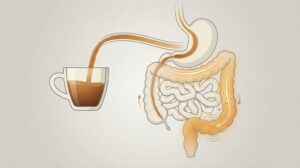
One possible reason coffee can trigger the urge to go is its effect on normal gastrocolic activity, the process by which eating or drinking can increase colonic activity. Coffee appears to stimulate colonic motor activity particularly well in some people who are sensitive to its effects.
The most cited study on this, a 1990 trial published in the journal Gut, surveyed 99 healthy young adults and found that 29 percent reported that coffee gave them a noticeable urge to defecate.1 When researchers measured colon activity directly using manometry in a smaller group of “responders,” both regular and decaffeinated coffee increased rectosigmoid motility within about four minutes, an effect that was measurable for at least half an hour. Plain hot water, tested as a control, produced no such response.1 That single detail, that decaf worked almost as well as regular coffee in this trial, is a strong hint that caffeine is not the only driver of coffee’s bowel-stimulating effect.
A later study measuring colonic motor activity directly with manometry found that caffeinated coffee stimulated the colon with a magnitude similar to a full meal, about 60 percent stronger than plain water and 23 percent stronger than decaffeinated coffee.2 So caffeine does add something on top of the non-caffeine effect, but it is not the whole story.
Laboratory research offers a plausible explanation, with an important caveat. A 2022 study in the journal Nutrients found that when isolated rat ileal and colonic muscle was bathed directly in coffee, both regular and decaf caused dose dependent contractions, working through a muscarinic receptor pathway rather than through caffeine’s usual stimulant mechanism.3
It is worth being precise here: this direct contraction effect was shown in isolated muscle tissue in the lab, and points to non-caffeine coffee compounds acting directly on gut smooth muscle rather than to any single named compound that has been proven responsible. In the same study, three days of oral coffee intake in live rats suppressed certain gut bacteria but did not produce a measurable change in overall gut motility. So this is best read as evidence for a plausible mechanism rather than as proof that daily coffee drinking reliably speeds up transit in a living animal.
Clinical evidence: what happens when people actually drink coffee after surgery
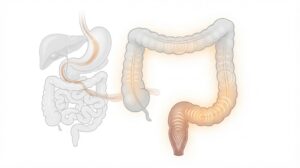
Some of the more concrete real world evidence for coffee’s effect on the bowel comes from surgical recovery research, where “time to first bowel movement” is measured precisely as a marker of recovery. Several meta-analyses of randomized trials in patients recovering from colorectal surgery have found that postoperative coffee or caffeine can shorten the time to first bowel movement, although individual trials have produced mixed results.4,10,11
One 2022 meta-analysis, for example, found a pooled mean difference of about 10 hours (−10.36 hours, 95% CI −14.61 to −6.11) in time to first bowel movement, and one analysis also found a modestly shorter hospital stay.4
A 2023 three-armed randomized trial in patients recovering from minimally invasive colorectal surgery, however, found that neither caffeinated nor decaffeinated coffee sped up the return of bowel function compared with warm water, a reminder that not every individual trial agrees with the pooled meta-analysis figures.9
It is also worth repeating that this research was done in post surgical patients recovering from anesthesia and bowel manipulation, not people with everyday chronic constipation, so the exact hours saved should not be assumed to transfer directly to a typical morning cup of coffee.
Taken as a whole, this research supports a real, biologically plausible reason coffee tends to get things moving for many people. It does not, however, support coffee as a treatment for chronic constipation. Coffee can temporarily stimulate bowel activity, but this does not address the underlying causes of chronic constipation, which can include low fiber intake, inadequate hydration, certain medications, slow colonic transit, pelvic floor dysfunction, IBS-C, or other medical conditions that are worth discussing with a doctor if constipation is persistent.
Does decaf coffee help constipation too?
It appears to, though perhaps slightly less than regular coffee. Decaffeinated coffee stimulated colon motility nearly as strongly as regular coffee in the 1990 Gut trial, where decaf produced the same rapid increase in rectosigmoid motility as regular coffee in responders.1 On the other hand, the 1998 manometry study found caffeinated coffee’s effect was about 23 percent stronger than decaf’s.2
So the honest summary is that decaf can also stimulate the colon, but regular coffee may have a somewhat stronger effect for some people. If your goal is to use coffee’s bowel stimulating effect without the jitters, sleep disruption, or anxiety that caffeine can bring, decaf is a reasonable substitute to try.

So can coffee make constipation worse?
In some circumstances, coffee may make bowel symptoms feel worse, although coffee itself is not established as a direct cause of constipation. Rather, the research above establishes that coffee stimulates the colon in many people, but not everyone, and certain patterns of use can flip that stimulant effect from helpful to counterproductive.
The dehydration question, and why it is more nuanced than it sounds
Inadequate hydration is a well established contributor to constipation. Inadequate fluid intake can contribute to harder stools, particularly when overall fluid intake is low (our guide on how dehydration causes constipation covers this in more detail). Coffee can increase urine output at sufficiently high caffeine doses, particularly in people who are not accustomed to caffeine, but moderate coffee intake is not generally considered dehydrating.5,6,7
A crossover trial in 50 habitual male coffee drinkers found no meaningful difference in total body water or urinary and blood hydration markers between three day periods of drinking coffee versus water.6 Because the study population was male only, the same result cannot automatically be assumed to apply equally to women. A review of the caffeine and fluid balance literature reached a similar conclusion, that typical serving sizes of caffeinated beverages show no clear diuretic action, and that regular drinkers develop a tolerance to whatever mild diuretic effect exists.7
That said, dose matters. In a small crossover trial of 10 habitual coffee drinkers, about 269 milligrams of caffeine from coffee did not significantly disturb fluid balance, while a higher dose of about 537 milligrams increased urine output over three hours.5
Given the small sample size, this specific finding should be treated as a useful signal rather than a settled number, and it does not necessarily mean coffee at typical intakes causes dehydration. In practice, if someone drinks large amounts of coffee while consuming too little fluid overall, inadequate hydration could still contribute to harder stools, not because coffee itself is uniquely dehydrating, but because it may be crowding out plain water in their day.
Coffee and IBS: a genuinely mixed picture
If you have irritable bowel syndrome, including constipation predominant IBS (IBS-C), coffee’s effect is less predictable than for the general population. A large cross-sectional study of 3,362 adults found an association between coffee and caffeine intake and IBS; because the study design was cross-sectional, none of the findings below can establish that coffee or caffeine causes IBS or IBS-C, only that they are associated.8
In this study, people who drank coffee weekly or more had greater odds of having IBS (OR 1.44) compared to non drinkers, and people in the highest third of caffeine intake had about 47 percent greater odds of IBS than those in the lowest third (OR 1.47), an association that was strongest in women and in people with a higher body mass index.
The study also found an association between coffee and caffeine intake and IBS-C specifically. After adjustment for potential confounders, people who drank coffee weekly or more had higher odds of IBS-C than non-drinkers (OR 1.66), while those in the highest caffeine-intake tertile also had higher odds of IBS-C (OR 1.49).
In practice, people with IBS can respond differently to coffee. Some may notice increased bowel activity, while others may experience cramping, urgency, bloating, or loose stools. This association-only evidence cannot tell you whether coffee contributes to IBS-C symptoms in an individual person or whether other factors explain the link.
If you suspect coffee is part of your IBS pattern, keeping a simple log of intake and symptoms for a couple of weeks is more useful than any general rule. For a deeper look at how fiber and diet interact with IBS-C specifically, see our article on why fiber sometimes fails to work for constipation.
When coffee becomes a bandage instead of a fix
There is a behavioral pattern worth naming separately from the physiology: relying on coffee as your only strategy for bowel regularity. Relying on coffee alone does not address the underlying causes of chronic constipation, and it may mask a slow transit problem that would respond better to the basics covered in our guide to natural constipation relief methods. If milk or cream in your coffee regularly causes bloating or loose stools, the added dairy, not the coffee itself, may be contributing to your symptoms.
How much coffee should you drink for constipation?
There is no clinically established coffee dose for treating constipation, so treat the following as general, non medical observations rather than a prescription:
- There is no clinically established coffee dose for treating constipation. If you already tolerate coffee, staying at your usual intake rather than increasing it is reasonable; the hydration research above simply suggests that habitual, moderate intake does not measurably disturb fluid balance.5,6 Because caffeine content varies a lot by bean, brew method, and cup size, there is no single “constipation dose” to aim for.
- Higher caffeine intake, around 537 milligrams in one small crossover study, increased urine output over three hours, although this does not necessarily mean that coffee at this level causes dehydration or worsens constipation on its own.5
- Keep your overall fluid intake adequate, rather than relying on coffee as your main source of fluids during the day.
- Increasing your coffee intake specifically to treat constipation is not something the research supports as a reliable strategy, and is not a substitute for addressing fiber, fluids, or an underlying medical cause.
Some people notice a stronger urge after morning coffee, which may relate to the gastrocolic reflex already being active around waking and the first meal or drink of the day. This is a plausible, commonly reported pattern rather than a tested finding, and coffee timing has not been established as a treatment for constipation in clinical trials.
What actually works for constipation, and where coffee fits in
Coffee is a minor, situational nudge, not a first-line treatment, and it works best alongside the basics rather than instead of them. For ongoing constipation, evidence-based options include fiber, particularly psyllium, and osmotic laxatives such as polyethylene glycol (PEG). PEG has particularly strong guideline support when dietary measures and fiber alone are not enough.12 Other pieces worth building into a constipation strategy include:
- Adequate fiber intake, from food or a supplement such as psyllium, is a well supported first step. See our fiber foods and gut health guide for specifics, and our piece on why fiber sometimes fails to work if you have already tried it without success.
- Polyethylene glycol (PEG), an over-the-counter osmotic laxative, is a standard recommendation for chronic constipation, with particularly strong guideline support when fiber alone is not enough.12
- Adequate fluid intake, mainly plain water, supports stool softness and works alongside fiber rather than replacing it, and matters more than coffee timing or amount. Our guide on dehydration and constipation covers how much most adults need.
- Regular physical activity is commonly recommended for general bowel regularity, though the evidence for it as a standalone constipation treatment is more modest than for fiber or PEG.
- Other osmotic or stimulant laxatives, such as magnesium oxide or senna, may also be appropriate in selected situations, depending on the person’s health and the cause of constipation.
- Coffee, which can act as a short-term nudge to colonic motor activity for some people, but does not address the underlying causes of chronic constipation and should not replace the options above. If you need daily coffee just to have a bowel movement at all, that pattern is worth mentioning to a doctor rather than solving by increasing your dose.
If fiber, fluids, and movement are not resolving persistent constipation, that is a reason to talk to a clinician about options such as PEG, rather than a reason to increase coffee intake.
When constipation needs medical attention
Coffee is a minor lever, not a diagnostic tool, and it should not be used to mask symptoms that need medical attention. See a doctor if you notice any of the following, regardless of your coffee habits:
- Constipation that is new, persistent, or progressively worsening
- Rectal bleeding, or blood in the stool or on toilet paper
- Unexplained weight loss
- Severe or persistent abdominal pain, or vomiting
- A persistent or unexplained change in bowel habits
It is also worth telling your doctor about a relevant furoast Low Acid Organic Ground Coffee or a decaffeinated coffeeamily history of colorectal cancer or other gastrointestinal disease, especially if your bowel habits have recently changed.
If coffee bothers your stomach
“Low acid” is a marketing term, not an independently regulated standard, so treat any such claim as a starting point rather than a guarantee. If you already know that regular coffee bothers your stomach, you could try a lower-acid coffee, such as Puroast, or a Swiss Water Process decaf, and see whether you tolerate it better. However, these products have not been studied specifically as treatments for constipation.
As an Amazon Associate, this site may earn from qualifying purchases through the link above, at no extra cost to you.
Frequently asked questions
Does coffee help with constipation or make it worse?
Coffee can stimulate colonic motor activity in some people and may help trigger a bowel movement, an effect supported by controlled research, though not everyone responds this way.1,2 Coffee is not generally considered a direct cause of constipation, but constipation may be harder to manage if someone drinks large amounts of coffee while consuming too little fluid overall, or in some people with irritable bowel syndrome who find caffeine triggers cramping or irregularity rather than relief.8
Why does coffee make me poop?
Coffee can stimulate colonic motor activity in some people. Controlled studies using manometry have measured this response directly, with effects occurring within minutes in people who respond to coffee.1,2
Does decaf coffee help constipation as much as regular coffee?
Decaf coffee can also stimulate the colon, although regular coffee may have a somewhat stronger effect in some studies. In controlled trials, decaffeinated coffee produced a similar, though sometimes slightly smaller, increase in colon motility compared with regular coffee, which points to non caffeine compounds as a meaningful part of coffee’s bowel-stimulating effect.1,2
Does coffee dehydrate you and cause constipation?
At typical intake levels, research in habitual coffee drinkers has found no significant dehydrating effect.6,7 At higher caffeine doses, a measurable increase in urine output has been shown in at least one small trial, which does not necessarily mean coffee causes dehydration but could theoretically contribute to constipation if it is not offset by other fluids.5
How much coffee should I drink for constipation?
There is no clinically established coffee dose for treating constipation. If you already tolerate coffee, staying at your usual intake alongside adequate water is reasonable, but increasing coffee intake specifically to fix constipation is not supported as a reliable strategy.5,6
Can coffee cause diarrhea instead of helping with constipation?
Yes. Some people find that coffee stimulates bowel activity enough to cause loose stools or urgency, particularly if they have a sensitive gut. Individual responses vary, and this is more commonly reported anecdotally and in people with IBS than established in a dedicated clinical trial.
References
- Brown SR, Cann PA, Read NW. Effect of coffee on distal colon function. Gut. 1990;31(4):450-453. Available from: https://pubmed.ncbi.nlm.nih.gov/2338272/
- Rao SS, Welcher K, Zimmerman B, Stumbo P. Is coffee a colonic stimulant? Eur J Gastroenterol Hepatol. 1998;10(2):113-118. Available from: https://pubmed.ncbi.nlm.nih.gov/9581985/
- Hegde S, Shi DW, Johnson JC, Geesala R, Zhang K, Lin YM, Shi XZ. Mechanistic study of coffee effects on gut microbiota and motility in rats. Nutrients. 2022;14(22):4877. Available from: https://www.mdpi.com/2072-6643/14/22/4877
- Yang TW, Wang CC, Sung WW, Ting WC, Lin CC, Tsai MC. The effect of coffee/caffeine on postoperative ileus following elective colorectal surgery: a meta-analysis of randomized controlled trials. Int J Colorectal Dis. 2022;37(3):623-630. Available from: https://pmc.ncbi.nlm.nih.gov/articles/PMC8885519/
- Seal AD, Bardis CN, Gavrieli A, Grigorakis P, Adams JD, Arnaoutis G, Yannakoulia M, Kavouras SA. Coffee with high but not low caffeine content augments fluid and electrolyte excretion at rest. Front Nutr. 2017;4:40. Available from: https://pmc.ncbi.nlm.nih.gov/articles/PMC5563313/
- Killer SC, Blannin AK, Jeukendrup AE. No evidence of dehydration with moderate daily coffee intake: a counterbalanced cross-over study in a free-living population. PLoS One. 2014;9(1):e84154. Available from: https://pmc.ncbi.nlm.nih.gov/articles/PMC3886980/
- Maughan RJ, Griffin J. Caffeine ingestion and fluid balance: a review. J Hum Nutr Diet. 2003;16(6):411-420. Available from: https://pubmed.ncbi.nlm.nih.gov/19774754/
- Koochakpoor G, Salari-Moghaddam A, Hassanzadeh Keshteli A, Esmaillzadeh A, Adibi P. Association of coffee and caffeine intake with irritable bowel syndrome in adults. Front Nutr. 2021;8:632469. Available from: https://pmc.ncbi.nlm.nih.gov/articles/PMC8241212/
- Nasseri Y, Kasheri E, Oka K, et al. Does coffee affect bowel recovery following minimally invasive colorectal operations? A three-armed randomized controlled trial. Int J Colorectal Dis. 2023;38:199. Available from: https://link.springer.com/article/10.1007/s00384-023-04494-7
- Zhu J, Xu W, Sun Q, Geng J, Yu Y, Zhao Z. Effect of coffee consumption on postoperative ileus after colorectal surgery: a meta-analysis of randomized controlled trials. Gastroenterol Res Pract. 2022;2022:8029600. Available from: https://pmc.ncbi.nlm.nih.gov/articles/PMC9200568/
- Vaghiri S, Prassas D, David SO, Knoefel WT, Krieg A. Caffeine intake enhances bowel recovery after colorectal surgery: a meta-analysis of randomized and non-randomized studies. Updates Surg. 2024;76(3):769-782. Available from: https://pubmed.ncbi.nlm.nih.gov/38700642/
- Chang L, Chey WD, Imdad A, et al. American Gastroenterological Association-American College of Gastroenterology Clinical Practice Guideline: Pharmacological Management of Chronic Idiopathic Constipation. Am J Gastroenterol. 2023;118(6):936-954. Available from: https://pubmed.ncbi.nlm.nih.gov/37211380/