

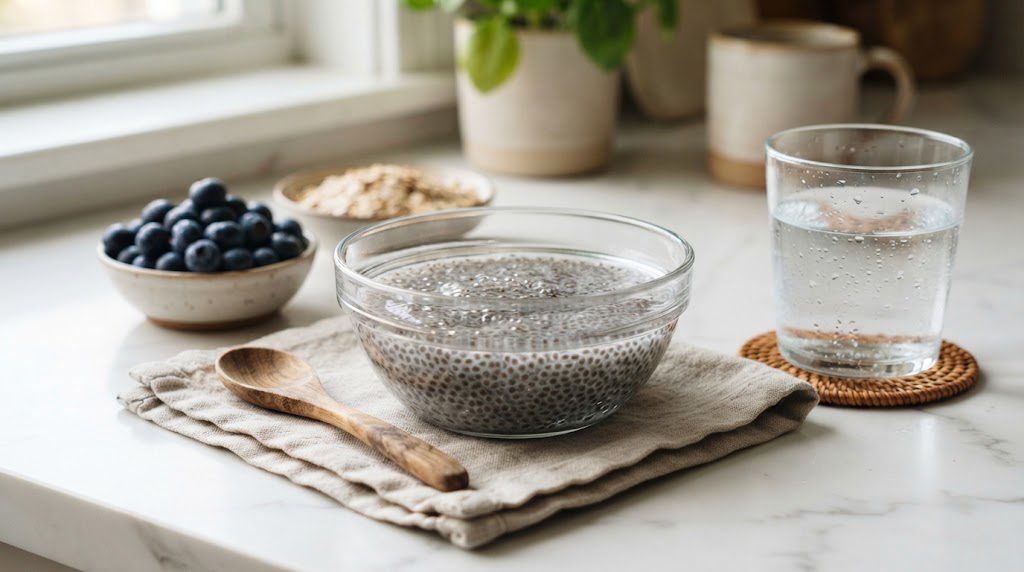
Chia seeds for constipation is a question worth asking carefully if you already keep a bag in your kitchen and are dealing with irregular bowel movements. There is a reasonable answer, and a right and wrong way to go about it. A tablespoon provides roughly 4 grams of fiber, depending on the product and serving weight, and forms a thick gel when it meets liquid, the same basic texture that makes bulk-forming fiber supplements work.
But how you prepare chia seeds matters more than most people realize, since eating them the wrong way carries a documented safety risk. Below, we break down what the research actually shows, how much to take, and the soaking method you should never skip.
Quick Answer
- How much: If you want to try chia, start with about 1 tablespoon daily and increase gradually if tolerated. Research on chia and constipation has used 2 tablespoons per day, divided into two 1-tablespoon servings.
- How to prepare: Let the seeds sit until they are fully hydrated and surrounded by gel. This usually takes several minutes; overnight soaking produces a thicker gel. Never eat them dry or with just a small sip of water.
- How long it takes: Chia may take several days to affect bowel habits, but there is not enough chia-specific research to promise an exact timeline. The main trial measured results after 4 weeks of daily use.
- Who should be cautious: People with swallowing difficulties, esophageal narrowing, or a history of bowel obstruction should talk to a doctor before adding chia seeds, and should never attempt them dry.
Do Chia Seeds Really Help Constipation?
Probably, for some people, though the evidence is still thin compared to better-studied options. Chia seeds are high in fiber and form a gel when soaked, a related mechanism to bulk-forming fiber therapy. A small 2025 randomized trial found that chia increased complete spontaneous bowel movements and performed comparably to psyllium and PEG on that measure, but the study was small and has not yet been published as a full peer-reviewed paper. Chia seeds are best viewed as a reasonable, food-based fiber option rather than a proven, first-line treatment.
Why Chia Seeds May Help With Constipation
Chia seeds (Salvia hispanica) are made up of roughly 30 to 35 grams of dietary fiber per 100 grams, which is an unusually high concentration for a food.[1] That fiber includes both an insoluble fraction and a smaller soluble, gel-forming fraction; published breakdowns of the exact ratio vary somewhat by study, but insoluble fiber generally makes up the larger share.[1] That combination matters for constipation in two distinct ways.
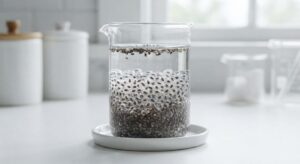
The insoluble fraction can contribute to stool bulk, while the gel-forming fraction may help retain water and support softer stool. When chia seeds contact liquid, the outer layer of each seed forms a mucilage, a viscous gel coating that can hold water and contributes to chia’s texture and bulking properties.[1] Whether this translates into a clinically meaningful improvement in constipation, similar to established bulk-forming fiber supplements like psyllium husk, is still being studied.
It is worth being clear about one distinction: although chia forms a noticeable gel when soaked, its fiber contains both insoluble and soluble components, and published estimates of the exact proportion vary.[1] Psyllium husk, by contrast, is predominantly soluble fiber. The two work through related but not identical mechanisms. If you want a side-by-side look at how chia compares with other fiber types, our comparison of psyllium husk vs wheat bran for constipation covers how different fiber types behave in the gut.
What the Research Actually Shows
It is worth being precise here, since chia seeds are often marketed with more confidence than the evidence currently supports.
The most directly relevant study is a 2025 randomized, open-label prospective trial presented at the American College of Gastroenterology’s Annual Scientific Meeting. It compared chia seeds against psyllium and polyethylene glycol (PEG) in adults with chronic constipation meeting Rome IV criteria.[2] Seventy-one participants were randomized to a standard 28-day serving of chia seeds (2 tablespoons per day), psyllium (12 grams per day), or PEG (17 grams per day). Only 29 completed the full study, including just 13 in the chia arm.
Chia seeds significantly increased the number of complete spontaneous bowel movements per week (P = 0.001). The researchers reported that chia performed comparably to psyllium and PEG on that specific measure, with no significant effect on other symptoms like bloating or straining.[2] Given how few participants completed the trial, this is best read as promising, early evidence rather than a firm conclusion. As of this writing, the results have been presented as a conference abstract rather than a full peer-reviewed journal article.
A separate 2025 multicenter, double-blind, randomized, placebo-controlled trial looked at a combination product containing chia seed powder, pea protein, and xyloglucan in adults with constipation-predominant irritable bowel syndrome (IBS-C).[3] Over 28 days, the combination significantly improved stool consistency compared to placebo. This study tested chia seed powder as part of a multi-ingredient formula, not chia alone, so the results cannot isolate the effect of chia itself.
Beyond chia-specific research, the broader evidence base for fiber and constipation is stronger. A 2022 updated systematic review and meta-analysis of 16 randomized controlled trials found that fiber supplementation, particularly psyllium, significantly improved response rates and stool frequency in adults with chronic constipation, with clearer benefits at doses above 10 grams per day for at least four weeks.[4] This evidence applies to fiber supplementation generally, not specifically to chia seeds.
The 2023 joint clinical practice guideline from the American Gastroenterological Association and American College of Gastroenterology gives fiber supplementation a conditional recommendation for chronic idiopathic constipation, based on low certainty evidence.[5] The same guideline gives PEG a strong recommendation, based on moderate certainty evidence.[5] Chia seeds fit within the general fiber category discussed in the guideline, though they have not been studied anywhere near as extensively as psyllium specifically.
Taken together, chia seeds have a plausible mechanism and encouraging early trial data. Chia is not currently as well validated as PEG for chronic constipation, while psyllium has substantially stronger evidence among fiber-based options. Chia is best thought of as a reasonable, food-based addition, particularly for people who prefer whole foods or already use them for other reasons. For a broader look at where chia fits among natural options, see our guide to natural laxatives for constipation.
How Much Chia Seeds Should You Take for Constipation
| Stage | Amount | Notes |
|---|---|---|
| Starting amount | 1 tablespoon (about 12 grams) once daily | Take with adequate fluid and make sure the seeds are fully hydrated before eating; try a smaller amount first if you are not used to eating much fiber |
| Study dose | 2 tablespoons per day, divided into two 1-tablespoon servings | The amount used in the 2025 chronic constipation trial[2] |
| Higher amounts | Not routinely necessary | There is no established chia-specific evidence that more than 2 tablespoons daily adds benefit, and more fiber can worsen bloating |
As with any fiber source, increase the amount gradually over several days rather than jumping straight to the target dose. When increasing fiber, make sure you are drinking enough fluid for your individual needs, particularly if your usual fluid intake is low. For more on why this pairing matters, see Does Dehydration Cause Constipation? The Science-Backed Link.
If you take iron supplements, prenatal vitamins, or other oral medications, ask your pharmacist or doctor whether they should be separated from high-fiber foods like chia seeds, since fiber can affect how some minerals and drugs are absorbed. Our guide on iron supplement constipation covers this general timing issue in more detail.
How to Prepare Chia Seeds Safely (Never Eat Them Dry)
Safety note: Dry chia seeds should never be swallowed on their own or with just a small amount of water. A peer-reviewed case report describes a patient who developed a complete esophageal obstruction after swallowing a tablespoon of dry chia seeds followed by a glass of water; the hydrated gel became lodged in the esophagus and required an endoscopic procedure with specialized equipment to clear.[6] Chia seeds absorb a substantial amount of liquid and expand as they hydrate, which is why it is safer to let them fully hydrate before eating them.[1][6] People with swallowing difficulties or esophageal narrowing may be at greater risk, but the basic rule, soak before you eat, applies to everyone.
The Basic Chia Gel Method
- Add 1 tablespoon of chia seeds to a small bowl or jar.
- Pour in about ½ cup (120 mL) of water, milk, or a milk alternative.
- Stir immediately and again after 2 to 3 minutes to prevent clumping.
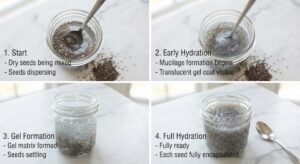
- Let it sit until the seeds are fully hydrated and surrounded by a gel. This usually takes several minutes; overnight soaking in the refrigerator is another option and gives a thicker, pudding-like texture.
- Eat it on its own, or stir it into oatmeal, yogurt, a smoothie, or soup.
Overnight Chia Pudding
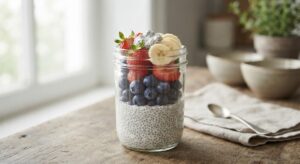
Combine 2 tablespoons of chia seeds with 1 cup of liquid (dairy or plant-based milk works well) in a jar with a lid. Shake or stir well, refrigerate overnight, and stir again in the morning before eating. This gives you about the 2-tablespoon amount used in the 2025 constipation trial, in a single, make-ahead serving.[2]
Adding Chia to Meals Without a Separate Prep Step
You can also stir pre-soaked chia gel directly into soups, stews, sauces, or baked oatmeal after they have cooled slightly. Because the seeds are already hydrated, this avoids any risk of dry seeds ending up in a dish where they might be eaten without enough liquid.
How Long Does It Take to Work?
There is not enough chia-specific research to give a precise, evidence-backed timeline. The main clinical trial on chia and chronic constipation measured outcomes after 4 weeks of daily use rather than tracking day-by-day results, so it cannot tell us exactly how many days it typically takes.[2] Some people notice softer stools or more frequent bowel movements within the first week, but this is based on general experience with fiber, not a specific chia trial finding.
If you are tolerating chia well, several weeks of consistent daily use, alongside adequate water intake, is a reasonable period over which to judge whether it is helping. Fiber-based approaches tend to work gradually rather than producing an immediate bowel movement the way an osmotic or stimulant laxative might. If you need faster relief in the meantime, our guide to fast constipation relief at home covers options that act sooner.
Disclosure: This article contains affiliate links. If you purchase through these links, Constipation Relief may earn a small commission at no extra cost to you. This does not influence our editorial content.
At a Glance: Chia Seeds and Fiber Options for Constipation
Chia seeds work best as a food-based addition rather than a standalone treatment. Here are the top picks for each option covered in this guide:
- Best chia seeds (plain, unflavored, 100% chia): Viva Naturals Organic Chia Seeds (2 lb) — 100% organic, no additives, 21,000+ Amazon reviews at 4.7★, the versatile format this guide recommends for soaking into gel or overnight pudding. Always hydrate fully before eating, never dry.
- Best psyllium husk (stronger evidence, well-studied first-line fiber): Konsyl Daily Psyllium Fiber Powder (19oz) — 100% pure psyllium husk, the fiber type with the strongest clinical evidence per the 2022 meta-analysis and 2023 AGA-ACG guideline cited in this guide. The article explicitly notes psyllium is “substantially more studied” than chia.
- Best magnesium oxide (osmotic, non-fiber mechanism): Nature Made Magnesium Oxide 250mg — the exact magnesium form listed in this guide’s comparison table, works through osmotic mechanism independent of fiber, USP verified. ⚠️ Avoid with kidney disease.
Side Effects and Who Should Be Cautious
- Bloating and gas: The most common side effect when increasing any fiber intake too quickly. Start low and increase gradually.
- Swallowing difficulties or esophageal narrowing: Chia seeds should be avoided in dry form entirely and used only in fully hydrated, gel form. If you have a known history of dysphagia or esophageal stricture, talk to a clinician before using chia.[6]
- Prescription medications: If you take prescription medications, particularly ones that require consistent dosing or monitoring, ask your pharmacist or clinician before making a large change in your fiber intake.
- Blood pressure or blood sugar medications: Some research suggests chia may modestly lower blood pressure or blood glucose. This is generally a benefit, but it is worth flagging to your prescriber if you are on medication for either condition, so they can decide whether any monitoring is appropriate.
- Kidney disease: Chia seeds contain phosphorus and potassium. People with advanced kidney disease who have potassium or phosphorus restrictions should check with their renal care team before making chia a daily part of their diet.
- Pregnancy: If you are pregnant and considering chia specifically for constipation, ask your OB-GYN or prenatal care provider about your individual fiber and fluid needs; our guide to high-fiber foods for pregnancy constipation relief covers this and other food options in more detail.
- Allergy: Rare but documented; discontinue use and seek medical attention if you notice hives, swelling, or difficulty breathing after eating chia seeds.
Chia Seeds vs Other Fiber Options for Constipation
| Option | Fiber type | Evidence strength | Best for |
|---|---|---|---|
| Chia seeds | Mixed soluble and insoluble fiber; forms a gel when hydrated | Emerging; one small 2025 RCT[2] | People who prefer whole foods and want a gentle daily addition |
| Psyllium husk | Predominantly soluble, strongly gel-forming | Well-supported by clinical trials and guidelines[4][5] | Chronic constipation, fiber-specific first choice |
| Ground flaxseed | Mixed soluble and insoluble | Moderate, food-based evidence | Similar profile to chia, slightly different fat content |
| Magnesium oxide | Not a fiber; osmotic mechanism | Moderate evidence; conditional guideline recommendation[5] | Can provide osmotic laxative effects; not a fiber supplement |
For a deeper dive into fiber-based options generally, see Constipation Relief: Best Fiber Foods and Fiber Therapy for Gut Health, and if you would rather compare osmotic options, our best magnesium supplements for constipation guide breaks down the different forms.
Where to Get Chia Seeds
Plain, unflavored chia seeds are the most versatile option and widely available. Look for a product that is simply labeled 100 percent chia seed, with no added sugar or flavoring, from a reputable seller with fresh packaging, and store it in an airtight container in a cool, dry place. Organic certification is a personal preference rather than something that changes the fiber content or constipation-related effects. You can compare current options here: chia seeds on Amazon or chia seeds on iHerb.
Frequently Asked Questions
Can I eat chia seeds dry for constipation?
No. Dry chia seeds should not be swallowed on their own, especially with only a small amount of liquid. They can absorb liquid and expand in the esophagus, which has caused documented cases of esophageal obstruction. Let the seeds sit in enough liquid until they are fully hydrated and surrounded by gel before eating them. This usually takes several minutes; overnight soaking produces a thicker gel.
How much chia seed should I eat per day for constipation?
A commonly used amount in research is about 2 tablespoons per day, divided into two 1-tablespoon servings, soaked in liquid. Many people start with 1 tablespoon daily and increase gradually while maintaining adequate fluid intake, to reduce bloating and gas. There is no established evidence that higher amounts provide added benefit.
How long does it take for chia seeds to help with constipation?
Chia seeds may take several days to affect stool consistency or bowel frequency for some people, but there is not enough chia-specific research to give a reliable, exact timeline. The main clinical trial on chia and constipation measured outcomes after 4 weeks of daily use, so it is reasonable to give it several weeks of consistent use, combined with adequate water intake, before judging whether it is helping.
Are chia seeds better than psyllium husk for constipation?
Psyllium husk still has the largest and most consistent body of clinical evidence for constipation among fiber sources. A 2025 randomized trial found chia seeds performed comparably to psyllium and polyethylene glycol for increasing complete bowel movements, but this was a small study, and psyllium remains the more thoroughly studied option. Many people use chia seeds as a food-based addition alongside, rather than a replacement for, first-line fiber therapy.
Can chia seeds make constipation worse?
Yes, if they are not paired with enough water. Like other bulk-forming fibers, chia seeds absorb liquid from their surroundings. Without adequate fluid intake, they can theoretically contribute to harder stool or a feeling of fullness and bloating. Increasing fiber too quickly can also temporarily worsen bloating and gas before symptoms improve.
Medical Disclaimer: This article is for informational and educational purposes only and is not a substitute for professional medical advice, diagnosis, or treatment. Always consult a qualified healthcare provider before making changes to your diet, especially if you have a swallowing disorder, kidney disease, or take prescription medications.
References
- Khalid W, Arshad MS, Aziz A, Rahim MA, Qaisrani TB, Afzal F, Ali A, Ranjha MMAN, Khalid MZ, Anjum FM. Chia seeds (Salvia hispanica L.): A therapeutic weapon in metabolic disorders. Food Sci Nutr. 2023;11(1):3-16. doi:10.1002/fsn3.3035.
- Chia Seeds for the Treatment of Chronic Constipation in Adults: A Randomized Multi-Armed Prospective Trial. Am J Gastroenterol. 2025;120(10S2):S259. doi:10.14309/01.ajg.0001132272.68553.35. (Abstract presented at the American College of Gastroenterology 2025 Annual Scientific Meeting; full peer-reviewed results not yet published as a complete journal article.)
- Armova M, Nikolova MS, Draganov PM, Peneva PV, Sabaté JM, Santos J. Efficacy and Safety of Chia Seed Powder, Pea Protein, and Xyloglucan in Patients with Constipation-Predominant Irritable Bowel Syndrome: A Multicenter, Double-Blind, Randomized, Placebo-Controlled Trial. Gastrointest Disord. 2025;7(1):19. doi:10.3390/gidisord7010019.
- van der Schoot A, Drysdale C, Whelan K, Dimidi E. The Effect of Fiber Supplementation on Chronic Constipation in Adults: An Updated Systematic Review and Meta-Analysis of Randomized Controlled Trials. Am J Clin Nutr. 2022;116(4):953-969. doi:10.1093/ajcn/nqac184.
- Chang L, Chey WD, Imdad A, Almario CV, Bharucha AE, Diem S, Greer KB, Hanson B, Harris LA, Ko C, Murad MH, Patel A, Shah ED, Lembo AJ, Sultan S. American Gastroenterological Association-American College of Gastroenterology Clinical Practice Guideline: Pharmacological Management of Chronic Idiopathic Constipation. Am J Gastroenterol. 2023;118(6):936-954. doi:10.14309/ajg.0000000000002227.
- Simmelink A, Rawl RE, Browne L, Scobey M. Watch it grow: Esophageal impaction with chia seeds. Case Rep Intern Med. 2017;4(2):49. doi:10.5430/crim.v4n2p49.