

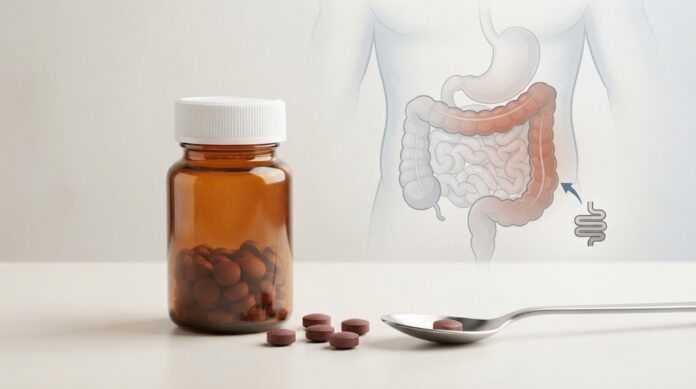
Iron supplement constipation is one of the reasons people stop taking iron before their deficiency is corrected. Fortunately, constipation is often manageable without abandoning treatment. This guide explains why oral iron can cause constipation, which forms and products may be easier to tolerate, what typical doses look like, and what actually helps, based on the available clinical research rather than forum folklore.
Quick answer: Iron supplements, especially ferrous sulfate, can cause constipation and other gastrointestinal side effects. If constipation becomes difficult to manage, talk with your doctor or pharmacist about adjusting the dose, schedule, or iron formulation rather than stopping treatment on your own.
How Common Is Constipation From Iron Supplements?
Constipation is one of the most frequently reported side effects of oral iron therapy. A 2015 systematic review and meta-analysis pooled data from 43 randomized controlled trials and 6,831 adults and found that ferrous sulfate, a commonly used oral iron supplement, more than doubled the odds of gastrointestinal (digestive-system) side effects compared with placebo (odds ratio 2.32).[1]
Notably, that same analysis found no clear relationship between dose and side effect risk, meaning a lower dose doesn’t automatically guarantee a gentler experience for every person.[1]
Looking specifically at constipation, the 27 studies in that meta-analysis that reported it separately from other GI symptoms found an average incidence of 12% in people taking ferrous sulfate.[1]
The National Institutes of Health’s Office of Dietary Supplements lists constipation alongside nausea, abdominal pain, and an upset stomach as a well-documented effect of high-dose iron supplementation, especially when taken on an empty stomach.[2] In rare cases, severe and unmanaged constipation from iron pills has progressed to bowel obstruction requiring hospital treatment, which is one reason this side effect shouldn’t be dismissed as purely cosmetic.[3]

Why Iron Supplements Cause Constipation
The exact reason iron supplements cause constipation isn’t fully understood. A few explanations show up in the research, though none of them is fully confirmed:
- Unabsorbed iron stays in the gut. Only part of an oral iron dose is typically absorbed, so some iron remains in the digestive tract. Researchers have proposed that this unabsorbed iron may affect the gut lining, motility, or gut microbiome, although the precise mechanism behind constipation remains uncertain.
- Total iron exposure may play a role, though evidence on dose isn’t consistent. Higher doses expose the gut to more unabsorbed iron, which is one reason clinicians sometimes start with a lower dose. That said, the National Institutes of Health’s health professional fact sheet notes that gastrointestinal effects, including constipation, are associated with high-dose iron supplementation,[4] while the largest meta-analysis of ferrous sulfate trials to date did not find a statistically significant relationship between dose and the odds of GI side effects.[1] In short, more iron doesn’t reliably mean more constipation for a given person, even though it’s a reasonable factor to consider.
Typical Iron Dosing for Deficiency and Anemia
Dosing always needs to come from the prescribing doctor or pharmacist, since it depends on how severe the deficiency is, body weight, age, and whether the person is pregnant. That said, it helps to know the general ranges that show up in clinical guidance so a prescribed dose makes sense in context:
| Population / Purpose | Typical Elemental Iron Range | Notes |
|---|---|---|
| Adult RDA (dietary intake, not supplement dose) | 8 mg/day (adult men, postmenopausal women) to 18 mg/day (menstruating women) | Vegetarians and vegans need roughly 1.8 times these amounts due to lower absorption of plant-based iron.[5] |
| Tolerable Upper Intake Level (UL), adults | 45 mg/day | Set based on GI side effects. Clinicians may prescribe amounts above the UL for a limited period when treating diagnosed iron deficiency or iron-deficiency anemia.[5] |
| Treating diagnosed iron deficiency anemia (adults) | Commonly around 50–100 mg elemental iron once daily in current regimens | The appropriate dose depends on the cause and severity of the deficiency, the formulation used, and the treatment plan set by the prescriber; this range reflects a general shift in recent guidance toward single daily or alternate-day dosing rather than older split-dose regimens.[6] |
| Pregnancy | 27 mg/day is the standard dietary RDA | Therapeutic supplementation may be higher when iron deficiency or anemia is diagnosed, and the exact amount should be determined by the OB-GYN or midwife; prenatal vitamins alone may not contain enough iron if anemia is diagnosed.[5] |
This table is general reference information, not a substitute for a prescribed dose. Taking more elemental iron than directed doesn’t just risk worse constipation; iron overdose is a real medical emergency, particularly in children, so supplements should always be stored out of reach and taken exactly as directed.
Not All Iron Supplements Are Equally Constipating
The chemical form of iron in a supplement can also affect how well it is tolerated, although individual responses vary. A randomized trial in children with iron deficiency anemia compared a standard ferrous sulfate regimen with iron hydroxide polymaltose complex (IPC), a non-ionic form, over four months. Both forms raised hemoglobin by a similar amount, but overall gastrointestinal adverse events (which included nausea, vomiting, and diarrhea as well as constipation) occurred in 26.9% of the IPC group compared with 50.9% of the ferrous sulfate group.[7]
That gap describes GI side effects as a whole rather than constipation specifically, so it shouldn’t be read as proof that IPC causes meaningfully less constipation than ferrous sulfate, just that it was better tolerated overall in this trial.
| Iron Form | Typical Elemental Iron | Constipation/GI Tolerability | Pros |
|---|---|---|---|
| Ferrous sulfate | ~20% of tablet weight (e.g., a 325 mg tablet ≈ 65 mg elemental iron) | Most studied; highest reported GI side effect rates in trials[1] | Generally inexpensive; commonly used oral iron formulation; extensive clinical experience |
| Ferrous fumarate / ferrous gluconate | ~12–33% depending on salt | GI tolerability varies by formulation and dose; ferrous sulfate remains the most extensively studied form for comparison | Inexpensive; widely available; sometimes tried as an alternative if sulfate isn’t tolerated, with mixed individual results |
| Ferrous bisglycinate (chelated iron) | ~20–25 mg elemental iron per capsule in most consumer products | Encouraging results in comparative research on overall tolerability | Some comparative studies suggest better gastrointestinal tolerability than conventional iron salts for many people; often marketed as “gentle” or “non-constipating”; a reasonable option to discuss after a poor experience with ferrous sulfate |
| Iron hydroxide polymaltose complex (IPC) | Varies by product | Fewer overall GI adverse events than ferrous sulfate in a pediatric RCT; this reflects total GI symptoms, not a proven constipation-specific advantage[7] | Non-ionic form; well studied in children; comparable efficacy to ferrous sulfate over months of use |
| Heme + non-heme combination iron | Often lower total elemental iron (~28 mg is typical) | Evidence on gastrointestinal tolerability is more limited than for ferrous sulfate and ferrous bisglycinate, relying mainly on manufacturer data and small studies rather than large independent RCTs | Lower total elemental iron per dose; convenient once-daily dosing |
No single form has been proven to be the least constipating for everyone; individual response varies. Switching forms isn’t something to do unilaterally if iron was prescribed for a diagnosed deficiency; it’s worth raising with the prescribing doctor or a pharmacist, since the right choice also depends on how severe the deficiency is and how quickly levels need to come up.
Affiliate disclosure: This article contains affiliate links. If you purchase through these links, we may earn a commission at no additional cost to you.
Common Iron Supplement Products, by Form
The products below are commonly available options in each category, included here to make the table above concrete; they are factual composition notes (form, elemental iron per dose), not a ranked “best of” list, and none of these are paid placements. Always check the current label, since formulations and doses can change, and confirm the choice with a doctor or pharmacist if iron was prescribed rather than self-selected.
- Standard ferrous sulfate, 65 mg elemental iron/tablet: This is the form used in most of the clinical trials referenced above. Examples: Feosol Original, Nature Made Iron 65 mg.
- Slow-release ferrous sulfate, lower elemental iron (~45 mg/tablet): Formulated to release iron more gradually, which some people find gentler, though the 2015 meta-analysis found modified-release ferrous sulfate did not clearly reduce GI side effects compared with conventional release.[1] Example: Slow Fe 45 mg.
- Chelated ferrous bisglycinate (commonly ~25 mg elemental iron/capsule): Often marketed specifically as “gentle” or “non-constipating” iron; lower elemental iron per dose than standard ferrous sulfate, which may mean more capsules are needed to reach a prescribed total. Example: Solgar Gentle Iron 25 mg (a chelated bisglycinate product; some brands use the trademarked ingredient name “Ferrochel” on the label; check the Supplement Facts panel for the specific ingredient source).
- Combination heme/non-heme iron (~28 mg elemental iron/caplet): Pairs a small amount of heme iron with non-heme iron, aiming for meaningful absorption at a lower total dose. Example: Feosol Complete with Bifera.
- Iron plus cofactors (vitamin C, B12, folate): Many multi-ingredient products pair iron with vitamin C to aid absorption; this doesn’t change the constipation risk from the iron itself, but it can reduce the number of separate pills needed.
Note: these are factual composition examples, not a ranked “best” list or paid placements; no affiliate links or codes are attached. Amazon prices, stock, and exact formulations change; always confirm current label details before purchasing, and check with a doctor or pharmacist before switching from a prescribed product.
Does Alternate-Day Dosing Help?
One of the more interesting developments in iron research over the past decade has to do with timing rather than the type of iron itself. A pair of randomized trials found that daily iron dosing raises a hormone called hepcidin, which temporarily blocks further iron absorption, while spacing doses out to every other day improved how much iron the body actually took up per dose.[6]
Some later studies have also reported fewer gastrointestinal side effects with alternate-day dosing, but whether it consistently reduces constipation specifically remains uncertain.[9] Any change in dosing schedule should be discussed with the prescribing clinician rather than adopted independently, since total weekly iron intake still needs to meet treatment goals.
How to Prevent and Manage Constipation While Taking Iron
A few practical habits consistently show up in clinical guidance for people on oral iron:
- Increase fiber gradually alongside the iron, not instead of it. Both soluble and insoluble fiber can help support regular bowel movements and may make constipation easier to manage. If you’re not sure where to start, our comparison of the best fiber capsules for constipation covers gentler options that are easy to add to a daily routine. If you use a fiber supplement, ask a pharmacist about timing, since some fiber products can affect the absorption of iron and other medications if taken too close together.
- Stay well hydrated. Extra fluid intake is a reasonable, low-risk step that supports normal bowel function and may help keep stools softer.
- Ask about a stool softener or osmotic laxative if fiber alone isn’t enough. Cleveland Clinic specifically notes that people on ferrous sulfate may need to add a stool softener alongside the supplement.[8] Our guide to the best stool softeners for constipation breaks down the options, our review of the best magnesium supplements for constipation covers a gentle osmotic alternative some people pair with iron, and our broader roundup of the best OTC laxatives for constipation covers other over-the-counter options if symptoms need more than fiber alone.
- Take iron with food if an empty-stomach dose is too harsh. This can reduce absorption somewhat, but for many people, better tolerability and actually finishing the course of treatment matters more than squeezing out maximum absorption from every single dose.
- Don’t double up after a missed dose. Follow the product instructions or ask your pharmacist what to do if you miss a dose, rather than taking two doses at once.
- Give a new regimen some time if side effects are mild. Mild gastrointestinal side effects may improve with continued use as the gut adjusts, but if constipation is persistent, worsening, or difficult to manage, contact your clinician or pharmacist rather than simply continuing the same regimen.
Iron Supplement Constipation During Pregnancy
Pregnant women are one of the groups most likely to be prescribed iron, and the same 2015 meta-analysis found a similarly elevated risk of gastrointestinal side effects with ferrous sulfate specifically in pregnant participants.[1] Because pregnancy already slows digestion on its own, the combination can be uncomfortable. If this applies to you, our guide to high-fiber foods for pregnancy constipation relief covers food-based strategies that are generally considered safe alongside prenatal iron, though any supplement or medication changes during pregnancy should go through your OB-GYN first.
When It’s More Than Ordinary Constipation
Mild constipation from iron is common and usually manageable at home. It’s worth contacting a doctor sooner rather than later if you notice:
- No bowel movement for several days combined with worsening abdominal pain or bloating
- Vomiting or an inability to pass gas
- Severe, cramping abdominal pain rather than ordinary straining discomfort
These can be signs of a more serious bowel obstruction, especially when accompanied by worsening pain, distension, or an inability to have a bowel movement or pass gas at all. While rare, case reports have described bowel obstruction, including ileus, associated with oral iron use in people without any other predisposing surgical history.[3] This isn’t meant to be alarming since the vast majority of people on iron experience nothing beyond ordinary constipation, but it’s the reason unmanaged, worsening symptoms shouldn’t be pushed through indefinitely.
Frequently Asked Questions
How common is constipation from iron supplements?
A 2015 meta-analysis of 43 randomized controlled trials found that ferrous sulfate, a commonly used oral iron formulation, more than doubled the odds of gastrointestinal side effects compared with placebo.[1] Reported constipation rates for ferrous sulfate specifically cluster around 12%, though estimates vary by study and dose.
Which iron supplement is least likely to cause constipation?
There isn’t a single iron supplement proven to be least constipating for everyone; individual responses can vary considerably. Some comparative studies suggest that certain formulations may be better tolerated overall: ferrous sulfate has substantial evidence of gastrointestinal side effects, some comparative studies suggest ferrous bisglycinate has better gastrointestinal tolerability than conventional iron salts, and iron hydroxide polymaltose complex showed fewer overall GI adverse events (not specifically less constipation) than ferrous sulfate in one pediatric trial.[7]
Chelated forms also tend to cost more per milligram of elemental iron and typically supply less elemental iron per dose.
Can I stop taking iron supplements if they constipate me?
Don’t stop an iron supplement on your own if it was prescribed for diagnosed iron deficiency or anemia. Talk to the prescribing doctor or a pharmacist first. There are usually several ways to manage the constipation, such as switching iron forms, adjusting the dose or schedule, or adding a fiber supplement or stool softener, without abandoning treatment.
Does taking iron every other day instead of daily help with constipation?
Research suggests alternate-day dosing can improve how much iron the body actually absorbs per dose, which in theory should leave less unabsorbed iron sitting in the gut.[6] Whether this meaningfully reduces constipation for a given individual varies, and any change to a prescribed dosing schedule should be discussed with a doctor first.
What is a typical dose of iron for iron deficiency?
Common adult oral treatment regimens may provide about 50 to 100 mg of elemental iron once daily in current practice, but the appropriate dose depends on the cause and severity of the iron deficiency, the formulation used, and the treatment plan set by the prescriber.[6] This is general reference information, not a personal dosing recommendation; always follow what a doctor or pharmacist has prescribed.
The Bottom Line
Constipation from iron supplements is common, well documented in clinical research, and usually manageable without abandoning treatment for anemia or iron deficiency. Fiber, adequate hydration, and, when appropriate, a stool softener or osmotic laxative can help manage constipation for many people. For people who remain uncomfortable despite these steps, discussing a potentially better-tolerated iron formulation or spacing doses out to every other day are both reasonable next conversations to have with a doctor, rather than reasons to quit iron altogether.
References
- Tolkien Z, Stecher L, Mander AP, Pereira DI, Powell JJ. Ferrous sulfate supplementation causes significant gastrointestinal side-effects in adults: a systematic review and meta-analysis. PLoS One. 2015;10(2):e0117383. journals.plos.org
- Office of Dietary Supplements. Iron: Fact Sheet for Consumers. National Institutes of Health. ods.od.nih.gov
- Parvataneni S, Maw M. Ileus Due to Iron Pills: A Case Report and Literature Report on the Importance of Stool Softeners. Cureus. 2020;12(6):e8392. PubMed · Cureus (full text)
- Office of Dietary Supplements. Iron: Fact Sheet for Health Professionals. National Institutes of Health. ods.od.nih.gov
- Office of Dietary Supplements. Iron: Fact Sheet for Health Professionals, Recommended Intakes and Tolerable Upper Intake Levels. National Institutes of Health. ods.od.nih.gov
- Stoffel NU, Cercamondi CI, Brittenham G, et al. Iron absorption from oral iron supplements given on consecutive versus alternate days and as single morning doses versus twice-daily split dosing in iron-depleted women: two open-label, randomised controlled trials. Lancet Haematol. 2017;4(11):e524-e533. PubMed · The Lancet
- Yasa B, Agaoglu L, Unuvar E. Efficacy, Tolerability, and Acceptability of Iron Hydroxide Polymaltose Complex versus Ferrous Sulfate: A Randomized Trial in Pediatric Patients with Iron Deficiency Anemia. Int J Pediatr. 2011;2011:524520. PMC (full text)
- Iron Oral Supplements for Anemia (Ferrous Sulfate). Cleveland Clinic. my.clevelandclinic.org
- Rigutto-Farebrother J, et al. Alternate day versus consecutive day oral iron supplementation in iron-depleted women: a randomised double-blind placebo-controlled study. eClinicalMedicine. 2023. thelancet.com (eClinicalMedicine)
This article is for general educational purposes and is not a substitute for individualized medical advice. Product mentions describe composition only and are not endorsements or rankings. Do not stop, change, or exceed a prescribed iron supplement dose without talking to your doctor or pharmacist first, especially if it was prescribed for diagnosed anemia or iron deficiency, and keep all iron supplements out of reach of children; iron overdose is a medical emergency.





[…] cause, so it is worth checking with your pharmacist. Iron is a common example, and we explain it in iron supplement constipation. For children, see our guide to foods for constipated toddlers, and ask a pediatrician before using […]