

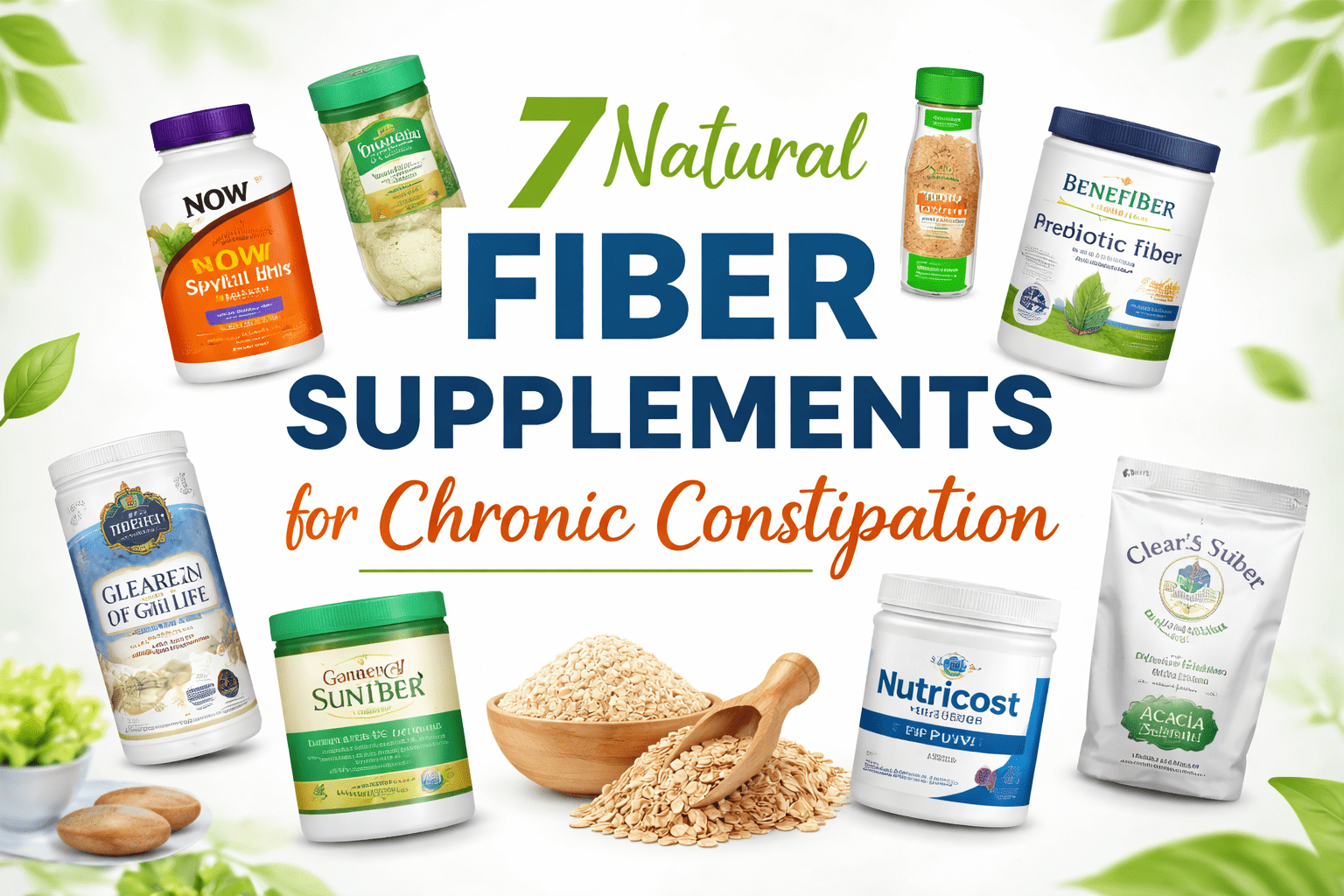
If you’re struggling with chronic constipation, natural fiber supplements may be the safest and most effective long-term solution — no harsh laxatives, no dependency, no side effects. Chronic constipation affects approximately 15–20% of the global population and is one of the most common gastrointestinal complaints worldwide, particularly among older adults. In this guide, we break down the 7 best natural fiber supplements for chronic constipation, including their exact dosage, proven benefits, and potential side effects — all backed by clinical research.
Chronic constipation is defined as having fewer than 3 bowel movements per week, often accompanied by hard stools, straining, bloating, and a feeling of incomplete evacuation. It affects roughly 15–20% of adults worldwide — and nearly 34% of women over 85.
Several factors contribute to constipation: low fiber intake, dehydration, physical inactivity, medication side effects, and age-related changes in gut motility. If left unmanaged, it can lead to complications including hemorrhoids, anal fissures, and fecal impaction.
Among all available treatments, dietary fiber remains the most widely recommended first-line intervention — safe, natural, and effective for long-term use. Below, we explore the 7 best natural fiber supplements that research actually supports.
⚡ Quick Answer: The 7 best natural fiber supplements for chronic constipation are Psyllium Husk, Inulin, Wheat Bran, Oat Fiber, PHGG, Flaxseed, and FOS. Start with 5g daily, drink plenty of water, and increase gradually over 2–3 weeks for best results. Most people notice improvement within 3–14 days.
Best natural Fiber Supplements for Chronic Constipation
The table below compares some of the best natural fiber supplements for chronic constipation available on Amazon, including their fiber type, benefits, and typical dosage.
| # | Product Name | Fiber Type | Key Benefit | Typical Dose | Amazon Link |
|---|---|---|---|---|---|
| 1 | Metamucil Psyllium Fiber Supplement Powder | Psyllium Husk | Improves stool bulk and regular bowel movements | 5–10 g daily | View |
| 2 | NOW Foods Inulin Prebiotic Pure Powder | Inulin | Supports gut microbiome and digestion | 3–10 g daily | View |
| 3 | Bob’s Red Mill Wheat Bran | Wheat Bran | Adds stool bulk and speeds intestinal transit | 10–20 g daily | View |
| 4 | Anthony’s Organic Oat Fiber | Oat Fiber | Improves stool consistency and digestion | 5–15 g daily | View |
| 5 | NOW Foods Guar Gum Powder | PHGG (Guar Gum Fiber) | Gentle fiber that improves gut bacteria | 5–10 g daily | View |
| 6 | Viva Naturals Organic Ground Flaxseed | Flaxseed Fiber | Supports bowel regularity and gut health | 1–2 tbsp daily | View |
| 7 | NOW Foods FOS Powder | Fructo-Oligosaccharides | Prebiotic fiber for microbiome balance | 3–8 g daily | View |
Understanding Dietary Fiber and Digestive Health
Dietary fiber refers to plant-based carbohydrates that resist digestion in the small intestine. Instead of being broken down and absorbed like other carbohydrates, fiber passes into the colon where it interacts with gut bacteria and contributes to stool formation and intestinal motility.
Fiber is generally classified into two main categories:
Soluble Fiber
Soluble fiber dissolves in water and forms a gel-like substance in the digestive tract. It slows digestion, increases stool softness, and can help regulate bowel movements.
Soluble fiber is also fermented by beneficial gut bacteria in the colon, producing short-chain fatty acids (SCFAs) such as acetate, propionate, and butyrate. These compounds support colon health, regulate inflammation, and provide energy for colon cells.
Common sources of soluble fiber include:
-
Psyllium husk
-
Oats
-
Barley
-
Fruits
-
Legumes
-
Inulin and prebiotic fibers
Insoluble Fiber
Insoluble fiber does not dissolve in water. Instead, it adds bulk to stool and helps move waste through the digestive tract more quickly.
This type of fiber is particularly helpful for improving stool consistency and preventing stool stagnation in the colon.
Common sources include:
-
Wheat bran
-
Whole grains
-
Vegetables
-
Nuts and seeds
Both types of fiber contribute to bowel health through several mechanisms. First, fiber increases stool bulk and water content, making stools softer and easier to pass. Second, fiber stimulates intestinal contractions, promoting regular bowel movements. Third, fermentation of certain fibers promotes the growth of beneficial gut bacteria, which can influence intestinal motility and gut health.
Recent research has also highlighted the prebiotic properties of specific fibers such as inulin and fructo-oligosaccharides (FOS). These fibers selectively stimulate the growth of beneficial gut bacteria, particularly bifidobacteria, which are associated with improved intestinal health.
However, despite these theoretical benefits, the clinical effectiveness of fiber supplementation varies among individuals, especially in elderly populations.
Scientific Evidence: Fiber and Chronic Constipation
Despite widespread recommendations for fiber supplementation, research findings have been somewhat inconsistent, especially in elderly populations.
A systematic review and meta-analysis of randomized controlled trials investigated the effectiveness of dietary fiber supplementation in individuals aged 50 years and older with chronic constipation.
The analysis included seven randomized controlled trials involving 187 participants recruited from hospitals, outpatient clinics, and nursing homes.
Various types of dietary fibers were studied, including:
-
Inulin
-
Oat flakes
-
Fructo-oligosaccharides (FOS)
-
Isomalto-oligosaccharides
-
Partially hydrolyzed guar gum (PHGG)
-
Wheat bran
The fiber doses ranged from approximately 5 grams to 22 grams per day, and treatment durations ranged from 4 to 12 weeks.
Researchers evaluated several outcomes, including stool frequency, stool weight, use of laxatives, changes in gut microbiota, and adverse effects.
Effects on Stool Frequency
One of the most commonly measured outcomes in constipation research is stool frequency, which refers to the number of bowel movements per week.
Interestingly, the pooled results from multiple trials indicated that dietary fiber supplementation did not significantly increase stool frequency in elderly individuals with chronic constipation.
Although some individual studies reported small improvements, the overall statistical analysis did not demonstrate a significant difference compared with control or placebo groups.
Several factors may explain these findings. First, elderly individuals often experience reduced intestinal motility due to aging, which may limit the effect of fiber on bowel movement frequency. Second, many participants in these studies were already using laxatives before the intervention, which could influence baseline bowel habits. Third, differences in fiber type, dosage, and treatment duration may contribute to variability in outcomes.
Therefore, while fiber may influence bowel function through other mechanisms, its impact on increasing the number of weekly bowel movements appears limited in elderly populations.
Reduction in Laxative and Enema Use
Although fiber supplementation did not significantly increase stool frequency, a notable finding from the analysis was the significant reduction in the use of laxatives or enemas among participants receiving fiber supplements.
Across several randomized controlled trials, elderly patients who consumed dietary fiber required fewer pharmacological interventions to maintain bowel function compared with those in the control group.
This outcome is clinically meaningful because excessive reliance on laxatives can lead to dependency, electrolyte imbalances, and other adverse effects. Many elderly individuals also experience polypharmacy, meaning they take multiple medications simultaneously. Reducing the need for additional drugs can therefore improve medication safety and overall health outcomes.
Furthermore, decreasing laxative use may also reduce healthcare costs and simplify treatment regimens for elderly patients.
Effects on Gut Microbiota
Another significant finding from the studies was the increase in beneficial gut bacteria following dietary fiber supplementation.
Specifically, several trials reported a substantial increase in the concentration of bifidobacteria in the stool samples of participants receiving fiber supplements.
Bifidobacteria are considered beneficial microorganisms that contribute to gut health through several mechanisms. They help maintain intestinal barrier integrity, regulate immune responses, and produce short-chain fatty acids that support colon function. For an even stronger microbiome boost, consider pairing fiber with a quality probiotic. Read: 9 Best Probiotic Supplements 2026.
Age-related changes in gut microbiota often involve a decline in beneficial bacterial populations, which may contribute to digestive disturbances including constipation.
By promoting the growth of beneficial bacteria, dietary fiber may indirectly improve bowel function and overall gastrointestinal health in elderly individuals.
Stool Weight and Consistency
The analysis also examined the effects of fiber supplementation on stool weight and stool consistency.
However, the available evidence did not demonstrate a statistically significant difference in stool dry weight between fiber and control groups.
The limited number of trials reporting this outcome and small sample sizes may explain the lack of significant findings.
Nevertheless, previous research in broader populations has shown that certain fibers can increase stool bulk and water content, which may facilitate easier bowel movements.
Adverse Effects and Tolerability
Although dietary fiber is generally considered safe, some participants experienced mild gastrointestinal side effects during supplementation.
The most commonly reported adverse effects included:
-
Bloating
-
Flatulence
-
Abdominal discomfort
These symptoms were more frequently observed in individuals consuming highly fermentable fibers such as inulin and partially hydrolyzed guar gum.
Fermentation of these fibers by gut bacteria produces gas, which can cause temporary discomfort, particularly when fiber intake is increased rapidly.
However, no severe adverse reactions were reported in the studies analyzed.
To improve tolerability, many healthcare professionals recommend gradually increasing fiber intake and ensuring adequate hydration.
Clinical Implications
Despite the limitations, the available evidence suggests that dietary fiber supplementation can play a supportive role in managing chronic constipation in elderly individuals.
Although fiber may not significantly increase stool frequency, its ability to reduce reliance on laxatives and improve gut microbiota composition represents important clinical benefits.
Healthcare providers may consider fiber supplementation as part of a comprehensive treatment approach that also includes adequate hydration, physical activity, and appropriate pharmacological therapy when necessary.
The choice of fiber type, dosage, and duration should be individualized based on patient tolerance and clinical response.
Future Research Directions
Future studies should aim to address the limitations of current evidence by conducting large-scale randomized controlled trials with standardized protocols.
These studies should evaluate different types of fiber, optimal dosages, and long-term outcomes in diverse elderly populations.
In addition, further research is needed to better understand the interaction between dietary fiber and gut microbiota, as well as how these changes influence constipation symptoms.
Investigating personalized approaches to fiber supplementation based on individual microbiome profiles may also provide new insights into effective constipation management strategies.
7 Best Natural Fiber Supplements for Chronic Constipation
Below are seven of the most effective and widely studied natural fiber supplements that may help manage chronic constipation.
1. Psyllium Husk
Psyllium husk is one of the most widely recommended fiber supplements for constipation. It is derived from the seeds of the Plantago ovata plant and contains a high concentration of soluble fiber.
When mixed with water, psyllium forms a gel-like substance that softens stool and increases stool bulk.
This helps stimulate bowel movements and improves stool consistency.
Dosage
5–10 grams per day, divided into two doses.
Always take psyllium with plenty of water to prevent choking or intestinal blockage. If you’re looking for over-the-counter options that combine psyllium with other active ingredients, see our guide: Best OTC Laxatives for Constipation in the US.
Benefits
-
Improves stool consistency
-
Increases stool bulk
-
Supports gut microbiota
-
Gentle and safe for long-term use
Side Effects
-
Bloating
-
Gas
-
Mild abdominal discomfort
These symptoms usually improve as the body adapts to fiber intake.
2. Inulin
Inulin is a soluble prebiotic fiber naturally found in chicory root, onions, garlic, and asparagus.
It is fermented by gut bacteria and stimulates the growth of beneficial microorganisms such as bifidobacteria.
Dosage
3–10 grams per day.
Start with small doses to avoid digestive discomfort.
Benefits
-
Improves gut microbiota
-
Supports colon health
-
Promotes beneficial bacterial growth
Side Effects
-
Gas
-
Bloating
-
Abdominal discomfort
These effects are more common at higher doses.
3. Wheat Bran
Wheat bran is one of the richest sources of insoluble fiber.
It works primarily by increasing stool bulk and accelerating intestinal transit time.
Dosage
10–20 grams per day.
Benefits
-
Increases stool volume
-
Improves bowel movement regularity
-
Supports digestive health
Side Effects
-
Bloating
-
Gas
-
Possible irritation in individuals with sensitive digestive systems
4. Oat Fiber
Oat fiber contains both soluble and insoluble fiber, making it useful for improving stool consistency and bowel regularity.
Oats also contain beta-glucan, which has additional benefits for heart health and cholesterol reduction.
Dosage
5–15 grams per day.
Benefits
-
Improves stool softness
-
Supports heart health
-
Helps regulate bowel movements
Side Effects
-
Mild bloating
-
Gas during initial use
5. Partially Hydrolyzed Guar Gum (PHGG)
PHGG is a soluble fiber derived from guar beans. It is often used as a prebiotic fiber and is generally well tolerated.
Dosage
5–10 grams per day.
Benefits
-
Improves gut microbiota
-
Helps regulate bowel movements
-
Gentle on the digestive system
Side Effects
-
Mild bloating
-
Gas
However, PHGG tends to cause fewer digestive symptoms than some other fibers.
6. Flaxseed Fiber
Flaxseed contains both soluble and insoluble fiber, as well as healthy omega-3 fatty acids.
It is widely used as a natural remedy for constipation. Another well-researched natural remedy is prune juice — read: How Long Does Prune Juice Take to Work?
Dosage
1–2 tablespoons of ground flaxseed per day.
Benefits
-
Improves stool bulk
-
Supports gut health
-
Provides anti-inflammatory omega-3 fats
Side Effects
-
Bloating
-
Gas
-
Loose stools if taken in excessive amounts
7. Fructo-Oligosaccharides (FOS)
FOS are short-chain carbohydrates that function as prebiotic fibers.
They stimulate the growth of beneficial gut bacteria and support digestive health.
Dosage
3–8 grams per day.
Benefits
-
Promotes beneficial gut bacteria
-
Supports colon health
-
May improve digestive balance
Side Effects
-
Gas
-
Bloating
-
Abdominal discomfort in sensitive individuals
How to Use Fiber Supplements Safely
Although fiber supplements are generally safe, improper use may lead to digestive discomfort.
To minimize side effects:
Start with a low dose and increase gradually.
Drink plenty of water when taking fiber supplements.
Increase fiber intake slowly over several weeks.
Combine fiber supplementation with physical activity and adequate hydration.
Healthcare professionals often recommend a total daily fiber intake of 25–30 grams per day from food and supplements combined. Magnesium supplements are another gentle option with minimal side effects. See: 5 Best Magnesium Supplements for Constipation.
Limitations of Current Research
While the findings provide valuable insights, several limitations must be considered when interpreting the results.
First, the total number of studies included in the analysis was relatively small, and the sample sizes of individual trials were limited. Small sample sizes reduce the statistical power of studies and may limit the generalizability of findings.
Second, there was substantial heterogeneity among the included trials. Differences in fiber types, dosages, treatment durations, and study designs make direct comparisons difficult.
Third, many studies did not control for potential confounding factors such as baseline dietary habits, medication use, and underlying health conditions.
Additionally, participants in several studies were residents of long-term care facilities, which may not represent the broader elderly population living independently in the community.
These limitations highlight the need for larger and more standardized clinical trials in the future.
Conclusion
Chronic constipation doesn’t have to control your life. The 7 natural fiber supplements covered in this guide — Psyllium Husk, Inulin, Wheat Bran, Oat Fiber, PHGG, Flaxseed, and FOS — are all clinically studied, safe for long-term use, and free from the dependency risks of conventional laxatives.
Start low, go slow, drink plenty of water, and give your body 2–3 weeks to adjust. Most people notice meaningful improvement within days to weeks.
For a complete digestive health routine, explore our evidence-based guides on natural constipation remedies, constipation-friendly diet tips, and supplements for digestive health — all backed by research.
Ready to get started? Here are all 7 fiber supplements in one place:
| Supplement | Link |
|---|---|
| Psyllium Husk | Buy on Amazon |
| Inulin | Buy on Amazon |
| Wheat Bran | Buy on Amazon |
| Oat Fiber | Buy on Amazon |
| Guar Gum (PHGG) | Buy on Amazon |
| Flaxseed | Buy on Amazon |
| FOS Powder | Buy on Amazon |
⚠️ Always consult a healthcare professional before starting any new supplement, especially if you have underlying medical conditions or take prescription medications.
Disclosure: The information on this website is for educational and informational purposes only and is not a substitute for professional medical advice. Some links on this site are affiliate links through which we may earn a commission.
FAQ
Here are some frequently asked questions about natural fiber supplements for chronic constipation:
Q1: What are the best natural fiber supplements for chronic constipation?
A: The most commonly recommended natural fiber supplements include Psyllium Husk, Inulin, Fructo-oligosaccharides (FOS), Partially Hydrolyzed Guar Gum (PHGG), Wheat Bran, Oat Bran, and Acacia Fiber. These fibers help improve bowel regularity and stool consistency.
Q2: How do I take fiber supplements for constipation?
A: Start with a low dose and gradually increase to the recommended amount. Always take fiber supplements with plenty of water to prevent discomfort and help stool pass easily.
Q3: What is the recommended dosage for Psyllium Husk?
A: For adults, Psyllium Husk is typically taken in 5–10 grams once or twice daily with water. It helps bulk up stools and improve bowel movement frequency.
Q4: Are there any side effects of natural fiber supplements?
A: Most fiber supplements are safe, but some may cause mild bloating, gas, or abdominal discomfort, especially when starting with a high dose. Gradually increasing intake and drinking enough water can reduce side effects.
Q5: Can fiber supplements reduce the need for laxatives?
A: Yes. Regular use of natural fiber supplements can help maintain bowel regularity and reduce dependence on laxatives or enemas.
Q6: How long does it take for fiber supplements to improve constipation?
A: Many people notice improvements in stool consistency and bowel movements within a few days to a couple of weeks, depending on the type of fiber and individual response.
Q7: Are some fibers better for elderly individuals?
A: Soluble fibers like Psyllium Husk, PHGG, and Acacia Fiber are generally gentler and more tolerable for older adults, while insoluble fibers like Wheat Bran can be effective but may cause bloating if introduced too quickly.
Q8: Can fiber supplements support gut health?
A: Yes. Prebiotic fibers like Inulin, FOS, and Acacia Fiber promote the growth of beneficial gut bacteria, which can improve digestion and overall gastrointestinal health.
Q9: Do I need to follow a special diet with fiber supplements?
A: A balanced diet with plenty of water, fruits, vegetables, and physical activity enhances the effectiveness of fiber supplements for constipation relief.
Read more on our website:
References
-
MDPI – Foods Journal
https://www.mdpi.com/2304-8158/14/13/2315 -
van der Schoot A. et al. The Effect of Fiber Supplementation on Chronic Constipation in Adults
https://pubmed.ncbi.nlm.nih.gov/35816465/ -
British Dietetic Association Guidelines for Chronic Constipation
https://pmc.ncbi.nlm.nih.gov/articles/PMC12517116/ -
McRorie JW. Laxative Effects of Wheat Bran and Psyllium
https://pubmed.ncbi.nlm.nih.gov/31764399/ -
Gel-Forming Fiber and Laxative Effects Study
https://pubmed.ncbi.nlm.nih.gov/27680987/








[…] already managing gut inflammation or IBS, even small irritants matter. You may also want to explore natural fiber supplements for chronic constipation alongside switching your cookware, as both dietary and environmental factors work together in gut […]
[…] you’re also curious about natural fiber supplements for chronic constipation, some of the herbs below — like Isabgol — overlap beautifully with both Ayurvedic and modern […]