

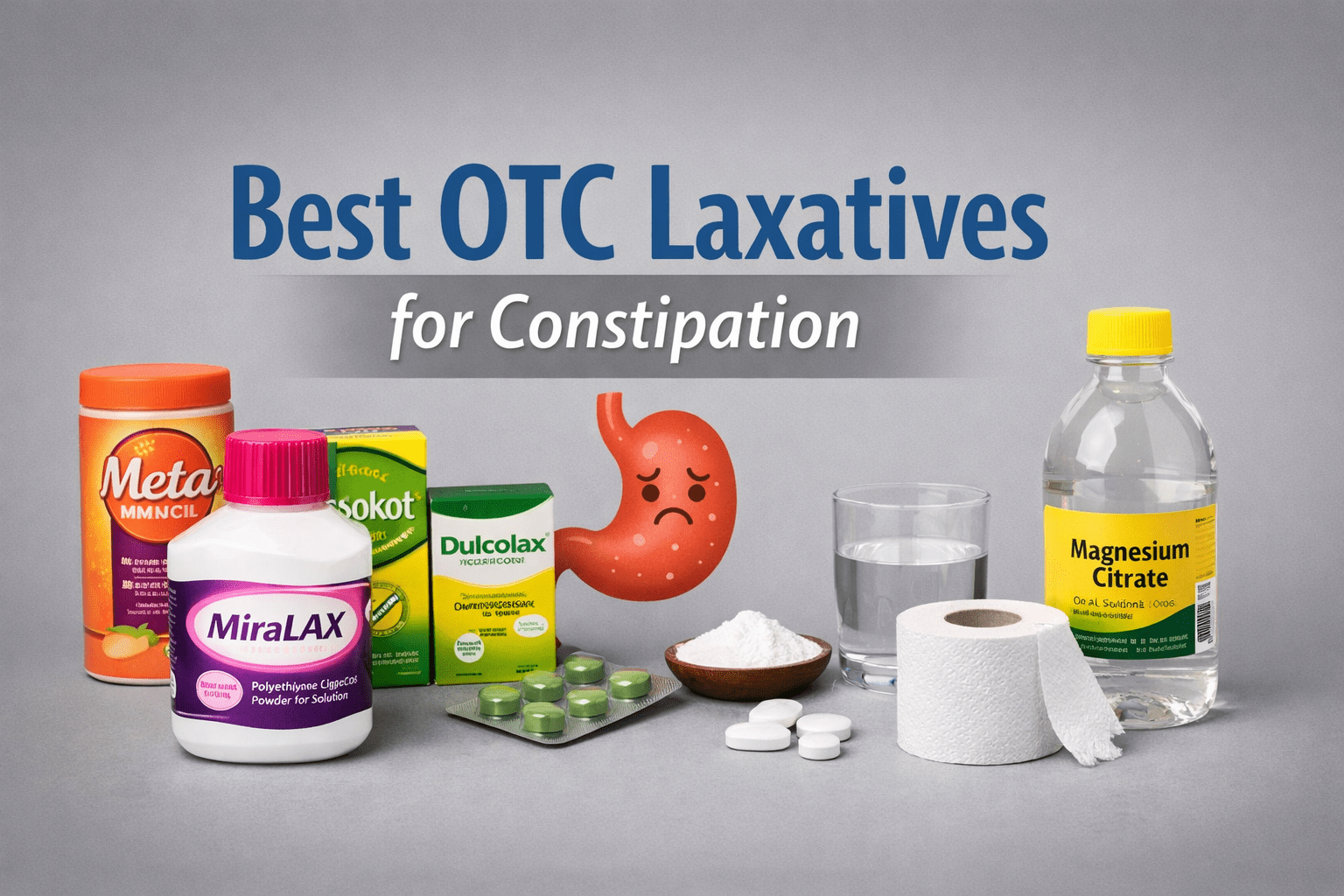
Best OTC laxatives for constipation are widely used in the United States by millions of adults seeking fast and gentle relief from digestive discomfort. Constipation is one of the most common digestive complaints in the country, affecting a large portion of the population every year. Studies suggest that between 2% and 39% of people globally experience constipation, and in the US alone, nearly 40% of patients manage the condition using over-the-counter (OTC) laxatives.
With pharmacy shelves filled with dozens of options—fiber supplements, stimulant laxatives, osmotic agents, magnesium products, and even fruit-based remedies—it can be difficult to determine which treatments actually work and which are supported by scientific evidence.
A large systematic review published in the American Journal of Gastroenterology analyzed randomized clinical trials from 2004 to 2020 to evaluate the effectiveness and safety of OTC constipation treatments. Researchers reviewed 1,297 studies, ultimately selecting 41 high-quality randomized trials to determine which therapies truly provide relief.
The findings revealed that some OTC laxatives offer strong scientific support and fast relief, while others have only moderate or limited evidence.
This article explores the best OTC laxatives for constipation relief in the US, highlighting options that are both fast-acting and gentle on the digestive system, based on clinical research.
Understanding Constipation and Why It Happens
Constipation occurs when bowel movements become infrequent, difficult, or painful. Clinically, it is often defined as having fewer than three bowel movements per week, along with symptoms such as:
-
Hard or dry stools
-
Excessive straining during bowel movements
-
Feeling of incomplete evacuation
-
Abdominal discomfort or bloating
Several factors contribute to constipation, including:
-
Low fiber intake
-
Inadequate hydration
-
Lack of physical activity
-
Certain medications
-
Hormonal changes
-
Aging
Women tend to experience constipation more often than men, and its prevalence increases significantly with age.
Beyond discomfort, chronic constipation can affect quality of life, causing fatigue, stress, and even psychological distress.
Because of these impacts, many people turn to OTC medications and supplements to find relief.
Evidence-Based best OTC Laxatives for constipation: What Research Shows
The systematic review categorized OTC constipation treatments into eight groups:
-
Osmotic laxatives
-
Stimulant laxatives
-
Fiber supplements
-
Magnesium-based laxatives
-
Fruit-based laxatives
-
Prebiotic foods
-
Surfactants (stool softeners)
-
Miscellaneous therapies
Researchers graded each treatment according to the strength of scientific evidence, using the US Preventive Services Task Force criteria.
The results showed clear differences between laxatives in terms of effectiveness.
Some options have strong clinical evidence, while others show only moderate or limited support.
1. Polyethylene Glycol (PEG): The Most Effective OTC Laxative
Among all treatments studied, polyethylene glycol (PEG) emerged as the most effective and reliable OTC laxative.
PEG is an osmotic laxative, meaning it works by drawing water into the intestines. This softens stool and stimulates bowel movements naturally.
Clinical trials showed that PEG significantly improved:
-
Stool frequency
-
Stool consistency
-
Ease of bowel movements
Compared with placebo, PEG consistently increased the number of complete spontaneous bowel movements (CSBMs) in patients with chronic constipation.
The research also found that PEG performed as well as or better than several prescription medications used to treat constipation.
Another major advantage is safety.
Because PEG is minimally absorbed by the body—less than 0.3% enters the bloodstream—it is considered very safe for most adults.
Common side effects include:
-
Mild bloating
-
Gas
-
Loose stools
However, serious adverse effects were not reported in clinical trials.
Due to its strong evidence and safety profile, PEG received a Level I evidence rating and a Grade A recommendation, making it the first-line OTC treatment for chronic constipation.
2. Senna: A Fast-Acting Stimulant Laxative
Another OTC laxative with strong scientific support is senna, a natural stimulant laxative derived from plant compounds called anthraquinones.
Unlike osmotic laxatives, stimulant laxatives work by activating nerve cells in the colon, which increases intestinal contractions and speeds up bowel movements.
Clinical trials found that senna significantly improved:
-
Weekly bowel movement frequency
-
Overall constipation symptoms
-
Patient quality of life
In placebo-controlled trials, patients using senna experienced more regular bowel movements and reduced straining compared with those taking inactive treatments.
Because of these positive outcomes, senna also received Level I evidence and a Grade A recommendation.
However, stimulant laxatives may cause gastrointestinal side effects, including:
-
Abdominal cramps
-
Diarrhea
-
Stomach discomfort
These effects are usually dose-dependent, meaning they occur more frequently with higher doses.
For occasional constipation, senna can be a fast and effective option, but many healthcare providers recommend using it for short-term relief rather than daily use.
3. Psyllium Fiber Supplements: A Gentle Natural Option
Fiber supplements are often recommended as the first lifestyle-based treatment for constipation.
Among fiber products, psyllium husk has the most research supporting its use.
Psyllium is a soluble fiber that absorbs water in the digestive tract, forming a gel-like substance that softens stool and increases stool bulk.
Clinical trials found that psyllium can:
-
Improve stool consistency
-
Increase stool frequency
-
Reduce straining
However, compared with other laxatives such as PEG or lactulose, psyllium appears less effective in direct comparisons.
Still, it remains a widely recommended treatment because it is:
-
Gentle
-
Natural
-
Safe for long-term use
Psyllium received Level II evidence and a Grade B recommendation, indicating moderate support from clinical studies.
The most common side effects are:
-
Gas
-
Bloating
-
Abdominal discomfort
These symptoms usually improve once the digestive system adjusts to increased fiber intake.
4. Magnesium-Based Laxatives
Magnesium compounds are another commonly used category of OTC laxatives.
Examples include:
-
Magnesium hydroxide (milk of magnesia)
-
Magnesium citrate
-
Magnesium oxide
These agents work by drawing water into the intestines, similar to osmotic laxatives.
Recent studies found that magnesium-based treatments can improve:
-
Stool frequency
-
Stool consistency
-
Overall constipation symptoms
However, results varied depending on the specific magnesium formulation.
For example, magnesium-rich mineral water showed improvements in stool consistency but did not significantly increase weekly bowel movements compared with placebo.
Magnesium oxide demonstrated stronger results, improving bowel movement frequency and patient-reported quality of life.
Overall, magnesium laxatives received Level I evidence and a Grade B recommendation, meaning they are supported by moderate-quality clinical trials.
Side effects may include:
-
Diarrhea
-
Abdominal discomfort
-
Bloating
Patients with kidney disease should consult a doctor before using magnesium laxatives because excessive magnesium can accumulate in the body.
5. Bisacodyl and Sodium Picosulfate
Two additional stimulant laxatives with clinical support are:
-
Bisacodyl
-
Sodium picosulfate
Both belong to a chemical group called diphenylmethane derivatives.
These medications stimulate intestinal muscles, helping the colon push stool through the digestive tract.
Clinical trials demonstrated that both drugs significantly increased complete spontaneous bowel movements per week compared with placebo.
Because of this evidence, they received Level I evidence and Grade B recommendations.
However, stimulant laxatives tend to cause more gastrointestinal side effects than fiber or osmotic laxatives.
Common reactions include:
-
Diarrhea
-
Abdominal cramps
-
Stomach pain
These medications are typically recommended for short-term relief of occasional constipation rather than continuous daily use.
6. Fruit-Based Natural Laxatives
Interestingly, research also found promising evidence supporting fruit-based laxatives.
Certain fruits naturally contain:
-
Dietary fiber
-
Sorbitol
-
Natural sugars
These compounds increase water retention in the intestines and stimulate bowel movements.
Studies evaluated several fruits, including:
-
Kiwi
-
Mango
-
Prunes
-
Figs (Ficus carica)
Among these, kiwi showed the strongest scientific evidence, improving stool frequency and stool consistency in clinical trials.
Prunes also performed well, sometimes outperforming fiber supplements like psyllium.
Fruit-based laxatives received Level I or Level II evidence and Grade B recommendations.
Because they are natural foods, these options are typically very well tolerated, with minimal side effects.
For individuals seeking a gentle and natural approach, fruit-based remedies can be an excellent option.
7. Prebiotic Foods and Functional Yogurt
Another emerging approach to constipation treatment involves prebiotic foods.
Prebiotics are nondigestible fibers that feed beneficial gut bacteria, improving gut health and digestive function.
One clinical study evaluated a yogurt containing:
-
Galacto-oligosaccharides
-
Prunes
-
Linseed oil
The results showed improvements in:
-
Stool frequency
-
Stool softness
-
Ease of bowel movements
Because of these findings, prebiotic foods received Level II evidence and Grade B recommendations.
However, more research is needed to confirm their long-term effectiveness.
8. Treatments With Insufficient Evidence
Despite widespread use, some constipation treatments lack strong scientific evidence.
These include:
-
Docusate (stool softener)
-
Inulin fiber
-
Polydextrose fiber
-
Fructo-oligosaccharides
In particular, docusate is one of the most commonly used stool softeners in the US, yet clinical trials have not shown clear benefits compared with placebo.
As a result, these treatments received insufficient evidence ratings, meaning more research is needed before they can be strongly recommended.
Safety of OTC Laxatives
Overall, the systematic review found that OTC laxatives are generally safe and well tolerated.
Most reported side effects were mild gastrointestinal symptoms such as:
-
Bloating
-
Abdominal cramps
-
Diarrhea
-
Nausea
Importantly, none of the studies reported serious adverse events.
However, experts caution that long-term or excessive use of laxatives—especially stimulant laxatives—should be avoided without medical supervision.
How to Choose the Best OTC laxatives for constipation
Choosing the right laxative depends on individual symptoms and preferences.
General recommendations include:
For gentle daily relief
-
Psyllium fiber supplements
-
Fruit-based remedies
-
Increased dietary fiber
For chronic constipation
-
Polyethylene glycol (PEG)
For fast short-term relief
-
Senna
-
Bisacodyl
-
Sodium picosulfate
For occasional constipation
-
Magnesium-based laxatives
Lifestyle changes should also accompany laxative use, including:
-
Drinking more water
-
Increasing fiber intake
-
Exercising regularly
These steps help prevent constipation from recurring.
The Future of OTC Constipation Treatments
Although many treatments are available today, researchers note that more high-quality clinical trials are needed.
Many studies in the systematic review had limitations, including:
-
Small sample sizes
-
Short trial durations
-
Different outcome measures
Future research will likely focus on standardized clinical endpoints and long-term studies to better understand how OTC laxatives perform over months or years.
Note: If you are struggling with constipation, several over-the-counter laxatives can help provide relief. Each product works in a slightly different way—some draw water into the intestines, while others stimulate bowel movements or add fiber to your diet. Choosing the right option depends on your symptoms, how quickly you need relief, and your overall digestive health.
Below is a comparison table of some of the most popular and commonly recommended laxatives. This will help you quickly understand how each product works and which one may be best for your needs.
| Product | Type | Best For | Action |
|---|---|---|---|
| MiraLAX (Polyethylene Glycol) | Osmotic Laxative | Chronic Constipation | Check |
| Senokot (Senna) | Stimulant Laxative | Natural Relief | Check |
| Dulcolax (Bisacodyl) | Stimulant Laxative | Fast Acting Relief | Check |
| Metamucil (Psyllium Fiber) | Fiber Supplement | Daily Digestive Support | Check |
| Phillips Milk of Magnesia | Magnesium Laxative | Gentle Overnight Relief | Check |
| Magnesium Citrate | Saline Laxative | Strong Short-Term Relief | Check |
What is the best natural laxative for constipation?
Fiber supplements such as psyllium (Metamucil) are considered one of the best natural options. Fruit-based remedies like prunes and kiwi may also help improve bowel movements.
How long do OTC laxatives take to work?
The time varies depending on the type of laxative:
-
Osmotic laxatives: 24–72 hours
-
Stimulant laxatives: 6–12 hours
-
Magnesium laxatives: 30 minutes to 6 hours
-
Fiber supplements: 12–72 hours
When should you see a doctor for constipation?
You should consult a healthcare provider if:
-
Constipation lasts more than 3 weeks
-
There is blood in the stool
-
Severe abdominal pain occurs
-
OTC laxatives do not provide relief
Conclusion
Constipation remains a widespread digestive issue affecting millions of Americans each year.
While numerous OTC treatments are available, scientific evidence shows that some options are far more effective than others.
According to current research, the most evidence-based OTC laxatives include:
-
Polyethylene glycol (PEG) – strongest evidence and first-line treatment
-
Senna – fast-acting stimulant laxative
-
Psyllium fiber – gentle, natural fiber supplement
-
Magnesium-based laxatives – effective osmotic agents
-
Bisacodyl and sodium picosulfate – stimulant laxatives for short-term relief
Natural options such as kiwi, prunes, and mango also show promising results.
For individuals experiencing persistent constipation, starting with fiber supplements or PEG and combining them with healthy lifestyle changes may provide the best balance of effectiveness and safety.
As research continues, new therapies may further improve treatment options for one of the most common digestive problems worldwide.
Disclosure: The information on this website is for educational and informational purposes only and is not a substitute for professional medical advice. Some links on this site are affiliate links through which we may earn a commission.
Read more on our website:








[…] Best OTC Laxatives for Constipation in the US […]
[…] cause cramping, urgency, or dependency. If you’re looking for other options, check out our Complete Guide to the Best OTC Laxatives for Constipation → Magnesium supplements offer a gentler, more natural alternative — and the science behind it is […]
[…] leads to dependency, electrolyte imbalances, and bowel laziness. If you’ve already explored best OTC laxatives for constipation and found them unsatisfying for long-term use, you are not alone. This is exactly why more and more […]