

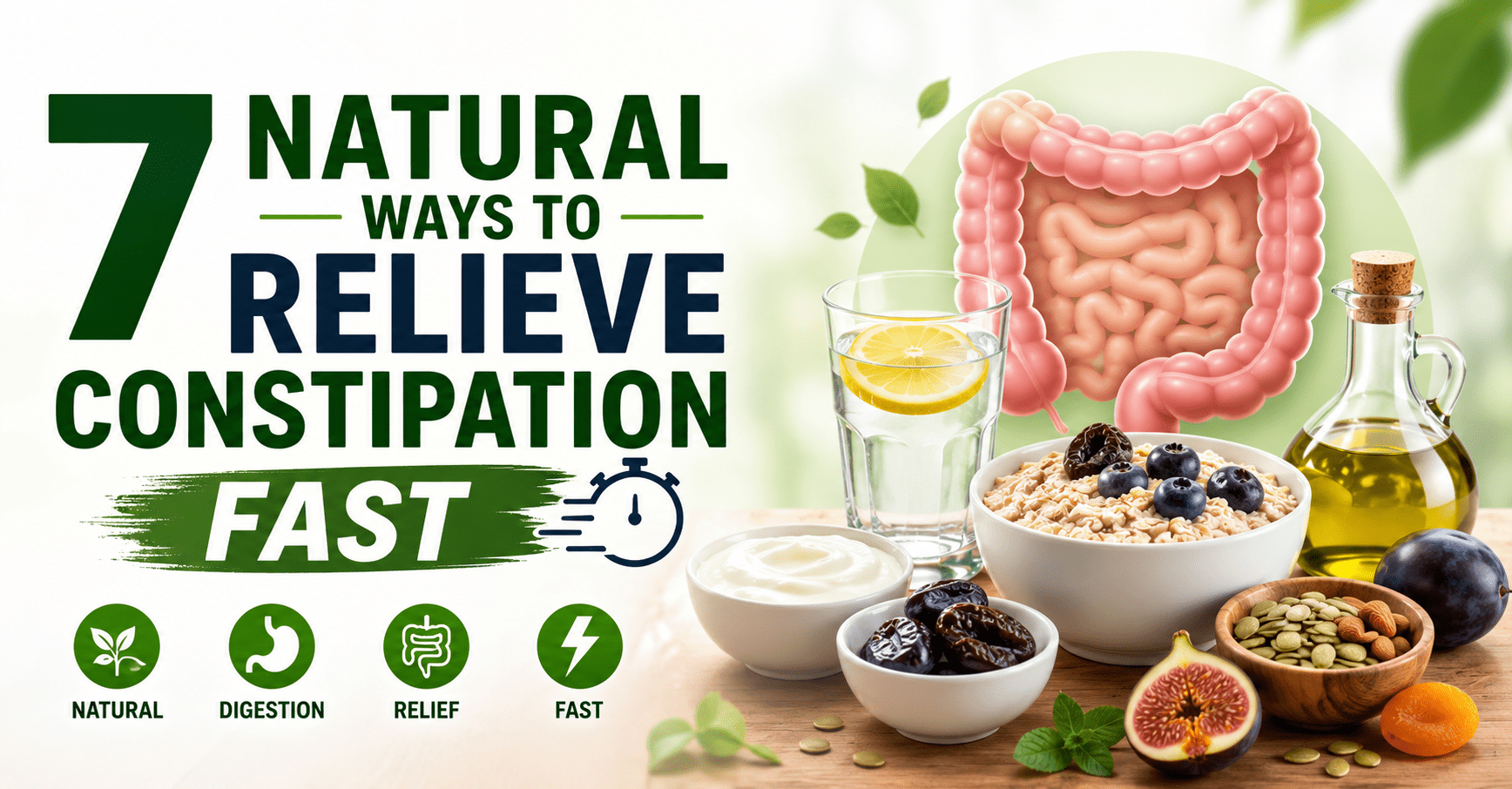
Struggling with constipation? You are not alone. According to population-based estimates cited by the American Gastroenterological Association, constipation affects approximately 16% of adults in the United States — and up to 33% of adults over age 60.
If you are searching for natural ways to relieve constipation fast, several evidence-based lifestyle strategies may help support bowel regularity naturally. Simple habits like increasing soluble fiber, staying hydrated, eating probiotic-rich foods, and moving your body regularly may improve stool consistency and support healthier gut motility over time.
This guide covers seven science-backed natural remedies for constipation — including fiber, hydration, probiotics, magnesium-rich foods, movement, healthy fats, and herbal teas. Each approach is explained in plain language so you can take practical action today. Individual results vary, and persistent or severe constipation should be evaluated by a healthcare professional.
1. Fiber-Rich Foods — Focus on Soluble Fiber First
When it comes to foods that may help relieve occasional constipation, the type of fiber matters just as much as the total amount. For most people, soluble fiber is the better starting point.
What Is Soluble Fiber and Why Does It Help?
Soluble fiber dissolves in water and forms a thick, gel-like substance inside the intestines. This gel may soften stool and help retain moisture in the colon throughout the digestive process — making stool easier to pass without straining.
Insoluble fiber adds bulk to stool, which is also beneficial, but it requires adequate water intake to work properly. Without enough fluid, insoluble fiber may worsen constipation.
Best Soluble Fiber Foods for Constipation
Psyllium husk is one of the most studied fiber sources for constipation. The 2023 AGA-ACG Clinical Practice Guideline supports psyllium as a first-line fiber option for constipation, noting it may help increase spontaneous bowel movements and support overall symptom relief. (DOI: 10.1053/j.gastro.2023.01.017)
Other excellent soluble fiber foods include:
- Oats — Rich in beta-glucan, a soluble fiber with strong gut health evidence. Start with ½ cup of rolled oats daily.
- Apples and pears — Contain pectin, a soluble fiber that may also act as a prebiotic, feeding beneficial gut bacteria.
- Beans and lentils — High in both soluble fiber and magnesium.
- Ground flaxseeds — Add 1–2 tablespoons to yogurt or oatmeal. Grinding releases the beneficial compounds.
- Prunes and dried figs — Prunes contain fiber plus sorbitol, a natural sugar alcohol with a well-established mild laxative effect.
How much fiber do you need? The USDA recommends 25 g/day for women and 38 g/day for men. Most Americans consume less than half that. Increase intake gradually — a sudden jump can temporarily cause bloating and gas — and always pair higher fiber intake with adequate water.
2. Hydration — The Importance of Water (and Warm Water)
Dehydration is one of the most common and overlooked causes of constipation. When the body is short on fluids, the colon pulls water from stool — leaving behind hard, dry waste that is difficult to pass. Staying consistently hydrated is one of the simplest things you can do to support regular bowel movements.
How Much Water Do You Need?
Most adults need at least 8 cups (64 oz) of water per day, and more if physically active. A simple check: urine should be pale yellow. Dark yellow is a clear sign you need more fluids.
Does Warm Water Help?
Warm water may help stimulate bowel activity in some individuals. A 2016 randomized controlled study found that patients who drank warm water postoperatively experienced significantly faster return of bowel movements compared to controls. (PubMed: PMID 27684632)
Drinking 1–2 cups of warm water first thing in the morning, before coffee or food, is a simple habit many people find helpful. A squeeze of lemon may add a mild digestive benefit through its citric acid content. Other hydrating options include herbal teas (peppermint, ginger — covered below), broth-based soups, and water-rich fruits like watermelon and cucumbers.

3. Probiotics — Yogurt and Fermented Foods for a Healthier Gut
Your gut contains trillions of bacteria — the gut microbiome. When the balance of these bacteria is disrupted, constipation is a common result. Probiotics — live beneficial bacteria — may help restore that balance and support more regular bowel movements.
What the Research Shows
A 2014 meta-analysis published in the American Journal of Clinical Nutrition reviewed 14 randomized controlled trials (1,182 patients total) and found that probiotics increased stool frequency by an average of 1.3 bowel movements per week and reduced gut transit time by approximately 12.4 hours. The effect was most pronounced for Bifidobacterium lactis. (PubMed: PMID 24780623)
Other strains with solid evidence include Lactobacillus reuteri (for reducing transit time) and Lactobacillus acidophilus (for overall digestive support).
Natural Food Sources of Probiotics
- Plain yogurt — Choose varieties labeled “live and active cultures.” Avoid high-sugar flavored versions. If dairy worsens your symptoms, consider kefir or a non-dairy fermented alternative instead.
- Kefir — A fermented milk drink with a wide variety of probiotic strains; often well-tolerated by people with mild lactose sensitivity due to its lower lactose content.
- Sauerkraut and kimchi — Choose refrigerated, unpasteurized varieties to ensure live cultures are preserved.
- Miso — A fermented soybean paste. Add after cooking to protect live cultures from heat.
- Tempeh — Fermented soybeans with firm texture; also a good source of protein and fiber.
Aim for at least one fermented food daily. If you prefer a supplement, look for at least 10 billion CFU with multiple strains, taken consistently over several weeks.
For a deeper look at which strains have the strongest evidence, see our guide on Best Probiotic Strains for Constipation and Bloating, and our focused review on Does L. Reuteri Help with Constipation and Bloating.

4. Magnesium-Rich Foods — A Mineral That Supports Bowel Regularity
Magnesium plays a key role in bowel regularity. It may help draw water into the intestines, softening stool and making it easier to pass — which is why magnesium citrate is used in several over-the-counter laxative products. Getting more magnesium through food is a gentler, sustainable approach.
Best Magnesium-Rich Foods for Bowel Health
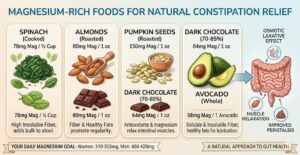
Spinach and dark leafy greens — One cup of cooked spinach provides approximately 157 mg of magnesium (about 37% of the daily recommended intake for adult men; approximately 49% for adult women). It also provides fiber and water, which may further support bowel regularity. Kale, Swiss chard, and collard greens are similarly effective.
Dark chocolate (70% cacao or higher) — A 1-ounce (28 g) serving contains approximately 64 mg of magnesium, plus small amounts of fiber. One to two squares per day is a reasonable amount.
Other magnesium-rich foods:
- Pumpkin seeds — approximately 168 mg per ounce
- Almonds — approximately 80 mg per ounce
- Black beans — approximately 60 mg per half cup
- Avocado — approximately 58 mg per whole fruit
- Bananas — approximately 32 mg per medium banana
The research: A 2021 population-based study using NHANES data found that higher dietary magnesium intake was inversely associated with prevalence of chronic constipation among U.S. adults. (PubMed: PMID 34925793)
Important safety note: If you are considering a magnesium supplement, speak with your doctor first — especially if you have kidney disease. Impaired kidneys cannot clear magnesium efficiently, and supplementation can be unsafe in that context.
If you are considering supplementation, see our guide to Best Magnesium Supplements for Constipation — comparing forms, dosages, and what the research shows.
5. Physical Movement — Walking, Stretching, and Yoga
A sedentary lifestyle is strongly associated with chronic constipation. Physical activity may stimulate the colon’s muscular contractions, which can support movement of stool through the digestive tract more efficiently. Even a 10–15 minute walk after meals may meaningfully support gut transit time — no gym required.
Yoga Poses That May Support Constipation Relief
Certain yoga postures apply gentle pressure to the abdomen and may help stimulate intestinal movement. Research published in Alimentary Pharmacology & Therapeutics found that yoga may improve constipation-related symptoms in patients with IBS-C. These benefits are most consistently observed for constipation linked to stress or poor gut motility.
Postures worth trying:
- Wind-Relieving Pose (Pawanmuktasana) — Lie on your back and pull both knees to your chest. Hold for 20–30 seconds. This gently compresses the colon.
- Seated Twist (Ardha Matsyendrasana) — Spinal twists apply gentle massage-like pressure to the abdominal organs.
- Child’s Pose (Balasana) — Gently compresses the abdomen and relaxes the pelvic floor muscles, which are often tense in people with constipation.
- Cat-Cow Pose (Marjaryasana-Bitilasana) — Rhythmic spinal movement may increase blood flow to the digestive area.
- Squat Pose (Malasana) — Replicates the natural squatting position, which straightens the anorectal angle and may support easier elimination.
For step-by-step instructions on each pose and additional variations, see our dedicated guide on yoga poses for constipation relief.
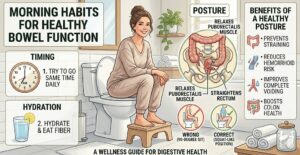
Toilet Posture: A Simple Evidence-Based Tip
Research shows that raising your knees above hip level while sitting on a standard toilet — using a small footstool — may reduce straining and improve the anorectal angle. This simple change is supported by clinical research and may provide meaningful comfort for many people.

6. Healthy Fats — Olive Oil for Digestive Support
Certain healthy fats may act as natural lubricants for the digestive tract, potentially supporting smoother stool passage. Extra-virgin olive oil has the most clinical evidence among dietary fats for this purpose.
Olive Oil for Constipation
Olive oil may help stimulate bile release from the gallbladder, which may support smoother stool passage and bowel regularity. It also has anti-inflammatory properties that may benefit the intestinal lining.
A 2015 randomized controlled trial in the Journal of Renal Nutrition found that olive oil was as effective as mineral oil in relieving constipation in hemodialysis patients — without mineral oil’s side effects. The study used approximately 4 ml (1 teaspoon) daily, escalated as needed. (PubMed: PMID 25238699)
How to use it: Try 1 teaspoon to 1 tablespoon of extra-virgin olive oil in the morning — mixed into oatmeal, drizzled over vegetables, or taken on its own. Warm water and olive oil together may support smoother stool passage in some individuals, especially when combined with adequate hydration and fiber. For a full breakdown of dosage, timing, and what clinical studies show, see our detailed guide: Olive Oil for Constipation: How It Works. Individual responses vary.
Other fats that may support digestive health include avocado (fiber and healthy fats), ground flaxseed (omega-3s and soluble fiber), and MCT oil (may support gut motility; start with 1 teaspoon to assess tolerance).
A note on castor oil: Castor oil is a stronger stimulant laxative that typically works within 2–6 hours. However, it carries meaningful risks with misuse: repeated use can cause laxative dependency, dehydration, and electrolyte imbalance. It should not be used regularly, and is not appropriate for the elderly without medical supervision, for people with bowel obstruction or inflammatory bowel disease, or during pregnancy (it can stimulate uterine contractions). Use only occasionally and ideally with guidance from a healthcare provider.

7. Natural Herbs — Peppermint Tea and Ginger Tea
Several herbal teas have long been used for digestive discomfort, and modern research has begun to validate some of these traditional uses. Their effects are generally moderate and most beneficial for constipation linked to cramping, bloating, or stress — rather than structural or severe constipation.
Peppermint Tea
Peppermint contains menthol, which may help relax smooth muscles of the gastrointestinal tract. This makes it particularly useful for easing bloating and abdominal discomfort associated with constipation — especially when symptoms overlap with IBS.
It is worth noting that most clinical research on peppermint uses enteric-coated oil capsules, not tea. Tea delivers menthol in a milder, less concentrated form. A 2019 meta-analysis (Alammar et al., BMC Complementary and Alternative Medicine) found that peppermint oil was associated with significantly reduced global IBS symptoms and abdominal pain compared to placebo across 12 randomized controlled trials. (PMC: PMC6337770)
How to use it: Brew 1–2 cups after meals. Avoid peppermint entirely if you have acid reflux or GERD — menthol can relax the lower esophageal sphincter and worsen reflux.
Ginger Tea
Ginger contains gingerols and shogaols — bioactive compounds that may support overall digestive movement and stomach emptying. A 2008 randomized double-blind trial found that ginger accelerated gastric emptying by approximately 25% compared to placebo in healthy volunteers. (PubMed: PMID 18403946)
Note: Gastric emptying (stomach to small intestine) is not the same as colonic motility, so ginger’s effect on constipation itself may be more indirect than its impact on upper digestive symptoms like nausea and bloating. That said, improving overall digestive movement may contribute to better regularity over time.
How to use it: Steep a 1-inch slice of fresh ginger root in hot water for 5–10 minutes. Add honey if desired. Generally considered safe for daily use.
Other Herbal Options
- Senna tea — A stimulant laxative herb with well-established short-term efficacy. Not recommended for regular daily use due to risk of dependency and electrolyte loss with prolonged use.
- Chamomile tea — May soothe intestinal spasms and mild inflammation. A good evening option, especially for stress-related digestive discomfort.
- Dandelion root tea — May act as a mild digestive stimulant and may support beneficial gut bacteria as a prebiotic.
- Deglycyrrhizinated licorice (DGL) — May soothe the gut lining and ease digestive discomfort, but does not act as a direct laxative. Non-DGL (whole licorice root) should only be used short-term, as its glycyrrhizin content can raise blood pressure with prolonged use.
The herbal options above work best as complements to dietary changes — not as standalone remedies for chronic constipation.

Bonus Habits That Support Better Bowel Regularity
Beyond the seven natural ways to relieve constipation fast covered above, these additional evidence-based habits are easy to build into a daily routine:
Establish a regular toilet schedule. The gastrocolic reflex — your colon’s natural response to eating — is strongest 20–30 minutes after breakfast. Sitting on the toilet at the same time each morning, even without a strong urge, may help train consistent regularity over time.
Do not ignore the urge to defecate. Repeatedly suppressing the defecation urge can weaken rectal muscle tone over time and contribute to chronic constipation. When the urge arrives, respond to it promptly.
Reduce processed food intake. Processed foods are typically low in fiber and high in refined carbohydrates — both of which may slow gut motility. Replacing them with whole grains, fruits, and vegetables may support noticeable improvements in regularity within a few days.
Manage stress. There is a well-established connection between the brain and the gut — often called the gut-brain axis. Ongoing stress may slow digestion by shifting the body into a fight-or-flight state, which deprioritizes normal bowel function. Regular sleep, light daily movement, and mindfulness practices may all support healthier digestion by reducing this response.
For readers looking for age-specific guidance, you can find evidence-based approaches for safe, immediate constipation relief strategies for elderly adults at home.
When to See a Doctor
Most occasional constipation responds well to the dietary and lifestyle changes described above. However, some symptoms warrant prompt medical evaluation. See a doctor if you experience any of the following:
- Blood in your stool — this should always be evaluated, regardless of other symptoms
- Unexplained weight loss — especially when combined with changes in bowel habits
- Constipation lasting more than 3 weeks that does not improve with dietary changes
- Severe or worsening abdominal pain
- New constipation in adults over 50 — a change in bowel habits at this age should be discussed with a physician
- Constipation alternating with diarrhea — this pattern may indicate conditions like IBS or, rarely, colorectal disease, and warrants medical assessment
These symptoms do not necessarily indicate a serious condition, but they deserve professional assessment rather than self-treatment alone.

Frequently Asked Questions (FAQ)
What are the most effective natural ways to relieve constipation fast?
Several science-backed strategies may help improve bowel regularity naturally: increasing soluble fiber (psyllium husk, oats, prunes), staying well hydrated, eating probiotic-rich foods, getting adequate magnesium, and doing gentle movement like walking or yoga. Warm water and olive oil may also help when combined with consistent hydration and fiber. Results vary; persistent constipation should be evaluated by a doctor.
Does warm water really help constipation?
Warm water may help stimulate bowel activity, especially on an empty stomach in the morning. A clinical study found it supported faster return of bowel function after surgery. That said, consistent overall hydration — with any fluid — remains the most important factor. Warm water is a helpful addition, not a guaranteed remedy.
Which fiber is better for constipation — soluble or insoluble?
Both may be beneficial, but soluble fiber — found in psyllium husk, oats, apples, and beans — is generally more effective for softening stool. It absorbs water to form a soft gel that makes stool easier to pass. Insoluble fiber adds bulk but must be paired with adequate water intake to avoid worsening symptoms.
Can probiotics help with constipation?
Yes. A 2014 meta-analysis of 14 randomized controlled trials found probiotics increased stool frequency by about 1.3 bowel movements per week and reduced gut transit time by 12.4 hours. Bifidobacterium lactis showed the strongest effect. Practical daily sources include plain yogurt, kefir, and fermented vegetables.
Is peppermint tea good for constipation?
Peppermint tea may reduce bloating and abdominal discomfort linked to constipation, especially when symptoms relate to IBS or stress. It is not a direct laxative. Most clinical research used concentrated peppermint oil capsules rather than tea. Avoid peppermint entirely if you have acid reflux or GERD.
How long does it take for natural remedies to work?
Warm water or olive oil may show results within hours for some people. Increasing dietary fiber typically takes 2–4 days. Probiotics generally require 1–3 weeks of consistent use. Building sustainable daily habits tends to produce better long-term outcomes than relying on any single intervention.
The Bottom Line
These natural ways to relieve constipation fast tend to work best when used consistently and in combination. Soluble fiber, consistent hydration, fermented foods, magnesium, daily movement, healthy fats, and calming herbal teas are all practical, evidence-informed starting points.
Begin with the simplest steps: warm water each morning, one fiber-rich food at lunch, and a short walk after dinner. Small, consistent changes add up over time. If symptoms do not improve within a few weeks — or if any warning signs listed above are present — consult a healthcare professional.
For deeper reading, explore our guides on Olive Oil for Constipation, Best Probiotic Strains for Constipation and Bloating, and Best Magnesium Supplements for Constipation.
References
- American Gastroenterological Association.
Bharucha AE, Dorn SD, Lembo A, Pressman A. American Gastroenterological Association Medical Position Statement on Constipation. Gastroenterology. 2013;144(1):211–217.
AGA Guideline Overview - Camilleri M, et al.
AGA Clinical Practice Guideline on the Pharmacological Management of Chronic Idiopathic Constipation. Gastroenterology. 2023.
DOI: 10.1053/j.gastro.2023.01.017
DOI Link - Suares NC, Ford AC.
Prevalence of, and Risk Factors for, Chronic Idiopathic Constipation in the Community. American Journal of Gastroenterology. 2011;106(9):1582–1591.
PubMed Reference - Niv E, et al.
Warm Water Intake Following Abdominal Surgery: A Randomized Controlled Trial. Gastroenterology Nursing. 2016.
PubMed PMID: 27684632
PubMed Article - Dimidi E, et al.
The Effect of Probiotics on Functional Constipation in Adults: A Systematic Review and Meta-Analysis of Randomized Controlled Trials. American Journal of Clinical Nutrition. 2014;100(4):1075–1084.
PubMed PMID: 24780623
PubMed Article - Moshfegh M, et al.
Dietary Magnesium Intake and Chronic Constipation: Analysis of NHANES Data. 2021.
PubMed PMID: 34925793
PubMed Article - Vanhauwaert E, et al.
Olive Oil Versus Mineral Oil for Constipation Relief in Hemodialysis Patients: A Randomized Controlled Trial. Journal of Renal Nutrition. 2015.
PubMed PMID: 25238699
PubMed Article - Alammar N, et al.
The Impact of Peppermint Oil on Irritable Bowel Syndrome: A Meta-Analysis of the Pooled Clinical Data. BMC Complementary and Alternative Medicine. 2019.
PMC ID: PMC6337770
PMC Full Text - Wu KL, et al.
Effects of Ginger on Gastric Emptying and Motility in Healthy Humans. European Journal of Gastroenterology & Hepatology. 2008;20(5):436–440.
PubMed PMID: 18403946
PubMed Article - United States Department of Agriculture (USDA).
Dietary Fiber Recommendations for Adults.
USDA Dietary Guidelines - National Institutes of Health Office of Dietary Supplements.
Magnesium Fact Sheet for Health Professionals.
NIH Magnesium Fact Sheet
Editorial & Medical Integrity: This article was written and reviewed for factual accuracy and clinical relevance. All referenced studies are linked directly to their original sources and include peer-reviewed clinical trials, systematic reviews, meta-analyses indexed on PubMed, and American Gastroenterological Association (AGA) clinical practice guidelines. It is for informational purposes only and does not constitute medical advice. Always consult a qualified healthcare provider before starting any new health regimen, particularly if you have an existing medical condition.






[…] or prune juice — prunes and prune juice are widely used natural constipation remedies and have been studied in clinical settings. They contain sorbitol, a naturally occurring sugar […]
[…] use alongside adequate hydration, it may be worth broadening your approach. Our guide on natural ways to relieve constipation fast covers seven evidence-backed strategies to layer in. And for long-standing constipation, our […]