

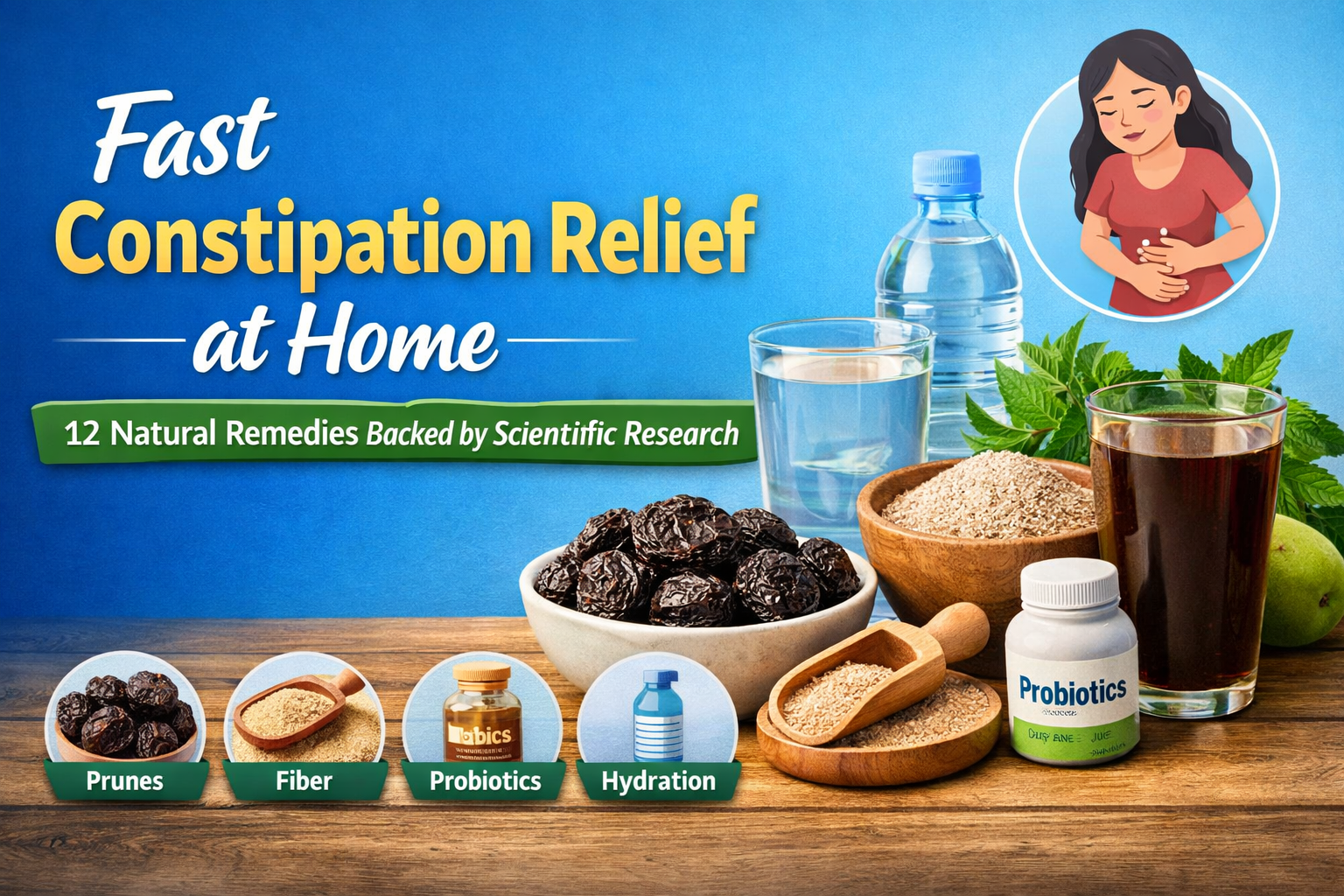
Fast constipation relief at home is something a lot of people go looking for, and it’s a bigger problem than most realize, affecting an estimated 10 to 16 percent of adults worldwide depending on which criteria you use to define it. The good news is that a handful of simple, well studied habits, prunes, fiber, probiotics, and just drinking enough water, can meaningfully improve bowel movements without needing prescription medication. Here are 12 remedies with real evidence behind them, along with the doses used in the actual studies.
Understanding Constipation
The Mayo Clinic defines constipation as having fewer than three bowel movements a week, along with at least one of the following: hard, dry, or lumpy stools, straining or pain when going, a feeling that you haven’t fully emptied your bowels, or needing manual help to pass stool.
When these symptoms stick around for three months or longer, it’s considered chronic. It’s usually driven by a mix of things: too little fiber, not drinking enough, sitting too much, an imbalanced gut microbiome, or certain medications, especially opioids and iron supplements. If you want a deeper dive into treatment, including when prescription medication makes sense, our guide to science backed chronic constipation strategies covers that.
Most of the remedies on this list come back to one basic mechanism: when stool moves too slowly through the colon, the colon keeps pulling water out of it, and it ends up hard and dry. That’s why staying hydrated underlies nearly everything else here, and we go into more detail on that connection in how dehydration causes constipation.
12 Fast Constipation Relief Remedies Backed by Research
1. Prunes (Dried Plums)
Prunes are probably the best studied natural laxative there is. In one trial that compared them head to head with psyllium fiber, prunes actually did better at improving stool frequency and consistency in adults with chronic constipation, particularly for mild to moderate cases. If you’re weighing the two, our psyllium vs. wheat bran article covers the comparison in more depth.
Part of why prunes work so well is that they hit the problem from several angles at once. They’re a good source of dietary fiber, which adds bulk and gets peristalsis going. They contain sorbitol, a sugar alcohol that pulls water into the colon through osmosis. They also have a compound called dihydroxyphenyl isatin that directly stimulates intestinal contractions, plus polyphenols that feed beneficial gut bacteria like Bifidobacteria. According to current USDA data, dried prunes have about 7.1g of fiber per 100g.
The dose used in the research is 50g twice a day (100g total), roughly 8 to 10 prunes. Most people see improvement within about three weeks of sticking with it. If you’d rather drink it than eat it, our prune juice for constipation relief guide walks through that option.
2. Psyllium Husk (Isabgol)
A meta-analysis pooling 16 randomized trials found that psyllium reliably improves constipation, with the clearest results at doses above 10g a day taken for at least four weeks. A 2023 clinical guideline also concluded that fiber supplements, psyllium especially, can serve as a first line treatment for chronic idiopathic constipation, particularly if your diet is naturally low in fiber.
Worth knowing though, that’s a conditional recommendation based on lower certainty evidence, not a strong one. The only laxative in that guideline to get a strong recommendation was polyethylene glycol (PEG).
Psyllium itself is a soluble, bulk forming fiber. It soaks up water in the gut and turns into a gel that softens stool, adds bulk, and gets things moving, without the dependency risk that comes with stimulant laxatives. Our psyllium husk vs. wheat bran piece has a fuller breakdown against other fiber sources.
Aim for more than 10 grams a day, typically 10 to 15g, split into two doses, and always take each dose with a full glass of water, at least 250 ml. This part matters: without enough fluid, psyllium can make constipation worse or even become a choking hazard.
3. Kiwifruit
A 2024 review and meta-analysis found that eating kiwifruit regularly significantly boosts bowel movement frequency in people with chronic constipation, and in some studies it holds up about as well as psyllium.
A few things make kiwi effective. It contains actinidin, an enzyme that speeds up gastric emptying and helps with protein digestion. Each fruit has around 3g of soluble fiber, which forms a gel that softens stool, and it’s roughly 83 percent water, which helps hydrate the colon directly.
The dose used in studies is two green kiwifruits a day, skin included if you can manage it, since the skin adds extra fiber. Give it about four weeks to notice a real change in stool consistency.
4. Prune Juice
Like whole prunes, the juice works through its sorbitol and pectin content, pulling water into the intestines osmotically and stimulating contractions in the colon. Taken on an empty stomach, most people feel something within 1 to 6 hours. For more on timing and tips, see our prune juice for constipation guide.
The typical amount is 120 to 240 ml, half to one cup, ideally first thing in the morning before breakfast. Warming it slightly may help boost the gastrocolic reflex too.
5. Magnesium Rich Mineral Water
A randomized, double blind, placebo controlled trial found that drinking 500 ml a day of mineral water rich in magnesium sulphate and sodium sulphate meaningfully improved stool consistency and constipation symptoms over six weeks. Interestingly, the lower dose group in that same trial, 300 ml a day, was actually dropped partway through for lack of effect, so 500 ml seems to be the amount that actually works. Our guide on the best magnesium supplements for constipation covers supplement alternatives if mineral water isn’t practical.
Magnesium works as a natural osmotic agent, drawing water into the gut to soften stool and stimulate the colon’s muscle contractions, while the sulfate helps stimulate bile and digestive enzymes.
Look for water with at least 50 mg of magnesium per liter, and drink 500 ml daily. One caution worth repeating: too much magnesium can cause diarrhea, nausea, or an electrolyte imbalance, so anyone with kidney disease should check with a doctor before increasing magnesium intake in any form.
6. Prebiotics (Fructooligosaccharides, or FOS)
A 2024 meta-analysis covering 17 randomized trials and 713 participants found that FOS increased stool frequency, softened stool, and reduced straining in people with functional constipation, though mild bloating showed up as a fairly common side effect. The researchers were cautiously optimistic but said more rigorous trials are needed before locking in firm dosage advice.
Prebiotics themselves are fibers your body can’t digest, but your gut bacteria can. As Bifidobacteria and Lactobacillus ferment them, they produce short chain fatty acids that pull more water into the colon and get things moving. Our article on chronic constipation and probiotic relief goes into how prebiotics and probiotics work together.
Studies used 5 to 10 grams of FOS a day. You can also get prebiotics naturally from bananas, garlic, onions, asparagus, leeks, and whole grain oats, though it’s a good idea to introduce them gradually so you don’t end up gassy or bloated.
7. Probiotics
Several trials show that specific probiotic strains help with both stool frequency and constipation symptoms generally. One meta-analysis found probiotics increased weekly bowel movements by an average of 1.3 times, with Bifidobacterium lactis showing the strongest benefit. Our probiotics for chronic constipation article breaks down how to pick a strain.
| Strain | Primary Effect | Evidence |
|---|---|---|
| Bifidobacterium lactis | Reduces transit time, improves stool frequency | Strong, multiple RCTs |
| Lactobacillus rhamnosus GG | Reduces gut inflammation, supports immune function | Strong, most studied strain |
| Lactobacillus acidophilus | Improves nutrient absorption, strengthens gut barrier | Moderate |
| Bifidobacterium infantis | Reduces bloating and gas | Moderate |
The typical dose is 1 to 10 billion CFU a day, and it usually takes two to four weeks before you notice a real difference. Pairing probiotics with prebiotic foods tends to help even more.
8. A High Fiber Diet
This one’s backed by a huge amount of research overall: more fiber means better stool bulk, faster transit, and more regular bowel movements. Soluble fiber works by absorbing water in the colon, while insoluble fiber adds bulk mechanically to speed things along. If you’re already eating more fiber and not seeing results, our piece on why fiber isn’t working for your constipation walks through the common reasons why, and fiber foods and gut health has plant based ideas for getting there.
Here’s what current dietary guidelines recommend by group:
| Group | Daily Fiber Target |
|---|---|
| Women aged 19 to 50 | 25 grams |
| Men aged 19 to 50 | 38 grams |
| Women over 50 | 21 grams |
| Men over 50 | 30 grams |
Some easy high fiber choices: chia seeds (10g per 2 tbsp), lentils (8g per half cup), black beans (7.5g per half cup), avocado (5g per half fruit), and broccoli (5g per cup).
9. Hydration
Not drinking enough is probably the single most common, and most fixable, cause of constipation. When your fluid intake is too low, the colon pulls more water out of your stool, leaving it hard and dry. Our article on does dehydration cause constipation covers this connection in more detail.
For total daily fluid, including what you get from food, the general recommendation is about 2.7 litres (91 oz) for women and 3.7 litres (125 oz) for men. If you’re just counting plain drinking water, most adults land somewhere around 2 to 3 litres a day, depending on body size, activity, and climate.
Warm drinks in particular, like warm water with lemon or ginger tea, tend to help in the morning because they trigger the gastrocolic reflex, often prompting a bowel movement within 20 to 30 minutes.
10. Physical Activity
Exercise has a real, measurable effect here too. Research shows it improves both stool frequency and gut transit time, and a sedentary lifestyle is consistently linked to slower digestion. Our yoga for constipation relief guide covers poses that specifically target the colon.
A brisk 20 to 30 minute walk most days of the week (aim for at least 5) is a solid baseline. Yoga poses like knees to chest or a seated twist gently massage and compress the colon, and cycling or swimming are good low impact options if you’ve got joint issues. One easy habit worth adopting: a 10 minute walk after meals is one of the simplest ways to trigger the gastrocolic reflex, and it often leads to a bowel movement within 30 to 60 minutes.
11. Morning Routine and the Gastrocolic Reflex
The gastrocolic reflex is a well documented response where your colon becomes more active after you eat or drink, especially in the morning. It’s strongest right after your first meal of the day, which makes that window your best shot at a smooth bowel movement.
A few habits that help take advantage of it: drink a glass of warm water as soon as you wake up, before coffee or food. Try to eat a fiber rich breakfast within 30 to 60 minutes of waking. Give yourself 15 to 20 unhurried minutes for the bathroom after breakfast. And try not to hold it in when you feel the urge, since doing that repeatedly actually weakens the reflex over time.
Posture matters too. Propping your feet up on a footstool about 6 to 9 inches high while you’re on the toilet mimics a natural squat, which straightens out the anorectal angle and reduces straining. Studies on this squatting position consistently show real benefits, like shorter time on the toilet and less straining, even if the exact size of the improvement varies between studies.
12. A Balanced, Gut Friendly Diet for the Long Run
A large systematic review pulled together the foods with the strongest evidence for constipation, and kiwifruit, prunes, rye bread, and high mineral water all came out on top. If you want to go further and build your whole diet around this, our plant based diet for constipation relief guide is a good starting point.
| Food | Evidence Level | Mechanism |
|---|---|---|
| Kiwifruit | Strong (multiple RCTs) | Actinidin enzyme plus fiber |
| Prunes / prune juice | Strong (multiple RCTs) | Sorbitol plus dihydroxyphenyl isatin |
| Rye bread | Moderate | High insoluble fiber plus lactic acid bacteria |
| Psyllium rich foods | Strong (conditional guideline recommendation) | Soluble bulk forming fiber |
| Fermented foods (yogurt, kefir) | Moderate | Live probiotic cultures |
| Legumes (lentils, beans) | Moderate | High fiber plus prebiotic effect |
Put these foods together with enough water and regular movement, and you’re addressing the root cause rather than just chasing symptoms. If diet alone isn’t cutting it, our best OTC laxatives for constipation guide covers what’s available without a prescription.
When to Seek Medical Advice
Some symptoms mean it’s time to stop self treating and see a doctor: blood in or on the stool, whether bright red or dark and tarry, unexplained weight loss, severe or worsening abdominal pain, constipation that’s lasted more than 3 weeks despite changing your diet, new constipation showing up for the first time after age 50 (this warrants a colonoscopy), or signs of a possible bowel obstruction like nausea, vomiting, or being unable to pass gas.
These can point to something more serious, like colorectal cancer, a thyroid issue, or a structural problem in the bowel, all of which need a proper medical workup. If you’re caring for an older adult, our guide to immediate constipation relief for elderly adults at home is worth a look too.
Frequently Asked Questions
What’s the fastest natural way to relieve constipation at home?
Prune juice, 120 to 240 ml on an empty stomach, paired with warm water or ginger tea, tends to work within 1 to 6 hours for a lot of people. You’re getting a double effect there, the osmotic pull of sorbitol plus the gastrocolic reflex from the warm liquid.
How long do natural remedies actually take to work?
It varies quite a bit by remedy. Prune juice is usually 1 to 6 hours. Psyllium can show early effects within 12 to 72 hours, but you need more than 10g a day for at least 4 weeks to get its full benefit. Probiotics and general diet changes tend to take 2 to 4 weeks before you see the full effect.
Are these safe to use every day, long term?
Yes, for the most part. Bulk forming fiber like psyllium, dietary fiber generally, staying hydrated, probiotics, and exercise are all fine to keep up indefinitely, and so are prunes and kiwifruit. Stimulant laxatives like senna or bisacodyl are the exception, don’t use those daily for more than 7 days in a row without checking with a doctor.
What foods should I be avoiding if I’m constipated?
It helps to cut back on processed foods made with refined white flour, red meat (especially without vegetables alongside it), too much dairy, fried food, alcohol, and heavy caffeine, since all of these can slow digestion or crowd out fiber intake.
Do any of these work especially well for older adults?
Yes. Prune juice, warm water in the morning, gentle activity, and staying well hydrated all work well and are considered safe for older adults, and both magnesium supplements and psyllium tend to be well tolerated too. Our immediate constipation relief for elderly adults guide has more.
Research References
- van der Schoot A, Drysdale C, Whelan K, Dimidi E. (2022). The Effect of Fiber Supplementation on Chronic Constipation in Adults: An Updated Systematic Review and Meta-Analysis of Randomized Controlled Trials. American Journal of Clinical Nutrition. 116(4):953–969. PMID: 35816465
- Dimidi E. (2025). Dietary management of chronic constipation: a review of evidence based strategies and clinical guidelines. Proceedings of the Nutrition Society. PMID: 40888045
- Zhen H, Qian H, Liu X, Tan C. (2024). Fructooligosaccharides for Relieving Functional Constipation: A Systematic Review and Meta-Analysis of Randomized Controlled Trials. Foods. 13(24):3993. PMID: 39766936
- Attaluri A, et al. (2011). Randomised clinical trial: dried plums (prunes) vs. psyllium for constipation. Alimentary Pharmacology & Therapeutics. PMID: 21323688
- Bothe G, Coh A, Auinger A. (2017). Efficacy and safety of a natural mineral water rich in magnesium and sulphate for bowel function. European Journal of Nutrition. 56(2):491–499. PMID: 26582579
- Dimidi E, et al. (2014). The effect of probiotics on functional constipation in adults: a systematic review and meta-analysis of randomized controlled trials. American Journal of Clinical Nutrition. 100(4):1075–84. PMID: 25099542
- van der Schoot A, Katsirma Z, Whelan K, Dimidi E. (2024). Systematic review and meta-analysis: Foods, drinks and diets and their effect on chronic constipation in adults. Alimentary Pharmacology & Therapeutics. 59(2):157–174. PMID: 37905980
- Vriesman MH, et al. (2021). Global prevalence of functional constipation according to the Rome criteria: a systematic review and meta-analysis. Lancet Gastroenterology & Hepatology. PMID: 34090581
- Chang L, Chey WD, Imdad A, et al. (2023). American Gastroenterological Association–American College of Gastroenterology Clinical Practice Guideline: Pharmacological Management of Chronic Idiopathic Constipation. Gastroenterology. 164(7):1086–1106. PMID: 37116919
- Gao R, Tao Y, Zhou C, et al. (2019). Exercise therapy in patients with constipation: a systematic review and meta-analysis of randomized controlled trials. Scandinavian Journal of Gastroenterology. 54(2):169–177. PMID: 30843436
- Mayo Clinic. Constipation, Symptoms and Causes. mayoclinic.org
- National Academies of Sciences. (2004). Dietary Reference Intakes for Water. doi.org/10.17226/10925
- USDA FoodData Central. Plums, dried (prunes), uncooked. FDC ID 168162
This article is for educational and informational purposes only and does not constitute medical advice. Always consult a qualified healthcare provider before starting new supplements or making significant dietary changes, especially if you have chronic health conditions, are pregnant, or take regular medications.






[…] Psyllium is the most evidence-supported bulk-forming fiber for constipation. It softens stool, adds bulk, and shortens bowel transit time. For related guidance, see our article on natural constipation relief remedies and fast constipation relief at home. […]
[…] like bisacodyl or senna act faster, though usually with a higher chance of cramping. Our guide to fast constipation relief at home covers natural options you can try while you wait for either product to kick in. See […]
[…] For more on the link between water intake and bowel health, see our guide: Fast Constipation Relief at Home: 12 Natural Ways That Actually Work. […]
[…] constipation is not yet under control despite fiber use, our guide on 12 research-backed ways to get fast constipation relief at home covers additional […]
[…] 1. Hydration: Drink 8–12 cups (64–96 oz) of water daily. For every 10g of extra fiber added, increase water by 200ml. See: Fast Constipation Relief at Home: 12 Natural Ways That Actually Work […]
[…] food and routine are not enough, it helps to know your options. Our overview of fast constipation relief at home covers practical steps. If you are thinking about gut bacteria more broadly, see our guide to […]