

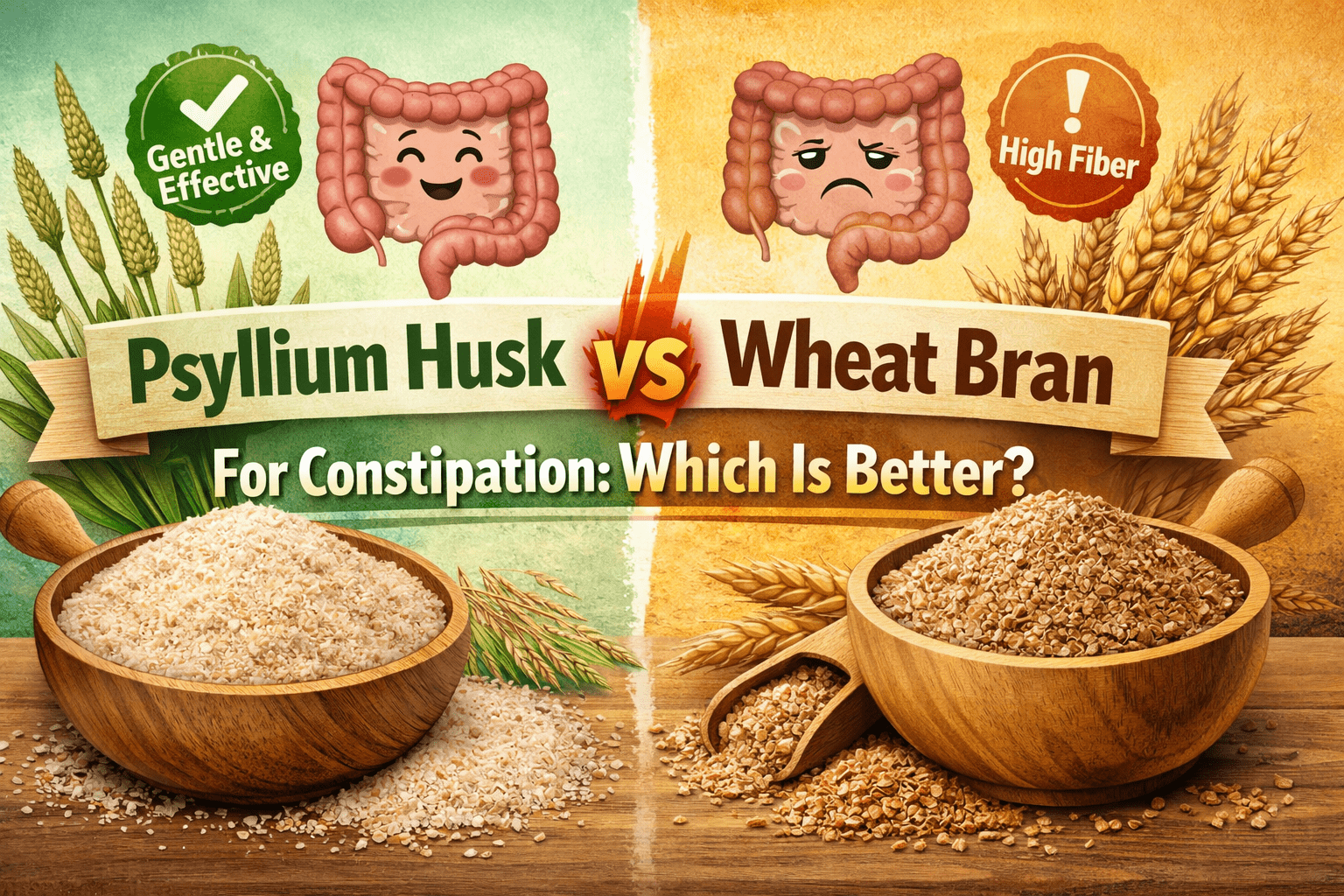
Psyllium husk vs wheat bran for constipation is one of the most searched questions among people struggling with digestive issues. Both fibers are widely recommended — but they work very differently, and choosing the wrong one could mean weeks of bloating, no results,or even worsened symptoms.
The truth is, not all fiber is the same. Psyllium husk is a soluble fiber that forms a thick gel in your colon, while wheat bran is an insoluble fiber that works by physically bulking up your stool. Depending on your specific type of constipation, your gut sensitivity, your diet, and your health goals, one of these fibers will serve you far better than the other.
In this comprehensive, science-backed guide, we compare psyllium husk vs wheat bran across ten critical factors — from constipation relief and IBS management to cholesterol support, blood sugar control, cost, and safety. By the end, you will know exactly which fiber supplement is right for your body and your goals.
Quick Comparison: Psyllium Husk vs Wheat Bran at a Glance
Before we dive into the details, here is a side-by-side overview of both fibers across the most important factors.
| Feature | Psyllium Husk | Wheat Bran |
|---|---|---|
| Fiber Type | Soluble (gel-forming) | Insoluble (bulk-forming) |
| Primary Action | Softens stool, forms gel in colon | Adds bulk, speeds transit time |
| Best For | IBS, high cholesterol, general constipation | Slow transit constipation |
| Gluten-Free | ✅ Yes | ❌ No — contains gluten |
| Bloating Risk | Low to Moderate | Moderate to High |
| Taste & Texture | Neutral, slightly thick | Slightly nutty, gritty |
| Water Requirement | High | Moderate |
| Cost Per Serving | $$ Moderate | $ Budget-friendly |
| Available Form | Powder, capsule, wafer | Powder/flakes (food ingredient) |
| FDA Cholesterol Claim | ✅ Yes | ❌ No |
| Winner for Constipation | ✅ Most cases | Specific cases only |
What Is Psyllium Husk?
Psyllium husk is a natural dietary fiber derived from the seeds of the Plantago ovata plant, which is primarily grown in India. The outer husks of the seeds are dried and ground into a fine powder that is exceptionally rich in soluble fiber — specifically a type called arabinoxylan.
When psyllium husk comes into contact with water, it absorbs many times its own weight in liquid and forms a thick, gel-like substance. This gel coats the inside of the intestines, softens stool, and helps it pass more easily and comfortably. This is why psyllium is often described as a “bulk-forming laxative” — it increases stool volume and softness without stimulating the bowel in a harsh or chemical way.
Psyllium husk is best known as the active ingredient in Metamucil, one of the most widely sold fiber supplements in the United States. It is also available in capsule form, as loose powder, and as organic whole husk from brands like Anthony’s Organic.
Key Facts About Psyllium Husk
- Fiber type: Primarily soluble (approximately 70% soluble, 30% insoluble)
- Source: Seeds of the Plantago ovata plant
- FDA health claim: Approved for reducing the risk of heart disease and lowering LDL cholesterol
- Gluten-free: Yes — safe for celiac disease and gluten sensitivity
- Water absorption: Very high — must be taken with at least 8 oz (240 ml) of water per serving
- Effect onset: Usually within 12 to 72 hours of regular use
Multiple clinical studies have confirmed that psyllium husk is one of the most effective fiber supplements for managing chronic constipation, irritable bowel syndrome (IBS), and elevated cholesterol. For a broader overview of fiber-based treatments, see our guide on 7 Natural Fiber Supplements for Chronic Constipation.
What Is Wheat Bran?
Wheat bran is the hard outer layer of the wheat grain — the part that is removed during the milling process when white flour is produced. It is one of the richest sources of insoluble dietary fiber available, containing approximately 42 grams of fiber per 100 grams of product.
Unlike psyllium husk, wheat bran does not form a gel. Instead, insoluble fiber acts like a scrubbing brush in your intestines. It adds physical bulk to your stool, speeds up the transit of food through the colon, and helps prevent stool from becoming hard and dry. This makes wheat bran particularly useful for people who have slow colonic transit — meaning food moves too slowly through their digestive tract.
Wheat bran is commonly sold as a loose powder or flakes and is frequently used as a cooking ingredient. It can be mixed into smoothies, baked into bread, or stirred into oatmeal. Popular brands include Bob’s Red Mill Wheat Bran, which is widely available in health food stores and on Amazon.
Key Facts About Wheat Bran
- Fiber type: Primarily insoluble (approximately 88% insoluble fiber)
- Source: Outer layer of the wheat grain
- Contains gluten: Yes — not suitable for celiac disease or gluten intolerance
- Best form: Food powder or flakes — mixed into meals rather than taken as a standalone supplement
- Primary mechanism: Increases stool bulk and speeds intestinal transit
- Effect onset: Can begin within 24 to 48 hours
It is critical to note that wheat bran contains gluten, which makes it entirely unsuitable for anyone with celiac disease, non-celiac gluten sensitivity, or a wheat allergy. This is one of the most important practical distinctions from psyllium husk, which is naturally gluten-free.
How Do They Work in the Gut? The Science Explained
Understanding how each fiber type actually functions inside your digestive system will help you make a more informed choice for your specific situation.
How Psyllium Husk Works
When you consume psyllium husk with water, the soluble fiber begins absorbing liquid almost immediately. In the stomach and small intestine, it forms a viscous gel that slows digestion slightly — this is one reason why psyllium also helps with blood sugar management, as it reduces the rate at which glucose enters the bloodstream after a meal.
As the gel moves into the colon, it interacts with gut bacteria and is partially fermented, producing short-chain fatty acids (SCFAs) such as butyrate, acetate, and propionate. Butyrate is a critical fuel source for colonocytes — the cells lining the colon — and plays an important role in maintaining gut wall integrity, reducing inflammation, and supporting long-term colon health.
The gel simultaneously softens the stool by retaining water within its structure, which makes stool much easier to pass. This is particularly important for people with hard, dry stools or those who strain painfully during bowel movements.
How Wheat Bran Works
Wheat bran works through a fundamentally different mechanism. Because it is predominantly insoluble fiber, it does not dissolve or form a gel. Instead, it remains largely physically intact as it passes through the entire digestive system.
The physical bulk of wheat bran particles adds volume to stool, which stretches the walls of the colon and triggers peristalsis — the coordinated muscular contractions that move stool through the intestines and toward the rectum. This mechanical stimulation speeds up colonic transit time, which is why wheat bran is particularly effective for people whose constipation stems from food moving too slowly through the gut.
However, wheat bran is also highly fermentable in the colon, which means it can produce significant amounts of gas. This is one key reason why wheat bran tends to cause more bloating and flatulence than psyllium husk, especially when introduced at high doses or too quickly.
For a deeper understanding of how dietary fiber affects constipation and gut health, read our comprehensive article on Constipation Relief: Best Fiber Foods and Fiber Therapy for Gut Health.
Psyllium Husk vs Wheat Bran for Constipation: 8 Head-to-Head Comparisons
When comparing psyllium husk vs wheat bran for constipation,the most important factor is your specific type of constipation.
| Category | Psyllium Husk | Wheat Bran |
|---|---|---|
| General Constipation | ✅ Winner — softens & regulates | Good for slow transit type only |
| IBS Relief | ✅ Winner — gentle, well-tolerated | ⚠️ May worsen IBS symptoms |
| Cholesterol Lowering | ✅ Winner — FDA-approved claim | ❌ No significant effect |
| Blood Sugar Control | ✅ Winner — slows glucose absorption | Limited effect |
| Gut Microbiome | ✅ Produces butyrate, prebiotic benefit | High fermentation, more gas |
| Gluten-Free Safety | ✅ Winner — 100% gluten-free | ❌ Contains gluten |
| Cooking & Baking | Limited — gels when wet | ✅ Winner — easy to add to food |
| Budget-Friendliness | Moderate cost | ✅ Winner — cheapest per serving |
1. For General Constipation Relief
Winner: Psyllium Husk — for most people.
For the majority of people dealing with occasional or chronic constipation, psyllium husk is the more versatile and effective option. Its ability to simultaneously soften stool while also adding bulk means it addresses both of the most common causes of constipation — hard stools and infrequent bowel movements — at the same time with a single supplement.
A landmark meta-analysis published in the American Journal of Clinical Nutrition reviewed multiple randomized controlled trials and found that psyllium husk significantly increased stool frequency and improved stool consistency compared to placebo. The effect was consistent across different age groups and different types of constipation.
Wheat bran, by contrast, works best when constipation is primarily caused by slow transit time and when stools are already formed but simply infrequent. It does not have the stool-softening properties of psyllium, making it less effective for people whose primary problem is hard, dry, difficult-to-pass stool.
2. For IBS (Irritable Bowel Syndrome)
Winner: Psyllium Husk — significantly.
If you have IBS, particularly IBS-C (constipation-predominant IBS), psyllium husk is strongly preferred over wheat bran. Multiple clinical trials have demonstrated that psyllium husk improves overall IBS symptom scores, including abdominal pain, bloating, and stool consistency, when taken consistently over several weeks.
Wheat bran, on the other hand, has been shown in controlled studies to worsen IBS symptoms in a meaningful proportion of patients. Because wheat bran is coarse and highly fermentable, it tends to increase gas production, bloating, and abdominal cramping — the very symptoms that IBS sufferers are trying to eliminate.
The National Institute of Diabetes and Digestive and Kidney Diseases (NIDDK) specifically recommends soluble fiber such as psyllium for IBS management, while cautioning that insoluble fibers like wheat bran may aggravate symptoms in gut-sensitive individuals.
For additional clinically validated supplement options beyond these two, see our guide on 7 Natural Fiber Supplements for Chronic Constipation.
In the debate of psyllium husk vs wheat bran for constipation, IBS patients have a clear winner — psyllium husk.
3. For Lowering Cholesterol
Winner: Psyllium Husk — by a wide margin.
Psyllium husk has an FDA-approved health claim specifically for reducing the risk of coronary heart disease by lowering LDL (“bad”) cholesterol. The mechanism is well understood: the soluble gel formed by psyllium binds to bile acids in the small intestine — the compounds that carry cholesterol — and prevents them from being reabsorbed back into the bloodstream. The liver is then forced to draw more cholesterol from the blood to produce new bile acids, resulting in a measurable reduction in circulating LDL cholesterol levels.
This effect has been validated across dozens of clinical trials. A meta-analysis in the American Journal of Clinical Nutrition found that approximately 10 grams of psyllium husk per day reduced LDL cholesterol by an average of 7 percent in people with elevated cholesterol levels — a clinically meaningful reduction that can complement dietary changes.
Wheat bran has no comparable cholesterol-lowering effect. While it is a valuable source of dietary fiber, its predominantly insoluble composition means it does not interact with bile acids in the same way and therefore cannot replicate psyllium’s cardiovascular benefit.
4. For Blood Sugar Control
Winner: Psyllium Husk.
The viscous gel formed by psyllium husk in the small intestine slows the absorption of glucose from food, which helps prevent the sharp post-meal blood sugar spikes that are particularly harmful for people with type 2 diabetes or prediabetes.
Several well-designed studies have found that consistent use of psyllium husk can meaningfully improve fasting blood glucose levels and HbA1c — the long-term marker of blood sugar control — in people with type 2 diabetes, especially when taken before meals as part of a consistent routine.
Wheat bran does not have the same viscous gel mechanism and therefore has a more limited effect on blood sugar regulation, although its high fiber content does still slow digestion to some degree.
5. For Gut Microbiome Health
Winner: Psyllium Husk — slight practical advantage.
Both fibers support gut microbiome health to some degree, as both are fermented by bacteria in the colon. However, the fermentation characteristics and their real-world implications differ significantly.
Psyllium husk produces moderate amounts of SCFAs — particularly butyrate — which nourishes colonocytes and supports the integrity of the gut wall. Its partial fermentability also means it causes less gas than highly fermentable fibers, making it more comfortable for daily long-term use.
Wheat bran is more highly fermentable and can significantly increase populations of beneficial bacteria like Bifidobacterium and Lactobacillus. However, this rapid fermentation also produces substantially more gas, which can cause bloating and discomfort that discourages consistent use — which ultimately undermines the microbiome benefit.
For optimal gut microbiome support, consider pairing your fiber supplement with a quality probiotic. Read our expert guide on the 9 Best Probiotic Supplements 2026 for top-rated, clinically reviewed options.
6. For Gluten Sensitivity and Celiac Disease
Winner: Psyllium Husk — unambiguously.
This is one of the most practically important distinctions between the two fibers and one that is often overlooked. Wheat bran is derived directly from wheat and therefore contains gluten. Anyone with celiac disease, non-celiac gluten sensitivity, or a wheat allergy must avoid wheat bran completely and permanently.
Psyllium husk, by contrast, is derived from the Plantago ovata plant and is completely free of gluten. It is safe for people with celiac disease and is actually used in many gluten-free baking recipes as a natural binding agent.
If you have any form of gluten intolerance or wheat allergy, psyllium husk is your only safe choice between these two options — there is no alternative consideration here.
7. For Weight Management
Winner: Psyllium Husk — slight but consistent edge.
Both fibers can support weight management through the mechanism of increased satiety. When you consume fiber, it swells in the stomach and helps you feel full for longer, which tends to reduce overall calorie intake across the day.
However, psyllium has a consistent edge here because its gel-forming property creates a more pronounced and sustained feeling of fullness. When psyllium absorbs water and expands in the stomach, it takes up significant physical space and creates strong mechanical satiety signals that reduce appetite at the following meal.
A 2020 randomized controlled trial found that taking psyllium husk before meals significantly reduced hunger ratings and spontaneous calorie intake at the subsequent meal compared to a placebo — making it a practical tool for people managing their weight alongside constipation.
Wheat bran also promotes satiety, but the effect is less pronounced because it does not create the same viscous, space-occupying gel in the stomach.
8. For Budget and Ease of Use
Winner: Wheat Bran — for cost. Psyllium Husk — for convenience.
Wheat bran is significantly cheaper per serving. A bag of Bob’s Red Mill Wheat Bran typically costs $5–8 and provides many servings. Quality psyllium husk powder or capsules from reputable brands generally cost $15–30 for a comparable supply.
However, psyllium husk is available in highly convenient capsule form, which many people prefer for travel, work, or simply when they cannot mix powders into drinks. Wheat bran is primarily a food ingredient — it must be mixed into food or beverages, which limits its convenience as a standalone portable supplement.
Who Should Choose Which? The Definitive Decision Guide
Based on the evidence reviewed throughout this article, here is a clear, practical framework to help you choose the right fiber for your specific situation.
Choose Psyllium Husk If You:
- Have IBS, especially IBS-C (constipation-predominant irritable bowel syndrome)
- Have elevated LDL cholesterol and want to address both constipation and heart health simultaneously
- Have celiac disease, gluten sensitivity, or any wheat allergy
- Prefer taking a supplement in convenient capsule or powder form
- Have hard, dry stools that are painful or difficult to pass
- Want the most clinically studied, broadly effective fiber supplement option
- Are managing type 2 diabetes or insulin resistance
- Want to reduce dependence on over-the-counter laxatives
- Are pregnant, elderly, or have a sensitive digestive system
Choose Wheat Bran If You:
- Have no gluten sensitivity, celiac disease, or wheat allergy
- Prefer adding natural fiber to food rather than taking a daily supplement
- Have slow transit constipation with infrequent bowel movements but relatively soft stools
- Are looking for the most budget-friendly fiber option available
- Enjoy cooking or baking and want to naturally boost your dietary fiber intake through food
- Do not have IBS or a particularly sensitive gut
If you are unsure about your type of constipation or digestive condition, we recommend reading our overview of causes of constipation to better understand what might be driving your symptoms before choosing a supplement.
Dosage and How to Use Each Fiber Safely
Getting the dosage right is just as important as choosing the correct fiber supplement. Starting with too little will produce no noticeable results, while beginning with too much too quickly is the most common reason people experience excessive bloating and abandon fiber supplementation altogether before it has a chance to work.
Psyllium Husk Dosage Guidelines
- Standard adult dose: 5 to 10 grams per day (approximately 1–2 teaspoons of powder)
- Maximum dose: Up to 20 grams per day, ideally split into two or three smaller doses throughout the day
- Best time to take: 30 minutes before a meal or at bedtime — consistency of timing matters
- Critical rule: Always take psyllium husk with at least 240 ml (8 fl oz) of water immediately after mixing. Failure to consume adequate water can cause the powder to swell in the throat or esophagus and create a serious choking hazard
- Starting rule: Begin with half the recommended dose for the first 5–7 days, then increase gradually as your gut adjusts
- Capsule form: Typically 2–6 capsules per dose, always taken with a full glass of water
Wheat Bran Dosage Guidelines
- Starting dose: 5 to 10 grams per day (about 2–3 tablespoons of bran flakes or powder)
- Maintenance dose: 10 to 20 grams per day, ideally divided across multiple meals throughout the day
- How to take: Mix into oatmeal, smoothies, yogurt, soup, or baked goods — it blends easily into most foods
- Water intake: Drink at least 8 full glasses of water throughout the day when consuming wheat bran regularly
- Starting rule: Begin with just 1–2 tablespoons per day and increase over 2–3 weeks to allow the gut to adjust and minimize gas
General Safety Tips for Both Fibers
- Never start at the full dose — a gradual increase over 1–2 weeks significantly reduces bloating and gas
- Hydration is non-negotiable — drink water consistently throughout the day, not only when taking the supplement
- Watch for warning signs — if you experience severe bloating, intense abdominal pain, rectal bleeding, or complete inability to pass stool, stop use immediately and consult a doctor
- Medication timing — if you take prescription medications, take fiber supplements at least 2 hours before or after your medication, as fiber can reduce the absorption of some drugs
- Pregnancy and breastfeeding — always consult your healthcare provider before starting any new fiber supplement regimen
For more on safe supplement protocols and what to expect during the first few weeks, visit our guide on Best OTC Laxatives for Constipation in the US.
Side Effects and Potential Risks
Both psyllium husk and wheat bran are generally considered safe for most healthy adults when used as directed. However, both can cause side effects — particularly when started at high doses or consumed without adequate water intake.
Psyllium Husk — Potential Side Effects
- Bloating and gas — usually mild and decreases significantly after the first 1–2 weeks of consistent use
- Abdominal discomfort — more common when starting at high doses rather than building up gradually
- Allergic reactions — rare but possible, particularly in people with grass pollen allergies or occupational exposure to psyllium dust
- Choking risk — if taken as powder without sufficient water; always mix thoroughly and drink immediately
- Reduced medication absorption — may interfere with the absorption of certain drugs such as digoxin, warfarin, and some diabetes medications if taken simultaneously
Wheat Bran — Potential Side Effects
- Significant bloating and gas — generally more pronounced and persistent than with psyllium; this is the most common reason people discontinue wheat bran use
- Abdominal cramping — particularly common in people with IBS, sensitive bowels, or those who increase their dose too quickly
- Phytic acid interference — wheat bran contains substantial amounts of phytic acid, which can bind to important minerals such as iron, zinc, and calcium and reduce their absorption from food over time
- Worsening of IBS symptoms — clinically documented, particularly for bloating, pain, and altered bowel habits in both IBS-C and IBS-D subtypes
- Celiac disease risk — wheat bran contains gluten and will cause serious intestinal damage in people with celiac disease; this is not a manageable side effect but a contraindication
If you experience persistent digestive symptoms that do not improve after 2–3 weeks of fiber supplementation, we recommend consulting a gastroenterologist and reading our research overview on chronic constipation causes and evidence-based treatments.
Real User Experiences: What People Are Saying
Sarah, 44 — IBS-C for 10 Years
“I tried wheat bran for about three weeks because someone online recommended it. It made my bloating absolutely unbearable. My gastroenterologist then switched me to psyllium husk and the difference was dramatic. Within two weeks my stools were regular and soft, and my IBS pain reduced significantly. I wish I had started with psyllium from the very beginning.”
Mark, 58 — Slow Transit Constipation
“My doctor diagnosed me with slow transit constipation specifically. He recommended starting with wheat bran since I needed something to physically speed things up. I mix a few tablespoons into my morning oatmeal every day. It worked within a few days, my bowel movements are now regular, and it costs very little compared to all the supplements I was buying before.”
Linda, 67 — Type 2 Diabetes and Constipation
“My doctor recommended psyllium husk because it helps with both blood sugar and constipation at the same time. I have been taking Metamucil every morning for six months. My last blood test showed my HbA1c has actually improved too. For anyone dealing with both issues together, I highly recommend it.”
Want to share your own story? Join our community and read more real experiences on our Stories page.
Our Top Product Recommendations
Based on clinical evidence, ingredient quality, third-party testing, user reviews, and overall value for money, here are our top-rated psyllium husk and wheat bran products currently available on Amazon:
| # | Product | Type | Best For | Link |
|---|---|---|---|---|
| 1 | Metamucil Sugar-Free Psyllium Powder | Psyllium — Soluble | Daily constipation & cholesterol | View on Amazon |
| 2 | NOW Foods Psyllium Husk Caps | Psyllium — Soluble | IBS, convenient capsule form | View on Amazon |
| 3 | Anthony’s Organic Psyllium Husk | Psyllium — Soluble | Organic, budget powder option | View on Amazon |
| 4 | Bob’s Red Mill Wheat Bran | Wheat Bran — Insoluble | Cooking, baking, slow transit | View on Amazon |
Disclosure: Some links above are affiliate links. If you purchase through these links, we may earn a small commission at no additional cost to you. We only recommend products we have reviewed and trust.
Can You Take Psyllium Husk and Wheat Bran Together?
Yes — in principle, you can use both fibers together to receive the combined benefits of both soluble and insoluble fiber. Many dietitians and gastroenterologists actually recommend consuming a mixture of both fiber types as part of a balanced, high-fiber diet, since the two types of fiber complement each other through different mechanisms.
However, there is an important practical caveat: if you are starting fiber supplementation for the first time, always begin with just one type — ideally psyllium husk — before introducing a second fiber source. Starting both simultaneously makes it impossible to identify which one is causing side effects if you experience bloating, cramping, or unusual symptoms.
If you already tolerate psyllium husk well after several weeks of consistent use and want to add wheat bran for additional transit support, start with a very small amount (1 tablespoon per day) and increase gradually while monitoring your symptoms carefully.
Always ensure you are drinking adequate water when consuming fiber from multiple sources simultaneously, as insufficient hydration can actually worsen constipation rather than improve it — the opposite of the intended effect.
The Science Behind Fiber and Constipation: What the Research Says
The evidence base supporting fiber supplementation for constipation relief is extensive and spans several decades. Here is a summary of the most clinically relevant research:
Psyllium Husk — Key Research Findings
McRorie JW Jr. (2015) — Published in the Journal of the American Association of Nurse Practitioners, this landmark systematic review concluded that psyllium husk is one of only two laxative agents with sufficient robust clinical evidence to be classified as a true, proven bulk-forming laxative for both constipation and IBS. Wheat bran was found to have notably weaker and less consistent evidence specifically for constipation management.
Maki et al. (2019) — A randomized controlled trial published in Nutrition Journal found that daily psyllium supplementation significantly improved stool consistency, stool frequency, and ease of stool passage in adults with functional constipation over a 12-week period.
Ueberall et al. (2021) — A large-scale observational study involving over 1,000 patients found that consistent psyllium husk use reduced laxative dependence and measurably improved quality of life in patients with chronic idiopathic constipation over a 6-month follow-up period.
Wheat Bran — Key Research Findings
Cummings et al. (1978) — The original landmark wheat bran study, published in Lancet, first established that wheat bran increases stool weight and accelerates colonic transit time. This research remains foundational evidence for wheat bran’s laxative mechanism and is still cited in modern clinical guidelines.
Bijkerk et al. (2009) — A systematic review published in the British Medical Journal found that psyllium was significantly more effective than wheat bran for overall IBS symptom relief, while wheat bran provided no significant improvement over placebo for IBS patients — a critically important finding for anyone with both IBS and constipation.
van der Schoot et al. (2022) — A meta-analysis published in Nutrients found that dietary fiber supplementation, including wheat bran, reduced laxative and enema use in elderly patients with chronic constipation, even in cases where stool frequency was not significantly increased — indicating meaningful clinical benefit even when the primary outcome metric does not change.
Frequently Asked Questions (FAQ)
Q1: Which is better for constipation — psyllium husk vs wheat bran?
For most people, yes. Psyllium husk is more versatile, better tolerated across different constipation types, and more extensively studied in clinical trials. It works for both hard stools and infrequent bowel movements simultaneously, and it is safe for people with IBS and gluten sensitivity. Wheat bran is more specifically effective for slow transit constipation, but carries a higher risk of side effects and is not appropriate for everyone.
Q2: How long does it take for psyllium husk to work?
Most people notice improvement in stool consistency within 12 to 72 hours of their first dose when taking the correct amount with adequate water. For consistent, long-term bowel regularity, daily use for 1–2 weeks is typically needed before the full benefit is established.
Q3: How long does it take for wheat bran to work?
Wheat bran tends to produce an initial laxative effect slightly faster — often within 24 to 48 hours — due to its bulk-forming mechanism. However, it may take 2–3 weeks of consistent daily use to achieve optimal, stable bowel regularity.
Q4: Can wheat bran actually worsen IBS?
Yes — and this is well-documented in the clinical literature. Multiple controlled studies have found that wheat bran can worsen IBS symptoms, including bloating, gas, and abdominal pain, in a significant proportion of IBS patients. If you have IBS of any subtype, psyllium husk is the clinically preferred choice.
Q5: Is psyllium husk safe for long-term daily use?
Yes. Psyllium husk is considered safe for long-term daily use by the medical community. It does not cause dependency, bowel laziness, or tolerance, unlike stimulant laxatives. The colon does not become reliant on psyllium to function. However, it should always be taken with adequate water to prevent rare but serious complications.
Q6: Can I use these fibers if I have type 2 diabetes?
Psyllium husk is particularly well-suited for people with diabetes, as it has been clinically shown to help regulate post-meal blood sugar levels and improve HbA1c in addition to relieving constipation — offering a meaningful dual benefit. Wheat bran also provides some fiber-related benefit for blood sugar, but does not share psyllium’s specific gel-forming mechanism for glucose regulation.
Q7: Which fiber is better for weight loss?
Psyllium husk has a measurable advantage for weight management due to its superior gel-forming property in the stomach, which creates greater and more sustained satiety before meals. However, both fibers support weight control as part of a balanced diet when combined with regular physical activity and conscious calorie management.
Q8: Can fiber supplements interfere with my medications?
Yes — fiber can reduce the absorption of some medications, including certain heart medications, diabetes drugs, and thyroid medications. As a general and important safety rule, always take any fiber supplement at least 2 hours before or after your prescription medications. Consult your doctor or pharmacist if you take multiple medications and are unsure.
Q9: What should I eat while taking fiber supplements?
A fiber-rich diet with plenty of vegetables, fruits, legumes, and whole grains will significantly enhance the effectiveness of your fiber supplement. Adequate hydration throughout the day is equally critical. Read our comprehensive guide on the best fiber foods for constipation relief for practical daily dietary tips.
Q10: Are there other supplements that help with constipation alongside fiber?
Yes. Magnesium is another well-researched and effective option for constipation relief and can be used alongside fiber supplements for a complementary approach. Read our detailed review of the 5 Best Magnesium Supplements for Constipation (2026 Review) for science-backed product recommendations and dosage guidance.
Conclusion: Which Fiber Should You Choose?
After reviewing all the evidence on psyllium husk vs wheat bran for constipation, psyllium husk is the better choice for most people.
Psyllium husk is the better choice for the majority of people dealing with constipation. It is more versatile, more extensively validated in clinical research, safe for IBS and gluten-sensitive individuals, and uniquely effective for multiple health goals simultaneously — including cholesterol reduction, blood sugar regulation, and weight management in addition to constipation relief.
Wheat bran remains a valuable and budget-friendly food-based fiber source for people without IBS or gluten sensitivity who prefer adding natural fiber through cooking, or who specifically need to accelerate slow colonic transit time and want the cheapest possible solution.
Whichever fiber you choose, the foundational principles of safe and effective use remain the same: start with a low dose, increase gradually over 1–2 weeks, drink plenty of water consistently throughout every day, and give the supplement a fair trial of at least two weeks before evaluating your results.
If your constipation is persistent, severely affects your quality of life, or is accompanied by rectal bleeding, unexplained weight loss, or severe abdominal pain, please consult a gastroenterologist promptly for a thorough evaluation — these symptoms can sometimes indicate conditions that require medical treatment beyond dietary fiber.
For more evidence-based guides on constipation and digestive health, explore our Supplements section, Remedies section, and Research section.
References
- McRorie JW Jr. Evidence-Based Approach to Fiber Supplements and Clinically Meaningful Health Benefits. Nutr Today. 2015 — https://pubmed.ncbi.nlm.nih.gov/27680987/
- van der Schoot A et al. The Effect of Fiber Supplementation on Chronic Constipation in Adults Aged ≥50 Years. Nutrients. 2022 — https://pubmed.ncbi.nlm.nih.gov/35816465/
- Bijkerk CJ et al. Soluble or insoluble fibre in irritable bowel syndrome in primary care? BMJ. 2009 — https://www.bmj.com/content/339/bmj.b3154
- Anderson JW et al. Cholesterol-lowering effects of psyllium intake adjunctive to diet therapy. Am J Clin Nutr. 2000 — https://pubmed.ncbi.nlm.nih.gov/10729161/
- McRorie JW. Laxative Effects of Wheat Bran and Psyllium: Resolving Enduring Misconceptions. JAANP. 2015 — https://pubmed.ncbi.nlm.nih.gov/31764399/
- MDPI – Foods Journal: Dietary Fiber and Constipation Management Review. 2025 — https://www.mdpi.com/2304-8158/14/13/2315
- British Dietetic Association Guidelines for Chronic Constipation. PMC. 2025 — https://pmc.ncbi.nlm.nih.gov/articles/PMC12517116/
- FDA Authorized Health Claim: Psyllium and Reduced Risk of Heart Disease — https://www.fda.gov/food/nutrition-labeling-and-value-daily/authorized-health-claims-meet-significant-scientific-agreement-ssa-standard
Read More on Constipation Relief
- 7 Natural Fiber Supplements for Chronic Constipation (Dosage & Side Effects)
- 9 Best Probiotic Supplements 2026: Expert Guide for Gut Health & Immunity
- 5 Best Magnesium Supplements for Constipation (2026 Review)
- Best OTC Laxatives for Constipation in the US (Fast & Gentle Options)
- Constipation Relief: Best Fiber Foods and Fiber Therapy for Gut Health
- 7 Best Ayurvedic Powder for Constipation Relief (2026 Guide)
- After 12 Years of Chronic Constipation, a Probiotic Brought Relief: What Research Says
Disclosure: The information on this website is for educational and informational purposes only and is not a substitute for professional medical advice, diagnosis, or treatment. Some links on this site are affiliate links through which we may earn a commission at no additional cost to you. Always seek the advice of your physician or other qualified health provider regarding any medical condition.