
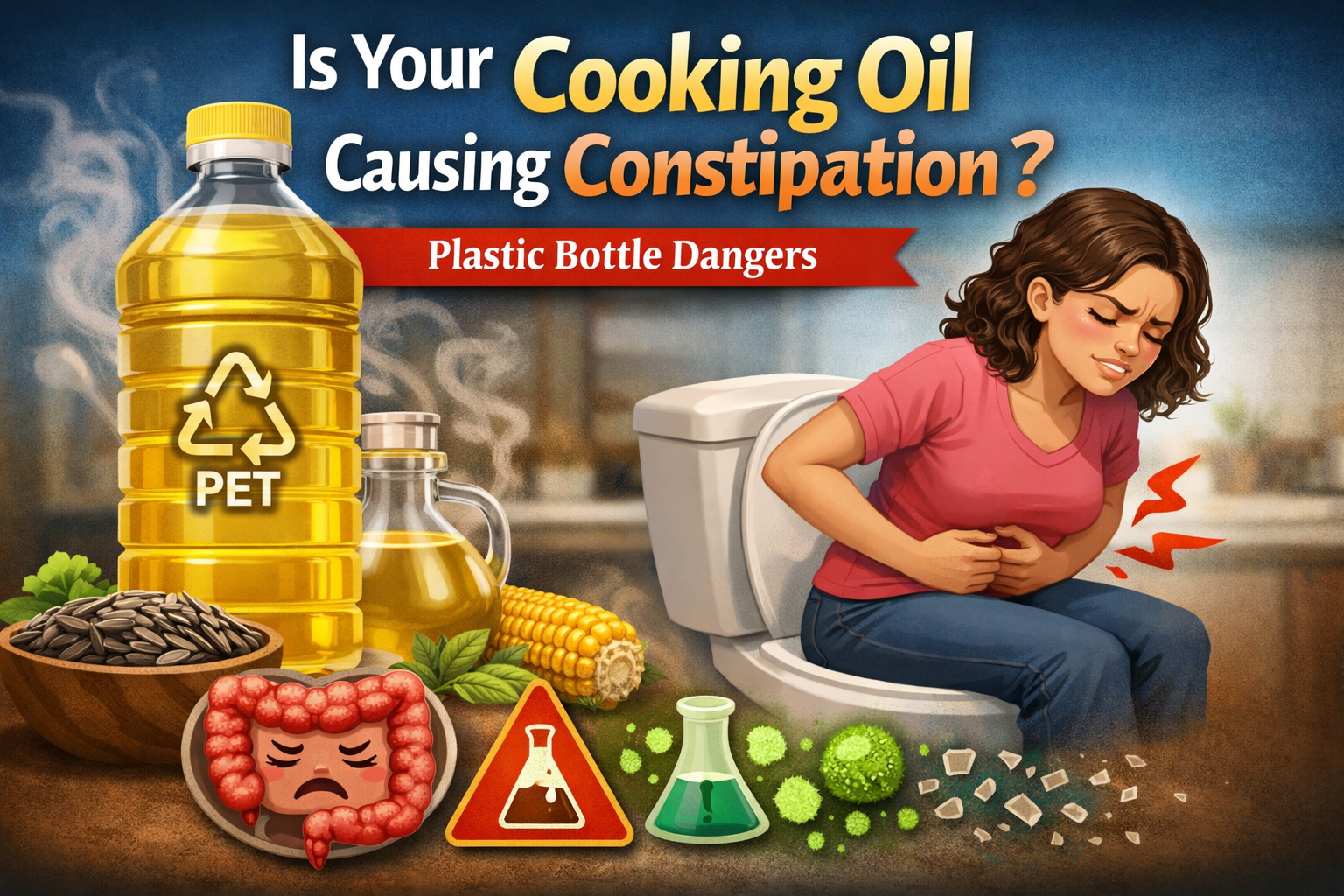
Every morning, millions of Americans reach for a plastic bottle of cooking oil without a second thought. Sunflower oil, canola oil, vegetable blend, or even olive oil — it sits on the counter, used daily, never questioned. But what if that very bottle is quietly disrupting your gut, feeding chronic constipation, and delivering invisible toxins into every meal?
This isn’t speculation. It’s science. And once you understand the connection between your cooking oil, its plastic container, and your digestive health, you’ll never look at that bottle the same way again.
We’ve previously covered how cookware chemicals can affect your gut — but the oil inside your pan matters just as much as the pan itself. This guide goes deeper.
Table of Contents
- The Cooking Oil Problem Nobody Talks About
- Microplastics in Vegetable Oil: The Research Is Alarming
- Leaching Chemicals from Plastic Bottles: What’s Actually Getting Into Your Food
- The Gut-Plastic Connection: How Plastic Disrupts Digestion
- Best Oil for Chronic Constipation Relief: What Science Says
- Extra Virgin Olive Oil vs Seed Oils for Gut Health: The Definitive Comparison
- Top 5 EVOO Picks on Amazon (Glass Bottle Only)
- Practical Action Plan: What to Do Starting Today
- FAQ
1. The Cooking Oil Problem Nobody Talks About
Constipation affects an estimated 35% of Americans at any given time. It is one of the most underreported and undertreated digestive conditions in the country. Billions are spent annually on laxatives, fiber supplements, and probiotic products — yet the problem persists for millions of people.
What rarely gets discussed is the role that cooking oil — and specifically the container it comes in — may play in driving or worsening chronic constipation. The conversation almost always focuses on fiber, hydration, and physical activity. These matter. But the fat source at the center of your daily cooking, and the chemicals leaching into it from plastic packaging, may be an overlooked contributor that almost no one is addressing.
If you’ve already tried natural fiber supplements, magnesium, or OTC laxatives without lasting relief, this article explores a fundamentally different piece of the puzzle — one that begins not in the pharmacy, but in your kitchen cabinet.
This piece connects four critical and interconnected topics: microplastics in vegetable oil, the danger of leaching chemicals from plastic bottles, identifying the best oil for chronic constipation relief, and understanding the difference between extra virgin olive oil vs seed oils for gut health. Together, they tell a clear and actionable story.
2. Microplastics in Vegetable Oil: The Research Is Alarming
Until recently, the idea that your cooking oil contained plastic particles felt like an overblown concern. In 2024, it became confirmed, peer-reviewed science.
A landmark study published in Food Chemistry by researchers from the University of Bologna and FISABIO-Public Health analyzed commercial vegetable oils — including extra-virgin olive oil, regular olive oil, sunflower oil, and mixed seed oils — packaged in both plastic and glass bottles. The results were stark: microplastics were detected in every single sample tested, regardless of packaging type, with most of the detected particles being smaller than 100 microns, composed primarily of polyethylene (50.3%) and polypropylene (28.7%). BeeWell Nutrition
The mean microplastics abundance found was 1,140 ± 350 MPs per liter, and the study found no significant differences between oil types or between plastic and glass packaging — suggesting contamination occurs during production or bottling rather than being packaging-specific. Big Horn Olive Oil
A separate study from the University of Massachusetts Amherst analyzed four types of commercially bottled edible oils. Between 134,000 and 580,000 microplastic particles per liter were detected in olive oil, canola oil, sunflower oil, and coconut oil — with over 80% of detected plastics smaller than 10 microns. PubMed Central At that scale, these particles can cross the intestinal lining and enter the bloodstream.
The UC Davis Olive Center also discovered that olive oil corrodes plastic — meaning that when olive oil sits in plastic containers on store shelves or in your pantry, it gradually breaks down the plastic, releasing even more microplastic particles into the oil over time, particularly when exposed to light and heat. KimEcopak
What Microplastics in Vegetable Oil Do Inside Your Gut
The health implications of regularly ingesting microplastics in vegetable oil are still emerging, but early research is deeply concerning. Inside the digestive system, microplastics accumulate in the intestinal lining, trigger low-grade inflammation, and disrupt the gut bacteria ecosystem. They also function as chemical carriers — plastic particles attract and bind to heavy metals, endocrine-disrupting compounds, and persistent organic pollutants, delivering these toxins directly into the gut wall.
When your intestinal lining is inflamed or compromised by microplastic accumulation, normal gut motility — the rhythmic muscle contractions that move food and waste through the digestive tract — is impaired. This directly contributes to constipation. This is why the same approaches that support gut microbiome recovery — like probiotic therapy — become even more relevant when dietary plastic exposure is part of the picture.
3. Leaching Chemicals from Plastic Bottles: What’s Actually Getting Into Your Food
Microplastics are one problem. The chemical contamination caused by leaching chemicals from plastic bottles is another — and in some ways more insidious, because it has been happening for decades largely unnoticed.
Plastic oil bottles are most commonly made from HDPE, PET, or polypropylene. These materials contain chemical additives — including bisphenol A (BPA), bisphenol S (BPS), and phthalates — that can migrate into the oil over time, particularly when the container is exposed to heat, UV light, or stored for extended periods.
Consumer Reports’ investigation into plastic chemicals in food found phthalates in almost every food tested, often at high levels — and noted that these chemicals enter the body at almost the same rate as they are eliminated, meaning constant exposure keeps blood and tissue levels chronically elevated, with harmful effects that may be cumulative. PubMed
Phthalates can get into foods not only through packaging but also through tubing, conveyor belts, and gloves used during food processing — and in 2023, the FDA rejected a petition calling for a ban on the use of phthalates in food packaging and processing. Birmingham Gastroenterology Associates
BPA and Phthalates: The Endocrine Disruptors in Your Kitchen
BPA and phthalates are classified as endocrine disruptors — they interfere with the body’s hormone signaling. When plastics are exposed to high temperatures or different solvent concentrations, the chemical bonds in their structure alter and BPA leaches into food contact items, causing health hazards including reproductive problems, cardiovascular disease, type 2 diabetes, and effects on fetal brain development. PubMed Central
For gut health specifically, endocrine disruption matters more than most realize. Gut motility is regulated in part by hormonal signals. When those signals are disrupted by estrogen-mimicking chemicals from leaching plastic bottles, the gut slows down significantly — and slow gut transit time is the physiological definition of constipation.
Research on plasticizer contamination throughout olive oil production found that plasticizer concentrations progressively increased at each stage of the production process, and higher concentrations were observed in plastic-packaged samples after 18 months of storage — leading researchers to conclude that prolonged storage in plastic bottles should be avoided. Medical News Today
The Oxidation Problem
Beyond chemical migration, plastic bottles accelerate oil oxidation. Plastic materials are permeable to oxygen, causing oil to slowly oxidize over time. Oxidized oil contains lipid peroxides, aldehydes, and acrolein — compounds that directly damage gut lining cells, trigger chronic inflammation, and further impair bowel motility. This means cooking with old plastic-stored vegetable oil can deliver microplastics, endocrine-disrupting chemicals, and oxidized lipid byproducts simultaneously — three gut health insults in every dish.
4. The Gut-Plastic Connection: How Plastic Disrupts Digestion
Here is the chain of events stated plainly:
You buy cooking oil in a plastic bottle. During manufacturing and storage, microplastics accumulate in the oil. Chemicals including BPA and phthalates migrate from the plastic container into the oil. With each meal cooked in this oil, you ingest a small dose of microplastic fragments, endocrine-disrupting chemicals, and potentially oxidized lipid byproducts.
Over weeks and months, this accumulation causes low-grade intestinal inflammation. Your gut lining becomes mildly irritated. Your gut microbiome is disrupted — beneficial bacteria like Bifidobacterium and Lactobacillus decline. Hormonal signals that regulate gut motility become dysregulated. The result is slower transit, harder stools, reduced frequency, and the debilitating experience of chronic constipation.
This is why, as we covered in our article on chronic constipation and probiotic relief, rebuilding gut bacteria is so important — but that effort is constantly undermined if the dietary inputs continue to damage the microbiome at the same time.
This doesn’t mean plastic-bottled cooking oil is the sole cause of constipation. Diet, hydration, fiber, physical activity, stress, and medications all play important roles. But for the millions of Americans who have tried prune juice, fiber, and probiotics without lasting relief, the plastic bottle in their kitchen cabinet may be an entirely addressable missing piece.
5. Best Oil for Chronic Constipation Relief: What Science Says
Not all oils affect constipation equally. When it comes to identifying the best oil for chronic constipation relief, the research is unusually clear and actionable. Extra virgin olive oil (EVOO) stands in a category of its own.
The Clinical Evidence
A double-blind randomized clinical trial published in the Caspian Journal of Internal Medicine in 2025 directly compared EVOO against refined olive oil in 140 patients with chronic constipation. After four weeks, the EVOO group’s constipation scores dropped dramatically — from an average of 11.27 down to 3.47 — compared to 11.37 down to 7.74 in the refined olive oil group. The EVOO group also showed significantly improved stool consistency on the Bristol Stool Form Scale beginning as early as week two.
EVOO works as a natural gut lubricant, coating intestinal walls and softening stool. It stimulates bile acid production in the liver — bile acids are natural laxatives that promote bowel movement. And the polyphenols in high-quality EVOO stimulate contractions in the large intestine and increase water and electrolyte secretion into the intestinal tract — directly facilitating defecation.
A separate study of 50 patients found that just 4 ml — roughly one teaspoon — of olive oil per day for four weeks significantly improved constipation symptoms, with no risk of dependency or rebound constipation unlike pharmaceutical laxatives.
The Polyphenol Difference
Research confirmed that 25 ml of phenolic-rich EVOO consumed daily for three weeks significantly boosted Bifidobacteria in the gut — the same beneficial bacteria population that probiotics target. Additionally, EVOO contains oleocanthal, a polyphenol with anti-inflammatory effects comparable to a low dose of ibuprofen — addressing the root cause of constipation rather than masking symptoms.
The Daily Protocol
- Morning dose: 1–2 tablespoons of high-quality EVOO on an empty stomach first thing in the morning
- Polyphenol minimum: Look for oils listing polyphenol content above 400 mg/kg
- Glass only: Only purchase EVOO in dark glass bottles or metal tins
- Be consistent: Digestive improvement within 3–7 days; full microbiome benefits within 3–12 weeks
6. Extra Virgin Olive Oil vs Seed Oils for Gut Health: The Definitive Comparison
The question of extra virgin olive oil vs seed oils for gut health has become increasingly important, and the research has become increasingly clear. Americans consume enormous quantities of seed oils — canola, soybean, sunflower, corn — because they’re inexpensive and widely marketed as heart-healthy. But when it comes to gut health and constipation, the two categories behave very differently inside the body.
What Seed Oils Do to Your Gut
Seed oils are rich in omega-6 polyunsaturated fatty acids. In balanced quantities these are essential. But the modern American diet delivers omega-6 in quantities profoundly disproportionate to omega-3 intake, with ratios in some individuals reaching 20:1. This imbalance creates a persistently pro-inflammatory environment throughout the body, including the gut.
University of California, Riverside research found that a consistently high-soybean-oil diet caused significant reduction in beneficial gut bacteria, increased harmful E. coli populations, and biochemical changes in the gut wall consistent with inflammatory bowel disease — as well as disrupted endocannabinoid signaling that regulates intestinal motility.
Seed oils also carry a second critical disadvantage: they are almost universally sold in plastic bottles. This means when you use canola or vegetable oil from a standard grocery shelf bottle, you receive both the omega-6 inflammatory load and the microplastic and leaching chemical burden simultaneously.
What EVOO Does Instead
Extra virgin olive oil is predominantly monounsaturated fat (oleic acid), more stable and less prone to oxidation than polyunsaturated seed oil fats. It also delivers polyphenols, hydroxytyrosol, oleuropein, squalene, and fat-soluble vitamins — compounds completely absent from refined seed oils. In patients with ulcerative colitis, consuming 50 ml of EVOO daily measurably reduced intestinal inflammation and improved gastrointestinal symptoms including constipation, bloating, and irregular bowel movements. No equivalent intervention has been demonstrated with any seed oil.
Head-to-Head Comparison
| Factor | Extra Virgin Olive Oil | Common Seed Oils |
|---|---|---|
| Primary fat type | Monounsaturated (oleic acid) | Polyunsaturated (omega-6) |
| Oxidation stability | High — resists rancidity | Low — oxidizes easily |
| Polyphenol content | Very high (if cold-pressed) | Negligible (refined) |
| Anti-inflammatory effect | Strongly anti-inflammatory | Pro-inflammatory at excess |
| Constipation relief | Clinical evidence supports | May worsen symptoms |
| Gut microbiome | Increases Bifidobacteria | May reduce beneficial bacteria |
| Typical packaging | Available in dark glass | Almost always plastic |
The nuanced position: seed oils in moderate quantities as part of a whole-foods diet are not inherently catastrophic. The problem is how they are consumed in practice — in heavily processed, fiber-poor foods, stored in oxidation-accelerating plastic, with an omega-6 to omega-3 ratio profoundly out of balance. For someone with chronic constipation, however, the practical recommendation is clear.
7. Top 5 EVOO Picks on Amazon (Glass Bottle Only)
Each product below was selected for high polyphenol content, glass packaging, certification standards, freshness indicators, and verified customer ratings on Amazon. These align specifically with clinical research on gut health and constipation relief.
#1 — P.J. KABOS 2025/26 Fresh Harvest Organic Greek EVOO — Phenolic Shot (900+ mg/kg)
🥇 Editor’s Top Pick for Constipation Relief
The gold standard for polyphenol content on Amazon. With 900+ mg/kg polyphenol concentration — more than double most premium oils — this USDA Organic, cold-extracted Greek oil from the fresh 2025/26 harvest represents exactly the therapeutic benchmark used in clinical research. The “Phenolic Shot” format is purpose-designed for daily medicinal consumption: one tablespoon each morning on an empty stomach. Packaged in protective glass. Kosher certified.
- 900+ mg/kg polyphenols — exceptionally high therapeutic value
- USDA Organic + Kosher certified, cold-extracted
- Fresh 2025/26 harvest — maximum freshness guaranteed
- 16.9 oz dark glass bottle — zero plastic contact
- Purpose-designed for the morning constipation protocol
⭐ Amazon Rating: 4.8/5 | Search “PJ KABOS Phenolic Shot olive oil” on Amazon
#2 — Terra Delyssa Organic EVOO — Blockchain Traceable, Dark Glass Bottle
🥈 Best Value Organic Pick
Hand-harvested from Tunisian orchards and cold-pressed within 4 hours of harvest, this oil preserves polyphenols at peak levels. The dark glass bottle actively blocks UV degradation. First olive oil to offer full farm-to-bottle traceability using blockchain technology — scan the QR code and see exactly where your oil came from. Non-GMO, USDA Organic, pesticide-free. Available as a 3-pack for consistent long-term use.
- Dark glass bottle blocks UV degradation
- Cold-pressed within 4 hours of harvest
- Full blockchain traceability — verified origin
- Non-GMO, USDA Organic, grown without pesticides
⭐ Amazon Rating: 4.7/5 | View on Amazon — ASIN: B01KB8A3C0
#3 — Colavita Premium Italian EVOO — CERMET Certified, 25.5 oz Glass Bottle
🥉 Best Mainstream Trusted Brand
Carries the CERMET seal confirming it is 100% grown and pressed in Italy — not a blend. The characteristic peppery bite when tasted raw is a reliable indicator of polyphenol presence. Versatile for everyday cooking, finishing dishes, and morning consumption. One of Amazon’s consistently top-rated mainstream EVOO options.
- CERMET-certified 100% Italian origin
- Glass bottle — no plastic chemical exposure
- Slightly bitter peppery taste confirms polyphenol presence
⭐ Amazon Rating: 4.7/5 | View on Amazon — ASIN: B07NSRKBSG
#4 — Atlas Organic EVOO — Moroccan, Carbon Neutral, Glass or Metal Tin
Best Organic Moroccan Option
Grown in the Atlas Mountains of Morocco. Certified carbon neutral, trusted by Michelin-starred chefs worldwide. 100% free from added chemicals. Available in both glass bottles and large metal tins — both completely plastic-free. Low acidity, polyphenol-rich, sweet fruity profile. Ideal for families wanting bulk plastic-free purchasing.
- USDA Organic, carbon neutral, ethically produced
- Plastic-free packaging (glass + metal tin options)
- Available in bulk sizes — great for consistent daily use
⭐ Amazon Rating: 4.6/5 | Search “Atlas Organic olive oil glass” on Amazon
#5 — Atsas Gold Limited Edition Greek EVOO — 3,024 mg/kg Polyphenols, Black Glass
Best Premium Therapeutic Option
For the most concentrated polyphenol dose commercially available: 3,024 mg/kg polyphenol concentration from early-harvest organic Kalamon olives in Cyprus. Limited to 200 individually numbered bottles per production run. Packaged in a UV-blocking matte black glass bottle. USDA Organic, cold-pressed, unfiltered, additive-free. This is not a cooking oil — it is a daily therapeutic supplement in oil form. Take as a morning shot.
- 3,024 mg/kg polyphenols — the highest available commercially
- USDA Organic, unfiltered, zero additives
- Exclusive UV-blocking black glass bottle
- 200 individually numbered bottles per batch
⭐ Amazon Rating: 4.9/5 | View on Amazon — ASIN: B0BSQY6BKQ
8. Practical Action Plan: What to Do Starting Today
This week — the container switch: Open your kitchen cabinet. If any cooking oil is in a plastic bottle, replace it at your next shopping trip with the same oil in dark glass or a metal tin. This eliminates leaching chemicals from plastic bottles entering your food and meaningfully reduces your microplastic intake from this source.
Start the morning protocol: Take 1 tablespoon of high-quality EVOO on an empty stomach each morning. You can take it straight or mixed into warm water with fresh lemon. Most people notice improvement within 3–7 days.
Replace your everyday cooking oil: Wherever possible, swap plastic-bottled seed oils with EVOO in glass. For very high-heat cooking above 375°F, use refined avocado oil in glass as an alternative — higher smoke point, favorable fat profile.
Store correctly:
- Never store oil next to or above your stove — heat accelerates oxidation and chemical migration even through glass
- Choose dark glass bottles and keep in a closed cupboard — UV light degrades polyphenols rapidly
- Buy smaller quantities more frequently — a fresh 500ml bottle every 2–3 months is better than a large bottle used over 12 months
- Check for a harvest date — polyphenol content peaks at harvest and declines steadily
Give it time: Microbiome changes from EVOO take 3–12 weeks. Constipation symptom relief — improved frequency, softer stools, reduced straining — often appears within the first week. For the most chronic cases, commit to three full months before evaluating results.
Combining this oil switch with approaches from our fiber foods guide and best probiotic supplements list creates a comprehensive gut health strategy that addresses the problem from multiple angles.
9. Frequently Asked Questions (FAQ)
Q: Does cooking oil in plastic bottles actually cause constipation? A: Not directly on its own, but it contributes to the conditions that lead to constipation. Leaching chemicals from plastic bottles — particularly BPA and phthalates — disrupt hormonal signaling that regulates gut motility. Microplastics in vegetable oil cause low-grade intestinal inflammation and disrupt gut bacteria. Together, these effects can slow gut transit time, which is the physiological mechanism of constipation. Reference: Battaglini et al., Food Chemistry, 2024 — https://pubmed.ncbi.nlm.nih.gov/38295567/
Q: Are microplastics in vegetable oil confirmed by science? A: Yes. A 2024 peer-reviewed study published in Food Chemistry by the University of Bologna and FISABIO-Public Health found microplastics in every single commercial vegetable oil sample tested — olive oil, sunflower oil, and seed oil blends — regardless of whether they were in glass or plastic bottles. A separate University of Massachusetts study found up to 580,000 microplastic particles per liter in commercial edible oils. Reference: https://pubmed.ncbi.nlm.nih.gov/38295567/ | https://www.sciencedirect.com/science/article/abs/pii/S2214289423000996
Q: What is the best oil for chronic constipation relief? A: Extra virgin olive oil (EVOO) is the most clinically supported choice. A 2025 randomized controlled trial published in the Caspian Journal of Internal Medicine found EVOO significantly outperformed refined olive oil in improving constipation scores, stool consistency, and bowel frequency over four weeks. The polyphenols in EVOO stimulate intestinal contractions and increase water secretion into the gut. The recommended dose is 1–2 tablespoons on an empty stomach each morning. Reference: Joukar et al., Caspian Journal of Internal Medicine, 2025 | constipationrelief.net/remedies/
Q: Is glass-bottled olive oil free from microplastics? A: Not entirely. The research found no significant differences in microplastic abundance between glass and plastic packaging, suggesting contamination occurs during the production and bottling process before the oil is packaged. Big Horn Olive Oil However, glass does prevent additional chemical leaching and oxidation during storage, making it meaningfully safer than plastic for long-term use. Dark glass also protects polyphenol content from UV degradation. Reference: https://affidiajournal.com/en/microplastics-discovered-lurking-in-olive-oil-and-other-vegetable-oils
Q: Are BPA-free plastic bottles safe for cooking oil? A: Not reliably. Scientists describe the chemical swapping from BPA to alternatives as “regrettable substitutes” — and independent researchers have demonstrated that many BPA alternatives impact reproduction and endocrine function in ways similar to BPA itself. Mecenemarket The safest option remains dark glass or stainless steel containers. Reference: National Geographic — https://www.nationalgeographic.com/science/article/news-BPA-free-plastic-safety-chemicals-health
Q: How does EVOO compare to seed oils for gut health? A: Clinical and research evidence consistently favors EVOO. Seed oils are high in omega-6 polyunsaturated fats, which in excess create a pro-inflammatory gut environment, reduce beneficial bacteria populations, and disrupt intestinal motility signaling. EVOO is predominantly monounsaturated fat with polyphenols that are anti-inflammatory, prebiotic, and gut-motility supporting. For anyone with chronic constipation, this difference is clinically meaningful. Reference: UC Riverside gut microbiome research | Caspian Journal of Internal Medicine, 2025 | constipationrelief.net/diet/
Q: How quickly does olive oil relieve constipation? A: Most people notice improvement in stool frequency and consistency within 3–7 days of taking 1–2 tablespoons of EVOO on an empty stomach each morning. In clinical trials, measurable improvements in formal constipation scores appeared within the first two weeks. Full gut microbiome benefits require 4–12 weeks of consistent use. For more on timing and expectations, see our guide on how long natural remedies take to work.
Q: What other natural remedies support constipation relief alongside EVOO? A: A comprehensive approach includes: high-polyphenol EVOO in glass (daily morning dose), adequate dietary fiber from whole foods (see our fiber foods guide), magnesium supplementation where appropriate, probiotic support to rebuild beneficial gut bacteria, adequate hydration, and regular physical movement. Addressing plastic chemical exposure through better oil storage is most effective as part of this broader strategy.
Final Thoughts
We live in an era of extraordinary nutritional awareness. People track polyphenols and optimize their microbiome — yet millions are unknowingly undermining all of that effort by storing their most frequently used cooking fat in a plastic bottle that is actively contaminating it.
The research on microplastics in vegetable oil is confirmed and replicated. The science of leaching chemicals from plastic bottles has accumulated for decades. The clinical data on EVOO as the best oil for chronic constipation relief is robust and recent. And the comparison of extra virgin olive oil vs seed oils for gut health consistently and clearly favors EVOO for gut motility, microbiome health, and reducing intestinal inflammation.
Start with the container. Replace the plastic bottle. Buy EVOO in glass. Take one tablespoon in the morning. Be consistent for three months.
The answer to your constipation may have been sitting in your kitchen cabinet all along. You just needed to know which bottle to throw away.
Medical Disclaimer: This article is for informational and educational purposes only and does not constitute medical advice, diagnosis, or treatment. Consult a licensed healthcare provider before making significant dietary changes. This site participates in the Amazon Associates Program; product links may generate a small commission at no additional cost to you.
Scientific References
- Battaglini E et al. Analysis of microplastics in commercial vegetable edible oils from Italy and Spain. Food Chemistry, 2024. https://pubmed.ncbi.nlm.nih.gov/38295567/
- Guo X et al. Detection and quantification of microplastics in commercially bottled edible oil. Food Packaging and Shelf Life, 2023. https://www.sciencedirect.com/science/article/abs/pii/S2214289423000996
- Joukar F et al. Comparative efficacy of extra virgin vs. refined olive oil in chronic constipation. Caspian Journal of Internal Medicine, 2025.
- Consumer Reports. The Plastic Chemicals Hiding in Your Food. 2024. https://www.consumerreports.org/health/food-contaminants/the-plastic-chemicals-hiding-in-your-food-a7358224781/
- Analysis of Plasticizer Contamination Throughout Olive Oil Production. PMC/NIH, 2024. https://pmc.ncbi.nlm.nih.gov/articles/PMC11678070/
- National Geographic. Is BPA-Free Plastic Safe? 2022. https://www.nationalgeographic.com/science/article/news-BPA-free-plastic-safety-chemicals-health
- Food Safety Magazine. Microplastics Ubiquitous in Olive Oil. 2024. https://www.food-safety.com/articles/9548-microplastics-ubiquitous-in-olive-oil-no-difference-between-glass-or-plastic-packaging
- BPA Leaching from Polycarbonate Baby Bottles. PMC/NIH, 2022. https://pmc.ncbi.nlm.nih.gov/articles/PMC9441614/
- CBS News. BPA, Phthalates “Widespread” in Supermarket Foods. 2024. https://www.cbsnews.com/news/bpa-phthalates-plastic-chemicals-consumer-reports-fda/
- Oleaphen. Are There Microplastics in Your Olive Oil? 2025. https://www.highphenolic.com/post/are-there-microplastics-in-your-olive-oil