

Chronic constipation is not just a minor digestive inconvenience; it affects nearly 10% of adults worldwide, significantly impacting daily life, emotional well-being, and productivity. For decades, the advice given to patients was vague — “eat more fiber” or “drink more water” — often leaving them frustrated and dissatisfied with treatment outcomes. In fact, studies show that more than half of patients remain unsatisfied with conventional therapies.
Recently, the world witnessed a major breakthrough: the first comprehensive, evidence-based dietary guidelines for chronic constipation, published in the leading journal Neurogastroenterology & Motility. Developed by an international team of nutritionists, gastroenterologists, dietitians, and gut physiology experts, these guidelines replace decades of generalized advice with 59 clear, graded recommendations based on robust clinical evidence.
These guidelines use the internationally recognized GRADE framework (Grading of Recommendations, Assessment, Development and Evaluation), traditionally applied to pharmaceutical and surgical protocols. The evidence draws from 75 randomized controlled trials covering five key domains: stool frequency, stool consistency, gastrointestinal symptoms like bloating and straining, adverse effects, and overall quality of life.
The result is a precise, actionable roadmap for patients and clinicians seeking lasting relief from chronic constipation.
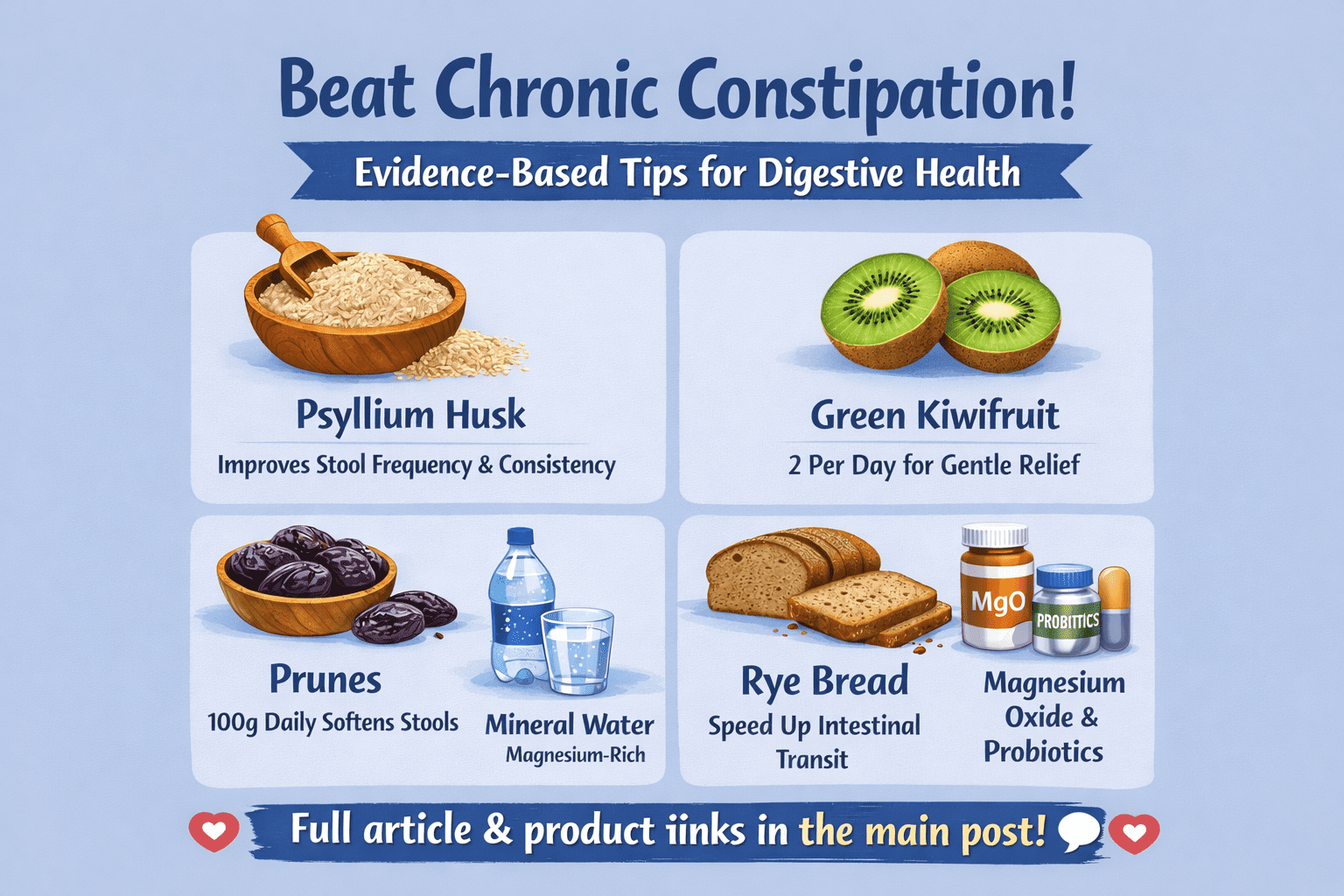
Not all fibers are created equal. Among the most notable findings is that psyllium (ispaghula) — a soluble, gel-forming fiber — stands out as the most effective fiber supplement for chronic constipation.
- Clinical Benefits: Psyllium significantly increases weekly bowel movements, improves stool consistency, and reduces straining, which is one of the most distressing symptoms for patients.
- Quality of Life: Studies show that psyllium not only alleviates physical symptoms but also improves patient-reported quality-of-life scores, reducing social anxiety and emotional distress associated with chronic constipation.
- Comparison with Other Fibers: Other commonly used fibers, including polydextrose and galacto-oligosaccharides, demonstrated minimal clinical benefits, challenging the misconception that any fiber works equally well.
Takeaway: A measured daily dose of psyllium husk is now strongly recommended as part of a structured dietary plan.
For the first time, specific fruits have been elevated to the level of therapeutic interventions. Among them, green kiwifruit is particularly effective.
- Dosage: Consuming two green kiwifruits daily can increase stool frequency, reduce abdominal discomfort, and improve stool consistency.
- Advantages: Unlike many high-fiber grains, kiwifruit rarely causes bloating, making it an excellent option for sensitive digestive systems.
- Mechanism: Rich in soluble and insoluble fiber, actinidin enzymes, and water, kiwifruit promotes natural bowel movements and smooth digestion.
Tip for Readers: Adding kiwifruit to your breakfast or snack routine is a simple, natural way to enhance gut health without relying on supplements.
Prunes, long considered a traditional remedy for constipation, now have robust scientific backing.
- Recommended Intake: Approximately 100 grams of prunes daily.
- Efficacy: Studies indicate prunes outperform several over-the-counter bulk-forming laxatives in improving bowel movement frequency and stool softness.
- Mechanism: Prunes contain sorbitol, dietary fiber, and phenolic compounds, which draw water into the intestines and promote smooth bowel movements.
Tip: Prunes can be eaten as a snack or soaked overnight to enhance digestibility.
Among grains, rye bread was found to shorten intestinal transit time, allowing waste to move more efficiently through the digestive tract.
- Impact: Regular rye intake can reduce constipation severity and improve stool consistency.
- Recommendation: Include rye-based bread or crackers in your daily diet as a fiber-rich option.
Note: Rye is especially effective when combined with soluble fibers like psyllium for maximum benefit.
Probiotics are often marketed broadly for “gut health,” but the guidelines emphasize that benefits are highly strain-specific.
- Key Finding: Bifidobacterium lactis consistently improves stool frequency and stool form in adults with chronic idiopathic constipation.
- Other Strains: Generalized probiotic formulations may not produce significant clinical benefits.
Tip: Choose probiotic supplements with clear, evidence-backed strains rather than relying on generic labels.
Hydration has long been recommended, but new evidence challenges the assumption that simply drinking more tap water alleviates constipation — unless the individual is dehydrated.
- Effective Option: Mineral-rich water containing magnesium and sulfate acts as a natural osmotic laxative, drawing water into the intestines and softening stools.
- Advantages: Accessible, non-pharmaceutical, and safe for long-term use.
Tip: Drinking 1–2 glasses of magnesium-rich mineral water daily can support bowel regularity, especially when combined with dietary fiber.
Magnesium Oxide: Safe and Effective Osmotic Supplement
For patients requiring more than dietary interventions:
- Effectiveness: Magnesium oxide softens stools and improves bowel regularity.
- Safety: Generally well tolerated when used under professional supervision.
- Comparison: Unlike stimulant laxatives, magnesium oxide is suitable for long-term management with fewer risks.
Tip: Magnesium oxide can be taken in measured doses alongside dietary changes for best results.
Quality of Life and Psychological Benefits
Chronic constipation is not merely a physical disorder; it significantly impacts mental health and social life.
- Symptoms: Social anxiety, emotional distress, and reduced productivity.
- Evidence: Interventions like psyllium and kiwifruit have been shown to improve both physical symptoms and patient-reported quality-of-life scores.
- Holistic Approach: Effective treatment should address both digestive and psychological aspects.
Clinical Adoption: Guidelines Endorsed
These new recommendations have already been endorsed by:
- British Dietetic Association (BDA)
- UK Primary Care Society for Gastroenterology
Impact on Practice: Clinicians can now provide structured dietary therapy rather than vague advice, such as:
- Two green kiwifruits daily
- Measured psyllium husk doses
- Magnesium-rich mineral water intake
This represents a shift toward precision nutrition for digestive health.
| Intervention | Key Benefit | Recommendation |
|---|---|---|
| Psyllium husk | Increase stool frequency & consistency | Daily measured dose |
| Green kiwifruit | Gentle, natural relief | 2 per day |
| Prunes | Increase bowel movement frequency | ~100g daily |
| Rye bread | Shorten intestinal transit time | Include regularly |
| Magnesium oxide | Safe osmotic laxative | Under supervision |
| Mineral-rich water | Draws water into intestines | 1–2 glasses/day |
| Bifidobacterium lactis | Strain-specific probiotic effect | Targeted supplement |
Conclusion: A Breakthrough in Constipation Management
Millions of people worldwide struggle silently with chronic constipation. These evidence-based dietary guidelines mark a turning poin
- Replacing vague advice with targeted, clinically validated interventions
- Combining dietary, supplemental, and hydration strategies for predictable relief
- Addressing both physical symptoms and quality-of-life issues
By following these recommendations, patients can reduce trial-and-error frustration, improve bowel regularity, and enjoy a better quality of life.
The information on this website is for educational and informational purposes only and is not a substitute for professional medical advice. Some links on this site are affiliate links through which we may earn a commission.








[…] Read More from Our Blog: Chronic Constipation Treatment […]
[…] Chronic Constipation Treatment […]
[…] Chronic Constipation Treatment […]
[…] Chronic Constipation Treatment […]
[…] Chronic Constipation Treatment […]