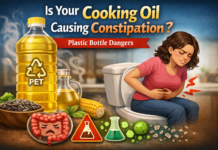

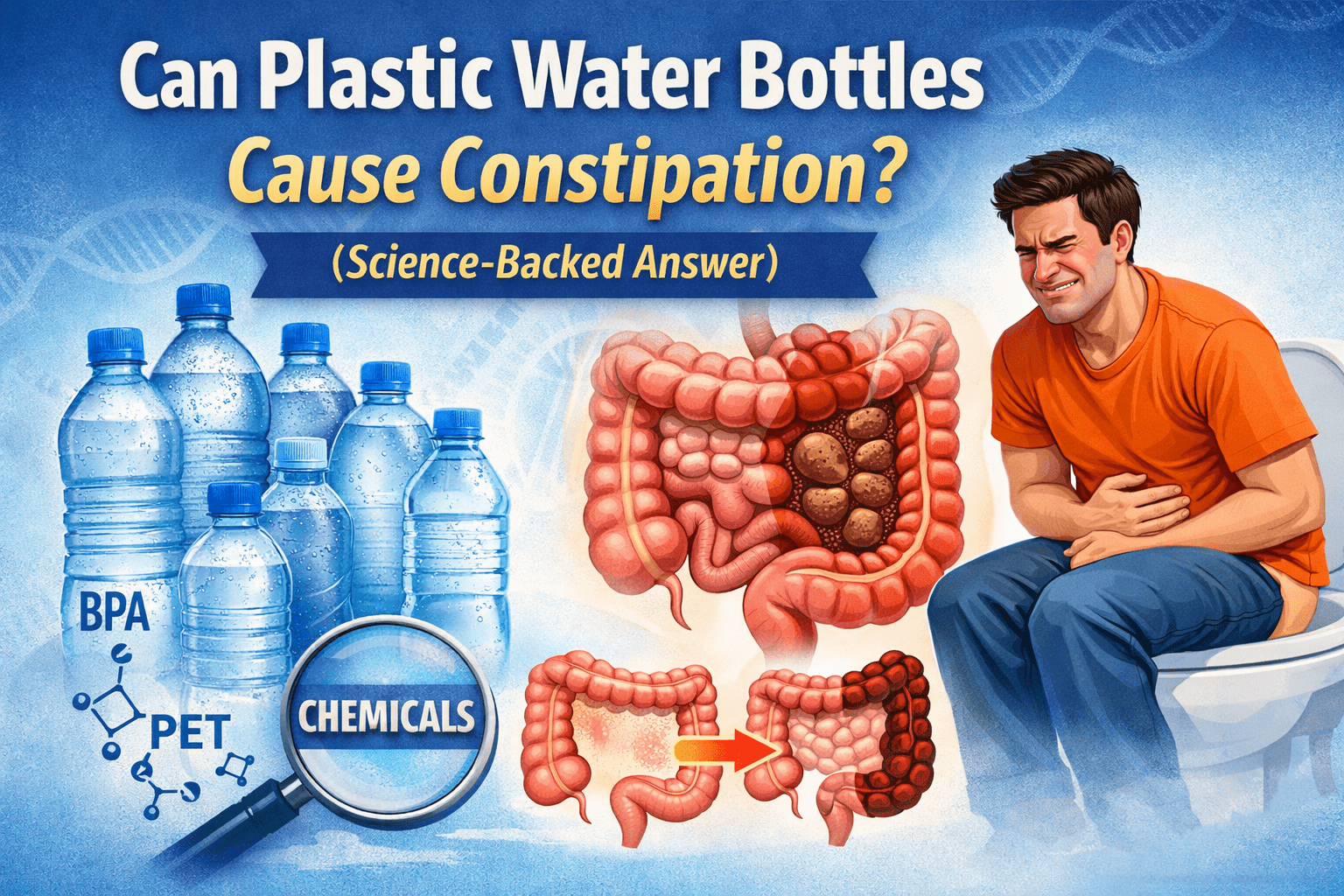
Every morning, millions of people reach for a plastic water bottle without a second thought. But here is the question more researchers are now asking: can plastic water bottles cause constipation? Globally, nearly one million plastic bottles are sold every single minute. From Dhaka to Dallas, bottled water has become so deeply embedded in daily life that questioning it feels almost radical.
Yet a growing body of scientific evidence is pointing in a troubling direction: the chemicals leaching from plastic water bottles may be quietly damaging our digestive systems — and specifically, contributing to constipation.
This is not a fringe concern raised by wellness bloggers. Peer-reviewed studies published in major scientific journals, research conducted under the oversight of the NIH, and investigations from universities like Columbia and Rutgers are all pointing in the same troubling direction. The chemicals in plastic — BPA, phthalates, BPS, and microplastics — interact with the human body in complex, far-reaching ways that scientists are only beginning to fully understand.
In this comprehensive research article, we will examine exactly what chemicals are hiding in your plastic water bottle, how they interact with the gastrointestinal tract, what the scientific evidence says about their role in constipation, and — most importantly — which types of water and beverages can actually help relieve constipation and restore healthy digestive function.
Table of Contents
| # | Section | What You’ll Learn |
|---|---|---|
| 1 | What Chemicals Are in Plastic Bottles? | BPA, BPS, Phthalates, Microplastics & Nanoplastics |
| 2 | How Do They Cause Constipation? | Peer-reviewed science linking plastic to slow GI transit |
| 3 | Other Constipation Causes & Plastic’s Role | How plastic silently worsens existing risk factors |
| 4 | Which Water Types Relieve Constipation? | 7 scientifically backed drinks for constipation relief |
| 5 | Comprehensive Relief Strategy | Fiber, exercise, routine, and OTC laxative options |
| 6 | How to Reduce Plastic Exposure | Practical daily steps to cut chemical intake |
| 7 | Research Limitations | Honest scientific caveats on current evidence |
| 8 | Best Plastic-Free Bottles on Amazon (2026) | Top 5 reviewed with Amazon links & ratings |
| 9 | When to See a Doctor | Red flag symptoms that need medical attention |
| — | Conclusion | Key takeaways and action steps |
| — | References | 16 peer-reviewed and medical sources with links |
What Chemicals Are Lurking in Plastic Water Bottles?
Before exploring the constipation connection, it is essential to understand the chemical landscape of a typical plastic water bottle. The science here is sobering.
BPA (Bisphenol A) — The Endocrine Disruptor
BPA is perhaps the most extensively studied chemical in plastic manufacturing. It is used to harden polycarbonate plastics and is found in the lining of many food and beverage containers. BPA is classified as a synthetic estrogen and an endocrine disruptor — meaning it mimics and interferes with the body’s natural hormonal signals.
The CDC conducted surveys and found BPA in the urine of the vast majority of people tested, confirming that widespread human exposure is occurring daily. The scientific literature has linked BPA to fertility problems, certain cancers, cardiovascular disease, obesity, and neurological development issues in children.
What makes BPA particularly relevant to digestive health is that it does not just stay in the bloodstream — it actively interferes with the nervous and hormonal systems that regulate gut function.
BPS — The “Safe” Alternative That Isn’t
When the public learned about BPA’s dangers, manufacturers pivoted to “BPA-Free” products, primarily replacing BPA with BPS (Bisphenol S). However, independent research has shown that BPS disrupts the endocrine system in nearly identical ways to BPA. Toxicologists have called this a “regrettable substitution” — replacing one harmful chemical with another that is equally problematic.
A landmark study found that approximately 95% of commercially available plastic products — including those labeled BPA-Free — leached chemicals with significant estrogenic activity. Some BPA-Free products showed even higher estrogenic activity than their BPA-containing counterparts. The “BPA-Free” label, in other words, is largely a marketing claim, not a health guarantee.
Phthalates — Metabolism and Hormone Disruptors
Phthalates are plasticizers used to make plastic flexible. Like BPA, they are endocrine disruptors with particular documented effects on male reproductive health. Research has linked phthalate exposure to metabolic disorders, type 2 diabetes, and neurodevelopmental problems in children. They are found not only in plastic bottles but in food packaging, cosmetics, and medical devices — making total daily exposure potentially very high.
Microplastics and Nanoplastics — The Invisible Threat
Perhaps the most alarming recent discovery concerns microplastics and nanoplastics. In 2024, a groundbreaking study conducted by researchers at Columbia University and Rutgers University, with NIH oversight, used advanced SRS (Stimulated Raman Scattering) microscopy technology to analyze bottled water in unprecedented detail.
Their findings were extraordinary: bottled water contained an average of approximately 240,000 tiny plastic particles per liter. Of these, 90% were nanoplastics — particles so small they are invisible to the naked eye and capable of penetrating individual human cells. This figure was 10 to 100 times higher than previous estimates, suggesting earlier studies had significantly underestimated the problem.
These nanoplastic and microplastic particles have now been detected in human blood, lungs, heart tissue, brain tissue, testicular tissue, and even breast milk. The PET plastic used to manufacture water bottles can leach at least 150 different chemicals into the water it contains, including heavy metals like lead and antimony, as well as BPA.
Heat Dramatically Accelerates Chemical Leaching
Scientists have documented that heat causes dramatic increases in chemical release from plastic bottles. Studies conducted in hot climates found that antimony leaching from PET bottles increased significantly with rising temperature. Leaving a plastic bottle in a hot car, in direct sunlight, or in a warm environment substantially increases the concentration of chemicals that end up in the water you drink.
Reused Bottles Are Even More Problematic
Research has shown that repeatedly using single-use PET bottles accelerates plastic degradation and increases chemical leaching beyond what occurs with first use. Every time a bottle cap is opened and closed, microplastic particles can be shed into the water. Consumers who reuse single-use bottles in an effort to be economical may actually be increasing their chemical exposure significantly.
How Do Plastic Chemicals Cause Constipation? The Scientific Evidence
This is the central question, and the evidence — while still developing — is genuinely concerning.
BPA Directly Slows Gastrointestinal Transit
The most directly relevant study comes from the Department of Physiology at Banaras Hindu University, India, published in a peer-reviewed journal and indexed by the NIH’s PubMed/PMC database. Researchers examined the effects of BPA on gastrointestinal (GI) function in animal models using both short-term (single dose) and long-term (28 days continuous) exposure protocols.
The results were clear and significant:
- Gastric transit index (GTI) — measuring how quickly food moves through the stomach — was significantly reduced
- Ileocecal transit index (ICTI) — measuring transit through the small intestine — was significantly reduced
- Colonic transit time (CTT) — measuring how long it takes material to move through the large intestine — was significantly increased
In plain terms: BPA slowed the movement of food and waste through every major section of the digestive tract. The researchers themselves explicitly stated: “Slow GI transit may lead to metabolic disorders and GI motility disorders, such as constipation.”
This is not a speculative connection. These are researchers who studied BPA’s effect on digestive function and directly concluded that it can cause constipation.
The Two Pathways: Direct and Hormonal
BPA appears to cause constipation through at least two distinct biological pathways:
Pathway 1 — Direct Impairment of Intestinal Muscle Contraction
The intestines move food and waste through a rhythmic process of muscular contraction and relaxation called peristalsis. This is the fundamental mechanism of normal bowel movement. Research has shown that BPA weakens the contractile ability of intestinal smooth muscle — essentially reducing the power of peristalsis. When this wave-like motion slows down, stool accumulates in the colon, loses water through absorption, becomes hard and dry, and becomes difficult to pass. This is, by definition, constipation.
Pathway 2 — Hormonal Disruption via the Thyroid
BPA functions as a synthetic estrogen and also interferes with thyroid hormone signaling. Hypothyroidism — low thyroid function — is a well-established cause of constipation. Slowed metabolism, reduced intestinal motility, and hard, infrequent stools are classic symptoms of an underactive thyroid. If BPA is suppressing thyroid function, it may be causing constipation indirectly through this hormonal route, even in people who have never been diagnosed with a thyroid disorder.
This creates a particularly insidious scenario: a person drinking daily from plastic bottles may experience worsening constipation, attribute it to diet or lifestyle, and never consider that the container holding their water is contributing to the problem.
Microplastics and the Gut Microbiome
Early-stage research suggests that microplastic particles may disrupt the gut microbiome — the vast community of trillions of beneficial bacteria, fungi, and other microorganisms living in the intestinal tract. These microorganisms play active roles in digestion, fermentation of dietary fiber, production of short-chain fatty acids that fuel intestinal cells, and regulation of bowel movement frequency and consistency.
When the microbiome is disrupted — a condition called dysbiosis — constipation, diarrhea, bloating, and other digestive problems frequently follow. Several studies have now found that microplastic exposure can alter microbiome composition in animal models, reducing beneficial species and promoting inflammatory responses in the gut lining.
Inflammation in the Gut Lining
Beyond the microbiome, microplastic particles may directly irritate the intestinal mucosa — the delicate lining of the intestines. Chronic low-grade inflammation of the gut lining can impair normal digestive function, interfere with nutrient absorption, and contribute to the sluggish bowel activity that characterizes constipation.
The Broader Context — Other Constipation Causes and Plastic’s Role
It is important to be scientifically honest: plastic bottle chemicals are unlikely to be the sole cause of constipation in most people. Constipation is a multifactorial condition with numerous contributing causes, including insufficient water intake, low dietary fiber consumption, physical inactivity, certain medications, Irritable Bowel Syndrome (IBS), hypothyroidism, diabetes, pregnancy, and psychological stress.
However, the important insight is this: plastic chemicals may be silently worsening constipation in people who already have some of these risk factors, making an existing tendency toward constipation significantly more severe.
For a comprehensive overview of constipation causes, visit: Constipation Causes
Which Types of Water Actually Help Relieve Constipation?
1. Plain, Clean Water — The Foundation
The most fundamental intervention for constipation is simply drinking enough water. According to Johns Hopkins Medicine, the large intestine absorbs water from stool as it passes through. When the body is even mildly dehydrated, the colon extracts more water from stool, making it hard, dry, and difficult to pass. The standard recommendation is 1.5 to 2 liters of water per day as a first-line intervention.
Critical caveat: Drinking more water from plastic bottles may be counterproductive if BPA and other chemicals in those bottles are simultaneously slowing your GI transit. Drink your water from glass or stainless steel containers to maximize hydration benefits without chemical exposure.
2. Warm and Hot Water
Research supports the traditional practice of drinking warm or hot water for digestive health. Warm water dilates blood vessels in the digestive tract, stimulates peristalsis, and may help dissolve hardened stool. A randomized controlled trial on postoperative patients found that those who drank warm water passed gas and had bowel movements significantly earlier. Starting each morning with a glass of warm lemon water is a practice supported by both traditional medicine and modern science.
3. Magnesium Sulfate-Rich Natural Mineral Water
If there is one type of water with the strongest scientific evidence for relieving constipation, it is natural mineral water rich in magnesium sulfate. A comprehensive review concluded that this type of mineral water is effective in treating Functional Constipation based on clinical trial evidence. Magnesium works through two complementary mechanisms: the osmotic effect (drawing water into the intestinal lumen, softening stool) and neuromuscular stimulation (promoting peristaltic contractions).
For more on magnesium supplementation: 5 Best Magnesium Supplements for Constipation (2026)
4. Coffee and Warm Beverages
Coffee activates the gastrocolic reflex, a neurological response that triggers colonic contractions when the stomach is stimulated. This effect occurs with both caffeinated and decaffeinated coffee. Moderate consumption of one to two cups daily, combined with adequate water intake, is the optimal approach.
5. Prune Juice and Fruit Juices
Prune juice is arguably the most evidence-backed natural beverage remedy for constipation. Its effectiveness comes from sorbitol — a naturally occurring sugar alcohol that functions as an osmotic laxative — as well as soluble fiber. Apple juice and pear juice also contain meaningful amounts of sorbitol and pectin.
To learn how quickly prune juice works: How Long Does It Take for Prune Juice to Work?
6. Probiotic Beverages
Probiotic-rich fermented beverages — kefir, kombucha, and drinking yogurt — directly address gut microbiome disruption, one of the key mechanisms by which plastic chemicals may worsen constipation. Consistent consumption of these beverages helps restore microbial balance and supports regular bowel movements.
For the best probiotic supplements: 9 Best Probiotic Supplements 2026
For Seed DS-01 specifically: Seed DS-01 Review: Does It Really Help With Constipation?
7. Filtered Tap Water in Non-Plastic Containers
Research suggests that switching from bottled water to filtered tap water can reduce microplastic consumption by up to 90%. A high-quality reverse osmosis or activated carbon filter removes microplastics, BPA residues, and heavy metals. Storing this filtered water in glass or stainless steel containers completes the chain of protection.
A Comprehensive Constipation Relief Strategy
Increase Dietary Fiber
The recommended daily fiber intake is 25–38 grams. Soluble fiber (oats, apples, legumes) softens stool; insoluble fiber (whole wheat, vegetables, bran) adds bulk and speeds transit. Prunes, kiwi fruit, papaya, and flaxseed are particularly potent natural remedies.
For detailed guidance: Best Fiber Foods and Fiber Therapy for Gut Health
Move Your Body Regularly
Even moderate exercise — 30 minutes of brisk walking daily — has been shown in clinical studies to significantly reduce constipation frequency and severity by stimulating intestinal motility.
Establish a Consistent Toilet Routine
The gastrocolic reflex is most active in the morning after the first meal of the day. Establishing a consistent morning routine and never ignoring the natural urge to defecate significantly improves bowel regularity.
Consider OTC Laxatives When Necessary
For detailed guidance: Best OTC Laxatives for Constipation
For constipation from iron pills: Best Laxative for Constipation from Iron Pills
Practical Steps to Reduce Plastic Bottle Exposure
Switch to glass or stainless steel bottles. These materials release no chemicals into water under any conditions.
Never leave plastic bottles in hot environments. Heat dramatically accelerates chemical leaching.
Do not reuse single-use plastic bottles. Each reuse increases degradation and chemical release.
Never microwave in plastic containers. Heat is the primary accelerant of chemical leaching from plastic.
Install a quality water filter. Reverse osmosis or activated carbon filtration dramatically reduces microplastic and chemical contamination.
Check your cookware too: Does Your Cookware Cause Constipation?
For research: Constipation Research Hub | For remedies: Constipation Remedies | For diet: Constipation Diet Guide
Limitations of Current Research
The most direct evidence linking BPA to slowed GI transit comes from animal studies; human clinical trials remain limited. Whether the daily dose of BPA from plastic bottles is sufficient to cause measurable effects in humans remains open. Constipation is also multifactorial, making it difficult to isolate plastic chemicals as a specific cause in any individual. The NIH has acknowledged that the health effects of nanoplastics are largely unknown and that more research is urgently needed. What the evidence does support is that the biological mechanisms are plausible, exposure is real and measurable, and the precautionary principle strongly supports reducing plastic bottle use.
Best Plastic-Free Water Bottles on Amazon — Our Top Picks (2026)
Now that you understand why switching away from plastic bottles matters for your digestive health, here are the top-rated, best-selling options on Amazon. All five picks below are completely BPA-free, leach no chemicals into your water, and carry thousands of verified positive reviews.
🥇 #1 — Hydro Flask Wide Mouth (32 oz) — Best Overall
Material: 18/8 Pro-Grade Stainless Steel | Insulation: Double-wall TempShield vacuum | Amazon Rating: ⭐⭐⭐⭐⭐ (4.8/5, 50,000+ reviews)
🔗 View on Amazon — Hydro Flask Wide Mouth 32 oz
The Hydro Flask Wide Mouth has been the most consistently top-rated stainless steel water bottle across multiple independent testing roundups — from OutdoorGearLab to CNN Underscored. The interior is pure 18/8 food-grade stainless steel with no plastic lining, meaning your warm morning water or cold mineral water touches only inert metal before it reaches your lips. It uses a glass bead seal rather than lead in its insulation process — a detail that matters to health-conscious buyers.
Performance highlights:
- Keeps drinks cold for up to 24 hours and hot for up to 12 hours
- Leakproof Flex Chug Cap — one of the best lid designs tested
- Wide mouth fits ice cubes and cleans easily
- Available in 12 oz to 64 oz and dozens of colors
Honest cons: Takes more cosmetic damage from drops than the YETI Rambler. Hand wash only.
Best for: Anyone who wants a reliable, chemical-free daily driver proven to maintain temperature all day.
🥈 #2 — YETI Rambler (26 oz) — Best for Durability
Material: 18/8 Stainless Steel | Insulation: Double-wall vacuum | Amazon Rating: ⭐⭐⭐⭐⭐ (4.8/5, 40,000+ reviews)
🔗 View on Amazon — YETI Rambler 26 oz
The YETI Rambler is built to last a decade of daily punishment. The interior is pure stainless steel with no plastic lining, and the Chug Cap design eliminates any additional plastic contact point. CNN Underscored ranked it as the most durable bottle tested, surviving drop tests that left competing bottles dented or damaged.
Performance highlights:
- Most durable in independent drop testing
- Magnetic Chug Cap — airtight, leakproof seal
- DuraCoat finish resists scratches and fading for years
- Dishwasher safe — rare for insulated bottles
Honest cons: In extended 48-hour temperature tests, ranked last among top competitors. Adequate for standard daily use under 24 hours.
Best for: Heavy users, outdoor enthusiasts, anyone who wants a bottle that lasts 10+ years.
🥉 #3 — Klean Kanteen TKWide (20 oz) — Best for Clean Taste + Sustainability
Material: Recycled 18/8 Stainless Steel | Insulation: Climate Lock double-wall vacuum | Amazon Rating: ⭐⭐⭐⭐ (4.6/5, 20,000+ reviews)
🔗 View on Amazon — Klean Kanteen TKWide 20 oz
Klean Kanteen stands apart for two reasons: it features a metal rather than plastic straw, eliminating the slight chemical flavor plastic straws impart even on cold water, and it is made from recycled stainless steel, making it the most environmentally responsible option on this list. For the purest tasting water experience, this bottle wins.
Performance highlights:
- Keeps drinks cold for up to 50 hours and hot for up to 20 hours — the strongest insulation stats of any bottle on this list
- Electropolished interior prevents flavor retention
- Metal straw included — no plastic contact
- Backed by a lifetime guarantee
Honest cons: Lid seals can wear before the bottle itself does. Keeping a replacement seal on hand is advisable for long-term users.
Best for: Taste-sensitive drinkers, eco-conscious consumers, coffee and tea drinkers who want a bottle that never absorbs flavors.
⭐ #4 — Lifefactory Glass Bottle with Active Flip Cap (22 oz) — Best Glass Option
Material: Borosilicate Glass + Silicone Sleeve | Insulation: None (single-wall) | Amazon Rating: ⭐⭐⭐⭐ (4.5/5, 8,000+ reviews)
🔗 View on Amazon — Lifefactory Glass Water Bottle 22 oz
Glass is the gold standard for chemical purity. It is completely inert — it releases zero chemicals under any conditions, regardless of temperature, time, or reuse. When you pour warm lemon water or magnesium-rich mineral water into this bottle, what comes out is exactly what went in. For readers switching away from plastic specifically to reduce gut-disrupting chemical exposure, this is the most logical destination.
Performance highlights:
- Zero chemical leaching — completely inert under all conditions
- Active Flip Cap proved completely leakproof in testing
- Silicone sleeve provides grip and meaningful drop protection
- No flavor retention whatsoever
- Fully dishwasher safe (except lid)
Honest cons: Heavier than steel, no insulation, can break under extreme impact. Not suited for outdoor or rough daily use.
Best for: Home use, office hydration, morning warm water routines, health purists who want absolute zero material compromise.
💰 #5 — Iron Flask Sports Water Bottle (32 oz) — Best Value
Material: 18/8 Stainless Steel | Insulation: Double-wall vacuum | Amazon Rating: ⭐⭐⭐⭐ (4.7/5, 60,000+ reviews)
🔗 View on Amazon — Iron Flask 32 oz Water Bottle
The Iron Flask is Amazon’s bestselling stainless steel water bottle by volume — and for buyers on a budget, it delivers performance comparable to Hydro Flask at roughly half the price.
Performance highlights:
- Comes with three interchangeable lids in the box — straw, flip, and wide mouth cap
- Keeps drinks cold 24 hours and hot 12 hours
- 18/8 stainless steel interior — completely BPA-free
- Available in 14 oz to 64 oz and over 30 colors
Honest cons: Included plastic straws impart a slight flavor. For pure taste, choose Klean Kanteen or Lifefactory instead.
Best for: Budget-conscious buyers, first-time switchers from plastic, gym and sports use.
Quick Comparison Table
| Bottle | Material | Best For | Price | Rating |
|---|---|---|---|---|
| Hydro Flask Wide Mouth | Stainless Steel | Best Overall | $$$ | ⭐ 4.8/5 |
| YETI Rambler | Stainless Steel | Durability | $$$ | ⭐ 4.8/5 |
| Klean Kanteen TKWide | Recycled Steel | Clean Taste + Eco | $$$ | ⭐ 4.6/5 |
| Lifefactory Glass | Borosilicate Glass | Zero Chemicals | $$ | ⭐ 4.5/5 |
| Iron Flask | Stainless Steel | Best Value | $$ | ⭐ 4.7/5 |
Our recommendation for constipation sufferers: Use the Lifefactory Glass for home morning routines and the Hydro Flask or Iron Flask for on-the-go hydration. This two-bottle strategy gives you maximum chemical avoidance with practical daily convenience.
When to Seek Medical Attention
Not all constipation can be addressed through diet and hydration changes alone. Seek medical attention if you experience constipation lasting more than two weeks that does not respond to lifestyle changes, blood in the stool or rectal bleeding, unexplained weight loss, severe abdominal pain, a sudden change in bowel habits after age 50, or constipation alternating with diarrhea. These symptoms may indicate colorectal cancer, inflammatory bowel disease, or other serious gastrointestinal disorders.
For personal constipation stories: Constipation Stories
For supplement reviews: Constipation Supplements Guide
For a highly regarded book on the topic: Best Constipation Remedies Book Review — Rudy Silva
Frequently Asked Questions (FAQ)
Does BPA in plastic water bottles cause constipation?
Research from the Department of Physiology at Banaras Hindu University — published in PubMed/PMC — found that BPA significantly slows gastrointestinal transit time in animal models. Specifically, it reduced gastric transit index (GTI), ileocecal transit index (ICTI), and increased colonic transit time (CTT). The researchers explicitly concluded that slow GI transit caused by BPA may lead to constipation. While large-scale human clinical trials are still needed, the biological mechanism is well-established and scientifically credible.
What chemicals in plastic water bottles affect digestion?
The four main chemicals of concern are BPA (Bisphenol A), BPS (Bisphenol S), phthalates, and microplastics/nanoplastics. BPA is a synthetic estrogen that slows gut muscle contractions and interferes with thyroid hormones — both of which contribute to constipation. BPS, used in BPA-Free bottles, has been shown to cause nearly identical hormonal disruption. Phthalates affect metabolism and the endocrine system. Microplastics may damage the gut microbiome and cause intestinal inflammation.
Is bottled water bad for your gut health?
The growing scientific evidence suggests it can be, particularly with long-term daily use. A 2024 Columbia University and Rutgers University study found an average of 240,000 plastic particles per liter in bottled water — 90% of which were nanoplastics capable of entering individual cells. These particles have been found in human blood, heart tissue, and brain tissue. The gut microbiome may be particularly vulnerable to disruption from microplastic accumulation. Switching to filtered tap water in glass or stainless steel containers can reduce microplastic intake by up to 90%.
What is the best water to drink for constipation?
The most scientifically supported options are: (1) magnesium sulfate-rich natural mineral water, which has been proven effective in clinical trials for Functional Constipation; (2) warm or hot water, which stimulates peristalsis and was shown in a randomized controlled trial to accelerate bowel movements; (3) prune juice, which contains sorbitol — a natural osmotic laxative; and (4) filtered tap water consumed from glass or stainless steel containers. All of these options also avoid the chemical exposure that comes with plastic bottled water.
Does warm water help with constipation?
Yes — and the evidence is strong. Warm water dilates blood vessels in the digestive tract, increases circulation to gut tissues, and directly stimulates peristalsis — the muscular wave-like contractions that push stool through the colon. A randomized controlled trial on postoperative patients found that those who drank warm water passed gas and had bowel movements significantly earlier than the cold water group. Drinking one glass of warm or warm lemon water first thing in the morning is one of the most accessible and effective constipation relief habits you can build.
How many microplastics are in bottled water?
Far more than scientists previously thought. A landmark 2024 study by Columbia University and Rutgers University using advanced SRS microscopy found an average of 240,000 plastic particles per liter in commercially bottled water. Of these, 90% were nanoplastics — invisible to the naked eye and small enough to cross cell membranes. This figure was 10 to 100 times higher than earlier estimates. Microplastics from bottled water have now been detected in human blood, lungs, heart, brain, testicular tissue, and breast milk.
Which plastic-free water bottles are best for constipation sufferers?
Based on our review of the top Amazon-rated options: the Hydro Flask Wide Mouth 32 oz is the best overall pick (4.8/5, 50,000+ reviews); the YETI Rambler 26 oz is the most durable; the Klean Kanteen TKWide 20 oz offers the cleanest taste with its metal straw and recycled steel construction; the Lifefactory Glass Bottle 22 oz is the gold standard for zero chemical exposure; and the Iron Flask 32 oz is the best budget option (4.7/5, 60,000+ reviews). For constipation sufferers specifically, use the Lifefactory Glass for home morning routines and the Hydro Flask or Iron Flask for daily on-the-go use.
How can I reduce plastic chemical exposure from water bottles?
The most impactful steps are: switch to glass or stainless steel bottles immediately; never leave plastic bottles in hot cars or direct sunlight; do not reuse single-use plastic bottles; avoid microwaving food or drink in plastic containers; and install a reverse osmosis or activated carbon water filter at home. Research shows that switching from bottled to filtered tap water in non-plastic containers can reduce your daily microplastic intake by up to 90%.
The question was: can plastic water bottles cause constipation? The honest scientific answer is: the direct causal link in humans is not yet definitively proven, but the evidence is substantial enough to take seriously as a real risk.
BPA has been shown in peer-reviewed research to slow gastrointestinal transit through direct impairment of intestinal muscle function and through thyroid hormone disruption. Microplastics are present in bottled water in concentrations far higher than previously estimated, and early evidence suggests they may disrupt the gut microbiome. Daily exposure to these chemicals is occurring in virtually every population on earth.
The rational response is not panic — it is informed action. Switch to glass or stainless steel bottles. Filter your tap water. Drink warm water in the morning. Add magnesium-rich mineral water to your routine. Eat a high-fiber diet. Move your body. Take your gut microbiome seriously.
Constipation is one of the most responsive conditions to lifestyle intervention. Small, consistent changes to how you hydrate — what you drink, how much you drink, and what you drink it from — can produce significant improvements in digestive health within days to weeks.
Your gut is communicating with you. The question is whether you are listening — and whether you are willing to look beyond the obvious causes to consider the container holding your water.
References
- Dixit et al. (2024) — Effects of BPA on Gastrointestinal Transit Time — Banaras Hindu University / PMC https://pmc.ncbi.nlm.nih.gov/articles/PMC10918301/
- Qian N, Gao X et al. (2024) — Rapid single-particle chemical imaging of nanoplastics by SRS microscopy — Columbia University & Rutgers / PNAS https://www.pnas.org/doi/10.1073/pnas.2300582121
- NIH Research Matters (2024) — Plastic Particles in Bottled Water https://www.nih.gov/news-events/nih-research-matters/plastic-particles-bottled-water
- Columbia University Mailman School of Public Health (2024) — Bottled Water Can Contain Hundreds of Thousands of Nanoplastics https://www.publichealth.columbia.edu/news/bottled-water-can-contain-hundreds-thousands-nanoplastics
- Dupont C & Hébert G (2020) — Magnesium Sulfate-Rich Natural Mineral Waters in the Treatment of Functional Constipation — A Review — Nutrients / PMC https://pmc.ncbi.nlm.nih.gov/articles/PMC7400933/
- Dupont C, Campagne A, Constant F (2014) — Efficacy and Safety of a Magnesium Sulfate-Rich Natural Mineral Water — Clinical Gastroenterology and Hepatology / PubMed https://pubmed.ncbi.nlm.nih.gov/24342746/
- Bothe G et al. (2015) — Efficacy and Safety of a Natural Mineral Water Rich in Magnesium and Sulphate for Bowel Function — European Journal of Nutrition / PMC https://pmc.ncbi.nlm.nih.gov/articles/PMC5334415/
- Naumann J et al. (2016) — Effects of Sulfate-Rich Mineral Water on Functional Constipation — PubMed https://pubmed.ncbi.nlm.nih.gov/27924798/
- Bharucha AE et al. (2020) — Mechanisms, Evaluation, and Management of Chronic Constipation — Gastroenterology / PubMed https://pubmed.ncbi.nlm.nih.gov/31945360/
- Johns Hopkins Medicine — Foods for Constipation https://www.hopkinsmedicine.org/health/wellness-and-prevention/foods-for-constipation
- Harvard Health Publishing — 8 Ways to Relieve Constipation https://www.health.harvard.edu/digestive-health/8-ways-to-relieve-constipation
- GoodRx Health — The 5 Best Drinks for Constipation https://www.goodrx.com/health-topic/digestive-system/best-drinks-for-constipation
- Healthline — Does Water Help with Constipation? https://www.healthline.com/health/digestive-health/water-for-constipation
- Cleveland Clinic — Constipation: Diagnosis & Treatment https://my.clevelandclinic.org/health/diseases/4059-constipation
- NPR (2024) — Researchers Find a Massive Number of Plastic Particles in Bottled Water https://www.npr.org/2024/01/10/1223730333/bottled-water-plastic-microplastic-nanoplastic-study
- CBS News (2024) — Bottled Water Contains Up to 100 Times More Plastic Than Previously Estimated https://www.cbsnews.com/news/bottled-water-nanoplastics-up-to-100-times-more-plastic-pnas/
This article is intended for informational purposes only and does not constitute professional medical advice. For persistent or severe constipation, consult a qualified healthcare provider.