

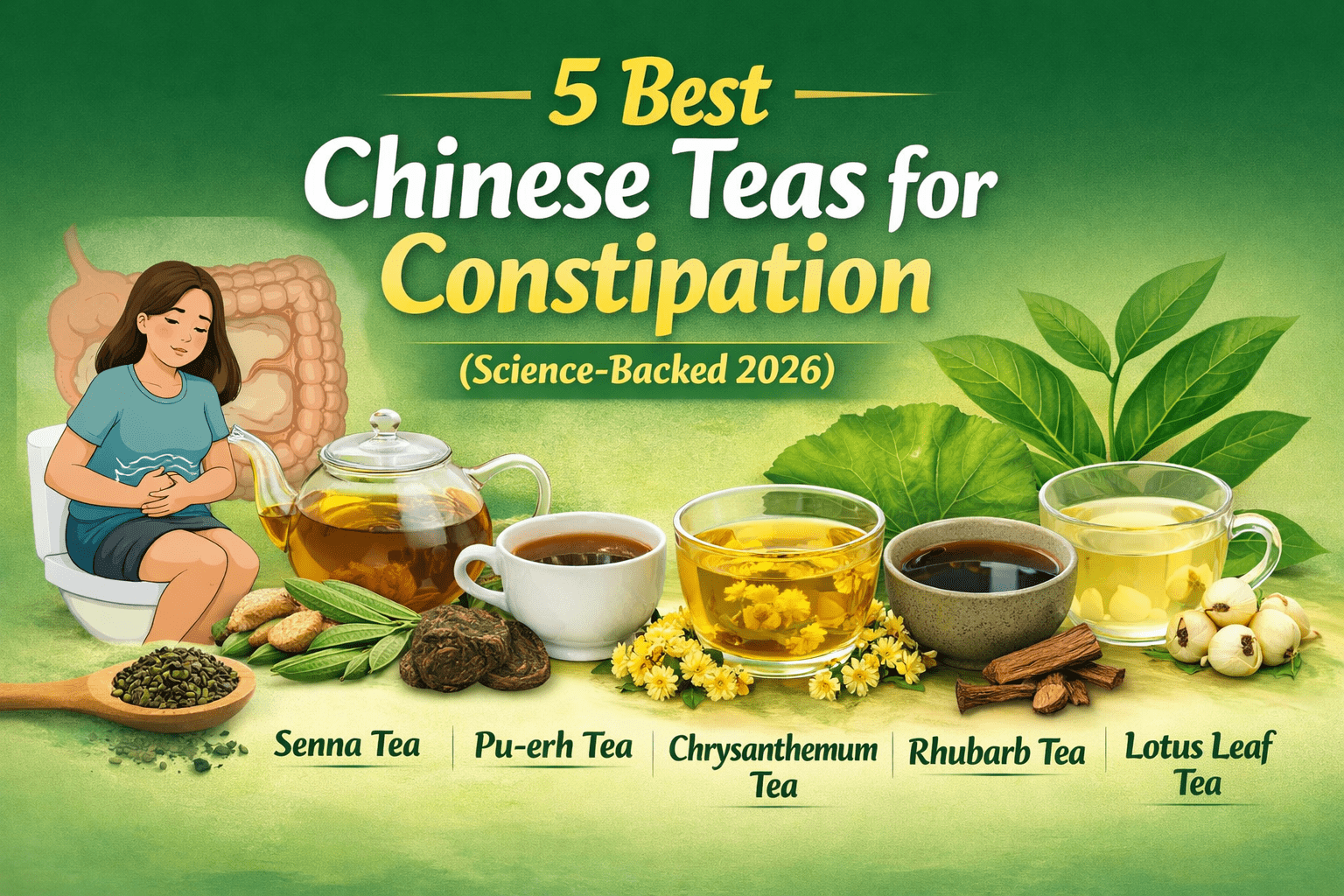
Constipation is one of the most common digestive complaints in the United States, affecting an estimated 16% of American adults — and rising to 33% in people over 60. If you’ve tried over-the-counter laxatives and ended up dealing with cramping, dependency, or that frustrating rebound effect, you’re not alone. That’s exactly why so many people are now turning to the best Chinese teas for constipation as a gentler, longer-term solution.
Traditional Chinese teas aren’t a miracle cure — but they are a time-tested, research-supported approach to digestive wellness that Western medicine is only beginning to fully appreciate. For over 2,000 years, Traditional Chinese Medicine (TCM) practitioners have used specific teas to address the root causes of constipation: gut stagnation, intestinal dryness, and slow bowel transit. If you’ve already explored best OTC laxatives for constipation without lasting results, Chinese tea for digestion may be the missing piece in your gut health routine.
Not all herbal teas for constipation relief are created equal. Some work as stimulant laxatives, some improve microbiome diversity, and others simply hydrate the intestinal lining — and knowing the difference is what this guide is all about.
Modern science is now catching up with ancient wisdom. PubMed-indexed clinical studies have confirmed the anti-constipation effects of Pu-erh tea, the powerful laxative mechanism of Senna tea, and the gut motility benefits of Oolong tea for stomach health and Ginger tea for bloating relief. This guide brings all that research together — along with honest product reviews and direct Amazon links — so you can make a fully informed choice.
⚡ Quick Answer: The best overall Chinese tea for constipation is Pu-erh tea — backed by clinical data showing it shortens gastrointestinal transit time and improves bowel frequency without harsh side effects. For fast, immediate Pu-erh tea constipation relief, the Shou (Ripe) variety is your best bet. If you need stronger, quicker action, Senna tea is the most potent option — but it must be used occasionally only, never daily. For everyday gut maintenance, Oolong tea for stomach support and Ginger tea are the gentlest and most sustainable choices.
How Chinese Tea for Digestion Works in Your Body: The Science
Drinking Chinese tea for digestion after meals is a centuries-old practice that modern gastroenterology is now validating through clinical research. Understanding these helps you choose the right tea for your type of constipation.
1. Stimulating Gut Motility (Peristalsis)
Some teas — especially those containing caffeine, sennosides, or certain polyphenols — directly stimulate the wave-like muscle contractions (peristalsis) that move waste through the colon. When this movement slows down, stool sits in the colon longer, losing water and becoming hard and difficult to pass. This is one of the main causes of constipation that can be addressed through natural remedies.
2. Supporting the Gut Microbiome
Fermented teas like Pu-erh introduce probiotic-like microorganisms and prebiotics into the digestive system. Research published in peer-reviewed journals shows that regular Pu-erh consumption can increase beneficial bacteria like Bifidobacterium and Lactobacillus, which play a crucial role in stool softening, water retention in the bowel, and short-chain fatty acid production. You can read more about how probiotic supplements support gut health on our site.
3. Hydrating the Intestinal Lining
TCM explains constipation as “intestinal dryness” — a deficiency of moisture in the large intestine. Several teas naturally support intestinal hydration by softening stool and lubricating the gut lining. This aligns with modern gastroenterology’s understanding that dehydration is one of the most common causes of chronic constipation. Interestingly, research has also shown that plastic water bottles may contribute to constipation through BPA and microplastic exposure — so brewing your tea in glass or ceramic is always a better choice.
4. Reducing Gut Inflammation
Inflammation in the gut lining disrupts normal bowel function. Antioxidant-rich teas containing catechins, theabrownins, and polyphenols help reduce oxidative stress and gut inflammation — creating a healthier environment for regular digestion. Diet also plays a major role here; combining tea with high-fiber foods creates a powerful synergistic effect for gut health.
5. The TCM Perspective
Traditional Chinese medicine for constipation identifies three root patterns: Heat drying the intestines, Qi stagnation, and Blood deficiency. Modern research into TCM for constipation is now confirming that these ancient frameworks align closely with what gastroenterologists call slow-transit and dyssynergic constipation.
📚 What the Research Shows: A clinical trial registered at ClinicalTrials.gov demonstrated that the Chinese herbal formula Ma Zi Ren Wan (Hemp Seed Pill) showed comparable efficacy to Senna for functional constipation over an 8-week treatment period — and maintained benefits longer after treatment ended. A separate PubMed study on Pu-erh tea in mice found it shortened gastrointestinal transit rates by up to 78% compared to untreated controls, with effects approaching those of the prescription laxative bisacodyl. Sources: PubMed ID 24604453 | PMC6989537 | NCT01695850 – ClinicalTrials.gov
1. Pu-erh Tea Constipation Relief: What the Science Says
Rating: Effectiveness ★★★★☆ | Gentleness ★★★★★ | Daily Use: ✅ Safe | Caffeine: Moderate
Pu-erh is arguably the most scientifically validated Chinese tea for constipation and gut health. Originating from Yunnan Province and aged through microbial fermentation, it has been consumed for over 2,000 years — particularly after rich or oily meals. In traditional Chinese culture, Pu-erh is often served at Dim Sum restaurants alongside fatty dishes specifically because it is believed to “cut the grease” and support digestion.
If you’re looking for genuine Pu-erh tea constipation relief, the Shou (Ripe) variety is your best starting point — gentler on the stomach and better fermented than raw Sheng.
What Makes Pu-erh Work for Constipation?
Lovastatin: Pu-erh leaves naturally contain lovastatin, a compound that improves digestive function and has been linked to relief from constipation symptoms. This is the same compound used pharmaceutically to manage cholesterol, which hints at how significantly bioactive Pu-erh truly is.
Probiotic-like microorganisms: The fermentation process of Pu-erh (particularly Shou/Ripe Pu-erh) introduces beneficial microorganisms that behave similarly to probiotics in the gut. These help increase populations of Bifidobacterium and Akkermansia in the gut microbiome, supporting healthier bowel movements and reducing bloating. Our guide to best magnesium supplements for constipation also discusses how microbiome support compounds pair well with mineral supplementation for maximum effect.
Polyphenols and theabrownins: These antioxidant compounds reduce gut inflammation, stimulate digestive enzyme production, and support the intestinal barrier — all of which contribute to more regular digestion.
📚 Clinical Research Spotlight: A study published in Molecular Medicine Reports (PubMed ID: 24604453) investigated Pu-erh tea’s anti-constipation effects in mice. Researchers found that it significantly shortened first black stool defecation time and increased gastrointestinal transit rates by 48.6% to 78% depending on dose. The study concluded that Pu-erh tea may be used as a functional food to help prevent constipation — with effects approaching those of bisacodyl at higher concentrations. Source: Li G, Wang Q, et al. Molecular Medicine Reports, 9(5): 2003–2009, 2014. DOI: 10.3892/mmr.2014.2009 | PubMed
Sheng vs. Shou — Which Is Better for Constipation?
Shou (Ripe) Pu-erh undergoes accelerated wet-pile fermentation, making it dark, earthy, and lower in acidity. It is gentler on sensitive stomachs and recommended for digestive use after meals. Its warming quality in TCM makes it ideal for “moistening” dry intestines.
Sheng (Raw) Pu-erh is more astringent and undergoes natural slow aging. Younger Sheng teas can be harsh on the stomach, while aged Sheng (10+ years) develops deep digestive benefits over time.
Recommendation: For constipation relief, start with Shou (Ripe) Pu-erh. It’s gentler, more consistently fermented, and better documented for gut health benefits.
✓ Pros:
- Clinically researched anti-constipation effects
- Supports gut microbiome long-term
- Safe for daily use (1–3 cups)
- Rich, earthy flavor — enjoyable to drink
- No harsh laxative effect or dependency
✗ Cons:
- Contains caffeine — avoid late at night
- Earthy/funky flavor can be off-putting at first
- High-quality versions can be expensive
- Results are gradual, not immediate
🛒 Amazon Pick — Editor’s Choice: Numi Organic Tea Pu-erh Tea Bags (16 Count) Certified organic, fair-trade Shou Pu-erh. One of the most accessible and consistently reviewed Pu-erh options on Amazon. Earthy, smooth, and easy to brew daily. → Check Price on Amazon
How to Brew Pu-erh for Maximum Constipation Relief
- Use water just off a boil — approximately 205–212°F (96–100°C)
- Rinse the leaves with hot water for 5 seconds and discard (awakens the tea, removes surface dust)
- Steep for 2–3 minutes on the first infusion; increase time slightly for subsequent infusions
- Drink 1 cup 20–30 minutes after a heavy meal for best digestive effect
- Aim for 1–3 cups per day consistently for noticeable gut health benefits
2. Senna Tea Strongest Laxative Effect
Rating: Effectiveness ★★★★★ | Gentleness ★★☆☆☆ | Daily Use: ❌ Not Recommended | Caffeine: None
Senna is the most potent tea on this list — and the one requiring the most caution. Derived from the leaves and pods of Cassia acutifolia or Cassia angustifolia, Senna has been used in Chinese herbal medicine and TCM formulas for constipation for centuries. It is also the active ingredient in popular over-the-counter laxatives like Senokot. For a broader comparison of stimulant vs. osmotic laxatives, see our guide on best OTC laxatives for constipation.
How Senna Tea Works
Senna contains active compounds called sennosides — specifically Sennoside A and Sennoside B. According to the NIH LiverTox database, these sennosides are not absorbed in the small intestine; instead they travel to the large intestine where colonic bacteria hydrolyze them to release rhein and rhein-anthrone, which act as local irritants on the colonic mucosa, stimulating peristalsis and increasing fluid secretion into the colon.
A randomized, placebo-controlled clinical trial published in The American Journal of Gastroenterology (PubMed ID: 32969946) showed that senna achieved a 69.2% overall improvement response rate in chronic constipation patients, compared to just 11.7% in the placebo group — confirming its status as one of the most evidence-based laxatives available.
What Makes Senna Teas “Chinese”?
Many popular Chinese detox and diet teas contain Senna as a primary ingredient. The most well-known is Uncle Lee’s China Green Dieters Tea, which blends Senna leaf with Malva Verticellata (Chinese Mallow). This tea has been produced in the US for over 30 years and remains one of the most purchased Chinese-style herbal teas for constipation on Amazon.
⚠️ Important Safety Warning: Senna tea is intended for short-term, occasional use only — typically no more than 1–2 weeks at a time. According to the NIH LiverTox database, long-term or high-dose use can lead to electrolyte imbalance, laxative dependency, abdominal cramping, and clinically apparent liver injury. It should not be used by pregnant women, children under 18, or people taking warfarin or digoxin without consulting a physician.
✓ Pros:
- Most powerful and fast-acting relief (6–12 hours)
- Caffeine-free — safe to drink in evenings
- FDA-approved OTC laxative ingredient
- Inexpensive and easy to find
✗ Cons:
- Should NOT be used daily or long-term
- Can cause cramping and diarrhea
- Multiple drug interactions (warfarin, digoxin)
- Not safe during pregnancy or for children under 18
- Bitter, acquired taste
🛒 Amazon Pick — Best Seller: Uncle Lee’s China Green Dieters Tea with Senna (150 Tea Bags, Pack of 5) Over 30 years of production history. Contains Senna leaf and Chinese Mallow. 100% natural, caffeine-free. Thousands of verified Amazon reviews. Brew for 2–3 minutes only — oversteeping dramatically increases potency. → Check Price on Amazon
best tea for constipation overnight
Senna is the clear winner if you need the best tea for constipation overnight. Drink one cup (brewed 2–3 minutes only) before bed, and most people experience a bowel movement within 6–12 hours — by morning.
Senna Tea Side Effects: What You Need to Know
The most common side effects include abdominal cramps and bloating (especially if overbrewed), diarrhea if used in excess, and nausea in sensitive individuals. According to WebMD’s evidence-based supplement database, Senna is possibly unsafe when used for longer than 1 week or in doses above 34.4 mg sennosides twice daily. Anyone who experiences prolonged diarrhea, severe abdominal pain, or rectal bleeding after using Senna tea should stop immediately and consult a healthcare provider.
📚 Reference Sources:
- NIH LiverTox: Senna — https://www.ncbi.nlm.nih.gov/books/NBK547922/
- Morales MA, et al. Is Senna Laxative Use Associated to Cathartic Colon, Genotoxicity, or Carcinogenicity? J Toxicol. 2009. PMC2809429
- Senna vs. MgO RCT: Kamei K, et al. Am J Gastroenterol. 2021. PubMed 32969946
- WebMD: Senna Drug Interactions & Safety — https://www.webmd.com/vitamins/ai/ingredientmono-652/senna
3. Why Oolong Tea for Stomach Health Is a Daily Must
Rating: Effectiveness ★★★☆☆ | Gentleness ★★★★★ | Daily Use: ✅ Ideal | Caffeine: Moderate
Oolong tea sits in a fascinating middle ground: partially oxidized (typically 15–85%), it captures the best properties of both green and black tea. In Chinese culture, Oolong has been a digestive staple for centuries — consumed after meals at tea houses and during Dim Sum service throughout southern China, Hong Kong, and Taiwan. Pairing Oolong with a high-fiber diet is one of the most effective long-term strategies for preventing constipation.
What makes oolong tea for stomach support so effective is its unique partial oxidation — it sits between green and black tea, delivering the digestive polyphenols of both in a single cup.
Why Oolong Helps with Digestion and Constipation
Gut Motility Stimulation: Oolong contains both caffeine and polyphenols (particularly catechins and theaflavins) that work together to stimulate the digestive system and encourage gut motility. For people experiencing sluggish digestion or mild constipation, Oolong is a reliable daily support tea.
Mildly Antiseptic Effect: Oolong tea inhibits the growth of harmful bacteria in the gut, helping maintain a healthier microbial balance directly linked to more regular bowel movements and reduced bloating.
Alkalizing Effect: Unlike coffee, Oolong tea has an alkalizing effect on the body, helping reduce acid reflux and creating a more comfortable gut environment overall.
Polyphenol Prebiotics: The polyphenols in Oolong act as prebiotics — food for beneficial gut bacteria. Regular consumption supports a diverse, healthy microbiome, which is one of the strongest long-term predictors of consistent bowel function. To further amplify this effect, consider pairing Oolong tea with one of our recommended probiotic supplements.
Best Types of Oolong for Digestive Health
Da Hong Pao (Big Red Robe): One of China’s most prized oolongs from the Wuyi Mountains in Fujian Province. Known for its powerful fragrance, roasted flavor, and high antioxidant concentration. Excellent for digestion after heavy meals.
Tie Guan Yin (Iron Goddess of Mercy): A lighter, floral Oolong from Anxi, Fujian. Its gentler oxidation makes it easier on sensitive stomachs while still delivering digestive polyphenols.
Dan Cong Honey Orchid: From Guangdong Province. Complex aromatic profile with noted digestive support properties.
✓ Pros:
- Perfect for daily digestive maintenance
- Wide flavor range — something for everyone
- Supports gut microbiome as a prebiotic
- Gentle enough for sensitive stomachs
✗ Cons:
- Not for immediate/strong constipation relief
- Contains caffeine — limit in evenings
- Premium loose-leaf versions can be expensive
🛒 Amazon Pick — Best Value: FullChea Da Hong Pao Oolong Tea Loose Leaf — Wuyi Rock Tea (8.8oz / 250g) Authentic Da Hong Pao from Wuyi Mountain. High in antioxidants, rich roasted flavor, perfect for daily use after meals. Makes 100+ cups per bag. → Check Price on Amazon
4. Ginger Tea for Constipation: Best for Bloating Relief
Rating: Effectiveness ★★★★☆ | Gentleness ★★★★★ | Daily Use: ✅ Safe | Caffeine: Zero
Ginger has been a foundational herb in Chinese medicine for digestive complaints for over 2,000 years — and modern science has now provided substantial clinical evidence for why it works so well. It’s particularly useful when constipation is accompanied by bloating and gas, which are common in people whose diet or cookware may be disrupting gut function.
To use ginger tea for constipation most effectively, slice 5–6 rounds of fresh ginger root and steep covered in boiling water for 10–15 minutes — this maximizes gingerol extraction.
The Active Compounds: Gingerols and Shogaols
Fresh ginger root contains gingerols, while dried ginger contains higher concentrations of shogaols. Both compounds act on the digestive system through multiple pathways:
Gastric Emptying Acceleration: A randomized, double-blind clinical trial published in European Journal of Gastroenterology & Hepatology (Wu et al., 2008; PubMed ID: 18403946) demonstrated that ginger accelerates gastric emptying and stimulates antral contractions in healthy volunteers — meaning food moves from the stomach to the small intestine more quickly, reducing backed-up digestion.
Gut Motility Stimulation: A follow-up study published in World Journal of Gastroenterology (Hu et al., 2011; PMC3016669) confirmed these effects extended to patients with functional dyspepsia, showing that ginger significantly accelerated gastric emptying compared to placebo. This is why ginger tea is particularly helpful when constipation is accompanied by feelings of heaviness, bloating, and gas.
Anti-inflammatory Action: A 2019 systematic review in Food Science & Nutrition (Nikkhah Bodagh et al.; DOI: 10.1002/fsn3.807) concluded that ginger is a useful supplement for multiple gastrointestinal symptoms including nausea, vomiting, and bloating, and found it can be used at 1,000 mg/day without side effects.
Relaxing Intestinal Muscles: Ginger has calcium-antagonistic effects that cause spasmolysis — meaning it relaxes intestinal muscles while also stimulating motility, reducing cramping and spasms that often accompany difficult bowel movements.
Fresh vs. Dried Ginger Tea
For constipation relief, fresh ginger root (thinly sliced and steeped in boiling water for 10–15 minutes) is the most potent option. Dried ginger tea bags are convenient and effective but deliver a different compound profile. Both have valid digestive benefits — choose based on convenience.
✓ Pros:
- Completely caffeine-free
- Safe for most people including pregnant women (in moderation)
- Also relieves bloating, gas, and nausea
- Inexpensive and widely available
- Can be combined with other teas
✗ Cons:
- Spicy, pungent flavor not for everyone
- Not as potent as Senna or Pu-erh for severe constipation
- Large amounts may cause heartburn in sensitive individuals
🛒 Amazon Pick — Caffeine-Free Favorite: Traditional Medicinals Organic Ginger Tea (16 Bags) One of the most respected herbal tea brands in the US. Uses pharmaceutical-grade ginger root. Perfect for caffeine-free, reliable digestive support any time of day. → Check Price on Amazon
📚 Reference Sources:
- Wu KL, et al. Effects of ginger on gastric emptying and motility in healthy humans. Eur J Gastroenterol Hepatol. 2008. PubMed 18403946
- Hu ML, et al. Effect of ginger on gastric motility and symptoms of functional dyspepsia. World J Gastroenterol. 2011. PMC3016669
- Nikkhah Bodagh M, et al. Ginger in gastrointestinal disorders: A systematic review. Food Sci Nutr. 2019. DOI: 10.1002/fsn3.807
5. Chinese Green Tea — green tea for digestion
Rating: Effectiveness ★★★☆☆ | Gentleness ★★★★☆ | Daily Use: ✅ Ideal | Caffeine: Low–Moderate
Chinese green tea — whether Longjing (Dragon Well), Bi Luo Chun, or Mao Feng — carries a well-deserved reputation for digestive wellness. While its effects on constipation are more indirect than Senna or Pu-erh, green tea supports gut health through a suite of powerful bioactive compounds. Combined with the right fiber-rich diet, daily green tea consumption can make a meaningful difference in bowel regularity.
How Green Tea Supports Digestion
Catechins and Pepsin Activity: Research links green tea’s EGCG (epigallocatechin gallate) and other catechins to improved pepsin activity — the key digestive enzyme responsible for breaking down proteins in the stomach. More efficient protein digestion means less fermentation and gas in the lower gut.
Polyphenols and Gut Flora: Green tea polyphenols act as selective antimicrobials, suppressing harmful bacteria while supporting beneficial species. This helps maintain the microbiome balance that underpins healthy bowel regularity.
Mild Caffeine Effect: The caffeine in green tea provides a gentle stimulant effect on the colon, helping initiate bowel movements — this is why many people notice they need to use the bathroom shortly after their morning cup.
Hydration: As a warm liquid, green tea directly contributes to overall hydration — one of the simplest and most effective ways to soften stool and prevent constipation. Be sure you’re not undermining this with plastic bottle BPA exposure, which can disrupt gut hormones.
⚠️ Note: Green tea is high in tannins. Always drink it alongside or after a light snack or meal — never on a completely empty stomach.
✓ Pros:
- Widely available and easy to find
- Lower caffeine than most teas
- Supports digestive enzyme production
- Rich in antioxidants — benefits beyond digestion
✗ Cons:
- Least direct impact on constipation among the teas on this list
- Must not be drunk on empty stomach
- Quality varies widely — buy from reputable sources
🛒 Amazon Pick: Longjing (Dragon Well) Loose Leaf Green Tea — Authentic Chinese Green Tea China’s most famous green tea — smooth, grassy, minimally bitter, and high in catechins. Excellent for daily digestive enzyme support. → Check Price on Amazon
Quick Comparison Table: Best Chinese Teas for Constipation
The table below compares each natural laxative tea by speed of relief, strength, caffeine content, and whether it’s safe for daily use.
| Tea | Speed of Relief | Strength | Daily Use? | Caffeine | Best For |
|---|---|---|---|---|---|
| Pu-erh (Shou) | Gradual (days–weeks) | ★★★★ | ✅ Yes | Moderate | Long-term gut health, microbiome support |
| Senna | Fast (6–12 hours) | ★★★★★ | ❌ No | None | Occasional, acute constipation relief |
| Oolong | Moderate (daily habit) | ★★★ | ✅ Yes | Moderate | After-meal digestion, fat breakdown |
| Ginger | Moderate (1–2 hours) | ★★★★ | ✅ Yes | None | Bloating + constipation combo, IBS support |
| Green Tea | Gentle (ongoing) | ★★★ | ✅ Yes | Low–Mod | Enzyme support, overall gut health |
How to Brew Chinese Teas for Best Digestive Results
Proper brewing is crucial — both for flavor and for maximizing bioactive compounds.
Pu-erh Tea
- Water temperature: 205–212°F (96–100°C) — full boil
- Rinse tea quickly (5 seconds) and discard first brew
- Steep 30 seconds to 2 minutes depending on taste preference
- Good for 5–8 re-steepings — each infusion brings out different compounds
- Best time: 20–30 minutes after meals
Senna Tea
- Water temperature: 200°F (93°C) — just off boil
- Steep for exactly 2–3 minutes only
- Drink 1 cup in the evening — effects occur 6–12 hours later
- Do NOT exceed 1 cup per day or use more than 1–2 weeks consecutively
- Drink plenty of water throughout the day
Oolong Tea
- Water temperature: 190–200°F for lighter oolongs; full boil for roasted varieties like Da Hong Pao
- Steep 2–4 minutes for tea bags; 1–2 minutes for loose leaf
- Best time: with or after meals, 2–3 cups per day
Ginger Tea
- Fresh ginger: Slice 5–6 thin rounds per cup, steep in boiling water for 10–15 minutes (covered)
- Ginger tea bags: Steep in boiling water for 5–7 minutes
- Add honey and lemon for added soothing effect
- Can be drunk warm or iced — both are effective
Green Tea
- Water temperature: 160–180°F (71–82°C) — never fully boiling water
- Steep 1–3 minutes only
- Always drink with food, not on an empty stomach
- 2–3 cups per day for consistent digestive benefit
When to Avoid Chinese Tea for Constipation
See a Doctor If Your Constipation Is Accompanied By:
- Blood in the stool or rectal bleeding
- Unexplained weight loss
- Severe abdominal pain
- Constipation lasting more than 3 weeks despite lifestyle changes
- A sudden change in bowel habits in a person over 50
Avoid Senna Tea If You Are:
- Pregnant or breastfeeding
- Taking blood thinners (warfarin) or digoxin
- Under 18 years old
- Managing inflammatory bowel disease (Crohn’s or ulcerative colitis)
- Already using other laxatives
Avoid Caffeinated Teas (Pu-erh, Oolong, Green) If You Have:
- Caffeine sensitivity or anxiety disorders
- Insomnia (avoid in the afternoon/evening)
- Iron-deficiency anemia (drink tea between meals, not with iron-rich foods)
- Severe GERD or acid reflux
Frequently Asked Questions
Q: What Chinese tea is best for constipation? Pu-erh tea (Shou/Ripe variety) is the best overall Chinese tea for constipation, backed by clinical research showing it can shorten gastrointestinal transit time and support gut microbiome health without harsh laxative effects. For fast, immediate relief, Senna tea is most potent — but should only be used occasionally, not daily.
Q: Is it safe to drink Senna tea every day? No. Senna should only be used short-term (maximum 1–2 weeks). According to the NIH LiverTox database, daily or long-term use can cause electrolyte imbalances, laxative dependency, and in high doses, clinically apparent liver injury. Use Senna sparingly and only when gentler options haven’t provided relief. See also our review of best OTC laxatives for safe short-term alternatives.
Q: What are the most common Senna tea side effects? The most reported Senna tea side effects include abdominal cramping, diarrhea, nausea, and electrolyte imbalance — especially when brewed too strong or used daily.
Q: How many cups of tea should I drink for constipation relief? For daily-use teas like Pu-erh, Oolong, Ginger, and Green tea: 1–3 cups per day after meals. For Senna tea: limit to 1 cup (2–3 minute steep) occasionally as needed. Always drink adequate water throughout the day, as dehydration is a primary driver of constipation.
Q: Does Oolong tea help with constipation? Yes, moderately. Oolong tea contains caffeine and polyphenols that stimulate gut motility and support regular bowel movements, particularly when consumed after meals as part of a daily habit. It works best as a preventative and long-term digestive support tool rather than for acute constipation relief.
Q: What is the Chinese TCM approach to constipation? Traditional Chinese Medicine views constipation through several lenses: Excessive Heat drying out the intestines, Qi stagnation (blocked energy flow), Blood deficiency depriving the bowel of moisture, and Yang deficiency causing cold and slow gut movement. For a deeper look at constipation root causes, visit our constipation causes page.
Q: Can I drink Chinese tea for constipation during pregnancy? Ginger tea (in moderate amounts) and small amounts of green tea are generally considered safe during pregnancy. Senna tea should be avoided completely. Pu-erh and Oolong should be limited to 1–2 small cups per day due to caffeine content. Always consult your OB/GYN first.
Q: How long does it take for Chinese tea to relieve constipation? Senna tea: 6–12 hours. Pu-erh tea: noticeable improvement within 1–2 weeks of consistent daily use. Ginger tea: can ease bloating and support a bowel movement within 1–3 hours. Oolong and Green tea work best as ongoing preventative habits.
Q: Does Chinese tea make you poop? Yes — several Chinese teas can stimulate bowel movements. Does Chinese tea make you poop? The short answer is yes, but it depends on the type. Senna tea works within 6–12 hours as a stimulant laxative. Pu-erh and Oolong teas promote regularity gradually through microbiome support and gut motility stimulation.
Final Verdict
Chinese teas offer a genuinely effective, research-supported approach to constipation — from the powerhouse laxative action of Senna to the gentle, microbiome-nurturing effects of Pu-erh. Among all the best Chinese teas for constipation, Pu-erh remains our top pick for daily gut health support:
- Fast, occasional relief → Senna tea (short-term only)
- Long-term gut health support → Pu-erh (Shou), daily
- Gentle daily digestive maintenance → Oolong after meals
- Bloating accompanies your constipation → Ginger tea, any time
- Enzyme and microbiome support → Chinese Green Tea daily
The most powerful approach is combining these: build a daily habit of 1–2 cups of Pu-erh or Oolong after meals, add Ginger tea when you’re feeling backed up or gassy, and keep Senna on hand as a last resort for stubborn acute episodes. Don’t forget that tea works best alongside a high-fiber diet, regular movement, and adequate hydration. For more comprehensive approaches, explore our full constipation remedies section.
References & Sources
- Li G, Wang Q, Qian Y, Zhou Y, Wang R, Zhao X. Component analysis of Pu-erh and its anti-constipation effects. Mol Med Rep. 2014;9(5):2003–2009. DOI: 10.3892/mmr.2014.2009 | PubMed
- Morales MA, Hernández D, Bustamante S, et al. Is Senna Laxative Use Associated to Cathartic Colon, Genotoxicity, or Carcinogenicity? J Toxicol. 2009;2009:287247. PMC2809429
- Senna. NIH LiverTox: Clinical and Research Information on Drug-Induced Liver Injury. Bethesda (MD): National Institute of Diabetes and Digestive and Kidney Diseases; 2012–. NBK547922
- Kamei K, et al. Senna Versus Magnesium Oxide for the Treatment of Chronic Constipation: A Randomized, Placebo-Controlled Trial. Am J Gastroenterol. 2021. PubMed 32969946
- Wu KL, Rayner CK, Chuah SK, et al. Effects of ginger on gastric emptying and motility in healthy humans. Eur J Gastroenterol Hepatol. 2008;20(5):436–440. PubMed 18403946
- Hu ML, Rayner CK, Wu KL, et al. Effect of ginger on gastric motility and symptoms of functional dyspepsia. World J Gastroenterol. 2011;17(1):105–110. PMC3016669
- Nikkhah Bodagh M, Maleki I, Hekmatdoost A. Ginger in gastrointestinal disorders: A systematic review of clinical trials. Food Sci Nutr. 2019;7(1):96–108. DOI: 10.1002/fsn3.807
- Lemli J. The mechanism of action of sennosides. Bull Acad Natl Med. 1995;179(8):1605–1611. PubMed 8717178
- Senna Overview — WebMD Vitamins & Supplements. WebMD
- Dr. Axe: Pu-Erh Tea Benefits, Side Effects, History and How to Brew. draxe.com
Affiliate Disclosure: This article contains affiliate links to Amazon products. If you purchase through these links, we may earn a small commission at no extra cost to you. Recommendations are based on research and editorial judgment only.
Medical Disclaimer: This content is for informational purposes only and does not constitute medical advice, diagnosis, or treatment. Always consult a qualified healthcare provider for medical concerns.