
One Woman’s Story Changed Everything We Thought We Knew About Constipation. She had tried everything.
For years, she took fiber supplements, drank extra water, and relied on laxatives just to get through the day. Nothing worked — not for long. Every morning was a struggle. Every meal came with anxiety. She felt bloated, sluggish, and completely stuck.
Then she did something different. Instead of buying another fiber supplement, she saw a naturopathic doctor who ordered a comprehensive stool test. The results were eye-opening: her gut was overrun with harmful bacteria. The good bacteria — the ones responsible for keeping her digestion moving — had been crowded out.
Once she treated the bacterial overgrowth and started gut microbiome rebalancing for constipation, everything changed.
“I began having regular bowel movements — sometimes twice a day. I wish I’d known sooner that the problem was in my microbiome, not just my diet.”— Reader submission, ConstipationRelief.net
Her story is not unique. Thousands of people with chronic constipation are in the same position — doing everything “right” on the surface, but missing the real problem underneath.
This guide will show you exactly how gut microbiome rebalancing for constipation works, what the latest science says, and the specific steps you can take today.
📋 In This Article
- What Is Gut Microbiome Imbalance — and Why Does It Cause Constipation?
- What the Research Actually Says
- The Naturopathic Approach: Stool Testing and Targeted Treatment
- Grapefruit Seed Extract: The Natural First Step
- Best Probiotics for Constipation Relief
- Product Comparison Table
- Diet Changes That Support Microbiome Recovery
- Frequently Asked Questions
⚡ Top Picks at a Glance
How this works: Use a GSE product first (Step 1) to clear harmful bacteria. Then follow up with a probiotic (Step 2) to rebuild the good ones. Full reviews, research, pros, and cons are in the sections below.
| Product | Highlights | Key Benefit | Action |
| Seed DS-01® Daily Synbiotic | 24 Strains, 53.6B AFU | The probiotic that worked for our reader — includes B. longum BB536 shown to increase bowel frequency. |
|
| Seed 14-Day Gut Reset | 14-Day Supply | Clinically validated to restore gut function in 14 days. Ideal after GSE protocol or antibiotic course. | Check Price |
| Physician’s CHOICE 60B CFU | 10 Strains + Prebiotics | Affordable; no subscription required. Highly rated for constipation and bloating. | Check Price |
| NutriBiotic GSE Capsules | 250mg GSE | Step 1: Use before your probiotic to clear harmful bacteria. Always pair with a probiotic. | Check Price |
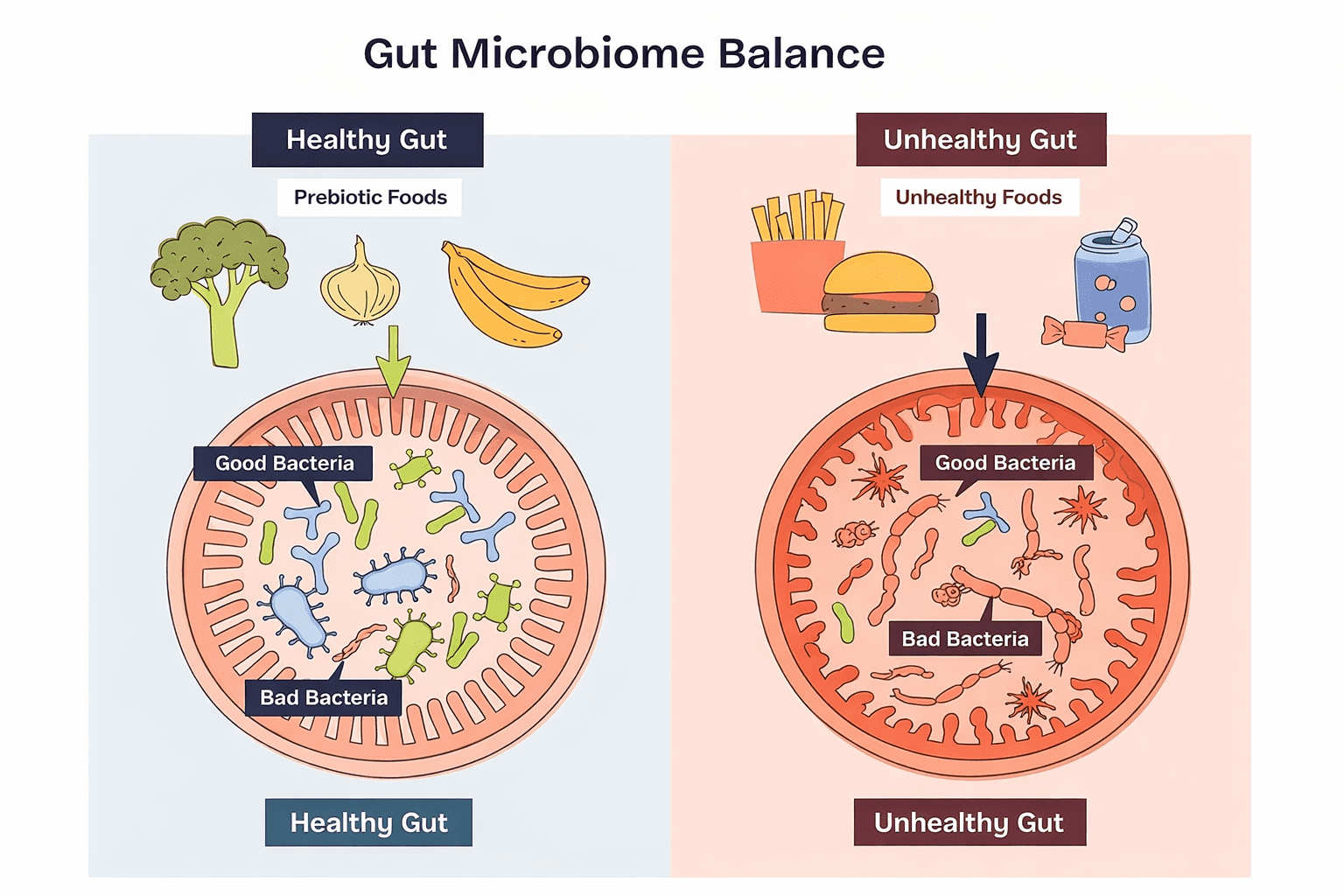
Your gut is home to roughly 100 trillion bacteria from over 1,000 different species. Together, they form your gut microbiome — a living ecosystem that helps you digest food, regulate your immune system, and even influence your mood.
When this ecosystem falls out of balance — when harmful bacteria, yeast, or other microorganisms start to outnumber the beneficial ones — it’s called dysbiosis, or gut imbalance.
And dysbiosis is far more common than most people realize.
What Causes Gut Imbalance?
- Poor diet — excess sugar feeds harmful bacteria; processed foods deplete the good ones
- Antibiotics — wipe out both good and bad bacteria indiscriminately
- Chronic stress — disrupts gut motility and immune function
- Sedentary lifestyle — physical inactivity slows intestinal transit. See: Yoga Poses That Support Gut Motility
- Dehydration — concentrates stool and slows movement through the colon. Learn more: Does Dehydration Cause Constipation?
- Artificial sweeteners — some may negatively affect microbial balance in sensitive individuals
The Direct Link to Constipation
Here is the part that most people — and even many doctors — miss.
Beneficial gut bacteria produce compounds called short-chain fatty acids (SCFAs), especially one called butyrate. These SCFAs do three critical things for your digestive system:
- They stimulate the muscular contractions that push stool through your colon
- They nourish the cells lining your gut wall, keeping them healthy and functional
- They regulate how quickly food moves through your digestive tract
When your good bacteria are depleted, SCFA production drops. Your gut muscles slow down. Stool moves sluggishly. And no amount of fiber or water will fully fix that — because the underlying problem isn’t fiber deficiency. It’s a bacterial imbalance.
💡 Key Insight: Constipation caused by gut dysbiosis will not fully resolve with fiber or laxatives alone. The root cause — the microbial imbalance — must be addressed directly.
This is exactly what the reader in our story had been missing for years.
What the Research Actually Says
This isn’t fringe science. The gut microbiome-constipation connection is one of the fastest-growing areas in digestive health research. Annual scientific publications on this topic rose from just 29 in 2013 to over 250 by 2024 — nearly a tenfold increase in a decade. [4]
Dysbiosis Is Directly Linked to Constipation
Studies consistently show that people with chronic constipation have a measurably different microbial profile compared to healthy individuals. Research from 2024 and 2025 found that constipation sufferers had: [2]
- Depleted populations of butyrate-producing species like Faecalibacterium prausnitzii and Roseburia
- Higher levels of opportunistic pathogens such as Porphyromonadaceae and Parabacteroides
- An elevated Firmicutes-to-Bacteroidetes ratio — a key marker of gut imbalance
📚 Research Spotlight A 2025 study published in npj Biofilms and Microbiomes (Nature) demonstrated that specific microbial imbalances — particularly in bacteria linked to SCFA production — disrupt gut motility, impair mucosal health, and alter short-chain fatty acid output. These are the exact core mechanisms behind constipation. [2] Clinical trials with Lactiplantibacillus plantarum P9 showed significant increases in complete spontaneous bowel movements in constipated patients.
Short-Chain Fatty Acids Are the Missing Link
SCFAs — particularly butyrate — are the primary fuel for the cells lining your colon. They promote intestinal movement, strengthen the gut barrier, and regulate serotonin release in the gut (which directly affects bowel function). When the bacteria that produce SCFAs are depleted, the entire propulsive system of your colon slows down.
Research confirms that restoring SCFA-producing bacteria through targeted probiotic or prebiotic therapy can meaningfully improve constipation outcomes. [1]
Probiotics Show Consistent Benefit
Meta-analyses of randomized controlled trials confirm that probiotic supplementation: [8]
- Increases stool frequency
- Improves stool consistency
- Reduces gut transit time in adults with functional constipation
Optimal results typically require consistent daily use for 4 to 12 weeks, with evidence suggesting benefits can be sustained with longer-term use up to one year.
The Naturopathic Approach: Stool Testing and Targeted Treatment
What made our reader’s breakthrough different from all her previous attempts was precision. Instead of guessing, her naturopathic doctor used a comprehensive stool test to identify exactly what was wrong.
A professional stool analysis (such as GI-MAP or Genova GI Effects) can reveal:
- The specific bacteria living in your gut and their relative abundance
- Whether harmful bacteria, yeast, or parasites have overgrown
- Your SCFA levels and other bacterial metabolite markers
- Signs of intestinal inflammation or gut permeability (“leaky gut”)
- Which antimicrobial or supplement protocols will be most effective against your specific bacterial imbalances
This targeted approach — treating the exact strains causing the problem — is far more effective than guessing with a generic probiotic off the shelf.
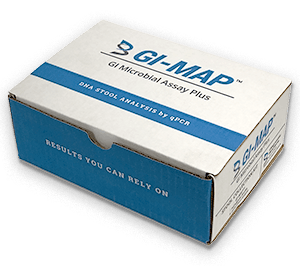
🏥 When to See a Naturopathic Doctor If you have tried dietary changes, increased hydration, fiber supplements, and OTC laxatives without lasting success, a naturopathic physician specializing in gut health can order stool microbiome analysis and build a personalized protocol. Look for practitioners using GI-MAP, Genova GI Effects, or similar comprehensive stool panels. For quick non-prescription options in the meantime, see our guide to the Best OTC Laxatives for Constipation.
Can’t Access a Naturopathic Doctor?
There is a practical, self-directed approach that mirrors the clinical protocol:
Step 1: Use a broad-spectrum antimicrobial supplement (like Grapefruit Seed Extract) to clear harmful bacterial overgrowths
Step 2: Repopulate your gut with a high-quality, multi-strain probiotic
For a broader comparison of supplement options, see our roundup of the 9 Best Probiotic Supplements of 2026. Both steps are covered in full detail below.
Grapefruit Seed Extract (GSE): The Natural First Step
Grapefruit Seed Extract (GSE) is derived from the seeds, pulp, and inner rind of grapefruit. It has been studied extensively for its broad-spectrum antimicrobial activity against harmful bacteria, fungi, and parasites — making it a useful “clearing agent” before probiotic recolonization begins.
Think of it this way: before you plant new seeds in a garden, you clear out the weeds first. GSE is the clearing step.
What Does the Research Show?
A preliminary clinical study on intestinal dysbiosis (an imbalance of gut bacteria) found that patients taking GSE capsules for four weeks experienced significant improvements in constipation, flatulence, abdominal discomfort, and sleep quality — with no registered side effects. The extract showed particular effectiveness against Candida, Geotrichum sp., and hemolytic E. coli.
⚠️ Important Warnings Before Using GSE
- Some research questions whether natural GSE — without synthetic additives — has significant antimicrobial activity on its own
- GSE can deplete beneficial gut bacteria if taken for more than 3 consecutive days
- It has significant interactions with common medications including blood thinners (warfarin), statins, and calcium channel blockers
- Always consult your doctor before use, especially if you take any regular medications
- Not suitable for pregnant or breastfeeding women, or children under 12
How to Use GSE Safely
- Start with the lowest effective dose — 1 capsule per day
- Do not exceed 3 consecutive days without probiotic support
- Take your probiotic at least 2–3 hours after your GSE dose
- Drink plenty of water throughout the day
- Discontinue immediately if symptoms worsen
🏆 Editor’s Pick — GSE: NutriBiotic GSE Capsules (250 mg)
NutriBiotic is the original manufacturer of grapefruit seed extract supplements — in continuous production since 1981. Each capsule delivers 250 mg of full-spectrum GSE, equivalent to 25 drops of the liquid concentrate. The formula includes a complete range of natural bioflavonoids and is vegan, gluten-free, non-GMO, and cGMP-compliant.
✅ Pros
- Original, trusted GSE manufacturer with 40+ years of experience
- Full-spectrum bioflavonoids included
- Vegan, gluten-free, non-GMO
- Convenient capsule format — no bitter liquid taste
- Made in USA, cGMP-compliant
❌ Cons
- Evidence for natural GSE efficacy is mixed
- Can deplete good bacteria — must always be paired with a probiotic
- Drug interactions possible — consult your doctor first
- Not suitable for children under 12
View on Amazon (Affiliate link — we may earn a commission at no cost to you)
Premium Option — GSE: Pure Encapsulations Grapefruit Seed Extract
Pure Encapsulations is a professional-grade brand widely recommended by integrative physicians and naturopaths. Their GSE formula (250 mg per capsule) is specifically formulated for GI microflora balance and is free from artificial colors, flavors, sweeteners, GMOs, and common allergens — making it ideal for sensitive individuals.
✅ Pros
- Physician-recommended, professional-grade brand
- Free from 9+ common allergens and artificial additives
- Flexible dosing — 1 to 4 capsules daily depending on need
- Hypoallergenic formula
❌ Cons
- Higher price point than standard options
- Not suitable for pregnant or breastfeeding women
- Must always be paired with a probiotic
View on Amazon(Affiliate link — we may earn a commission at no cost to you)
Best Probiotics for Constipation Relief
Once you’ve completed the GSE clearing step, it’s time to rebuild. But not all probiotics are created equal — especially for constipation.
Here’s what to look for:
- Strain specificity — look for strains with clinical evidence specifically for constipation (e.g., Bifidobacterium longum BB536, Lactiplantibacillus plantarum LP1, B. breve BR3)
- Delivery technology — the bacteria must survive stomach acid and reach your colon intact
- Prebiotic inclusion — prebiotics feed the probiotic bacteria and improve colonization in your gut
- Potency measurement — Active Fluorescent Units (AFU) are more precise and reliable than Colony-Forming Units (CFU)
For a full comparison including budget and specialty options, see our complete guide to the 9 Best Probiotic Supplements of 2026.
🏆 Top Pick — Probiotic: Seed DS-01® Daily Synbiotic
This is the probiotic that changed everything for the reader in our story — and the science backs up why.
Seed DS-01 combines 24 clinically studied probiotic strains with a plant-based prebiotic outer capsule in a patented ViaCap® 2-in-1 delivery system. This capsule-within-a-capsule design protects the live bacteria through stomach acid, bile, and digestive enzymes — ensuring they reach your colon intact, where they can actually do their job.
Key strains for constipation:
- Bifidobacterium longum BB536 — clinically shown to increase bowel movement frequency in people with constipation [7]
- Lactiplantibacillus plantarum LP1 — studied for gut motility and transit support
- Lacticaseibacillus rhamnosus GG — one of the most extensively researched probiotic strains in the world
- Bifidobacterium infantis M-63 — supports gut barrier integrity
- Plus 20 additional clinically studied strains
Total potency: 53.6 billion AFU
A 2024 Digestive Disease Week presentation reported that Seed DS-01 reduced abdominal pain, increased beneficial bacteria populations, and elevated serotonin levels in patients with constipation-predominant IBS. Independent reviewers who used the product consistently for 12 months noted improved bowel regularity within the first three days — with no cramping or discomfort.
📖 Want the full breakdown? Read our detailed Seed DS-01 Review: Does It Really Help With Constipation? (2026) — covering real user outcomes, a strain-by-strain analysis, and who it works best for. Also see the inspiring story of someone who found relief after 12 years of chronic constipation with a probiotic.
✅ Pros
- 24 clinically studied strains including BB536 specifically for constipation
- Patented ViaCap® delivery system for maximum bacteria survival
- Synbiotic — prebiotic and probiotic combined in one capsule
- 53.6 billion AFU — highly accurate and reliable potency measurement
- Shelf-stable — no refrigeration needed
- Vegan, allergen-free, no artificial additives
- Backed by clinical research and peer-reviewed science
❌ Cons
- Premium price — approximately $50/month on subscription
- Only available as a subscription — no single one-time purchase option
- Some users experience a brief adjustment period (mild bloating in the first few days)
- Not suitable for children under 18 (a separate pediatric product is available)
Check Price(Affiliate link — we may earn a commission at no cost to you)
Best for a Quick Start: Seed 14-Day Gut Reset
If you’ve just finished antibiotics, gone through a period of poor eating, or completed a GSE protocol, the Seed 14-Day Gut Reset uses the exact same DS-01 formula — but in a clinically validated 14-day recovery protocol designed to restore healthy gut function within two weeks.
It’s the perfect on-ramp before transitioning to the full monthly DS-01 subscription. Available as a one-time purchase — no subscription required. Each pack contains 28 capsules (2 per day).
✅ Pros
- Same proven DS-01 formula — no compromise on quality
- No subscription required — ideal for one-time use
- Clinically validated 14-day gut recovery protocol
- Perfect transition after antibiotics or GSE clearing protocol
❌ Cons
- Higher cost per dose than the monthly subscription
- Short-term only — you’ll need to transition to a daily probiotic afterward
View on Amazon (Affiliate link — we may earn a commission at no cost to you)
Best Budget Option: Physician’s CHOICE Probiotics 60 Billion CFU
For those who want a genuinely effective probiotic without a premium price tag or subscription commitment, Physician’s CHOICE delivers solid results at an accessible price.
The formula includes 10 strains at 60 billion CFU per capsule, alongside organic prebiotics from Jerusalem artichoke, chicory root, and acacia fiber. The acid-resistant capsule design improves bacteria survival through your stomach, and the product is third-party tested for quality and potency.
✅ Pros
- Budget-friendly — no subscription required
- 60 billion CFU with 10 strains plus organic prebiotic blend
- Acid-resistant capsules for improved bacteria survival
- Third-party tested for quality and potency
- Widely available on Amazon with strong customer ratings
❌ Cons
- CFU measurement is less precise than AFU
- Fewer strain-specific clinical data compared to Seed DS-01
- Delivery technology not as advanced as ViaCap®
View on Amazon (Affiliate link — we may earn a commission at no cost to you)
Product Comparison Table
| Product | Type | Strains / Potency | Vegan | Prebiotic Included | Price Range |
|---|---|---|---|---|---|
| NutriBiotic GSE Capsules | Antimicrobial | 250 mg GSE + bioflavonoids | ✓ | ✗ | Check Price |
| Pure Encapsulations GSE | Antimicrobial | 250 mg GSE, hypoallergenic | ✓ | ✗ | Check Price |
| Seed DS-01 Daily Synbiotic | Synbiotic | 24 strains, 53.6B AFU | ✓ | ✓ | Check Price |
| Seed 14-Day Gut Reset | Short-course synbiotic | DS-01 formula, 14-day supply | ✓ | ✓ | Check Price |
| Physician’s CHOICE 60B | Probiotic + Prebiotic | 10 strains, 60B CFU | ✓ | ✓ | Check Price |
Diet Changes That Support Microbiome Recovery
Supplements accelerate your recovery — but your daily diet is the foundation everything else is built on. Without the right dietary changes, even the best probiotic can only do so much.
Here are the changes with the strongest research support for reducing dysbiosis and improving constipation:
Remove What Harms Your Good Bacteria
- Added sugar — preferentially feeds harmful bacteria and yeast like Candida
- Ultra-processed foods — emulsifiers and preservatives (like carrageenan and polysorbate 80) have been shown in research to directly damage the protective gut lining
- Excess alcohol — reduces microbial diversity and increases gut permeability
- Excessive refined carbohydrates — rapidly fermented by dysbiotic bacteria, worsening imbalance
Add What Feeds Your Good Bacteria
- Prebiotic fiber — found in garlic, onions, leeks, asparagus, Jerusalem artichoke, and slightly unripe bananas. These fermentable fibers selectively nourish beneficial bacteria. See our full guide: Best Fiber Foods and Fiber Therapy for Gut Health
- Fermented foods — yogurt, kefir, sauerkraut, kimchi, and miso introduce live cultures and support microbial diversity
- Polyphenol-rich foods — berries, olive oil, dark chocolate, and green tea act as natural prebiotics and suppress pathogenic bacteria
- Diverse whole plant foods — aim for 30+ different plant foods per week. Research directly links dietary variety to gut microbiome diversity.
💧 Hydration Matters Too Adults should aim for at least 8 cups (64 oz) of water daily — more if you’re physically active or in a warm climate. A 2025 population study confirmed a clear association between adequate water intake and reduced constipation risk. Read more: Does Dehydration Cause Constipation? The Science-Backed Link
Frequently Asked Questions
Can gut dysbiosis really cause constipation?
Yes — and the evidence is strong. Research consistently shows that people with chronic constipation have measurably depleted populations of SCFA-producing bacteria like Faecalibacterium prausnitzii and Roseburia, alongside elevated levels of opportunistic bacteria. These imbalances slow gut motility, reduce intestinal lubrication, and weaken the muscular contractions that push stool forward. [2]
What is the best probiotic strain for constipation?
The strains with the strongest clinical evidence include Bifidobacterium longum BB536 (shown to increase bowel movement frequency), Lactiplantibacillus plantarum P9 (clinical trials showed significant improvement in spontaneous bowel movements), B. breve BR3, and B. animalis subsp. lactis HN019. Products like Seed DS-01 contain multiple evidence-based strains in a single formula. Read our detailed Seed DS-01 Review or browse our full guide to the 9 best probiotic supplements of 2026.
Is grapefruit seed extract safe?
GSE is generally considered safe for short-term use at recommended doses. However, it can deplete beneficial bacteria if used for more than 3 consecutive days; it interacts significantly with several common medications (warfarin, statins, calcium channel blockers, immunosuppressants); and some research suggests commercial products may rely on synthetic additives for their antimicrobial effect. Always consult your doctor before use — especially if you take regular medications.
How long does it take to rebalance the gut microbiome?
Initial improvements in bowel movement frequency can appear within 48–72 hours of starting a quality probiotic. However, meaningful microbiome remodeling — restoring bacterial diversity and establishing stable beneficial populations — typically takes 4 to 12 weeks of consistent daily probiotic use, supported by the dietary changes above. People with significant dysbiosis may need 3 to 6 months of targeted intervention.
Should I see a naturopathic doctor for chronic constipation?
If standard approaches — fiber, hydration, lifestyle changes, OTC laxatives — haven’t resolved your constipation, especially if it’s accompanied by bloating, gas, or abdominal pain, a naturopathic physician specializing in digestive health can order comprehensive stool microbiome analysis and create a personalized protocol targeting your specific bacterial imbalances. For a real-world example, read: How to Reverse Chronic Constipation with Diet: A Success Story. For quick non-prescription options in the meantime, see our guide to the Best OTC Laxatives for Constipation.
Can sugar and processed food really destroy good gut bacteria?
Yes. High-sugar diets are well-documented to promote the overgrowth of pathogenic bacteria and yeast — particularly Candida — while depleting beneficial species like Bifidobacterium and Faecalibacterium. Certain emulsifiers found in ultra-processed foods have been shown in research to directly damage the mucus layer that protects beneficial gut bacteria. Reducing sugar and processed food intake is not optional — it is a prerequisite for sustained microbiome recovery.
The Path to Lasting Relief: Your Journey Starts Here
Chronic constipation doesn’t have to be your permanent reality. For too long, the standard advice has been to “just eat more fiber” or “take a laxative,” but as we’ve seen, these are often just temporary fixes for a much deeper issue. By focusing on gut microbiome rebalancing for constipation, you are finally moving beyond surface-level symptoms and addressing the root cause of your digestive struggles.
The road to a healthy microbiome isn’t an overnight sprint—it’s a steady build. Here is how you can ensure your success:
-
Start Small: Don’t feel pressured to change everything at once. Begin with a high-quality probiotic or a gentle clearing protocol like GSE.
-
Be Consistent: Microbiome remodeling takes time. Stick with your chosen probiotic for at least 4–12 weeks to see the full biological shift in your gut motility.
-
Listen to Your Body: Every gut is unique. Pay attention to how different foods and supplements make you feel. Your body will tell you when you’re on the right track toward regularity.
You now have the science, the research, and the tools to reclaim your gut health. Whether it’s choosing the right strain-specific probiotic or finally ordering that stool test, the first step toward a lighter, more energetic version of yourself starts today.
📚 Recommended Reading
- Seed DS-01 Review: Does It Really Help With Constipation? (2026)
- 9 Best Probiotic Supplements 2026: Expert Guide
- After 12 Years of Chronic Constipation, a Probiotic Brought Relief
- 5 Best Magnesium Supplements for Constipation (2026 Review)
- Best Fiber Foods and Fiber Therapy for Gut Health
- Does Dehydration Cause Constipation? The Science-Backed Link
- Yoga for Constipation Relief: 7 Science-Backed Poses
- Best OTC Laxatives for Constipation in the US
References & Further Reading
- Frontiers in Microbiology (2025). Regulatory mechanisms of the gut microbiota–short chain fatty acids axis in slow-transit constipation. doi:10.3389/fmicb.2025.1689597
- npj Biofilms and Microbiomes (2025). Microbial imbalances in constipation: dysbiosis of Porphyromonadaceae and Parabacteroides linked to constipation symptoms. nature.com
- Frontiers in Medicine (2026). Fecal microbiota transplantation improves functional constipation via microbial remodeling. doi:10.3389/fmed.2026.1751593
- Frontiers in Microbiology (2024). Global research trajectories in gut microbiota and functional constipation. doi:10.3389/fmicb.2024.1513723
- Scientific Reports (2024). The oral cavity and intestinal microbiome in children with functional constipation. doi:10.1038/s41598-024-58642-2
- PLOS ONE (2025). Probiotics interventions modulating gut microbiota: registered report protocol. doi:10.1371/journal.pone.0311799
- Seed.com (2026). Best probiotic strains for constipation: a clinical guide. seed.com
- Dimidi E et al. (2014). The effect of probiotics on functional constipation in adults. Am J Clin Nutr. 100(4):1075–84. doi:10.3945/ajcn.114.089151
Medical Disclaimer: This article is for informational purposes only and does not constitute medical advice. Always consult a qualified healthcare provider before starting any supplement regimen, especially if you have a medical condition or take prescription medications.