
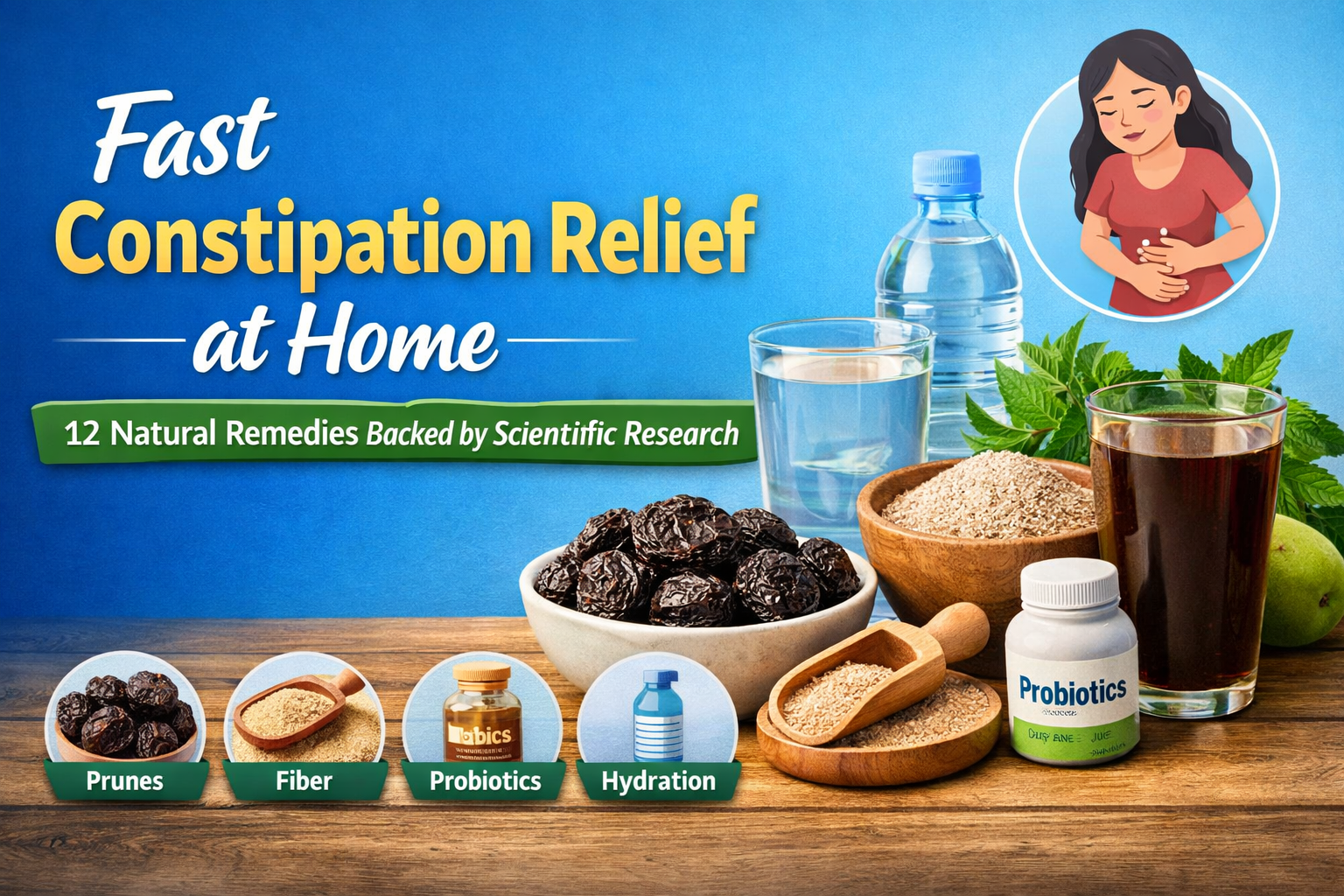
Fast constipation relief at home is something many people search for when experiencing digestive discomfort. Constipation affects millions of people worldwide and is one of the most common digestive complaints.
According to a systematic review of clinical studies published on PubMed, dietary and lifestyle interventions remain one of the most effective first-line treatments for mild to moderate constipation (PubMed ID: 35816465).
More recent research published in 2024 and 2025 clinical reviews analyzing multiple randomized controlled trials (RCTs) found that several natural remedies — including fiber, prunes, kiwifruit, probiotics, and magnesium-rich mineral water — can significantly improve bowel movement frequency and stool consistency (PubMed ID: 37905980; PubMed ID: 40888045).
In addition, a meta-analysis examining 17 randomized clinical trials on prebiotics such as fructooligosaccharides (FOS) concluded that these compounds may improve stool frequency and gut microbiota composition in people suffering from functional constipation (PubMed ID: 39766936).
These findings suggest that simple dietary and lifestyle strategies can play a powerful role in achieving fast constipation relief at home.
This article reviews evidence-based home remedies for fast constipation relief at home, including recommended dosages used in scientific studies.
Understanding Constipation
Constipation is typically defined as:
-
Fewer than three bowel movements per week
-
Hard or dry stools
-
Difficulty passing stool
-
A sensation of incomplete bowel evacuation
Chronic constipation may result from several factors including:
-
Low fiber intake
-
Dehydration
-
Sedentary lifestyle
-
Poor gut microbiome diversity
-
Certain medications
When stool moves slowly through the colon, the body absorbs too much water from it. This makes the stool dry and hard, which leads to difficult bowel movements.
12 Fast Constipation Relief at Home Remedies Backed by Research
1. Prunes (Dried Plums)
Scientific Evidence
One of the most well-known natural remedies for constipation is prunes.
A randomized controlled trial comparing prunes with psyllium fiber found that prunes significantly improved stool frequency and stool consistency in adults with chronic constipation (1 PubMed ID: 21323688).
Researchers concluded that prunes may be as effective or more effective than psyllium fiber supplements for mild to moderate constipation.
Why Prunes Work
Prunes contain several compounds that promote bowel movements:
-
Dietary fiber
-
Sorbitol (a natural laxative sugar alcohol)
-
Polyphenols that support gut bacteria
Recommended Dosage (Used in Studies)
Clinical studies typically used:
50–100 grams of prunes per day
(approximately 5–10 prunes daily)
Participants consuming this amount experienced increased bowel movement frequency within several weeks.
2. Psyllium Fiber
Scientific Evidence
A systematic review analyzing multiple clinical trials found that psyllium fiber significantly improves constipation symptoms, including stool frequency and stool consistency (PubMed ID: 35816465).
Because of its strong evidence base, many medical guidelines recommend psyllium as a first-line treatment for constipation.
How It Works
Psyllium is a soluble fiber that:
-
Absorbs water in the intestines
-
Increases stool bulk
-
Makes stool softer and easier to pass
Recommended Dosage
Typical dosage used in clinical trials:
7–10 grams per day
Usually divided into two doses with water.
Adequate hydration is essential when taking psyllium to prevent worsening constipation.
3. Kiwifruit
Scientific Evidence
A dietary management review published in 2025 concluded that kiwifruit Or(powder) consumption improves bowel movement frequency in people with chronic constipation (PubMed ID: 40888045).
Several randomized studies suggest that kiwifruit may work as a natural digestive stimulant.
Why It Works
Kiwifruit contains:
-
Fiber
-
High water content
-
Actinidin enzyme that supports digestion
Recommended Dosage
Studies typically used:
2 green kiwifruits per day
Participants consuming this amount experienced improved stool consistency and bowel movement frequency.
4. Prune Juice
Scientific Evidence
Clinical studies examining prune juice have found that it helps soften stool and improve bowel movement frequency due to its sorbitol and pectin content.
Prune juice works by drawing water into the intestines and stimulating colon movement.
Recommended Dosage
Most studies used:
120–240 mL per day
(about ½–1 cup daily)
Effects were usually observed within a few days.
5. Magnesium-Rich Mineral Water
Scientific Evidence
Clinical evidence reviewed in dietary guidelines suggests that magnesium-rich mineral water may improve constipation symptoms by stimulating bowel movement (PubMed ID: 40888045).
Magnesium works as an osmotic agent, drawing water into the colon and helping stool pass more easily.
Recommended Dosage
Typical intake used in research:
1–2 glasses of magnesium-rich mineral water daily
However, excessive magnesium intake may cause diarrhea.
6. Prebiotics (Fructooligosaccharides – FOS)
Scientific Evidence
A 2024 meta-analysis reviewing 17 randomized controlled trials found that prebiotics such as fructooligosaccharides significantly increased stool frequency and improved gut microbiota balance (PubMed ID: 39766936).
How They Work
Prebiotics feed beneficial gut bacteria, including:
-
Bifidobacteria
-
Lactobacillus species
Healthy gut bacteria improve intestinal motility.
Recommended Dosage
Studies commonly used:
5–10 grams per day of FOS
These are found in foods such as:
-
Bananas
-
Garlic
-
Onions
-
Whole grains
7. Probiotics
Scientific Evidence
Several clinical trials suggest probiotics may improve stool frequency and reduce constipation symptoms by restoring gut microbiome balance.
Certain strains have shown promising results.
Recommended Strains
Research commonly uses:
-
Lactobacillus
-
Bifidobacterium
Recommended Dosage
Typical doses used in research:
1–10 billion CFU per day
Results may take several weeks to appear.
Top 4 Probiotics for Gut Health (Bifidobacterium & Lactobacillus)
If you are looking for the best probiotic supplements on Amazon, these top-rated options are highly recommended for digestive and immune support:
-
Garden of Life Raw Probiotics: High potency (100 Billion CFU) with 34 diverse strains.
-
NOW BerryDophilus: A tasty, chewable option with 10 probiotic strains—perfect for all ages.
-
Culturelle Digestive Daily: Features Lactobacillus rhamnosus GG, the most clinically studied strain.
-
Renew Life Ultimate Flora: Specially formulated with a high Bifidobacteria ratio for colon health.
Pro Tip: Always check if the supplement is “Shelf-Stable” or requires refrigeration to ensure the live cultures stay effective.
8. High Fiber Diet
Scientific Evidence
Large meta-analyses show that increasing dietary fiber intake improves stool bulk and bowel movement frequency.
Fiber works by increasing stool mass and retaining water in the colon.
Recommended Daily Intake
Health experts recommend:
-
Women: 25 grams fiber daily
-
Men: 38 grams fiber daily
Good sources include:
-
Vegetables
-
Fruits
-
Whole grains
-
Legumes
9. Hydration
Scientific Evidence
Medical guidelines emphasize adequate hydration as a key component of constipation treatment.
Water helps soften stool and supports digestive movement.
Recommended Intake
General hydration guidelines suggest:
2–3 liters of water per day
People consuming high fiber diets should drink more water.
10. Physical Activity
Scientific Evidence
Sedentary lifestyle is associated with slower intestinal transit time.
Studies show that regular physical activity may stimulate bowel movement and improve digestive health.
Recommended Activity
Doctors recommend:
-
20–30 minutes of walking daily
-
Gentle stretching or yoga
Even moderate activity can help stimulate colon movement.
11. Morning Routine
The body naturally activates digestion after waking and eating.
This is called the gastrocolic reflex, where the colon becomes more active after meals.
Simple morning habits may help trigger bowel movements:
-
Drinking warm water
-
Eating breakfast
-
Allowing time for relaxation
12. Balanced Digestive Diet
Researchers emphasize that long-term digestive health depends on overall diet quality.
A review of clinical dietary studies found that certain foods consistently improve constipation symptoms.
These include:
-
Kiwifruit
-
Prunes
-
Rye bread
-
Fiber supplements
-
Probiotics
Adopting a balanced diet rich in plant foods may significantly reduce constipation risk.
When to Seek Medical Advice
Although natural remedies may help mild constipation, persistent symptoms may require medical evaluation.
Medical attention is recommended if constipation:
-
Lasts longer than three weeks
-
Causes severe abdominal pain
-
Includes blood in stool
-
Occurs with unexplained weight loss
These symptoms may indicate underlying digestive disorders.
Conclusion
Growing scientific evidence suggests that natural dietary and lifestyle remedies can play an important role in relieving constipation.
Clinical research supports several home-based strategies including:
-
Eating prunes or kiwifruit
-
Increasing fiber intake
-
Consuming probiotics and prebiotics
-
Staying hydrated
-
Maintaining regular physical activity
For many people, combining these approaches may provide fast and effective constipation relief without relying solely on medications.However, persistent or severe symptoms should always be evaluated by a healthcare professional.
Read More Article:
7 Safe and Natural Remedies for New Mothers’ Digestive Health
FAQ
What is the fastest natural way to relieve constipation?
Research suggests that increasing fiber intake, eating prunes, drinking enough water, and engaging in light physical activity may help relieve constipation quickly. Clinical trials have shown that prunes and psyllium fiber can significantly improve bowel movement frequency.
Have you tried any of these remedies?
Everyone’s digestive system is different, and what works quickly for one person may work differently for another. If you have tried any of these constipation relief home remedies, feel free to share your experience in the comments below.
Your experience may help other readers who are struggling with the same problem.
Research References
-
Attaluri A, et al. Randomised clinical trial: dried plums vs psyllium for constipation.
PubMed ID: 21323688 -
Rao SSC, et al. Effect of fiber supplementation on chronic constipation.
PubMed ID: 35816465 -
Dietary management of chronic constipation: Evidence-based review.
PubMed ID: 40888045 -
Foods, drinks and diets and their effect on chronic constipation.
PubMed ID: 37905980 -
Fructooligosaccharides for relieving functional constipation.
PubMed ID: 39766936